

Quick answer
Wildfire smoke cleanup requires ventilation, HEPA filtration, surface washing with damp microfibre cloths, upholstery vacuuming, air duct inspection, and replacing HVAC filters. Professional restoration may be needed for severe smoke infiltration or persistent odours.

Key Takeaways
- 1Wildfire smoke contains PM2.5 particles under 2.5 micrometres that penetrate deep into homes and lungs, requiring HEPA-grade filtration to capture effectively.
- 2Vancouver experiences an average of 12-18 days of poor air quality annually due to wildfire smoke, making indoor cleanup protocols essential for Metro residents.
- 3Damp microfibre cloths remove 99% of smoke residue from hard surfaces, while dry dusting redistributes harmful particles back into the air.
- 4Professional smoke damage restoration costs $300-$800 for average Vancouver homes, depending on infiltration severity and square footage affected.
Understanding Wildfire Smoke Damage in Vancouver Homes
Wildfire smoke infiltrates homes through ventilation systems, windows, and door gaps, depositing fine particulate matter on every surface and embedding odours in porous materials.
Wildfire smoke contains over 200 chemical compounds including carbon monoxide, volatile organic compounds, and fine particulate matter classified as PM2.5. These particles measure less than 2.5 micrometres in diameter, roughly 30 times smaller than a human hair, allowing them to bypass standard air filters and settle deep into carpets, upholstery, and HVAC systems. According to BC Health Authority data, indoor PM2.5 concentrations can reach 150-300 micrograms per cubic metre during active wildfire events, far exceeding the safe threshold of 25 micrograms established by Health Canada.
Metro Vancouver homes face unique smoke infiltration challenges due to the region's proximity to Interior BC forests and prevailing wind patterns that carry smoke westward during summer months. The 2023 wildfire season resulted in 18 consecutive days of air quality advisories across the Lower Mainland, with indoor air quality degrading by 60-80% in homes without proper filtration systems. Smoke residue appears as a thin grey or yellow film on horizontal surfaces, window sills, and electronics, while odours penetrate fabrics, drywall, and wooden furniture through a process called off-gassing that can persist for weeks without intervention.
The health implications of prolonged smoke exposure extend beyond immediate respiratory irritation. WorkSafeBC reports that indoor PM2.5 exposure correlates with increased asthma attacks, cardiovascular stress, and reduced lung function, particularly in children under 12 and adults over 65. Smoke particles also carry toxic compounds like benzene and formaldehyde that accumulate in enclosed spaces, making thorough cleanup essential rather than optional. Professional assessment becomes necessary when smoke odours persist after 72 hours of ventilation or when visible residue covers more than 30% of living space surfaces.
- PM2.5 particles remain airborne for 6-12 hours after initial smoke exposure, requiring extended ventilation periods
- Smoke residue contains acidic compounds that can corrode electronics and tarnish metal fixtures if left untreated
- Porous materials like curtains and upholstery absorb 3-5 times more smoke particles than hard surfaces
- HVAC systems recirculate contaminated air throughout homes, spreading smoke damage to previously unaffected rooms
Pro Tip
Close all windows and turn off ventilation systems immediately when smoke is visible outdoors. Wait until air quality improves to AQI 50 or below before beginning ventilation-based cleanup.
Related resources
Immediate Response Protocol for Smoke Infiltration
The first 24-48 hours after smoke exposure determine cleanup success. Quick action prevents particle embedding and reduces long-term odour retention in fabrics and porous surfaces.
Begin response by checking outdoor air quality through Environment Canada's Air Quality Health Index or IQAir monitoring apps. Only initiate ventilation when the AQHI drops to 3 or lower, indicating moderate risk levels safe for extended window opening. Create cross-ventilation by opening windows on opposite sides of your home, positioning box fans in window frames to exhaust indoor air outward. Run this ventilation cycle for 2-4 hours, monitoring indoor temperature to prevent excessive heat loss during cooler months. The City of Vancouver recommends ventilation rates of 0.35 air changes per hour minimum to effectively dilute indoor pollutants.
Immediately replace or clean all HVAC filters, as smoke-saturated filters become pollution sources that recontaminate cleaned air. Standard fibreglass filters capture only 20-30% of smoke particles, while MERV 13-16 filters remove 85-95% of PM2.5 contaminants. Inspect air intake vents and return ducts for visible residue accumulation, wiping surfaces with damp microfibre cloths before reinstalling upgraded filters. Professional duct cleaning becomes necessary if smoke odours persist after filter replacement or if visible residue appears inside vent openings. Statistics Canada data shows that 68% of Vancouver homes use forced-air heating systems vulnerable to smoke infiltration through ductwork.
Assess fabric items for smoke absorption by conducting a smell test in enclosed spaces like closets or storage bins. Items retaining strong odours after 24 hours of ventilation require washing or professional cleaning. Remove washable curtains, throw pillows, and bedding for immediate laundering using hot water cycles above 60°C with oxygen-based detergent boosters. Non-washable items like heavy drapes or upholstered furniture need professional steam cleaning or ozone treatment to neutralize embedded odours. The ISSA recommends addressing fabric contamination within 48 hours to prevent permanent odour bonding that resists standard cleaning methods.
- Check HVAC filter MERV ratings; upgrade to MERV 13 minimum for effective smoke particle capture
- Avoid using ceiling fans during initial ventilation as they redistribute settled particles back into breathing zones
- Remove indoor plants temporarily as smoke residue on leaves can release toxins when watered
- Document smoke damage with photos for insurance claims if professional restoration becomes necessary
Pro Tip
Place portable HEPA air purifiers in bedrooms and main living areas during the first 48 hours, running them continuously on high settings to accelerate particle removal from breathing zones.
Surface Cleaning Techniques for Smoke Residue Removal
Different surfaces require specific cleaning approaches to remove smoke residue without causing damage. Hard surfaces, electronics, and porous materials each demand tailored treatment methods.
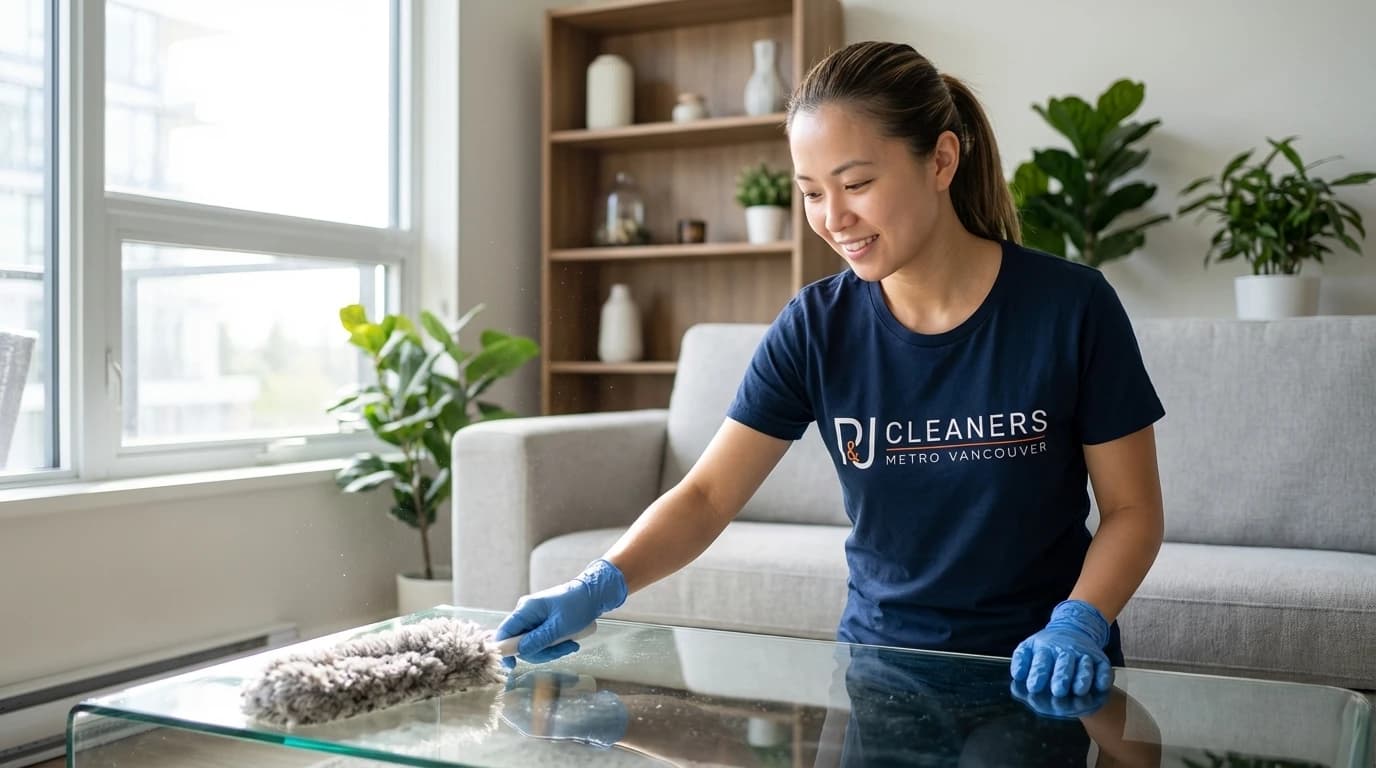
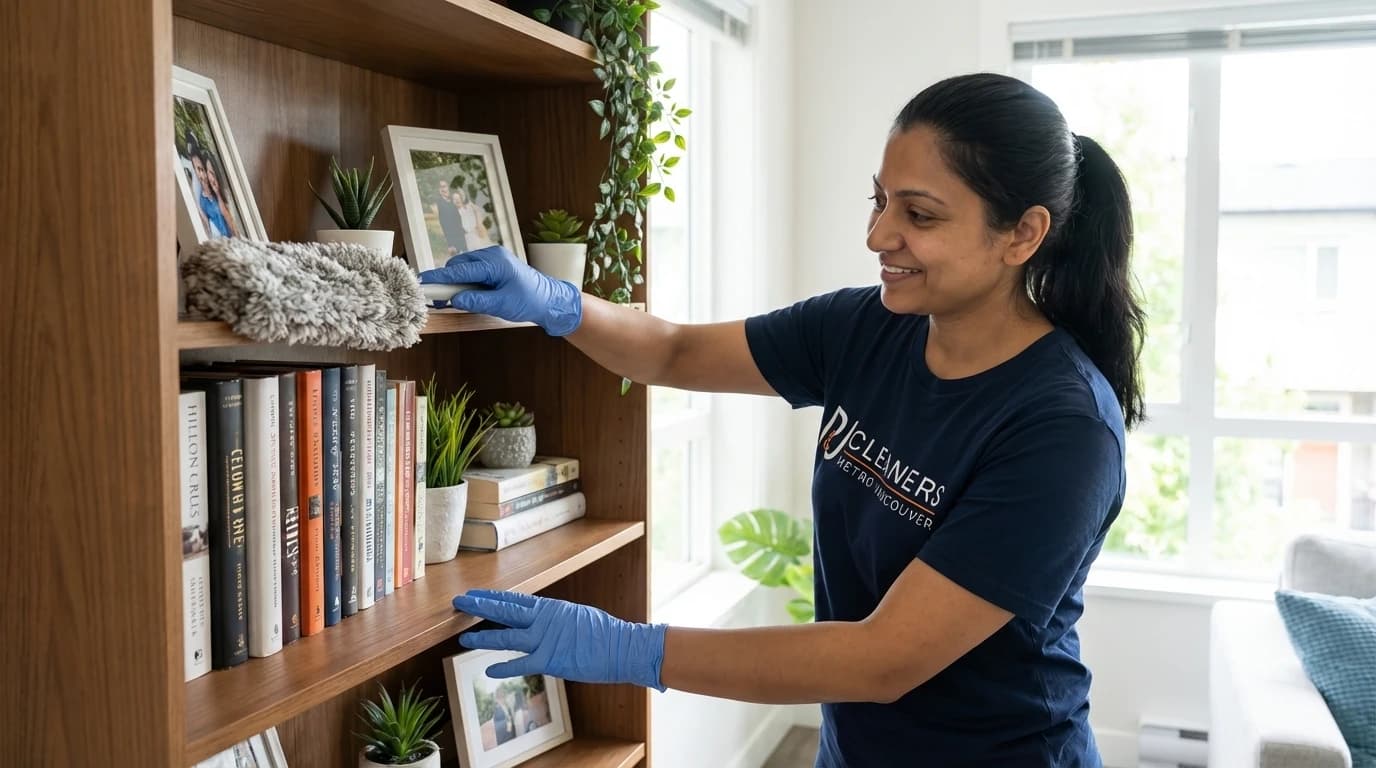
Hard surfaces including countertops, tables, and window sills accumulate visible smoke film that appears as a greasy, discoloured coating. Clean these areas using damp microfibre cloths with pH-neutral all-purpose cleaner diluted to manufacturer specifications. Work in small sections using overlapping strokes, rinsing cloths frequently in clean water to prevent residue redistribution. Never use dry dusting methods, as they launch settled particles back into the air where they remain suspended for hours. The CDC recommends damp cleaning as the only effective method for removing fine particulate matter from horizontal surfaces without creating secondary contamination.
Electronics and screens require specialized attention due to their sensitivity to moisture and chemical cleaners. Power down all devices before cleaning, then use barely damp microfibre cloths with distilled water only to wipe exterior casings and screens. Avoid spraying liquids directly onto electronics, as moisture can seep into ventilation ports and damage internal components. Computer keyboards and remote controls trap smoke particles between keys; use compressed air to dislodge debris before wiping with isopropyl alcohol on cotton swabs. BC Health Authority guidelines note that smoke residue on electronics can cause overheating and premature component failure if left untreated for extended periods.
Wall cleaning presents the greatest challenge in smoke-affected homes, as drywall and paint absorb odours while showing minimal visible residue. Test wall surfaces in inconspicuous areas before full cleaning, using a solution of 60ml white vinegar per litre of warm water applied with wrung-out sponges. Work from ceiling to floor in vertical sections, changing water frequently to prevent streaking. Flat paint finishes may show water marks or require repainting if smoke exposure was severe. Professional painters in Metro Vancouver report that 40% of smoke-damaged homes need primer sealing and repainting to fully eliminate persistent odours embedded in porous wall surfaces.
- Replace vacuum bags or empty canisters after each smoke cleanup session to prevent particle recirculation
- Clean light fixtures and ceiling fans, as smoke rises and concentrates residue on overhead surfaces
- Wipe door frames and baseboards where smoke particles settle in corners and crevices
- Use separate cleaning cloths for different room zones to prevent cross-contamination of cleaned areas
Pro Tip
Add 125ml of white vinegar to final rinse water when cleaning hard surfaces. The acetic acid neutralizes alkaline smoke compounds and accelerates odour elimination without leaving chemical residues.
Related resources
Carpet and Upholstery Treatment Methods
Soft furnishings absorb the highest concentration of smoke particles and odours, requiring intensive cleaning methods beyond standard vacuuming to restore air quality and eliminate persistent smells.
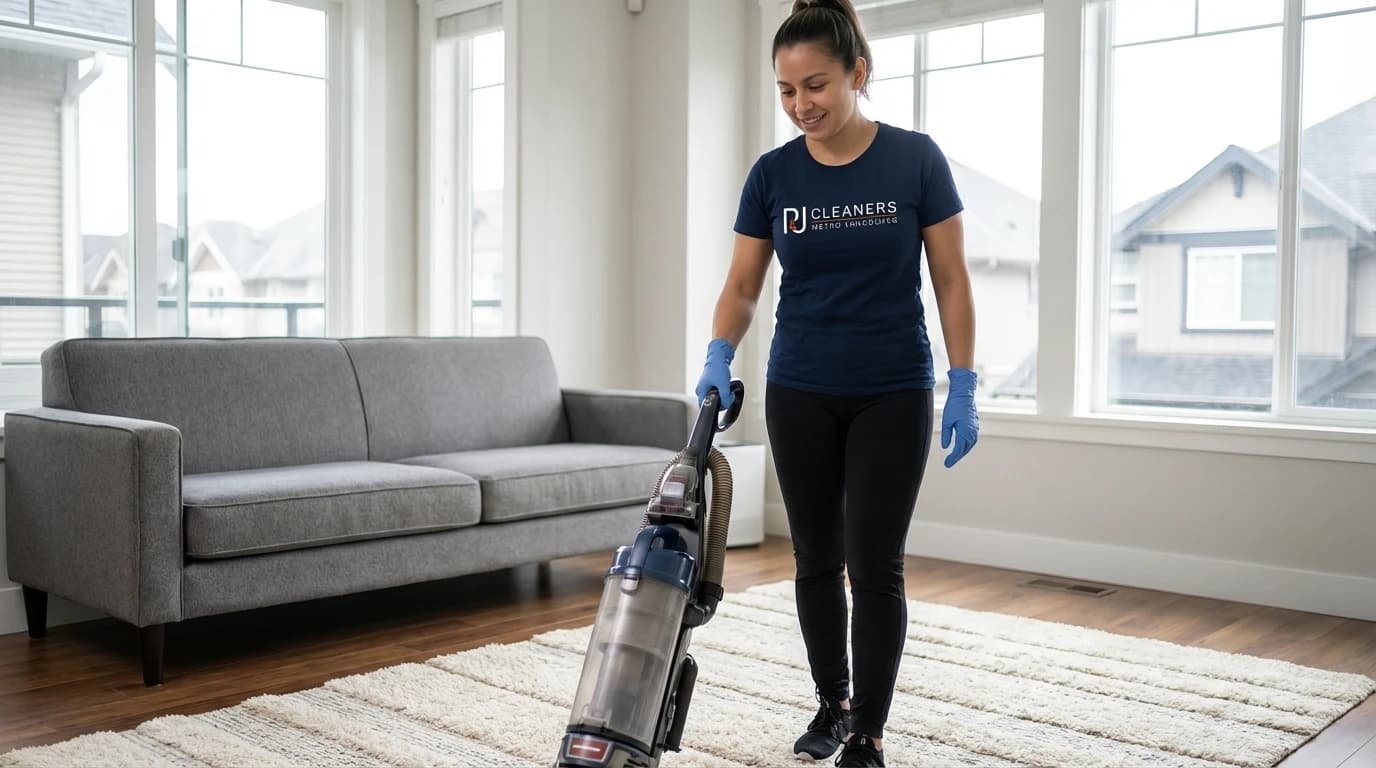
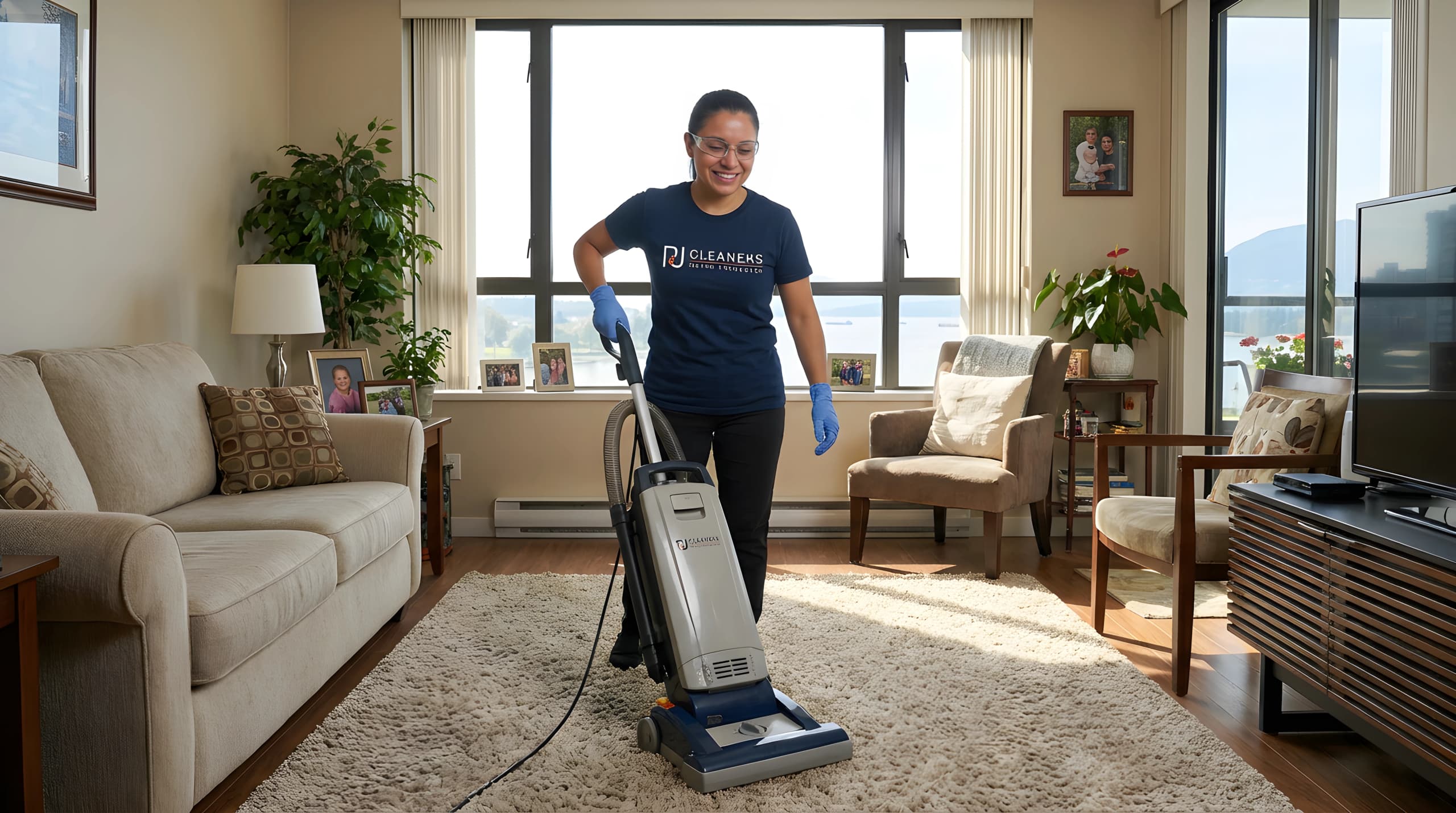
Begin carpet treatment by vacuuming thoroughly with a HEPA-filtered upright vacuum, making 7-10 slow passes over each section to maximize particle extraction from carpet fibres. Standard vacuums without HEPA filtration exhaust fine particles back into the room, negating cleanup efforts and potentially worsening indoor air quality. Focus on high-traffic areas and beneath furniture where smoke particles settle in concentrated layers. The ISSA reports that proper vacuuming removes 85-90% of surface-level smoke particles from carpets, though embedded odours in padding may require professional extraction cleaning for complete elimination.
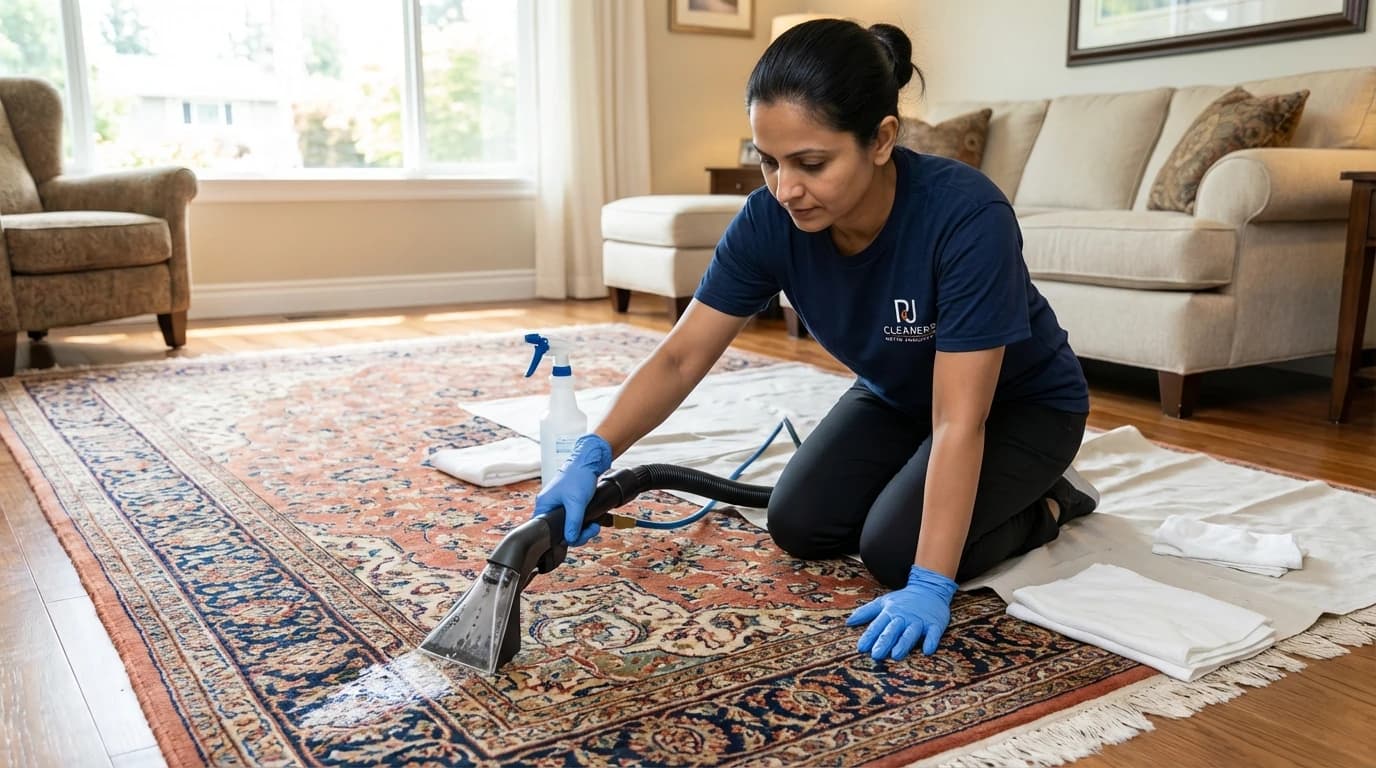
Apply baking soda liberally across carpet surfaces after initial vacuuming, using approximately 500g per 10 square metres of carpeting. Allow the baking soda to sit for 12-24 hours to absorb residual odours from carpet fibres and underlying padding. Vacuum thoroughly to remove all baking soda residue, as leftover powder can attract moisture and create musty odours. For persistent smoke smells, consider professional hot water extraction cleaning that injects cleaning solution deep into carpet backing and extracts contaminated water along with embedded particles. Metro Vancouver carpet cleaning specialists report that smoke-affected carpets require extraction temperatures above 80°C to break down odour-causing compounds effectively.
Upholstered furniture demands different treatment approaches depending on fabric type and manufacturer care codes. Vacuum all surfaces using upholstery attachments, paying special attention to crevices, seams, and tufted areas where smoke particles concentrate. Fabric marked with 'W' cleaning codes can tolerate water-based cleaners; apply upholstery shampoo according to product directions, working in small sections and extracting moisture with clean towels. 'S' coded fabrics require solvent-based cleaners available from professional suppliers. Leather and vinyl surfaces clean easily with damp cloths and pH-neutral cleaners, though smoke can penetrate stitching and seams requiring specialized leather conditioning treatments to prevent drying and cracking from chemical exposure.
- Steam clean carpets only after smoke odours are reduced through dry methods; moisture can activate dormant odours
- Remove couch cushions and vacuum both sides plus the deck beneath where particles accumulate heavily
- Consider professional ozone treatment for furniture with persistent odours that resist standard cleaning methods
- Test all cleaning solutions on hidden fabric areas to check for colour bleeding or texture damage
Pro Tip
Sprinkle activated charcoal powder on upholstery overnight before vacuuming. Charcoal absorbs 10 times more odour molecules than baking soda and works effectively on smoke-damaged fabrics.
Air Quality Restoration and Long-Term Prevention
Maintaining clean indoor air after initial cleanup requires ongoing filtration, humidity control, and preventive measures to protect against future wildfire smoke events.
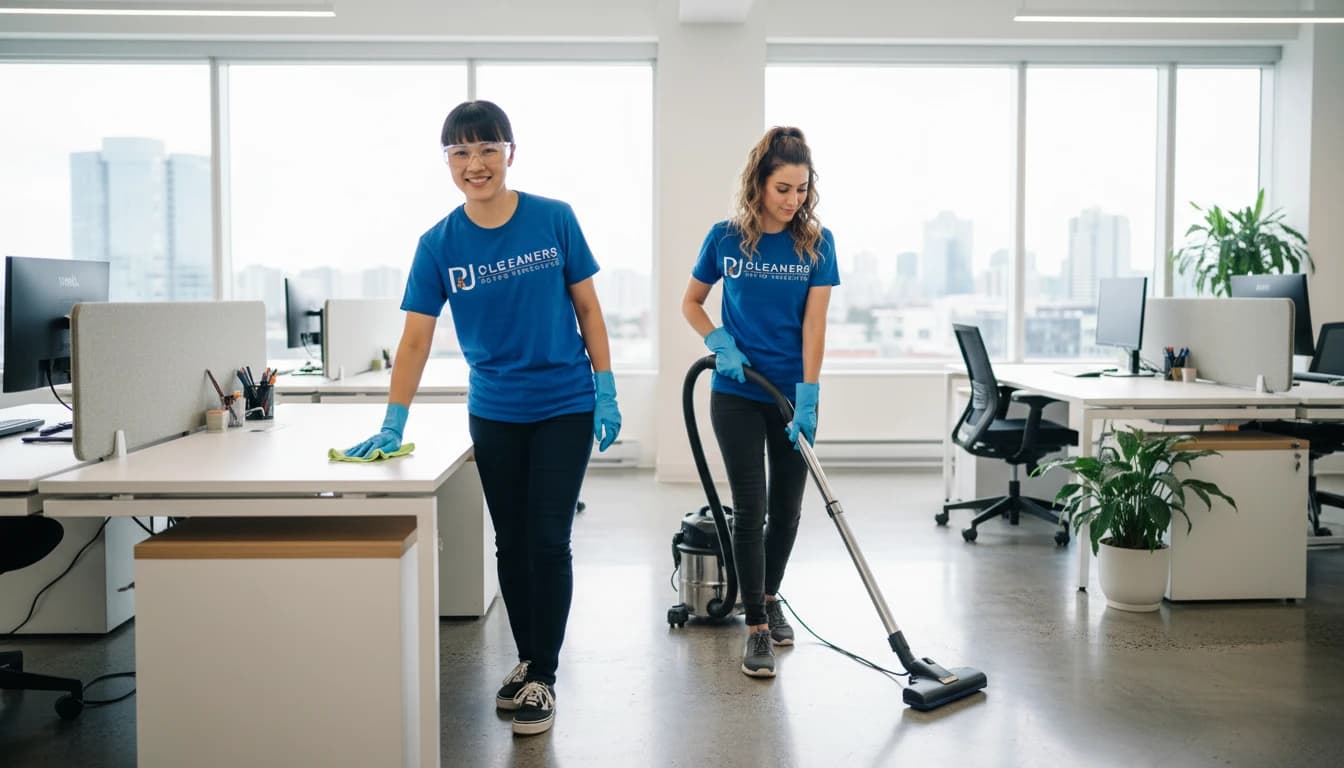
Install portable HEPA air purifiers rated for your room square footage, calculating coverage by multiplying room length by width in metres. Select units with Clean Air Delivery Rate (CADR) ratings above 200 for bedrooms and 300+ for living areas to ensure adequate air circulation and particle capture. Position purifiers away from walls and furniture to maximize airflow, running them continuously on medium settings during smoke season from June through September. Environment Canada data shows that properly sized HEPA purifiers reduce indoor PM2.5 concentrations by 60-80% within 4 hours of continuous operation, providing significant health protection during extended smoke events.
Monitor indoor humidity levels using digital hygrometers, maintaining relative humidity between 30-50% to prevent mould growth while optimizing air quality. Smoke-damaged homes often experience humidity fluctuations as ventilation patterns change during cleanup. Use dehumidifiers in basements and bathrooms where moisture accumulates, and consider whole-home humidification systems if indoor air becomes excessively dry from extended HEPA purifier operation. The BC Health Authority notes that humidity below 30% can irritate respiratory systems already stressed by smoke exposure, while levels above 60% promote mould growth that compounds indoor air quality problems.
Develop a smoke preparedness plan for future wildfire seasons by creating a home sealing checklist and emergency supply kit. Identify air leakage points around windows, doors, and utility penetrations, sealing gaps with weatherstripping or caulking to reduce smoke infiltration during active fire events. Stock extra HVAC filters rated MERV 13 or higher, along with N95 respirator masks for outdoor activities during poor air quality days. The City of Vancouver recommends creating a designated clean room with portable air purification where household members can retreat during severe smoke events, reducing overall exposure and simplifying post-event cleanup by limiting contamination to specific areas.
- Replace HVAC filters every 30 days during active smoke season instead of standard 90-day intervals
- Schedule annual duct cleaning before wildfire season to remove accumulated debris that can harbour smoke particles
- Install window air quality monitors that alert you when outdoor conditions improve enough for safe ventilation
- Keep windows closed and run air conditioning on recirculation mode during smoke events to minimize infiltration
Pro Tip
Create a smoke response kit containing extra HEPA filters, microfibre cloths, N95 masks, and baking soda. Store it in an accessible location so you can respond immediately when air quality deteriorates.
When to Call Professional Smoke Restoration Services
Severe smoke infiltration, persistent odours, or health symptoms indicate the need for professional assessment and restoration beyond standard homeowner cleanup capabilities.
Professional intervention becomes necessary when smoke odours persist for more than one week despite thorough cleaning and ventilation efforts. Lingering smells indicate that smoke particles have penetrated deep into building materials, HVAC systems, or wall cavities where homeowner cleaning methods cannot reach. Restoration specialists use thermal fogging, ozone generators, and hydroxyl generators to neutralize odours at the molecular level, breaking down chemical compounds that cause persistent smells. Metro Vancouver restoration companies report average treatment costs of $300-$800 for residential smoke remediation, with pricing varying based on home size, contamination severity, and required equipment deployment duration.
Visible smoke staining on ceilings, walls, or around air vents signals heavy infiltration requiring professional assessment. These stains indicate that smoke concentration exceeded normal levels, potentially depositing harmful residues throughout the home's structure. Professional restoration includes duct cleaning, insulation inspection, and specialized surface treatments using commercial-grade cleaning agents not available to consumers. WorkSafeBC guidelines recommend professional evaluation when smoke exposure causes respiratory symptoms like persistent coughing, throat irritation, or breathing difficulty that continues after outdoor air quality returns to normal levels, as these symptoms may indicate ongoing indoor contamination.
Insurance coverage for smoke damage varies by policy type and contamination source. Review your homeowner's insurance policy for smoke damage provisions, noting that some insurers cover wildfire smoke remediation while others exclude it as an environmental hazard. Document all cleanup efforts with photos, receipts, and detailed notes about affected areas and cleaning methods attempted. Professional restoration companies provide detailed invoices and contamination reports that support insurance claims, increasing approval likelihood. Statistics Canada reports that 23% of Metro Vancouver homeowners filed insurance claims related to smoke damage during the 2023 wildfire season, with average payouts of $2,400 for covered remediation services.
- Request multiple quotes from IICRC-certified restoration companies before committing to services
- Ask about guarantee periods for odour elimination; reputable companies offer 30-90 day satisfaction guarantees
- Verify that restoration companies carry liability insurance and WorkSafeBC coverage before allowing work to begin
- Schedule professional duct cleaning if you notice reduced airflow or musty odours when HVAC systems operate
Pro Tip
Contact P&J Cleaners for emergency smoke cleanup assessment within 48 hours of smoke exposure. Early professional intervention prevents permanent odour bonding and reduces overall restoration costs by 40-60%.
Related resources
Step-by-Step
7-Step Wildfire Smoke Cleanup Process
Follow this systematic approach to remove smoke contamination and restore healthy indoor air quality in your Vancouver home.
Assess Air Quality and Begin Ventilation
Check outdoor air quality using Environment Canada's AQHI or IQAir monitoring apps before opening windows. Wait until AQHI drops to 3 or lower before beginning ventilation. Create cross-ventilation by opening windows on opposite sides of your home and positioning box fans to exhaust indoor air outward. Run ventilation for 2-4 hours, monitoring indoor temperature. This initial air exchange removes the highest concentration of airborne particles and prepares surfaces for cleaning.
- Check AQHI rating and confirm outdoor air quality is safe for ventilation
- Open windows on opposite sides of home to create cross-flow ventilation
- Position box fans in windows facing outward to exhaust contaminated indoor air
- Run ventilation cycle for 2-4 hours while monitoring indoor temperature
- Close windows once initial air exchange is complete
Replace HVAC Filters and Inspect Ductwork
Turn off HVAC system and remove existing air filters, which are now saturated with smoke particles. Inspect filters for visible discolouration or residue accumulation. Install new MERV 13-16 rated filters capable of capturing 85-95% of PM2.5 particles. Check air intake vents and return ducts for visible smoke residue, wiping surfaces with damp microfibre cloths before reinstalling upgraded filters. Document filter condition with photos for potential insurance claims.
- Turn off HVAC system at thermostat and circuit breaker
- Remove and inspect existing filters for smoke contamination
- Purchase and install MERV 13-16 rated replacement filters
- Wipe visible residue from vent openings using damp microfibre cloths
- Restart HVAC system and verify proper airflow through new filters
Clean Hard Surfaces with Damp Microfibre Method
Prepare cleaning solution using pH-neutral all-purpose cleaner diluted according to manufacturer specifications. Use damp microfibre cloths to wipe all hard surfaces including countertops, tables, window sills, door frames, and baseboards. Work in small sections using overlapping strokes, rinsing cloths frequently in clean water to prevent residue redistribution. Never use dry dusting methods that launch particles back into the air. Pay special attention to horizontal surfaces where smoke particles settle most heavily.
- Mix pH-neutral cleaning solution in bucket according to product directions
- Dampen microfibre cloths in cleaning solution and wring out excess water
- Wipe all hard surfaces using overlapping strokes in small sections
- Rinse cloths frequently in clean water to remove accumulated residue
- Dry surfaces with clean towels to prevent water spots and streaking
Vacuum Carpets and Upholstery with HEPA Filtration
Use HEPA-filtered vacuum cleaner to remove smoke particles from carpets, rugs, and upholstered furniture. Make 7-10 slow passes over each carpet section to maximize particle extraction from fibres. Remove couch cushions and vacuum both sides plus the deck beneath where particles accumulate. Use upholstery attachments for furniture, focusing on crevices, seams, and tufted areas. Empty vacuum canister or replace bag after each room to prevent particle recirculation.
- Verify vacuum has HEPA filtration before beginning carpet cleaning
- Make 7-10 slow passes over each carpet section for thorough particle removal
- Remove and vacuum both sides of couch cushions and furniture deck
- Use upholstery attachments to clean furniture crevices and seams
- Empty vacuum canister or replace bag after completing each room
Treat Fabrics and Soft Furnishings
Remove washable fabric items including curtains, throw pillows, and bedding for immediate laundering. Wash using hot water cycles above 60°C with oxygen-based detergent boosters to break down smoke compounds. Apply baking soda liberally across remaining carpet surfaces, using 500g per 10 square metres. Allow baking soda to sit for 12-24 hours to absorb residual odours before vacuuming thoroughly. Consider professional steam cleaning for non-washable upholstery or carpets with persistent odours.
- Remove all washable curtains, bedding, and throw pillows for laundering
- Wash fabric items in hot water above 60°C with oxygen-based detergent
- Apply baking soda across carpet surfaces at 500g per 10 square metres
- Allow baking soda treatment to sit for 12-24 hours before vacuuming
- Schedule professional cleaning for non-washable items with persistent odours
Deploy HEPA Air Purifiers and Monitor Air Quality
Position portable HEPA air purifiers in bedrooms and main living areas, selecting units with CADR ratings appropriate for room square footage. Place purifiers away from walls and furniture to maximize airflow circulation. Run purifiers continuously on medium-high settings for 48-72 hours to capture remaining airborne particles. Monitor indoor air quality using portable PM2.5 monitors, targeting readings below 12 micrograms per cubic metre for healthy indoor conditions.
- Calculate room square footage to select appropriately sized air purifiers
- Position HEPA purifiers away from walls for optimal air circulation
- Run purifiers continuously on medium-high settings for 48-72 hours
- Monitor indoor PM2.5 levels using portable air quality monitors
- Adjust purifier settings based on air quality readings until targets are met
Conduct Final Inspection and Preventive Maintenance
Perform thorough inspection of all cleaned areas, checking for remaining visible residue or persistent odours. Test air quality in multiple rooms using smell tests and PM2.5 monitors. Wipe any missed surfaces and re-vacuum areas showing residual contamination. Establish ongoing maintenance schedule including weekly HEPA filter checks, monthly HVAC filter replacement during smoke season, and annual duct cleaning. Document cleanup completion with photos and notes for future reference.
- Inspect all cleaned surfaces for remaining visible residue or odours
- Test indoor air quality in multiple rooms using monitors and smell tests
- Re-clean any areas showing residual smoke contamination
- Create maintenance schedule for filters, purifiers, and duct cleaning
- Document cleanup completion with photos and detailed notes
Services mentioned in this article
Ready for help?
4.9 · 850+ Google reviewsProfessional Wildfire Smoke Restoration
Our emergency cleaning team uses hospital-grade HEPA equipment and proven smoke removal protocols to restore your home's air quality within 24-48 hours. Fully insured service with our satisfaction guarantee.
778-720-2224Wildfire Smoke Cleanup Questions
How to clean after wildfire smoke?
Start by ventilating your home with outdoor air when air quality improves to AQI below 50. Replace all HVAC filters with MERV 13 or higher rated filters. Vacuum all surfaces using HEPA filtration, then wet-wipe walls, ceilings, and furniture with microfibre cloths and pH-neutral cleaners. Launder all textiles in hot water and steam-clean upholstery and carpets to remove embedded particulates.
How to remove smoke smell from house?
Eliminate smoke odour by washing all hard surfaces with a solution of one part white vinegar to four parts water. Place activated charcoal or baking soda in open containers throughout affected rooms for 48-72 hours to absorb odours. Run HEPA air purifiers continuously for at least one week. For persistent smells, hire professionals to apply ozone treatment or thermal fogging, which neutralizes odour molecules at the molecular level.
Is wildfire smoke harmful indoors?
Wildfire smoke contains PM2.5 particulates that penetrate deep into lungs and enter the bloodstream. According to BC Health Authority data, indoor PM2.5 levels can reach 35-150 μg/m³ during wildfire events, far exceeding the safe threshold of 12 μg/m³. Prolonged exposure increases respiratory infections by 23% and aggravates asthma, COPD, and cardiovascular conditions. Children, elderly residents, and those with pre-existing conditions face the highest risk.
How to clean air quality after smoke?
Improve indoor air quality by running portable HEPA air purifiers rated for your room size, targeting 4-5 air changes per hour. Keep windows closed when outdoor AQI exceeds 50 and use exhaust fans sparingly. Replace HVAC filters every 30 days during wildfire season instead of the standard 90 days. Monitor indoor air quality with a PM2.5 sensor and maintain levels below 12 μg/m³ for safe breathing conditions.
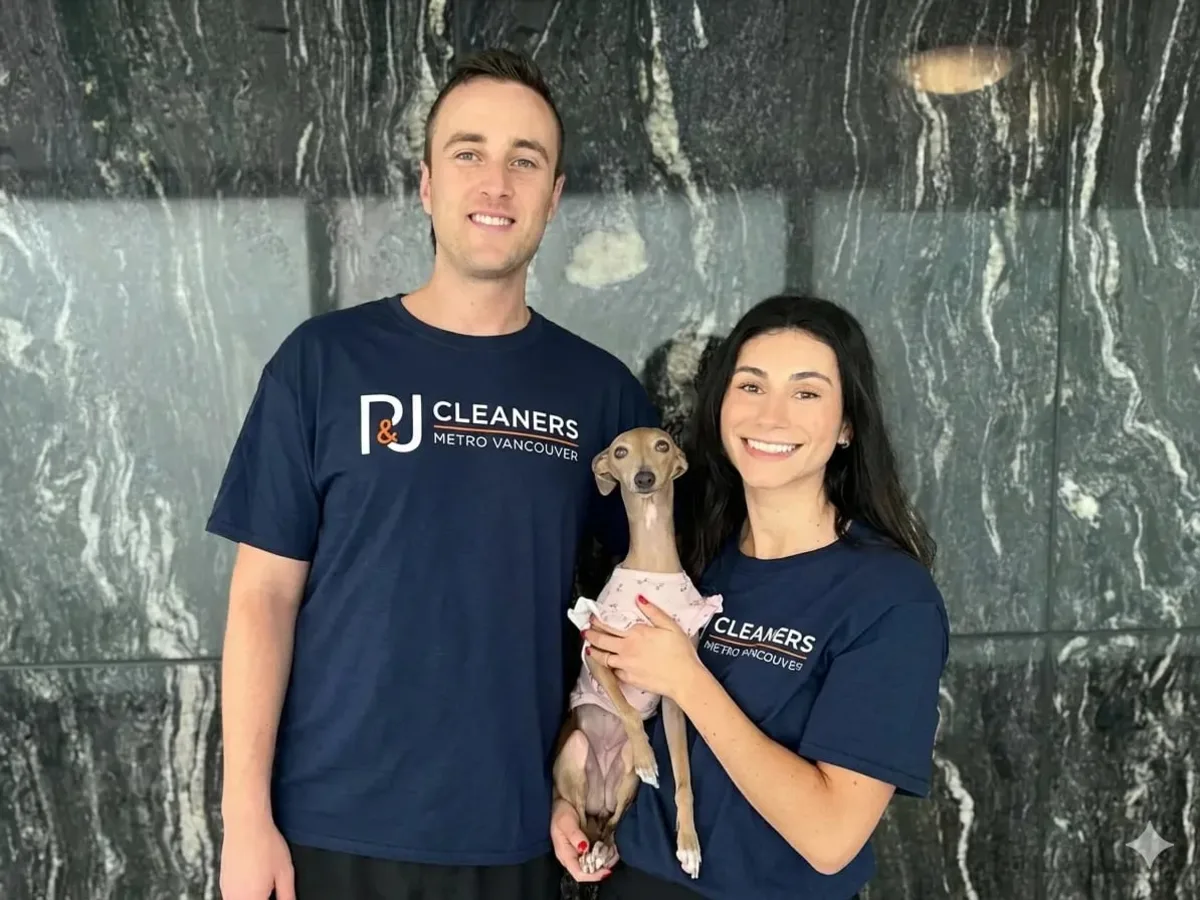
Meet the Author
Pamela
Co-Founder
Pamela leads residential quality standards at P&J Cleaners, refining safe, detail-driven cleaning systems for Vancouver homes, condos, and move-out projects.
Keep Exploring