

Quick answer
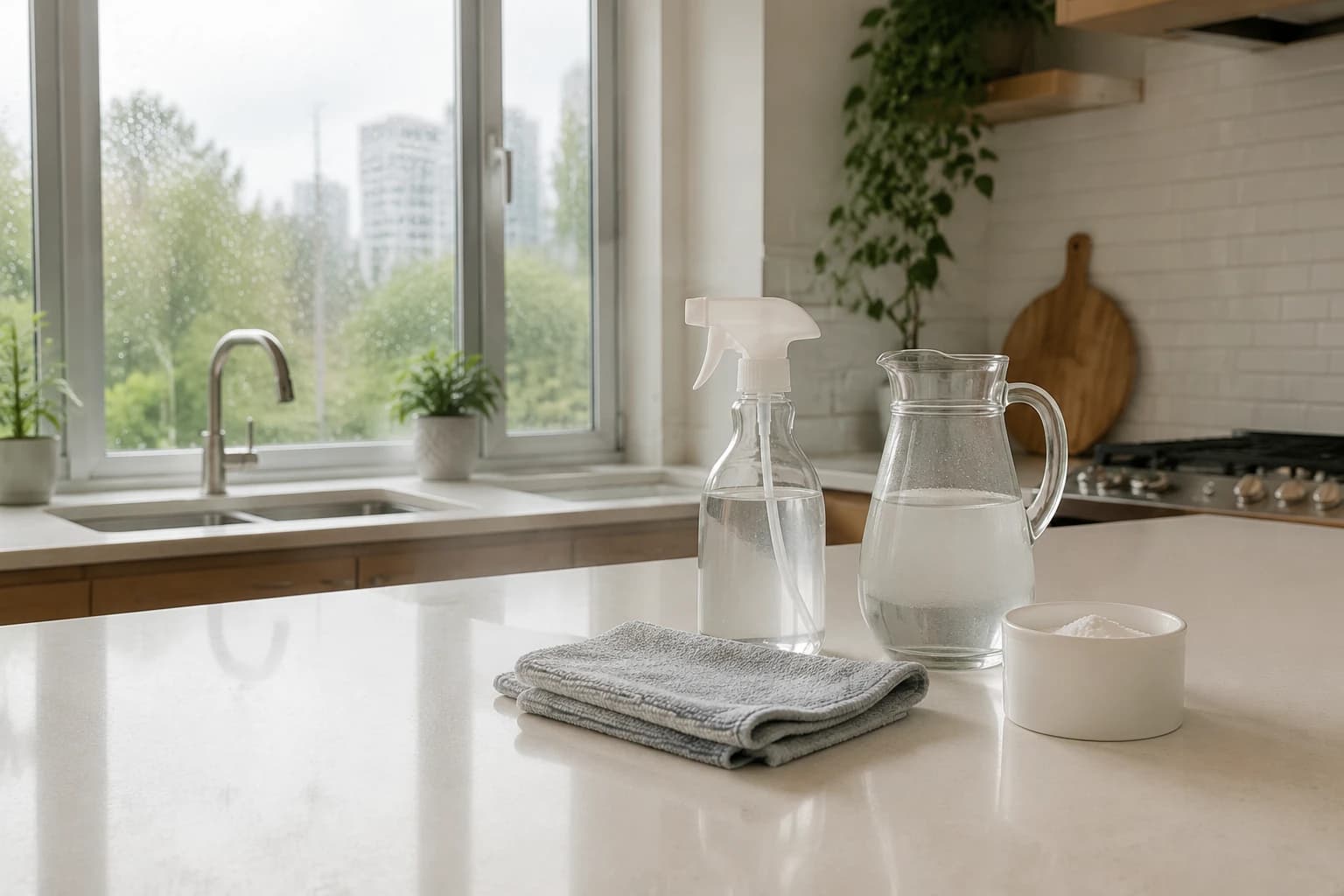
Homemade cleaning solutions work for three jobs: white vinegar dissolves mineral scale, baking soda scours grease, and dish soap lifts everyday soil into water. Used separately they clean well. They cannot disinfect, because that claim requires Health Canada approval, and they cannot fix mould that ongoing moisture keeps feeding.

Key Takeaways
- 1Vinegar and baking soda mixed in a bottle mostly neutralise each other: the reaction leaves water, carbon dioxide and sodium acetate, and more than 99% of the added baking soda is still sitting there unreacted.
- 2Cleaning and disinfecting are different claims. In Canada, only products assessed by Health Canada and issued a Drug Identification Number may advertise that they kill germs.
- 3Health Canada's rule is absolute: never mix any cleaning product with household bleach, including vinegar, since acids and ammonia both react with bleach to release toxic gas.
- 4Acidic cleaners permanently etch marble, limestone and travertine. The Natural Stone Institute recommends a neutral cleaner or mild dish detergent in warm water instead.
- 5HealthLinkBC's threshold for do-it-yourself mould removal is one metre square. Anything larger may need special training or commercial cleaning products, which is remediation work rather than a cleaning visit.
- 6For smooth mouldy surfaces the province's actual instruction is detergent and water, not vinegar, with gloves and an N95 mask.
- 7Vancouver International Airport records precipitation on about 169.5 days a year, which is why sill and bathroom mould here is a moisture problem first and a cleaning problem second.
What homemade cleaning solutions actually do
Three mechanisms explain almost every DIY recipe on the internet. Once you know which one you need, the recipe writes itself and most of the folklore falls away.
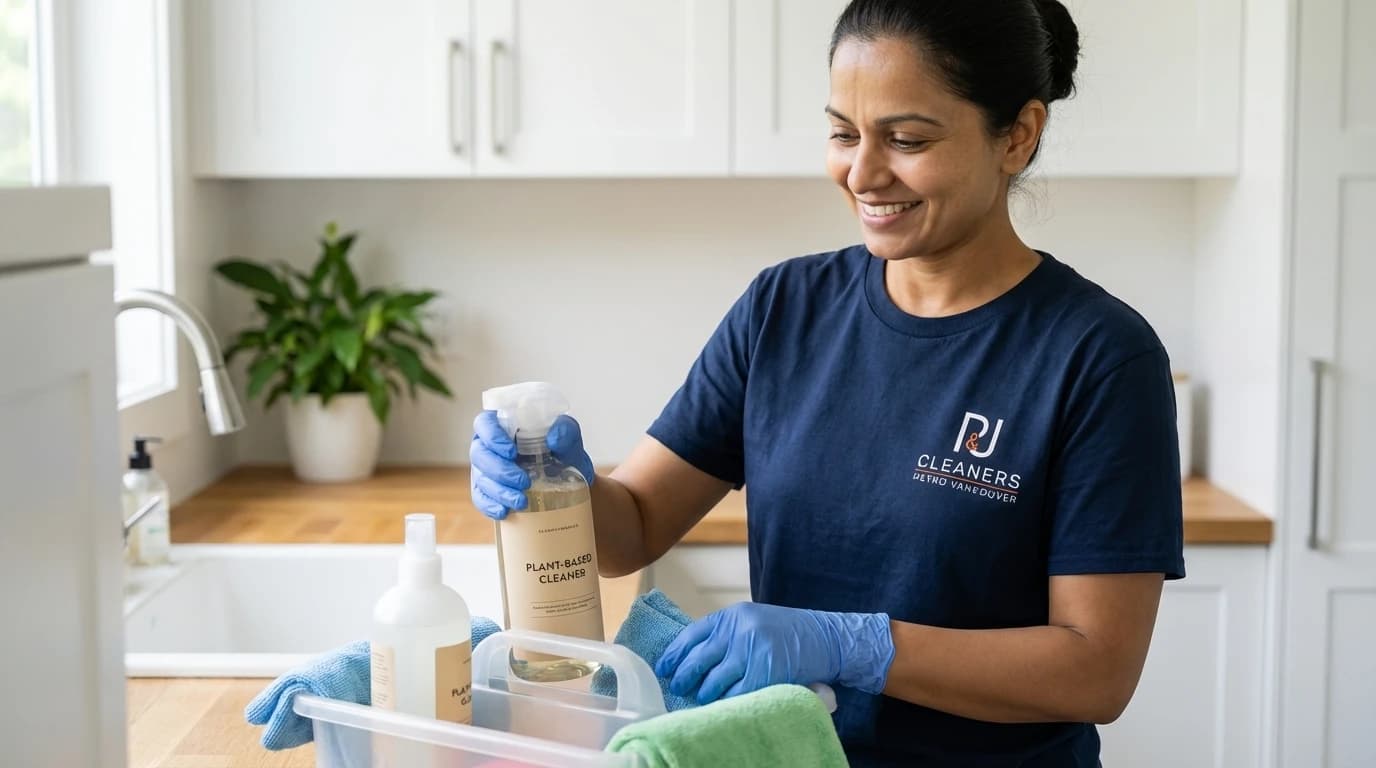
Strip away the mason jars and the essential oils, and homemade cleaning solutions come down to exactly three mechanisms. Acids dissolve minerals, so white vinegar takes limescale off a kettle element and hard water film off shower glass. Alkalis break down fats and oils and give you something gritty to scrub with, which is baking soda's entire job. Surfactants surround greasy soil and let water carry it away, which is what dish soap does in every sink in the country.
Almost every recipe you will find is one of those three wearing a costume, which means you can reason your way to the right one instead of trusting a stranger's ratio. Grease on the range hood is an alkali job. White crust around the tap is an acid job. A sticky handprint on a cabinet door is a surfactant job.
The part almost no recipe post mentions is the line between cleaning and disinfecting. Cleaning physically removes soil and most of the microbes riding on it. Disinfecting means killing a defined set of organisms at a defined concentration for a defined contact time. In Canada, a product may only advertise that it kills germs if Health Canada has assessed it and issued a Drug Identification Number. Your spray bottle of diluted vinegar has no DIN, no tested contact time, and no business being called a disinfectant. It is a cleaner, and for most of a healthy home a good cleaner is what you actually need. We use the same reasoning on every job we take: remove the soil properly, and reserve registered disinfectants for the surfaces that genuinely warrant them.
That distinction is where most green-cleaning folklore falls apart. We sorted the claims that hold up from the ones that do not in green cleaning myths debunked.
- White vinegar (5% acetic acid): mineral scale, hard water film, and the kettle and shower glass deposits that nothing else shifts.
- Baking soda: baked-on grease, scuffed sinks, deodorising bins and fridges when left dry in an open dish.
- Liquid dish soap: the workhorse for everyday soil on almost every washable surface, including sealed stone, where vinegar should never go.
- 3% hydrogen peroxide: whitening grout haze and lifting organic stains, stored in its original dark bottle because light degrades it quickly.
- 70% isopropyl alcohol: fast-drying wipe-down for glass, chrome and electronics housings where you do not want water sitting. It is flammable, so use it in a ventilated room and keep it away from any open flame.
Pro Tip
Buy plain white vinegar rather than cleaning vinegar unless you know what you are handling. Cleaning vinegar is sold at a higher acetic acid concentration than the 5% household kind, which means more etching risk on the surfaces below and a sharper smell in an unventilated bathroom. Everything here assumes plain 5% white vinegar.
Why vinegar and baking soda mostly cancel each other out
The most-shared homemade cleaning recipe on the internet is also the weakest. The fizz is not cleaning power, and understanding the reaction changes how you use both ingredients.
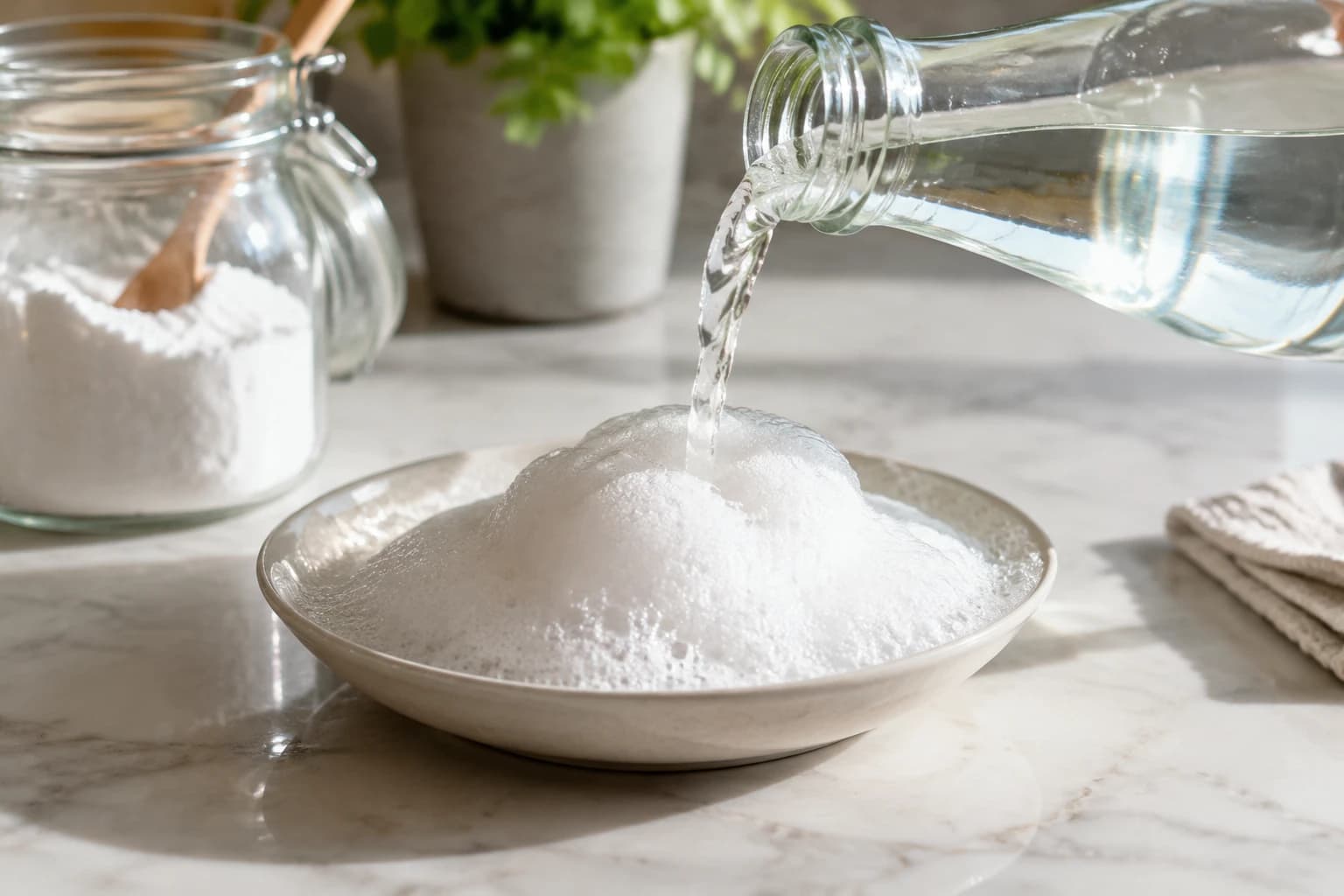
Pour vinegar onto baking soda and you get a dramatic foam. It looks like something powerful is happening. Chemically, the acid and the base are neutralising each other, and the products are water, carbon dioxide gas and sodium acetate. As chemist Nathan Kilah explained in an analysis of the reaction for The Conversation, sodium acetate is an even weaker base than baking soda, so it does very little cleaning work of its own.
There is a second detail worth knowing. Most recipes use far more baking soda than the vinegar can react with, so after the fizz subsides more than 99% of the added baking soda is still sitting there unreacted. That is why the paste still works when you scrub with it: you are cleaning with leftover baking soda and elbow grease, not with the reaction. The bubbles were theatre.
So use them in sequence, never premixed in a storage bottle. A jar of vinegar and baking soda left on a shelf is a jar of weak salt water. Scrub with a baking soda paste first, rinse it, then follow with vinegar on the mineral deposits that survived. Two passes, two different chemistries, both intact.
The one place the fizz genuinely earns its keep is a sluggish kitchen drain, where the gas physically agitates soft buildup inside the pipe. Skip it entirely if a commercial drain product has gone down that drain recently, since it can still be sitting in the trap and vinegar has no business meeting it. Even when it is safe, a run of hot water afterwards does most of the useful work. If you want the full picture on each ingredient on its own, we broke them down in what vinegar actually cleans and where baking soda earns its place.
Pro Tip
If you insist on using both together on a stubborn spot, first confirm the surface is not marble, limestone, travertine or unsealed grout, then apply them directly and start scrubbing while it is still fizzing. The mechanical agitation is the only benefit on offer, and it is gone almost as fast as the foam.
Four homemade cleaning solutions worth mixing
Single-agent recipes with exact dilutions and the dwell times nobody bothers to mention. Each one solves a specific problem rather than promising to do everything.
A good homemade all purpose cleaner recipe is boring by design. One active ingredient, water, and a clear job. The recipes below are the four we would actually keep under a sink, with the dwell times that make the difference between wiping soil around and removing it.
Mix small batches. Diluted dish soap and hydrogen peroxide both lose effectiveness quickly, and a jug of homemade spray from six months ago is a science experiment. Label every bottle with what is in it and the date you mixed it, because an unlabelled spray bottle is how the wrong two products end up on the same surface.
- Everyday all-purpose spray: one teaspoon of liquid dish soap in 500 ml of warm water. Spray, wait sixty seconds, wipe with a damp microfibre cloth, then buff dry. Safe on sealed stone, painted walls, appliance exteriors and cabinet fronts.
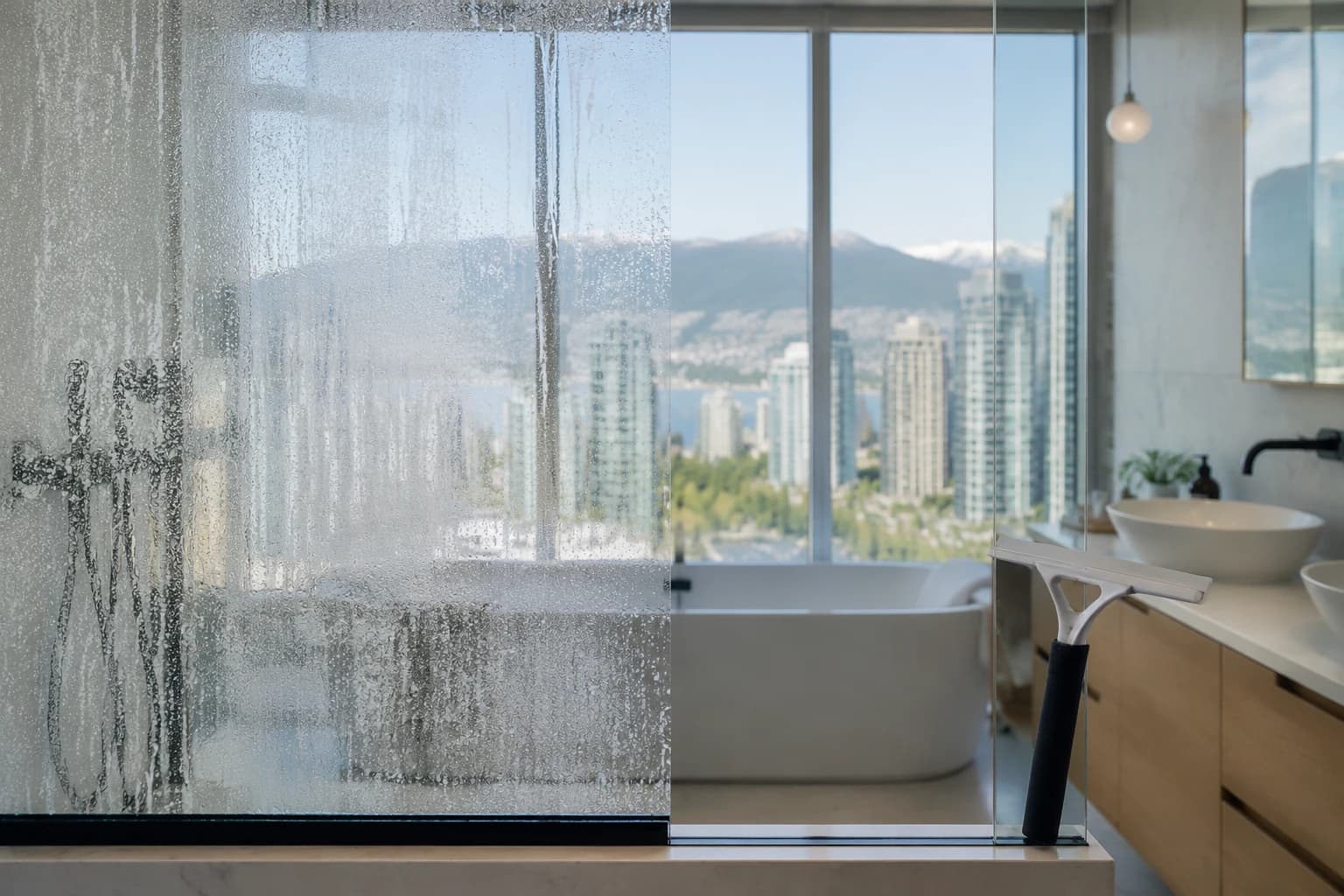
- Hard water and shower glass: equal parts white vinegar and warm water in a spray bottle. Spray the glass, leave it five to ten minutes so the acid has time to work on the deposits, then squeegee top to bottom. Rinse the frame and any fittings afterwards so acid does not sit on metal or seals. For heavier build-up, see our hard water stain guide.
- Grease paste for range hoods and stovetops: three tablespoons of baking soda with just enough water to make a spreadable paste. Spread it, leave it fifteen minutes, then work it with a non-scratch pad and rinse thoroughly. Repeat rather than pressing harder.
- Streak-free glass and mirrors: 250 ml water, 250 ml white vinegar and a single drop of dish soap to break the surface tension. Spray the cloth rather than the mirror, so nothing runs into the edges where it can work under the silvering. Apply with one microfibre cloth, dry with a second, and do it out of direct sunlight so it does not flash-dry into streaks.
Pro Tip
Dwell time beats pressure on every one of these. The reason a professional finish looks different is rarely a stronger product, it is that the product was allowed to sit and do its chemistry before anyone picked up a cloth.
What never to mix, and the surfaces DIY quietly ruins
Two categories of damage: the fast kind that sends you to the emergency room, and the slow kind you only notice under a certain angle of light six months later.
Start with the non-negotiable. Health Canada's advisory on household cleaners is blunt: never mix any cleaning product with household bleach. Bleach reacts with anything containing ammonia or an acid, and that includes the vinegar you just bought for the shower glass. The result is chloramine or chlorine gas in an enclosed bathroom. Health Canada's public advisory on mixing bleach also asks you to ventilate during and after using any cleaning product: open windows or doors, run the exhaust fan. Worth doing even on a rainy Tuesday in November.
The slower damage is the one that costs money. Acids etch calcareous stone, meaning marble, limestone, travertine and onyx. The Natural Stone Institute's care guidance states plainly that products containing lemon, vinegar or other acids may dull or etch these stones, and recommends a neutral cleaner, stone soap or mild liquid dishwashing detergent in warm water instead. Etching is not a stain sitting on top of the surface. It is the polish physically dissolved away, and no amount of rewashing brings it back.
Granite is more forgiving than marble, but repeated vinegar contact still degrades the sealer that keeps oil and wine out of the stone. If you are not certain what your counter is, treat it as marble until proven otherwise. Warm water and a drop of dish soap will never be the wrong answer.
- Never mix: bleach with vinegar, bleach with ammonia or glass cleaner, bleach with any other product at all. Rinse a surface fully before switching products.
- Never spray vinegar on: marble, limestone, travertine, onyx, unsealed grout, waxed or oiled wood, cast iron, natural stone floors, or the rubber seals around appliance doors.
- Go easy on hydrogen peroxide near coloured grout and dyed fabric, and never store it in a clear bottle where light will break it down.
- Keep alcohol away from shellac and lacquer finishes on older furniture, where it lifts the finish rather than the dirt.
- Label everything. Two unlabelled bottles under one sink are how a safe cupboard becomes a dangerous one.
Pro Tip
The safest habit in the whole cupboard is a single-product rule: use one product on a surface, rinse it fully with clean water, then move on. Layering products in an enclosed bathroom is where most household chemical incidents start.
Does vinegar kill mould? What Vancouver damp actually needs
The most-searched homemade cleaner question in this city, and the one where DIY advice diverges furthest from what the province actually recommends.
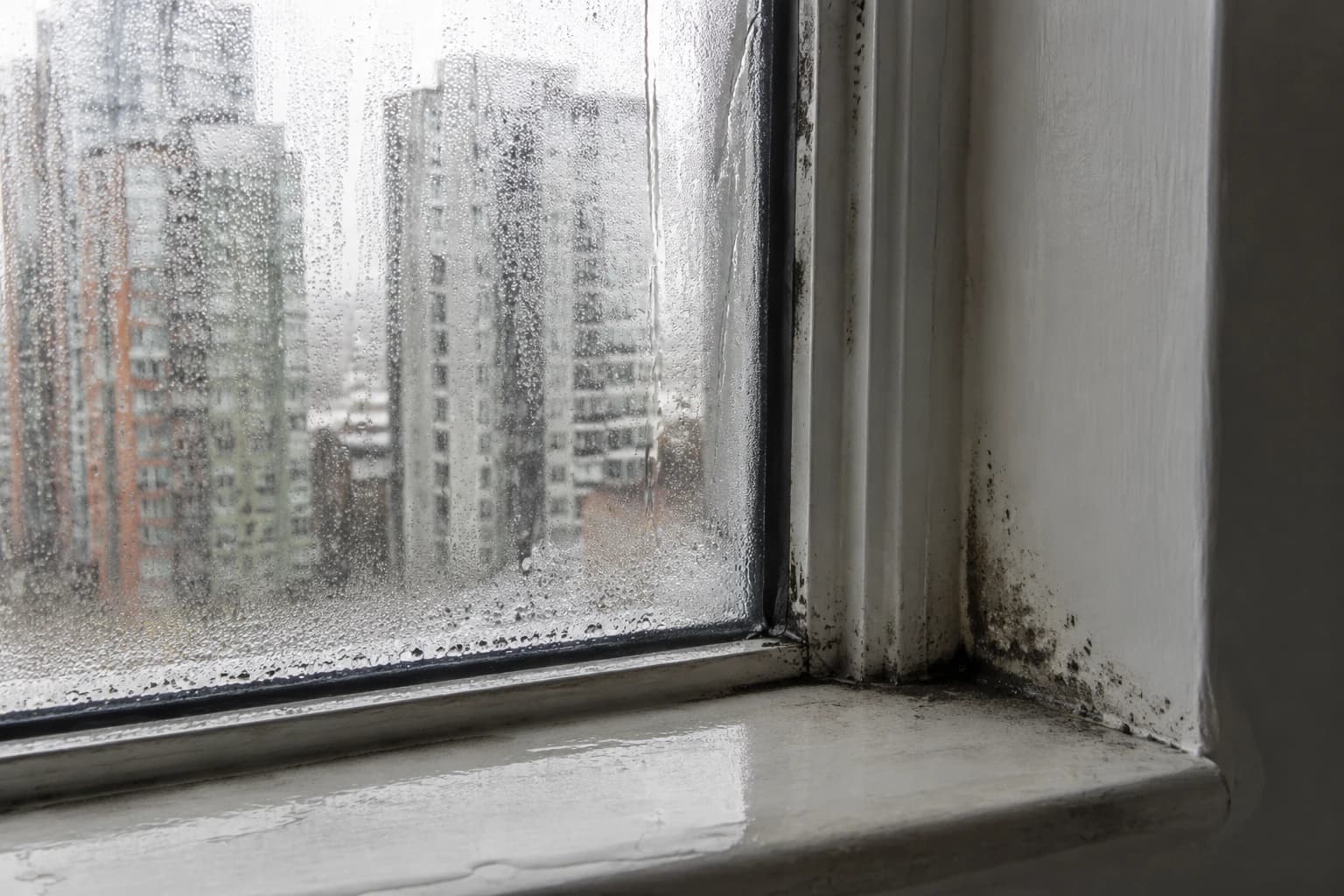
Vinegar has genuine antifungal activity, and on a light bloom of surface mildew on a bathroom tile it will do a reasonable job. That is not the same as saying it solves mould. Mould in a Vancouver home is almost never a cleaning problem in isolation. It is a moisture problem that shows up as a cleaning problem.
The mechanism here is specific to our climate. Environment and Climate Change Canada's climate normals for Vancouver International Airport record measurable precipitation on roughly 169.5 days a year, with November the wettest month. Through those months, HealthLinkBC notes that large differences between inside and outside temperatures cause water to condense on windows, which is precisely why mould appears on the framing and sills first. Older aluminum-framed windows in Kitsilano, Mount Pleasant and the West End are textbook cases, and shaded homes under tree cover in North Vancouver hold that damp longer because they get less drying sun.
Here is where the internet and the province disagree. HealthLinkBC's indoor air quality file on mould sets the do-it-yourself limit at one metre square, with gloves and an N95 mask. For anything under that, it says to clean all smooth surfaces with mould growth using detergent and water. Not vinegar. Not bleach. Detergent and water, with proper protection, because the goal is physical removal of the growth rather than a chemical kill that leaves the spores in place. The US Environmental Protection Agency gives a similar hard-surface instruction and puts its own do-it-yourself ceiling at roughly ten square feet.
Above that one metre square line, the province hands the job to trained remediators for a reason. Anything larger usually means water is getting in somewhere, and scrubbing the visible patch treats the symptom while the cause keeps working behind the drywall. Our mould and mildew removal guide walks through the assessment in more detail.
Whatever you clean, fix the moisture or you will be back with the same cloth in six weeks. Run the bathroom fan well past the end of the shower rather than switching it off at the door, confirm your dryer vents outside rather than into the crawlspace, and keep a dehumidifier running through the wet season in a suite that never quite dries out.
- Under one metre square, on a smooth surface, with gloves and an N95 mask: detergent and water, then dry the area completely.
- Dry water-damaged materials within 24 hours or plan to replace them, since porous materials do not recover once growth is established.
- Porous mouldy material such as ceiling tiles or drywall gets removed, not scrubbed. Cleaning a mouldy drywall surface leaves the growth inside the board.
- Recurring mould in the same spot after cleaning means the moisture source is still active. That is an inspection job, not a stronger spray.
When to stop scrubbing and call a professional cleaner
A set of specific triggers where more DIY effort produces less result, and what a professional visit actually changes.
Homemade cleaning solutions handle maintenance beautifully. Where they run out of road is accumulated buildup, scale, height, deadlines and volume. A weekly wipe-down keeps a surface at its current standard. It does not reset that standard, and no ratio of vinegar to water will.
The practical test is whether repetition is still improving things. If the third pass looks identical to the second, you have hit the ceiling of what surface chemistry and a cloth can do, and the rest needs a different chemistry, a different tool, or more time than a Saturday holds.
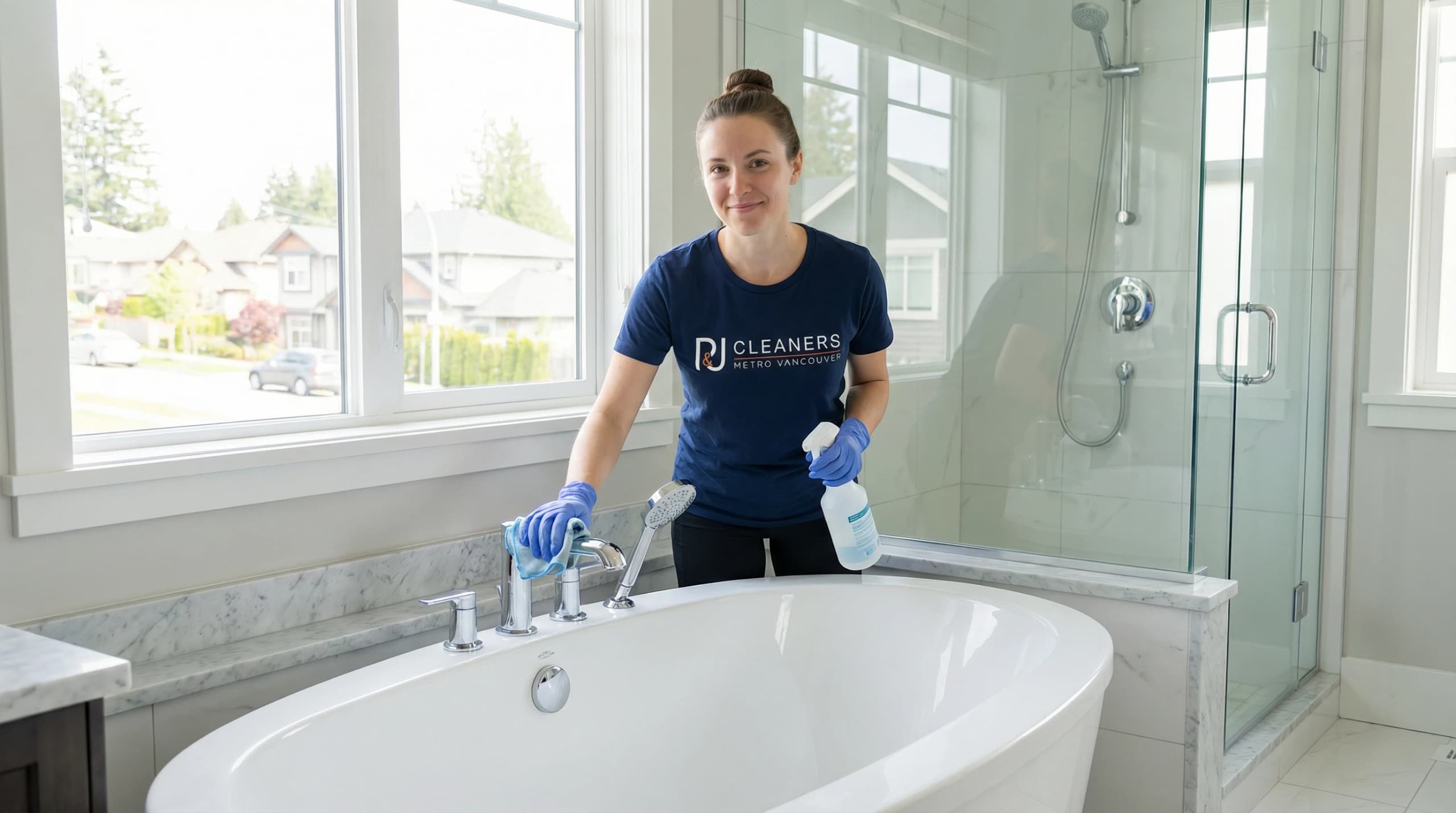
That is the point where booking a professional deep cleaning makes sense. A deep clean works through the parts of a home that maintenance cleaning never reaches: baseboards, door frames, light switches, window tracks, tile and grout lines, behind and under appliances, and the top edges of everything. If your reason for going homemade was avoiding harsh chemistry rather than avoiding cost, that does not have to change when you hand it over. Our eco cleaning service works from the same low-toxicity principles, with the kit and the patience the job actually takes.
It is also worth being honest about time. A full deep clean of a two-bedroom Vancouver condo is a genuine day of work for someone who does it professionally, and considerably longer for someone who does not. Doing it yourself is a legitimate choice. Doing it yourself on a move-out deadline, the week you also need to pack, usually is not.
- Mould covering more than one metre square, or returning in the same place after you have cleaned it properly. That one goes to a mould remediation specialist, along with somebody who can trace where the water is getting in.
- A move-out or end-of-tenancy deadline where the standard is somebody else's judgement and your deposit is the stake.
- Buildup that has been accumulating for years, particularly kitchen grease film on cabinet tops and range hoods.
- Anything requiring a ladder, working over stairwells, or reaching exterior glass above the ground floor.
- Post-renovation dust, which is fine enough to abrade surfaces and travel through a whole home. Wiping it with a damp cloth tends to spread it rather than remove it.
- Allergy or asthma in the household, where thorough removal matters more than a pleasant scent.
Pro Tip
Before you book anything, do one room properly and time it, start to finish, including the redo of the bits that did not come up. Most people badly underestimate a kitchen and badly overestimate a bathroom. An honest number on one room tells you whether the rest of the place is a weekend or a write-off.
Step-by-Step
How to test a homemade cleaner before you trust it on a surface
A few minutes of caution prevents the kind of damage that no cleaning fixes. Do this once per new surface and never think about it again.
Identify the material honestly
Guessing is where the damage starts. If you cannot confirm whether a counter is granite, quartz or marble, or whether a floor is sealed, assume the most acid-sensitive option and default to warm water with a drop of dish soap.
- Check the original invoice, strata handover documents or builder spec sheet
- Look at an offcut under the sink or in a utility cupboard
- Treat any unknown polished stone as marble until you have proof otherwise
Pick a hidden test patch
Choose somewhere the eye never lands: the back corner of a counter, inside a cabinet door, a tile behind the toilet, the underside of a windowsill. Roughly a coin-sized area is plenty.
- Avoid patches near an edge, a seam or a joint where liquid can wick underneath
- Take a photo before you apply anything, in the same light you will use to check
- Note which product and dilution you used so the result means something
Apply, wait the full dwell time, then rinse
Give the test the same treatment the real job would get, including the wait. A cleaner that is fine for thirty seconds can etch at five minutes, and the whole point is to find that out on a coin-sized patch.
- Use the exact dilution you intend to use on the full surface
- Leave it for the longest time you would realistically leave it
- Rinse with clean water and dry completely before assessing
Check at a low angle, in raking light
Etching and dulling are invisible head-on and obvious at a shallow angle. Crouch down so a window or lamp reflects off the surface toward you and compare the patch with the area beside it.
- Compare against your before photo in the same lighting
- Look for loss of gloss, clouding or a faint outline of the test area
- If anything changed, stop and switch to a pH-neutral cleaner for that surface
| Job | Best homemade option | Where it falls short | Worth calling a pro when |
|---|---|---|---|
| Everyday kitchen and bathroom surfaces | Dish soap in warm water, sixty second dwell | Nothing. This is genuinely the right tool | You want the time back, not a better result |
| Hard water film on shower glass | 1:1 white vinegar and water, five to ten minutes | Old etched-in mineral scale that has bonded to the glass | Deposits survive three treatments or the glass is permanently hazed |
| Baked-on grease and range hoods | Baking soda paste, fifteen minutes, non-scratch pad | Years of layered polymerised film on cabinet tops | The film is sticky, amber and no longer wipes off wet |
| Grout lines and tile | 3% hydrogen peroxide on a soft brush | Deeply stained or failing grout, and sealed grout where the stain sits under the sealer | Discolouration returns within days, which points to failing or unsealed grout and a tile specialist rather than a cleaner |
| Surface mildew in a bathroom | Detergent and water, gloves and N95, then dry fully | Growth larger than one metre square or inside porous material | Area exceeds one metre square or the patch keeps returning. That call is a remediation specialist, not a cleaning company |
| Move-out or end-of-tenancy clean | Nothing. This is a full-property project | Scope, standard and deadline all working against you | Worth it whenever your deposit depends on somebody else's judgement |
Services mentioned in this article
Ready for help?
4.9 · 850+ Google reviewsWhen the spray bottle has done all it can
You have scrubbed, you have waited out the dwell times, and the buildup is still there. That is not a failure of effort, it is the ceiling of what maintenance cleaning reaches. Our eco cleaning team brings low-toxicity products and commercial equipment to Metro Vancouver homes, backed by 850 reviews and our 200% satisfaction guarantee.
778-720-2224Homemade cleaning solutions: common questions
What is the best homemade cleaning solution?
For general use, one teaspoon of liquid dish soap in 500 ml of warm water beats every elaborate recipe. Most household soil is grease and body oil, which is a surfactant problem, and dish soap is the cheapest surfactant in the house. It is also the only one of the three you can use on sealed stone without worrying. Keep vinegar for mineral scale and baking soda for grease.
What are the five homemade cleaning agents?
White vinegar for mineral scale, baking soda for grease and scouring, liquid dish soap for everyday soil, 3% hydrogen peroxide for organic stains and grout haze, and 70% isopropyl alcohol for fast-drying wipe-downs on glass and chrome. Used one at a time, those five cover almost every household cleaning job.
Do baking soda and vinegar actually clean anything?
Individually, yes. Mixed together in a bottle, largely no. The acid and base neutralise each other into water, carbon dioxide and sodium acetate, which is a weaker base than the baking soda you started with. Use them in sequence on the surface rather than premixing them for storage.
Does vinegar kill mould?
Partly, and not enough to rely on. Vinegar has antifungal activity and can handle light surface mildew, but it is not what British Columbia's health guidance recommends. HealthLinkBC advises cleaning smooth mouldy surfaces with detergent and water while wearing gloves and an N95 mask, and treating anything larger than one metre square as a job that may need special training or commercial cleaning products.
Can homemade cleaners disinfect?
No, not in any regulated sense. In Canada a product can only carry a germ-kill claim if Health Canada has assessed it and issued a Drug Identification Number, which no homemade mixture has. Homemade solutions clean, and removing soil removes most of the microbes with it, which is sufficient for everyday household surfaces.
Is vinegar safe to use on granite or marble countertops?
No. The Natural Stone Institute warns that lemon, vinegar and other acids may dull or etch calcareous stones such as marble, limestone and travertine, and repeated acid contact also breaks down the sealer on granite. Use a neutral stone cleaner or a mild dish detergent in warm water instead.
How long do homemade cleaning solutions last?
Mix small and use them quickly. Diluted dish soap solutions are best made fresh each week, and hydrogen peroxide degrades in light so it stays in its original dark bottle. Straight vinegar and water keeps far longer. Label every bottle with contents and date, since an unlabelled bottle is how the wrong two products end up on the same surface.
Sources & References
The facts in this guide come from the primary sources below. Links open in a new tab.
- 1Vinegar and baking soda: a cleaning hack or just a bunch of fizz?Nathan Kilah, University of Tasmania, via The Conversation
- 2Reduce your risk of toxic gases: never mix bleach with other cleaning productsHealth Canada
- 3Indoor air quality: Mould and other biological contaminants (File 65b)HealthLink BC
- 4Care and cleaning of natural stoneNatural Stone Institute
- 5Mold cleanup in your homeUS Environmental Protection Agency
- 6Canadian Climate Normals, Vancouver International AirportEnvironment and Climate Change Canada

Meet the Author
Pamela
Co-Founder
Pamela leads residential quality standards at P&J Cleaners, refining safe, detail-driven cleaning systems for Vancouver homes, condos, and move-out projects.
Keep Exploring