

Quick answer
Mold removal starts with stopping moisture, wearing an N95 mask and gloves, spraying the area with vinegar or 3% hydrogen peroxide, scrubbing, rinsing, and drying the surface within 24 to 48 hours.

Key Takeaways
- 1Mold cleanup works best when you fix the leak or humidity issue before you scrub, otherwise stains usually return.
- 2Mould removal on grout, tile, and glass is often manageable with vinegar or 3% hydrogen peroxide, but porous drywall and insulation may need replacement.
- 3Bathroom mold remediation should include containment, protective gear, and a full drying plan so spores do not spread through the home.
- 4House mold removal becomes a professional job when growth is larger than 10 square feet, follows flooding, or keeps coming back in the same spot.
- 5Exterior mold removal needs a different approach than indoor work because runoff, siding finishes, and weather exposure change the cleaning risk.
Understanding Mold, Mildew, and House Mold Removal
Mold and mildew thrive in damp, poorly ventilated rooms, so BC homes often need fast mold removal before a bathroom or basement issue spreads into drywall, grout, or trim.
Mold appears as black, green, or brown patches that can sink into porous surfaces like drywall, grout, and caulk, while mildew usually stays lighter and more surface-level on tile, glass, or painted trim. Both release spores that can move through your home once you start cleaning mold aggressively without containment. In Metro Vancouver, the combination of rain, condensation, and slow bathroom ventilation makes quick mold cleanup especially important around tubs, windows, laundry rooms, and basement corners.
The difference between mold and mildew matters for treatment approaches. Mildew sits on surfaces and wipes away relatively easily with basic cleaning solutions. Mold roots penetrate materials, requiring more aggressive removal techniques and sometimes professional intervention. Black mold (Stachybotrys chartarum) produces mycotoxins that pose serious health risks, especially to children, elderly residents, and individuals with compromised immune systems. The BC Centre for Disease Control reports that prolonged exposure to toxic mold can cause chronic respiratory conditions, neurological symptoms, and persistent fatigue that doesn't improve with rest.
Prevention starts with controlling moisture sources throughout your property. Bathroom exhaust fans should run for at least 20 minutes after showers to remove excess humidity. Basement dehumidifiers maintain optimal levels between 30-50% relative humidity. Regular inspection of window seals, roof flashings, and plumbing connections catches water intrusion before mold colonies establish. Properties built before 1990 often lack proper vapour barriers, making them more susceptible to moisture problems. A 2024 study by the Canadian Mortgage and Housing Corporation found that 47% of Vancouver homes show signs of excess moisture damage in at least one room.
- Mold penetrates porous materials while mildew remains surface-level and easier to remove
- Health Canada estimates 20-30% of Canadians experience mold sensitivity symptoms
- Vancouver's 70%+ winter humidity creates prime conditions for fungal growth
- Black mold produces mycotoxins that cause serious respiratory and neurological issues
- Bathroom fans should run 20+ minutes post-shower to prevent moisture buildup
Pro Tip
Install a hygrometer in bathrooms and basements to monitor humidity levels. When readings consistently exceed 60%, increase ventilation or add a dehumidifier before mold problems develop.
Related resources
Safety Prep Before You Clean Mold
Safe mold removal starts with containment, protective gear, and a plan to keep spores from drifting into the rest of the home while you work.
N95 or N100 respirator masks, nitrile gloves, sealed eye protection, and washable clothing are the baseline for cleaning up mold safely. Standard dust masks do not seal well enough once scrubbing starts and spores become airborne. Before you touch the patch, gather your tools, line the floor with drop cloths, and make sure air is moving outside rather than into the hallway or nearby rooms.
Isolate the work area by closing doors and sealing gaps with plastic sheeting and painter's tape. This containment prevents spores from spreading to clean rooms during the removal process. Turn off HVAC systems that could distribute spores through ductwork to other areas of your home. Open windows in the affected room to create negative pressure that directs airflow outward. Place a box fan in the window facing outside to actively exhaust contaminated air. Cover nearby furniture and belongings with plastic drop cloths, then remove items from the room when possible. The Canadian Construction Association recommends containment protocols for any mold patch exceeding one square foot.
Prepare cleaning solutions before starting work to minimize time spent in contaminated areas. White vinegar (5% acetic acid) kills 82% of mold species without producing toxic fumes or leaving harmful residues. Hydrogen peroxide (3% solution) eliminates 99% of mold and bacteria while breaking down into water and oxygen. Baking soda mixed with water creates a mild abrasive that scrubs away surface growth without damaging most materials. Never mix cleaning products, as combinations like bleach and vinegar produce chlorine gas that causes severe respiratory damage. Store mixed solutions in clearly labeled spray bottles away from children and pets.
- N95 masks filter 95% of mold spores; standard dust masks provide inadequate protection
- Seal work areas with plastic sheeting to prevent spore migration to clean rooms
- White vinegar kills 82% of mold species without toxic fumes or chemical residues
- Never mix cleaning products - bleach and vinegar create dangerous chlorine gas
- WorkSafeBC requires protective equipment for all mold remediation projects
Pro Tip
Dispose of cleaning rags and brushes in sealed plastic bags immediately after use. Mold spores remain viable on contaminated materials for months and can restart colonies if reintroduced to damp environments.
Mold Cleanup Techniques for Walls, Grout, and Tile
The right mold cleanup method depends on the surface, because tile and glass can usually be scrubbed clean while drywall, caulk, and fabric may need deeper mold treatment or replacement.
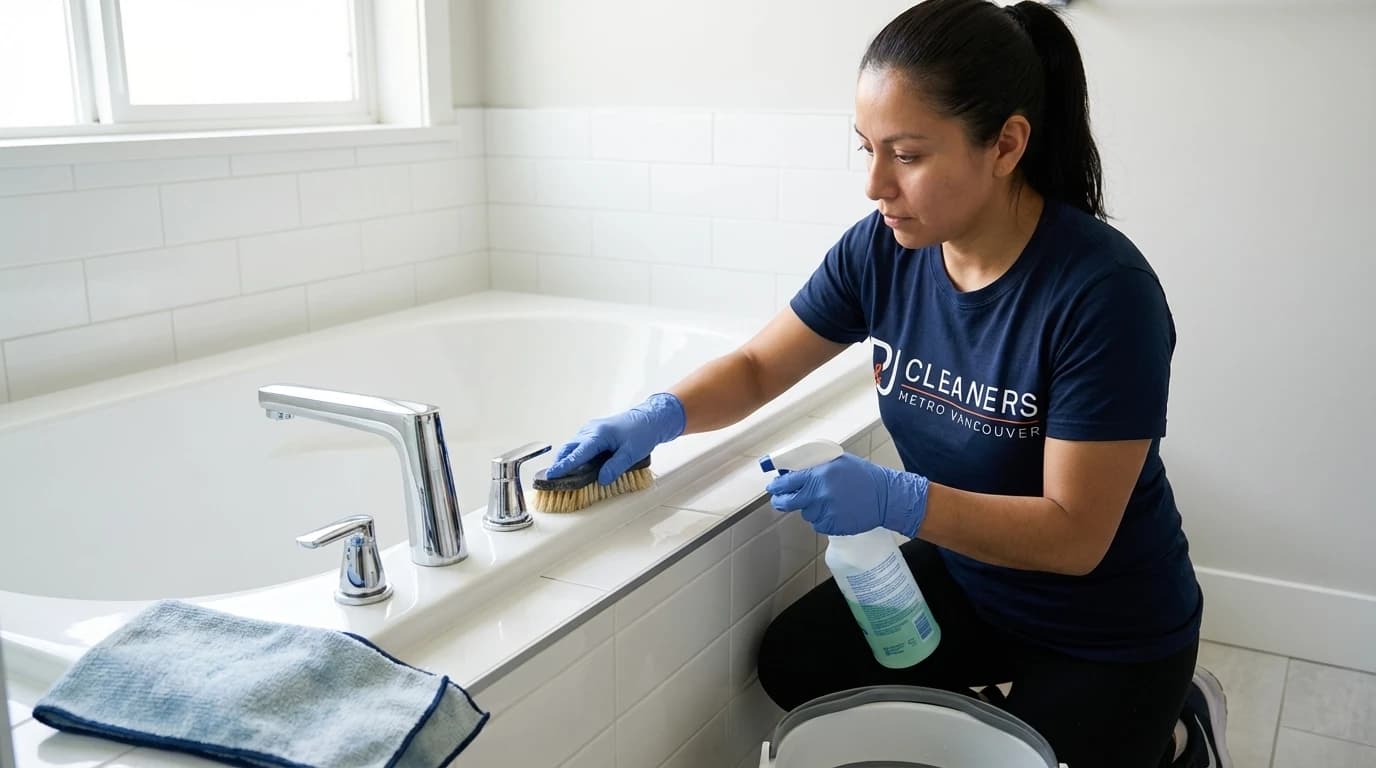
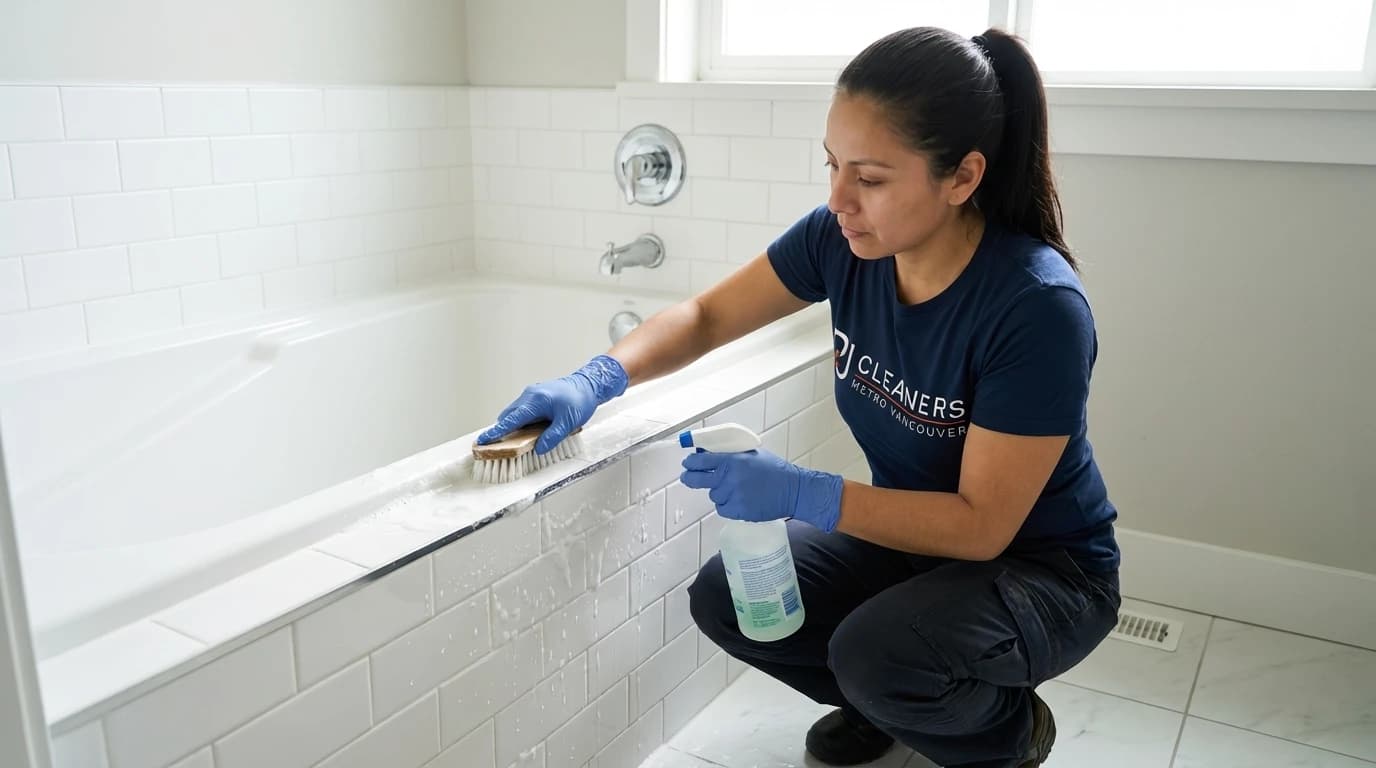
Spray the affected area generously with your chosen cleaner and cover a border around the visible stain so the mold treatment reaches what you cannot see right away. Let the product dwell for 10 to 15 minutes, then scrub with firm circular motions and rinse away the residue before drying the surface completely. This is the step where most DIY jobs fail, because people wipe too early, oversoak drywall, or skip the drying time that keeps mold from returning.
Ceramic tile and glass surfaces tolerate aggressive scrubbing with hydrogen peroxide or vinegar solutions. Grout requires special attention because its porous nature allows mold roots to penetrate deeply. Apply baking soda paste to grout lines, spray with vinegar to create a foaming reaction, then scrub with a grout brush or old toothbrush. Stubborn stains may need repeated applications over several days. Painted drywall presents challenges because excessive moisture damages the surface. Spray lightly, scrub gently, and dry immediately with fans or dehumidifiers. If mold returns within two weeks, the drywall likely has internal contamination requiring professional assessment and possible replacement.
Porous materials like ceiling tiles, carpeting, and fabric shower curtains cannot be effectively cleaned once mold penetrates their structure. The Carpet and Rug Institute states that carpets with mold growth should be removed and discarded rather than cleaned, as spores remain embedded in fibres and backing materials. Wooden surfaces require careful evaluation - surface mold on sealed wood responds to cleaning, but unsealed or water-damaged wood with deep mold penetration needs replacement. Concrete basement walls with efflorescence (white mineral deposits) indicate moisture problems that must be resolved before mold treatment succeeds. The BC Housing Research Centre recommends addressing water sources before attempting any mold remediation to prevent immediate regrowth.
- Allow cleaning solutions 10-15 minutes contact time to kill mold at root level
- Scrub with stiff brushes using circular motions and firm, consistent pressure
- Baking soda and vinegar create foaming action that lifts mold from grout lines
- Replace porous materials like carpet and ceiling tiles - cleaning doesn't eliminate embedded spores
- Address moisture sources before remediation or mold returns within two weeks
Pro Tip
Test cleaning solutions on inconspicuous areas first to check for discolouration or damage. Hydrogen peroxide can bleach dark grout and some painted surfaces, while vinegar may dull natural stone finishes.
Related resources
Drying After Mold Treatment and Preventing Regrowth
Drying is what turns a quick clean mold attempt into lasting mold prevention, because any damp surface can start growing again within a day or two.
Use fans, dehumidifiers, and open windows to dry cleaned surfaces completely within 24 to 48 hours. Point airflow directly at grout lines, window tracks, or painted walls where moisture tends to linger, and keep bathroom exhaust fans running well after showers. If your hygrometer keeps reading above 60%, the job is not finished yet, even if the stain looks gone.
Improve bathroom ventilation by upgrading to higher-capacity exhaust fans rated at 50-80 cubic feet per minute for standard bathrooms. Install timers or humidity-sensing switches that automatically run fans for 20-30 minutes after showers end. Seal gaps around windows, doors, and plumbing penetrations with weatherstripping and caulk to prevent humid outdoor air infiltration. Apply mold-resistant paint containing antimicrobial additives to bathroom ceilings and walls in high-moisture areas. Replace standard drywall with mold-resistant greenboard or cement board in shower surrounds and tub enclosures. These materials resist moisture penetration and inhibit fungal growth even in persistently damp conditions.
Regular maintenance prevents mold establishment before visible colonies appear. Wipe down shower walls and doors after each use to remove standing water. Wash bathroom rugs and shower curtains monthly in hot water with vinegar to kill spores before they multiply. Clean refrigerator drip pans quarterly, as these hidden areas collect moisture and organic debris that support mold growth. Inspect window condensation patterns during winter months - persistent moisture indicates inadequate ventilation or insulation problems requiring professional assessment. Schedule annual HVAC inspections to clean ductwork and replace filters that trap mold spores. Statistics Canada reports that homes with regular maintenance schedules experience 60% fewer mold problems than properties with reactive-only approaches.
- Dry cleaned areas within 24-48 hours to prevent spore germination and regrowth
- Maintain 30-50% relative humidity in basements using dehumidifiers and ventilation
- Upgrade bathroom fans to 50-80 CFM capacity with automatic humidity-sensing timers
- Apply mold-resistant paint with antimicrobial additives to high-moisture areas
- Regular maintenance reduces mold problems by 60% compared to reactive-only approaches
Pro Tip
Leave shower doors and curtains open after use to promote air circulation and evaporation. Closed enclosures trap moisture and create ideal conditions for mold growth on grout and caulk.
When Mold Removal Needs Professional Help
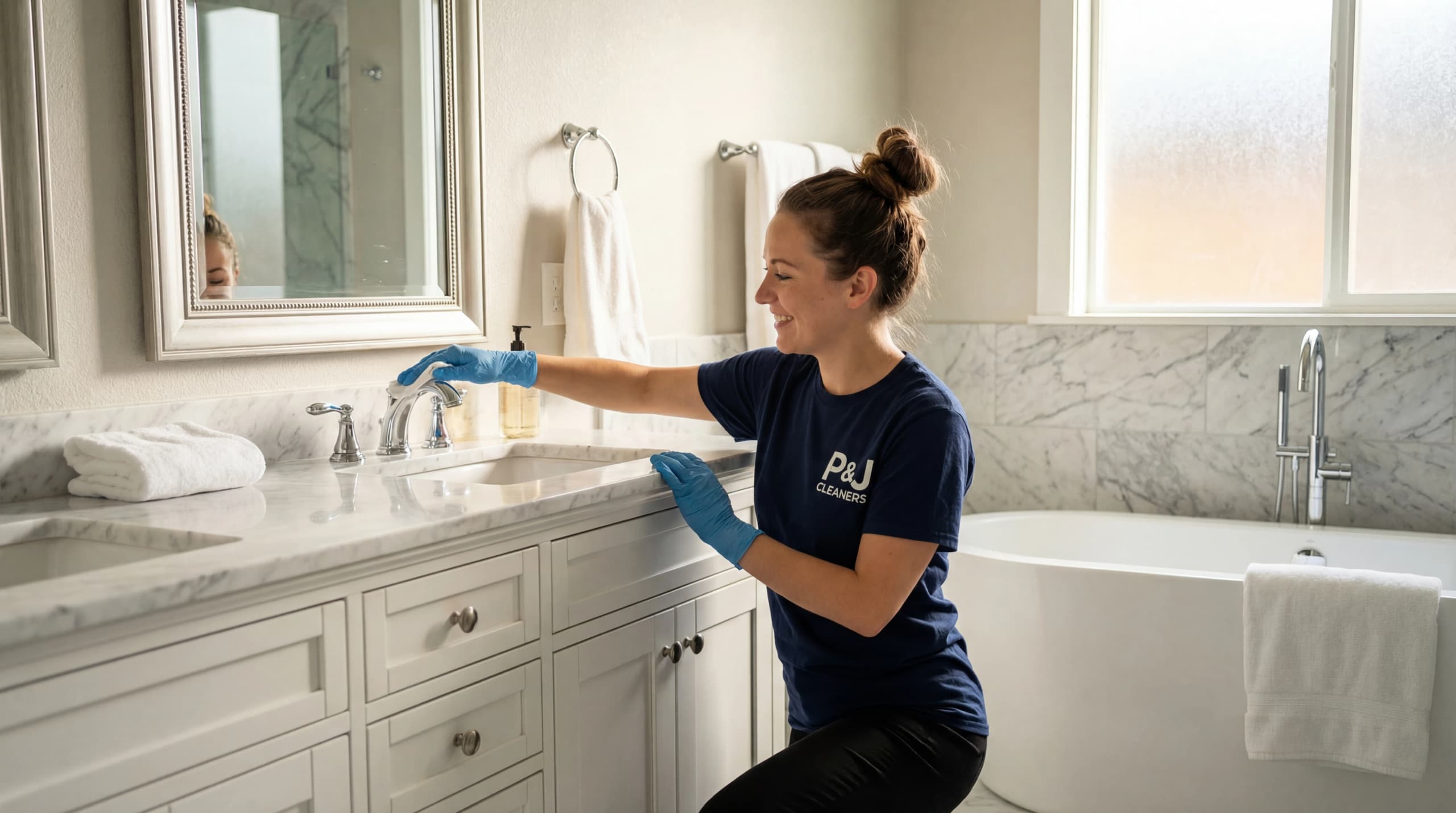
DIY cleaning is not enough when mold keeps returning, has spread behind finishes, or covers enough area that proper containment and moisture diagnosis matter more than scrubbing.
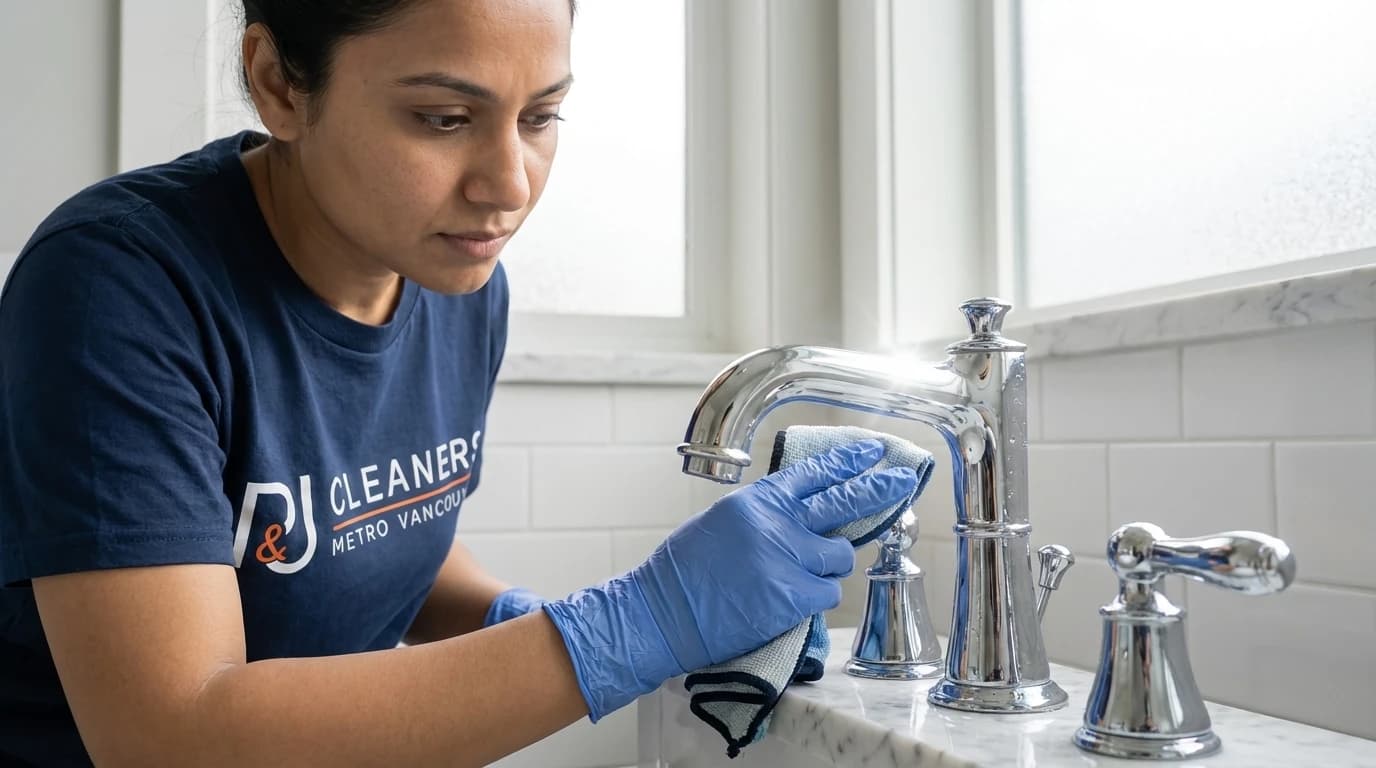
Call for professional mold removal when growth covers more than about 10 square feet, follows flooding, or shows up on ceilings, insulation, HVAC components, or the backside of drywall. Large or recurring patches usually mean the real problem is hidden moisture, not a dirty surface. If symptoms worsen at home or the smell stays after cleaning up mold, bring in help before the contamination spreads farther through the building.
Recurring mold in the same location despite repeated cleaning indicates unresolved moisture sources that require professional diagnosis. Thermal imaging cameras detect hidden water leaks behind walls and under floors that feed persistent mold growth. Moisture meters measure water content in building materials to identify problem areas before visible mold appears. Professional remediation includes source repair, contaminated material removal, antimicrobial treatment, and verification testing to confirm successful elimination. Costs typically range from $500-$6,000 depending on affected area size and contamination severity. Insurance policies often cover mold remediation when caused by sudden plumbing failures or storm damage, but exclude gradual moisture problems from poor maintenance.
Health symptoms that worsen at home but improve elsewhere suggest hidden mold contamination requiring professional investigation. Persistent coughing, wheezing, headaches, and fatigue that don't respond to medical treatment may indicate toxic mold exposure. Professional mold inspectors collect air and surface samples for laboratory analysis to identify species and concentration levels. Results guide remediation strategies and help determine whether temporary relocation becomes necessary during cleanup. The BC Centre for Disease Control recommends professional assessment when household members develop unexplained respiratory symptoms, especially children under five and adults over 65 who face higher vulnerability to mold-related health complications.
- Professional remediation required for mold covering areas larger than 10 square feet
- Black mold produces mycotoxins requiring specialized containment and removal protocols
- Recurring mold indicates unresolved moisture sources needing professional diagnosis and repair
- Remediation costs range $500-$6,000 depending on contamination severity and affected area
- Health symptoms worsening at home suggest hidden mold requiring professional investigation
Pro Tip
Document mold problems with dated photographs before attempting DIY removal. This evidence supports insurance claims and helps professionals assess problem severity if DIY efforts fail.
Related resources
Natural Products That Help Eliminate Mold
Vinegar, hydrogen peroxide, and baking soda can eliminate mold on many household surfaces without the heavy fumes that make enclosed bathrooms harder to work in.
White vinegar is a practical first option for small mold cleanup jobs on tile, glass, and sealed surfaces because it reaches crevices well and does not leave behind heavy chemical residue. Hydrogen peroxide is often stronger on stained grout and bathroom corners, while baking soda helps with gentle scrubbing and odour control. None of these products will solve active leaks or soaked drywall, so use them as part of a full mold treatment plan rather than a shortcut.
Hydrogen peroxide (3% solution) provides stronger antimicrobial action than vinegar, killing 99% of mold, bacteria, and viruses on contact. Spray hydrogen peroxide on moldy surfaces and allow 10 minutes contact time before scrubbing. The solution breaks down into water and oxygen, making it completely safe for homes with children and pets. Hydrogen peroxide works on both porous and non-porous materials without causing damage or discolouration to most surfaces. Store hydrogen peroxide in opaque bottles away from light, as UV exposure degrades its effectiveness. Combine hydrogen peroxide with vinegar in a two-step process for maximum mold-killing power, spray vinegar first, then hydrogen peroxide without rinsing between applications.
Baking soda (sodium bicarbonate) serves dual purposes as a mild abrasive and pH adjuster that inhibits mold growth. Mix one-quarter tablespoon baking soda with water in a spray bottle, shake until dissolved, then spray on moldy areas. Scrub with a brush or sponge, rinse with clean water, and spray again without rinsing to leave a protective residue that prevents regrowth. Baking soda absorbs moisture and odours while creating an alkaline environment hostile to fungal colonies. Add baking soda to laundry when washing mold-contaminated fabrics and towels to kill spores and eliminate musty smells. Tea tree oil provides another natural option, mix one teaspoon with one cup water for a powerful antifungal spray, though the higher cost limits practical use for large areas.
- White vinegar kills 82% of mold species without toxic fumes or chemical residues
- Hydrogen peroxide (3% solution) eliminates 99% of mold, bacteria, and viruses on contact
- Baking soda creates alkaline environment that inhibits mold growth and absorbs moisture
- Two-step vinegar-then-peroxide application maximizes mold-killing effectiveness
- Natural solutions produce zero volatile organic compounds compared to commercial cleaners
Pro Tip
Never mix vinegar and hydrogen peroxide in the same bottle, the combination creates peracetic acid that irritates eyes and respiratory systems. Apply them sequentially for safe, effective mold removal.

Step-by-Step
5-Step Mold Removal Process
Follow this systematic approach for safe, effective mold removal from bathrooms, walls, and other household surfaces. Each step builds on the previous one to ensure complete elimination and prevent regrowth.
Assess and Contain the Area
Begin by evaluating the mold problem's extent and severity. Measure the affected area to determine whether DIY cleaning remains appropriate or professional help becomes necessary. Check surrounding areas for hidden mold growth behind baseboards, under sinks, and in adjacent rooms. Photograph the mold for documentation purposes, especially if insurance claims may be filed later. Isolate the work area by closing doors, sealing gaps with plastic sheeting, and turning off HVAC systems to prevent spore distribution. Open windows and position fans to create negative pressure that directs airflow outside.
- Measure affected area dimensions and document with dated photographs
- Check adjacent spaces for hidden mold behind baseboards and fixtures
- Close doors and seal gaps with plastic sheeting and painter's tape
- Turn off HVAC systems to prevent spore circulation through ductwork
- Open windows and position box fans facing outward for ventilation
Gather Safety Equipment and Supplies
Collect all necessary protective gear before starting mold removal work. Purchase N95 or N100 respirator masks from hardware stores, ensuring proper fit by checking for air leaks around edges. Obtain nitrile gloves, safety goggles without ventilation holes, and long-sleeved clothing made from washable materials. Prepare cleaning solutions by filling spray bottles with white vinegar, hydrogen peroxide, or baking soda mixtures. Gather stiff-bristled brushes, sponges, buckets, and clean rags for scrubbing and wiping. Have plastic garbage bags ready for disposing of contaminated materials and cleaning supplies.
- Purchase N95 masks, nitrile gloves, and safety goggles from hardware stores
- Prepare cleaning solutions in clearly labeled spray bottles
- Collect stiff brushes, sponges, buckets, and clean rags for scrubbing
- Gather plastic sheeting, drop cloths, and garbage bags for containment
- Test respirator mask fit by checking for air leaks around edges
Apply Cleaning Solution and Wait
Spray your chosen cleaning solution generously over all visible mold and a six-inch border around affected areas. Ensure complete saturation of moldy surfaces, grout lines, and porous materials. Allow the solution to sit undisturbed for 10-15 minutes to penetrate fungal structures and kill spores at root level. This contact time proves critical for effective mold elimination, rushing to scrub immediately reduces treatment effectiveness significantly. Reapply solution to areas that dry before the waiting period ends. Use this time to prepare additional cleaning supplies or take breaks outside the contaminated area.
- Spray cleaning solution generously over mold and six-inch surrounding border
- Ensure complete saturation of grout lines and porous surface areas
- Set timer for 10-15 minutes and allow solution to penetrate undisturbed
- Reapply solution to areas that dry during the waiting period
- Prepare additional supplies or take breaks outside work area
Scrub and Remove Mold Growth
After the contact time expires, scrub affected surfaces vigorously using stiff-bristled brushes and circular motions. Apply firm, consistent pressure to dislodge embedded mold from grout lines, tile surfaces, and painted walls. Pay special attention to corners, edges, and textured surfaces where mold hides in crevices. Use smaller brushes or old toothbrushes for detailed work in tight spaces and grout lines. Rinse brushes frequently in clean water to prevent spreading mold to cleaned areas. Wipe surfaces with clean, damp cloths to remove dead mold and cleaning residue.
- Scrub surfaces vigorously with stiff brushes using circular motions
- Apply firm pressure to dislodge embedded mold from grout and crevices
- Use small brushes or toothbrushes for detailed work in tight spaces
- Rinse brushes frequently in clean water during scrubbing process
- Wipe surfaces with damp cloths to remove dead mold and residue
Dry Thoroughly and Monitor Results
Dry cleaned areas completely within 24-48 hours using fans, dehumidifiers, and open windows. Point fans directly at treated surfaces to accelerate moisture evaporation. Run bathroom exhaust fans continuously for 24 hours after cleaning to remove residual humidity from walls and ceilings. Monitor humidity levels with a hygrometer, maintaining readings between 30-50% to prevent regrowth. Inspect cleaned areas daily for two weeks, watching for signs of returning mold that indicate incomplete treatment or unresolved moisture problems. Document successful cleaning with dated photographs for future reference.
- Position fans directly at cleaned surfaces for maximum air circulation
- Run exhaust fans continuously for 24 hours after treatment completion
- Monitor humidity levels twice daily with digital hygrometer
- Inspect cleaned areas daily for two weeks watching for mold return
- Document successful cleaning with dated photographs for records
| Solution | Effectiveness | Best For | Limitations |
|---|---|---|---|
| White Vinegar (5%) | Kills 82% of mold species | Non-porous surfaces, tile, glass | Avoid on natural stone, strong odour |
| Hydrogen Peroxide (3%) | Kills 99% of mold and bacteria | All surfaces, porous and non-porous | Store away from light, may bleach dark grout |
| Baking Soda Solution | Mild antimicrobial, pH adjuster | Gentle cleaning, odour absorption | Less effective on heavy growth, requires scrubbing |
| Tea Tree Oil | Strong antifungal properties | Small areas, prevention spray | Expensive for large areas, strong scent |
| Bleach Solution | Kills surface mold quickly | Non-porous surfaces only | Toxic fumes, doesn't penetrate porous materials |
| Commercial Mold Cleaners | Variable effectiveness | Convenience, ready-to-use | Chemical fumes, higher cost, environmental impact |
Services mentioned in this article
Ready for help?
4.9 · 850+ Google reviewsNeed Help With Stubborn Mold Cleanup?
If mold treatment keeps failing, P&J Cleaners can handle the deep-cleaning side with 4.9-star care, 850+ reviews, and $2M insured, bonded, background-checked crews. Call 778-720-2224.
778-720-2224Common Mold Removal Questions
What is the safest mold removal method for bathrooms and walls?
Start mold removal by fixing the moisture source, then wear an N95 mask, gloves, and eye protection before you spray the surface with vinegar or 3% hydrogen peroxide. Let it sit for 10 to 15 minutes, scrub, rinse, and dry the area fully within 24 to 48 hours. Painted drywall and soft materials need extra caution because deep growth often means replacement, not repeated scrubbing.
What is the difference between mold cleanup, mold clean up, and mould removal?
Most homeowners use those phrases to mean the same job, removing visible growth and making sure it does not come back. In practice, mold cleanup usually describes surface cleaning, while mould removal or remediation often means deeper work on drywall, wood, insulation, or framing. If the stain comes back after cleaning, treat it as a moisture problem first and a cleaning problem second.
How do I clean mold without spreading spores through the house?
Close the room, turn off forced air, and use a fan that blows outward through an open window before you clean mold. Spray the area before scrubbing so spores stay damp, bag rags and brushes right away, and wash clothing on a hot cycle after cleaning. For house mold removal in condos or townhomes, keep people and pets out of the room until every surface is dry.
When does bathroom mold remediation need a professional instead of DIY cleaning?
Call for professional help when the patch is larger than about 10 square feet, keeps returning, follows a leak, or has spread into caulk, drywall, ceilings, or cabinetry. Bathroom mold remediation also needs a pro when anyone in the home has asthma, a compromised immune system, or strong reactions to spores. If you need help deciding whether deep cleaning is enough, P&J Cleaners can talk through the next step at 778-720-2224.
Can exterior mold removal be handled the same way as indoor mold treatment?
Not exactly. Exterior mold removal often involves siding, masonry, decks, and shaded trim that can handle stronger rinsing and weather exposure, while indoor mold treatment has to protect air quality and nearby finishes. The cleaning product may be similar, but the containment, drying plan, and damage risk are different.
When should I call for New Westminster mold removal or mold removal in Port Moody?
Call local help when cleaning up mold keeps failing, the smell spreads beyond one room, or you suspect hidden moisture behind walls or under flooring. Homes in older New Westminster buildings and damp Port Moody basements often need both cleanup and a plan to control humidity, drainage, or ventilation. P&J brings 4.9-star service, 850+ reviews, and $2M insured, bonded, background-checked crews for detailed cleaning support across Metro Vancouver.
Meet the Author
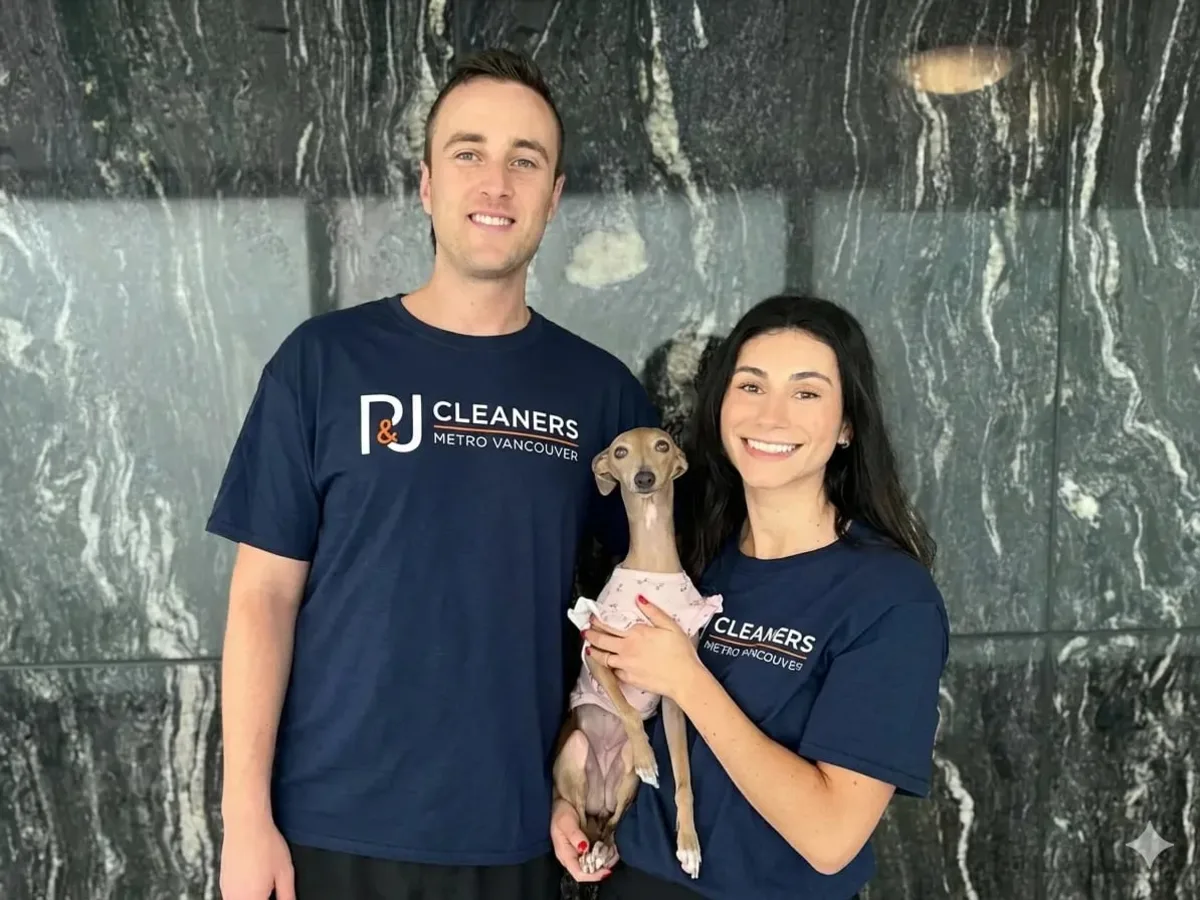
Pamela
Co-Founder
Pamela leads residential quality standards at P&J Cleaners, refining safe, detail-driven cleaning systems for Vancouver homes, condos, and move-out projects.
Keep Exploring