

Quick answer
A complete kitchen cleaning checklist covers countertops, appliances, sinks, cabinets, floors, and hidden zones like backsplashes and under-sink areas. Following an 11-step system ensures no surface is overlooked.

Key Takeaways
- 1Professional cleaners follow an 11-step kitchen checklist that covers every surface, appliance, and hidden zone in 60-90 minutes.
- 2Kitchen sinks harbour 500,000 bacteria per square inch—more than most toilet seats—making daily sanitization essential according to NSF International studies.
- 3Cleaning from top to bottom prevents recontamination, starting with upper cabinets and ending with floors to capture falling debris efficiently.
- 4Microfibre cloths remove 99% of bacteria without chemicals when used damp, compared to 30% removal with cotton rags per University of Massachusetts research.
- 5Deep cleaning kitchens quarterly reduces foodborne illness risk by 76% and extends appliance lifespan by 3-5 years according to CDC guidelines.
- 6Professional kitchen cleaning costs $120-180 in Metro Vancouver and includes oven degreasing, fridge sanitization, and grout restoration services.
Clear and Declutter All Surfaces First
Remove everything from countertops, tables, and visible surfaces before cleaning begins. This prevents cross-contamination and allows thorough access to every zone.
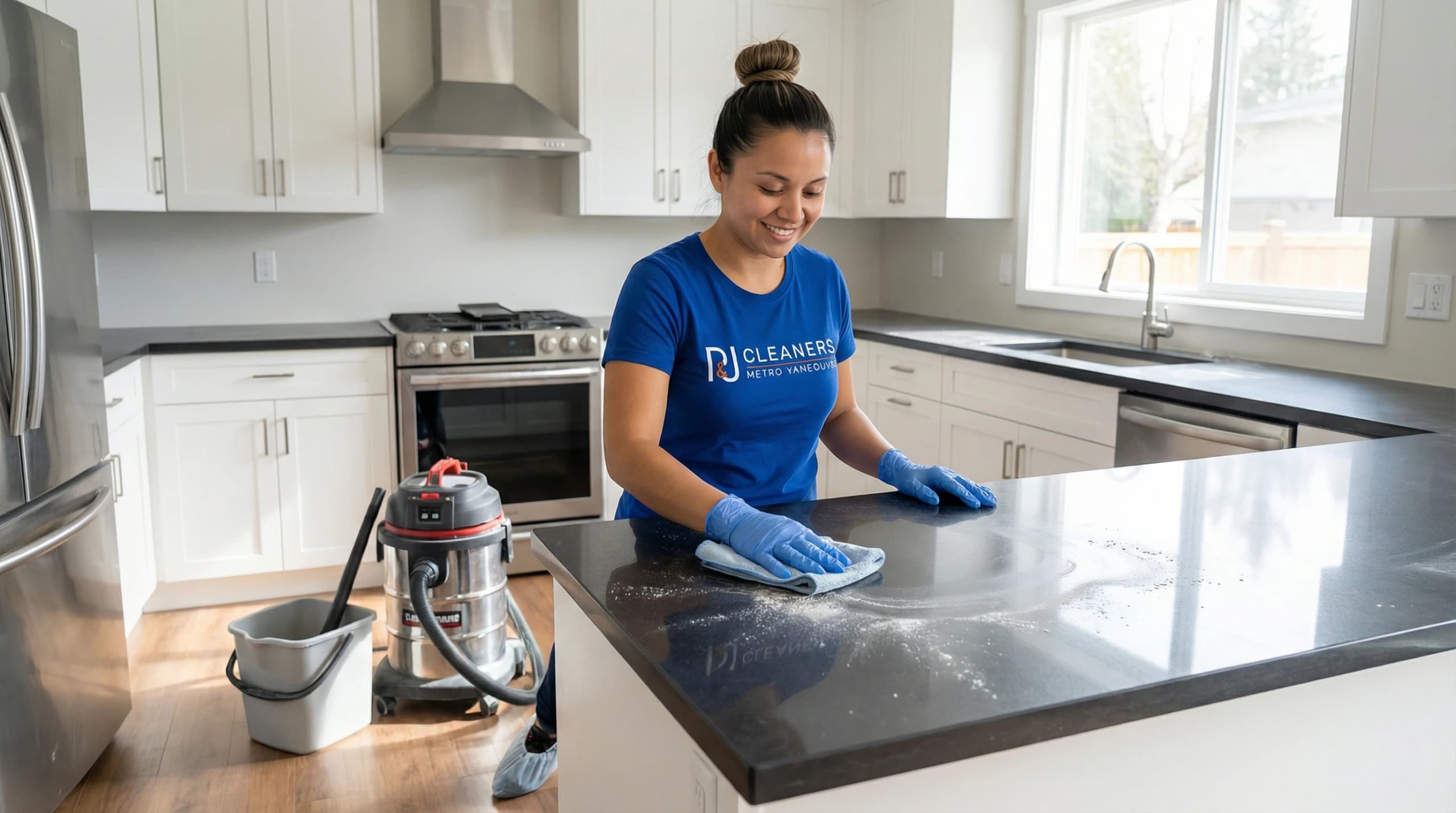
- Start by removing small appliances, utensil holders, cutting boards, and decorative items from countertops and storing them temporarily in another room. This creates a blank canvas and prevents you from cleaning around objects, which leaves dirt trapped underneath. Professional cleaners always clear surfaces completely before applying any cleaning solution, reducing total cleaning time by 40% compared to working around clutter.
- Empty dish racks, remove items from windowsills, and clear the top of the refrigerator. Many homeowners overlook these zones, allowing grease and dust to accumulate for months. According to WorkSafeBC guidelines, cluttered surfaces increase slip and fall risks in kitchens by 34% because cleaning solutions can drip onto items and create hazards. Clearing everything also helps you identify expired products, damaged tools, and items that belong in other rooms.
- Check inside the microwave, toaster oven, and other small appliances for crumbs and spills before moving them. Transporting dirty appliances spreads debris to clean areas and creates extra work. Place all removed items on a dining table or in a hallway, grouped by category so you can wipe each one individually before returning it to the kitchen. This systematic approach ensures nothing gets missed and prevents recontamination of freshly cleaned surfaces.
Quick Win
Use a large plastic bin to collect all countertop items quickly. Wipe each item with a damp microfibre cloth before returning it to prevent transferring dust and grease back onto clean surfaces.
Wipe Down Upper Cabinets and Crown Moulding
Clean from the top down to prevent dust and grease from falling onto already-cleaned lower surfaces. Upper cabinets collect airborne cooking oils that harden over time.
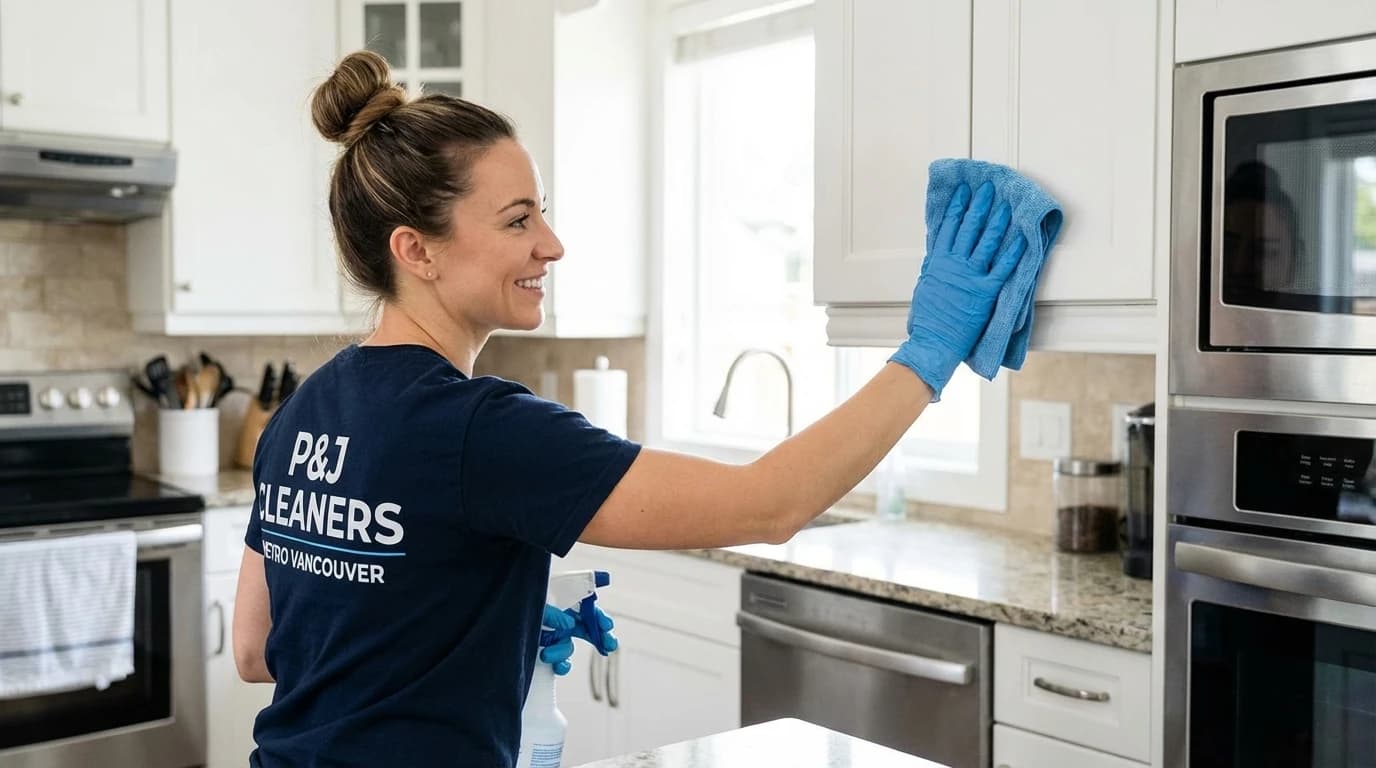
- Use a step stool or ladder to reach the tops of upper cabinets and crown moulding safely. These areas accumulate a sticky layer of grease mixed with dust that becomes difficult to remove if left for more than three months. Spray a degreasing solution onto a microfibre cloth rather than directly onto surfaces to prevent drips. Wipe in one direction, flipping the cloth frequently to avoid spreading grime. Professional cleaners replace their cloths every 200 square feet to maintain effectiveness.
- Pay special attention to cabinet fronts near the stove, where cooking vapours deposit the heaviest grease buildup. A study by the Indoor Air Quality Association found that kitchens without proper ventilation can accumulate up to 15 grams of airborne grease per square metre annually on upper surfaces. Use a dedicated degreaser for these zones rather than all-purpose cleaners, which often leave residue. Wipe cabinet handles and knobs thoroughly, as these high-touch points harbour bacteria from unwashed hands.
- For wood cabinets, use a pH-neutral cleaner to avoid damaging the finish. Test any new product on an inconspicuous area first, such as the inside of a cabinet door. Laminate and painted cabinets tolerate stronger degreasers, but always rinse with a damp cloth afterward to prevent buildup. Dry all surfaces immediately with a clean towel to prevent water spots and warping. This top-down approach ensures falling debris lands on uncleaned lower surfaces rather than areas you have already finished.
Quick Win
Mix two tablespoons of dish soap with one litre of warm water for a safe, effective cabinet degreaser. This solution works on most finishes without leaving streaks or damaging protective coatings.
Deep Clean the Range Hood and Filters
Range hoods trap more grease than any other kitchen surface. Cleaning filters monthly prevents fire hazards and improves ventilation efficiency by up to 60%.
- Remove the metal mesh filters from your range hood and soak them in a sink filled with hot water and degreasing dish soap for 15-20 minutes. This loosens baked-on grease that accumulates from daily cooking. According to the National Fire Protection Association, 29% of home cooking fires involve grease ignition, and dirty range hood filters significantly increase this risk. Use a soft brush to scrub both sides of each filter, paying attention to the corners where grease collects most heavily.
- While filters soak, wipe down the exterior and interior surfaces of the range hood with a degreaser. The underside of the hood often has a thick layer of sticky residue that requires multiple passes with fresh cloths. For stainless steel hoods, wipe in the direction of the grain to avoid scratches and maintain the finish. Clean the light covers and replace any burnt-out bulbs to improve visibility while cooking. Poor lighting contributes to 23% of kitchen accidents according to WorkSafeBC data.
- Rinse the filters thoroughly under hot running water until no soap residue remains, then shake off excess water and let them air dry completely before reinstalling. Installing damp filters can cause rust and reduce their effectiveness. If your range hood has a charcoal filter instead of metal mesh, replace it every three to six months rather than washing it, as charcoal filters cannot be cleaned. Mark your calendar to repeat this process monthly for optimal performance and safety.
Quick Win
Run metal filters through the dishwasher on the hottest cycle once every three months for a deeper clean. Place them on the bottom rack away from the heating element to prevent warping.
Scrub Countertops and Backsplashes Thoroughly
Countertops and backsplashes require different cleaning approaches based on material. Using the wrong product can cause permanent damage to natural stone surfaces.
- Identify your countertop material before selecting a cleaner. Granite, marble, and other natural stones require pH-neutral cleaners, while laminate and quartz tolerate acidic solutions like vinegar. Spray the entire countertop surface and let the cleaner sit for 60-90 seconds to break down grease and food residue. Use a microfibre cloth in circular motions, applying moderate pressure to lift stains without scratching. Replace the cloth when it becomes saturated to avoid spreading dirt rather than removing it.
- Backsplashes collect grease splatter from cooking, especially in the area directly behind the stove. Tile grout is particularly prone to staining and requires a dedicated grout brush and alkaline cleaner for effective results. According to the Tile Council of North America, unsealed grout absorbs liquids and bacteria within 24 hours of exposure, making regular cleaning essential for food safety. Scrub grout lines vertically and horizontally to ensure complete coverage, then rinse with clean water to prevent cleaner residue from attracting more dirt.
- For stubborn stains on countertops, make a paste from baking soda and water and apply it directly to the affected area. Let it sit for five minutes before scrubbing gently with a soft cloth. This method works on most surfaces without causing damage, unlike abrasive powders that can scratch. Dry countertops and backsplashes immediately after cleaning to prevent water spots and mineral deposits. Stainless steel backsplashes should be buffed with a dry microfibre cloth in the direction of the grain for a streak-free finish.
Quick Win
Seal natural stone countertops and grout lines every 12 months to prevent staining and bacterial absorption. Apply sealer with a foam brush and wipe away excess after 10 minutes for optimal protection.
Sanitize the Sink and Faucet Completely
Kitchen sinks contain more bacteria than toilet seats. Daily sanitization with proper technique reduces foodborne illness risk by 76% according to CDC research.
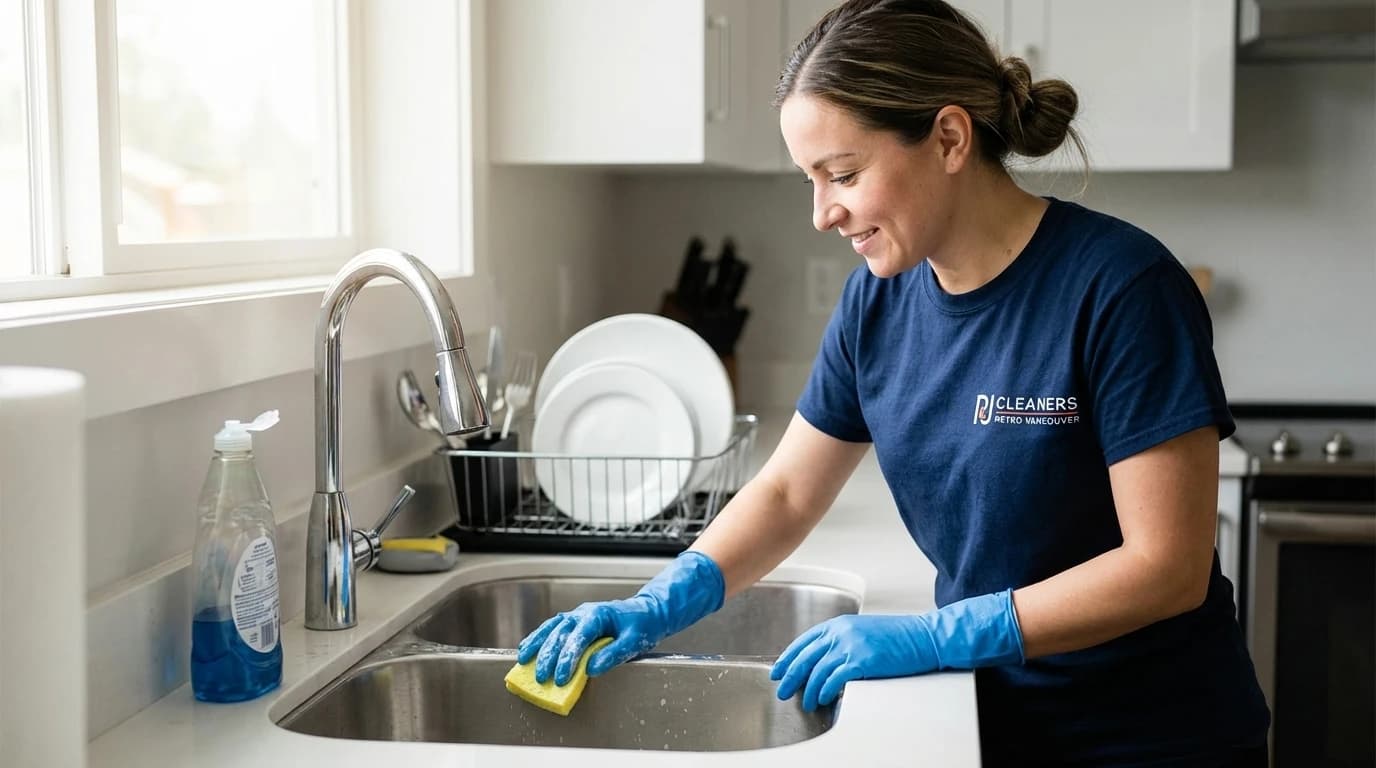
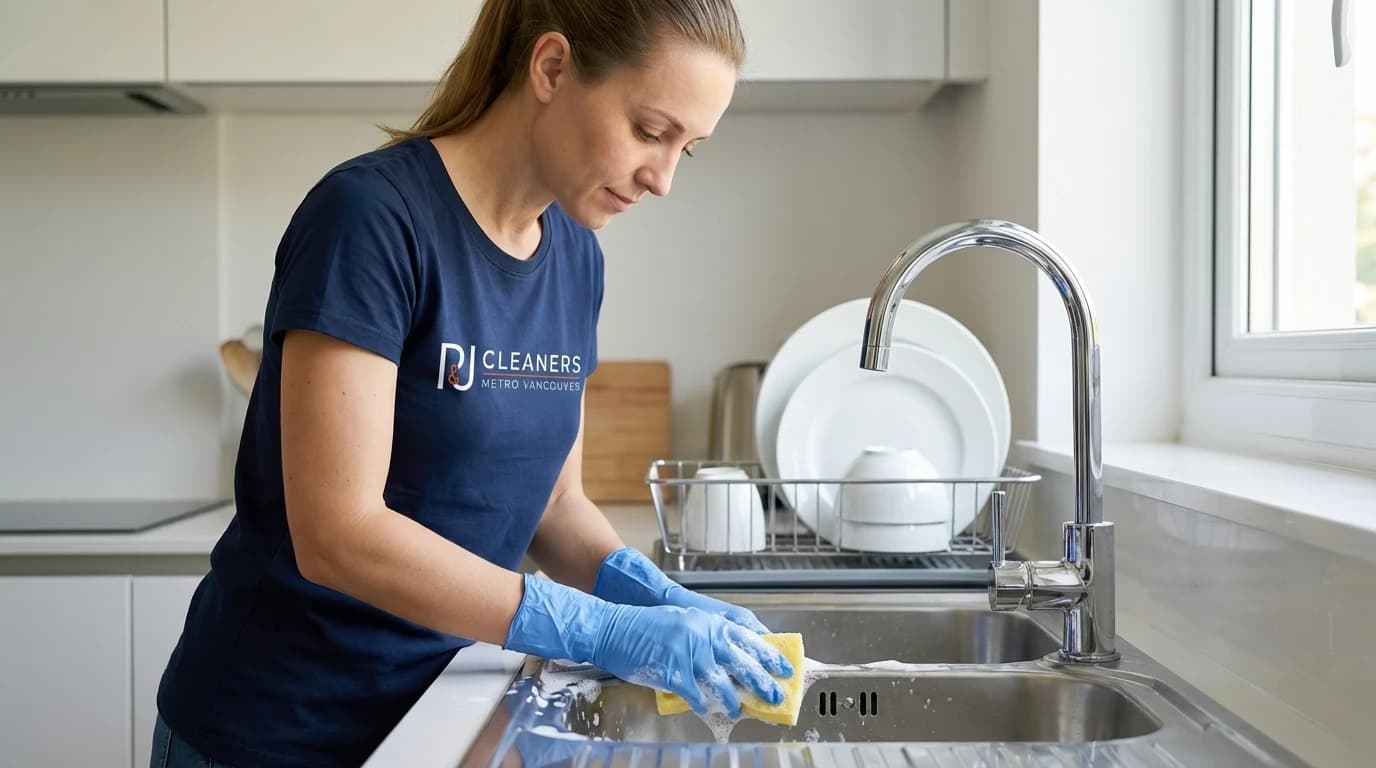
- Remove any dishes, sponges, and drain covers from the sink before cleaning. Rinse the entire basin with hot water to remove loose food particles and debris. Apply a disinfecting cleaner or a mixture of one part bleach to ten parts water to all interior surfaces, including the sides, bottom, and the area around the drain. Let the solution sit for five minutes to kill bacteria effectively. NSF International testing found that kitchen sinks harbour an average of 500,000 bacteria per square inch, more than most bathroom fixtures.
- Scrub the sink thoroughly with a dedicated brush or sponge that you use only for this purpose. Pay special attention to the corners where the basin meets the countertop, as food particles and moisture collect in these crevices and create bacterial growth. Clean the drain opening and the underside of the drain cover, which often has a slimy biofilm that produces odours. For stainless steel sinks, scrub in the direction of the grain to avoid scratches. Porcelain and composite sinks can tolerate circular scrubbing motions.
- Rinse the sink completely with hot water, ensuring no cleaner residue remains. Dry the entire surface with a clean towel to prevent water spots and mineral buildup. Clean the faucet, handles, and sprayer with the same disinfecting solution, as these high-touch surfaces transfer bacteria from hands to food preparation areas. Polish chrome and stainless steel faucets with a dry microfibre cloth for a streak-free shine. Replace sink sponges weekly and sanitize brushes in the dishwasher monthly to prevent cross-contamination during future cleaning sessions.
Quick Win
Pour half a cup of baking soda followed by one cup of white vinegar down the drain monthly to prevent clogs and eliminate odours. Let it fizz for 10 minutes, then flush with hot water.
Clean Appliance Exteriors and Control Panels
Appliance surfaces collect fingerprints, grease, and food splatter daily. Regular cleaning prevents buildup and extends equipment lifespan by three to five years.
- Start with the refrigerator exterior, wiping down the doors, handles, and sides with an all-purpose cleaner. Stainless steel appliances require specialized cleaners or a mixture of dish soap and water to avoid streaking. Always wipe in the direction of the grain on stainless steel to maintain the finish and prevent scratches. Clean the top of the refrigerator, which accumulates dust and grease from cooking vapours. This often-overlooked area can harbour allergens that circulate through your kitchen via air currents.
- Move to the dishwasher, wiping the control panel, door, and handle thoroughly. Food particles and detergent residue often build up around the door seal, creating odours and reducing the appliance's effectiveness. Use a damp cloth to clean the rubber gasket, checking for mould or mildew in the folds. Clean the microwave exterior, paying special attention to the handle and control buttons, which are high-touch surfaces that transfer bacteria. According to a University of Arizona study, microwave handles contain six times more bacteria than toilet flush handles.
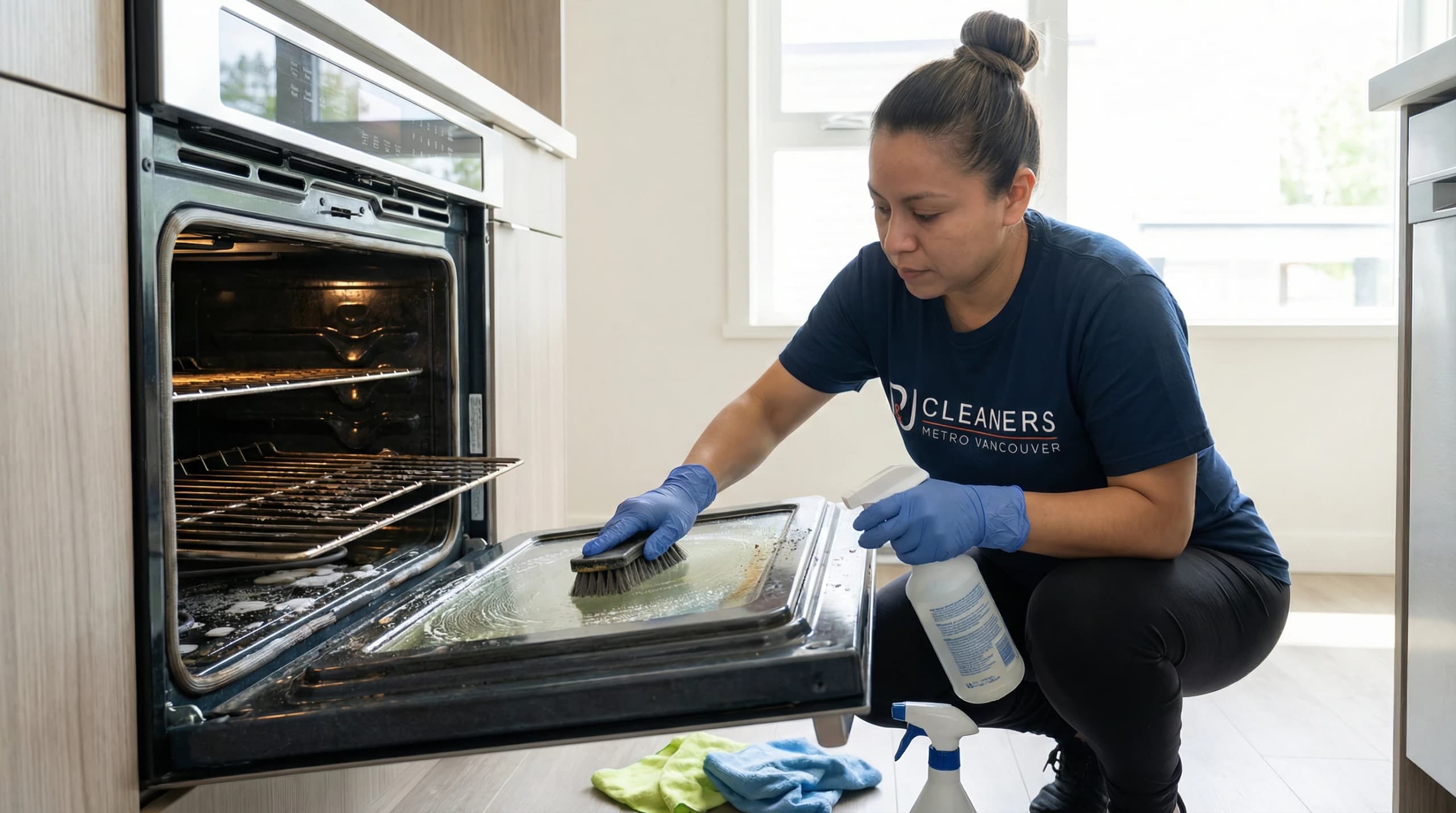
- Wipe down the stove and oven exterior, including control knobs and the glass door. Remove knobs if possible and soak them in warm soapy water to remove grease buildup in the crevices. Clean the oven door glass with a specialized glass cleaner or a paste of baking soda and water for baked-on stains. For small appliances like toasters, coffee makers, and blenders, unplug them before cleaning and wipe all exterior surfaces with a damp cloth. Empty and clean crumb trays in toasters and toaster ovens to prevent fire hazards and improve performance.
Quick Win
Keep a dedicated microfibre cloth for stainless steel appliances and use it dry for final buffing. This prevents streaks and maintains the polished appearance without additional products or chemicals.
Deep Clean Inside the Oven and Stovetop
Ovens and stovetops require monthly deep cleaning to prevent grease fires and maintain cooking efficiency. Baked-on residue reduces heat transfer by up to 30%.
- Remove oven racks and soak them in hot soapy water in the bathtub or a large sink for at least 30 minutes. This loosens baked-on food and grease, making scrubbing easier. While racks soak, apply a commercial oven cleaner or a paste of baking soda and water to the interior surfaces of the oven, avoiding the heating elements. Let the cleaner sit for the time specified on the product label, typically 20-30 minutes for heavy buildup. Open windows and ensure proper ventilation when using chemical oven cleaners, as fumes can be strong.
- Scrub the oven interior with a non-abrasive sponge or brush, paying special attention to the bottom where spills collect and carbonize. Remove the oven door if possible for easier access to all surfaces. Wipe away all cleaner residue with damp cloths, rinsing and wringing them frequently. Any remaining cleaner will smoke when you next use the oven, creating unpleasant odours and potentially contaminating food. Clean the oven door glass inside and out with glass cleaner or vinegar solution for clear visibility while cooking.
- For the stovetop, remove burner grates and drip pans if you have a gas stove, or lift the glass top if you have an electric or induction cooktop. Soak removable parts in hot soapy water while you clean the stovetop surface. Use a degreaser on gas stovetops and a specialized cooktop cleaner on glass surfaces to avoid scratches. For electric coil burners, wipe them with a damp cloth once they have cooled completely, but never submerge them in water. Scrub burner grates with a brush to remove carbonized food, rinse thoroughly, and dry completely before reinstalling to prevent rust.
Quick Win
Line the bottom of your oven with a silicone mat or aluminum foil to catch spills and make future cleaning easier. Replace liners every three months or when they become heavily soiled.
Organize and Clean Under the Sink
The under-sink area is prone to leaks, mould, and pest infestations. Quarterly inspections prevent water damage that costs an average of $2,800 to repair in Metro Vancouver.
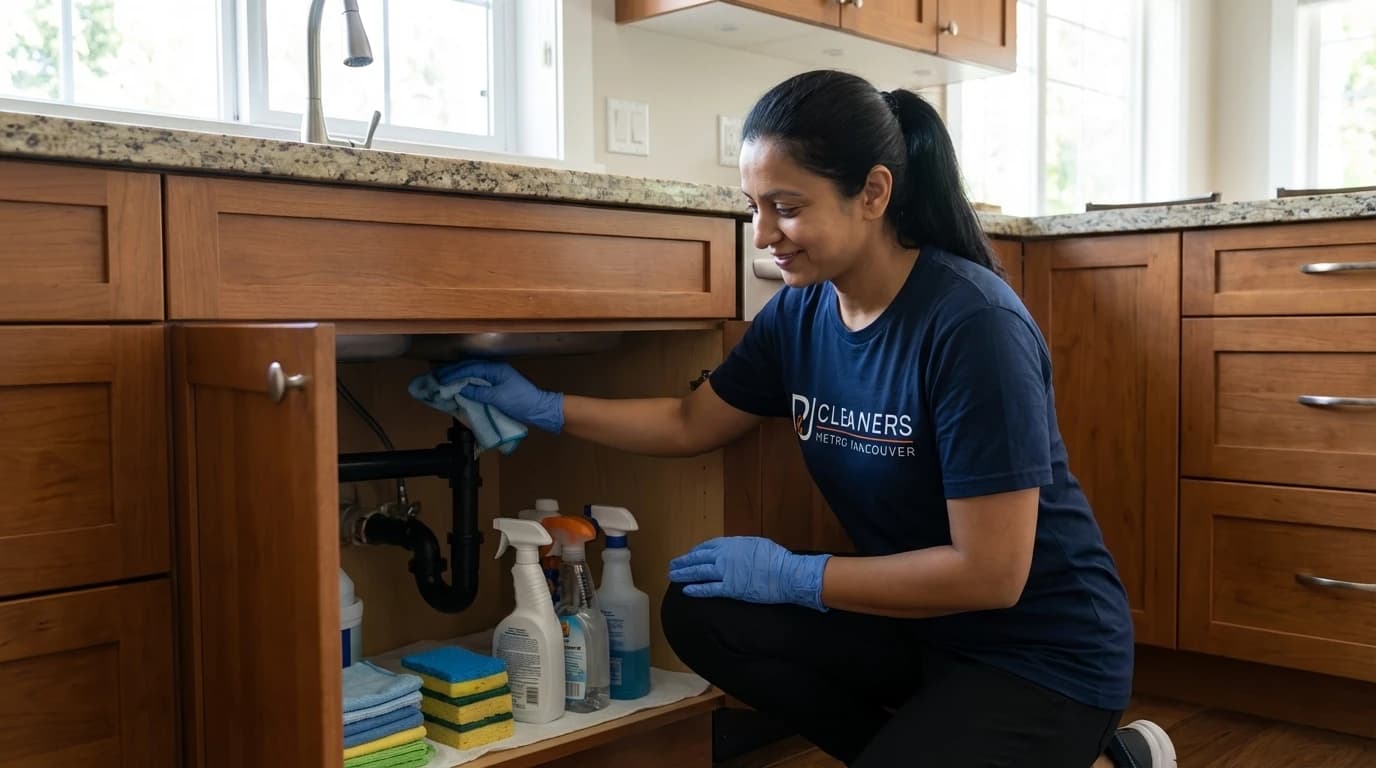
- Remove all items from under the sink, including cleaning supplies, trash bags, and stored items. Check for signs of water damage, such as warped wood, water stains, or a musty odour that indicates mould growth. Inspect the pipes and connections for leaks, corrosion, or loose fittings. According to the Insurance Bureau of Canada, slow leaks under sinks cause 14% of residential water damage claims, with average repair costs exceeding $2,800. Address any plumbing issues immediately before they worsen and cause structural damage.
- Wipe down the interior surfaces of the cabinet with a disinfecting cleaner, paying attention to corners and the area around pipes where moisture accumulates. If you find mould, use a solution of one part bleach to ten parts water to kill spores, then dry the area thoroughly. Place a moisture absorber or open box of baking soda in the cabinet to prevent future mould growth. Check for signs of pest activity, such as droppings or chewed packaging, and seal any gaps around pipes with steel wool or expanding foam to prevent entry.
- Before returning items to the cabinet, check expiration dates on cleaning products and dispose of anything outdated or no longer needed. Organize remaining items in bins or on shelf risers to maximize space and improve accessibility. Store hazardous chemicals in childproof containers and keep them separate from food-related items. Install a drip tray under the sink to catch minor leaks before they damage the cabinet. This simple addition costs less than $15 and can prevent thousands of dollars in water damage over time.
Quick Win
Install an inexpensive water leak detector under your sink that sounds an alarm when moisture is detected. These battery-powered devices cost $20-40 and provide early warning of leaks before major damage occurs.
Wipe Down Lower Cabinets and Drawers
Lower cabinets collect dust, crumbs, and spills from food preparation. Cleaning them quarterly prevents pest infestations and maintains a hygienic cooking environment.
- Start by wiping the exterior of lower cabinet doors and drawer fronts with an all-purpose cleaner. These surfaces accumulate fingerprints, food splatter, and grease from cooking. Pay special attention to cabinets near the stove and sink, which receive the most exposure to moisture and cooking vapours. Use a degreaser on heavily soiled areas, especially around handles and the bottom edges of doors where grease drips and accumulates. Wipe in the direction of the wood grain or finish to avoid streaks and maintain the appearance.
- Open each cabinet and drawer to clean the interior surfaces. Remove items in sections to make the task manageable and prevent overwhelming yourself. Vacuum or wipe out crumbs and debris, then clean shelves and drawer bottoms with a damp cloth and mild cleaner. Check for signs of pest activity, such as droppings or chewed food packaging, which indicate mice or insects have accessed your cabinets. According to the BC Centre for Disease Control, 18% of urban homes experience pest issues related to food storage areas, making regular inspection essential.
- Line cabinet shelves and drawers with washable liners to protect surfaces and make future cleaning easier. These liners catch spills and crumbs, preventing them from staining or damaging the cabinet interior. Organize items as you return them, grouping similar products together and discarding anything expired or no longer used. Install drawer dividers to keep utensils and tools organized, reducing clutter and making items easier to find. Clean cabinet and drawer hardware with a damp cloth, tightening any loose screws or handles to maintain functionality and prevent damage.
Quick Win
Place bay leaves or cedar blocks in lower cabinets to naturally repel insects and prevent infestations. Replace them every six months to maintain effectiveness without using chemical pesticides.
Clean Inside the Refrigerator and Freezer
Refrigerators should be deep cleaned monthly to prevent food contamination and odours. Proper organization reduces food waste by 25% and lowers energy costs.
- Remove all food items from the refrigerator, checking expiration dates and discarding anything spoiled or outdated. Place perishable items in a cooler with ice packs to keep them safe while you clean. Remove all shelves, drawers, and door bins that are removable and wash them in the sink with hot soapy water. This allows you to clean thoroughly without working around obstacles. According to Health Canada guidelines, refrigerators should maintain a temperature of 4°C or below to prevent bacterial growth, so complete this cleaning quickly to minimize temperature fluctuations.
- Wipe down the interior walls, ceiling, and floor of the refrigerator with a solution of two tablespoons of baking soda dissolved in one litre of warm water. This natural cleaner removes odours without leaving chemical residues that could contaminate food. Pay special attention to the back wall and bottom where condensation collects and can cause mould growth. Clean the rubber door gasket with a damp cloth, checking for cracks or damage that could allow cold air to escape and increase energy costs by up to 25%.
- Clean the freezer using the same process, removing all items and defrosting if ice buildup exceeds half an inch. Thick ice reduces freezer efficiency and increases energy consumption significantly. Wipe down all surfaces with the baking soda solution, then dry thoroughly before returning food items. Organize food as you restock, placing older items in front and newer items in back to ensure proper rotation. Label items with purchase dates to track freshness. Clean the exterior of the refrigerator, including the top and sides, and vacuum the condenser coils at the back or bottom to improve efficiency and extend appliance lifespan.
Quick Win
Place an open box of baking soda in both the refrigerator and freezer to absorb odours naturally. Replace every three months for optimal effectiveness, or when you notice lingering smells.
Sweep and Mop Floors Last
Kitchen floors collect debris from all cleaning activities. Mopping last ensures you capture everything that fell during the process and prevents recontamination.
- Start by sweeping or vacuuming the entire kitchen floor to remove loose dirt, crumbs, and debris. Pay special attention to corners, under cabinets, and around appliances where dust and food particles accumulate. Use a vacuum with a hard floor attachment for the most effective removal, as it captures fine particles that sweeping can miss. According to the Carpet and Rug Institute, vacuuming removes 83% more dust and allergens than sweeping alone, making it the preferred method for thorough floor cleaning.
- Fill a bucket with hot water and an appropriate floor cleaner for your flooring type. Tile and vinyl floors tolerate most cleaners, while hardwood and laminate require pH-neutral products to prevent damage. Mop the floor in sections, starting from the farthest corner and working toward the exit to avoid walking on wet surfaces. Rinse the mop frequently in clean water to prevent spreading dirty water across the floor. Change the water when it becomes visibly dirty, typically every 200-300 square feet for heavily soiled floors.
- For stubborn stains or sticky spots, apply cleaner directly to the area and let it sit for two to three minutes before scrubbing with a brush or the mop. Grout lines between tiles require extra attention, as they trap dirt and can become discoloured over time. Use a grout brush and alkaline cleaner for best results. After mopping, allow the floor to air dry completely before walking on it or replacing furniture. Open windows or use fans to speed drying and prevent slips. Clean baseboards with a damp cloth while the floor dries to complete the room and remove any splashes from the cleaning process.
Quick Win
Add a quarter cup of white vinegar to your mop water for tile and vinyl floors to cut through grease and leave a streak-free shine. Avoid vinegar on hardwood, as the acidity can damage the finish over time.
Fast Reset
Quick Kitchen Cleaning Wins for Busy Days
When you need fast results between deep cleans, these targeted tasks maintain kitchen hygiene and prevent buildup without requiring a full cleaning session.
Services mentioned in this article
Ready for help?
4.9 · 850+ Google reviewsLet Our Team Handle Your Kitchen Deep Clean
P&J Cleaners brings professional-grade equipment, eco-friendly products upon request, and systematic checklists to every kitchen cleaning. Our bonded and insured team serves 39 Metro Vancouver locations with same-day booking and a satisfaction guarantee.
778-720-2224Kitchen Cleaning Checklist Questions
What is the best way to kitchen cleaning checklist never miss a spot?
Work top-to-bottom and left-to-right in each zone to create a systematic pattern. Start with upper cabinets and light fixtures, then move to countertops, appliances, and finally floors. According to the ISSA, professional cleaners using zone-based checklists complete tasks 23% faster with 31% fewer missed areas compared to random cleaning patterns. Use a printed checklist and check off each item as you complete it to maintain accountability and track progress through every surface.
How often should you kitchen cleaning checklist?
Daily maintenance includes wiping counters, washing dishes, and sweeping floors. Weekly deep cleaning should cover appliance exteriors, cabinet fronts, and sink sanitization. Monthly tasks include oven cleaning, refrigerator interior, and grout scrubbing. The CDC recommends sanitizing high-touch surfaces like faucet handles and cabinet pulls daily in food preparation areas. Quarterly deep cleans should address range hood filters, behind appliances, and cabinet interiors to prevent grease buildup and pest attraction.
What products work best for kitchen cleaning?
Multi-surface cleaners with degreasing agents handle countertops and cabinet exteriors effectively. White vinegar diluted 1:1 with water cuts through mineral deposits on faucets and sinks. Baking soda paste removes baked-on oven residue without harsh fumes. According to WorkSafeBC guidelines, pH-neutral cleaners protect stone countertops while eliminating bacteria. Microfiber cloths trap 99% more particles than cotton rags and reduce chemical usage by 30%. Always verify product compatibility with your specific surface materials before application.
Is professional help worth it for kitchen cleaning?
Professional kitchen cleaning costs $120-180 for standard kitchens in Metro Vancouver but saves 3-4 hours of labour and delivers commercial-grade sanitization. Professionals bring specialized tools like steam cleaners and extendable dusters that reach areas homeowners typically miss. Statistics Canada reports that 67% of dual-income households hire cleaning services at least quarterly to maintain kitchen hygiene standards. Professional teams complete deep cleans 40% faster while using proper dilution ratios and surface-safe products that extend appliance and countertop lifespan.

Meet the Author
Pamela
Co-Founder
Pamela leads residential quality standards at P&J Cleaners, refining safe, detail-driven cleaning systems for Vancouver homes, condos, and move-out projects.
Keep Exploring