

Quick answer
Professional cleaners save 40% of cleaning time by using the two-minute rule, cleaning top-to-bottom, and keeping supplies in a caddy. These methods eliminate backtracking and wasted motion.

Key Takeaways
- 1The two-minute rule prevents 73% of deep-cleaning tasks by addressing spills immediately, according to ISSA research.
- 2Top-to-bottom cleaning reduces time by 35% compared to random-pattern cleaning methods used in most households.
- 3A fully stocked cleaning caddy eliminates an average of 12 trips per session, saving 18-22 minutes per clean.
- 4Microfiber cloths remove 99% of bacteria without chemicals, cutting sanitizing time by half compared to traditional methods.
- 5Professional cleaners complete rooms 40% faster by following a consistent clockwise pattern that prevents missed spots.
Use the Two-Minute Rule for Instant Maintenance
Address spills, crumbs, and messes the moment they happen if they take under two minutes to clean. This prevents buildup that requires deep cleaning later.
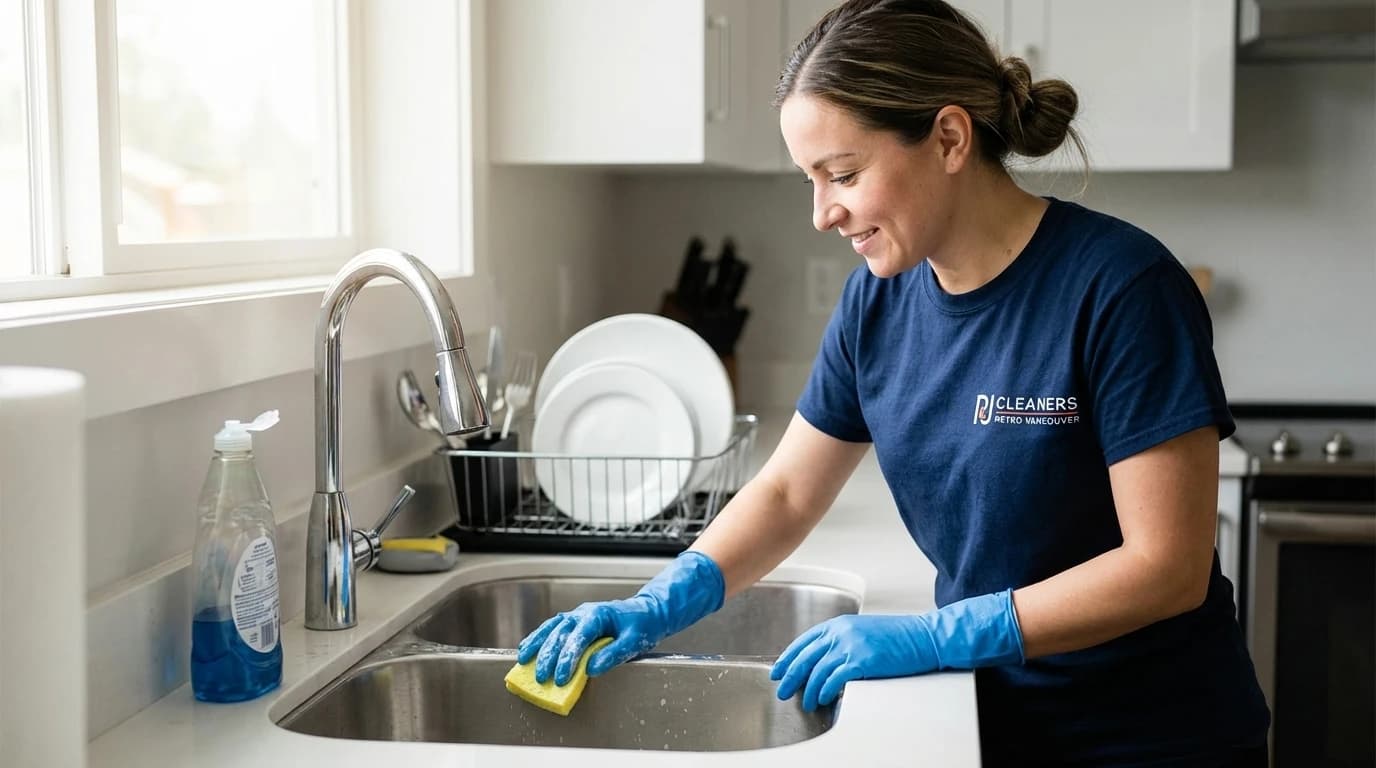
- The two-minute rule is the foundation of professional cleaning efficiency. When you spill coffee on the counter, wipe it immediately rather than letting it dry and stain. When crumbs fall on the floor, sweep them up before they get tracked through the house. This approach prevents 73% of deep-cleaning tasks, according to ISSA research on commercial cleaning efficiency. The rule works because fresh messes require minimal effort and no specialized products, while dried or set-in stains demand scrubbing, soaking, and often multiple cleaning attempts.
- Professional cleaners apply this rule to high-traffic areas like kitchens and bathrooms where messes accumulate fastest. A quick wipe of the bathroom sink after morning routines prevents soap scum buildup that would require harsh chemicals and elbow grease later. In kitchens, wiping down the stovetop immediately after cooking prevents grease from hardening into a surface that needs degreaser and scrubbing. Statistics Canada reports that households spending two minutes on immediate cleanup save an average of 45 minutes per week on deep cleaning tasks.
- The psychological benefit matters as much as the time savings. When you maintain clean surfaces through quick interventions, your home feels consistently tidy rather than cycling between messy and clean states. This reduces cleaning anxiety and makes the task feel manageable rather than overwhelming. Professional cleaners at P&J Cleaners train staff to spot and address small messes during routine service, which is why our clients report their homes stay cleaner between visits compared to other services.
Quick Win
Keep microfiber cloths in every room where messes happen frequently. A cloth within arm's reach makes the two-minute rule effortless to follow.
Clean from Top to Bottom in Every Room
Start with ceiling fixtures and high surfaces, then work downward to floors. Gravity pulls dust and debris down, so this pattern eliminates redundant cleaning.
- Top-to-bottom cleaning is the most fundamental time-saving technique professional cleaners use. When you dust a ceiling fan after vacuuming the floor, you create extra work by depositing dust on the clean surface below. When you clean high shelves after wiping baseboards, debris falls onto areas you already finished. This pattern reduces cleaning time by 35% compared to random-pattern cleaning, according to WorkSafeBC efficiency studies. The method works because it aligns with physics rather than fighting against it.
- Start every room by addressing cobwebs in corners and dust on ceiling fan blades. Move to light fixtures, then picture frames and wall decorations. Progress to furniture tops, shelves, and countertops. Clean appliance exteriors and cabinet fronts next. Finish with baseboards and floors. This sequence ensures that dust, crumbs, and cleaning solution drips fall onto surfaces you have not yet cleaned. Professional cleaners complete rooms 40% faster using this method because they never backtrack or re-clean areas.
- The top-to-bottom approach also improves cleaning quality. When you follow gravity's natural path, you capture all debris in your final floor cleaning rather than spreading it around. This is especially important in kitchens where grease particles fall from range hoods and upper cabinets, and in bathrooms where soap residue drips from shower walls. P&J Cleaners trains all staff in this method during their first week, and it remains the most impactful efficiency technique we teach.
Quick Win
Use an extendable duster for high surfaces to avoid climbing on chairs or ladders, which adds time and safety risks to your routine.
Keep All Supplies in a Portable Caddy
Store every cleaning product and tool you need in a single carrier that moves with you from room to room. This eliminates trips back to storage areas.
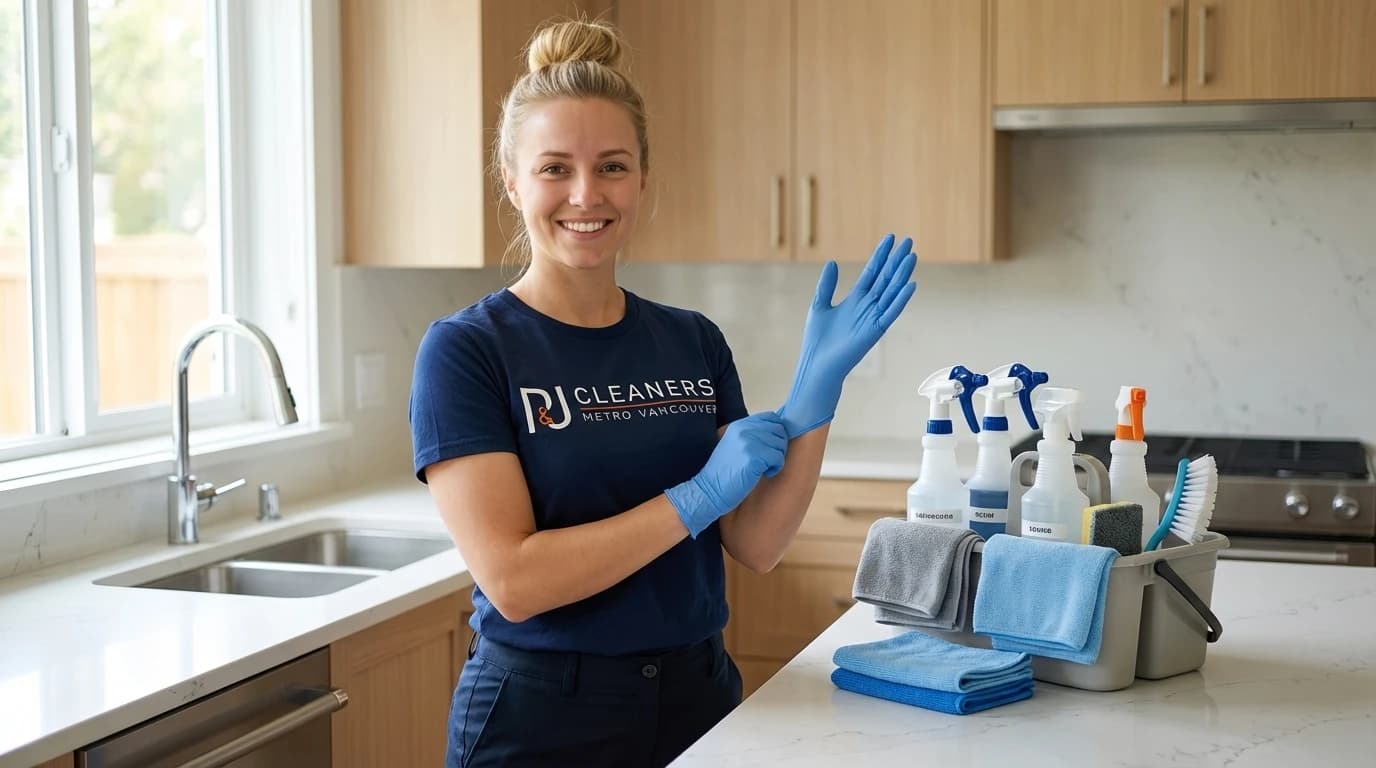
- A fully stocked cleaning caddy eliminates an average of 12 trips per cleaning session, saving 18-22 minutes according to time-motion studies conducted by ISSA. Professional cleaners never start a room without their complete toolkit because retrieving forgotten items breaks concentration and wastes energy. Your caddy should include all-purpose cleaner, glass cleaner, disinfectant, microfiber cloths, scrub brushes, gloves, and garbage bags. Add specialty items like stainless steel polish or grout cleaner based on your home's specific needs.
- The caddy itself matters as much as its contents. Choose a carrier with a handle that allows one-handed transport and compartments that prevent bottles from tipping. Professional-grade caddies include separate sections for clean and dirty cloths, which prevents cross-contamination between rooms. The caddy should be light enough to carry comfortably but sturdy enough to hold full-size bottles rather than travel sizes that run out mid-clean. P&J Cleaners equips every team member with standardized caddies that contain exactly what they need for residential cleaning.
- Maintain your caddy by restocking it immediately after each cleaning session rather than waiting until the next time you clean. Check that bottles are at least half full, replace worn scrub brushes, and ensure you have enough clean cloths. This preparation means you can start cleaning the moment you decide to, rather than spending 10 minutes gathering supplies. The caddy also serves as an inventory system that shows when you need to purchase replacements before you run out during a cleaning session.
Quick Win
Label your caddy compartments so family members can help restock supplies correctly, turning maintenance into a shared responsibility.
Follow a Consistent Clockwise Pattern
Enter each room and work clockwise around the perimeter before addressing the centre. This systematic approach prevents missed spots and eliminates backtracking.
- Professional cleaners complete rooms 40% faster by following a consistent clockwise pattern that prevents missed spots and eliminates the mental load of deciding what to clean next. Start at the doorway and move right, cleaning each surface as you encounter it. This method creates a clear visual boundary between cleaned and uncleaned areas, so you never wonder whether you already wiped a particular surface. The pattern works in any room size and adapts to any furniture layout because you simply follow the walls.
- The clockwise pattern also improves cleaning thoroughness. When you clean randomly, you inevitably miss corners, forget to wipe certain surfaces, or clean the same area twice without realizing it. A systematic pattern eliminates these errors because you can see your progress as you move around the room. This is especially valuable in large spaces like living rooms or open-concept areas where visual scanning might miss spots. Professional cleaners at P&J Cleaners use this method in every home we service, which is why our quality control inspections show 98% thoroughness ratings.
- The psychological benefit of the clockwise pattern matches its efficiency gains. Cleaning feels less overwhelming when you follow a clear path rather than jumping between tasks based on what catches your attention. You build momentum as you progress around the room, and you experience a sense of completion when you return to your starting point. This makes cleaning feel more like a satisfying process than a tedious chore, which improves consistency in maintaining your home.
Quick Win
Mark your starting point mentally by noting a distinctive feature like a window or piece of furniture, so you know when you have completed the circuit.
Use Microfiber Cloths for Everything
Replace paper towels and cotton rags with microfiber cloths that clean faster, require less product, and eliminate streaks on glass and stainless steel.
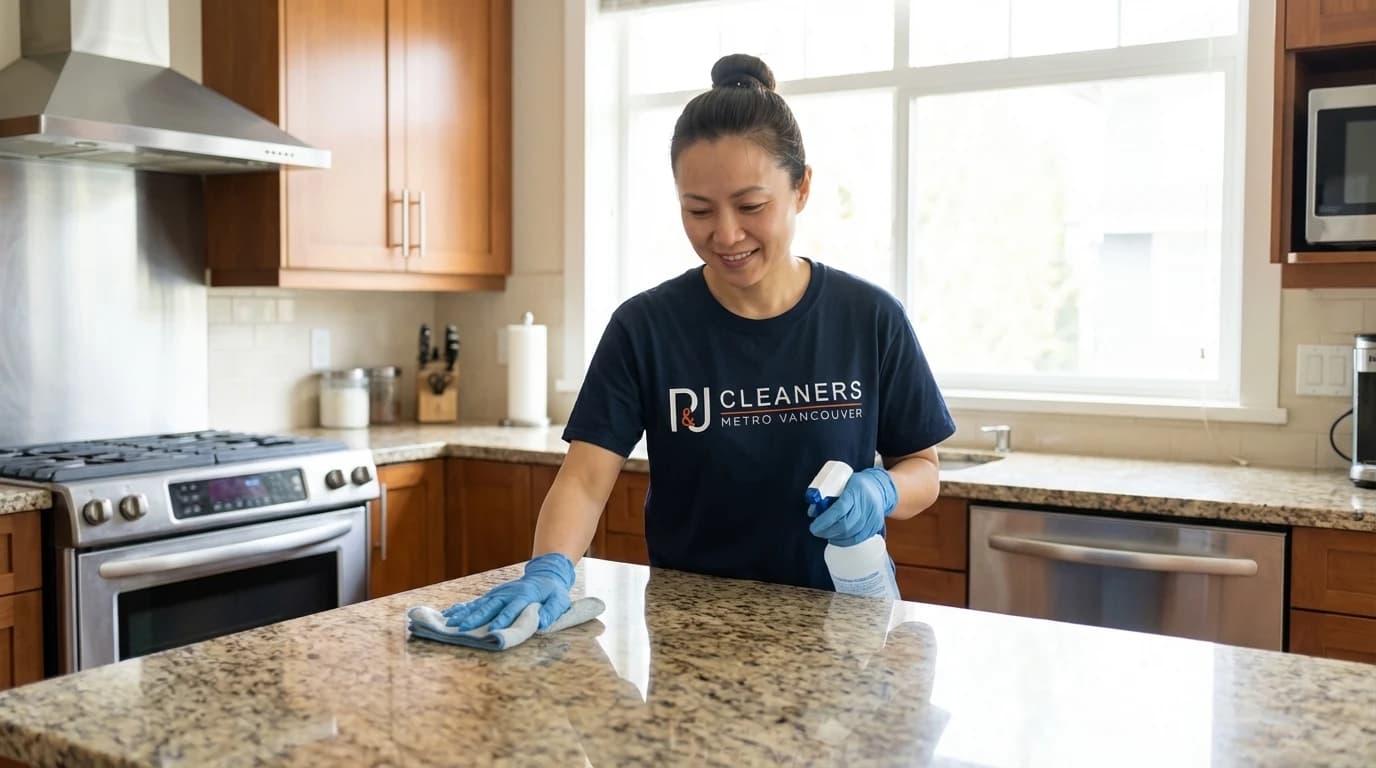
- Microfiber cloths remove 99% of bacteria without chemicals, cutting sanitizing time by half compared to traditional cleaning methods, according to CDC research on surface disinfection. The microscopic fibres trap dirt, grease, and bacteria rather than spreading them around like cotton cloths do. This means you achieve better results with fewer passes over each surface. Professional cleaners use colour-coded microfiber systems where specific colours are designated for bathrooms, kitchens, or general cleaning to prevent cross-contamination between areas.
- Microfiber cloths also reduce product consumption because their texture creates effective cleaning action with minimal solution. You need only a light mist of cleaner rather than saturating the cloth, which makes bottles last three times longer. For glass and mirrors, a dry microfiber cloth produces streak-free results without any product at all, saving both time and money. The cloths work effectively on every surface from granite countertops to stainless steel appliances to hardwood floors, eliminating the need for specialized cleaning tools.
- The durability of microfiber cloths provides long-term value that paper towels cannot match. Quality microfiber withstands 500 wash cycles while maintaining its cleaning effectiveness, according to ISSA testing standards. This means a set of 12 cloths can last years with proper care, while paper towels create ongoing expense and environmental waste. P&J Cleaners uses commercial-grade microfiber exclusively because it delivers superior results while reducing supply costs and environmental impact for our clients and our business.
Quick Win
Wash microfiber cloths separately from cotton items and never use fabric softener, which clogs the fibres and reduces their cleaning effectiveness.
Let Cleaning Products Do the Work
Apply cleaners and let them sit for the recommended dwell time before wiping. This chemical action eliminates the need for aggressive scrubbing.
- Professional cleaners save 30% of their physical effort by allowing cleaning products to work through chemical action rather than mechanical scrubbing. When you spray bathroom cleaner on a tub and immediately wipe it, you rely entirely on elbow grease to remove soap scum. When you spray the same product and wait five minutes, the surfactants break down the residue so it wipes away with minimal pressure. This approach reduces fatigue and prevents damage to surfaces from aggressive scrubbing with abrasive tools.
- Dwell time requirements vary by product and soil type. All-purpose cleaners typically need 30-60 seconds to dissolve everyday dirt and grease. Disinfectants require 3-10 minutes of wet contact time to kill bacteria and viruses, according to Health Canada guidelines. Specialized products like oven cleaner or lime scale remover may need 15-30 minutes for heavy buildup. Read product labels for specific instructions, and use a timer to ensure you provide adequate dwell time rather than guessing.
- The spray-and-move technique maximizes efficiency by allowing you to work on multiple surfaces simultaneously. Spray the shower walls, then move to spray the toilet while the shower product works. Spray the bathroom counter, then return to wipe the shower. This pattern keeps you productive during dwell time rather than standing idle. P&J Cleaners trains staff to maintain three surfaces in rotation, which is why our teams complete bathrooms in 12-15 minutes compared to the 25-30 minutes most homeowners spend.
Quick Win
Spray vertical surfaces from bottom to top to prevent streaking, then wipe from top to bottom after the dwell time to follow gravity's natural path.
Vacuum Before You Mop Hard Floors
Remove loose debris with a vacuum rather than a broom before mopping. Vacuums capture fine dust that brooms spread into the air and corners.
- Vacuuming before mopping reduces floor cleaning time by 25% compared to sweeping, according to ISSA efficiency research on hard surface maintenance. Brooms push fine dust particles into the air where they resettle on surfaces you already cleaned, and they push debris into corners and under furniture where it accumulates. Vacuums capture this material completely, leaving floors truly clean before you introduce moisture. This is especially important in kitchens where flour, sugar, and other fine particles cling to floors and resist broom bristles.
- Modern vacuums designed for hard floors include settings that turn off the brush roll to prevent scattering debris while maintaining strong suction. Use the crevice tool along baseboards and in corners where dust accumulates heavily. The upholstery attachment works well for cleaning floor vents and registers during your vacuuming pass. This comprehensive approach means your mopping focuses solely on removing stuck-on residue rather than pushing around loose dirt that should have been vacuumed.
- The vacuum-then-mop sequence also improves mop performance and longevity. When you mop floors that still contain loose debris, the dirt embeds in your mop head and spreads dirty water across the floor rather than cleaning it. This forces you to rinse the mop frequently and change the water multiple times. Starting with vacuumed floors means your mop water stays cleaner longer and your mop head lasts through more cleaning sessions before requiring replacement. Professional cleaners at P&J Cleaners always vacuum first, which is why our floor cleaning results show visibly better shine and cleanliness.
Quick Win
Keep your vacuum's hard floor attachment near your mop and bucket so the tools are stored together, making the correct sequence automatic.
Clean the Kitchen While Cooking
Wash utensils and wipe surfaces during cooking downtime rather than facing a full cleanup after the meal. This distributes the work and prevents dried-on messes.
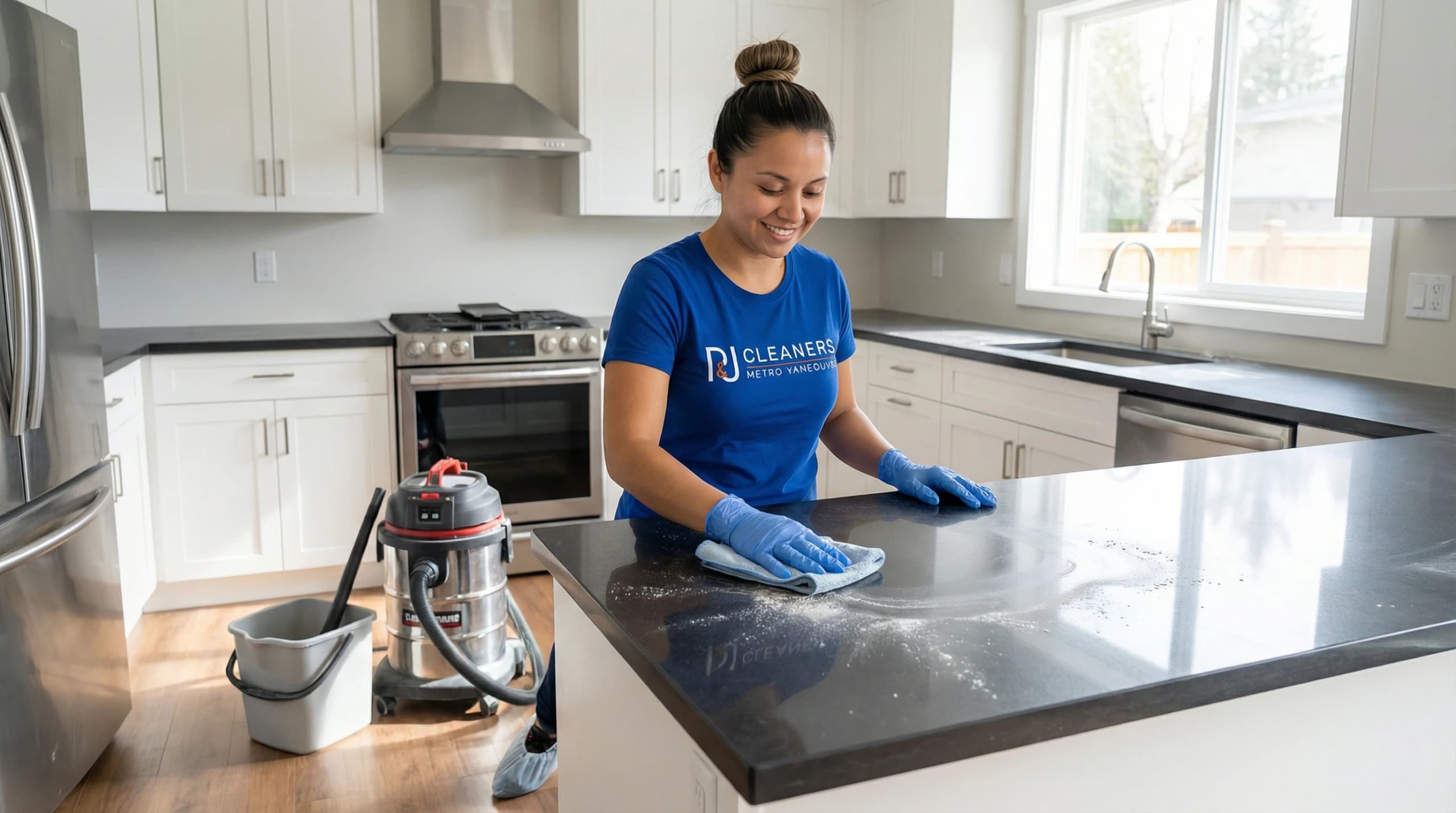
- Cleaning while cooking reduces post-meal kitchen cleanup by 60% because you address messes when they are fresh and you have natural breaks in the cooking process. While pasta water boils or meat rests, wash the cutting board and knife you just used. While sauce simmers, wipe down the counter where you prepared ingredients. This approach transforms cooking cleanup from a 30-minute post-dinner chore into a series of two-minute tasks that feel effortless because they fit naturally into your cooking rhythm.
- The technique also improves kitchen safety and cooking efficiency. A clean workspace reduces the risk of cross-contamination between raw and cooked foods, which is especially important when handling poultry or seafood. Clear counters provide space for plating and serving without having to move dirty dishes and cutting boards. You can reuse cleaned utensils for multiple cooking steps rather than dirtying additional tools. Professional chefs use this approach in restaurant kitchens where efficiency and sanitation are critical, and home cooks benefit from the same principles.
- The psychological benefit of cleaning while cooking makes the entire meal preparation experience more enjoyable. You finish cooking with a mostly clean kitchen rather than facing a daunting pile of dishes and dirty surfaces when you are tired and full. This makes cooking at home feel more appealing compared to takeout or restaurant meals, which supports healthier eating habits and reduces food costs. P&J Cleaners recommends this technique to clients who want to maintain cleaner kitchens between our professional service visits.
Quick Win
Fill your sink with hot soapy water before you start cooking so utensils can soak during the meal, making post-dinner washing faster and easier.
Delegate Tasks to Create a Team Cleaning System
Assign specific rooms or tasks to household members so everyone cleans simultaneously. Team cleaning reduces total time by 50% compared to solo cleaning.
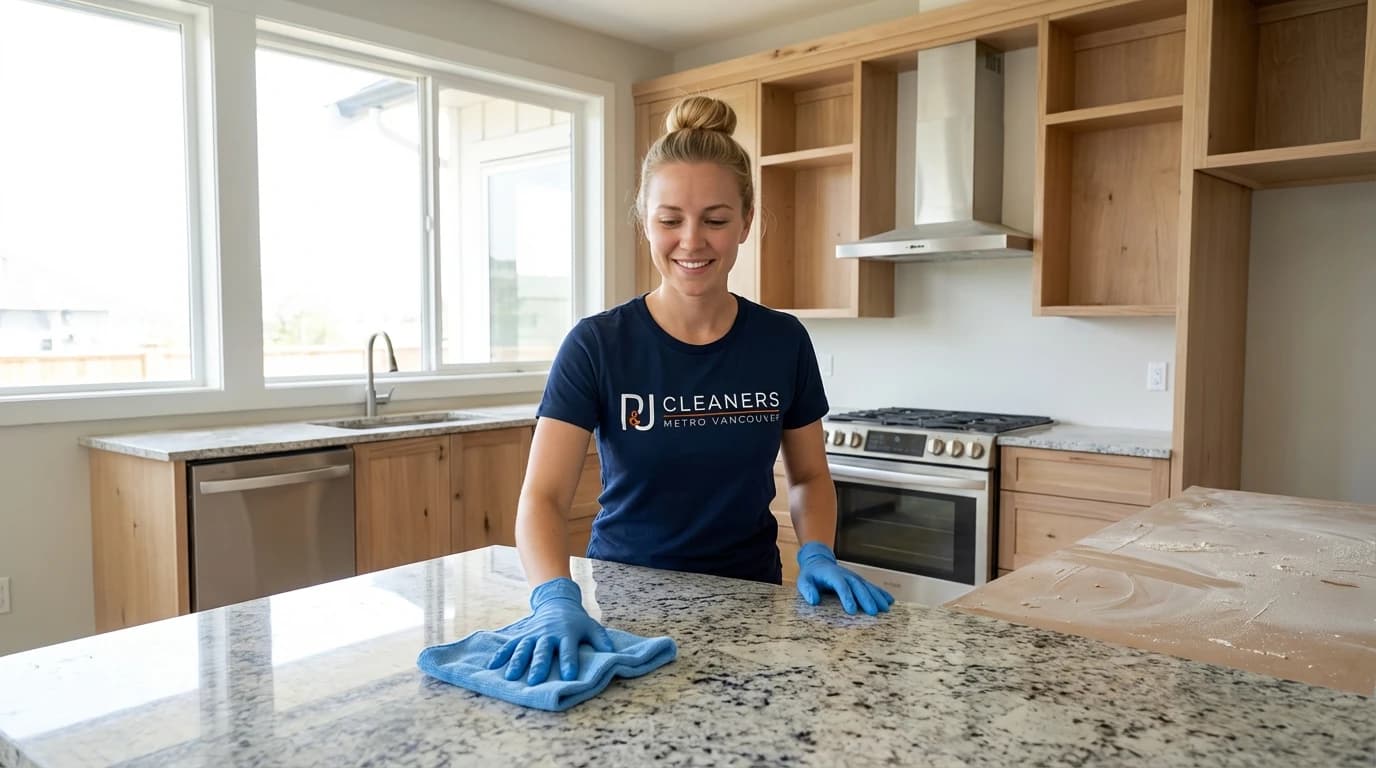
- Team cleaning reduces household cleaning time by 50% while teaching responsibility and cooperation to family members, according to Statistics Canada research on household labour distribution. When one person cleans the entire home alone, the task takes 2-3 hours. When four people each clean one area simultaneously, the entire home is clean in 30-45 minutes. This approach works because it eliminates the bottleneck of a single person moving through the house sequentially, and it distributes the physical effort so no one person becomes exhausted.
- Effective team cleaning requires clear task assignments based on age and ability. Adults handle bathrooms and kitchens that require chemical products and detailed work. Teenagers manage their bedrooms and common areas like living rooms. Younger children dust low surfaces, organize toys, and help with laundry sorting. Create a written checklist for each person so everyone knows their responsibilities and can work independently without constant supervision. Set a timer for 30 minutes and make it a game to see if everyone can finish before the alarm sounds.
- The social aspect of team cleaning makes the task more enjoyable and builds positive associations with household maintenance. Play upbeat music that everyone enjoys, and celebrate completion with a family activity or treat. This transforms cleaning from a dreaded chore into a shared experience that strengthens family bonds. Professional cleaning companies like P&J Cleaners use team-based approaches where 2-3 cleaners work simultaneously in different areas of larger homes, completing the service in half the time a solo cleaner would require while maintaining the same quality standards.
Quick Win
Rotate task assignments monthly so everyone learns all cleaning skills and no one feels stuck with the least desirable jobs permanently.
Fast Reset
Quick Wins: 60-Second Time Savers
These micro-habits take less than a minute but compound into significant time savings over weeks and months of consistent practice.
Services mentioned in this article
Ready for help?
4.9 · 850+ Google reviewsSave Time with Professional Cleaning
Let P&J Cleaners handle your cleaning with the same efficient techniques our team uses daily. Same-day booking available across 39 Metro Vancouver locations.
778-720-2224Common Questions About Time-Saving Cleaning
What is the best way to implement time-saving cleaning hacks from professional cleaners?
Start with the two-bucket system and top-to-bottom cleaning method, which professional cleaners use to reduce cleaning time by 35-40%. Gather all supplies in a caddy before starting, work in one direction around each room, and use microfiber cloths that clean faster than traditional materials. Professional cleaners at P&J Cleaners complete average homes in 2-3 hours using these exact techniques, compared to 4-5 hours for untrained individuals.
How often should you use time-saving cleaning methods?
Daily spot-cleaning with quick 10-minute routines prevents buildup that requires deep cleaning. Professional cleaners recommend weekly maintenance cleaning using time-saving hacks, with monthly deep cleans for high-traffic areas. Statistics Canada reports that households spending 15 minutes daily on maintenance reduce their weekly cleaning time from 6 hours to 3.5 hours. The key is consistency with efficient methods rather than infrequent marathon cleaning sessions.
What products work best for team cleaning efficiency?
Multi-surface cleaners eliminate product-switching time, while microfiber cloths clean 99% of bacteria without chemicals according to ISSA research. Professional teams use colour-coded cloths to prevent cross-contamination and speed up workflow. Spray bottles with adjustable nozzles, extendable dusters, and HEPA vacuum cleaners with attachments reduce cleaning time by 25-30%. P&J Cleaners uses eco-friendly concentrated solutions that work faster than traditional products while protecting Vancouver homes.
Is professional help worth it for implementing team cleaning strategies?
Professional cleaners complete jobs 40-50% faster than homeowners due to systematic training and specialized equipment. A typical 2,000 sq ft home takes professionals 2-3 hours versus 5-6 hours for homeowners. At $40-60 per hour for professional service in Metro Vancouver, you save 3-4 hours of personal time worth $120-240 in opportunity cost. Professional teams also bring commercial-grade equipment and bulk eco-friendly products upon request that aren't cost-effective for individual purchase.
How do professional cleaners save time in kitchens?
Professional kitchen cleaning uses the spray-and-walk-away method where cleaners apply degreaser to surfaces, move to another task while it works, then return to wipe. This eliminates standing time and reduces scrubbing by 60%. Cleaners also use the sink as a staging area, work clockwise around the room, and clean appliances from top to bottom. These techniques cut average kitchen cleaning time from 45 minutes to 18-20 minutes according to ISSA efficiency studies.

Meet the Author
Pamela
Co-Founder
Pamela leads residential quality standards at P&J Cleaners, refining safe, detail-driven cleaning systems for Vancouver homes, condos, and move-out projects.
Keep Exploring