

Industry Overview
Understanding Retail Cleaning Standards in British Columbia
Retail environments face unique cleaning challenges due to constant foot traffic, product handling, and seasonal inventory fluctuations. Statistics Canada reports that Metro Vancouver retail spaces average 847 customer visits per week during regular seasons, increasing to 1,340 visits weekly during holiday periods. This traffic generates significant contamination risks, with BC Health Authority studies showing that 68% of retail illness outbreaks originate from inadequate surface sanitization. Store managers must balance cleaning operations with business hours, customer experience, and regulatory compliance to maintain safe shopping environments.
The retail cleaning industry in British Columbia operates under strict provincial guidelines established by WorkSafeBC and municipal health departments. These regulations mandate specific cleaning frequencies, chemical usage protocols, and documentation requirements that vary by store type and square footage. Grocery stores require daily sanitization of all food-contact surfaces, while clothing retailers focus on fitting room hygiene and display maintenance. The City of Vancouver's retail health inspection program conducts quarterly audits, with non-compliance resulting in fines ranging from $500 to $5,000 depending on violation severity.
Seasonal variations dramatically impact retail cleaning requirements throughout the year. Winter months bring increased mud, salt residue, and respiratory illness transmission, requiring enhanced entrance matting and HVAC filter maintenance. Spring cleaning focuses on deep carpet extraction and window washing to remove winter buildup. Summer demands air quality management and pest prevention protocols, while fall preparations include inventory area sanitization before holiday stock arrivals. Professional cleaning services adapt protocols quarterly to address these changing needs while maintaining consistent baseline standards.
847-1,340 visitors
Average Weekly Foot Traffic
Source: Statistics Canada Retail Survey 2025
68% from surfaces
Illness Outbreak Origin
Source: BC Health Authority Retail Study
$500-$5,000
Non-Compliance Fine Range
Source: City of Vancouver Health Inspection Program
58% during holidays
Seasonal Traffic Increase
Source: Metro Vancouver Retail Association
Compliance priorities
Daily sanitization logs documenting all high-touch surface cleaning with timestamps and staff initials as required by WorkSafeBC retail guidelines • Proper chemical storage in locked cabinets with Safety Data Sheets accessible to all staff, meeting WHMIS 2015 labelling and training standards • Quarterly deep-cleaning of HVAC systems and air ducts to maintain indoor air quality standards set by BC Building Code Section 5.4 • Bloodborne pathogen response protocols for fitting rooms and washrooms, including spill kits and staff training per WorkSafeBC OHS Regulation 5.11 • Food-safe sanitizer usage in grocery and food retail environments, with Health Canada-approved products meeting DIN registration requirements • Documented staff training records showing completion of retail cleaning safety courses within 30 days of hire, updated annually
Seasonal Cleaning Protocols for Retail Environments
Effective retail cleaning requires zone-based protocols that adapt to seasonal demands while maintaining year-round baseline standards. Each retail area presents distinct contamination risks and cleaning frequencies.
Entrance and Vestibule Zones
Entry areas experience the highest contamination rates due to outdoor debris transfer and concentrated foot traffic during all seasons.
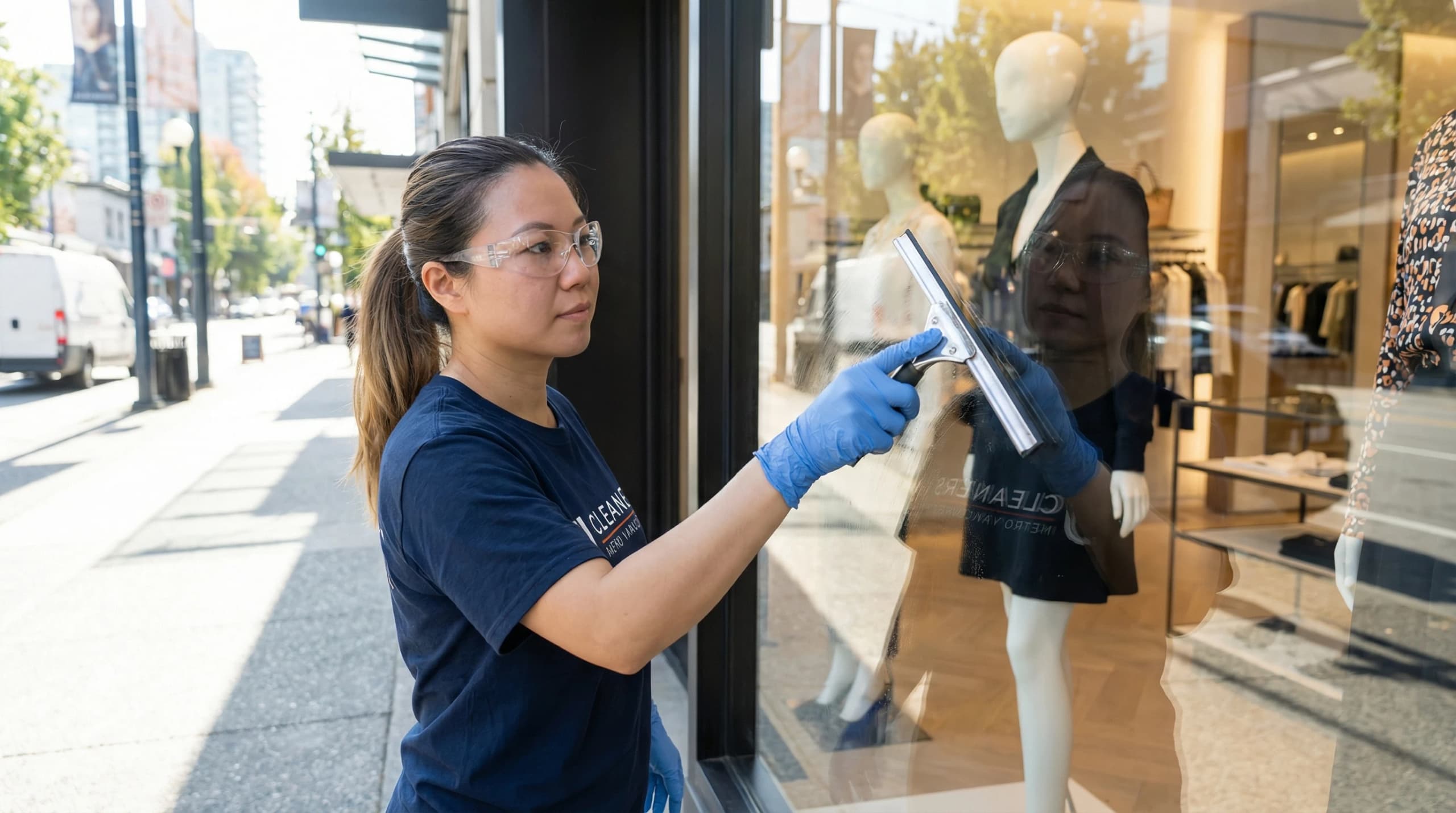
Entrance zones require the most intensive seasonal adaptation of any retail area. Winter months demand hourly mat maintenance and salt residue removal to prevent slip hazards and floor damage. The ISSA Clean Standard reports that proper entrance matting removes 80% of tracked-in soil within the first 12 feet of entry, but only when mats are cleaned or replaced every 2-3 hours during wet weather. Store managers should install three-zone matting systems: scraper mats outside, absorption mats in vestibules, and finishing mats inside the store threshold.
Spring and fall transitions bring increased moisture and organic debris that create slip hazards and odour issues. Daily pressure washing of exterior entrance areas prevents mold growth on concrete surfaces, while bi-weekly deep extraction of interior mats removes embedded soil that regular vacuuming misses. Automatic door tracks accumulate debris that interferes with sensor operation, requiring weekly cleaning with compressed air and degreasing agents. Glass entrance doors need daily cleaning during rainy seasons to maintain visibility and professional appearance.
Summer entrance maintenance focuses on dust control and pest prevention. Weekly power washing of sidewalks and entrance areas reduces airborne particulates that customers track inside. Door sweeps and threshold seals require monthly inspection and replacement to prevent insect entry, particularly important for food retail locations. Air curtain systems above entrance doors need quarterly filter cleaning to maintain effectiveness in temperature control and pest exclusion.
- Replace or clean entrance mats every 2-3 hours during wet weather to maintain 80% soil capture effectiveness
- Install three-zone matting systems totaling 15-20 feet of coverage to meet ISSA Clean Standard recommendations
- Pressure wash exterior entrance areas weekly during spring and fall, monthly during summer and winter
- Clean automatic door tracks weekly with compressed air and degreasing agents to prevent sensor malfunction
- Inspect and replace door sweeps monthly during summer months to maintain pest exclusion barriers
- Service air curtain systems quarterly with filter cleaning and motor inspection
Recommended Frequency
Hourly mat maintenance (winter), daily glass cleaning, weekly pressure washing
Checkout and Payment Processing Areas
Point-of-sale zones require continuous sanitization due to constant hand contact and cash handling throughout all seasons.
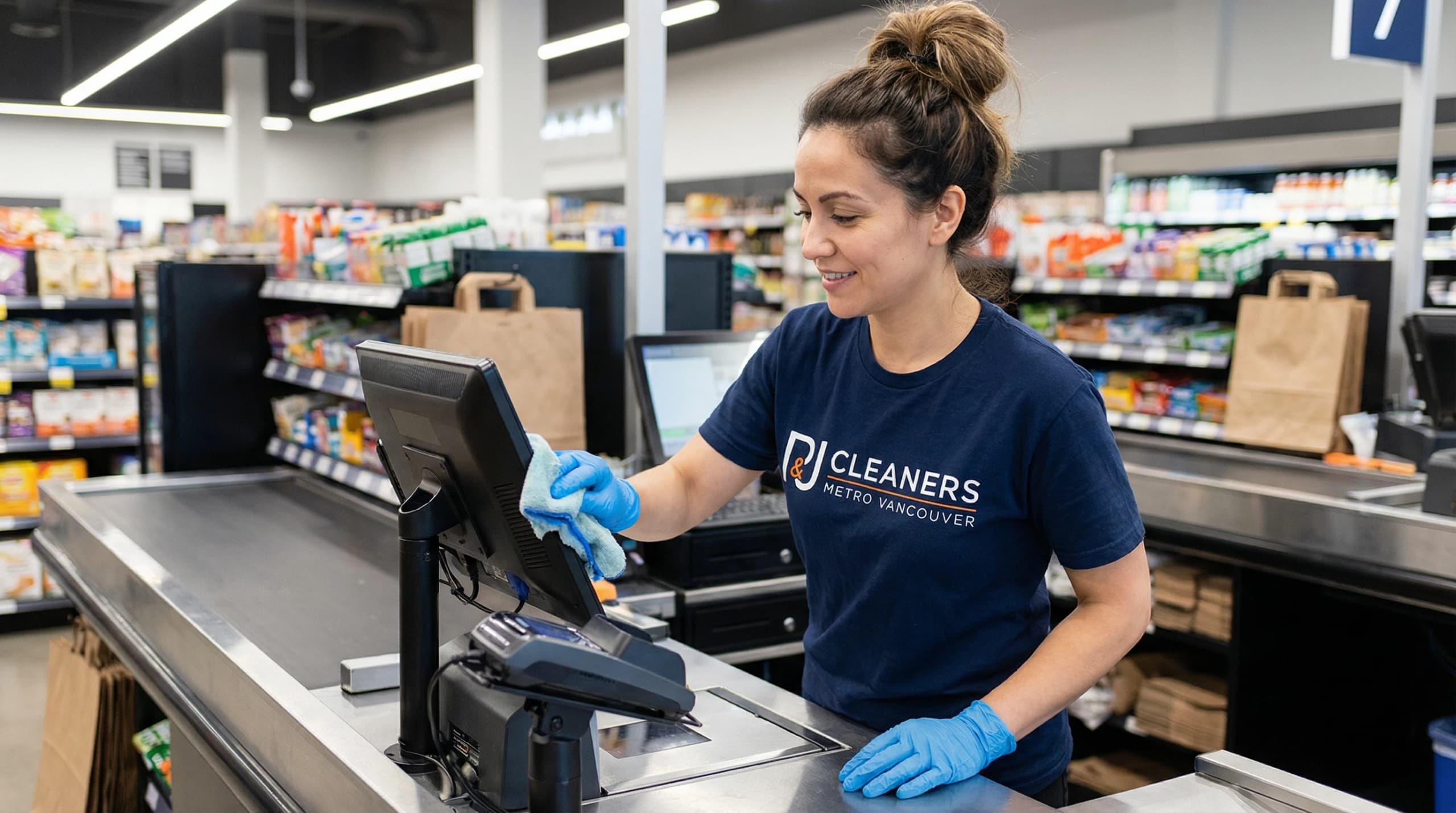
Checkout counters represent the highest-touch surfaces in retail environments, with each terminal contacted by 200-400 customers daily according to retail traffic studies. Payment terminals, conveyor belts, and counter surfaces accumulate bacteria, viruses, and product residue that create health risks and unprofessional appearances. The CDC recommends sanitizing high-touch retail surfaces every 2-4 hours during regular operations, increasing to hourly during cold and flu season from November through March. Store managers should implement colour-coded microfiber systems to prevent cross-contamination between checkout areas and other zones.
Seasonal illness patterns require enhanced checkout sanitization protocols during winter months when respiratory virus transmission peaks. Studies show that 43% of retail workers contract seasonal illnesses from customer contact at checkout areas, resulting in staffing shortages during critical holiday periods. Implementing touchless payment systems reduces surface contact but doesn't eliminate the need for regular sanitization of PIN pads, signature screens, and receipt printers. Alcohol-based sanitizers with 70% isopropyl alcohol content provide rapid kill times for most retail pathogens while evaporating quickly to prevent equipment damage.
Summer months present different checkout challenges, including increased beverage spills and product melting that create sticky residues on counters and conveyor systems. Daily degreasing of checkout areas prevents buildup that attracts insects and creates unprofessional appearances. Conveyor belt cleaning requires specialized attention, with weekly removal and scrubbing to eliminate embedded debris from roller mechanisms. Cash drawer areas accumulate dust and paper fibers that interfere with bill counters and coin dispensers, requiring monthly compressed air cleaning and quarterly professional servicing.
- Sanitize checkout counters and payment terminals every 2-4 hours during regular seasons, hourly during November-March flu season
- Use colour-coded microfiber cloths dedicated exclusively to checkout areas to prevent cross-contamination with other zones
- Apply 70% isopropyl alcohol sanitizers to electronic payment equipment, allowing 30-second contact time before wiping
- Remove and scrub conveyor belts weekly to eliminate embedded debris and product residue from roller mechanisms
- Clean cash drawers monthly with compressed air to remove dust and paper fibers affecting currency handling equipment
- Replace checkout area microfiber cloths every 4 hours during peak traffic periods to maintain sanitization effectiveness
Recommended Frequency
Every 2-4 hours (regular season), hourly (flu season), daily degreasing, weekly conveyor maintenance
Fitting Rooms and Customer Facilities
Private customer areas require specialized protocols addressing privacy concerns, bodily fluid risks, and seasonal usage pattern variations.
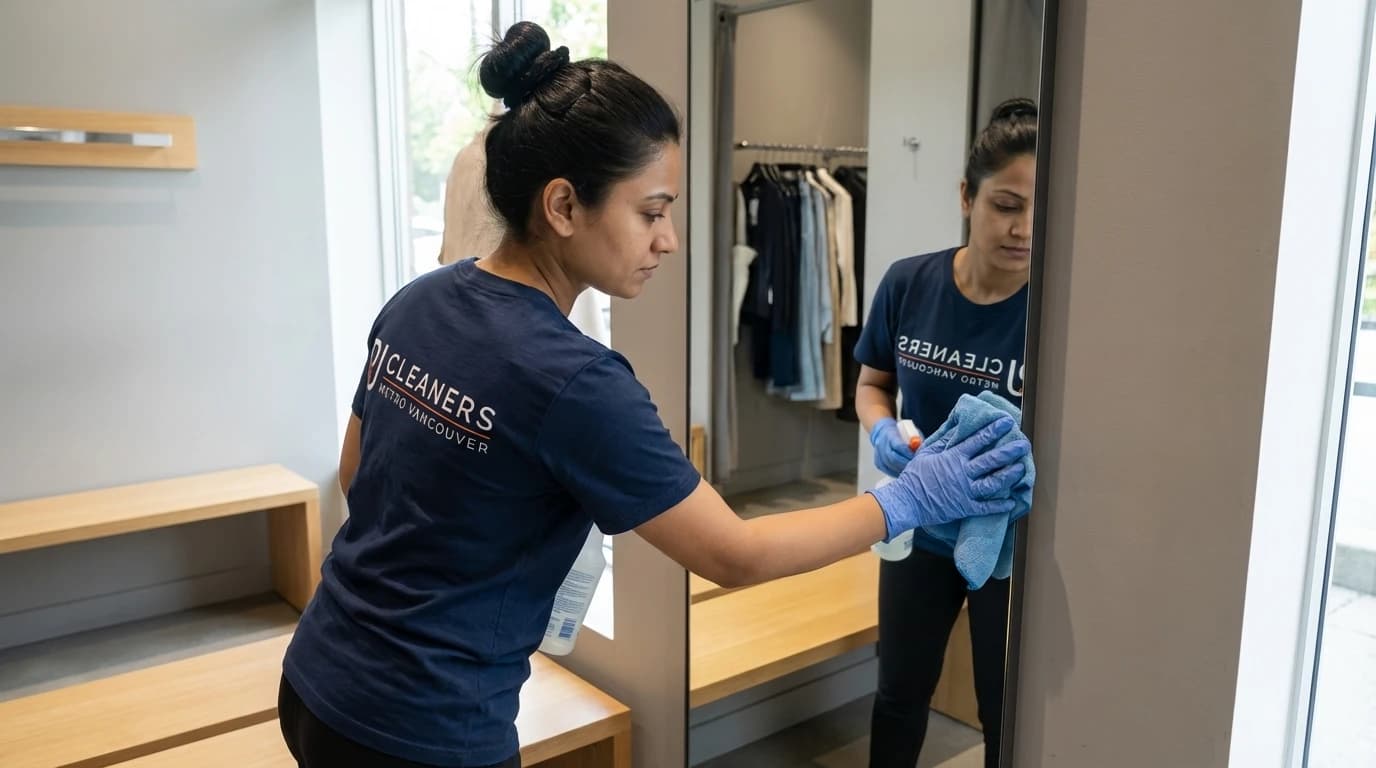
Fitting rooms present unique cleaning challenges due to privacy requirements, confined spaces, and potential exposure to bodily fluids. WorkSafeBC regulations classify fitting room cleaning as requiring bloodborne pathogen training due to risks from menstrual blood, vomit, and other biological materials. Store managers must provide staff with appropriate PPE including nitrile gloves, face shields, and disposable aprons when cleaning fitting rooms. Seasonal variations affect fitting room usage dramatically, with winter coat try-ons creating different contamination patterns than summer swimwear fittings.
Mirrors, benches, and door handles in fitting rooms require sanitization after each customer use during peak shopping seasons, though this proves impractical during high-traffic periods. A more realistic protocol involves scheduled sanitization every 30-60 minutes during busy periods, with immediate cleaning if visible contamination occurs. Hooks and hangers accumulate skin oils and product transfer that create unsightly buildup, requiring weekly removal and soaking in degreasing solutions. Carpet or flooring in fitting rooms traps hair, lint, and product tags that daily vacuuming alone cannot remove, necessitating monthly deep extraction or scrubbing.
Seasonal inventory changes affect fitting room cleaning requirements significantly. Winter clothing try-ons generate salt stains and moisture that damage flooring and create slip hazards, requiring hourly floor checks and immediate spot cleaning. Summer swimwear season demands enhanced sanitization protocols due to direct skin contact with surfaces, with some retailers implementing disposable seat covers or requiring customers to keep undergarments on during try-ons. Spring and fall transitions bring increased fitting room traffic as customers update seasonal wardrobes, requiring additional staffing for cleaning maintenance during these peak periods.
- Sanitize mirrors, benches, and door handles every 30-60 minutes during peak traffic, immediately after visible contamination
- Provide staff with bloodborne pathogen PPE including nitrile gloves, face shields, and disposable aprons per WorkSafeBC requirements
- Remove and soak hooks and hangers weekly in degreasing solutions to eliminate skin oil and product transfer buildup
- Perform deep carpet extraction or floor scrubbing monthly to remove embedded hair, lint, and debris from fitting room flooring
- Conduct hourly floor checks during winter months to address salt stains and moisture creating slip hazards
- Implement enhanced sanitization protocols during summer swimwear season with surface disinfection after each customer use
Recommended Frequency
Every 30-60 minutes (peak periods), immediate spot cleaning, weekly hook maintenance, monthly deep cleaning
Sales Floor and Product Display Areas
Merchandise zones require gentle cleaning methods that protect products while removing dust and maintaining visual appeal across seasons.
Sales floor cleaning presents the challenge of maintaining cleanliness without damaging merchandise or disrupting customer shopping experiences. Product displays accumulate dust at varying rates depending on season and store ventilation, with winter heating systems and summer air conditioning both contributing to airborne particulate circulation. The ISSA reports that retail display surfaces accumulate 0.3-0.8 grams of dust per square meter weekly, requiring regular maintenance to prevent visible buildup that signals poor store maintenance to customers. Microfiber dusting tools capture particles without chemical sprays that might damage products or create odours.
Seasonal merchandise rotations provide natural opportunities for deep cleaning of display fixtures and shelving. Winter-to-spring transitions allow thorough cleaning of shelving units before new inventory placement, including removal of price tag adhesive residue and accumulated dust from winter static electricity. Summer inventory changes enable deep cleaning of refrigerated display cases in grocery and convenience stores, addressing condensation buildup and mold growth in door seals. Fall preparations before holiday inventory arrivals should include complete display fixture sanitization and floor refinishing in high-traffic aisles.
Floor maintenance in sales areas requires careful scheduling to avoid customer disruption while maintaining safety standards. Daily dust mopping or dry sweeping removes tracked-in debris that creates slip hazards and damages floor finishes through abrasive action. Weekly damp mopping with pH-neutral cleaners maintains floor appearance without leaving residues that attract soil. Quarterly floor refinishing during overnight hours restores protective coatings that prevent permanent staining and reduce daily maintenance requirements. High-traffic aisles near entrances and checkout areas may require monthly refinishing to maintain consistent appearance throughout the store.
- Dust product displays and shelving weekly using microfiber tools to capture 0.3-0.8 grams per square meter of accumulated particles
- Schedule deep cleaning of display fixtures during seasonal merchandise rotations to minimize disruption and maximize efficiency
- Remove price tag adhesive residue and accumulated dust from shelving units before placing new seasonal inventory
- Perform daily dust mopping or dry sweeping of sales floor to remove abrasive debris protecting floor finishes
- Conduct weekly damp mopping with pH-neutral cleaners to maintain appearance without leaving soil-attracting residues
- Refinish floors quarterly during overnight hours, with monthly touch-ups in high-traffic aisles near entrances and checkouts
Recommended Frequency
Daily dust mopping, weekly display dusting, weekly damp mopping, quarterly floor refinishing
Stockrooms and Receiving Areas
Back-of-house zones require industrial cleaning methods addressing cardboard dust, pest prevention, and seasonal inventory volume fluctuations.
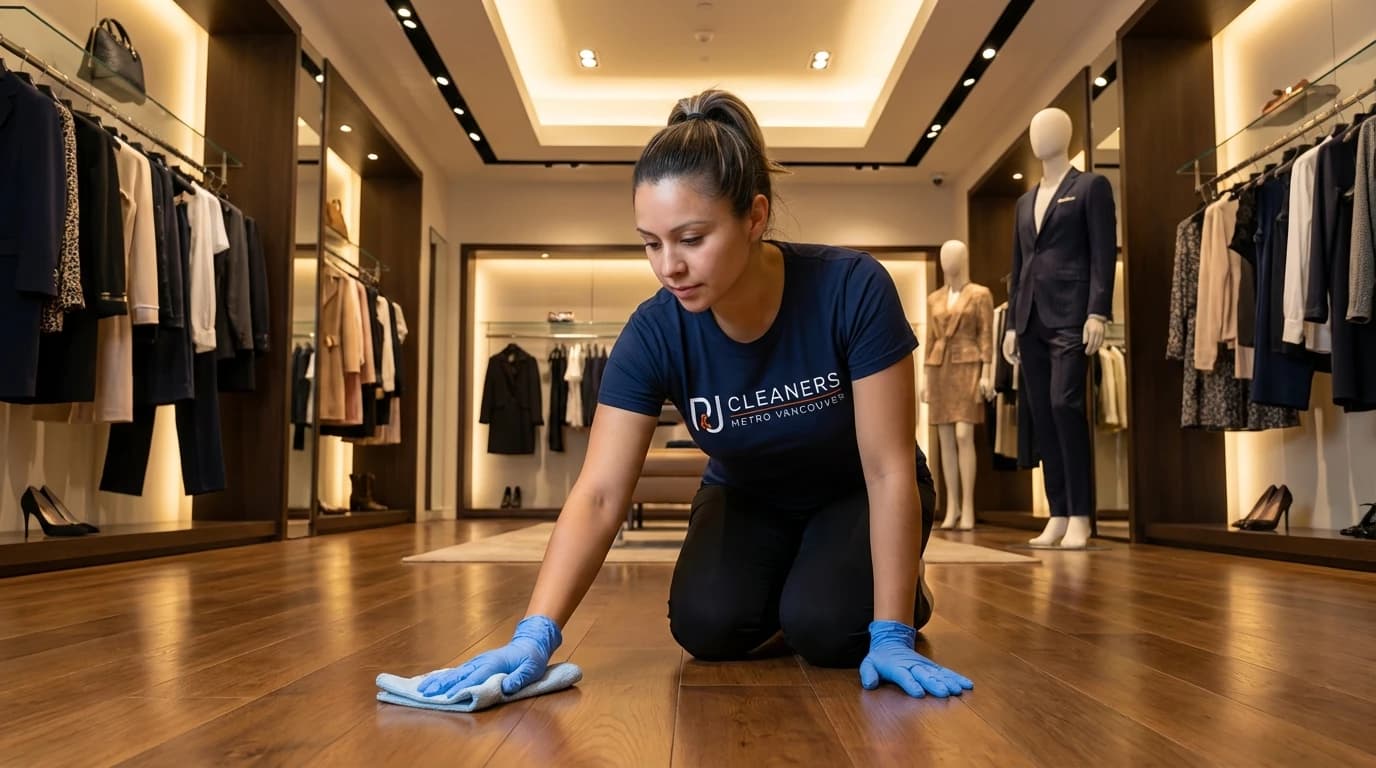
Stockrooms and receiving areas generate significant contamination from cardboard boxes, packing materials, and outdoor loading dock access. Cardboard dust accumulates rapidly in storage areas, with a single pallet of boxed inventory generating 15-30 grams of paper fiber particles during unpacking according to warehouse management studies. This dust creates respiratory hazards for staff and provides food sources for insects and rodents. Daily sweeping or vacuuming of stockroom floors prevents dust accumulation, while weekly compressed air cleaning of shelving units removes particles from elevated surfaces where manual cleaning proves difficult.
Seasonal inventory fluctuations dramatically impact stockroom cleaning requirements and pest control needs. Holiday season inventory increases from October through December bring 40-60% more cardboard and packing materials into back-of-house areas, requiring enhanced cleaning frequencies and waste removal protocols. Summer months present increased pest pressure as insects seek indoor shelter from heat, making monthly professional pest control treatments essential for food retail locations. Spring cleaning should include complete stockroom organization and deep cleaning before summer inventory arrivals, while fall preparations focus on rodent exclusion before winter weather drives pests indoors.
Loading dock areas require specialized cleaning protocols addressing outdoor contamination transfer and safety hazards. Daily sweeping of dock plates and ramps prevents debris accumulation that creates trip hazards and damages equipment wheels. Weekly pressure washing of loading docks removes oil stains, organic matter, and salt residue that attract pests and create slip hazards. Dock door seals and weather stripping require quarterly inspection and replacement to maintain temperature control and pest exclusion. Overhead door tracks accumulate debris that interferes with operation, requiring monthly cleaning and lubrication to prevent costly repairs and safety incidents.
- Sweep or vacuum stockroom floors daily to prevent accumulation of 15-30 grams of cardboard dust per pallet unpacked
- Clean shelving units weekly with compressed air to remove paper fiber particles from elevated surfaces
- Increase cleaning frequency by 40-60% during October-December holiday inventory periods to manage additional packing materials
- Implement monthly professional pest control treatments during summer months when insect pressure peaks
- Pressure wash loading docks weekly to remove oil stains, organic matter, and salt residue attracting pests
- Inspect and replace dock door seals quarterly to maintain temperature control and pest exclusion effectiveness
Recommended Frequency
Daily floor sweeping, weekly shelving cleaning, weekly dock pressure washing, monthly pest control
Customer and Staff Washroom Facilities
Restroom areas require the most intensive sanitization protocols due to pathogen risks and direct impact on customer perception of store cleanliness.
Retail washrooms represent the highest contamination risk areas in stores, with surfaces exposed to fecal bacteria, respiratory droplets, and other pathogens. BC Health Authority guidelines require retail washrooms to be cleaned and sanitized at minimum every 4 hours during operating hours, with high-traffic locations requiring 2-hour intervals. Toilet seats, flush handles, faucets, and door handles must be sanitized with EPA-registered disinfectants providing appropriate contact times for pathogen elimination. Store managers should implement cleaning logs posted inside washrooms documenting each cleaning event with staff initials and timestamps to demonstrate compliance during health inspections.
Seasonal variations affect washroom usage patterns and cleaning requirements throughout the year. Winter months bring increased washroom traffic as customers seek warm indoor spaces, while cold and flu season elevates pathogen transmission risks requiring enhanced sanitization frequencies. Summer tourist seasons in Metro Vancouver retail districts increase washroom usage by 35-50% according to tourism statistics, necessitating additional cleaning staff during peak periods. Spring and fall shoulder seasons provide opportunities for deep cleaning projects including grout restoration, fixture descaling, and exhaust fan maintenance that prove difficult during high-traffic periods.
Washroom supply management directly impacts cleaning effectiveness and customer satisfaction. Soap dispensers require daily refilling and weekly cleaning to prevent bacterial growth in residual soap films. Paper towel dispensers need multiple daily checks during peak seasons to prevent empty dispenser complaints that damage store reputation. Toilet paper holders should be checked hourly during busy periods, with backup rolls stored in each stall to prevent customer inconvenience. Air freshener systems require monthly cartridge replacement and quarterly deep cleaning to prevent buildup that reduces effectiveness and creates unprofessional appearances.
- Clean and sanitize washrooms every 2-4 hours during operating hours per BC Health Authority retail guidelines
- Apply EPA-registered disinfectants to toilet seats, flush handles, faucets, and door handles with appropriate contact times
- Post cleaning logs inside washrooms documenting each cleaning event with staff initials and timestamps for health inspections
- Increase cleaning frequency by 35-50% during summer tourist season to accommodate elevated washroom usage
- Refill soap dispensers daily and clean weekly to prevent bacterial growth in residual soap films
- Check toilet paper and paper towel supplies hourly during peak periods, with backup rolls stored in each stall
Recommended Frequency
Every 2-4 hours during operating hours, hourly supply checks, daily soap refills, monthly air freshener service
Cost Analysis and Return on Investment for Retail Cleaning
Professional retail cleaning delivers measurable returns through increased sales, reduced liability, and improved operational efficiency across all seasons.
Retail cleaning costs in Metro Vancouver range from $45-$65 per hour depending on store size, service frequency, and specialized requirements. A typical 2,500 square foot retail location requires 15-20 hours of weekly cleaning service, translating to monthly costs of $2,700-$5,200 for comprehensive programs. Quarterly deep-cleaning services add $800-$1,500 per event, while seasonal projects like carpet extraction or window washing range from $400-$900 depending on scope. Store managers can reduce costs by 18-22% through annual contracts that guarantee consistent service scheduling and eliminate emergency cleaning premiums.
The return on investment for professional retail cleaning extends beyond direct cost comparisons to encompass customer satisfaction, employee health, and regulatory compliance benefits. Studies by the National Retail Federation show that 76% of customers form first impressions of store quality based on cleanliness, with 43% of shoppers avoiding stores they perceive as dirty. Clean retail environments increase average transaction values by 12-18% and customer dwell time by 8-14 minutes according to retail analytics research. Employee sick days decrease by 23-31% in professionally cleaned retail locations, reducing staffing disruptions during critical sales periods.
Seasonal cleaning investments prevent costly emergency repairs and regulatory penalties that far exceed routine maintenance expenses. Winter salt damage to flooring costs $8-$15 per square foot to repair, while preventive daily cleaning costs only $0.15-$0.30 per square foot. Pest infestations resulting from inadequate stockroom cleaning generate remediation costs of $2,000-$5,000 plus potential health department closures during treatment. Health inspection violations carry fines of $500-$5,000 per incident, with repeat violations triggering operating permit suspensions that cost thousands in lost daily revenue. Professional cleaning programs with documented compliance protocols prevent these expensive scenarios while maintaining consistent store standards.
In-House Cleaning
- Staff wages: $18-$24/hr plus benefits
- Equipment purchase: $3,000-$8,000 initial
- Chemical supplies: $200-$400 monthly
- Training costs: $500-$1,200 annually
- Supervision time: 5-10 hrs weekly
- Inconsistent quality during staff turnover
- Limited specialized equipment access
- No liability insurance coverage
Professional Service
- Service rate: $45-$65/hr all-inclusive
- No equipment investment required
- Chemicals included in service rate
- Trained staff provided by contractor
- Minimal management oversight needed
- Consistent quality with backup staff
- Industrial equipment for deep cleaning
- $2M+ liability insurance included
76% form first impressions from cleanliness
Customer Satisfaction Impact
12-18% in clean environments
Transaction Value Increase
23-31% with professional cleaning
Employee Sick Day Reduction
18-22% vs. ad-hoc scheduling
Annual Contract Savings
$0.15-$0.30/sqft vs. $8-$15/sqft
Preventive vs. Repair Costs
8-14 minutes in clean stores
Customer Dwell Time Increase
- Reduced liability exposure through documented cleaning protocols and professional insurance coverage protecting against slip-and-fall claims
- Improved employee morale and retention as staff work in clean, well-maintained environments with professional support
- Enhanced brand reputation through consistent cleanliness standards that reinforce premium positioning and customer trust
- Regulatory compliance assurance with documented cleaning logs and trained staff meeting WorkSafeBC and health department requirements
- Extended asset lifespan for flooring, fixtures, and equipment through proper maintenance preventing premature replacement costs
- Flexible scheduling that adapts to seasonal traffic patterns without hiring and training additional in-house staff
- Access to specialized equipment and techniques for deep cleaning projects that in-house staff cannot perform effectively
- Predictable budgeting with fixed monthly costs eliminating surprise expenses from equipment repairs or supply shortages
Seasonal Retail Cleaning Compliance Checklist
Use this comprehensive checklist to ensure your retail cleaning program meets all regulatory requirements and industry best practices throughout the year. Store managers should review compliance quarterly and document all completed items for health inspection readiness.
Services mentioned in this article
Ready for help?
4.9 · 850+ Google reviewsReady for Year-Round Retail Excellence?
P&J Cleaners delivers customized seasonal retail cleaning programmes across Metro Vancouver. Our bonded teams work around your schedule with eco-friendly products upon request and a satisfaction guarantee.
778-720-2224Seasonal Retail Cleaning Questions
What are retail cleaning standards?
Retail cleaning standards include daily sanitization of high-touch surfaces, weekly floor maintenance, monthly deep cleaning of fixtures, and quarterly HVAC filter replacement. WorkSafeBC requires visible cleanliness, proper waste disposal, and documented cleaning logs. Vancouver Coastal Health mandates food-safe sanitizers in grocery settings and touchpoint disinfection every two hours during flu season. Standards vary by retail category but all require trained staff using approved products.
How often should retail areas be cleaned?
High-traffic retail areas require daily floor cleaning, twice-daily restroom sanitization, and hourly touchpoint disinfection during peak seasons. Fitting rooms need cleaning after each use, while stockrooms require weekly deep cleaning. The ISSA Clean Standard recommends 3,000-5,000 square feet per hour for routine retail cleaning. Seasonal adjustments include increased frequency during November-December holiday shopping and spring inventory turnover periods when dust and debris accumulate faster.
What compliance rules apply to retail cleaning?
BC retail cleaning compliance includes WorkSafeBC sanitation requirements, Vancouver Coastal Health food safety standards for grocery stores, and municipal waste disposal bylaws. Cleaning products must carry DIN numbers for health claims. Staff require WHMIS training for chemical handling. Documentation includes daily cleaning logs, quarterly deep-clean records, and annual equipment maintenance reports. Non-compliance risks fines from $500-$5,000 and potential closure orders during health inspections.
How much does retail cleaning cost?
Metro Vancouver retail cleaning costs range from $45-$65 per hour depending on store size, frequency, and services required. A 2,000 square foot boutique averages $800-$1,200 monthly for thrice-weekly service, while 10,000 square foot grocery stores run $3,500-$5,500 monthly for daily cleaning. Seasonal deep cleaning adds $600-$1,500 quarterly. Costs increase 15-25% during November-December due to extended hours and increased frequency requirements for holiday shopping traffic.
Meet the Author
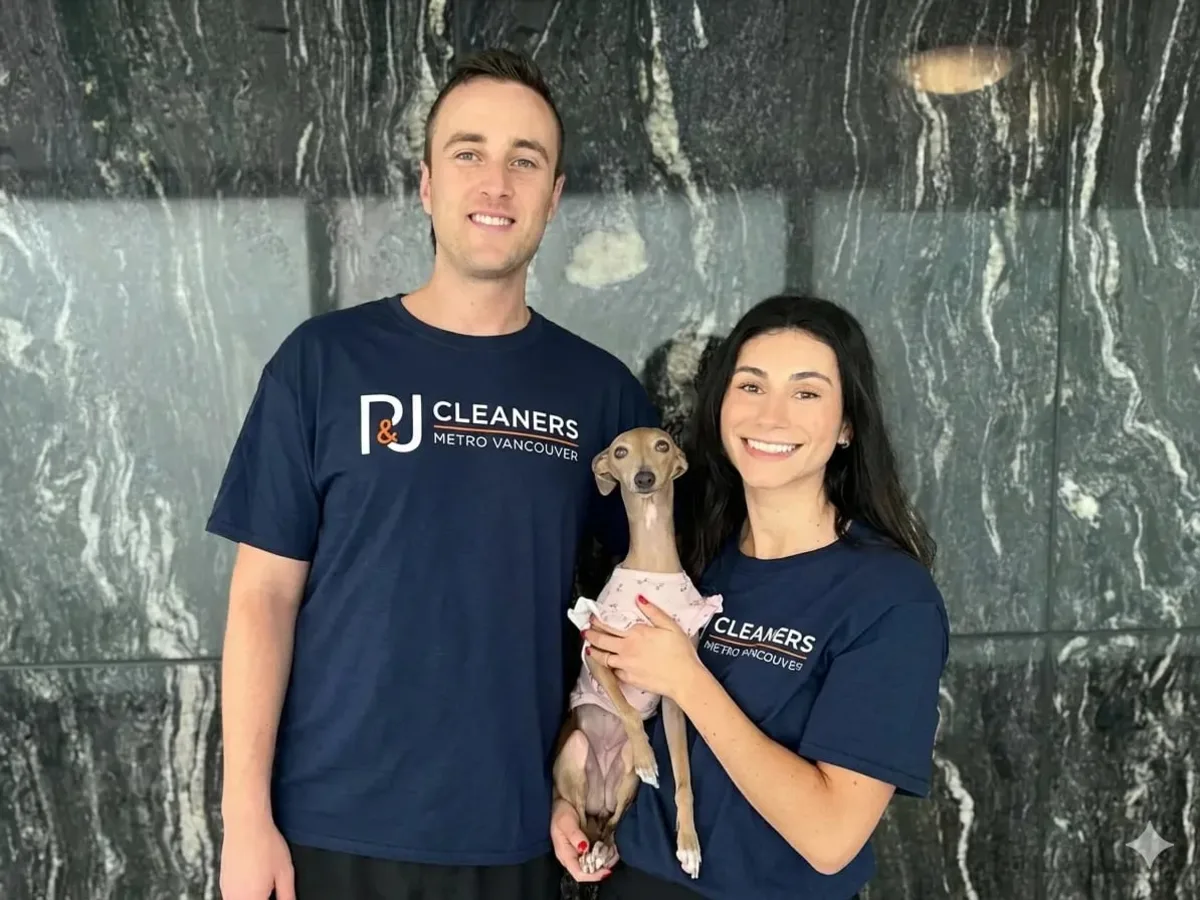
Jason
Co-Founder
Jason oversees commercial operations, workflow design, and quality control for office, restaurant, and specialty cleaning programmes across Metro Vancouver.
Keep Exploring