

Industry Overview
Restaurant Cleaning Standards in British Columbia
British Columbia restaurants operate under strict sanitation requirements enforced by regional health authorities. Vancouver Coastal Health and Fraser Health conduct unannounced inspections using standardized criteria that evaluate food handling, equipment maintenance, and facility cleanliness. Establishments receive colour-coded permits based on inspection results, with green indicating full compliance and red requiring immediate corrective action before reopening.
The BC Food Premises Regulation mandates specific cleaning frequencies for different restaurant zones. Food preparation areas require continuous sanitation throughout service hours, while dining spaces need thorough cleaning between meal periods. Equipment that contacts raw proteins must be cleaned and sanitized after each use to prevent bacterial growth. Storage areas need weekly organization and monthly deep cleaning to maintain proper inventory rotation and prevent pest attraction.
Statistics Canada reports that foodborne illness costs the Canadian economy $1.6 billion annually in healthcare and lost productivity. Proper cleaning protocols directly reduce contamination risks. The Canadian Food Inspection Agency found that 73% of restaurant-related illness outbreaks stem from inadequate surface sanitation or improper equipment cleaning. Implementing documented cleaning schedules with verification steps reduces these incidents by ensuring consistent execution of critical sanitation tasks across all shifts and staff members.
$1.6 billion
Annual foodborne illness cost in Canada
Source: Statistics Canada
73%
Restaurant outbreaks from poor sanitation
Source: Canadian Food Inspection Agency
67%
Violation reduction with documented schedules
Source: BC Health Authority
Every 4 hours
Required sanitizing frequency during service
Source: Vancouver Coastal Health
Compliance priorities
Food-contact surfaces sanitized every 4 hours during operation using approved quaternary ammonium or chlorine-based solutions at proper concentrations • Three-compartment sink protocol maintained for manual dishwashing with wash at 43°C, rinse, and sanitize at 77°C or chemical equivalent • Handwashing stations stocked with soap, paper towels, and warm water accessible within 6 metres of food preparation areas • Floor drains cleaned daily and sanitized weekly to prevent biofilm buildup and eliminate drain fly breeding sites • Refrigeration units maintained between 0-4°C with daily temperature logs and weekly coil cleaning to ensure consistent cold chain • Pest control monitoring with monthly professional inspections and documented corrective actions for any evidence of activity
Daily, Weekly, and Monthly Cleaning Protocols
Effective restaurant cleaning divides tasks by frequency and criticality. Daily tasks focus on food safety and customer-facing areas. Weekly cleaning addresses equipment maintenance and less-visible zones. Monthly deep cleaning tackles structural elements and systems that accumulate buildup over time. This tiered approach ensures nothing gets overlooked while preventing staff overwhelm from attempting comprehensive cleaning every shift.
Daily Kitchen and Food Prep Areas
Kitchen zones require multiple cleaning cycles throughout each operating day to maintain food safety standards and prevent cross-contamination between raw and cooked products.
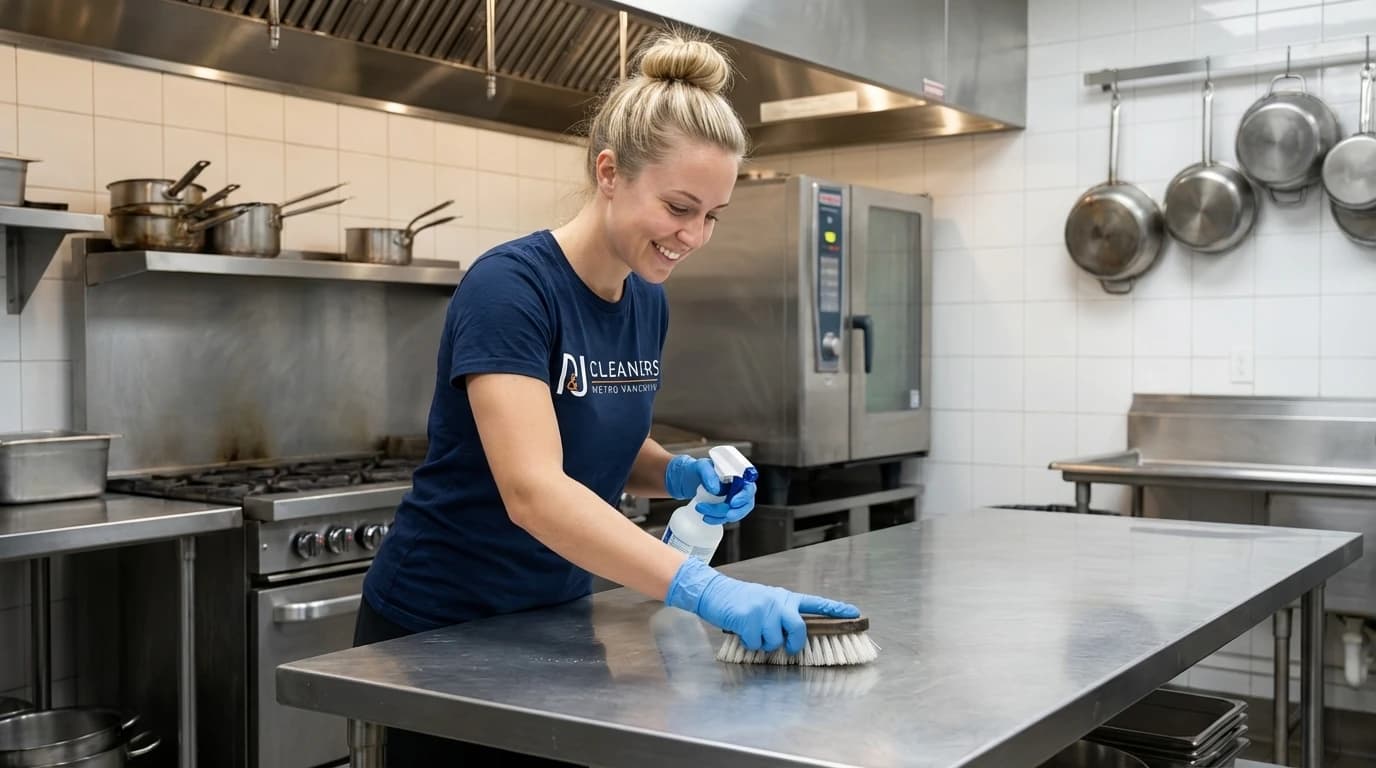
Food preparation surfaces need cleaning and sanitizing before opening, between different food types, every four hours during continuous use, and at closing. Use separate colour-coded cutting boards and utensils for raw proteins, vegetables, and ready-to-eat foods. Clean and sanitize each board immediately after use with hot soapy water followed by approved sanitizer at manufacturer-recommended concentration. Test sanitizer strength using test strips to verify effectiveness. Replace cutting boards showing deep knife scores that harbour bacteria.
Cooking equipment requires different cleaning approaches based on use intensity. Grills, griddles, and fryers need scraping and degreasing after each service period. Empty and filter fryer oil daily, wiping down exterior surfaces and removing carbon buildup from heating elements. Clean oven interiors weekly but wipe spills immediately to prevent baked-on residue. Sanitize all food-contact surfaces on slicers, mixers, and processors after each use, disassembling removable parts for thorough cleaning in the three-compartment sink.
Floor cleaning in kitchens must happen multiple times daily due to constant spills and traffic. Sweep high-traffic areas every two hours during service to remove food debris that creates slip hazards. Mop with degreasing solution at closing, paying special attention to areas around cooking equipment where grease accumulates. Use separate mops for kitchen and restroom areas to prevent cross-contamination. Clean floor drains daily by removing covers, clearing debris, and flushing with hot water and enzymatic cleaner to prevent odours and fruit fly breeding.
- Sanitize all cutting boards, knives, and utensils between different food types using approved quaternary ammonium or chlorine solutions
- Empty and clean garbage bins at least three times daily, washing bins weekly with hot soapy water and sanitizer
- Wipe down all stainless steel surfaces with microfiber cloths and stainless cleaner to remove fingerprints and water spots
- Clean and sanitize can openers, thermometers, and other small tools after each use to prevent bacterial transfer
- Sweep and mop kitchen floors after each service period using separate mops for different zones
- Clean splash guards, backsplashes, and walls around cooking equipment to remove grease spray and food particles
Recommended Frequency
Multiple times daily
Daily Dining Room and Customer Areas
Front-of-house cleaning maintains customer perception and comfort while preventing surface contamination that could transfer to food service items.
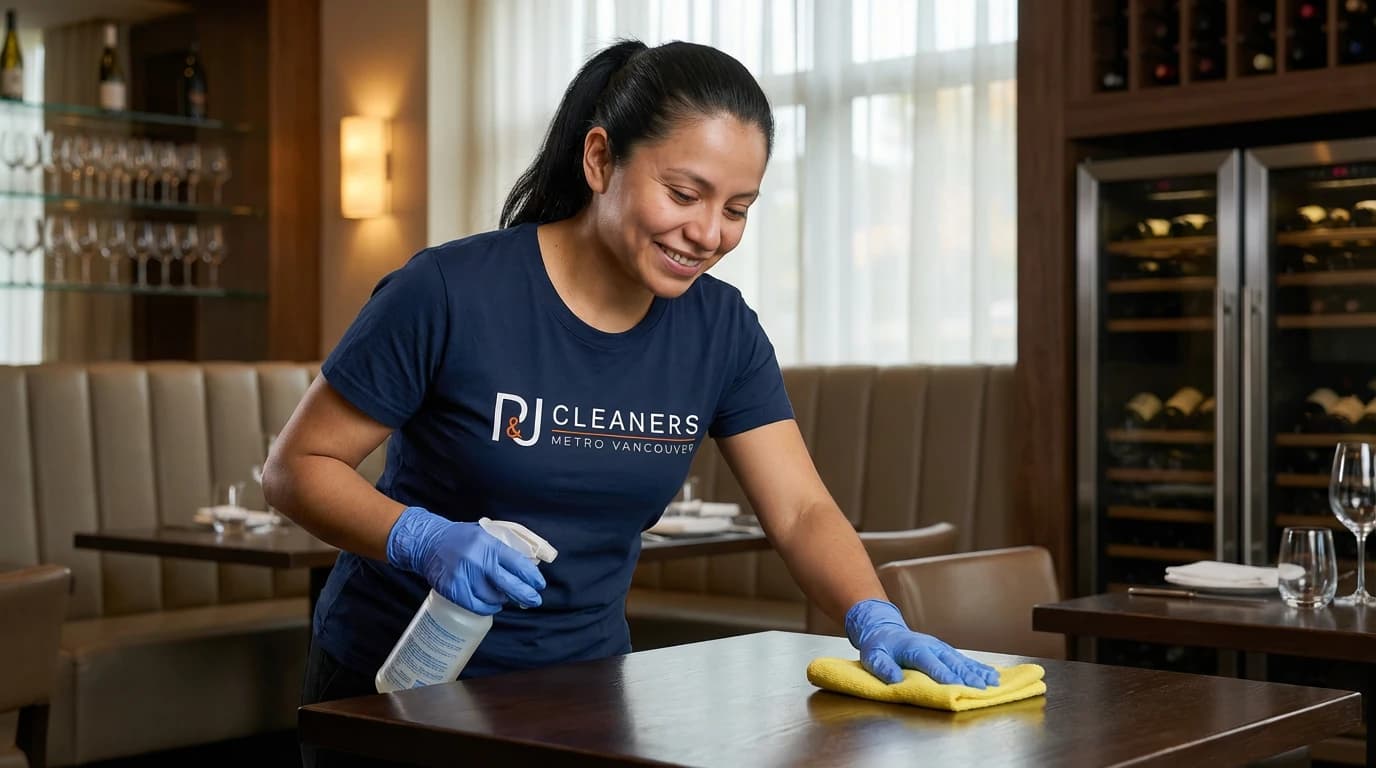
Table and booth cleaning requires attention between every customer turnover. Wipe surfaces with food-safe sanitizer, checking underneath for gum or stuck debris. Clean and sanitize condiment containers, salt and pepper shakers, and table tents daily. Inspect upholstered seating for stains or damage, spot-cleaning immediately with appropriate fabric cleaner. Vacuum booth seating and chair cushions daily to remove crumbs that attract pests. Deep clean upholstery monthly using extraction methods to remove embedded soil and odours.
High-touch surfaces throughout dining areas need frequent sanitizing to reduce pathogen transmission. Clean door handles, light switches, payment terminals, and menus after each rush period. Laminated menus can be wiped with sanitizer, while paper menus should be single-use or replaced daily. Clean and polish all glass surfaces including windows, mirrors, and display cases to maintain professional appearance. Remove fingerprints and smudges from entrance doors multiple times daily, especially during peak traffic periods.
Restroom cleaning in restaurants requires more frequent attention than typical commercial facilities due to health inspection scrutiny and customer expectations. Check and clean restrooms every hour during operating hours, restocking supplies and addressing any cleanliness issues immediately. Deep clean toilets, urinals, and sinks at closing using disinfectant cleaners with appropriate dwell time. Mop floors with separate equipment designated only for restroom use. Clean mirrors, partitions, and all touchpoints. Empty waste receptacles before they overflow and replace liners. Ensure proper ventilation to control odours.
- Sanitize tables, chairs, and booth seating between each customer using food-safe disinfectant with 30-second contact time
- Clean and refill condiment containers daily, checking expiration dates and wiping down exteriors
- Vacuum all carpeted areas and sweep hard floors after each meal service to remove food debris
- Polish stainless steel, chrome, and glass surfaces to remove water spots and maintain professional appearance
- Check and clean restrooms hourly during operation, restocking paper products and soap dispensers
- Empty and sanitize high-chair trays after each use, storing chairs in designated clean area
Recommended Frequency
Throughout operating hours
Weekly Deep Equipment and Storage Cleaning
Weekly tasks address equipment maintenance and areas that accumulate buildup over multiple days of operation but don't require daily attention.
Refrigeration equipment needs weekly deep cleaning to maintain food safety temperatures and prevent equipment failure. Pull out all items from walk-in coolers and reach-in units, checking expiration dates and discarding expired products. Wipe down all shelving with sanitizer, cleaning any spills or drips. Vacuum condenser coils to remove dust buildup that reduces cooling efficiency and increases energy costs. Check door gaskets for tears or gaps that allow cold air to escape. Clean floor drains inside walk-ins to prevent odour and bacterial growth.
Exhaust hood systems require weekly degreasing to maintain fire safety and proper ventilation. Spray hood interiors, filters, and accessible ductwork with commercial degreaser, allowing proper dwell time before scrubbing and rinsing. Remove and soak filters in degreasing solution, scrubbing both sides to remove accumulated grease. Clean grease traps and collection cups, disposing of waste properly. Wipe down exterior hood surfaces and fan housings. Schedule professional hood cleaning every three to six months depending on cooking volume and local fire code requirements.
Dry storage areas need weekly organization and cleaning to maintain inventory rotation and prevent pest attraction. Remove all items from shelving, checking for signs of pest activity like droppings or gnawed packaging. Wipe down all shelving with damp cloth to remove dust and spills. Sweep and mop floors, paying attention to corners where debris accumulates. Inspect walls and ceilings for cracks or gaps that could allow pest entry. Reorganize inventory using first-in-first-out rotation, moving older products to front. Check all packaging for damage and transfer compromised items to sealed containers.
- Deep clean all refrigeration units including shelving, walls, and floor drains using food-safe sanitizer
- Degrease exhaust hood systems, filters, and accessible ductwork to maintain fire safety and ventilation efficiency
- Clean ice machines by removing bins, sanitizing interiors, and wiping down exterior surfaces
- Organize dry storage areas with full inventory rotation and pest inspection of all shelving
- Descale dishwashing equipment and clean spray arms to maintain proper water pressure and temperature
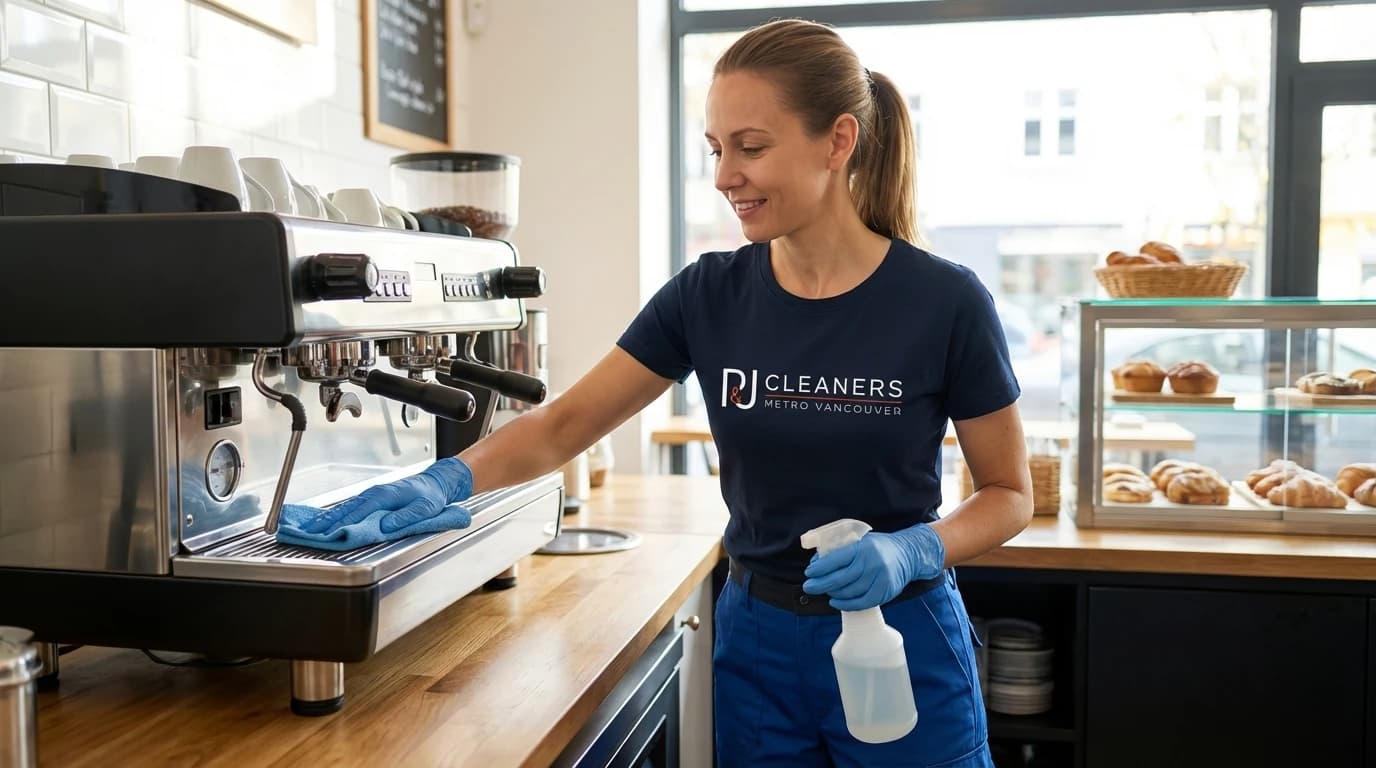
- Sanitize beverage dispensers, coffee equipment, and bar tools with thorough disassembly and cleaning
Recommended Frequency
Weekly
Monthly Structural and System Deep Cleaning
Monthly deep cleaning addresses structural elements and building systems that accumulate soil over extended periods and require intensive cleaning methods.
Wall and ceiling cleaning removes accumulated grease, dust, and cooking residue that builds up over weeks of operation. Start from ceiling and work downward to avoid recontaminating cleaned surfaces. Use extension poles with microfiber pads dampened with degreasing solution for ceilings and upper walls. Pay special attention to areas above cooking equipment where grease vapour condenses. Clean light fixtures and replace any burnt bulbs. Wipe down all wall surfaces in kitchen and dining areas, spot-cleaning any stains or marks. Touch up paint as needed to maintain professional appearance.
Floor care beyond daily mopping requires monthly intensive cleaning to remove embedded soil and restore appearance. Strip and refinish vinyl or tile floors in kitchen areas where grease buildup dulls the surface. Use commercial floor scrubber with appropriate pad and cleaning solution for the floor type. Rinse thoroughly and apply fresh floor finish in thin coats, allowing proper drying time between applications. Clean grout lines with specialized grout cleaner and stiff brush. Seal grout annually to prevent staining and make future cleaning easier. Carpet areas in dining rooms need monthly extraction cleaning to remove embedded soil and refresh appearance.
HVAC system maintenance impacts both air quality and energy efficiency in restaurant environments. Replace all air filters monthly in kitchen and dining areas due to grease and cooking particulates that clog filters faster than typical commercial spaces. Clean return air grilles and diffusers to remove dust buildup that restricts airflow. Wipe down thermostats and control panels. Schedule professional duct cleaning annually to remove accumulated debris and improve system efficiency. Clean bathroom exhaust fans monthly to maintain proper ventilation and prevent moisture buildup that encourages mould growth.
- Clean walls and ceilings throughout facility using degreasing solution and extension tools for hard-to-reach areas
- Strip and refinish kitchen floors to remove embedded grease and restore slip-resistant surface
- Replace HVAC filters and clean all air grilles, diffusers, and return air vents throughout facility
- Deep clean behind and underneath all movable equipment including ovens, refrigerators, and prep tables
- Pressure wash exterior areas including dumpster pads, loading docks, and outdoor seating spaces
- Inspect and clean all lighting fixtures, replacing burnt bulbs and cleaning covers to maximize light output
Recommended Frequency
Monthly
Cost Analysis and Return on Investment
Professional restaurant cleaning delivers measurable returns through reduced health violations, lower equipment replacement costs, and improved customer retention.
Restaurant cleaning costs vary based on facility size, kitchen complexity, and service frequency. Most Metro Vancouver restaurants pay between $45-$75 per hour for professional cleaning services. A typical 2,500 square foot restaurant with full kitchen requires 15-20 hours weekly for comprehensive cleaning, resulting in monthly costs of $2,700-$6,000. This investment prevents significantly larger expenses from health violations, equipment failure, and reputation damage that can cost tens of thousands in lost revenue.
The return on professional cleaning extends beyond compliance to operational efficiency and customer satisfaction. Restaurants with documented cleaning programs experience 67% fewer health inspection violations compared to facilities without structured protocols. Each violation costs an average of $500-$2,000 in fines plus potential closure during remediation. Equipment properly maintained through regular cleaning lasts 40% longer than neglected units, delaying capital replacement costs. Clean, well-maintained dining environments increase positive online reviews by 34%, directly impacting customer acquisition and retention.
Labour costs for in-house cleaning versus professional services require careful analysis. Staff cleaning during off-hours costs $20-$30 per hour including wages and benefits, but lacks specialized training and equipment efficiency. Professional cleaners complete tasks 30-40% faster using commercial-grade equipment and proven protocols. This efficiency allows restaurant staff to focus on core food service operations rather than cleaning duties. Professional services also include proper chemical handling, equipment maintenance, and compliance documentation that reduces management oversight requirements.
In-House Cleaning
- Staff wages: $20-$30/hour plus benefits
- Training time and ongoing supervision required
- Equipment purchase and maintenance costs
- Chemical procurement and storage management
- Inconsistent results across different shifts
- Limited specialized equipment access
- No compliance documentation or verification
- Staff focus diverted from core service duties
Professional Cleaning Services
- Service rate: $45-$75/hour all-inclusive
- Trained specialists with proven protocols
- Commercial equipment included in service
- Professional-grade chemicals and supplies provided
- Consistent quality across all service visits
- Specialized tools for deep cleaning tasks
- Documented compliance and verification logs
- Staff focused entirely on food service operations
67%
Reduction in health violations
40%
Equipment lifespan extension
34%
Increase in positive reviews
30-40%
Professional cleaning efficiency gain
$500-$2,000
Average violation fine cost
$2,700-$6,000
Monthly cleaning investment (2,500 sq ft)
- Consistent health inspection results with documented cleaning verification reducing violation risk and potential closure
- Extended equipment lifespan through proper maintenance protocols preventing premature replacement of expensive commercial units
- Improved customer satisfaction and online reputation driving repeat business and positive word-of-mouth referrals
- Reduced staff turnover by eliminating unpleasant cleaning duties and allowing focus on hospitality and food service
- Lower insurance premiums through demonstrated risk management and compliance with food safety regulations
- Enhanced employee morale working in clean, well-maintained environment with professional sanitation standards
- Decreased pest control costs through elimination of food debris and proper sanitation that prevents infestations
- Streamlined operations with scheduled cleaning that doesn't disrupt service hours or require management oversight
Health Code Compliance Verification Checklist
Use this comprehensive checklist to verify compliance with BC Food Premises Regulation and regional health authority requirements. Document completion dates and staff initials for each task to maintain inspection-ready records.
Services mentioned in this article
Ready for help?
4.9 · 850+ Google reviewsKeep Your Restaurant Health-Permit Ready
P&J Cleaners delivers documented, compliant restaurant cleaning across Metro Vancouver. Our teams follow Vancouver Coastal Health protocols, maintain detailed logs, and work around your service schedule.
778-720-2224Restaurant Cleaning Questions
What are restaurant cleaning standards?
Restaurant cleaning standards in BC are governed by the Food Premises Regulation under the Public Health Act. Vancouver Coastal Health requires food contact surfaces sanitized every four hours, floors cleaned and sanitized daily, and equipment deep-cleaned weekly. Standards mandate specific sanitizer concentrations (50-200 ppm chlorine or equivalent quaternary ammonium), documented cleaning logs, and staff training records. Non-compliance results in violation notices, operational restrictions, or permit suspension.
How often should restaurant areas be cleaned?
High-touch surfaces require cleaning every two hours during service. Food prep areas need sanitizing after each use and deep cleaning daily. Dining areas get bussed continuously, with full cleaning between services. Floors are mopped every four hours in kitchens, swept hourly in dining rooms. Restrooms need checks every 30-60 minutes during peak hours. Walk-in coolers and storage areas require weekly deep cleaning, while exhaust hoods need monthly professional degreasing to prevent fire hazards.
What compliance rules apply to restaurant cleaning?
BC's Food Premises Regulation mandates documented cleaning schedules, staff training records, and sanitizer test logs. Vancouver Coastal Health inspectors verify three-compartment sink procedures, proper chemical storage, and cross-contamination prevention protocols. WorkSafeBC requires WHMIS training for cleaning chemical handling and proper ventilation during deep cleaning. Restaurants must maintain cleaning logs for two years, use approved sanitizers, and follow manufacturer dilution ratios. Violations can result in closure orders or fines up to $50,000.
How much does restaurant cleaning cost?
Professional restaurant cleaning in Metro Vancouver ranges from $45-$75 per hour depending on facility size and service frequency. A 2,000 sq ft restaurant typically pays $800-$1,200 monthly for daily post-service cleaning. Deep cleaning services (hood systems, walk-ins, grease traps) cost $300-$800 per session. Many operators budget 2-3% of gross revenue for cleaning services. Contract pricing offers 15-25% savings versus on-demand rates, with volume discounts for multi-location operators.
Meet the Author
Jason
Co-Founder
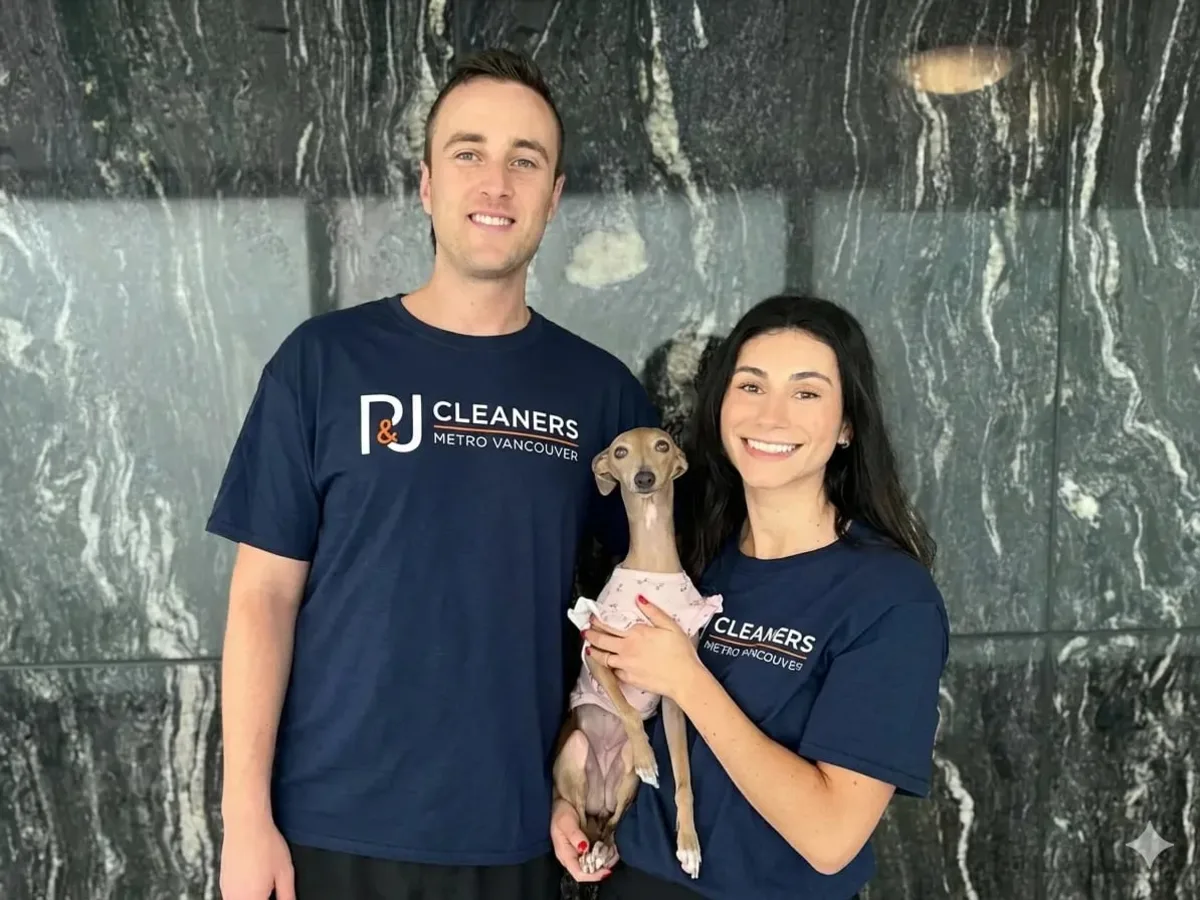
Jason oversees commercial operations, workflow design, and quality control for office, restaurant, and specialty cleaning programs across Metro Vancouver.
Keep Exploring