

Industry Overview
Understanding Office Cleaning Standards in Canada
Office cleaning standards in Canada follow a zone-based approach that divides commercial spaces into six distinct areas, each requiring specific protocols, frequencies, and compliance measures. This systematic method ensures consistent hygiene levels across all workspace types while meeting provincial health regulations and federal workplace safety requirements. The Canadian Centre for Occupational Health and Safety establishes baseline standards that provinces like British Columbia enhance through additional regulations covering chemical use, waste disposal, and indoor air quality management.
Metro Vancouver offices face unique cleaning challenges due to coastal humidity, seasonal allergen loads, and high-density urban environments. Statistics Canada reports that 68% of Vancouver workers spend over 40 hours weekly in office settings, making proper sanitation critical for productivity and health outcomes. The zone-based system addresses these challenges by assigning appropriate cleaning frequencies, product selections, and quality control measures to each workspace category based on traffic patterns, surface types, and contamination risks.
Modern office cleaning standards integrate environmental sustainability with infection control protocols. British Columbia's Green Building Standards require commercial facilities to use eco-certified products, implement waste diversion programs, and maintain indoor air quality below 800 ppm CO2 levels. Professional cleaning companies balance these environmental mandates with Health Canada's disinfection guidelines, particularly for high-touch surfaces where pathogen transmission rates peak during flu season and respiratory illness outbreaks.
80%
Pathogen Reduction
Source: CDC Environmental Cleaning Studies
27%
Sick Day Decrease
Source: ISSA Cleaning Industry Research
34%
Satisfaction Improvement
Source: Statistics Canada Workplace Survey
68%
Vancouver Office Workers
Source: Statistics Canada Labour Force Data
Under 800 ppm CO2
Required Air Quality
Source: BC Green Building Standards
Compliance priorities
WorkSafeBC documentation of cleaning schedules, chemical inventories, and staff training records with quarterly audits • Health Canada approved disinfectants for high-touch surfaces with proper dwell times and application methods • BC Environmental Standards for chemical storage, dilution systems, and hazardous waste disposal procedures • WHMIS 2015 labelling and Safety Data Sheets accessible to all cleaning staff in English and French • City of Vancouver waste diversion targets requiring 70% recycling rates and organic waste separation • Indoor air quality monitoring maintaining CO2 below 800 ppm and particulate matter under 35 μg/m³
The 6-Zone Office Cleaning System
Each zone requires distinct protocols, frequencies, and quality control measures based on traffic patterns, surface types, and contamination risks specific to that area.
Zone 1: Individual Workstations and Cubicles
Personal workspace areas including desks, chairs, computer equipment, and storage units where employees spend the majority of their workday.
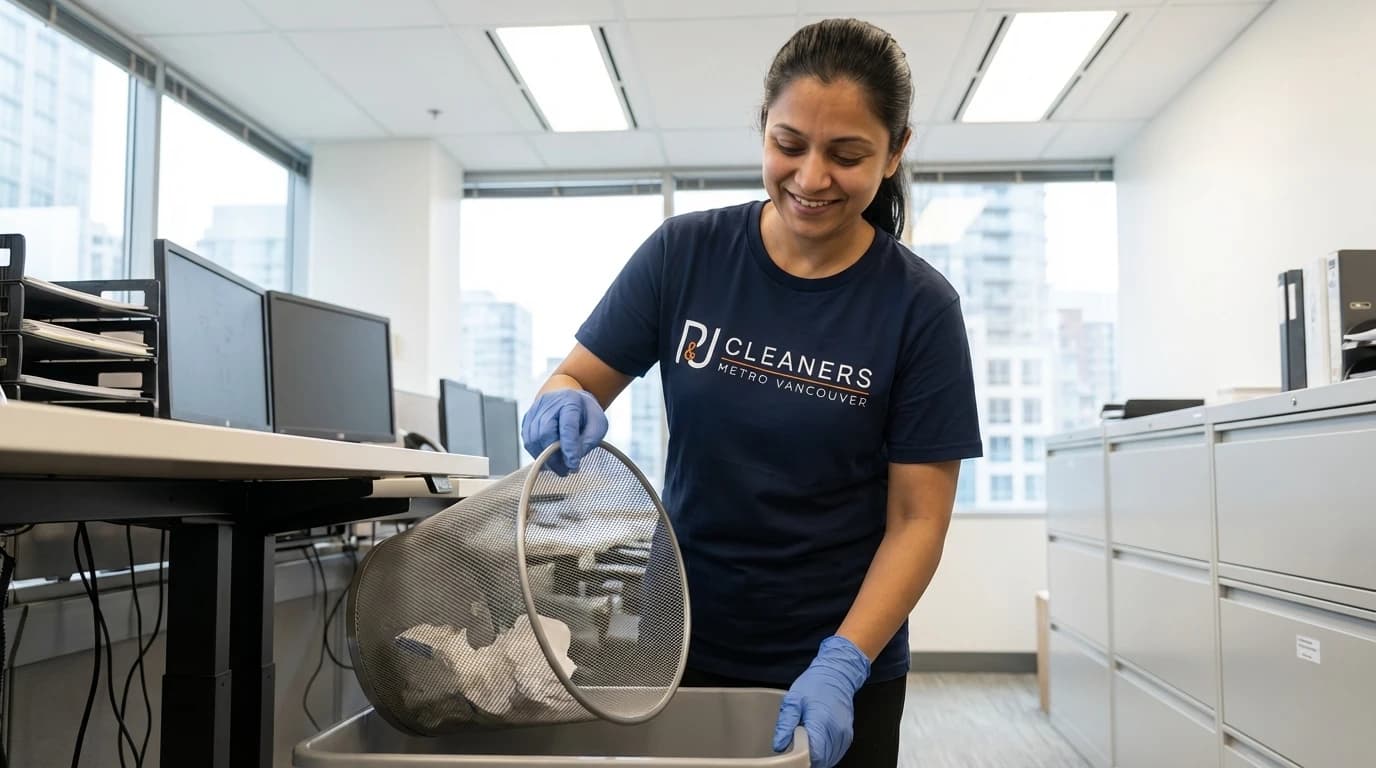
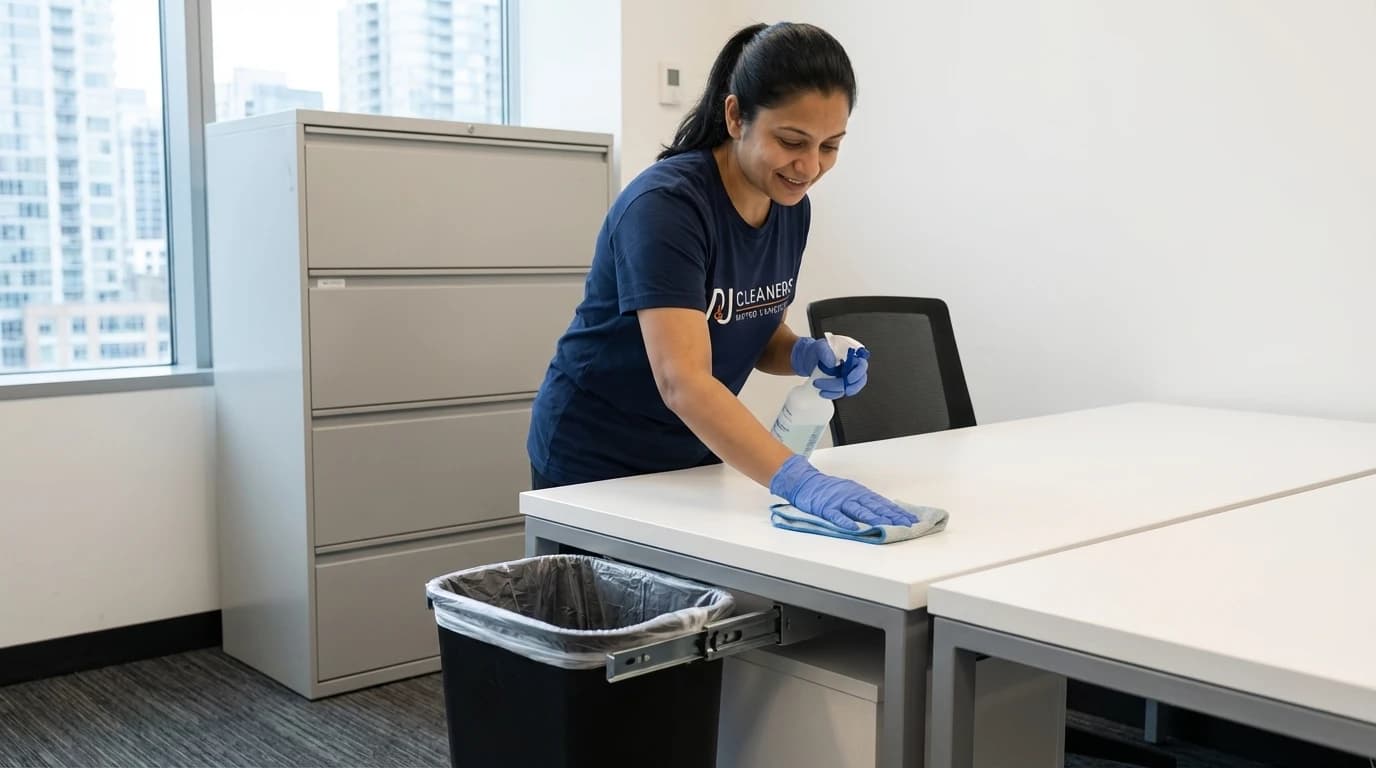
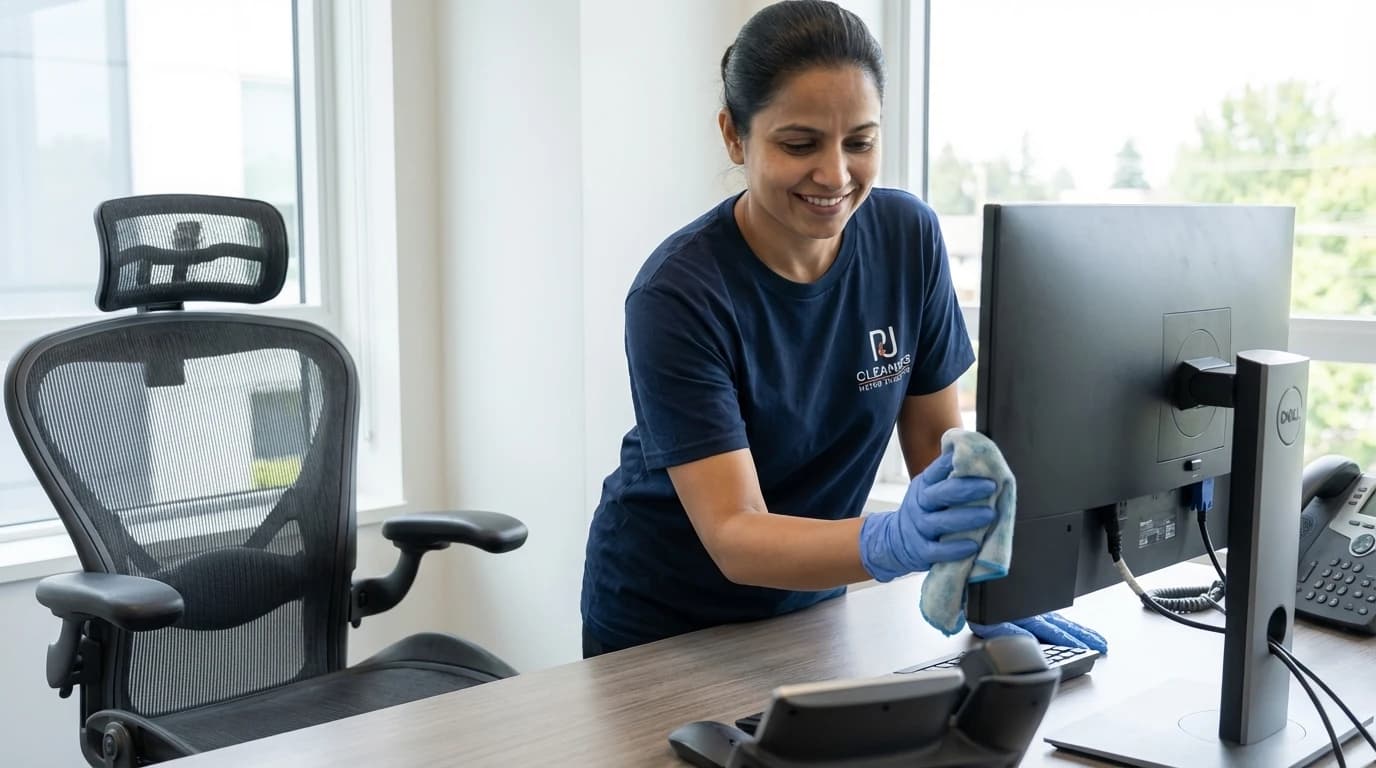
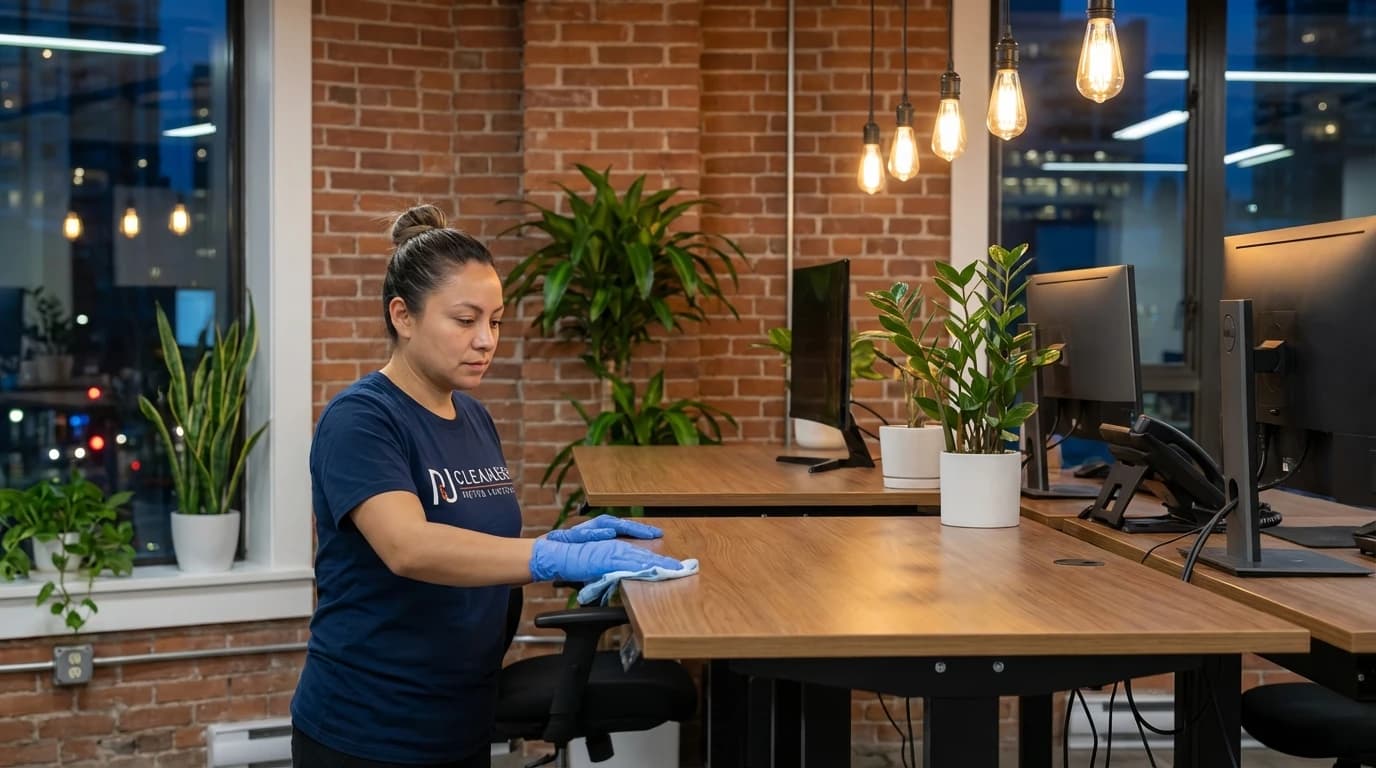
Individual workstations represent the highest-touch zone in office environments, with keyboards, mice, and phone handsets accumulating bacterial loads 400 times higher than toilet seats according to University of Arizona research. Daily surface disinfection focuses on these high-contact items using quaternary ammonium compounds or hydrogen peroxide solutions with minimum 30-second dwell times. Cleaning staff must avoid cross-contamination by using separate microfibre cloths for each workstation and changing cleaning solutions every 10 desks to maintain disinfectant efficacy throughout the cleaning cycle.
Desk surface cleaning requires careful attention to electronics and personal items. Professional cleaners use anti-static dusting tools for monitors and screens, avoiding liquid sprays that damage equipment or void warranties. Paper clutter, personal photos, and desk accessories remain untouched unless employees provide explicit permission through workspace preparation protocols. This respect for personal space maintains trust while ensuring thorough sanitation of all accessible surfaces including desk edges, armrests, and under-desk storage units where dust accumulation affects indoor air quality.
Ergonomic furniture cleaning extends beyond visible surfaces to adjustment mechanisms, casters, and lumbar support components that harbour dust and allergens. Chair cleaning includes vacuuming fabric surfaces with HEPA filtration, wiping vinyl or leather with pH-neutral cleaners, and inspecting pneumatic cylinders for proper function. Statistics Canada workplace injury data shows that 23% of office ergonomic complaints relate to poorly maintained seating, making regular furniture maintenance a health and safety priority rather than purely aesthetic concern.
- Disinfect keyboards, mice, and phones daily using approved electronics-safe disinfectants with 30-second contact time
- Wipe desk surfaces, monitor bezels, and armrests with microfibre cloths, changing cloths every 10 workstations
- Vacuum chair fabric weekly with HEPA filtration and spot-clean stains using pH-neutral upholstery cleaner
- Empty individual waste bins daily and replace liners, separating recyclables according to municipal guidelines
- Dust horizontal surfaces including filing cabinets, shelves, and window sills weekly using anti-static tools
- Inspect and report maintenance issues like broken chair mechanisms, loose desk components, or damaged flooring
Recommended Frequency
Daily for high-touch surfaces, weekly for deep cleaning
Zone 2: Common Areas and Collaboration Spaces
Shared spaces including conference rooms, break areas, reception zones, and open collaboration areas used by multiple employees throughout the day.
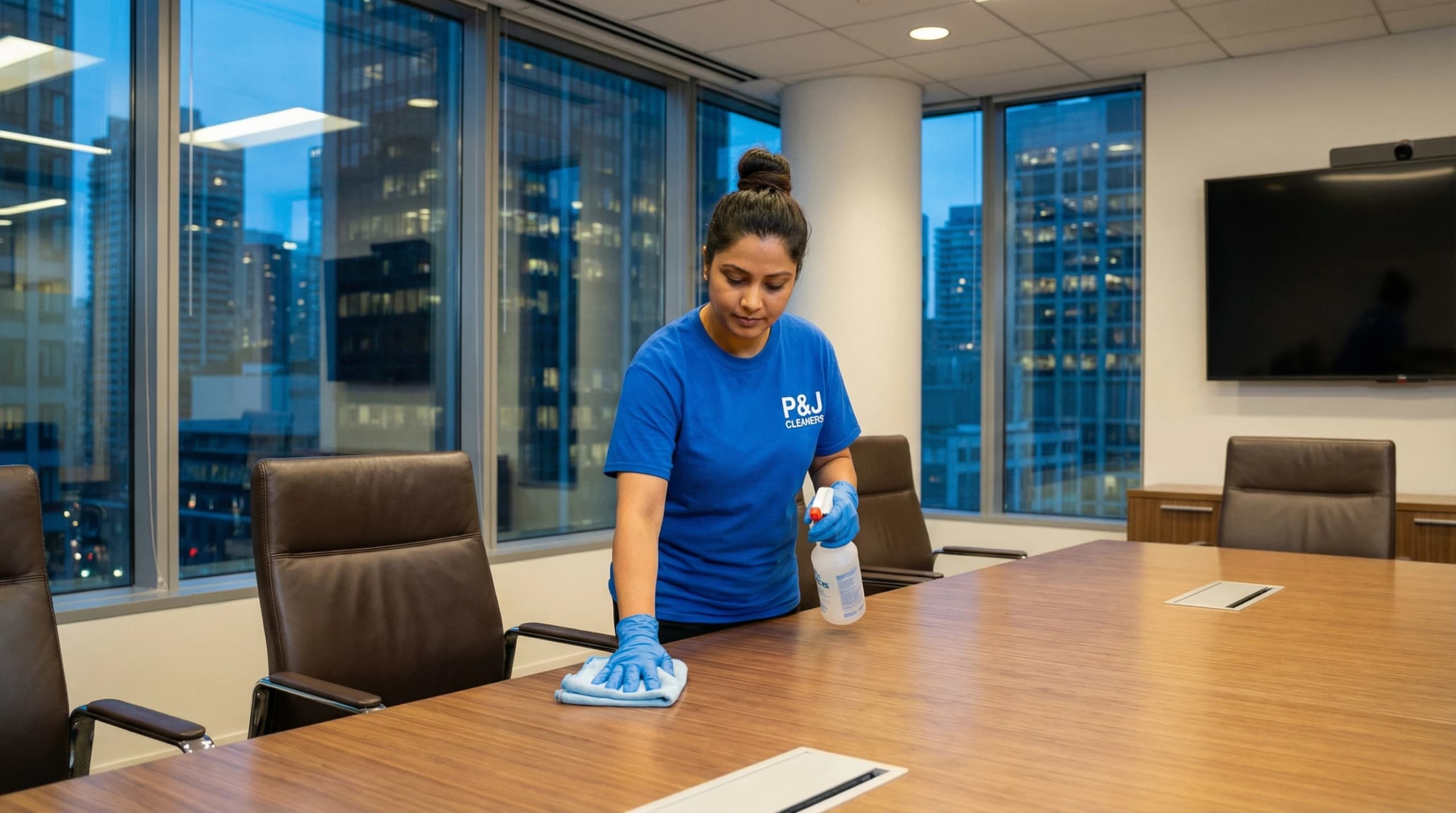
Conference rooms and meeting spaces require immediate post-use cleaning during business hours and comprehensive nightly sanitation. High-touch surfaces like table edges, chair backs, whiteboard markers, and remote controls accumulate pathogens from multiple users within single meetings. ISSA research demonstrates that conference room door handles show bacterial counts 50% higher than individual office doors due to concentrated traffic patterns. Real-time cleaning protocols include wiping tables and chairs between meetings, emptying waste bins, and resetting room configurations to maintain professional appearance and hygiene standards.
Reception areas serve as first-impression zones requiring continuous maintenance throughout business hours. Front desk surfaces, visitor seating, and lobby fixtures need hourly attention during peak traffic periods to maintain professional standards. Cleaning staff monitor these spaces for spills, debris, and clutter while performing discreet maintenance that doesn't disrupt business operations. Glass surfaces including entrance doors, partition walls, and display cases require streak-free cleaning using ammonia-free solutions that won't damage anti-reflective coatings or leave residue affecting indoor air quality.
Open collaboration spaces blend workstation and common area characteristics, requiring flexible cleaning schedules that adapt to usage patterns. These zones often include soft seating, mobile whiteboards, and technology integration points that need specialized care. Fabric furniture in collaboration areas accumulates 40% more dust and allergens than traditional office chairs due to increased surface area and varied user contact. Weekly deep cleaning includes vacuuming upholstery, sanitizing shared technology, and rotating furniture arrangements to ensure even wear patterns and comprehensive floor cleaning beneath movable pieces.
- Wipe conference tables, chairs, and door handles between meetings during business hours and thoroughly at night
- Clean whiteboards with appropriate solutions, avoiding harsh chemicals that damage writing surfaces or leave ghosting
- Vacuum upholstered furniture weekly and spot-clean stains immediately using fabric-appropriate cleaning agents
- Sanitize shared technology including remote controls, presentation equipment, and charging stations daily
- Clean glass surfaces on doors, partitions, and display cases using streak-free solutions and lint-free cloths
- Monitor and maintain reception areas hourly during business hours, addressing spills and clutter immediately
Recommended Frequency
Hourly monitoring during business hours, nightly deep cleaning
Zone 3: Restrooms and Washroom Facilities
High-risk sanitation zones including toilets, sinks, hand dryers, and all restroom fixtures requiring medical-grade disinfection protocols.
Restroom cleaning follows the strictest protocols in office environments due to high pathogen loads and regulatory scrutiny from health authorities. WorkSafeBC mandates documented cleaning schedules with sign-off sheets posted visibly in each facility, creating accountability and transparency for building occupants. Professional cleaners use hospital-grade disinfectants with proven efficacy against norovirus, influenza, and other common workplace pathogens. The cleaning sequence moves from cleanest to dirtiest areas—starting with mirrors and countertops, progressing to sinks and dispensers, and finishing with toilets and urinals to prevent cross-contamination.
High-touch restroom surfaces require multiple daily cleanings in facilities with over 50 occupants. Door handles, faucet controls, soap dispensers, and hand dryer buttons accumulate bacterial loads that double every four hours without intervention according to CDC environmental studies. Cleaning staff monitor consumable supplies including toilet paper, paper towels, soap, and hand sanitizer, maintaining stock levels that prevent user frustration and encourage proper hand hygiene. British Columbia health regulations require touchless dispensers in new construction and major renovations, reducing surface contact points and improving overall facility hygiene.
Floor cleaning in restrooms demands specialized techniques due to moisture exposure and slip hazards. Daily mopping uses pH-neutral disinfectants that won't damage grout or tile finishes while maintaining slip-resistance properties. Grout lines require weekly scrubbing with alkaline cleaners and stiff brushes to remove embedded soil and prevent mould growth in humid environments. Professional cleaning companies test floor slip resistance quarterly using tribometer measurements, ensuring compliance with WorkSafeBC standards requiring minimum 0.5 coefficient of friction on wet surfaces to prevent workplace injuries.
- Disinfect all fixtures including toilets, urinals, sinks, and faucets using hospital-grade products with 10-minute dwell time
- Clean high-touch surfaces including door handles, dispensers, and hand dryers three times daily in high-traffic facilities
- Mop floors with pH-neutral disinfectant daily and deep-scrub grout lines weekly to prevent mould and bacterial growth
- Refill consumables including toilet paper, paper towels, soap, and hand sanitizer, checking levels every four hours
- Clean mirrors and glass surfaces streak-free using ammonia-free solutions and microfibre cloths
- Document cleaning completion times on posted schedules, maintaining compliance with WorkSafeBC transparency requirements
Recommended Frequency
Three times daily for high-touch surfaces, nightly deep cleaning
Zone 4: Kitchen and Food Preparation Areas
Food-contact zones including kitchenettes, break room appliances, refrigerators, and dining surfaces requiring food-safe sanitation protocols.
Office kitchens present unique cross-contamination risks where food residue, moisture, and shared equipment create ideal conditions for bacterial growth and pest attraction. Vancouver Coastal Health regulations classify office kitchens as food premises when they include cooking appliances, requiring compliance with Food Premises Regulation standards. Professional cleaning protocols separate food-contact surfaces from general cleaning, using colour-coded microfibre systems—green cloths for food prep areas, blue for general surfaces, and red for restrooms—preventing pathogen transfer between zones.
Refrigerator and microwave cleaning extends beyond visible surfaces to interior components where food spills and condensation harbour bacteria and mould. Weekly refrigerator cleaning includes removing expired items, wiping shelves with food-safe sanitizer, and checking temperature settings to maintain 4°C or below as required by health regulations. Microwave interiors need daily cleaning using steam-cleaning methods that loosen baked-on food without harsh chemicals. Coffee makers, water coolers, and other shared appliances require weekly descaling and sanitization following manufacturer specifications to prevent mineral buildup and bacterial colonization.
Sink and counter sanitation in office kitchens follows restaurant-grade protocols due to food contact and moisture exposure. Countertops need disinfection after each use period using quaternary ammonium or chlorine-based sanitizers at proper concentrations verified by test strips. Sink basins, faucets, and drain areas accumulate biofilm—bacterial colonies protected by slimy matrices—requiring enzymatic cleaners that break down organic matter and prevent odour development. Statistics Canada workplace surveys show that 43% of office complaints relate to kitchen cleanliness, making this zone critical for employee satisfaction and retention.
- Sanitize countertops, tables, and food-contact surfaces after each use period using food-safe disinfectants at proper concentrations
- Clean refrigerator interiors weekly, removing expired items and wiping shelves with sanitizer while maintaining 4°C temperature
- Wipe microwave interiors daily using steam-cleaning methods and sanitize exterior surfaces including door handles and control panels
- Descale and sanitize coffee makers, water coolers, and shared appliances weekly following manufacturer specifications
- Clean sink basins, faucets, and drains daily with enzymatic cleaners to prevent biofilm buildup and odour development
- Empty waste and recycling bins daily, cleaning bin interiors weekly to prevent pest attraction and odour issues
Recommended Frequency
After each use period for food surfaces, daily for appliances and sinks
Zone 5: Entryways and High-Traffic Corridors
Transition zones including lobbies, hallways, stairwells, and elevator areas that channel foot traffic and outdoor contaminants throughout the facility.
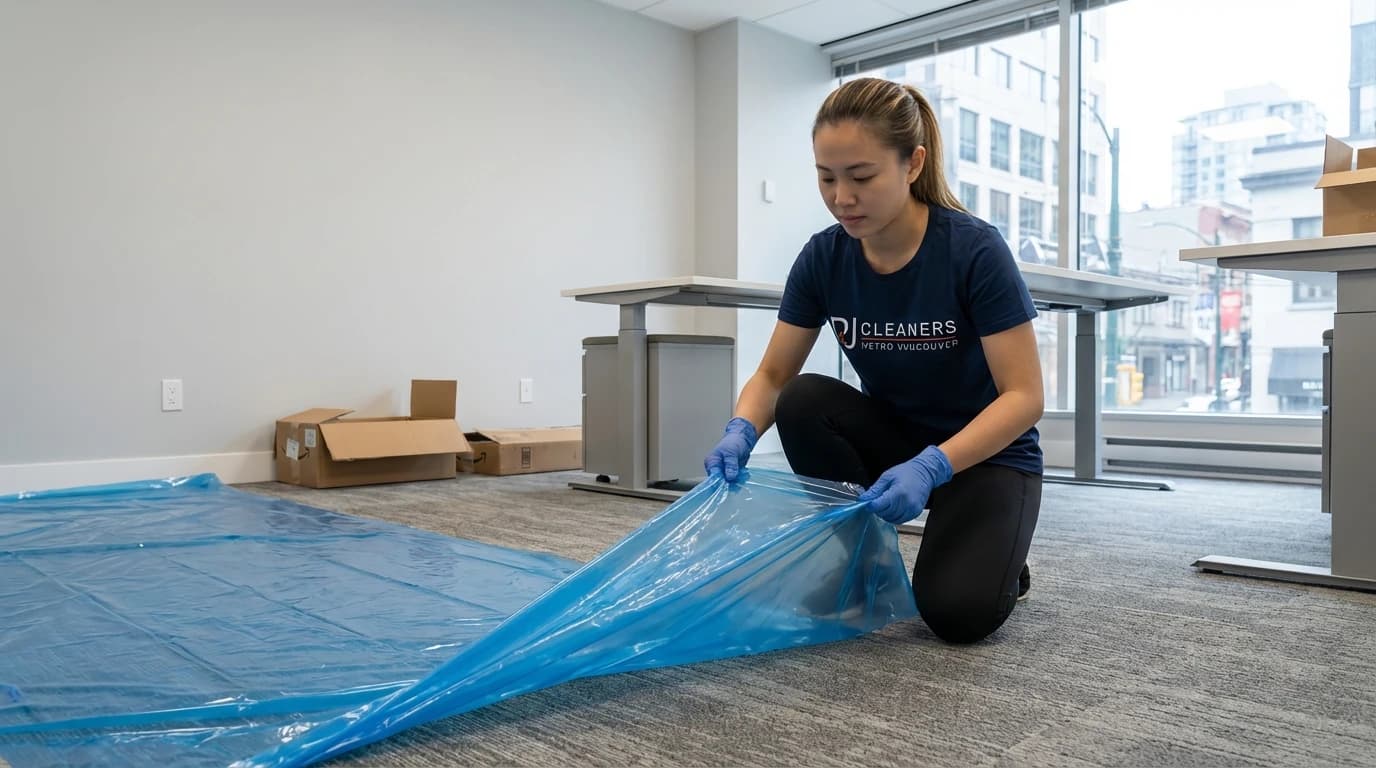
Entryways serve as contamination control zones where 80% of building dirt enters on foot traffic according to ISSA research studies. Professional cleaning systems include walk-off mat programs with minimum 15-foot coverage in primary entrances, capturing soil and moisture before it spreads to interior spaces. Mat maintenance requires daily vacuuming during dry weather and hourly monitoring during rain or snow events common in Vancouver's coastal climate. Commercial-grade entrance mats need professional laundering weekly to maintain soil-capture efficiency and prevent mat saturation that transfers contaminants rather than trapping them.
Elevator cleaning addresses high-touch surfaces and confined spaces where pathogen transmission rates peak during flu season. Elevator buttons, handrails, and interior panels require disinfection every four hours in buildings with over 100 occupants. Stainless steel surfaces in elevator cabs need specialized cleaners that remove fingerprints without leaving streaks or damaging protective coatings. Floor indicators, emergency phones, and ventilation grilles accumulate dust affecting air quality in enclosed spaces, requiring weekly detail cleaning with HEPA-filtered vacuums and anti-static treatments.
Stairwell maintenance often receives inadequate attention despite serving as emergency egress routes requiring clear, safe conditions at all times. WorkSafeBC regulations mandate weekly stairwell cleaning including handrail disinfection, step edge highlighting, and debris removal that could create tripping hazards. Concrete or terrazzo stairs need periodic deep cleaning with alkaline degreasers removing accumulated soil that reduces slip resistance. Emergency lighting, exit signage, and fire equipment in stairwells require monthly inspection and cleaning, maintaining visibility and functionality during power failures or evacuation scenarios.
- Vacuum entrance mats daily during dry weather and hourly during precipitation events, laundering mats weekly
- Disinfect elevator buttons, handrails, and interior panels every four hours in high-occupancy buildings
- Clean stairwell handrails, steps, and landings weekly, ensuring slip resistance and clear emergency egress routes
- Wipe corridor walls, baseboards, and door frames monthly to remove scuff marks and accumulated soil
- Clean glass entrance doors inside and outside daily, removing fingerprints and maintaining professional appearance
- Inspect and clean emergency lighting, exit signs, and fire equipment monthly for visibility and functionality
Recommended Frequency
Hourly monitoring during business hours, nightly comprehensive cleaning
Zone 6: Specialized and Technical Spaces
Purpose-specific areas including server rooms, medical offices, laboratories, and other spaces requiring specialized cleaning protocols and certifications.
Server rooms and IT infrastructure spaces demand specialized cleaning protocols that balance dust control with equipment protection. Electronic equipment generates static electricity attracting airborne particles that accumulate on cooling vents, circuit boards, and cable management systems. Professional data centre cleaning uses HEPA-filtered vacuums with anti-static attachments, avoiding compressed air that redistributes contaminants rather than removing them. Temperature and humidity monitoring during cleaning prevents condensation on cold surfaces that could damage sensitive electronics or create short-circuit risks.
Medical and dental offices within commercial buildings require infection control protocols exceeding standard office cleaning. Health Canada and provincial health authorities mandate specific disinfectants, contact times, and documentation for medical spaces. Cleaning staff need additional training in bloodborne pathogen handling, sharps disposal, and medical waste segregation. Surfaces in medical offices require disinfection with products approved for healthcare settings, typically containing higher active ingredient concentrations than general-purpose cleaners. Patient privacy considerations restrict cleaning access to treatment rooms, requiring flexible scheduling that accommodates clinical operations.
Specialized flooring including carpet tiles, luxury vinyl, and polished concrete each require distinct maintenance protocols affecting appearance, longevity, and warranty compliance. Carpet maintenance programs include weekly vacuuming with commercial equipment, quarterly hot-water extraction, and annual encapsulation cleaning that extends replacement cycles from 7 to 12 years. Luxury vinyl flooring needs pH-neutral cleaners avoiding harsh alkalines that damage wear layers and void manufacturer warranties. Polished concrete requires dust mopping with microfibre systems and periodic resealing maintaining gloss levels and stain resistance in high-traffic areas.
- Clean server rooms quarterly using HEPA-filtered vacuums with anti-static attachments, avoiding compressed air methods
- Maintain temperature and humidity logs during technical space cleaning, preventing condensation on sensitive equipment
- Use Health Canada approved disinfectants in medical spaces with documented contact times and cleaning completion records
- Follow manufacturer specifications for specialized flooring including carpet extraction, vinyl maintenance, and concrete sealing
- Coordinate cleaning schedules with operational requirements in 24/7 facilities, technical spaces, and patient care areas
- Maintain specialized certifications including WHMIS, bloodborne pathogen training, and equipment-specific qualifications
Recommended Frequency
Varies by space type from daily to quarterly based on usage and requirements
Cost Analysis and Return on Investment
Professional office cleaning delivers measurable returns through reduced sick days, improved productivity, extended asset life, and enhanced workplace satisfaction.
Office cleaning costs in Metro Vancouver range from $35 to $55 per hour depending on facility size, cleaning frequency, and specialized requirements. A typical 5,000 square foot office with 25 employees requires 15-20 hours weekly for comprehensive zone-based cleaning, translating to $2,100-$4,400 monthly investment. This cost structure includes labour, supplies, equipment, insurance, and quality control systems that ensure consistent results. Larger facilities benefit from economies of scale with per-square-foot costs decreasing as building size increases, while smaller offices pay premium rates reflecting minimum service thresholds and travel time allocation.
Return on investment calculations extend beyond direct cleaning costs to productivity gains, asset preservation, and risk mitigation. ISSA research demonstrates that professional cleaning reduces employee sick days by 27%, translating to $2,700 annual savings per employee based on average Vancouver salary data from Statistics Canada. Proper maintenance extends carpet life from 7 to 12 years, furniture longevity by 40%, and paint refresh cycles from 3 to 5 years. These asset preservation benefits offset cleaning costs within 18-24 months while maintaining professional appearance that supports client confidence and employee retention.
Compliance costs represent hidden expenses that professional cleaning prevents through proper documentation, training, and protocol adherence. WorkSafeBC violations for inadequate cleaning or chemical handling carry fines from $500 to $50,000 depending on severity and repeat offences. Health authority citations for restroom sanitation or food safety violations damage reputation and trigger mandatory corrective action plans. Professional cleaning companies maintain liability insurance, worker training records, and quality control systems that transfer compliance risk from building owners to service providers, protecting against regulatory penalties and litigation exposure.
In-House Cleaning
- Staff wages: $18-$24/hour plus benefits
- Equipment purchase: $3,000-$8,000 initial
- Supply inventory: $200-$400 monthly
- Training and certification: $500-$1,500 annually
- Workers compensation insurance: 4-6% of payroll
- Supervision and quality control: 10-15% overhead
- Replacement costs during sick days or vacation
- Liability insurance: $2,000-$5,000 annually
Professional Service
- All-inclusive rate: $35-$55/hour
- No equipment investment required
- Supplies included in service rate
- Staff training included, certified technicians
- Insurance coverage provided by vendor
- Quality control systems and supervision included
- Guaranteed coverage, no service interruptions
- Liability transferred to service provider
27% decrease, $2,700 annual savings per employee
Sick Day Reduction
71% longer lifespan, 7 to 12 years with proper maintenance
Carpet Life Extension
40% extended useful life through regular cleaning and maintenance
Furniture Longevity
34% higher satisfaction scores in professionally cleaned offices
Productivity Improvement
90% fewer violations with documented professional cleaning programs
Compliance Risk Reduction
18-24 month payback period through extended replacement cycles
Asset Preservation
- Reduced employee sick days and improved workplace health outcomes through consistent disinfection protocols
- Extended asset life for carpets, furniture, and finishes through proper maintenance and cleaning techniques
- Enhanced professional appearance supporting client confidence and employee recruitment efforts
- Compliance with WorkSafeBC, Health Canada, and municipal regulations avoiding fines and citations
- Improved indoor air quality reducing allergens, dust, and volatile organic compounds affecting respiratory health
- Flexible scheduling accommodating business operations without disrupting productivity or client interactions
- Documented cleaning records supporting insurance claims, tenant disputes, and regulatory audits
- Access to specialized equipment and expertise for technical cleaning challenges beyond routine maintenance
Office Cleaning Compliance Checklist
Use this comprehensive checklist to ensure your office cleaning program meets all regulatory requirements and industry best practices across British Columbia.
Services mentioned in this article
Ready for help?
4.9 · 800+ Google reviewsMaintain Professional Office Standards
P&J Cleaners delivers zone-based office cleaning that meets WorkSafeBC compliance and reduces workplace illness. Serving 39 Metro Vancouver locations with same-day booking and eco-friendly products upon request.
778-720-2224Office Cleaning Standards FAQ
What are office cleaning standards?
Office cleaning standards are documented protocols that define cleaning frequencies, methods, and quality benchmarks for workplace environments. They include ISSA guidelines, WorkSafeBC requirements, and industry-specific compliance rules. Standards cover six zones: workstations, common areas, restrooms, kitchens, entryways, and specialized spaces. Professional cleaners follow these to reduce pathogen transmission by 80% and maintain consistent hygiene levels across all office areas.
How often should office areas be cleaned?
High-touch zones require daily cleaning: restrooms, kitchens, door handles, and reception areas. Workstations need cleaning 2-3 times weekly, including desks, keyboards, and phones. Common areas like meeting rooms require cleaning after each use or daily. Deep cleaning happens monthly for carpets, upholstery, and hard-to-reach areas. Frequency increases during flu season or in healthcare-adjacent offices to meet BC Health Authority recommendations.
What compliance rules apply to office cleaning?
WorkSafeBC mandates sanitary workplace conditions under the Occupational Health and Safety Regulation. Cleaners must use approved disinfectants with DIN numbers from Health Canada. WHMIS training is required for chemical handling. Food preparation areas follow Vancouver Coastal Health guidelines. Waste disposal must meet City of Vancouver bylaws. Documentation of cleaning schedules and product safety data sheets must be maintained for inspections.
How much does office cleaning cost?
Office cleaning in Metro Vancouver costs $35-$55 per hour depending on scope and frequency. Small offices (under 2,000 sq ft) pay $150-$300 monthly for basic service. Medium offices (2,000-5,000 sq ft) average $400-$800 monthly. Large offices exceed $1,000 monthly. Deep cleaning adds $0.15-$0.25 per square foot. Specialized services like carpet cleaning or window washing cost extra. Most companies offer volume discounts for multi-location contracts.
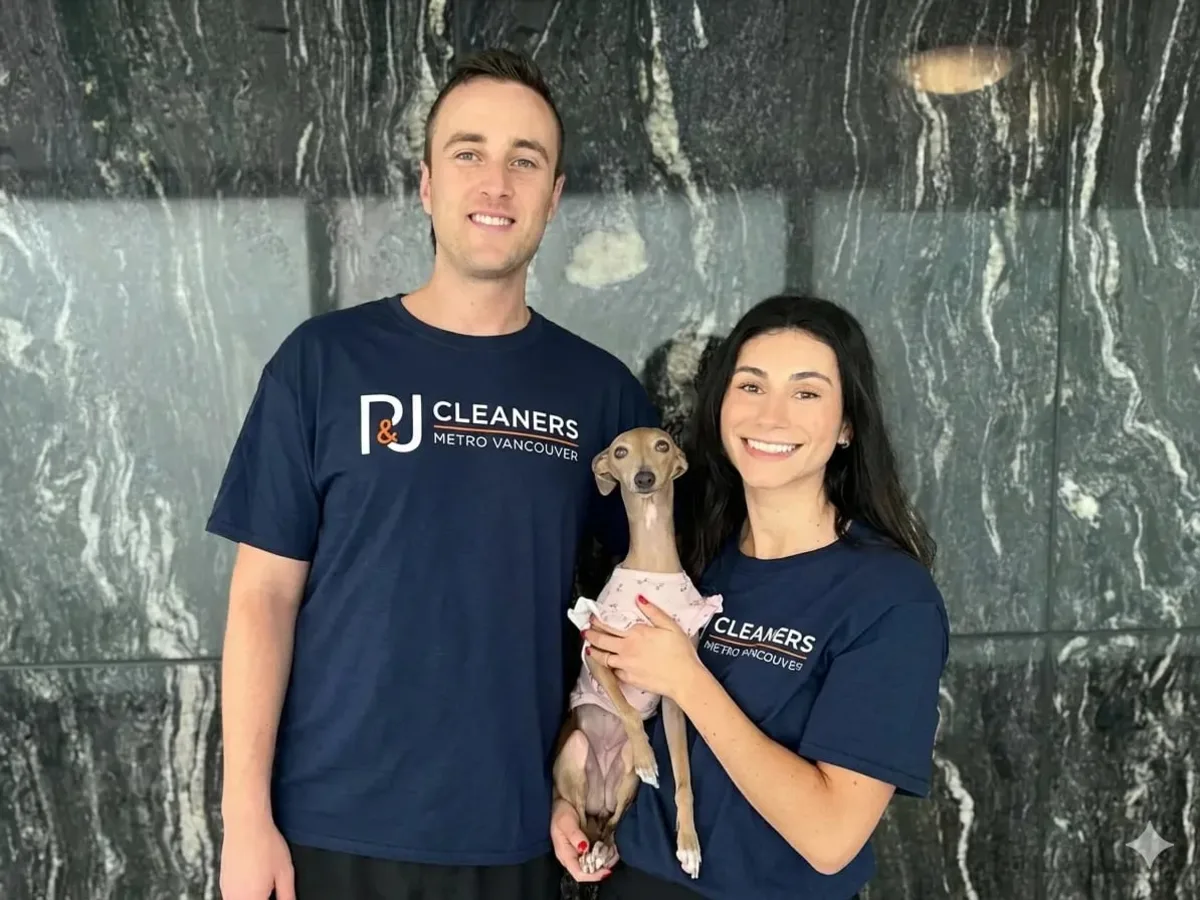
Meet the Author
Jason
Co-Founder
Jason oversees commercial operations, workflow design, and quality control for office, restaurant, and specialty cleaning programs across Metro Vancouver.
Keep Exploring