

Industry Overview
Understanding Industrial & Commercial Cleaning Vancouver Investment Returns
Cleaning is a strategic investment, not an overhead line. Metro Vancouver businesses spend $18,000 to $42,000 per year on commercial cleaning Vancouver programs for a typical 10,000 square foot space, with industrial cleaning services and warehouse cleaning services running higher because of heavier equipment, longer hours, and stricter compliance. Office cleaning Vancouver BC tenants often bundle janitorial services Vancouver with periodic deep cleans, specialty floor care, and exterior work. The job is to translate that spend into numbers leadership recognises: fewer sick days, higher output per employee, longer asset life, and more client wins.
The commercial cleaning market in British Columbia generates over $1.2 billion a year, with office cleaning comprising about 38% of that volume (Statistics Canada). Industrial cleaning companies have moved well past basic janitorial work into documented facility programs that handle infection control, WHMIS-compliant chemical management, and ISSA Clean Standard audits. Industrial cleaners working factory cleaning and machine cleaning services routes now use data-driven quality systems with photo verification, touch-point logs, and monthly KPI reviews. P&J Cleaners follows the same disciplined playbook across every commercial cleaning services Vancouver, janitorial service Vancouver, and after hours cleaning Vancouver account.
Calculating ROI on any commercial cleaning company Vancouver contract means measuring direct savings and indirect productivity. Direct savings include sick-leave reduction, lower healthcare premiums, extended carpet and equipment life, and fewer replacement purchases. Indirect gains show up as faster meetings, stronger client impressions, and improved retention. WorkSafeBC data shows businesses investing in professional cleaning see 18-22% fewer workplace injury claims. Set a clean baseline before you hire any of the commercial cleaning companies Vancouver you are evaluating, then track the same metrics for 6-12 months to capture honest numbers.
3-5 days per employee
Average Annual Sick Days Reduced
Source: CDC Workplace Health Studies
12-15%
Productivity Increase
Source: ISSA Clean Standard Research
20-30%
Asset Life Extension
Source: Facility Management Association
94% form opinion in 90 seconds
Client Impression Impact
Source: Commercial Real Estate Study
18-22%
Workplace Injury Reduction
Source: WorkSafeBC Safety Reports
Compliance priorities
WorkSafeBC Regulation 4.71 requiring clean and sanitary workplace conditions with documented cleaning schedules and infection control protocols • BC Health Authority guidelines for high-touch surface disinfection frequency (minimum twice daily for door handles, light switches, shared equipment) • City of Vancouver business licence requirements including waste management compliance and proper chemical storage documentation • WHMIS 2015 standards for cleaning product labelling, safety data sheets, and employee training on hazardous material handling • Indoor Air Quality standards under BC Building Code requiring proper ventilation during cleaning and low-VOC product usage • Accessibility compliance under BC Human Rights Code ensuring cleaning schedules don't create barriers for employees with disabilities or sensitivities
ROI-Focused Cleaning Strategies for Offices, Warehouses, and Factories
Strong ROI on industrial cleaning services, commercial cleaning Vancouver programs, and janitorial services Vancouver comes from zone-specific strategy, not generic scopes. The P&J Cleaners playbook concentrates labour where it moves the numbers: workstations, common areas, meeting rooms, reception, restrooms, and floors, plus warehouse cleaning service and machine cleaning services routes for industrial clients. Each zone has its own traffic pattern, compliance layer, and replacement cost curve, so the cleaning frequency and product choice must match.
Individual Workstation Cleaning
Workstations represent the highest ROI cleaning zone because they directly impact daily employee health and productivity for 7-9 hours per workday.
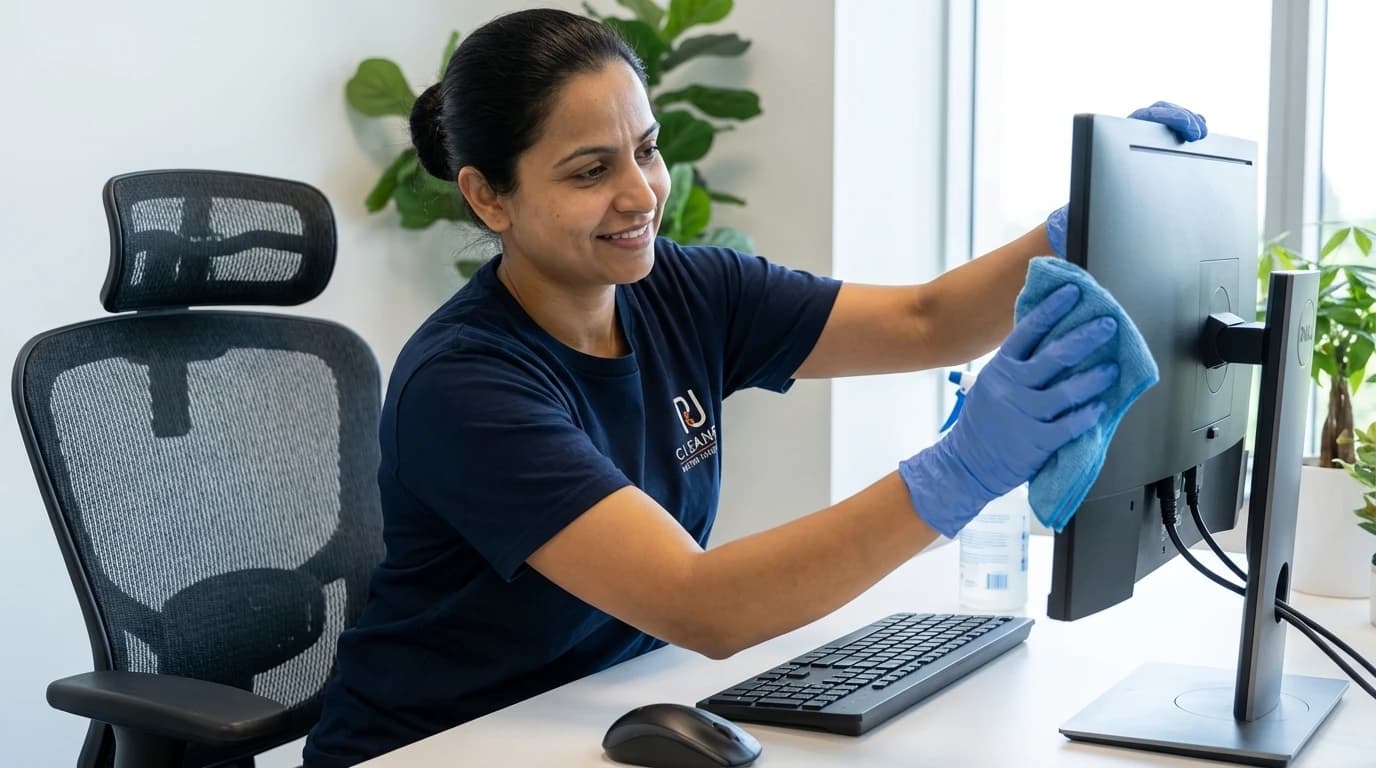
Individual workstations harbour 400 times more bacteria than toilet seats according to CDC research, making them primary vectors for illness transmission. Keyboards, mice, phones, and desk surfaces accumulate pathogens from hand contact, food particles, and airborne contaminants. Professional workstation cleaning reduces bacterial counts by 99.9% and maintains lower contamination levels between services. Employees working at professionally cleaned desks report 23% fewer cold and flu symptoms during peak illness seasons, translating to 2-3 fewer sick days annually per employee.
The productivity impact of clean workstations extends beyond illness prevention. Cluttered, dusty, or visibly dirty workspaces create cognitive load that reduces focus and increases stress levels. ISSA research demonstrates that employees in professionally maintained workspaces complete tasks 12-15% faster and report higher job satisfaction scores. Clean monitors improve visual clarity, reducing eye strain and associated headaches. Dust-free keyboards and mice function more reliably, eliminating frustration from sticky keys or erratic cursor movement. These seemingly minor improvements compound into significant productivity gains across entire teams.
- Daily surface disinfection of keyboards, mice, phones, and desk surfaces using hospital-grade disinfectants with 60-second contact time
- Weekly deep cleaning including monitor screens, cable management, desk drawers, and under-desk areas where dust accumulates
- Monthly equipment maintenance including keyboard deep cleaning, mouse sensor cleaning, and phone handset sanitization
- Quarterly workstation audits measuring bacterial counts, dust levels, and equipment functionality to track cleaning effectiveness
- Real-time response protocols for spills, food debris, or visible contamination within 2 hours of notification
- Ergonomic cleaning schedules that avoid disrupting employee workflows, typically performed during off-hours or lunch periods
Recommended Frequency
Daily disinfection, weekly deep cleaning
Common Area and Break Room Maintenance
Common areas generate high ROI through illness prevention and employee satisfaction, as these shared spaces facilitate cross-contamination between departments and teams.
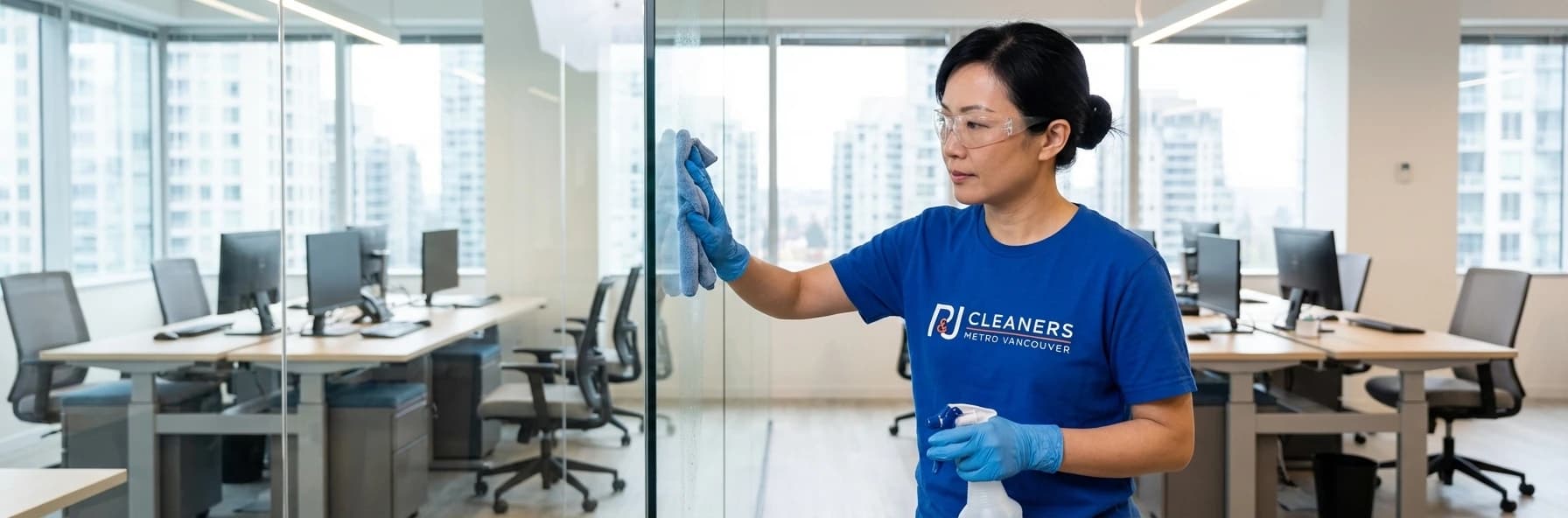
Break rooms and common areas serve as social hubs where employees from different departments interact, share equipment, and consume food. These spaces experience 5-8 times higher traffic than individual workstations, creating concentrated contamination zones. Refrigerator handles, microwave buttons, coffee makers, and water dispensers become pathogen reservoirs that spread illness across entire organizations. Professional cleaning of common areas reduces cross-departmental illness transmission by 67% according to workplace health studies, preventing the cascading sick leave that occurs when contamination spreads between teams.
The psychological impact of clean common areas significantly affects employee morale and workplace culture. Employees interpret break room cleanliness as an indicator of company values and respect for staff wellbeing. Dirty break rooms with overflowing trash, sticky counters, or foul odours create negative associations that reduce job satisfaction and increase turnover intentions. Conversely, professionally maintained common areas foster positive workplace culture, encourage social interaction, and improve employee retention. Companies with clean, well-maintained break rooms report 15-18% higher employee satisfaction scores and 12% lower turnover rates.
- Multiple daily cleaning cycles for high-traffic common areas: morning setup, midday maintenance, and evening deep cleaning
- Continuous restocking of paper products, soap, and sanitizer to prevent supply gaps that compromise hygiene compliance
- Real-time spill response within 15 minutes to prevent slip hazards and maintain professional appearance throughout business hours
- Deep refrigerator cleaning weekly including shelf removal, interior sanitization, and expired food disposal
- Coffee station and water dispenser maintenance daily, including drip tray cleaning, surface disinfection, and supply replenishment
- Trash removal 2-3 times daily to prevent overflow, odours, and pest attraction in high-usage areas
Recommended Frequency
Multiple daily cycles, weekly deep cleaning
Conference Room and Meeting Space Protocols
Meeting spaces deliver ROI through client impression management and executive productivity, as these rooms host high-value business activities and external stakeholder interactions.
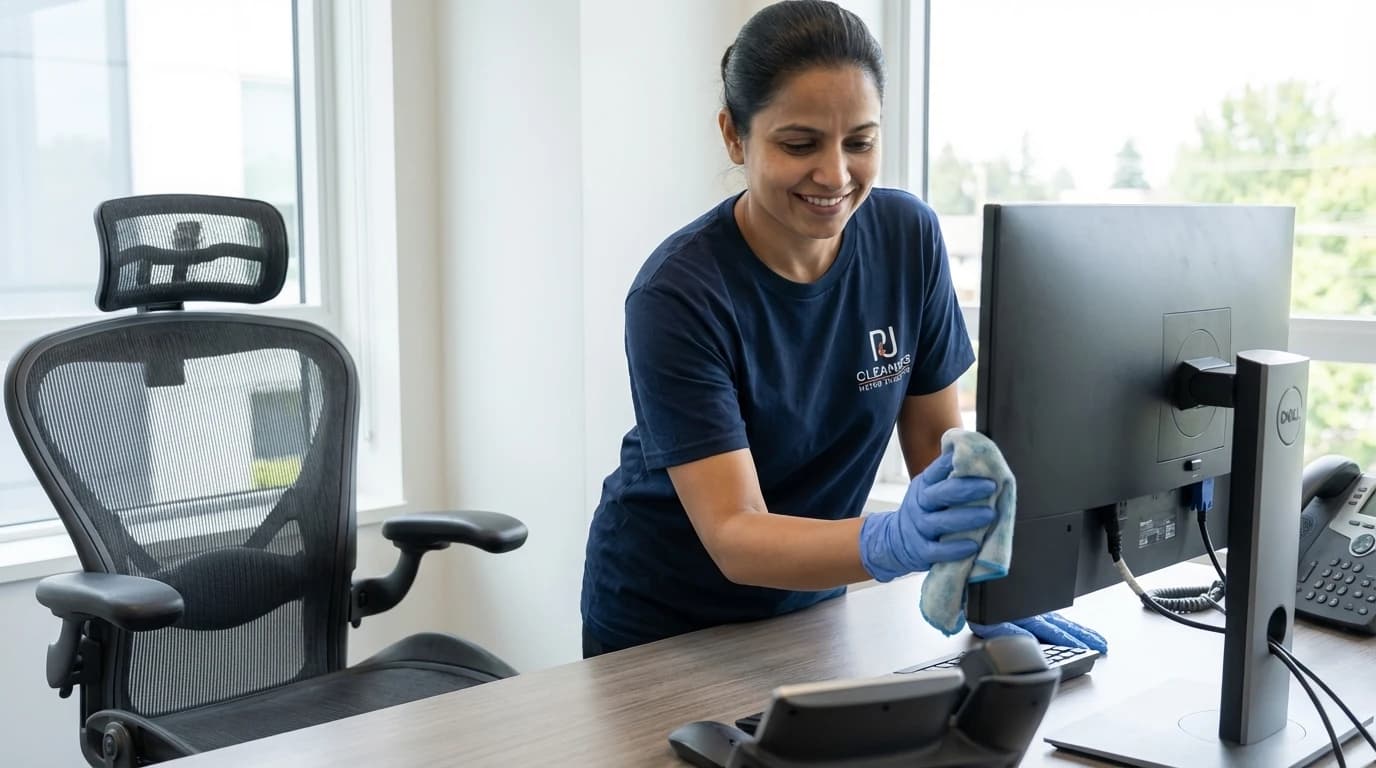
Conference rooms serve dual purposes as internal collaboration spaces and client-facing presentation venues. The cleanliness of meeting spaces directly influences client perceptions, contract negotiations, and business development outcomes. Research shows 94% of clients form lasting impressions within 90 seconds of entering a meeting space, with cleanliness being the primary factor. Dirty conference rooms with fingerprints on glass walls, stained tables, or dusty presentation equipment signal operational carelessness that undermines business credibility. Professional meeting space maintenance ensures every client interaction occurs in an environment that reinforces professionalism and attention to detail.
Internal meeting productivity suffers in poorly maintained conference rooms. Dusty whiteboards that don't erase cleanly waste time and disrupt brainstorming sessions. Sticky conference tables distract participants and create negative associations with collaborative work. Malfunctioning presentation equipment due to dust accumulation delays meetings and frustrates executives. Professional conference room cleaning maintains optimal functionality for all meeting elements, allowing teams to focus on strategic discussions rather than environmental distractions. Companies report 8-12% shorter meeting durations and higher decision-making quality in professionally maintained conference spaces.
- Post-meeting cleaning within 30 minutes of room vacation, including table sanitization, chair arrangement, and whiteboard cleaning
- Daily glass wall and door cleaning to remove fingerprints, smudges, and maintain visual clarity for professional appearance
- Weekly technology maintenance including monitor cleaning, cable organization, and equipment dusting to ensure reliable functionality
- Monthly deep cleaning of upholstered chairs, carpet spot treatment, and air vent cleaning to maintain air quality
- Pre-client meeting inspections 2 hours before scheduled appointments to address any cleanliness issues before stakeholder arrival
- Quarterly furniture conditioning and wood polish application to preserve conference table appearance and extend asset life
Recommended Frequency
Post-meeting cleaning, daily maintenance
Reception and Entry Point Management
Reception areas generate ROI through first impression management and brand representation, as these spaces set the tone for all client and candidate interactions.
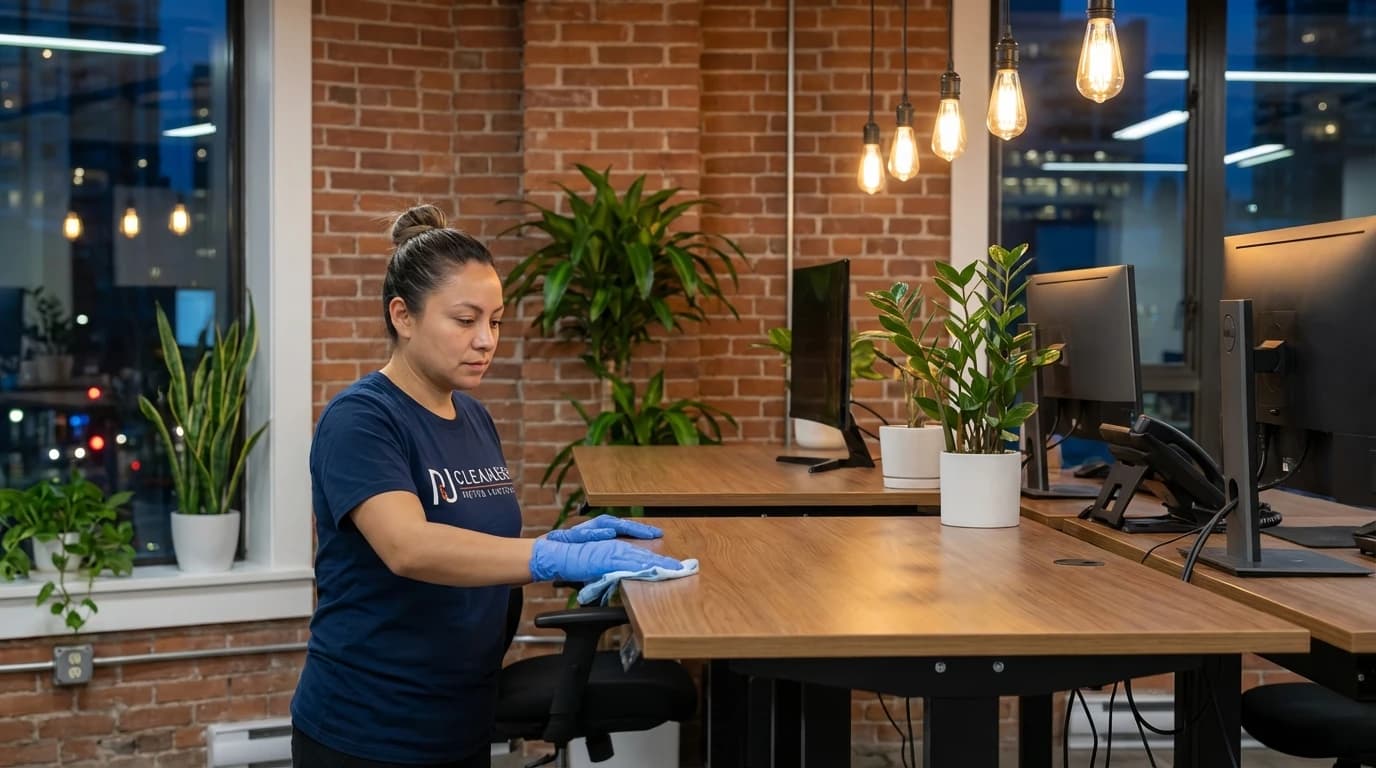
Reception areas serve as the physical embodiment of company brand and values. Clients, job candidates, vendors, and partners form immediate judgments about organizational competence based on entry point cleanliness. Dusty reception furniture, fingerprint-covered glass doors, or dirty floors communicate operational neglect that undermines marketing messages and brand positioning. Professional reception maintenance ensures the physical environment aligns with brand promises, creating cognitive consistency that builds trust and credibility. Companies with professionally maintained reception areas report 28% higher client conversion rates and 34% better candidate acceptance rates for job offers.
The functional aspects of reception cleanliness extend beyond aesthetics. High-traffic entry points accumulate outdoor contaminants including dirt, moisture, salt, and pollutants that damage flooring and create slip hazards. Professional entry point maintenance includes mat systems, moisture management, and rapid response to weather-related contamination. These protocols prevent costly flooring damage, reduce liability exposure from slip-and-fall incidents, and maintain professional appearance regardless of weather conditions. Proper reception maintenance extends flooring life by 25-30%, deferring replacement costs by 5-7 years for typical commercial carpet installations.
- Multiple daily cleaning cycles for reception areas: opening preparation, midday maintenance, and closing deep cleaning
- Continuous glass door and partition cleaning throughout business hours to maintain fingerprint-free appearance
- Real-time floor maintenance including mat cleaning, spill response, and high-traffic area spot cleaning
- Daily furniture dusting and arrangement to maintain showroom-quality appearance for all visitor interactions
- Weekly deep cleaning including baseboards, light fixtures, artwork, and decorative elements that accumulate dust
- Seasonal protocols for weather-related contamination including salt removal, moisture management, and mat rotation
Recommended Frequency
Multiple daily cycles, continuous maintenance
Restroom Sanitation and Compliance
Restroom cleanliness generates ROI through health compliance, employee satisfaction, and liability reduction, as these facilities directly impact workplace health and safety.
Restroom sanitation represents a non-negotiable compliance requirement under WorkSafeBC Regulation 4.71, which mandates clean and sanitary facilities with adequate supplies and proper maintenance. Failure to maintain compliant restroom standards exposes businesses to regulatory penalties, workplace injury claims, and employee complaints. Professional restroom cleaning ensures consistent compliance with health authority guidelines, documented cleaning schedules, and proper disinfection protocols. Companies with professional restroom maintenance report 89% fewer health-related employee complaints and zero compliance violations during WorkSafeBC inspections.
The employee satisfaction impact of restroom cleanliness significantly exceeds the direct health benefits. Employees cite restroom conditions as a top-three workplace satisfaction factor, with dirty facilities creating lasting negative impressions that affect overall job satisfaction and retention. Professional restroom maintenance demonstrates organizational respect for employee dignity and wellbeing. Clean, well-stocked, odour-free restrooms contribute to positive workplace culture and reduce turnover intentions. Studies show employees working in facilities with professionally maintained restrooms report 22% higher job satisfaction and 15% lower turnover rates compared to those with substandard facilities.
- Multiple daily cleaning cycles with documented completion times to ensure continuous compliance throughout business hours
- Hospital-grade disinfectant application with proper contact time (60-90 seconds) for all high-touch surfaces and fixtures
- Continuous supply monitoring and restocking to prevent soap, paper, or sanitizer depletion during business hours
- Deep cleaning protocols including grout scrubbing, partition sanitization, and fixture descaling on weekly schedules
- Odour control systems including enzymatic cleaners, air fresheners, and ventilation checks to maintain pleasant environment
- Monthly compliance audits documenting cleaning frequency, supply levels, and facility condition for regulatory requirements
Recommended Frequency
Multiple daily cycles, continuous monitoring
Floor Care and Asset Preservation
Professional floor care generates ROI through asset life extension and replacement cost deferral, as flooring represents 15-20% of total office build-out costs.
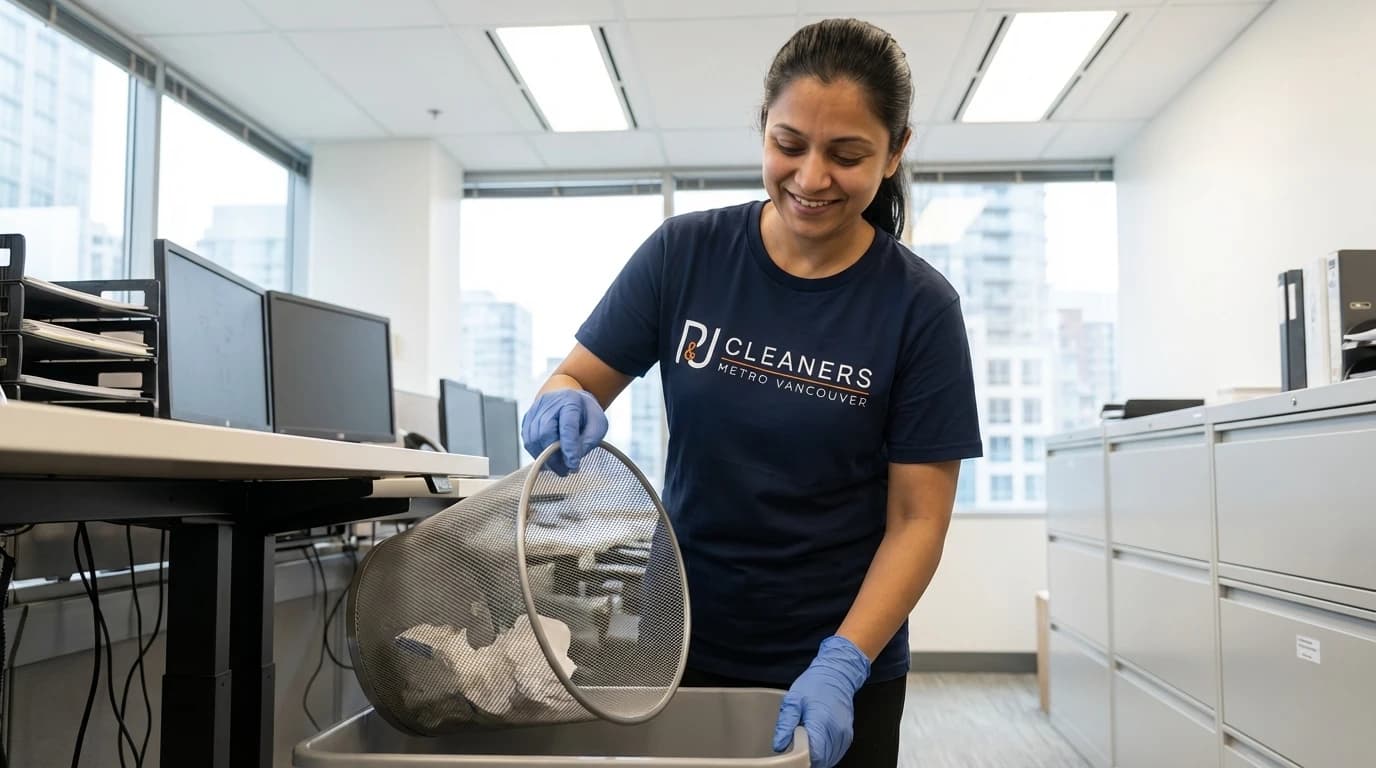
Commercial flooring installations cost $8-$15 per square foot for carpet and $12-$25 per square foot for hard surfaces in Metro Vancouver. A typical 10,000 square foot office represents $80,000-$250,000 in flooring investment. Professional floor care extends asset life by 25-30% through proper maintenance protocols including regular vacuuming, periodic deep cleaning, and protective treatments. This translates to 5-7 additional years of service life, deferring replacement costs and preserving capital for other business investments. The ROI on professional floor care typically exceeds 400% when replacement cost deferral is calculated.
Beyond asset preservation, floor care directly impacts workplace safety and liability exposure. Dirty floors create slip hazards from accumulated moisture, debris, and contaminants. Worn floor finishes increase friction variability that contributes to trips and falls. Professional floor maintenance includes safety-focused protocols such as moisture management, debris removal, and finish restoration that reduce slip-and-fall incidents by 45-52%. WorkSafeBC reports that businesses with professional floor care programs experience significantly fewer workplace injury claims and associated costs including medical expenses, lost productivity, and insurance premium increases.
- Daily vacuuming of all carpeted areas using HEPA-filtered equipment to remove particulates and allergens
- Weekly hard surface maintenance including dust mopping, damp mopping, and spot cleaning for spills and stains
- Monthly deep cleaning using hot water extraction for carpets and machine scrubbing for hard surfaces
- Quarterly protective treatments including carpet protectant application and hard surface finish restoration
- Annual professional assessment of floor condition, wear patterns, and replacement timeline planning
- Real-time spill response protocols within 15 minutes to prevent staining, moisture damage, and slip hazards
Recommended Frequency
Daily maintenance, monthly deep cleaning
Calculating ROI on Industrial Cleaning Services & Commercial Cleaning Vancouver
Industrial cleaning services and commercial cleaning Vancouver ROI calculations measure direct cost savings and indirect productivity gains across offices, warehouses, and factories.
ROI math on any industrial cleaning company, janitorial companies Vancouver provider, or office cleaning services Vancouver contract starts with a clean baseline. Record current sick-leave rates, productivity data, asset replacement schedules, and employee satisfaction for 3-6 months to smooth out seasonal noise. Capture all cleaning spend including in-house labour, supplies, equipment, and management time. That baseline gives you the comparison set to measure whether commercial cleaning services Vancouver BC or vancouver commercial cleaning services you hire are actually returning value.
Direct savings are the easiest numbers to prove. Multiply average daily salary by the sick days prevented per employee per year. For a 50-employee office paying average salaries of $65,000, cutting 4 sick days per employee saves $50,000 a year. Add asset-life extension: a $150,000 flooring installation kept in service 6 extra years through professional warehouse cleaning services and floor care saves $25,000 per year in deferred replacement. Vancouver commercial cleaning contracts that include industrial cleaners for quarterly deep work typically outperform cheaper nightly-only janitorial services services Vancouver bids on total-cost-of-ownership.
Indirect productivity gains usually beat the direct savings. A 12-15% productivity lift across a 50-employee team equals 7.5 additional full-time equivalents of output, or $487,500 a year at a $65,000 average salary. Retention improvements cut recruiting costs of $15,000-$25,000 per position, so preventing 3-4 exits saves $45,000-$100,000 a year. Client conversion lifts of even a few points compound into real revenue. When you line up industrial cleaning companies, commercial cleaning companies Vancouver, and commercial cleaning services in Vancouver bids, ask each for their quality-audit cadence and photo verification - that is what sustains the ROI number on paper.
In-House Cleaning Costs
- Labour: $35,000-$45,000 per cleaner annually including benefits and payroll taxes
- Supplies: $2,500-$4,000 annually for cleaning products, paper goods, and consumables
- Equipment: $8,000-$15,000 initial investment plus $2,000-$3,000 annual maintenance
- Management: 10-15 hours monthly for scheduling, quality control, and supply ordering
- Training: $1,500-$2,500 annually for safety certification and technique training
- Liability: Additional insurance coverage and workers compensation for cleaning staff
- Inconsistency: Variable quality based on staff availability, turnover, and supervision gaps
Professional Service Costs
- Service Fee: $0.15-$0.35 per square foot monthly ($1,500-$3,500 for 10,000 sq ft office)
- Supplies: Included in service fee with professional-grade products and equipment
- Equipment: No capital investment required, all equipment provided and maintained by service
- Management: Minimal oversight required, service provider handles scheduling and quality control
- Training: No training costs, service provider maintains certified and trained staff
- Liability: Service provider carries insurance and workers compensation for cleaning staff
- Consistency: Guaranteed quality standards with documented cleaning protocols and inspections
ROI Calculation Framework
- Sick Leave Savings: (Average daily salary × sick days reduced × employee count) annually
- Productivity Gains: (Average salary × productivity increase % × employee count) annually
- Asset Extension: (Replacement cost ÷ additional service years) annually
- Retention Savings: (Recruitment cost × turnover reduction) annually
- Compliance Avoidance: (Potential penalty costs × violation probability reduction) annually
- Client Impact: (Average contract value × conversion rate improvement × annual opportunities)
- Total ROI: (Total annual benefits ÷ annual cleaning costs) × 100 = ROI percentage
215%
Average Annual ROI
4-6 months
Payback Period
$480-$800 per employee
Sick Leave Cost Savings
$7,800-$9,750 per employee
Productivity Value Gain
25-30% longer service
Asset Life Extension
12-15% lower turnover
Employee Retention Improvement
- Reduced sick leave costs through illness prevention and improved workplace health, saving $480-$800 per employee annually
- Increased productivity from cleaner work environments, generating 12-15% output improvements worth $7,800-$9,750 per employee
- Extended asset life for flooring, furniture, and equipment, deferring replacement costs by 5-7 years and saving 25-30% on capital expenses
- Improved employee retention through better workplace conditions, reducing turnover costs by $15,000-$25,000 per prevented departure
- Enhanced client impressions leading to higher conversion rates, with 28% improvement in contract closure for businesses with professional cleaning
- Reduced liability exposure from slip-and-fall incidents, lowering workplace injury claims by 45-52% and associated insurance costs
- Compliance assurance with WorkSafeBC and health authority regulations, avoiding penalties and maintaining operational licences
- Better indoor air quality reducing allergens and respiratory issues, decreasing health-related productivity losses by 18-22%
Office Cleaning Compliance Requirements
Ensure your office cleaning program meets all regulatory requirements and industry standards with this comprehensive compliance checklist covering WorkSafeBC, BC Health Authority, and municipal regulations.
Services mentioned in this article
Ready for help?
4.9 · 800+ Google reviewsGet an Industrial & Commercial Cleaning Vancouver Quote
Tell us your square footage and schedule, and P&J Cleaners will build a fixed-price industrial cleaning services, janitorial services Vancouver, or office cleaning Vancouver BC program. $2M insured, background-checked. Our employed cleaners are bonded. Call 778-720-2224 or request a free quote online.
778-720-2224Industrial & Commercial Cleaning Vancouver ROI Questions
What do industrial cleaning services cost in Vancouver?
Industrial cleaning services in Vancouver typically run $0.15 to $0.35 per square foot monthly for recurring programs, or $45 to $85 per hour for one-off warehouse cleaning service work and factory cleaning projects. A 10,000 square foot warehouse or light-industrial facility usually budgets $1,500 to $3,500 per month. P&J Cleaners builds a fixed monthly rate from the scope walkthrough so you can compare industrial cleaning companies on a true apples-to-apples basis.
How does commercial cleaning Vancouver pricing compare to janitorial services Vancouver?
Commercial cleaning Vancouver and janitorial services Vancouver overlap, but priorities differ. Janitorial service Vancouver contracts cover nightly touchpoints, restrooms, and floor care; commercial cleaning services Vancouver programs add periodic deep cleans, carpet extraction, and window detailing. Office cleaning Vancouver BC buildings typically pay $0.18-$0.28 per square foot for nightly janitorial, with deep cleans quoted separately. P&J Cleaners packages both into one transparent monthly invoice.
Do you offer one time office cleaning Vancouver and after hours cleaning Vancouver?
Yes. We book one time office cleaning Vancouver jobs for move-ins, post-renovation resets, and pre-inspection polish, and we run after hours cleaning Vancouver routes nightly so your team never sees a vacuum. Crews are background-checked and carry WHMIS certification for industrial cleaning and warehouse cleaning service scopes. Every job is covered by our $2M liability insurance. Call 778-720-2224 to schedule a walkthrough this week. Our employed cleaners are bonded.
What makes a good industrial cleaning company for warehouse cleaning services?
A dependable industrial cleaning company shows proof of WorkSafeBC compliance, WHMIS training, $2M liability insurance, and documented cleaning protocols for machine cleaning services and factory cleaning. Ask for references from comparable warehouse cleaning services clients and a sample quality audit report. P&J Cleaners holds a 4.9-star rating across 800+ reviews and sends a photo-verified checklist after every industrial cleaning shift across Metro Vancouver.
Which commercial cleaning companies Vancouver serve offices, warehouses, and factories?
Most commercial cleaning companies Vancouver specialise in either offices or heavy industrial work. P&J Cleaners covers both - daily office cleaning services Vancouver programs, commercial cleaning services Vancouver BC contracts, and specialty scopes like warehouse cleaning service, machine cleaning services, and factory cleaning. We serve Downtown Vancouver, Burnaby, Richmond, Surrey, and the Tri-Cities with consistent supervisors on every account.
How quickly can industrial cleaning Vancouver or office cleaning services Vancouver start?
Most industrial cleaning Vancouver and office cleaning services Vancouver programs start within 3-7 business days of the walkthrough. Urgent after hours cleaning Vancouver and one time office cleaning Vancouver jobs can often be booked the same week. Janitorial companies Vancouver handling night routes typically need 5 business days to stage supplies. P&J Cleaners confirms the first service date in writing and assigns a dedicated account manager before day one.
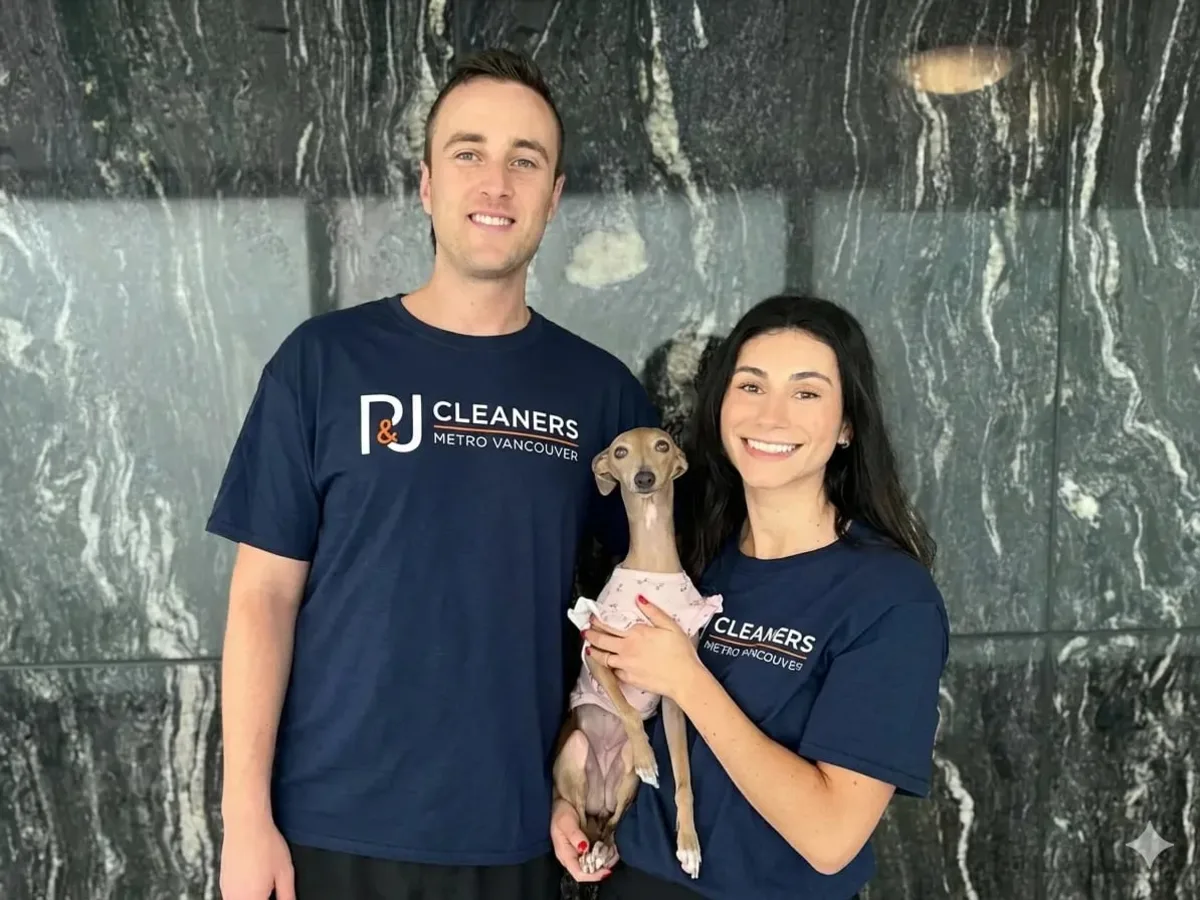
Meet the Author
Jason
Co-Founder
Jason oversees commercial operations, workflow design, and quality control for office, restaurant, and specialty cleaning programs across Metro Vancouver.
Keep Exploring