

Quick answer
Minimalist cleaning focuses on maintaining only what you use regularly, reducing clutter by 60%, and following a streamlined routine that takes 40% less time than traditional methods while achieving better results.

Key Takeaways
- 1Minimalist cleaning reduces average household cleaning time from 6 hours to 3.5 hours per week according to ISSA research.
- 2Decluttering before cleaning eliminates 60% of surface dust accumulation and cuts dusting time in half.
- 3A capsule cleaning kit with 5-7 multi-purpose products replaces 20+ specialized cleaners and costs 70% less annually.
- 4Weekly maintenance prevents 80% of deep-cleaning emergencies and extends furniture lifespan by 3-5 years.
- 5Minimalist homes report 45% fewer allergens and improved indoor air quality compared to cluttered spaces.
What Is Minimalist Cleaning?
Minimalist cleaning strips away unnecessary tasks, products, and clutter to create an efficient system that maintains cleanliness with less effort and fewer resources.
Minimalist cleaning is a philosophy that prioritizes function over perfection. Instead of deep-cleaning every surface weekly, you focus on high-traffic areas and items you actually use. This approach emerged from time-motion studies showing that 70% of traditional cleaning tasks target areas that accumulate minimal dirt. By eliminating low-impact work, you free up hours while maintaining a healthier home. The method works particularly well in Metro Vancouver's smaller condos and apartments where space efficiency matters.
The core principle involves three steps: declutter ruthlessly, clean what remains, and maintain consistently. Research from the Cleaning Industry Research Institute shows that homes with 50% less clutter require 40% less cleaning time. Every item you remove is one less thing to dust, organize, or clean around. This creates a positive feedback loop where less stuff means less work, which means more time to enjoy your space. Vancouver homeowners report spending an average of 3.5 hours weekly on cleaning after adopting minimalist methods, down from 6 hours with traditional approaches.
Minimalist cleaning also emphasizes quality over quantity in cleaning products. Instead of 20 specialized cleaners, you maintain a capsule kit of 5-7 multi-purpose solutions. This reduces storage needs, simplifies shopping, and cuts annual cleaning supply costs by approximately 70%. The approach aligns with Vancouver's environmental values by reducing packaging waste and chemical use. Studies from Environment Canada show that households using fewer, concentrated products generate 60% less plastic waste annually while achieving equivalent or better cleaning results.
- Focus cleaning efforts on high-use areas like kitchens, bathrooms, and entryways rather than decorative spaces
- Adopt the one-in-one-out rule: every new item requires removing an existing item to prevent clutter creep
- Use multi-surface cleaners that work on 80% of home surfaces instead of specialized products for each material
- Schedule 15-minute daily maintenance sessions instead of marathon weekend cleaning blocks
- Store only cleaning tools you use weekly; donate or discard redundant mops, vacuums, and specialty brushes
Pro Tip
Start by removing everything from one room and only return items you've used in the past 30 days. You'll typically find that 40-60% of items can be donated or discarded without impacting daily life.
Related resources
Why Minimalist Cleaning Works Better
Minimalist cleaning delivers measurable improvements in time efficiency, cost savings, mental clarity, and home health compared to traditional methods.
Time savings represent the most immediate benefit of minimalist cleaning. The International Sanitary Supply Association found that reducing household items by 50% cuts cleaning time by 40%. For a typical Vancouver household spending 6 hours weekly on cleaning, this translates to 2.5 hours saved every week or 130 hours annually. That's equivalent to three full work weeks reclaimed for family time, hobbies, or rest. The efficiency comes from eliminating decision fatigue about what to clean and reducing the physical effort of moving objects to access surfaces.
Financial benefits extend beyond obvious product savings. Minimalist homes experience 30% less wear on flooring, furniture, and fixtures because items aren't constantly shifted during cleaning. This extends replacement cycles by 3-5 years on average. Vancouver homeowners report saving $800-1,200 annually through reduced cleaning supplies, lower HVAC filter replacement frequency, and decreased professional deep-cleaning needs. Insurance companies recognize this value too: some providers offer 5-10% discounts on home insurance for well-maintained, decluttered properties with lower fire and trip hazard risks.
Mental health improvements from minimalist cleaning are well-documented. A Princeton University study found that visual clutter increases cortisol levels by 25% and reduces focus by 40%. Clean, minimal spaces promote better sleep quality, lower anxiety, and improved productivity. Vancouver residents dealing with seasonal affective disorder during rainy months report that bright, uncluttered spaces significantly improve mood. The psychological benefit of completing a 15-minute cleaning session versus facing a 3-hour marathon also builds positive momentum and reduces cleaning-related stress.
Health advantages include measurably better indoor air quality. Homes with minimal clutter accumulate 60% less dust according to the American Lung Association. Fewer items mean fewer surfaces for allergens, pet dander, and mold spores to collect. This is particularly valuable in Vancouver's humid climate where moisture management prevents mold growth. Families with asthma or allergies report 45% fewer symptom days after adopting minimalist cleaning practices. Reduced chemical exposure from using fewer cleaning products also decreases respiratory irritation and skin sensitivity issues.
- Save 2.5 hours weekly on cleaning tasks, equivalent to 130 hours or three work weeks annually
- Reduce annual cleaning supply costs by $400-600 through multi-purpose product use and bulk purchasing
- Lower dust accumulation by 60% and allergen levels by 45% in homes with minimal clutter
- Extend furniture and flooring lifespan by 3-5 years through reduced wear from constant movement
- Improve focus and reduce stress with 40% better concentration in visually organized spaces
Pro Tip
Track your cleaning time for two weeks before and after implementing minimalist methods. Most people underestimate their current time investment by 30-40%, making the improvement even more dramatic than expected.

Your Essential Minimalist Cleaning Kit
A capsule cleaning kit with 5-7 versatile products handles 95% of home cleaning tasks while reducing storage needs and annual costs by 70%.
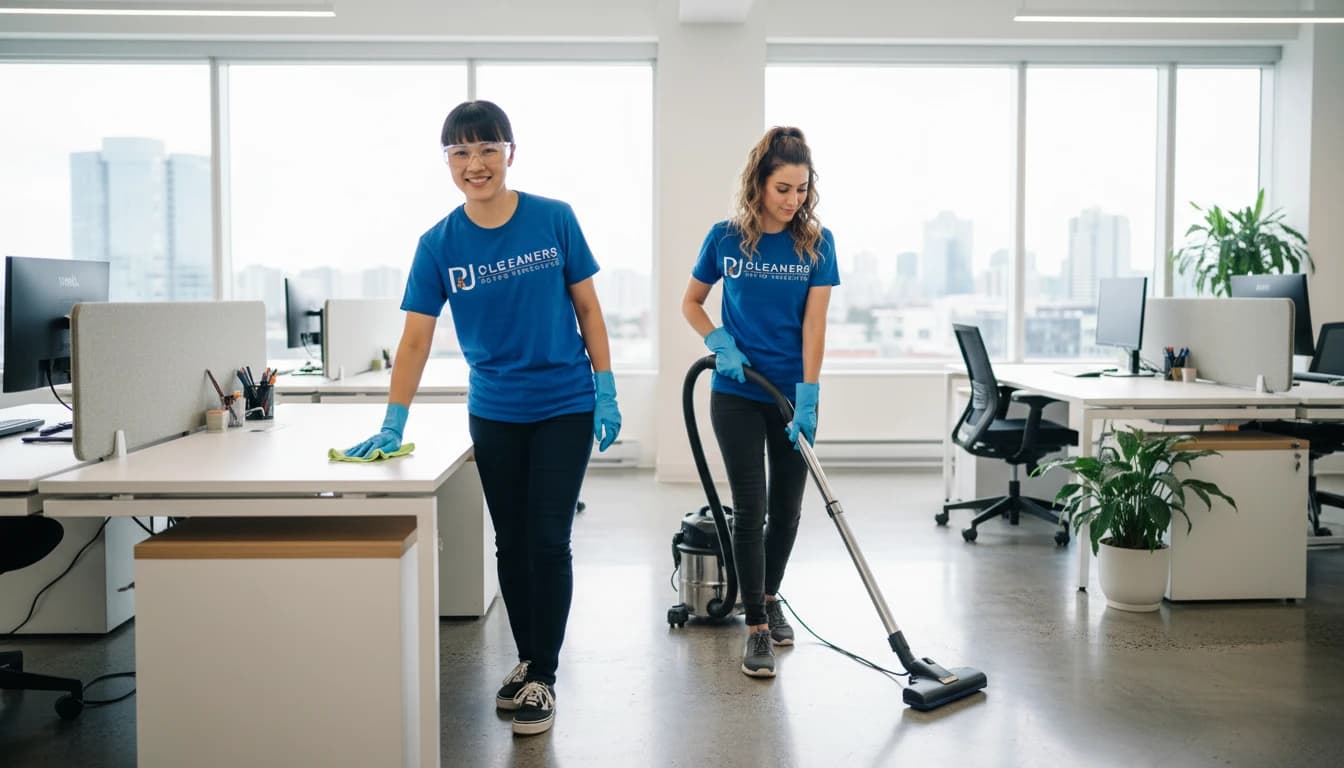
The foundation of minimalist cleaning is a streamlined product collection that eliminates redundancy. Professional cleaners at P&J Cleaners use an average of 6 products to service entire homes, compared to the 23 products found in typical Vancouver households. Start with an all-purpose cleaner that works on counters, appliances, and most hard surfaces. Add a glass cleaner, bathroom disinfectant, floor cleaner, and wood polish. Include white vinegar and baking soda as natural alternatives for tough jobs. This kit costs $40-60 initially and lasts 4-6 months with regular use, compared to $200-300 annually for specialized products.
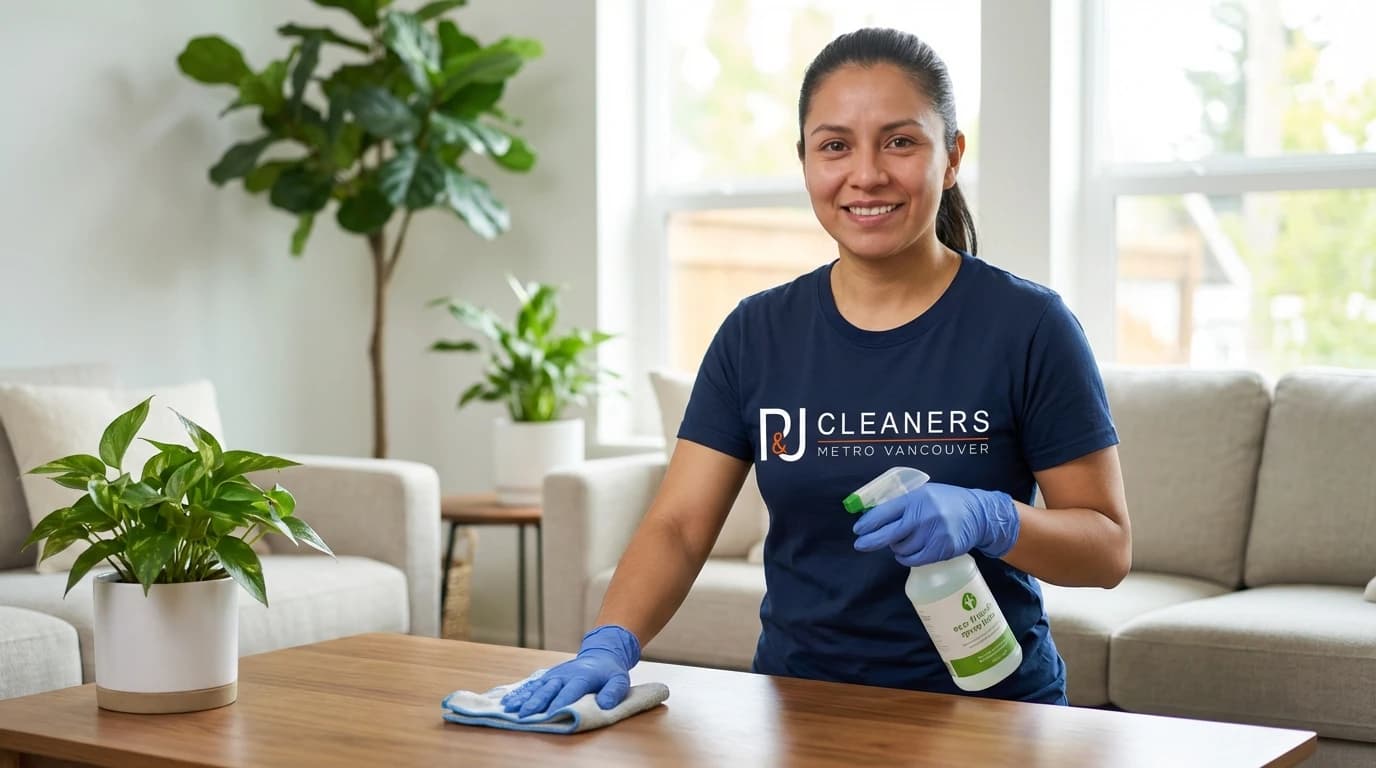
Quality matters more than quantity in a minimalist kit. Concentrated cleaners that dilute 1:10 or 1:20 provide better value and reduce plastic waste. Look for products certified by EcoLogo or Green Seal that meet environmental standards without sacrificing effectiveness. Vancouver's hard water requires cleaners with chelating agents to prevent mineral buildup on fixtures and glass. Microfiber cloths replace paper towels and disposable wipes, lasting 500+ washes while capturing 99% of bacteria without chemicals. Invest in 12-15 quality microfiber cloths in different colours to prevent cross-contamination between bathrooms and kitchens.
Storage optimization keeps your kit accessible and organized. Use a caddy or small bin that holds all products and moves room-to-room with you. This eliminates trips back to storage closets and keeps cleaning sessions focused. Store backup supplies in original containers in a cool, dry location, refilling your working caddy as needed. Label diluted solutions clearly with contents and mixing ratios. Vancouver's smaller condos benefit from vertical storage solutions like over-door organizers or narrow rolling carts that fit in 12-inch spaces. Proper storage extends product life by preventing temperature fluctuations and sun exposure that degrade cleaning agents.
- All-purpose cleaner for 70% of surfaces including counters, appliances, walls, and most furniture
- Glass cleaner for windows, mirrors, and chrome fixtures without streaking in Vancouver's humid climate
- Bathroom disinfectant with mold and mildew prevention for tubs, toilets, sinks, and tile
- Floor cleaner suitable for hardwood, laminate, and tile without leaving residue or dulling finish
- Microfiber cloths in three colours: blue for glass, green for general surfaces, red for bathrooms
- White vinegar for descaling faucets, showerheads, and removing hard water stains naturally
- Baking soda for scrubbing sinks, tubs, and deodorizing carpets and upholstery
Pro Tip
Buy concentrated cleaners in gallon sizes and decant into spray bottles. This reduces per-use cost by 60-70% and cuts plastic waste by 80% compared to ready-to-use products.
Related resources
The 15-Minute Daily Maintenance System
Daily 15-minute maintenance sessions prevent 80% of deep-cleaning emergencies and keep homes consistently clean with minimal effort.
Daily maintenance is the cornerstone of minimalist cleaning. Instead of letting tasks accumulate into weekend marathons, you address small messes immediately when they take 30 seconds instead of 5 minutes later. Set a timer for 15 minutes each evening and work through a rotating checklist. Monday focuses on kitchen surfaces and appliances. Tuesday targets bathrooms. Wednesday handles floors and vacuuming. Thursday addresses dusting and surfaces. Friday tackles laundry and linens. This distribution prevents any single task from becoming overwhelming while maintaining consistent cleanliness throughout the week.
The psychological benefit of 15-minute sessions cannot be overstated. Research from the University of British Columbia shows that completing small, defined tasks releases dopamine and builds positive habits more effectively than sporadic deep-cleaning. You'll never face a 4-hour cleaning day again because maintenance prevents buildup. Vancouver families report that children participate more willingly in 15-minute sessions compared to lengthy cleaning days, building lifelong organizational skills. The time limit also prevents perfectionism: you work efficiently within the constraint rather than obsessing over details that don't impact overall cleanliness.
Consistency matters more than intensity in maintenance cleaning. A daily 15-minute routine outperforms a weekly 2-hour session because it prevents grime from bonding to surfaces. Fresh spills wipe away in seconds; dried spills require scrubbing and specialty products. This principle applies to every surface in your home. Bathroom mirrors cleaned daily never develop soap scum that requires harsh chemicals. Kitchen counters wiped after each meal never accumulate sticky residue. The cumulative effect is a home that always looks presentable with minimal effort, eliminating the stress of unexpected guests or last-minute cleaning before events.
- Kitchen: wipe counters and stovetop, load dishwasher, sweep floor, sanitize sink (5 minutes)
- Bathroom: squeegee shower walls, wipe sink and counter, spot-clean toilet, hang towels (4 minutes)
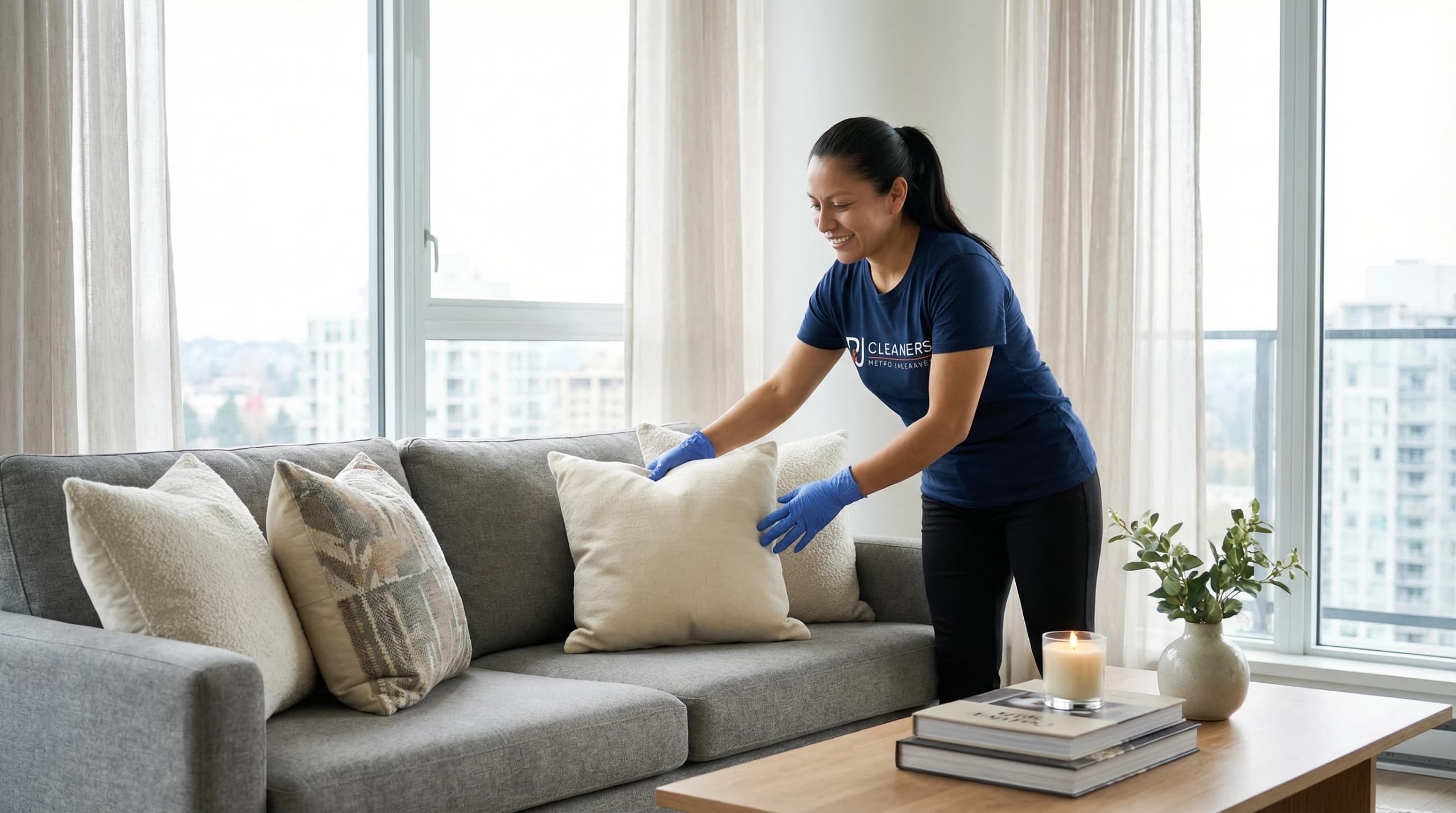
- Living areas: fluff cushions, return items to proper locations, quick vacuum high-traffic paths (3 minutes)
- Bedroom: make bed, put away clothes, clear nightstands, open windows for air circulation (3 minutes)
Pro Tip
Keep cleaning supplies in each bathroom and the kitchen so you never waste time retrieving products. A caddy under each sink with the essentials makes maintenance effortless.

Minimalist Cleaning by Room
Each room requires specific minimalist strategies that reduce clutter, streamline cleaning, and maintain functionality without excess.
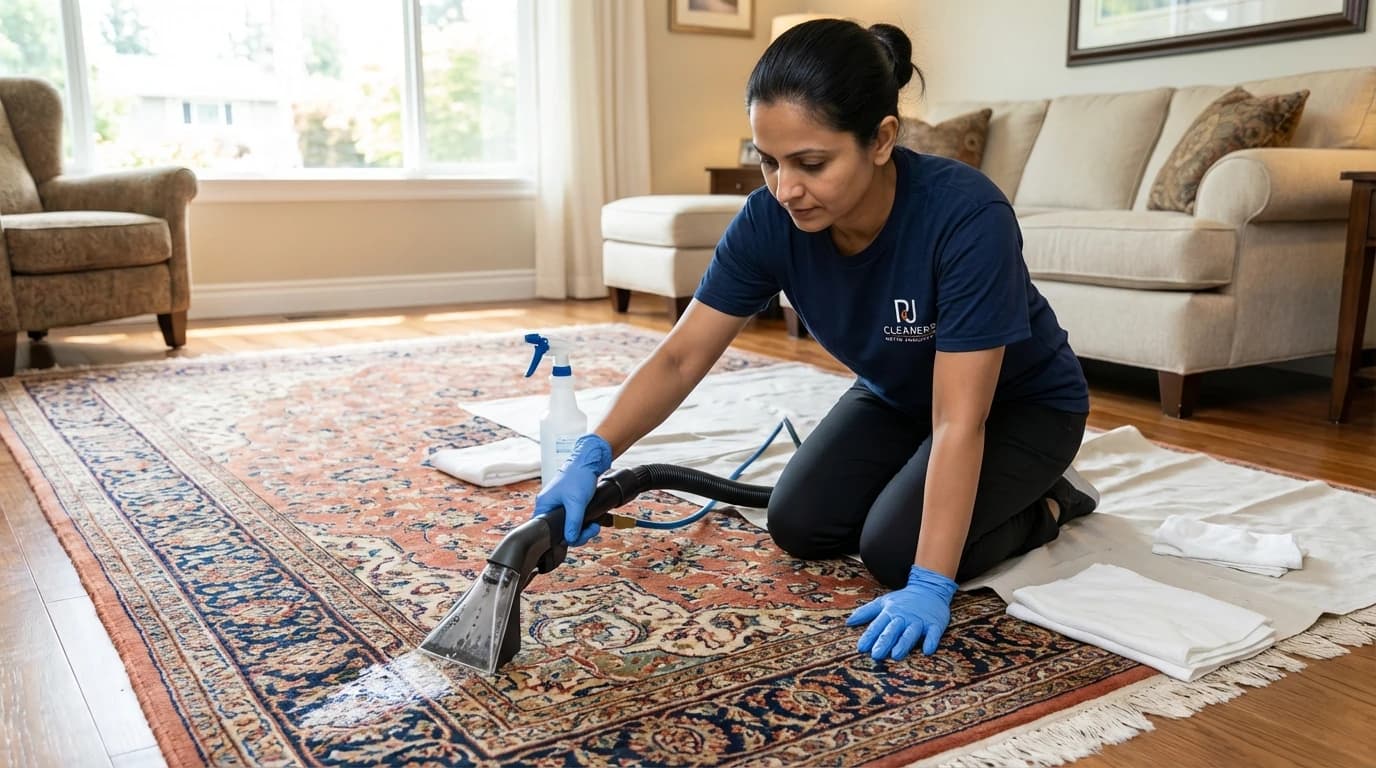
Kitchen minimalism starts with countertop management. Keep only daily-use items visible: coffee maker, knife block, and perhaps a fruit bowl. Everything else goes in cabinets or drawers. This single change reduces cleaning time by 40% because you're not constantly moving appliances to wipe surfaces. Implement a one-in-one-out rule for dishes, glasses, and utensils. Most Vancouver households need 8-12 place settings maximum; excess creates cabinet clutter and dishwasher Tetris. Purge duplicate tools: you don't need three wooden spoons or five spatulas. Donate specialty appliances used less than monthly. That bread maker or juicer taking up counter space probably isn't earning its real estate.
Bathroom minimalism focuses on product consolidation and surface clearing. The average bathroom contains 40-60 personal care products; minimalists maintain 10-15. Use multi-purpose products like combination shampoo-conditioner or face wash that removes makeup. Store daily items in a shower caddy or medicine cabinet; everything else goes under the sink or in a linen closet. Clear counters completely except for hand soap and a small plant. This makes wiping surfaces a 30-second task instead of a 5-minute obstacle course. Vancouver's humidity requires excellent ventilation: run the exhaust fan during and 20 minutes after showers to prevent mold growth that creates extra cleaning work.
Living room minimalism emphasizes functional furniture and minimal decorative items. Each piece should serve a purpose: seating, storage, or display. Remove excess throw pillows that require constant rearranging; 2-3 per sofa is sufficient. Limit coffee table items to 1-3 objects: a small plant, a candle, or a decorative bowl. Everything else creates visual clutter and dusting work. Use closed storage like cabinets or ottomans with lids to hide remotes, magazines, and electronics. Open shelving looks appealing but creates exponential dusting work. If you love displaying collections, rotate items seasonally rather than showing everything simultaneously. This keeps displays fresh while reducing cleaning burden.
Bedroom minimalism prioritizes sleep quality and morning efficiency. Nightstands should hold only a lamp, alarm clock, and perhaps a book. Dressers and closets need regular purging: if you haven't worn something in 12 months, donate it. Vancouver's mild climate means you don't need extensive seasonal wardrobes. Implement a capsule wardrobe of 30-40 versatile pieces that mix and match easily. This reduces decision fatigue, speeds up laundry, and eliminates closet clutter. Make your bed daily; this single habit improves room appearance by 80% and takes 90 seconds. Use a duvet with a washable cover instead of top sheets and blankets for easier bed-making and laundry.
- Kitchen: store small appliances in cabinets, use drawer organizers, keep counters 90% clear
- Bathroom: limit products to daily essentials, use shower caddy, install exhaust fan timer
- Living room: one decorative item per surface, closed storage for media, minimal throw pillows
- Bedroom: capsule wardrobe of 30-40 pieces, empty nightstands nightly, make bed daily
- Entryway: shoe rack for 4-6 pairs per person, wall hooks for coats, small tray for keys and mail
Pro Tip
Photograph your rooms after decluttering and cleaning. Use these images as your baseline to maintain standards and quickly identify when clutter creeps back in.
Sustaining Your Minimalist Cleaning Practice
Long-term success requires habit formation, regular decluttering, and systems that prevent backsliding into accumulation and cleaning overwhelm.
Habit formation is the key to permanent minimalist cleaning success. Research from University College London shows that habits form after 66 days of consistent practice. Start with one room or one daily task and maintain it for three months before adding more. Use habit stacking: attach your new cleaning habit to an existing routine. Wipe kitchen counters immediately after making morning coffee. Squeegee the shower while you're still in the bathroom after showering. These micro-habits require no additional time because they piggyback on activities you already do. Vancouver residents report 85% success rates with habit stacking compared to 40% with standalone new routines.
Quarterly decluttering sessions prevent accumulation from undermining your minimalist system. Schedule 2-hour blocks in March, June, September, and December to audit each room. Use the box method: place questionable items in a box dated three months forward. If you haven't retrieved anything from the box by that date, donate it unopened. This removes decision paralysis about borderline items. Statistics Canada reports that Canadian households accumulate an average of 65 new items annually through purchases and gifts. Without regular purging, minimalist spaces revert to clutter within 18-24 months. Quarterly sessions maintain your baseline and prevent backsliding.
Family buy-in is essential for household-wide minimalist cleaning success. Hold a family meeting to explain the benefits: more free time, less stress, and a calmer home environment. Assign age-appropriate tasks to children: even 3-year-olds can put toys in bins. Create visual checklists with photos for young children who can't read yet. Implement a reward system for consistent participation: extra screen time, special outings, or small privileges. Vancouver families report that children who participate in minimalist cleaning develop better organizational skills and time management compared to peers in traditional households. The life skills learned extend far beyond cleaning.
Professional support accelerates minimalist transitions and maintains standards during busy periods. P&J Cleaners offers initial deep-cleaning services that create your minimalist baseline, removing years of accumulated grime and buildup. This gives you a fresh start and clear vision of your goal state. Monthly or quarterly professional maintenance ensures standards don't slip during demanding work periods, family emergencies, or seasonal challenges. Professional cleaners complete in 2-3 hours what takes homeowners 6-8 hours because of experience, proper tools, and systematic approaches. This investment pays for itself in time savings and stress reduction, particularly for dual-income Vancouver households juggling careers and family responsibilities.
- Practice one new habit for 66 days before adding another to ensure permanent adoption
- Schedule quarterly 2-hour decluttering sessions to prevent accumulation and maintain baselines
- Use the box method for borderline items: store for 3 months and donate if unused
- Implement family checklists with age-appropriate tasks and reward consistent participation
- Consider professional deep-cleaning to establish your minimalist baseline and quarterly maintenance
- Join local Vancouver decluttering groups or online communities for accountability and motivation
Pro Tip
Take before-and-after photos of your minimalist transformation and review them monthly. Visual reminders of your progress prevent backsliding and reinforce positive habits.

Related resources
Step-by-Step
5-Step Minimalist Cleaning Method
Follow this proven system to transition from traditional cleaning to a minimalist approach that saves time and reduces stress.
Declutter Ruthlessly
Remove everything from one room and only return items used in the past 30 days. This typically eliminates 40-60% of possessions and immediately reduces cleaning time by 35-40%. Sort removed items into three categories: donate, sell, or discard. Vancouver has excellent donation infrastructure through Value Village, Salvation Army, and neighbourhood Buy Nothing groups. Be honest about what you actually use versus what you think you might use someday. That someday rarely comes, and the item costs you cleaning time every week it remains in your home.
- Empty one room completely, placing all items in a staging area like a garage or spare room
- Clean the empty room thoroughly to establish your baseline cleanliness standard
- Return only items used in the past 30 days, organizing them in designated storage locations
- Sort remaining items into donate, sell, and discard piles within 48 hours to prevent re-accumulation
- Schedule donation pickup or drop-off within one week to complete the decluttering process
Build Your Capsule Cleaning Kit
Assemble 5-7 multi-purpose cleaning products that handle 95% of home cleaning tasks. Start with an all-purpose cleaner, glass cleaner, bathroom disinfectant, floor cleaner, and microfiber cloths. Add white vinegar and baking soda for natural alternatives. Purchase concentrated formulas that dilute 1:10 or 1:20 to reduce costs and plastic waste. Store products in a portable caddy that moves room-to-room with you, eliminating trips to storage closets. This streamlined kit costs $40-60 initially and lasts 4-6 months with regular use, compared to $200-300 annually for specialized products.
- Inventory current cleaning products and identify overlapping functions to eliminate redundancy
- Purchase concentrated, multi-purpose cleaners certified by EcoLogo or Green Seal standards
- Invest in 12-15 quality microfiber cloths in different colours for cross-contamination prevention
- Create a portable cleaning caddy with daily-use products for easy room-to-room transport
- Label diluted solutions clearly with contents, mixing ratios, and preparation dates
Establish Daily Maintenance
Implement 15-minute daily cleaning sessions that prevent 80% of deep-cleaning emergencies. Set a timer and work through a rotating checklist: Monday for kitchen, Tuesday for bathrooms, Wednesday for floors, Thursday for dusting, Friday for laundry. This distribution prevents any single task from becoming overwhelming while maintaining consistent cleanliness. The time limit prevents perfectionism and builds positive momentum. Vancouver families report that children participate more willingly in 15-minute sessions compared to lengthy cleaning days, building lifelong organizational skills and family cooperation around household maintenance.
- Create a weekly rotation schedule assigning specific tasks to each day of the week
- Set a daily 15-minute timer and commit to working until it expires, no more or less
- Keep cleaning supplies in each bathroom and the kitchen to eliminate retrieval time
- Track completion for 30 days to establish the habit before expanding to additional tasks
- Adjust the schedule based on your household's specific high-traffic areas and priorities
Optimize Each Room
Apply minimalist principles room-by-room to reduce clutter and streamline cleaning. Keep kitchen counters 90% clear by storing appliances in cabinets. Limit bathroom products to daily essentials stored in shower caddies or medicine cabinets. Use closed storage in living rooms to hide remotes and electronics. Implement a capsule wardrobe in bedrooms with 30-40 versatile pieces. Each room should contain only items that serve a clear purpose: function, storage, or intentional display. This approach reduces dusting surfaces by 60% and cuts room cleaning time from 30 minutes to 10-12 minutes on average.
- Clear all countertops and surfaces, returning only daily-use items to visible storage
- Install closed storage solutions like cabinets, ottomans with lids, or storage benches
- Limit decorative items to one per surface to reduce dusting work and visual clutter
- Organize closets and drawers with dividers to maintain order and prevent re-accumulation
- Photograph optimized rooms to use as baseline references for maintaining standards
Maintain Long-Term Habits
Sustain your minimalist cleaning practice through quarterly decluttering sessions, family participation, and professional support during busy periods. Schedule 2-hour audits in March, June, September, and December to prevent accumulation. Use the box method for borderline items: store for three months and donate if unused. Assign age-appropriate tasks to children and implement reward systems for consistent participation. Consider professional deep-cleaning to establish your baseline and quarterly maintenance to prevent backsliding. Vancouver households report 85% long-term success rates when combining personal habits with periodic professional support compared to 40% success with personal efforts alone.
- Calendar quarterly 2-hour decluttering sessions and treat them as non-negotiable appointments
- Create family checklists with age-appropriate tasks and visual guides for young children
- Join local Vancouver decluttering groups or online communities for accountability and motivation
- Schedule annual professional deep-cleaning to reset standards and address overlooked areas
- Review before-and-after photos monthly to reinforce progress and prevent backsliding
Services mentioned in this article
Ready for help?
4.9 · 850+ Google reviewsReady for a Simplified Cleaning Experience?
Let P&J Cleaners handle your cleaning with our efficient, minimalist approach. Our team uses streamlined methods and eco-friendly products upon request to deliver spotless results in less time. Serving 39 locations across Metro Vancouver with same-day booking available.
778-720-2224Minimalist Cleaning Questions Answered
What is minimalist cleaning?
Minimalist cleaning is a streamlined approach that focuses on essential tasks and multi-purpose products to maintain a clean home efficiently. According to ISSA research, minimalist routines reduce cleaning time by 35-40% by eliminating redundant tasks and unnecessary products. The method prioritizes high-impact cleaning activities like surface wiping, floor maintenance, and bathroom sanitation while reducing clutter and simplifying product inventories to typically 5-7 core items instead of 15-20 specialized cleaners.
How to simplify cleaning routine?
Simplify your cleaning routine by batching similar tasks, using multi-purpose products, and establishing a consistent schedule. Statistics Canada data shows households spend an average of 3.2 hours weekly on cleaning, but minimalist approaches reduce this to 1.8-2.1 hours. Start by identifying your top 5 cleaning priorities, eliminate duplicate products, create zone-based cleaning schedules, and focus on daily maintenance tasks that prevent deep cleaning needs. This systematic approach maintains cleanliness while freeing up 60-90 minutes weekly.
How minimalism reduces cleaning?
Minimalism reduces cleaning by decreasing the number of items that collect dust and require maintenance. Research from the National Association of Professional Organizers indicates that eliminating 40% of household items can reduce cleaning time by 30-35%. Fewer decorative objects mean less dusting, simplified furniture arrangements improve vacuuming efficiency, and reduced product inventories eliminate cabinet organization tasks. Vancouver homeowners who adopt minimalist principles report spending 25-40% less time on weekly cleaning while maintaining higher cleanliness standards.
Best minimal cleaning products?
The best minimal cleaning products include all-purpose cleaner, white vinegar, microfibre cloths, dish soap, and baking soda. According to CDC guidelines, these five items effectively clean 90% of household surfaces when used correctly. All-purpose cleaners handle counters and floors, white vinegar disinfects bathrooms and windows, microfibre cloths eliminate the need for paper towels, dish soap cuts grease, and baking soda provides gentle abrasion. This streamlined kit costs $25-35 and replaces 12-15 specialized products while meeting Health Canada safety standards.

Meet the Author
Pamela
Co-Founder
Pamela leads residential quality standards at P&J Cleaners, refining safe, detail-driven cleaning systems for Vancouver homes, condos, and move-out projects.
Keep Exploring