

Industry Overview
Understanding the Commercial Cleaning Contract Landscape
Commercial janitorial contracts in Metro Vancouver represent a significant operational expense, typically accounting for 2-4% of total facility costs according to the Building Owners and Managers Association. The market has evolved considerably, with 68% of Vancouver businesses now prioritizing eco-friendly cleaning products and transparent pricing structures. Understanding current market rates, service standards, and contract terms positions facility managers to negotiate agreements that deliver value while maintaining workplace health and safety standards.
The janitorial services industry in British Columbia generates over $1.2 billion annually, with Metro Vancouver representing approximately 45% of provincial revenue according to Statistics Canada. This competitive market includes national chains, regional providers, and specialized cleaning companies serving diverse sectors from corporate offices to medical facilities. Contract structures vary significantly, with pricing models ranging from flat-rate monthly fees to hourly rates, square-footage calculations, and hybrid approaches that combine multiple factors.
Effective contract negotiation requires understanding both market dynamics and your facility's specific needs. WorkSafeBC regulations mandate specific cleaning protocols for workplace safety, while Vancouver Coastal Health Authority guidelines establish standards for sanitation in commercial spaces. These compliance requirements directly impact service scope, frequency, and ultimately contract pricing. Facility managers who approach negotiations with comprehensive knowledge of industry standards, regulatory requirements, and competitive pricing secure better terms and more reliable service delivery.
$25-$45
Average Hourly Rate Range
Source: ISSA Commercial Cleaning Survey 2025
15-20%
Annual Contract Savings
Source: Building Owners and Managers Association
24-48 hours
Service Provider Response Time
Source: Industry Standard
$18.25/hour
BC Minimum Wage (from June 1, 2026)
Source: BC Employment Standards Branch
68%
Eco-Product Preference
Source: Vancouver Business Survey 2025
Compliance priorities
WorkSafeBC workplace safety protocols including proper chemical handling, equipment maintenance, and staff training documentation • Vancouver Coastal Health Authority sanitation standards for high-touch surfaces, washroom facilities, and food preparation areas • City of Vancouver business licensing requirements and waste management compliance for commercial cleaning operations • WHMIS 2015 certification for all cleaning staff handling hazardous materials and chemical products • Cleaning companies should carry at least $2 million in general liability insurance, plus workers compensation for all janitorial staff • Privacy compliance for after-hours access including background checks, key management protocols, and security procedures
Essential Contract Components and Negotiation Strategies
Successful janitorial contract negotiation balances cost control with service quality through clearly defined terms, measurable performance standards, and flexible adjustment mechanisms.
Define Comprehensive Service Scope
Precise scope definition eliminates ambiguity and prevents disputes over included services, ensuring both parties understand exact deliverables and responsibilities.
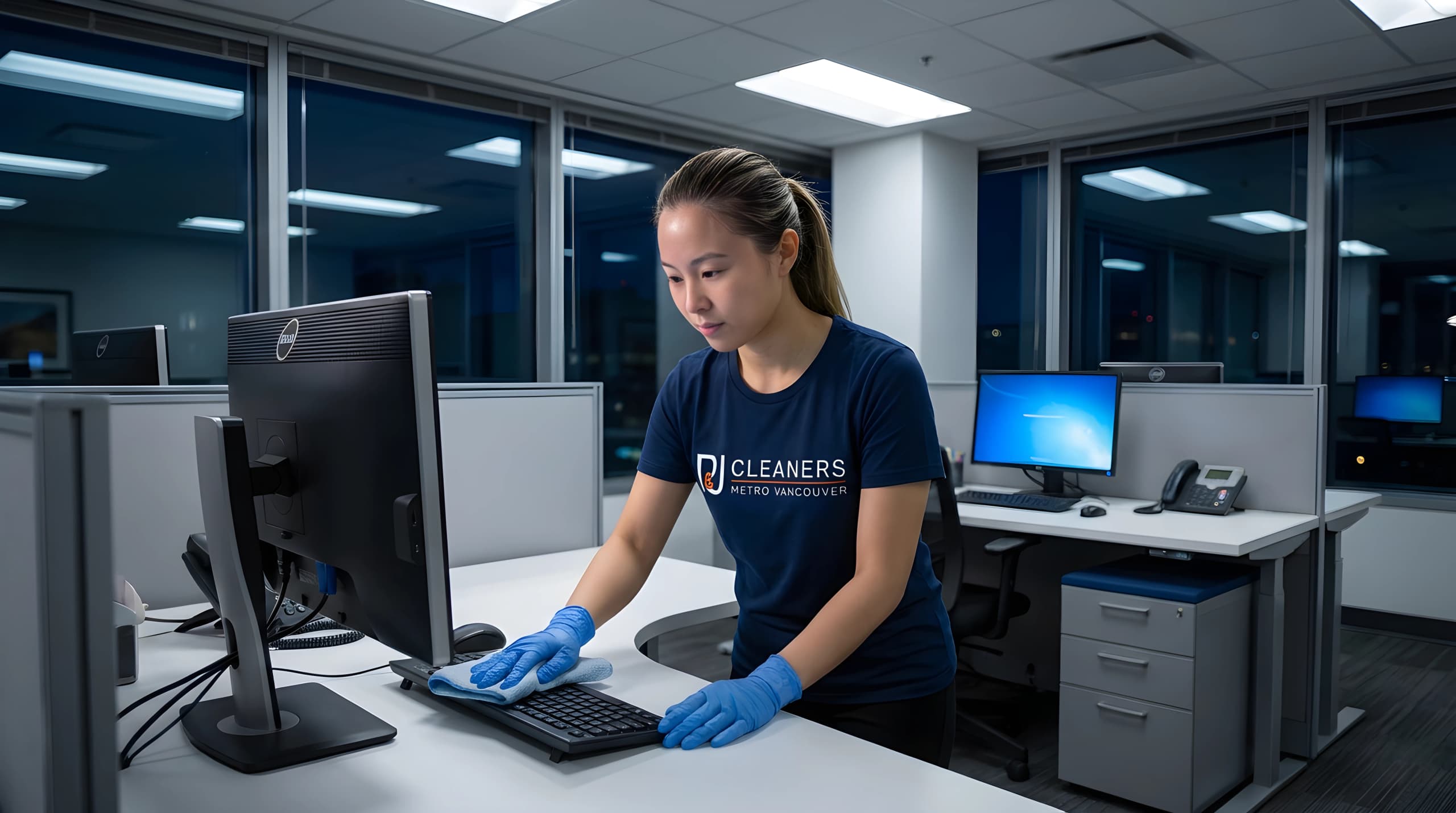
Service scope documentation must specify exact square footage, room counts, and detailed task lists for each cleaning frequency. Ambiguous language like 'general cleaning' or 'as needed' creates disputes and service gaps. Instead, contracts should list specific tasks such as 'vacuum all carpeted areas including under desks,' 'sanitize all door handles and light switches,' and 'empty and reline all waste receptacles.' This granular approach ensures cleaning teams understand expectations while providing clear performance measurement criteria.
Frequency specifications require equal precision, distinguishing between daily, weekly, monthly, and quarterly tasks. Daily services typically include waste removal, surface wiping, and washroom maintenance. Weekly tasks often cover vacuuming, floor mopping, and kitchen deep cleaning. Monthly services might include window washing, carpet spot treatment, and high-dusting. Quarterly deep cleans address baseboards, light fixtures, and specialized equipment. Breaking down frequency by task type prevents misunderstandings and ensures consistent service delivery across all areas.
Special requirements and exclusions need explicit documentation to avoid scope creep and unexpected charges. Specify whether the contract includes supply provision or if the client provides consumables like paper products and soap. Clarify responsibility for specialized equipment, carpet cleaning machines, or floor buffers. Document any areas excluded from regular service such as server rooms, executive offices, or secure facilities. Address after-hours access procedures, key management, and security protocols. These details protect both parties and establish clear operational boundaries.
- Document exact square footage for each service area including offices, common spaces, washrooms, and specialized zones
- Create detailed task checklists organized by frequency (daily, weekly, monthly, quarterly) with specific action verbs
- Specify supply responsibility including who provides cleaning products, paper goods, trash liners, and specialized equipment
- Define access procedures including key management, security codes, alarm systems, and after-hours protocols
- List exclusions explicitly such as exterior windows above ground floor, specialized equipment, or restricted areas
- Include floor plan markup identifying service areas, high-priority zones, and any spaces requiring special attention
Recommended Frequency
Initial contract development and annual review
Negotiate Competitive Pricing Models
Understanding different pricing structures and market rates enables facility managers to evaluate quotes accurately and negotiate terms that align with budget constraints and service requirements.
Hourly rate pricing offers transparency and flexibility, with Metro Vancouver rates typically ranging from $25-$45 per hour depending on service complexity and timing. Basic office cleaning during business hours commands lower rates around $25-$32 per hour, while after-hours service, specialized cleaning, or high-security facilities reach $38-$45 per hour. Hourly pricing works well for variable-scope contracts or facilities with fluctuating cleaning needs. However, it requires accurate time tracking and can lead to budget unpredictability if service hours vary significantly month to month.
Flat-rate monthly pricing provides budget certainty by establishing fixed costs regardless of actual hours worked. This model suits facilities with consistent cleaning needs and predictable service patterns. Providers calculate flat rates based on estimated hours, square footage, and service frequency, typically building in 10-15% margin for efficiency variations. While flat rates simplify budgeting and eliminate time-tracking disputes, they require careful scope definition to prevent service degradation if providers cut corners to maintain profitability. Annual contracts with flat monthly rates often include 5-8% discounts compared to month-to-month arrangements.
Hybrid pricing models combine elements of both approaches, establishing base rates for regular services with hourly charges for additional requests or specialized tasks. For example, a contract might include flat monthly fees for daily cleaning with hourly rates for carpet cleaning, window washing, or special event setup. This structure balances budget predictability with service flexibility. When negotiating hybrid models, ensure clear definitions separate base services from additional work, establish reasonable hourly rates for extras, and include monthly or quarterly caps on additional charges to prevent budget overruns.
- Request itemized quotes breaking down costs by service area, frequency, and task type for accurate comparison
- Compare at least three qualified providers using identical scope specifications to ensure apples-to-apples evaluation
- Negotiate volume discounts for multiple locations or extended contract terms, typically 10-20% for annual commitments
- Clarify what's included in base pricing versus additional charges for supplies, equipment, or specialized services
- Establish price adjustment mechanisms tied to specific indices like CPI rather than arbitrary annual increases
- Secure rate locks for 12-24 months to protect against mid-contract price increases and budget disruptions
Recommended Frequency
Quote comparison and annual contract renewal
Establish Measurable Performance Metrics
Objective performance standards with regular inspection protocols ensure service quality remains consistent and provides clear criteria for addressing deficiencies or contract disputes.
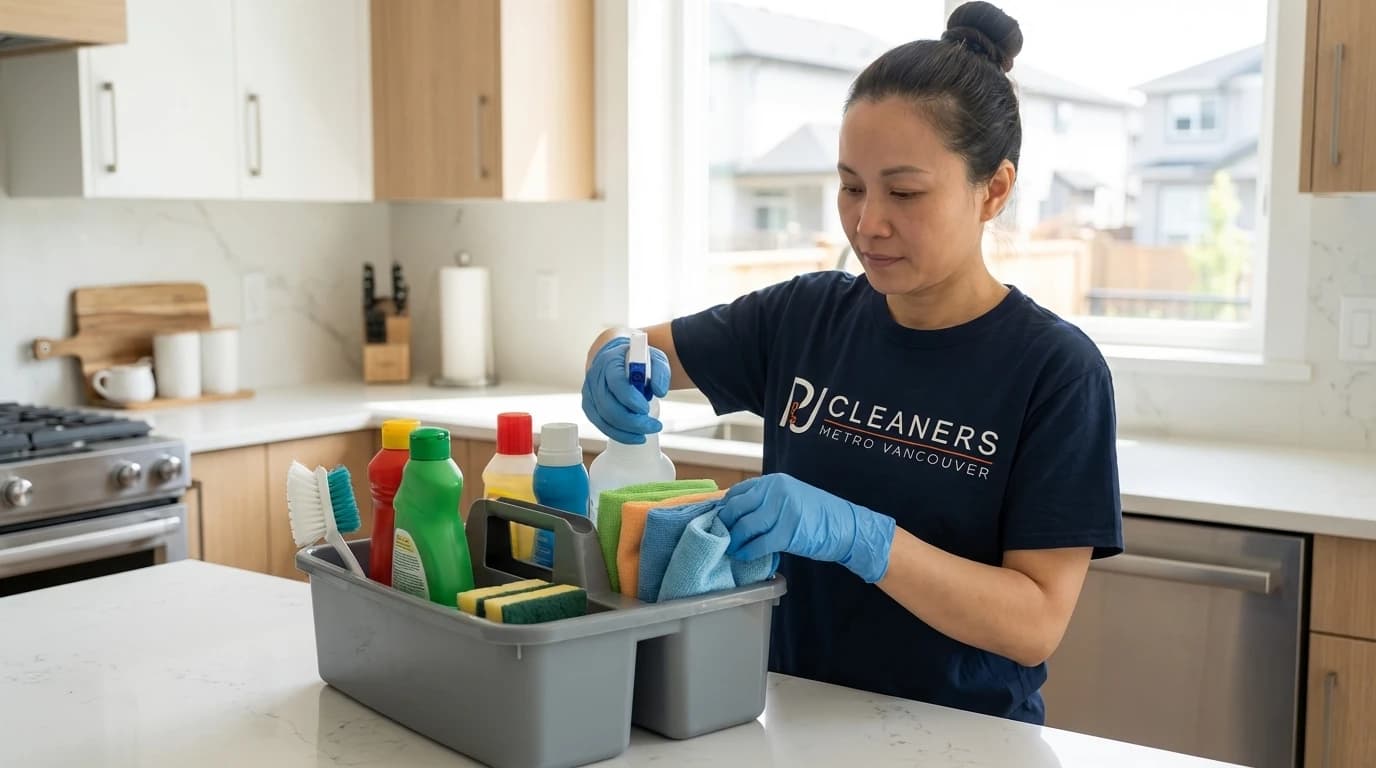
Performance metrics must translate service expectations into measurable, observable criteria that both parties can evaluate objectively. Rather than subjective standards like 'clean appearance,' effective metrics specify 'no visible dust on horizontal surfaces,' 'waste receptacles emptied daily with no overflow,' or 'washroom supplies restocked to 80% capacity.' These concrete standards eliminate interpretation disputes and provide clear benchmarks for quality assessment. Industry organizations like ISSA publish standardized cleaning metrics that many contracts reference as baseline performance expectations.
Inspection protocols formalize quality verification through scheduled walkthroughs, documentation procedures, and deficiency reporting systems. Effective contracts establish monthly or quarterly joint inspections where facility managers and cleaning supervisors review service areas together, document findings, and address concerns collaboratively. Digital inspection tools with photo documentation create objective records of conditions and facilitate trend analysis over time. Some contracts include third-party audits for high-stakes facilities like medical offices or food service operations where sanitation standards carry regulatory implications.
Response and remediation procedures define how providers address performance deficiencies, establishing timelines for corrective action and escalation processes for recurring issues. Standard contracts require providers to address reported deficiencies within 24 hours for critical issues like washroom supply shortages or safety hazards, and within 48-72 hours for general cleaning concerns. Persistent performance failures trigger escalation procedures including management review, service credits, or ultimately contract termination. Clear remediation protocols protect service quality while giving providers reasonable opportunity to correct issues before facing penalties.
- Define specific, observable criteria for each service task using measurable language and objective standards
- Establish regular inspection schedules with documented findings, photo evidence, and trend tracking over time
- Create deficiency reporting systems with clear timelines for provider response and corrective action completion
- Include service level agreements specifying response times for routine requests (48 hours) and emergencies (4 hours)
- Implement quality scoring systems with numerical ratings that trigger service credits or contract review at defined thresholds
- Require provider quality control audits with documentation shared quarterly to demonstrate internal oversight
Recommended Frequency
Monthly inspections with quarterly comprehensive reviews
Build in Service Adjustment Mechanisms
Flexible contract terms accommodate changing facility needs, seasonal variations, and business growth without requiring complete contract renegotiation or service disruptions.
Service adjustment clauses allow scope modifications within defined parameters, typically permitting 10-15% increases or decreases in service frequency or areas without triggering full contract renegotiation. For example, contracts might allow adding or removing individual offices, adjusting cleaning frequency from three to five days weekly, or temporarily increasing service during busy seasons. These provisions include pricing formulas for adjustments, usually prorating based on square footage or estimated hours. Flexibility clauses prevent the need for contract amendments for minor changes while maintaining cost predictability through predetermined adjustment rates.
Seasonal variation provisions address predictable fluctuations in cleaning needs, such as increased service during flu season, reduced frequency during summer slowdowns, or enhanced cleaning before major events or inspections. Rather than maintaining year-round peak service levels, flexible contracts establish baseline service with provisions for temporary increases at agreed-upon rates. This approach optimizes costs while ensuring adequate service during high-demand periods. Some contracts include annual service hour banks that allow redistribution of cleaning hours across the year based on actual facility needs.
Growth and contraction mechanisms accommodate business changes including office expansions, downsizing, or relocations without contract termination penalties. Effective provisions establish procedures for adding new locations to existing contracts, typically offering volume discounts for multiple sites. They also address service reductions due to space consolidation or remote work transitions, allowing proportional cost decreases without early termination fees. These clauses protect both parties during business transitions while maintaining service continuity and relationship stability through organizational changes.
- Include scope adjustment provisions allowing 10-15% service changes without full contract renegotiation or amendments
- Establish predetermined pricing formulas for service increases or decreases based on square footage or estimated hours
- Create seasonal service provisions with temporary frequency adjustments and clear start/end dates for variations
- Define procedures for adding new locations with volume discounts, typically 8-12% for multiple sites under single contract
- Allow service reductions for space consolidation with proportional cost decreases and no early termination penalties
- Include annual service reviews with mutual adjustment opportunities based on actual usage patterns and facility changes
Recommended Frequency
Quarterly service reviews with annual comprehensive assessment
Verify Insurance and Liability Protection
Comprehensive insurance verification protects facility owners from liability exposure while ensuring cleaning providers maintain adequate coverage for property damage, injuries, and professional errors.

Most commercial cleaning contracts look for at least $2 million in general liability coverage, protecting against property damage, bodily injury, and advertising injury claims. This coverage protects facility owners if cleaning staff damage equipment, cause slip-and-fall accidents, or create other liability situations during service delivery. Contracts should ask providers to name the facility owner as additional insured, ensuring direct coverage rather than relying on provider cooperation during claims. Annual certificate of insurance updates verify continuous coverage throughout the contract term.
Workers compensation coverage protects facility owners from liability if cleaning staff suffer workplace injuries during service delivery. British Columbia law requires all employers to maintain WorkSafeBC coverage, but facility managers should verify active accounts and good standing before contract execution. Inadequate workers compensation coverage can expose property owners to injury claims, medical costs, and legal liability if injured workers pursue damages. Request current WorkSafeBC clearance letters and verify account numbers directly with WorkSafeBC to confirm active coverage and compliance history.
Bonding and theft insurance provides additional protection for facilities where cleaning staff access valuable equipment, sensitive information, or secure areas after hours. Fidelity bonds cover employee theft or dishonesty, while crime insurance protects against broader criminal acts. High-security facilities, medical offices, or businesses with valuable inventory should require bonding as standard contract terms. Some contracts include background check requirements for all cleaning staff with access to secure areas, providing additional security beyond insurance coverage alone.
- Ask for at least $2 million in general liability coverage, with the facility owner named as additional insured on the policy
- Verify active WorkSafeBC coverage with current clearance letters and direct account confirmation before contract execution
- Request certificates of insurance annually and require 30-day notice of any coverage changes or cancellations
- Include bonding requirements for high-security facilities or businesses with valuable equipment and sensitive information
- Specify background check requirements for all cleaning staff accessing secure areas or handling confidential materials
- Establish liability procedures defining responsibility for property damage, equipment breakage, and security breaches during service
Recommended Frequency
Annual insurance verification with immediate updates for coverage changes
Structure Termination and Renewal Terms
Clear termination provisions and renewal procedures protect both parties while maintaining service continuity, balancing commitment with flexibility for changing business needs.
Contract duration significantly impacts pricing and service stability, with longer terms typically securing 15-20% lower rates compared to month-to-month arrangements. One-year contracts represent the industry standard, balancing commitment with flexibility for most commercial facilities. Two or three-year agreements offer additional savings but require careful consideration of business stability and growth projections. Avoid contracts exceeding three years unless they include annual pricing reviews and service adjustment provisions. Initial contracts often include 30-90 day trial periods allowing either party to terminate without penalty if service expectations aren't met.
Termination clauses define conditions and procedures for ending contracts before expiration, protecting both parties from unreasonable commitment or service failures. Standard provisions allow termination for cause including persistent performance failures, safety violations, or breach of contract terms. Termination for convenience provisions permit either party to exit with 30-60 days written notice, though some contracts assess early termination fees equal to 1-3 months service costs. Facility managers should negotiate termination rights for business closure, relocation, or significant downsizing without penalty, while providers typically require notice periods to reassign staff and replace lost revenue.
Automatic renewal provisions require careful attention to prevent unintended contract extensions with unfavourable terms. Many contracts include automatic renewal clauses extending agreements for additional one-year terms unless either party provides written notice 60-90 days before expiration. While automatic renewal ensures service continuity, it can lock facilities into outdated pricing or service terms if renewal deadlines pass unnoticed. Calendar reminders 120 days before contract expiration provide adequate time for performance review, competitive bidding if desired, and renewal negotiation. Some facility managers prefer contracts that expire naturally, requiring active renewal decisions rather than automatic extensions.
- Negotiate one-year initial terms with 30-60 day trial periods allowing early termination if service expectations aren't met
- Include termination for cause provisions addressing persistent performance failures, safety violations, or contract breaches
- Limit early termination fees to reasonable amounts, typically 1-2 months service costs, with exceptions for business closure
- Require 60-90 day written notice for contract termination or non-renewal to allow adequate transition planning
- Set calendar reminders 120 days before contract expiration to initiate performance review and renewal negotiations
- Negotiate price protection during renewal limiting annual increases to CPI plus 2-3% maximum adjustment
Recommended Frequency
Annual contract review 120 days before expiration date
Cost Analysis and Return on Investment
Understanding the financial impact of janitorial contracts requires analyzing direct costs, indirect benefits, and long-term value beyond simple hourly rates.
Direct cost comparison represents the most obvious financial consideration, but comprehensive ROI analysis includes indirect benefits like reduced sick days, improved employee productivity, and extended asset life. Studies by the International Sanitary Supply Association demonstrate that professional cleaning reduces workplace illness transmission by 80%, translating to fewer sick days and maintained productivity. Clean, well-maintained facilities also extend carpet life by 50%, reduce HVAC maintenance costs through better air quality, and preserve furniture and fixtures through proper care protocols.
Contract structure significantly impacts total cost of ownership beyond base service rates. Month-to-month arrangements offer flexibility but typically cost 15-20% more than annual contracts due to provider uncertainty and administrative overhead. Longer commitments secure better pricing while including provisions for service adjustments, seasonal variations, and business changes. Supply inclusion versus client-provided consumables affects both direct costs and administrative burden, with provider-supplied arrangements typically adding 8-12% to base rates but eliminating procurement and inventory management responsibilities.
Quality versus cost trade-offs require careful evaluation, as the lowest-priced provider rarely delivers optimal value. Providers bidding significantly below market rates often cut corners through inadequate staffing, inferior products, or reduced service frequency. These shortcuts create hidden costs including increased employee complaints, higher turnover from poor workplace conditions, and potential health code violations in regulated industries. Effective contract negotiation targets competitive market rates from qualified providers rather than absolute lowest cost, ensuring sustainable service quality that protects facility investment and occupant satisfaction.
In-House Cleaning
- Direct labour costs $35-$48/hour including benefits
- Equipment purchase and maintenance $3,000-$8,000 annually
- Supply procurement and inventory management overhead
- Training, supervision, and quality control staffing
- Workers compensation and liability insurance premiums
- Scheduling complexity and coverage gaps during absences
- Limited specialized expertise for carpet, windows, or floors
Contract Janitorial Service
- All-inclusive rates $25-$45/hour with no additional overhead
- Provider supplies all equipment, products, and consumables
- Professional training and quality control included in service
- Consistent coverage with backup staff for absences or turnover
- Provider carries all insurance and workers compensation costs
- Access to specialized services and equipment as needed
- Predictable monthly costs with no surprise expenses or gaps
15-20% vs month-to-month
Annual Cost Savings
80% fewer illness transmissions
Sick Day Reduction
50% longer replacement cycle
Carpet Life Extension
23% improvement in workplace surveys
Employee Satisfaction
12-18% lower facility repairs
Maintenance Cost Reduction
8-12% from better workplace conditions
Productivity Improvement
- Predictable monthly costs eliminate budget surprises and simplify financial planning across fiscal years
- Professional expertise ensures proper cleaning techniques, product selection, and equipment use for optimal results
- Consistent service delivery through provider backup systems maintains standards despite staff turnover or absences
- Reduced administrative burden eliminates hiring, training, scheduling, and supervision responsibilities for facility managers
- Access to specialized services like carpet cleaning, window washing, and floor refinishing without separate vendor management
- Liability protection through provider insurance coverage shields facility owners from workers compensation and damage claims
- Quality control systems with regular inspections and performance monitoring ensure sustained service standards over time
- Flexibility for business changes including expansions, relocations, or downsizing without employment complications or severance costs
Contract Compliance and Documentation Checklist
Use this comprehensive checklist during contract development and annual reviews to ensure all critical elements receive proper attention and documentation.
Services mentioned in this article
Ready for help?
4.9 · 800+ Google reviewsReady to Negotiate Your Janitorial Contract?
Get expert guidance on contract terms, pricing structures, and service specifications. Our commercial cleaning advisors help Vancouver businesses secure better agreements.
778-720-2224Janitorial Contract Questions
How much does office cleaning cost?
Office cleaning in Metro Vancouver typically costs $25-$45 per hour depending on facility size, cleaning frequency, and service scope. A 5,000 sq ft office with nightly service averages $1,800-$2,800 monthly. Larger facilities over 20,000 sq ft often negotiate rates of $0.08-$0.15 per square foot. Request detailed quotes from three providers to compare pricing structures and included services.
What are office cleaning standards?
Office cleaning standards define task frequency, quality benchmarks, and inspection protocols. ISSA Clean Standard establishes measurable cleanliness levels from 1 (orderly spotlessness) to 5 (unkempt neglect). Most offices target Level 2 (ordinary tidiness) for general areas and Level 1 for reception and executive spaces. Standards should specify daily tasks like trash removal and vacuuming, weekly tasks like dusting, and monthly deep cleaning requirements.
How often should office areas be cleaned?
High-traffic areas require daily cleaning including lobbies, washrooms, kitchens, and main corridors. WorkSafeBC recommends daily disinfection of high-touch surfaces like door handles, light switches, and shared equipment. Individual offices and conference rooms typically need 2-3 times weekly service. Storage areas and low-traffic zones can be cleaned weekly or bi-weekly. Adjust frequency based on occupancy levels and industry requirements.
What compliance rules apply to office cleaning?
BC WorkSafeBC regulations require proper chemical handling, staff training, and safety protocols. Most cleaning companies carry at least $2 million in liability insurance, along with WorkSafeBC coverage. WHMIS 2015 mandates proper labelling and safety data sheets for all cleaning products. Green cleaning policies may require third-party certifications like Green Seal or EcoLogo. Food service areas must follow BC Food Premises Regulation standards for sanitation and cross-contamination prevention.
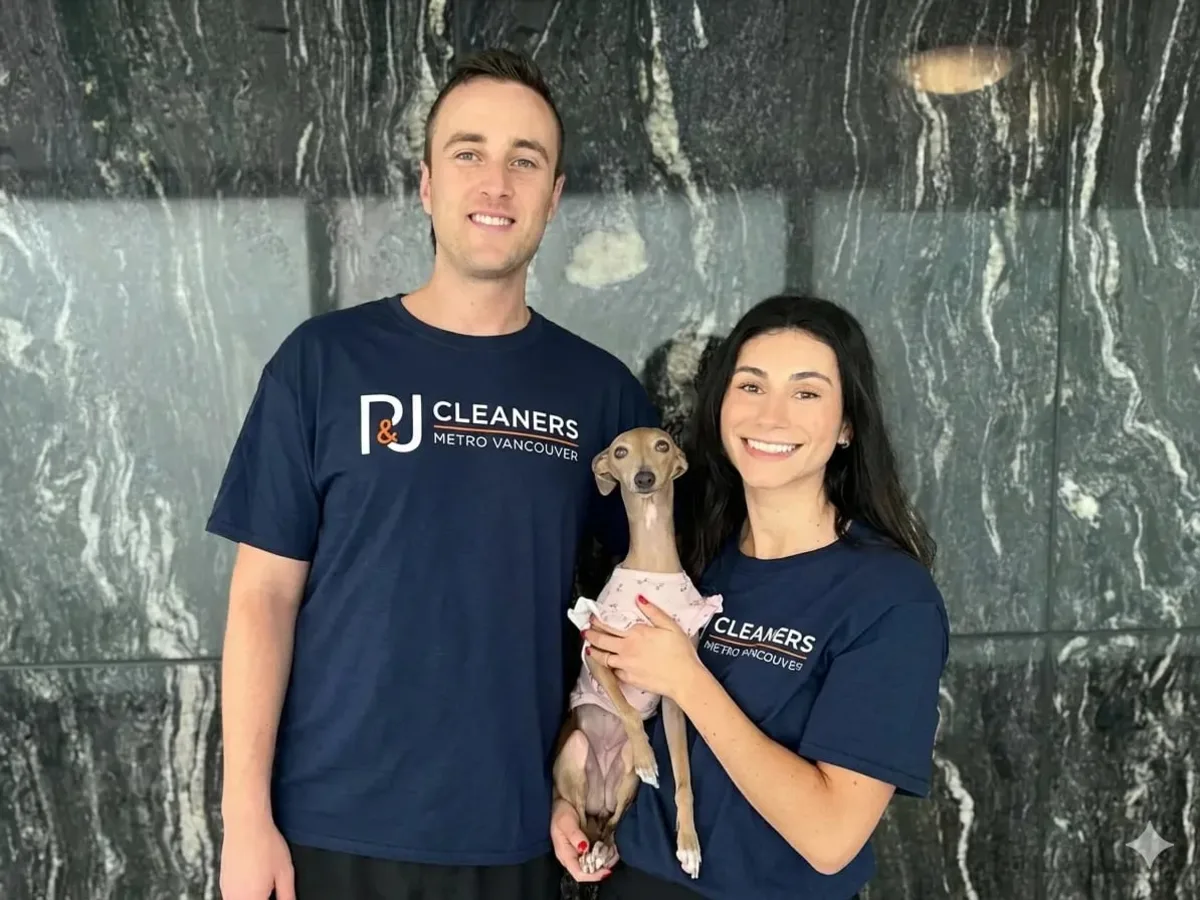
Meet the Author
Jason
Co-Founder
Jason oversees commercial operations, workflow design, and quality control for office, restaurant, and specialty cleaning programs across Metro Vancouver.
Keep Exploring