

Industry Overview
Understanding Janitorial Service Models in Metro Vancouver
Commercial facilities across Metro Vancouver face a critical decision when establishing cleaning operations: building an in-house janitorial team or partnering with a professional cleaning company. This choice impacts operational budgets, compliance management, service quality, and administrative workload. According to the Building Owners and Managers Association of Canada, 68% of commercial properties in major Canadian cities now use outsourced janitorial services, up from 52% in 2020. The shift reflects growing recognition of the hidden costs associated with managing internal cleaning staff, particularly in British Columbia's complex regulatory environment.
The janitorial services industry in Metro Vancouver employs over 24,000 workers and generates approximately $890 million in annual revenue, according to Statistics Canada's 2024 labour force data. Commercial office buildings represent 42% of this market, followed by healthcare facilities at 18%, educational institutions at 15%, and retail spaces at 12%. The remaining 13% covers specialized environments including industrial facilities, food service establishments, and multi-unit residential properties. Each sector faces unique cleaning requirements, compliance standards, and cost structures that influence the in-house versus outsourced decision.
WorkSafeBC regulations significantly impact janitorial operations in British Columbia, requiring comprehensive safety training, hazard assessments, and incident reporting protocols. The 2025 provincial minimum wage of $17.40 per hour, combined with mandatory employer contributions for CPP, EI, and WorkSafeBC premiums, establishes a baseline labour cost of approximately $22-$24 per hour when all statutory requirements are included. These figures don't account for benefits, paid time off, training costs, or management overhead that substantially increase the true cost of in-house staff.
$45,000-$65,000/year
Average In-House Janitorial Wage (Metro Vancouver)
Source: Statistics Canada Labour Force Survey 2024
30-40% vs in-house
Outsourced Service Cost Savings
Source: BOMA Canada Facilities Management Report 2024
$1.55 per $100 payroll
WorkSafeBC Premium Rate (Janitorial)
Source: WorkSafeBC 2025 Rate Schedule
$890 million annually
Commercial Cleaning Market Size (Metro Vancouver)
Source: Statistics Canada Business Registry 2024
68% of commercial buildings
Properties Using Outsourced Services
Source: BOMA Canada 2024
Compliance priorities
WHMIS 2015 training and certification for all staff handling cleaning chemicals and hazardous materials • WorkSafeBC Occupational Health and Safety Regulation compliance including hazard assessments and incident reporting • Vancouver Coastal Health Authority infection control protocols for healthcare and food service environments • City of Vancouver business licensing requirements and waste management regulations for commercial operations • Employment Standards Act compliance for wages, overtime, statutory holidays, and termination procedures • Privacy legislation adherence when cleaning staff access confidential documents or secure areas
Cost Analysis Framework for Janitorial Service Models
Accurate cost comparison requires examining direct labour expenses, indirect overhead, equipment and supply costs, training investments, and risk management factors. Many organizations underestimate the true cost of in-house operations by focusing solely on hourly wages while overlooking administrative burden, turnover expenses, and compliance management requirements.
Direct Labour Cost Comparison
Base wages represent only 60-65% of total in-house labour costs when statutory deductions, benefits, and paid time off are included in calculations.
In-house janitorial staff in Metro Vancouver typically earn $18-$24 per hour based on experience level and facility type, according to WorkBC's 2024 wage data. However, employers must add mandatory contributions including Canada Pension Plan at 5.95%, Employment Insurance at 1.66%, and WorkSafeBC premiums averaging $1.55 per $100 of payroll for janitorial classification units. These statutory costs add approximately $4-$5 per hour to base wages before considering any additional benefits or paid time off provisions.
Organizations offering competitive benefits packages to attract reliable cleaning staff typically provide extended health coverage costing $200-$400 per employee monthly, dental benefits at $80-$150 monthly, and paid vacation starting at two weeks annually. When factoring in statutory holidays, sick leave provisions, and average turnover replacement costs of $3,500-$6,000 per position, the true hourly cost of in-house staff reaches $28-$35 per hour. This figure excludes supervision, scheduling, payroll administration, and human resources management time.
Outsourced janitorial services quote all-inclusive rates typically ranging from $25-$32 per hour for standard commercial cleaning in Metro Vancouver. These rates include all labour costs, statutory contributions, insurance coverage, supervision, quality control, and administrative overhead. The service provider absorbs all recruitment, training, and turnover costs while maintaining consistent service delivery through backup staff coverage during absences or vacancies.
- Calculate total compensation including base wages, statutory deductions, benefits, paid time off, and turnover replacement costs
- Factor in payroll administration time averaging 2-3 hours monthly per employee for processing, reporting, and compliance documentation
- Include recruitment costs of $800-$1,500 per hire for advertising, screening, interviewing, and onboarding new janitorial staff
- Account for productivity losses during training periods when new hires work at 60-70% efficiency for first 4-6 weeks
- Consider overtime premium costs at 1.5x regular rate when in-house staff cover absences or handle special projects
- Evaluate supervision requirements with one supervisor needed per 8-12 cleaning staff for scheduling, quality control, and performance management
Recommended Frequency
Annual cost analysis
Equipment and Supply Investment Analysis
Initial equipment purchases for in-house operations range from $8,000-$15,000 per facility, with ongoing replacement and maintenance costs adding 15-20% annually.
Establishing an in-house janitorial program requires significant capital investment in commercial-grade equipment including vacuum cleaners at $600-$1,200 each, floor scrubbers ranging from $2,500-$8,000 depending on facility size, carpet extractors at $800-$2,000, and pressure washers for exterior maintenance costing $400-$1,500. Additional equipment needs include mop buckets, squeegees, extension poles, safety signage, and personal protective equipment for staff. A typical 20,000 square foot office building requires $10,000-$12,000 in initial equipment purchases.
Supply chain management for cleaning products, paper goods, and consumables adds ongoing administrative burden and storage requirements. Organizations must establish vendor relationships, manage inventory levels, process purchase orders, and ensure WHMIS-compliant safety data sheets are maintained for all chemical products. Supply costs typically run $0.08-$0.15 per square foot monthly for standard office environments, with higher rates for healthcare or food service facilities requiring specialized disinfectants and sanitizers.
Outsourced janitorial companies leverage bulk purchasing power to secure cleaning supplies at 25-35% below retail pricing while maintaining optimal inventory levels across multiple client sites. Equipment depreciation, maintenance, and replacement costs are absorbed by the service provider, eliminating capital expenditure requirements for client organizations. Professional cleaning companies also invest in advanced equipment including HEPA-filtered vacuums, microfiber systems, and electrostatic sprayers that individual facilities cannot justify purchasing for single-location use.
- Budget $8,000-$15,000 initial equipment investment for in-house operations plus 15-20% annual replacement and maintenance costs
- Allocate dedicated storage space of 80-150 square feet for equipment, supplies, and chemical products with proper ventilation
- Implement inventory management systems to track supply usage, reorder points, and cost allocation across departments or cost centres
- Maintain WHMIS safety data sheets for all cleaning chemicals and ensure proper labelling, storage, and disposal procedures
- Schedule equipment maintenance including vacuum filter changes, floor scrubber battery service, and carpet extractor pump inspections
- Compare bulk purchasing discounts available through outsourced providers versus individual facility procurement costs
Recommended Frequency
Quarterly equipment review
Training and Compliance Management
Comprehensive training programs for in-house staff cost $1,200-$2,000 per employee annually including WHMIS certification, safety protocols, and specialized cleaning techniques.
WorkSafeBC requires all janitorial staff to complete WHMIS 2015 training before handling cleaning chemicals, with refresher courses every three years. Additional mandatory training includes workplace hazard identification, proper lifting techniques, ladder safety, and incident reporting procedures. Organizations must document all training activities, maintain certification records, and ensure new hires receive comprehensive orientation before beginning independent work. Training costs include instructor time, materials, and productivity losses during learning periods.
Specialized environments require additional certification and training investments. Healthcare facilities must train cleaning staff on infection control protocols, proper handling of biohazardous waste, and terminal cleaning procedures for isolation rooms. Food service environments require food safety awareness training and allergen management protocols. LEED-certified buildings need staff trained on green cleaning standards and sustainable practices. These specialized requirements add $800-$1,500 per employee annually to training budgets.
Professional janitorial companies employ dedicated training departments that develop standardized curricula, conduct regular skills assessments, and maintain compliance documentation across their entire workforce. New hires complete 40-60 hours of structured training before assignment to client sites, with ongoing professional development programs ensuring staff stay current on industry best practices, new equipment technologies, and evolving regulatory requirements. These training investments are included in service rates without additional client costs.
- Budget $1,200-$2,000 per employee annually for mandatory safety training, WHMIS certification, and skills development programs
- Maintain training records for minimum seven years to demonstrate WorkSafeBC compliance during inspections or incident investigations
- Schedule refresher training every 12-18 months for standard cleaning procedures and immediately when introducing new equipment or chemicals
- Develop written standard operating procedures for all cleaning tasks with step-by-step instructions and safety precautions
- Conduct quarterly safety meetings to review incident reports, discuss hazard identification, and reinforce proper work practices
- Evaluate training effectiveness through skills assessments, quality inspections, and incident rate tracking over time
Recommended Frequency
Annual training cycle
Administrative and Management Overhead
In-house janitorial operations require 15-25 hours weekly of management time for scheduling, quality control, HR administration, and vendor coordination.
Managing an in-house cleaning team demands significant administrative resources including daily scheduling adjustments for absences, vacation coverage, and workload fluctuations. Facilities managers or operations supervisors typically spend 3-5 hours weekly on janitorial scheduling alone, with additional time required for performance reviews, disciplinary actions, and conflict resolution. Payroll processing, benefits administration, and compliance documentation add another 2-3 hours weekly per employee managed.
Quality control systems require regular inspections, customer feedback management, and corrective action implementation. Effective oversight includes daily walk-throughs of cleaned areas, weekly detailed inspections using standardized checklists, and monthly performance reviews with cleaning staff. Organizations without dedicated facilities management personnel often assign these responsibilities to office managers or administrative staff who lack specialized cleaning industry knowledge, resulting in inconsistent quality standards and reactive problem-solving approaches.
Outsourced janitorial services include dedicated account management, quality assurance programs, and responsive customer service without requiring client administrative involvement. Professional cleaning companies employ area supervisors who conduct regular site inspections, address service issues proactively, and ensure consistent delivery against contractual specifications. Client organizations maintain oversight through monthly performance reviews and periodic audits while eliminating day-to-day management responsibilities, freeing internal staff to focus on core business activities.
- Calculate management time costs at $35-$55 per hour for facilities managers or operations supervisors overseeing cleaning operations
- Implement quality inspection programs with documented checklists covering all cleaning tasks and frequency requirements
- Establish clear performance metrics including cleanliness scores, response times for special requests, and supply usage efficiency
- Develop escalation procedures for addressing quality issues, safety concerns, and customer complaints systematically
- Schedule regular performance reviews with cleaning staff to provide feedback, recognize achievements, and identify improvement opportunities
- Compare internal management costs against account management services included in outsourced janitorial contracts
Recommended Frequency
Weekly management review
Risk Management and Liability Considerations
In-house operations expose organizations to direct liability for workplace injuries, property damage, and employment disputes that outsourced services transfer to the cleaning company.
Organizations employing in-house janitorial staff assume full liability for workplace injuries, with WorkSafeBC claims directly impacting their experience rating and future premium costs. The janitorial sector reports injury rates of 3.2 per 100 full-time equivalent workers annually according to WorkSafeBC statistics, with common incidents including slips and falls, repetitive strain injuries, and chemical exposures. A single serious injury claim can increase an organization's WorkSafeBC premiums by $5,000-$15,000 annually for three to five years following the incident.
Employment-related disputes including wrongful dismissal claims, human rights complaints, and employment standards violations create legal exposure and administrative burden for organizations managing in-house staff. Defence costs for employment disputes average $15,000-$35,000 even when claims lack merit, with settlement amounts ranging from $10,000-$100,000 depending on circumstances. Professional janitorial companies maintain comprehensive employment practices liability insurance and experienced HR departments that minimize these risks through proper hiring practices, documentation, and progressive discipline procedures.
Property damage and theft risks increase when organizations lack robust screening, supervision, and accountability systems for cleaning staff accessing facilities during off-hours. Professional cleaning companies conduct criminal background checks, maintain bonding insurance covering theft and property damage up to $2 million, and implement key control systems that track facility access. These risk management practices protect client organizations while ensuring consistent security protocols across all cleaning operations.
- Maintain general liability insurance with minimum $2 million coverage for property damage and third-party injury claims
- Conduct criminal background checks for all cleaning staff accessing facilities, secure areas, or confidential information
- Implement key control systems tracking who has facility access, when keys are issued, and procedures for lost or unreturned keys
- Document all workplace injuries immediately with incident reports, witness statements, and corrective action plans
- Review WorkSafeBC experience ratings annually and implement safety improvements to minimize premium increases
- Compare liability transfer benefits of outsourced services where the cleaning company assumes all employment and injury risks
Recommended Frequency
Quarterly risk assessment
Operational Flexibility and Scalability
Outsourced services provide immediate scalability for seasonal demands, special projects, and facility expansions without recruitment delays or staffing commitments.
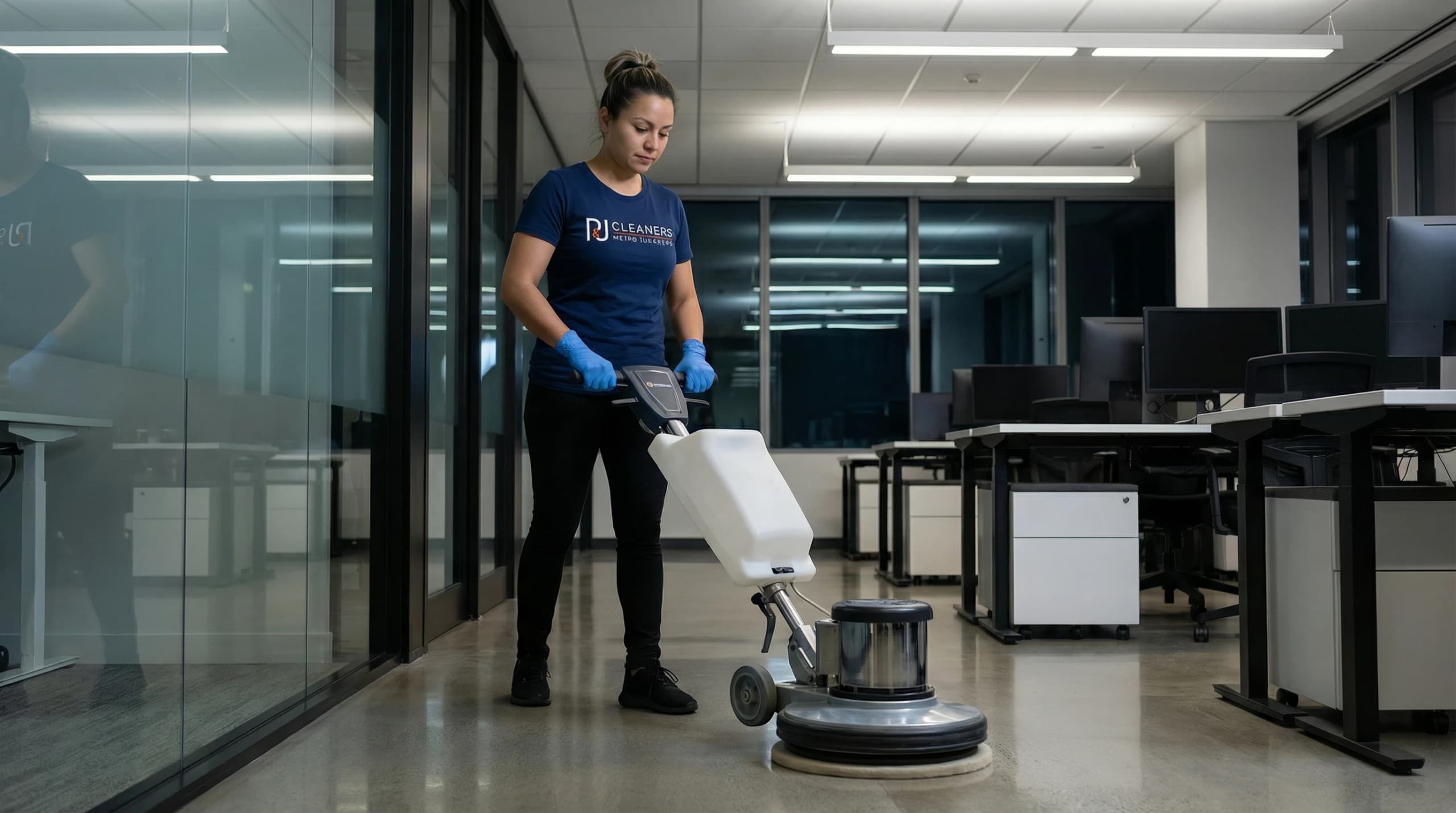
Business growth, facility expansions, and seasonal fluctuations create staffing challenges for in-house janitorial teams that require weeks or months to recruit, hire, and train additional personnel. Organizations experiencing rapid growth often struggle to maintain cleaning quality during transition periods, with existing staff working overtime or cleaning frequencies reduced until new hires reach full productivity. Recruitment timelines in Metro Vancouver's competitive labour market average 4-8 weeks from job posting to start date, with additional training periods of 3-4 weeks before new staff work independently.
Special projects including post-construction cleaning, event preparation, or deep cleaning initiatives require temporary staffing increases that in-house teams cannot accommodate without disrupting regular cleaning schedules. Organizations must either hire temporary workers through staffing agencies at premium rates of $32-$40 per hour or defer special projects until regular staff have capacity. Both approaches create inefficiencies and compromise either routine maintenance or special project quality.
Professional janitorial companies maintain flexible workforce pools that scale services up or down with 24-48 hours notice for most requests. Seasonal demands, special events, and facility changes are accommodated through the provider's existing staff resources without requiring client involvement in recruitment or training. Contract terms typically allow service level adjustments monthly, providing operational flexibility that matches business needs while maintaining consistent quality standards through experienced, trained personnel.
- Evaluate historical cleaning demand fluctuations including seasonal peaks, special events, and facility expansion plans
- Compare recruitment timelines and costs for in-house staffing increases against outsourced service scalability
- Negotiate contract terms allowing monthly service level adjustments without penalties or long-term commitments
- Establish clear procedures for requesting temporary service increases with advance notice requirements and pricing terms
- Review staffing flexibility during business disruptions including employee absences, equipment failures, or emergency situations
- Consider total cost of overtime premiums for in-house staff versus standard rates for outsourced service increases
Recommended Frequency
Monthly capacity planning
Return on Investment: Making the Financial Decision
Comprehensive cost analysis reveals that outsourced janitorial services deliver 30-40% cost savings compared to in-house operations when all direct and indirect expenses are included in calculations.
Organizations evaluating janitorial service models must examine total cost of ownership rather than focusing solely on hourly labour rates. A typical 20,000 square foot office building in Metro Vancouver requires approximately 15-20 hours of cleaning weekly, translating to 780-1,040 hours annually. At true in-house costs of $28-$35 per hour including all labour, benefits, and overhead, annual cleaning expenses reach $21,840-$36,400. This figure excludes equipment purchases, supply costs, management time, training investments, and risk management expenses that add another $12,000-$18,000 annually.
Outsourced janitorial services for the same facility typically cost $19,500-$29,120 annually at rates of $25-$28 per hour for standard office cleaning. This all-inclusive pricing covers labour, supervision, equipment, supplies, insurance, training, and quality assurance without additional client costs. The 15-25% direct cost savings increase to 30-40% when factoring in eliminated management overhead, avoided capital expenditures, and transferred liability risks. Organizations also gain access to professional expertise, proven quality systems, and operational flexibility that in-house teams struggle to match.
Beyond direct cost savings, outsourced services deliver measurable operational benefits including reduced absenteeism impact through backup coverage, consistent quality through standardized procedures, and improved compliance through professional training programs. These qualitative advantages translate to quantifiable value through reduced workplace complaints, lower turnover in other departments due to facility condition, and enhanced professional image for clients and visitors. The combined financial and operational benefits make outsourced janitorial services the optimal choice for most commercial facilities in Metro Vancouver.
In-House Janitorial Team
- Base wages: $18-$24/hour × 1,040 hours = $18,720-$24,960
- Statutory deductions (CPP, EI, WorkSafeBC): +$4,680-$6,240
- Benefits (health, dental, vacation): +$6,000-$9,600
- Equipment purchase and maintenance: +$2,400-$3,600
- Cleaning supplies and consumables: +$1,920-$3,600
- Training and compliance programs: +$1,200-$2,000
- Management and administrative time: +$5,200-$7,800
- Recruitment and turnover costs: +$1,200-$2,400
- Total annual cost: $41,320-$60,200
- Cost per hour (all-inclusive): $39.73-$57.88
Outsourced Janitorial Service
- Service rate: $25-$28/hour × 1,040 hours = $26,000-$29,120
- All labour costs included in rate
- All equipment provided by service company
- All supplies included in service rate
- Professional training included
- Account management and supervision included
- No recruitment or turnover costs
- Liability insurance and bonding included
- Total annual cost: $26,000-$29,120
- Cost savings vs in-house: 30-40%
$12,200-$31,080
Annual Cost Savings (20,000 sq ft facility)
15-25 hours weekly
Management Time Recovered
$8,000-$15,000 initial
Equipment Capital Avoided
60-75% through backup coverage
Absenteeism Cost Reduction
$1,200-$2,000 per employee annually
Training Investment Eliminated
Immediate savings from month one
Payback Period for Switching
- Eliminate payroll administration, benefits management, and HR compliance burden for cleaning staff
- Transfer workplace injury liability and WorkSafeBC claims to the professional cleaning company
- Access commercial-grade equipment and bulk purchasing discounts unavailable to individual facilities
- Gain operational flexibility to scale services up or down monthly without recruitment or termination costs
- Receive professional quality assurance through trained supervisors and standardized inspection programs
- Reduce management time spent on scheduling, performance issues, and day-to-day cleaning oversight
- Avoid capital expenditures for equipment purchases, maintenance, and replacement over time
- Ensure consistent service delivery through backup staff coverage during absences and vacancies
Janitorial Service Compliance Requirements
Organizations operating in-house janitorial teams must maintain comprehensive compliance programs covering workplace safety, employment standards, environmental regulations, and industry-specific requirements. Professional cleaning companies manage these obligations as part of their service delivery.
Services mentioned in this article
Ready for help?
4.9 · 850+ Google reviewsReady to Optimize Your Janitorial Costs?
Get a detailed cost comparison for your Vancouver office. Our team provides transparent pricing and customized cleaning schedules that fit your budget and standards.
778-720-2224Common Questions About In-House vs Outsourced Janitorial Ser...
What are office cleaning standards?
Office cleaning standards define the frequency, methods, and quality benchmarks for commercial spaces. ISSA Clean Standard establishes measurable cleanliness levels from 1 (orderly spotlessness) to 5 (unkempt neglect). Most Vancouver offices maintain Level 2 standards, requiring daily trash removal, weekly vacuuming, and monthly deep cleaning. WorkSafeBC mandates sanitary washrooms, clean floors, and dust-free surfaces to prevent workplace hazards and maintain employee health.
How often should office areas be cleaned?
High-traffic areas like lobbies and washrooms require daily cleaning, while workstations need attention 2-3 times weekly. Conference rooms should be cleaned after each use or daily if heavily booked. Break rooms and kitchens need daily sanitization to prevent contamination. According to ISSA research, offices with 50+ employees benefit from nightly janitorial services, while smaller spaces can maintain standards with 3-times-weekly cleaning schedules.
What compliance rules apply to office cleaning?
BC offices must comply with WorkSafeBC Occupational Health and Safety Regulation sections covering workplace cleanliness, hazardous material handling, and sanitation standards. The BC Health Authority requires proper disinfection protocols in shared spaces. Vancouver's Environmental Protection Bylaw restricts chemical use and waste disposal. Professional janitorial companies maintain compliance documentation, WHMIS certification, and liability insurance that in-house staff may lack, reducing your regulatory risk significantly.
How much does office cleaning cost?
Vancouver office cleaning costs range from $0.08 to $0.20 per square foot for standard janitorial services. A 5,000 sq ft office pays $400-$1,000 monthly for 3-times-weekly cleaning. In-house janitors cost $45,000-$55,000 annually including wages, benefits, and payroll taxes. Outsourced services eliminate these fixed costs, charging only for actual cleaning time. Most businesses save 30-40% by outsourcing when factoring in equipment, supplies, management overhead, and replacement coverage.
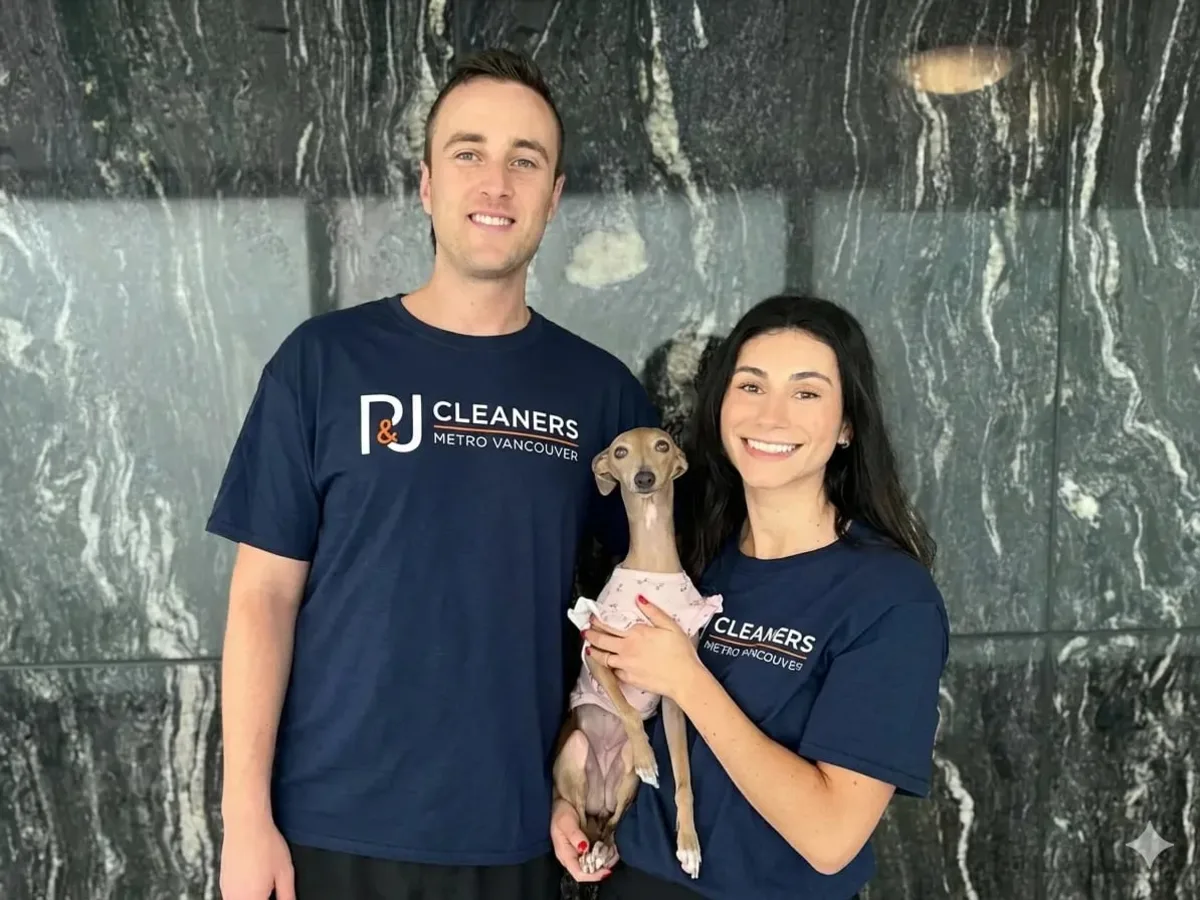
Meet the Author
Jason
Co-Founder
Jason oversees commercial operations, workflow design, and quality control for office, restaurant, and specialty cleaning programs across Metro Vancouver.
Keep Exploring