


Quick answer
Clean grout by mixing baking soda with water into a paste, applying it to grout lines, scrubbing with a stiff brush, and rinsing thoroughly. For stubborn stains, use hydrogen peroxide or a commercial grout cleaner, then seal the grout after it dries completely.

Key Takeaways
- 1Unsealed grout absorbs 73% more moisture and stains than sealed grout, according to the Tile Council of North America.
- 2Baking soda paste (3:1 ratio) removes most grout stains without damaging tile surfaces or releasing harsh fumes.
- 3Professional grout cleaning costs $0.75-$2.00 per square foot in Metro Vancouver, depending on grout condition and tile type.
- 4Sealing grout every 12-18 months prevents mould growth and extends tile lifespan by up to 40%.
- 5Steam cleaning at 200°F kills 99.9% of bacteria in grout lines without chemical residue, per CDC sanitation guidelines.
Why Grout Gets Dirty So Quickly
Grout is porous cement that traps dirt, soap scum, and moisture deep within its surface, creating ideal conditions for staining and mould growth.
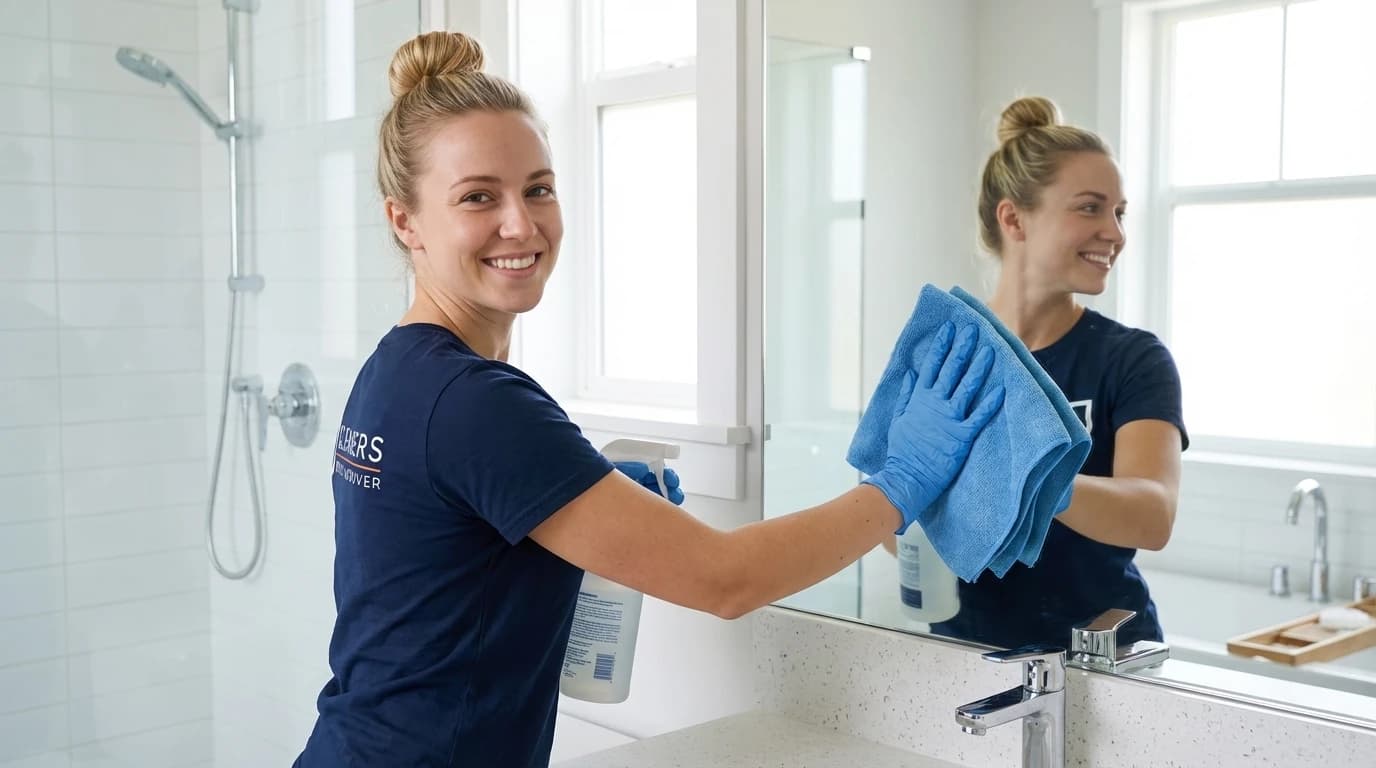
Grout consists of cement, sand, and water that hardens into a porous material between tiles. This porous structure acts like a sponge, absorbing liquids, oils, and particles from daily use. In bathrooms, soap residue, body oils, and hard water minerals penetrate grout lines within hours of showering. Kitchen grout faces cooking oils, food particles, and spills that seep into the surface. Without proper sealing, grout can absorb up to 15% of its weight in moisture, according to WorkSafeBC building material studies.
Mould and mildew thrive in damp grout because the porous surface retains moisture for extended periods. Bathroom grout in Metro Vancouver homes experiences humidity levels above 60% for an average of 18 hours daily during winter months, creating perfect conditions for fungal growth. The Tile Council of North America reports that unsealed grout develops visible mould colonies within 30-45 days of installation in high-moisture areas. Dark grout lines often indicate embedded dirt rather than the original grout colour, especially in high-traffic kitchen and bathroom floors.
Hard water deposits compound grout staining in Vancouver's water supply areas. Calcium and magnesium minerals leave white, chalky residue on grout surfaces as water evaporates. These mineral deposits bond with soap scum to create stubborn, layered stains that resist basic cleaning methods. Statistics Canada water quality data shows Metro Vancouver water hardness ranges from 0.3 to 1.2 grains per gallon, enough to cause visible buildup on grout within three to six months without regular maintenance.
- Porous grout absorbs moisture, oils, and particles from daily bathroom and kitchen use
- Humidity above 60% promotes mould growth in grout lines within 30-45 days
- Hard water minerals create white, chalky deposits that bond with soap scum
- Unsealed grout can absorb up to 15% of its weight in liquids and contaminants
- Dark grout lines often indicate years of embedded dirt rather than original colour
Pro Tip
Test your grout's porosity by placing a water drop on the surface. If it absorbs within 5 minutes, your grout needs immediate sealing to prevent further staining.
Essential Supplies for Grout Cleaning
Effective grout cleaning requires specific tools and solutions that penetrate porous surfaces without damaging tiles or releasing harmful fumes.
Start with basic supplies available at any Vancouver hardware store or supermarket. Baking soda serves as a gentle abrasive that lifts stains without scratching tile surfaces. White vinegar breaks down soap scum and mineral deposits through mild acidity. Hydrogen peroxide (3% solution) whitens grout and kills mould spores on contact. A stiff-bristled grout brush with nylon bristles reaches into narrow grout lines without damaging surrounding tiles. Microfibre cloths absorb cleaning solutions and residue more effectively than paper towels or sponges.
For stubborn stains, oxygen bleach powder (sodium percarbonate) provides stronger cleaning power than chlorine bleach without toxic fumes or surface damage. Mix oxygen bleach with warm water according to package directions for a paste consistency. Commercial grout cleaners containing alkaline or acidic formulas work on specific stain types but require careful application to avoid tile damage. Always test commercial cleaners on a small, hidden area before applying to visible grout lines. The BC Health Authority recommends avoiding chlorine bleach in poorly ventilated bathrooms due to respiratory irritation risks.
Protective equipment prevents skin irritation and chemical exposure during grout cleaning. Wear rubber gloves rated for chemical resistance, especially when using commercial cleaners or hydrogen peroxide. Safety glasses protect eyes from splashes when scrubbing overhead shower grout. Knee pads reduce joint strain during floor grout cleaning sessions. Open windows or run exhaust fans to maintain air circulation and prevent fume buildup. P&J Cleaners technicians use HEPA-filtered vacuums to remove loose dirt before wet cleaning, reducing the amount of scrubbing required and preventing dirty water from spreading across clean tiles.
- Baking soda and hydrogen peroxide create effective, non-toxic grout cleaning paste
- Stiff nylon-bristled brushes reach into grout lines without scratching tiles
- Oxygen bleach powder whitens grout without chlorine bleach fumes or damage
- Rubber gloves and safety glasses prevent chemical exposure during cleaning
- HEPA vacuums remove loose dirt before wet cleaning for better results
Related resources
Natural Grout Cleaning Methods That Work
Baking soda, vinegar, and hydrogen peroxide provide effective grout cleaning without harsh chemicals or toxic fumes in Vancouver homes.
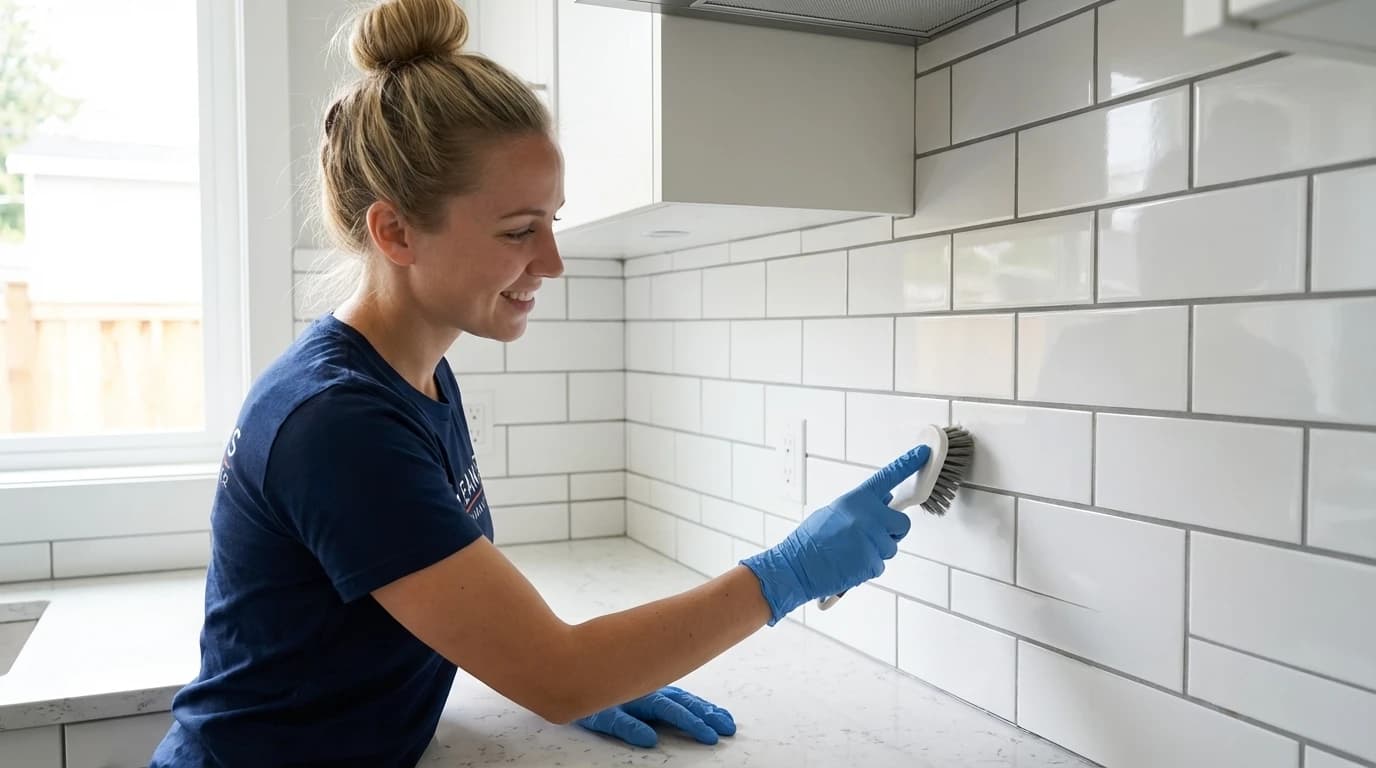
The baking soda paste method works on most bathroom and kitchen grout stains without damaging tiles or releasing fumes. Mix three parts baking soda with one part water to create a thick paste consistency. Apply the paste directly to grout lines using a small spatula or old toothbrush, ensuring complete coverage of stained areas. Let the paste sit for 15-20 minutes to penetrate the porous grout surface. Scrub grout lines with a stiff-bristled brush using circular motions and moderate pressure. Rinse thoroughly with clean water and wipe tiles dry with microfibre cloths.
Hydrogen peroxide boosts cleaning power for stubborn grout stains and mould growth. Mix equal parts 3% hydrogen peroxide and water in a spray bottle for light cleaning, or use undiluted hydrogen peroxide for heavy stains. Spray the solution directly onto grout lines and let it sit for 10-15 minutes while the oxygen bubbles lift embedded dirt. The fizzing action indicates active cleaning as hydrogen peroxide breaks down organic stains and kills mould spores. Scrub with a grout brush and rinse thoroughly. This method whitens grout by up to three shades according to Tile Council of North America testing data.
Vinegar works effectively on soap scum and hard water deposits but requires careful application to avoid damaging natural stone tiles. Mix equal parts white vinegar and warm water in a spray bottle for regular maintenance cleaning. Spray grout lines and let the solution sit for 5-10 minutes before scrubbing. Never use vinegar on marble, travertine, or limestone tiles as the acidity etches and dulls the stone surface. For these materials, stick to pH-neutral cleaners or baking soda paste. Vancouver's hard water makes vinegar particularly effective for removing mineral buildup on ceramic and porcelain tile grout.
- Baking soda paste (3:1 ratio) removes most grout stains without harsh chemicals
- Hydrogen peroxide whitens grout by up to three shades and kills mould spores
- Vinegar dissolves soap scum and hard water deposits on ceramic tile grout
- Never use vinegar on marble, travertine, or limestone as it etches stone surfaces
- Let cleaning solutions sit for 10-20 minutes to penetrate porous grout before scrubbing
Pro Tip
For extra whitening power, sprinkle baking soda on grout lines first, then spray with hydrogen peroxide. The fizzing reaction creates a powerful cleaning action that lifts deep stains.
When to Use Commercial Grout Cleaners
Commercial grout cleaners provide stronger cleaning power for heavily stained or neglected grout but require careful selection and application to avoid tile damage.
Alkaline grout cleaners work best on organic stains like mould, mildew, and soap scum in bathroom applications. These cleaners typically contain sodium hydroxide or potassium hydroxide at pH levels between 11 and 13. Apply alkaline cleaners to grout lines, let them sit for the manufacturer's recommended time (usually 5-15 minutes), then scrub and rinse thoroughly. Alkaline formulas break down protein-based stains and cut through greasy residue effectively. However, repeated use can dull the finish on glazed tiles, so limit application to heavily soiled areas only.
Acidic grout cleaners remove mineral deposits, rust stains, and efflorescence (white powder) from grout surfaces. These products contain phosphoric acid, sulfamic acid, or hydrochloric acid at pH levels between 1 and 3. Acidic cleaners work quickly but can etch natural stone tiles and damage metal fixtures if not rinsed immediately. Use acidic cleaners only on ceramic or porcelain tiles with sealed grout. Vancouver's hard water makes acidic cleaners particularly useful for removing calcium and magnesium buildup on shower grout. Always neutralize acidic cleaners with a baking soda solution after cleaning to prevent ongoing chemical reactions.
Oxygen bleach cleaners provide a middle ground between natural methods and harsh chemicals for grout whitening. These products contain sodium percarbonate that releases hydrogen peroxide when mixed with water. Oxygen bleach whitens grout, removes stains, and kills mould without chlorine fumes or colour damage to surrounding materials. Mix oxygen bleach powder with warm water to create a paste or solution according to package directions. Apply to grout lines, let sit for 20-30 minutes, scrub, and rinse. The International Sanitary Supply Association rates oxygen bleach as safer than chlorine bleach for residential use while providing comparable cleaning results on grout surfaces.
- Alkaline cleaners (pH 11-13) remove organic stains like mould and soap scum effectively
- Acidic cleaners (pH 1-3) dissolve mineral deposits but can damage natural stone tiles
- Oxygen bleach provides chlorine-free whitening and mould removal for grout lines
- Always test commercial cleaners on hidden areas before applying to visible grout
- Rinse acidic cleaners immediately and neutralize with baking soda solution to prevent tile damage
Steam Cleaning for Deep Grout Sanitization
Steam cleaning uses high-temperature vapour to sanitize grout, kill mould, and remove embedded dirt without chemicals or scrubbing.
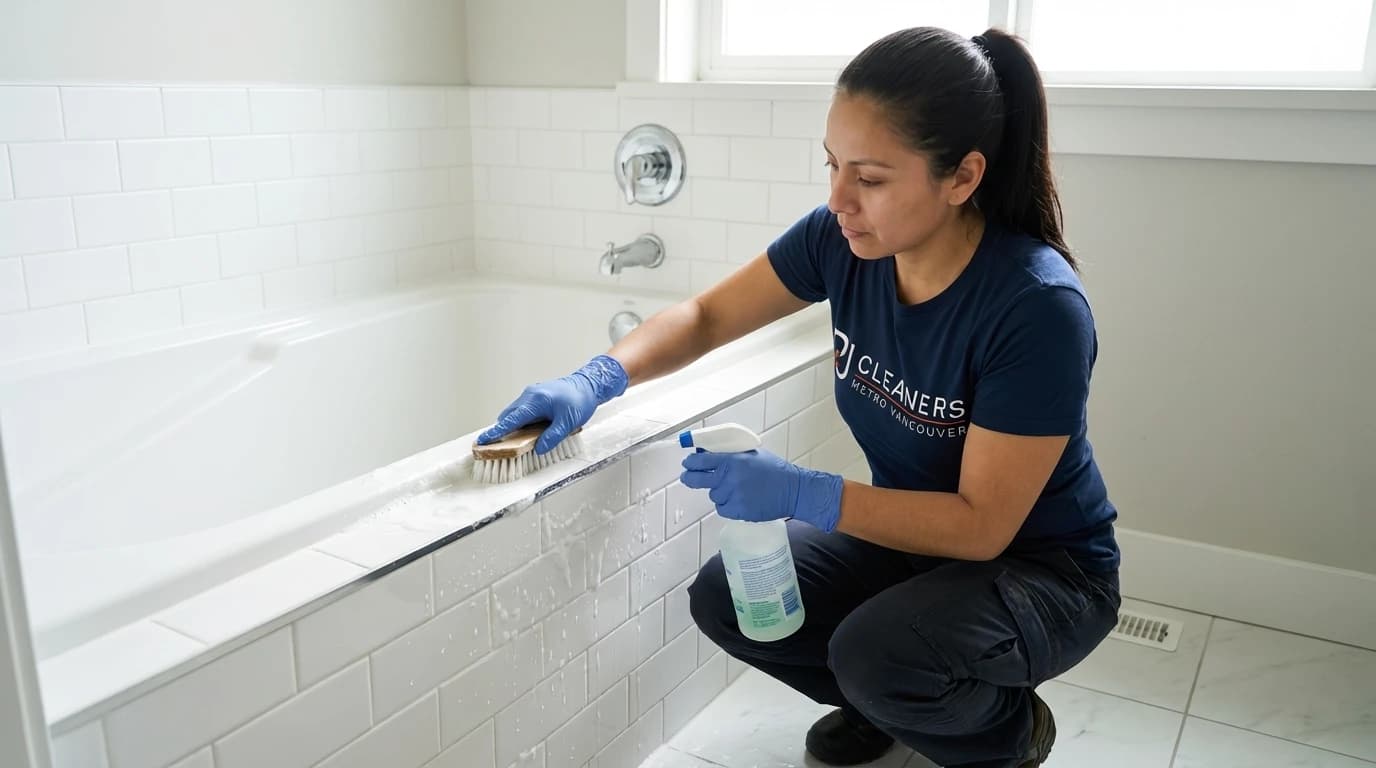
Steam cleaners heat water to 200-250°F and release pressurized vapour that penetrates porous grout surfaces. The high temperature kills 99.9% of bacteria, viruses, and mould spores on contact according to CDC sanitation guidelines. Steam cleaning works particularly well on bathroom grout where biological contaminants accumulate from daily use. The vapour loosens embedded dirt and dissolves soap scum without chemical residue, making it ideal for homes with children, pets, or residents with chemical sensitivities. Professional-grade steam cleaners cost $150-$400 for home use, while rental units run $30-$50 per day at Vancouver equipment rental shops.
Proper steam cleaning technique requires slow, methodical passes over grout lines to allow heat penetration. Hold the steam nozzle 1-2 inches from the grout surface and move at a rate of approximately 6 inches per 10 seconds. Use a small brush attachment to agitate stubborn stains while applying steam. Wipe away loosened dirt immediately with a microfibre cloth to prevent redeposit on clean tiles. Steam cleaning works best on sealed grout as the vapour can drive moisture deeper into unsealed grout, potentially causing damage or prolonged drying times. Always test steam cleaning on a small area first to ensure grout and tile can withstand the heat.
Steam cleaning provides chemical-free maintenance for grout in Vancouver homes concerned about indoor air quality and environmental impact. The method uses only water, eliminating disposal concerns for chemical cleaners and reducing packaging waste. Steam cleaning also reduces water consumption compared to traditional mopping, using approximately 1-2 litres per 100 square feet versus 5-10 litres for conventional cleaning. However, steam cleaning requires more time than chemical methods and may not remove deep stains from heavily neglected grout. P&J Cleaners combines steam cleaning with targeted chemical treatments for optimal results on challenging grout restoration projects.
- Steam at 200-250°F kills 99.9% of bacteria and mould spores without chemicals
- Professional steam cleaners cost $150-$400 or rent for $30-$50 daily in Vancouver
- Hold steam nozzle 1-2 inches from grout and move slowly for heat penetration
- Steam cleaning uses 1-2 litres of water per 100 square feet versus 5-10 litres for mopping
- Works best on sealed grout to prevent moisture damage from vapour penetration
Pro Tip
Run your bathroom exhaust fan during steam cleaning to remove excess moisture and prevent condensation buildup on walls and mirrors.
Related resources
Sealing Grout After Cleaning
Grout sealer creates a protective barrier that prevents stains, moisture absorption, and mould growth for 12-18 months after application.
Grout sealer consists of either penetrating or membrane-forming formulas that protect cleaned grout from future staining. Penetrating sealers soak into the porous grout surface and chemically bond with the cement, creating water and oil resistance from within. These sealers maintain the grout's natural appearance and breathability while preventing stain absorption. Membrane-forming sealers create a protective coating on the grout surface, offering stronger stain resistance but potentially changing the grout's appearance with a slight sheen. The Tile Council of North America recommends penetrating sealers for most residential bathroom and kitchen applications due to their durability and natural finish.
Apply grout sealer only after grout has dried completely following cleaning, typically 24-48 hours depending on humidity levels. Vancouver's damp climate may require extended drying time, especially during fall and winter months when indoor humidity exceeds 50%. Test grout dryness by taping a small piece of plastic wrap over the grout and checking for condensation after 24 hours. If moisture appears under the plastic, allow additional drying time before sealing. Applying sealer to damp grout traps moisture inside, leading to discolouration, efflorescence, and potential mould growth beneath the sealed surface.
Use a small foam brush or applicator bottle to apply sealer directly to grout lines, avoiding excess sealer on tile surfaces. Work in small sections of 10-15 square feet to maintain control and prevent sealer from drying before wiping excess from tiles. Allow the first coat to penetrate for 5-10 minutes, then wipe away any sealer that remains on tile surfaces with a clean, dry cloth. Apply a second coat after the first coat dries (usually 2-4 hours) for maximum protection. Sealed grout repels water and stains for 12-18 months in high-use areas like showers and kitchen backsplashes. Reapply sealer annually in these areas or when water no longer beads on the grout surface.
- Penetrating sealers bond with grout internally while maintaining natural appearance and breathability
- Wait 24-48 hours after cleaning for grout to dry completely before applying sealer
- Apply two coats of sealer with foam brush, wiping excess from tiles between coats
- Sealed grout lasts 12-18 months in high-use areas before requiring reapplication
- Test grout dryness with plastic wrap method to prevent trapping moisture under sealer
Pro Tip
Mark your calendar to reseal grout every 12 months in showers and 18 months in other areas. Regular sealing prevents deep stains that require professional restoration.
Step-by-Step
7-Step Method to Clean Tile Grout
Follow this systematic approach to clean bathroom and kitchen grout thoroughly, remove stubborn stains, and protect grout from future damage. Each step builds on the previous one to ensure professional-quality results.
Remove Loose Dirt and Debris
Start by removing surface dirt, dust, and debris from tile and grout surfaces using a vacuum or dry mop. This prevents loose particles from turning into muddy paste when wet cleaning begins. Use a vacuum with a brush attachment to clean grout lines thoroughly, paying special attention to corners and edges where dirt accumulates. For floor tiles, sweep or vacuum the entire area twice, changing direction the second time to capture particles missed in the first pass. This dry cleaning step reduces the amount of scrubbing required and prevents dirty water from spreading across clean tiles during wet cleaning.
- Vacuum tile floors with brush attachment, focusing on grout lines and corners
- Wipe down wall tiles with dry microfibre cloth to remove dust and cobwebs
- Remove bath mats, shower curtains, and other items from the cleaning area
- Check for loose or damaged grout that needs repair before cleaning
- Open windows or turn on exhaust fans for ventilation during cleaning
Mix Your Cleaning Solution
Prepare your chosen grout cleaning solution based on the stain severity and tile type. For light cleaning and regular maintenance, mix three parts baking soda with one part water to create a thick paste. For moderate stains and mould, combine equal parts hydrogen peroxide and water in a spray bottle, or use undiluted hydrogen peroxide for heavy staining. For commercial cleaners, follow manufacturer mixing instructions precisely to avoid damaging tiles or creating unsafe fume concentrations. Always mix cleaning solutions in well-ventilated areas and wear rubber gloves to protect skin from irritation.
- Mix baking soda paste (3:1 ratio) in a small bowl for light to moderate stains
- Prepare hydrogen peroxide solution in spray bottle for mould and whitening
- Read commercial cleaner labels and mix according to manufacturer directions
- Put on rubber gloves and safety glasses before handling cleaning solutions
- Test cleaning solution on hidden grout area to check for adverse reactions
Apply Cleaning Solution to Grout
Apply your cleaning solution directly to grout lines using a small spatula, old toothbrush, or spray bottle depending on the solution consistency. Work in manageable sections of 10-15 square feet to prevent the cleaning solution from drying before you can scrub it. For paste cleaners, spread a generous layer over grout lines, ensuring complete coverage of stained areas. For liquid cleaners, spray directly onto grout and allow the solution to saturate the porous surface. Let the cleaning solution sit for the recommended time (typically 10-20 minutes for natural cleaners, 5-15 minutes for commercial products) to penetrate and break down embedded stains.
- Apply cleaning solution to grout lines in 10-15 square foot sections
- Ensure complete coverage of stained and discoloured grout areas
- Set a timer for recommended dwell time based on cleaning solution type
- Keep cleaning solution moist by misting with water if it begins to dry
- Avoid getting cleaning solution on natural stone tiles that may be damaged
Scrub Grout Lines Thoroughly
Scrub grout lines with a stiff-bristled nylon brush using firm, circular motions to lift embedded dirt and stains. Apply moderate pressure, increasing force gradually on stubborn stains without damaging the grout surface. Work systematically across each section, scrubbing horizontal grout lines first, then vertical lines to ensure complete coverage. For floor grout, use a larger grout brush or an old toothbrush attached to a long handle to reduce back strain. Pay extra attention to corners, edges, and areas around fixtures where grime accumulates most heavily. The scrubbing action combined with the cleaning solution's chemical action lifts stains from deep within the porous grout structure.
- Scrub grout lines with stiff nylon brush using circular motions and moderate pressure
- Work systematically across sections, completing horizontal then vertical lines
- Use smaller brush or old toothbrush for tight corners and edges
- Reapply cleaning solution to areas where it has dried during scrubbing
- Increase pressure gradually on stubborn stains without gouging grout surface
Rinse and Remove Residue
Rinse cleaned grout thoroughly with clean water to remove all traces of cleaning solution and loosened dirt. Use a damp microfibre mop for floor tiles or a spray bottle and clean cloths for wall tiles. Change rinse water frequently to avoid redepositing dirt onto clean surfaces. For bathroom walls and shower grout, use a handheld showerhead to rinse thoroughly, ensuring all cleaning solution flows down the drain. Wipe tiles dry immediately with clean microfibre cloths to prevent water spots and streaking. Inspect grout lines after rinsing to identify any remaining stains that need additional treatment. Proper rinsing prevents cleaning solution residue from attracting new dirt and ensures grout dries to its true cleaned colour.
- Rinse grout with clean water using damp mop, spray bottle, or showerhead
- Change rinse water frequently to avoid spreading dirty water to clean areas
- Wipe tiles dry immediately with clean microfibre cloths to prevent water spots
- Inspect grout lines for remaining stains that need additional cleaning
- Allow grout to dry completely (24-48 hours) before applying sealer
Treat Stubborn Stains
Address any remaining stubborn stains with targeted treatments after the initial cleaning and rinsing. For persistent mould stains, apply undiluted hydrogen peroxide directly to affected areas and let sit for 30 minutes before scrubbing again. For rust stains, use a commercial rust remover specifically formulated for grout, following product instructions carefully. For oil-based stains in kitchen grout, apply a paste of baking soda and dish soap, let sit for 20 minutes, then scrub and rinse. Some deeply embedded stains may require multiple treatment cycles or professional restoration. Document stains that don't respond to home cleaning methods for professional assessment if needed.
- Apply undiluted hydrogen peroxide to persistent mould stains for 30 minutes
- Use commercial rust remover on orange or brown rust stains in grout
- Treat oil-based kitchen stains with baking soda and dish soap paste
- Repeat cleaning process on stubborn stains with fresh cleaning solution
- Consider professional grout restoration for stains that resist home treatment
Seal Grout for Long-Term Protection
Apply grout sealer after grout has dried completely (24-48 hours) to protect your cleaning results and prevent future staining. Choose a penetrating sealer for most residential applications as it maintains grout's natural appearance while providing water and stain resistance. Use a small foam brush or applicator bottle to apply sealer directly to grout lines, working in small sections to maintain control. Wipe excess sealer from tile surfaces immediately with a clean, dry cloth to prevent hazy residue. Apply a second coat after the first coat dries (2-4 hours) for maximum protection. Sealed grout repels water, prevents stain absorption, and makes future cleaning significantly easier. Plan to reseal grout every 12-18 months depending on use and exposure to moisture.
- Wait 24-48 hours after cleaning for grout to dry completely before sealing
- Apply penetrating grout sealer with foam brush in small, controlled sections
- Wipe excess sealer from tile surfaces immediately with clean, dry cloth
- Apply second coat of sealer after first coat dries (2-4 hours)
- Mark calendar to reseal grout in 12-18 months for continued protection
| Method | Best For | Cost | Effectiveness | Time Required |
|---|---|---|---|---|
| Baking Soda Paste | Light to moderate stains, regular maintenance | $2-5 | Good for most stains | 30-45 min per 100 sq ft |
| Hydrogen Peroxide | Mould, mildew, whitening grout | $3-8 | Excellent for organic stains | 45-60 min per 100 sq ft |
| Vinegar Solution | Soap scum, hard water deposits | $2-4 | Good for mineral buildup | 30-45 min per 100 sq ft |
| Oxygen Bleach | Heavy stains, whitening, mould | $8-15 | Excellent for deep cleaning | 60-90 min per 100 sq ft |
| Commercial Alkaline | Organic stains, soap scum, grease | $10-20 | Very good for bathroom grout | 45-60 min per 100 sq ft |
| Commercial Acidic | Mineral deposits, rust, efflorescence | $12-25 | Excellent for hard water stains | 30-45 min per 100 sq ft |
| Steam Cleaning | Sanitization, chemical-free cleaning | $30-50 rental | Good for maintenance | 60-90 min per 100 sq ft |
| Professional Service | Severe staining, large areas, restoration | $150-400 | Excellent for all conditions | 2-4 hours per bathroom |
Services mentioned in this article
Ready for help?
4.9 · 850+ Google reviewsProfessional Grout Cleaning in Vancouver
Our deep cleaning service includes tile and grout restoration using commercial-grade equipment and eco-friendly products upon request. We serve 39 locations across Metro Vancouver with same-day booking available.
778-720-2224Common Grout Cleaning Questions
How to clean bathroom grout?
Mix equal parts baking soda and water into a paste, apply to grout lines, let sit 10 minutes, then scrub with a stiff brush in circular motions. For stubborn stains, spray white vinegar over the paste to create a foaming reaction that lifts dirt. Rinse thoroughly with clean water and dry completely. Vancouver's humid bathrooms benefit from weekly maintenance to prevent mould buildup in grout.
How to whiten grout?
Create a paste using 3 parts baking soda to 1 part hydrogen peroxide (3% solution). Apply generously to discoloured grout, let sit 15-20 minutes, scrub with a grout brush, then rinse. For severe staining, use oxygen bleach powder mixed with warm water according to package directions. Studies show hydrogen peroxide whitens grout 40% more effectively than vinegar alone while remaining safe for most tile types.
Best grout cleaner?
For routine cleaning, baking soda paste works effectively and safely on most surfaces. For heavy-duty jobs, oxygen bleach cleaners like OxiClean provide strong stain removal without harsh fumes. Commercial alkaline grout cleaners rated pH 10-11 dissolve soap scum and hard water deposits efficiently. Avoid chlorine bleach on coloured grout as it causes fading. The CDC recommends pH-neutral cleaners for daily maintenance to preserve grout integrity.
How to seal grout?
Clean and dry grout completely, waiting 72 hours after any deep cleaning. Apply penetrating grout sealer using a small foam brush or applicator bottle, working in 3-foot sections. Wipe excess sealer from tile surfaces within 5-10 minutes using a clean cloth. Allow 24-48 hours to cure before exposing to water. Reapply sealer every 6-12 months in high-moisture areas like showers to maintain water resistance and prevent staining.

Meet the Author
Pamela
Co-Founder
Pamela leads residential quality standards at P&J Cleaners, refining safe, detail-driven cleaning systems for Vancouver homes, condos, and move-out projects.
Keep Exploring