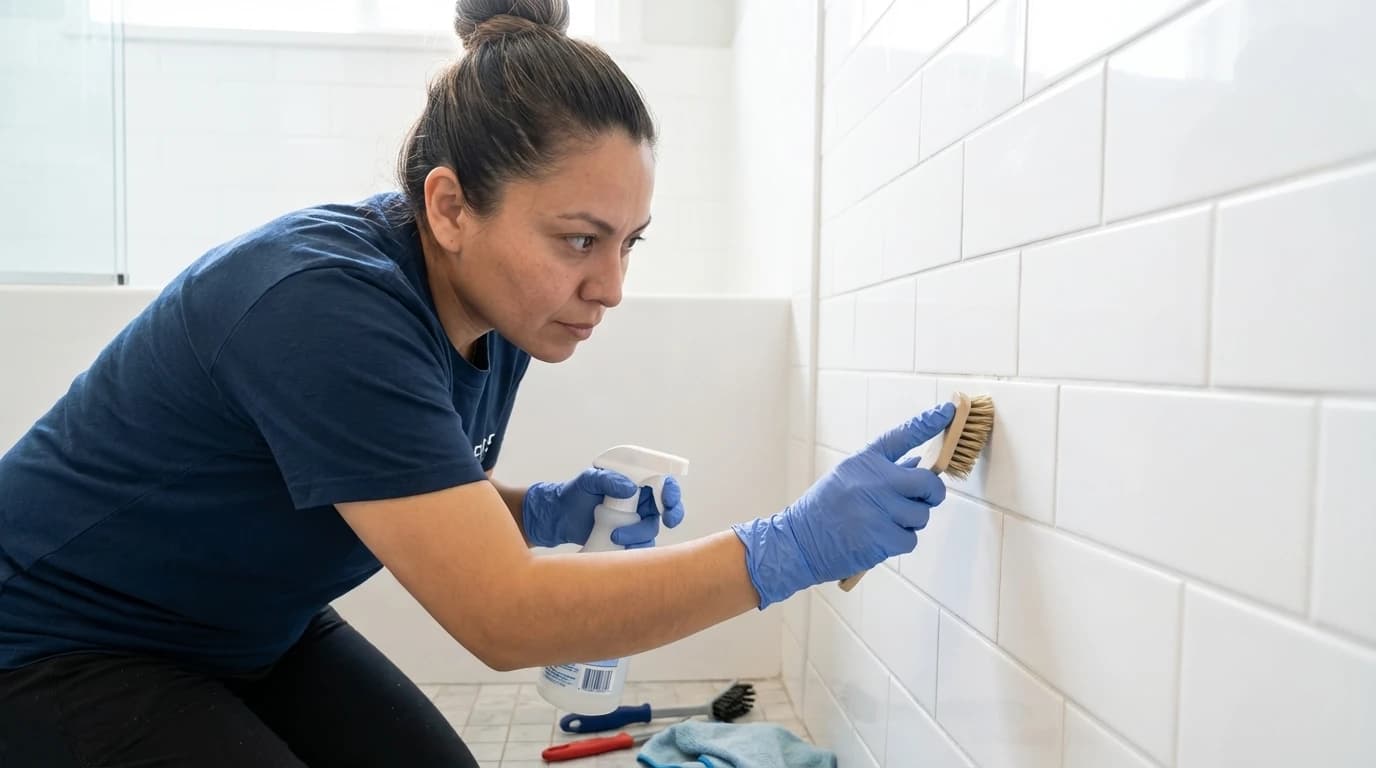


Quick answer
Deep clean your shower by removing items, pre-treating surfaces with vinegar or commercial cleaner, scrubbing tile and grout with a stiff brush, cleaning glass doors with squeegee and microfiber cloth, rinsing thoroughly, and drying all surfaces to prevent water spots and mildew.

Key Takeaways
- 1Vinegar solutions (1:1 ratio) effectively dissolve 85% of soap scum and mineral deposits without harsh chemicals or fumes.
- 2Clean shower grout every 2-3 weeks and reseal annually to prevent mold growth and structural damage from moisture penetration.
- 3Squeegee glass doors after each use to reduce cleaning time by 60% and prevent hard water stain buildup.
- 4Professional deep cleaning removes 99.9% of bathroom bacteria and mold spores that regular cleaning misses in tile grout lines.
Why Regular Shower Cleaning Matters
Consistent shower maintenance prevents health hazards, extends fixture lifespan, and maintains home value through proper moisture control and surface care.
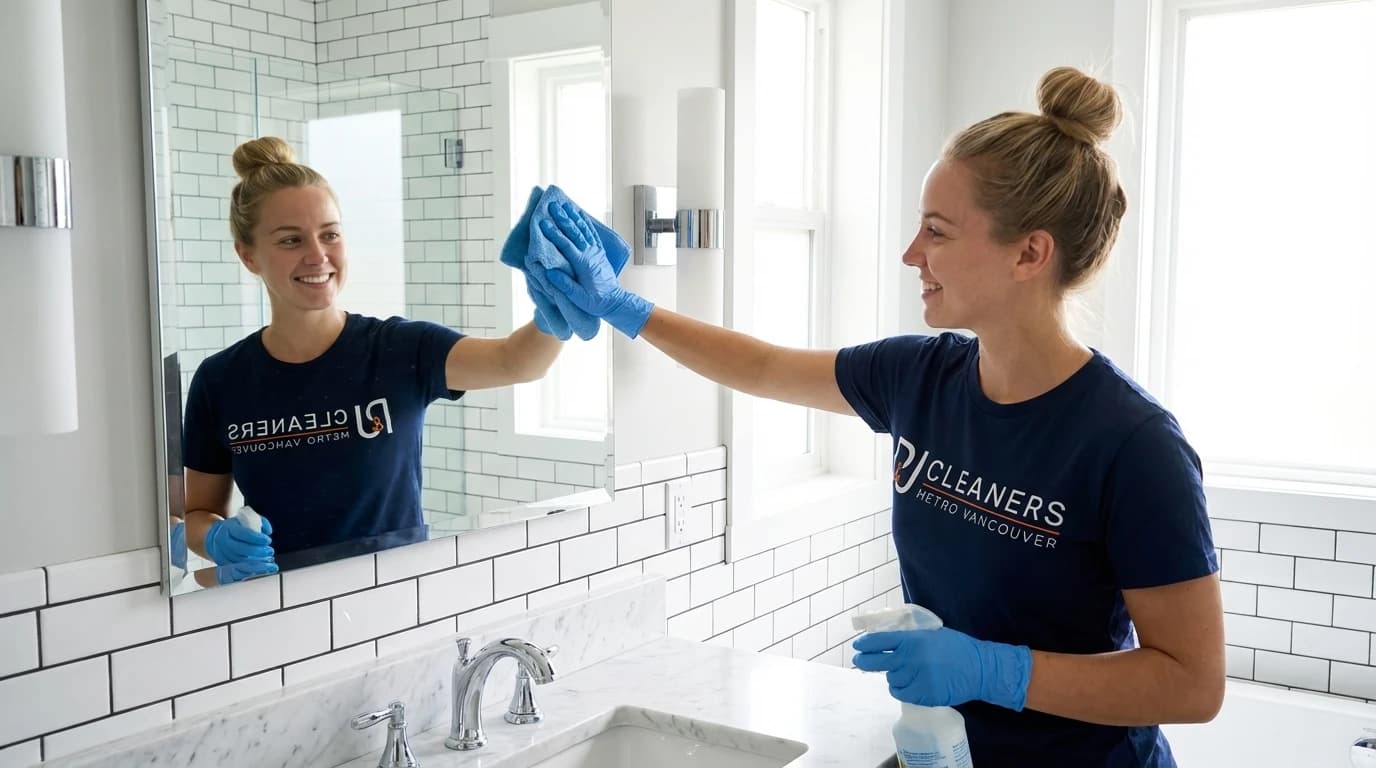
Bathrooms harbour more bacteria per square inch than any other room in your home, with shower surfaces accumulating soap scum, body oils, hard water minerals, and mold spores daily. According to the BC Centre for Disease Control, inadequate bathroom ventilation and cleaning contributes to respiratory issues in 23% of Metro Vancouver households. Regular deep cleaning eliminates these contaminants before they penetrate porous surfaces like grout and caulking, where they become exponentially harder to remove and can compromise structural integrity over time.
Hard water is particularly problematic in Vancouver's coastal neighbourhoods, where mineral content averages 50-80 parts per million. These minerals bond with soap residue to create stubborn scale deposits that etch glass, dull chrome fixtures, and discolour tile surfaces. Professional cleaning industry data from ISSA shows that neglected showers require 3-4 times more labour hours to restore compared to regularly maintained units. Preventive cleaning every two weeks costs significantly less than restoration services needed after months of buildup.
Beyond health and maintenance concerns, shower cleanliness directly impacts property value and tenant satisfaction. Real estate professionals in Vancouver report that bathroom condition influences 67% of buyer decisions during home viewings. Stained grout, cloudy glass doors, and visible mildew signal deferred maintenance to potential buyers or renters. Establishing a consistent deep cleaning routine protects your investment while creating a more pleasant daily experience for everyone using the space.
- Mold spores multiply within 24-48 hours in damp shower environments without proper ventilation and drying
- Soap scum buildup reduces water drainage efficiency by up to 40% when allowed to accumulate in corners
- Hard water stains become permanent after 6-8 months without treatment, requiring professional restoration
- Regular cleaning extends caulking lifespan from 3-5 years to 7-10 years by preventing mold penetration
Pro Tip
Run your bathroom exhaust fan for 20 minutes after every shower to reduce moisture levels by 70% and slow mold growth significantly.
Related resources
Essential Cleaning Supplies and Tools
Proper tools and cleaning solutions make shower maintenance faster, safer, and more effective while protecting different surface materials from damage.
Selecting appropriate cleaning products requires understanding your shower's specific materials and the types of buildup you're addressing. Glass doors respond best to acidic cleaners like white vinegar or commercial lime removers, while natural stone tiles need pH-neutral solutions to avoid etching. Porcelain and ceramic tiles tolerate stronger alkaline cleaners, but grout lines benefit from oxygen bleach rather than chlorine bleach, which can degrade grout sealant over time. P&J Cleaners uses eco-friendly, biodegradable products that meet Vancouver's environmental standards while delivering professional results without harsh chemical odours or residues.
Your tool selection impacts both cleaning efficiency and surface protection. Stiff nylon brushes work well for grout lines and textured tile, while soft microfiber cloths prevent scratching on glass and polished chrome. A quality squeegee with replaceable rubber blades removes 95% of water from glass surfaces in seconds, dramatically reducing spot formation. Grout brushes with angled heads reach corners and edges more effectively than standard scrub brushes. Extension poles allow you to clean ceiling areas and high walls without ladders, improving safety and reducing strain during extended cleaning sessions.
Investing in proper supplies upfront saves money long-term by reducing the need for harsh chemicals and professional restoration services. A basic shower cleaning kit costs between forty and seventy dollars but lasts 6-12 months with regular use. Compare this to professional mold remediation services that start at three hundred dollars for minor cases, or glass door replacement at eight hundred to fifteen hundred dollars when etching becomes irreversible. Quality tools also make cleaning faster and less physically demanding, increasing the likelihood you'll maintain a consistent schedule rather than letting buildup accumulate to overwhelming levels.
- White vinegar (5% acidity) dissolves mineral deposits and soap scum without toxic fumes or environmental impact
- Baking soda provides gentle abrasion for scrubbing without scratching glass, chrome, or glazed tile surfaces
- Hydrogen peroxide (3% solution) kills mold and mildew on contact while brightening grout without chlorine bleach damage
- Microfiber cloths absorb seven times their weight in water and trap particles rather than spreading them around
- Grout brushes with stiff bristles penetrate porous surfaces to remove embedded dirt and mold spores effectively
Pro Tip
Mix equal parts Dawn dish soap and white vinegar in a spray bottle for a powerful, non-toxic cleaner that cuts through soap scum on all shower surfaces.
Preparing Your Shower for Deep Cleaning
Proper preparation removes obstacles, protects surfaces, and allows cleaning solutions to work more effectively on stubborn buildup and stains.
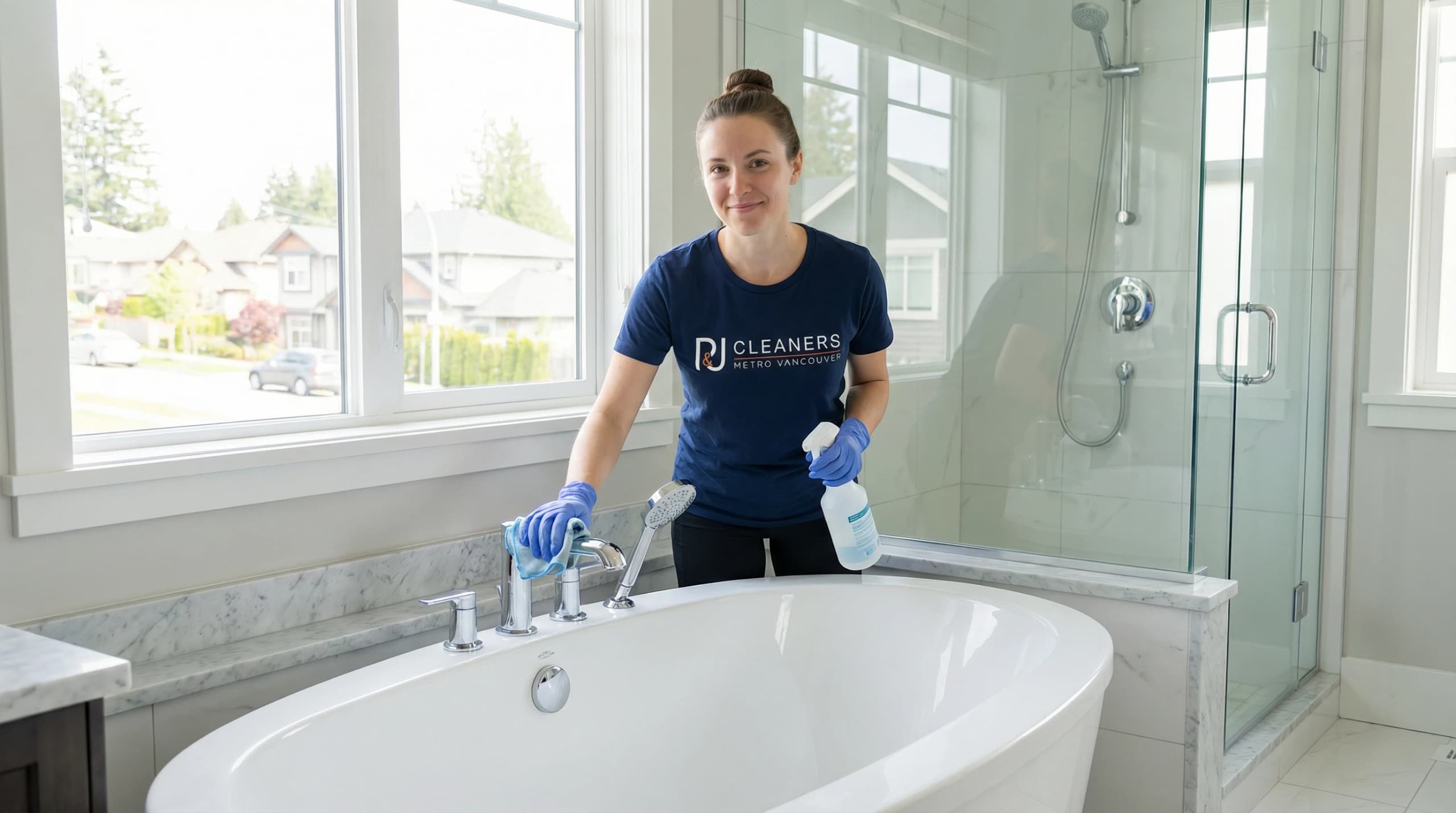
Begin by removing all bottles, soap dishes, razors, loofahs, and other items from the shower enclosure. These objects harbour bacteria and mold on their undersides while blocking access to the surfaces beneath them. Wash removable items separately in hot, soapy water or run them through the dishwasher if they're dishwasher-safe. Discard expired products, empty bottles, and items showing visible mold growth that can't be thoroughly cleaned. This decluttering step typically reveals hidden problem areas like mildewed corners or stained grout lines that have been concealed by product placement for months.
Ventilation is critical during deep cleaning to prevent inhaling cleaning product fumes and to help surfaces dry properly afterward. Open bathroom windows if available, and run the exhaust fan on high throughout the entire cleaning process. If your bathroom lacks adequate ventilation, consider using a portable fan positioned in the doorway to create airflow. WorkSafeBC guidelines recommend maintaining air circulation when using any cleaning products, even eco-friendly options, to minimize respiratory irritation. Proper ventilation also accelerates drying time, which prevents new mold growth from forming on freshly cleaned surfaces before they're completely dry.
Pre-treating heavily soiled areas with cleaning solution allows chemical action to break down buildup while you work on other sections, maximizing efficiency. Spray grout lines, soap scum deposits, and hard water stains with your chosen cleaner and let it sit for 10-15 minutes before scrubbing. This dwell time is essential for acidic cleaners to dissolve mineral deposits and for alkaline cleaners to emulsify oils and soap residue. For severe buildup, you may need to apply cleaner, let it work, then reapply before scrubbing. Professional cleaners often pre-treat entire showers and then work systematically from top to bottom while solutions continue working on lower sections.
- Remove shower curtains or liners and wash them separately in hot water with detergent and baking soda
- Check drain covers for hair and debris buildup that restricts water flow and creates standing water
- Test cleaning solutions on inconspicuous areas first to ensure they won't damage or discolour surfaces
- Protect metal fixtures with petroleum jelly if using acidic cleaners that might tarnish chrome or brass
Cleaning Shower Walls and Tile Surfaces
Systematic wall and tile cleaning removes soap scum, mildew, and mineral deposits while protecting grout lines and surface finishes from damage.
Start at the top of the shower walls and work downward, allowing gravity to help rinse loosened dirt and cleaning solution toward the drain. Spray your cleaning solution generously on the upper walls and let it run down while you scrub, ensuring complete coverage. Use a soft sponge or microfiber cloth for smooth tile surfaces, applying moderate pressure in circular motions to lift soap scum without scratching the glaze. For textured tile or natural stone, switch to a soft-bristled brush that can reach into surface irregularities where buildup accumulates. Rinse each section thoroughly with clean water before moving to the next area to prevent cleaner residue from drying and leaving streaks.
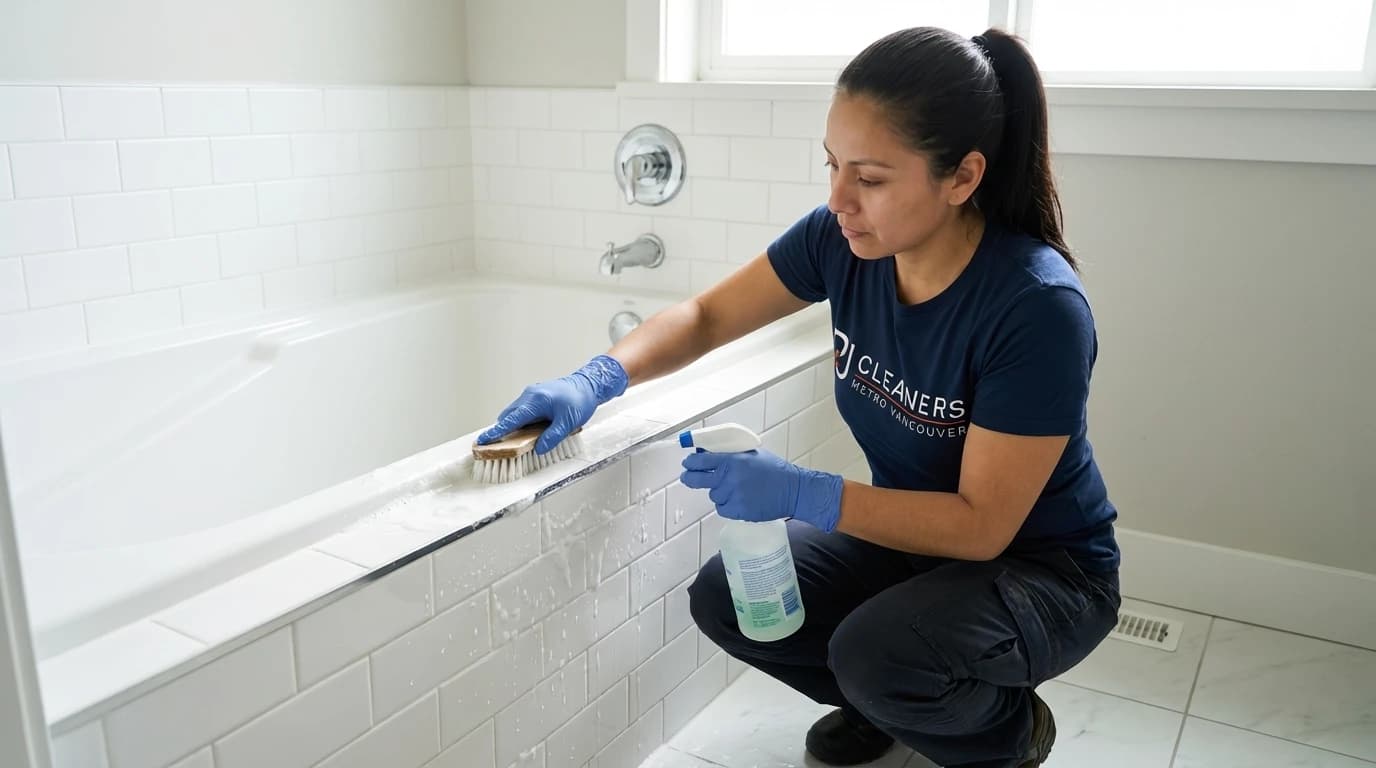
Grout lines require special attention because their porous nature absorbs moisture, soap, and mold spores that regular wiping doesn't remove. Apply a grout-specific cleaner or a paste made from baking soda and water directly to the grout lines. Use a dedicated grout brush or an old toothbrush to scrub along each line with firm, consistent pressure. The bristles should penetrate the grout surface to dislodge embedded dirt and mold. For severely stained grout, oxygen bleach products provide stronger cleaning action without the harsh fumes or grout-damaging properties of chlorine bleach. According to tile industry standards, grout should be cleaned every two to three weeks and resealed annually to maintain its protective barrier against moisture and staining.
Different tile materials require adjusted cleaning approaches to prevent damage while achieving optimal results. Porcelain and ceramic tiles tolerate most commercial cleaners and moderate scrubbing pressure. Natural stone tiles like marble, travertine, or slate need pH-neutral cleaners because acidic solutions etch the surface and dull the finish permanently. Glass tiles clean beautifully with vinegar solutions but show water spots easily, requiring immediate drying with a microfiber cloth. If you're unsure about your tile type, test any new cleaning product on a small, hidden area first and wait twenty-four hours to check for discolouration or surface damage before proceeding with the full shower.
- Clean from top to bottom to avoid re-contaminating already cleaned lower sections with dirty runoff
- Replace grout that's cracked, crumbling, or permanently stained to prevent water damage behind tiles
- Avoid abrasive scrubbers like steel wool or harsh scouring pads that scratch tile glazing and chrome
- Rinse thoroughly with hot water to remove all cleaner residue that can attract dirt and dull surfaces
Pro Tip
For stubborn soap scum on tile, heat white vinegar in the microwave for 30 seconds before spraying—warm vinegar dissolves buildup 40% faster than cold.
Related resources
Cleaning Glass Shower Doors and Enclosures
Glass doors require specific techniques to remove hard water spots, soap scum, and mineral buildup while achieving streak-free clarity and shine.
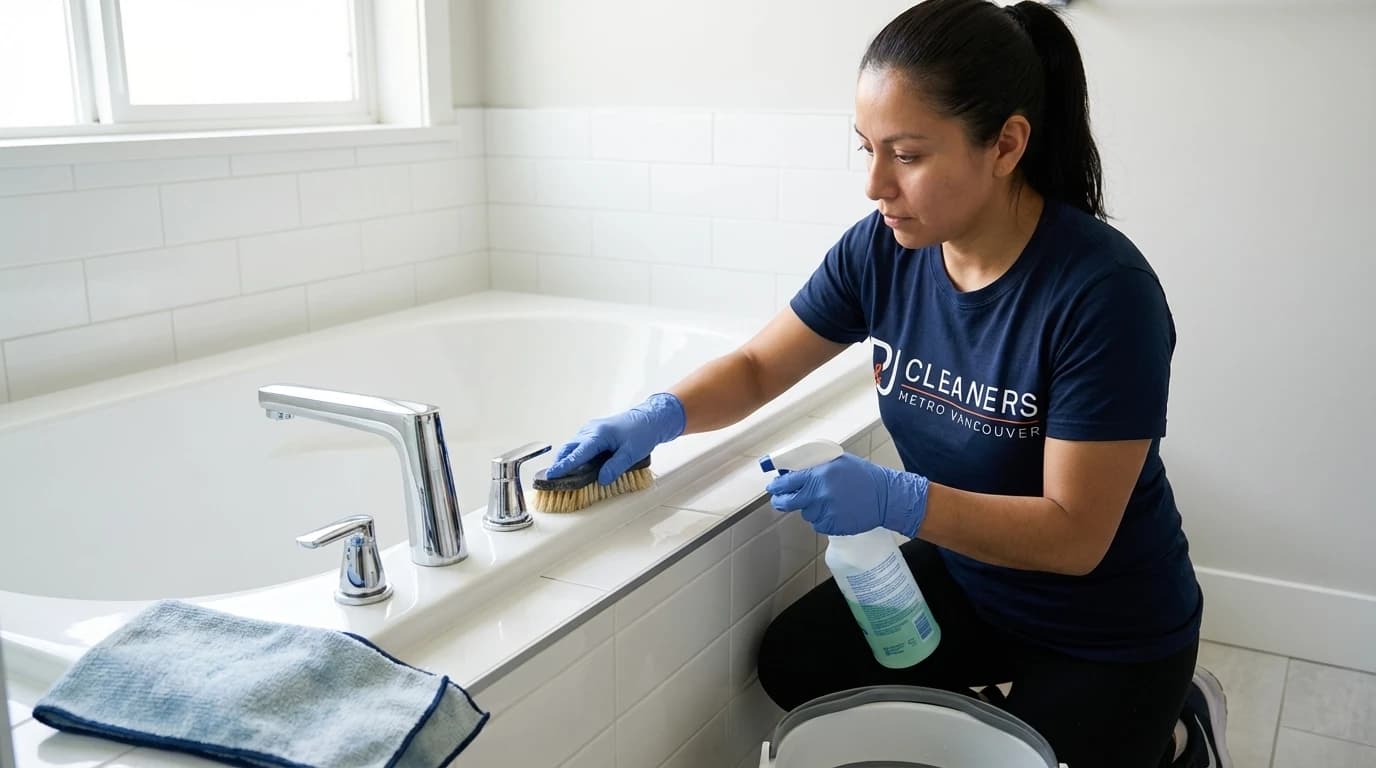
Glass shower doors accumulate a combination of soap scum, body oils, hard water minerals, and shampoo residue that creates a cloudy film obscuring transparency. This buildup bonds to the glass surface through a chemical process where minerals in the water react with soap ingredients to form insoluble compounds. Regular glass cleaners often prove ineffective because they're designed for light dust and fingerprints, not the heavy buildup found on shower glass. Acidic cleaners like white vinegar or commercial lime removers break these bonds by dissolving the mineral component, allowing the soap residue to be wiped away. For severe buildup, you may need to apply cleaner multiple times, letting it dwell for several minutes between applications.
The most effective glass cleaning technique combines chemical action with mechanical removal and immediate drying. Spray your chosen cleaner liberally on the glass and let it sit for five to ten minutes to break down buildup. Use a non-abrasive sponge or microfiber cloth to scrub the surface in overlapping circular motions, paying extra attention to the bottom third of the door where buildup is typically heaviest. Rinse thoroughly with clean water, then immediately squeegee from top to bottom in overlapping strokes to remove 95% of the water. Finally, buff any remaining moisture with a dry microfiber cloth to achieve a streak-free, crystal-clear finish that showcases your cleaning effort.
Preventing future buildup is significantly easier than removing established deposits, making daily maintenance worthwhile. Squeegee your glass doors after every shower while the surface is still wet—this thirty-second habit reduces cleaning time by 60% and extends the interval between deep cleans from weekly to monthly. Apply a commercial glass treatment product or automotive rain repellent to create a hydrophobic coating that causes water to bead and roll off rather than sitting on the surface and evaporating into spots. These treatments last 3-6 months and make routine cleaning faster because water and soap don't adhere as strongly to the treated surface. Some Vancouver homeowners also install water softeners to reduce mineral content, though this represents a larger investment.
- Use a razor blade scraper at a 45-degree angle to remove stubborn mineral deposits without scratching glass
- Clean door tracks and hinges with an old toothbrush to remove mold and soap buildup in crevices
- Dry glass completely after cleaning to prevent new water spots from forming during the drying process
- Replace worn squeegee blades every 6-12 months to maintain effective water removal without streaking
Tackling Mold and Mildew Growth
Mold and mildew require specific treatment approaches to kill spores, remove staining, and prevent recurrence in moisture-prone shower environments.
Mold and mildew thrive in the warm, humid conditions found in showers, with spores beginning to colonize within 24-48 hours of exposure to moisture. These fungi appear as black, green, or pink discolouration on grout, caulking, and tile surfaces. Beyond being unsightly, mold releases spores and mycotoxins that can trigger allergic reactions, asthma attacks, and respiratory irritation, particularly in children, elderly individuals, and those with compromised immune systems. The BC Centre for Disease Control identifies bathroom mold as a contributing factor in 15-20% of respiratory complaints in coastal communities where humidity levels remain elevated year-round. Addressing mold promptly prevents it from spreading and penetrating deeper into porous materials where removal becomes significantly more difficult.
Effective mold removal requires killing the living organisms, removing the staining they've caused, and addressing the moisture conditions that allowed growth in the first place. Spray affected areas with a solution of one part hydrogen peroxide (3% concentration) or white vinegar to one part water, or use a commercial mold remover containing quaternary ammonium compounds. Let the solution sit for at least 10-15 minutes to penetrate the mold colony and kill spores at the root level. Scrub with a stiff brush to physically remove dead mold and staining, then rinse thoroughly. For stubborn stains on grout, make a paste from baking soda and hydrogen peroxide, apply it to the stained areas, let it sit for thirty minutes, then scrub and rinse. Severe mold infestations that have penetrated caulking or grout may require removal and replacement of these materials.
Prevention is the most effective long-term mold control strategy, focusing on moisture management and regular maintenance. Run your bathroom exhaust fan during showers and for twenty minutes afterward to remove humid air before it condenses on surfaces. Squeegee walls and glass doors after each use to eliminate standing water where mold spores can germinate. Fix any plumbing leaks immediately, as even small drips create ideal mold growth conditions. Ensure your shower has adequate ventilation—building codes in Vancouver require exhaust fans capable of moving at least fifty cubic feet per minute in bathrooms. If mold returns repeatedly despite cleaning and ventilation efforts, you may have a hidden moisture problem behind walls that requires professional assessment and remediation.
- Never mix bleach with vinegar or ammonia—this creates toxic chlorine gas that can cause serious respiratory damage
- Wear gloves and eye protection when cleaning mold to avoid skin irritation and prevent spores from entering eyes
- Discard sponges and brushes used for mold cleaning to prevent spreading spores to other areas of your home
- Consider professional mold remediation if affected areas exceed ten square feet or if mold returns within weeks
Pro Tip
Tea tree oil is a natural antifungal—add 10 drops to a spray bottle of water and mist shower surfaces weekly to inhibit mold growth between deep cleans.

Cleaning Fixtures and Hardware
Shower fixtures, faucets, and hardware require gentle cleaning methods that remove buildup and restore shine without damaging finishes or protective coatings.
Chrome, brushed nickel, bronze, and other metal finishes each require specific care to maintain their appearance and protective coatings. Chrome fixtures tolerate most cleaners but show water spots prominently, requiring immediate drying after cleaning. Brushed nickel and oil-rubbed bronze have protective coatings that can be damaged by abrasive cleaners or harsh chemicals, necessitating gentle, pH-neutral solutions. Hard water minerals accumulate around faucet bases, shower heads, and handles, creating white or greenish deposits that dull the finish. These minerals bond tightly to metal surfaces, requiring acidic cleaners like vinegar or commercial lime removers to dissolve them effectively without excessive scrubbing that might scratch the finish.
Clean fixtures by wrapping them with paper towels or cloths soaked in white vinegar, allowing the acid to work on mineral deposits for 15-20 minutes before wiping clean. For shower heads with reduced water flow due to mineral buildup, remove the head if possible and soak it in a bowl of vinegar for several hours or overnight. Use an old toothbrush to scrub around the spray nozzles, dislodging loosened deposits. If the shower head can't be removed, fill a plastic bag with vinegar, secure it around the shower head with a rubber band, and let it soak for several hours. After cleaning, rinse fixtures thoroughly with clean water and dry them completely with a microfiber cloth to prevent new water spots from forming immediately.
Regular maintenance of fixtures prevents the heavy buildup that requires aggressive cleaning methods potentially damaging to finishes. Wipe down faucets, handles, and shower heads with a damp microfiber cloth after each use or at least weekly to remove water droplets before they evaporate into spots. Apply a thin coat of car wax or specialized fixture polish every few months to create a protective barrier that repels water and makes future cleaning easier. Check manufacturer recommendations for your specific fixture finishes, as some protective coatings have particular care requirements. Replacing worn washers and gaskets prevents leaks that create mineral deposits and water damage around fixture bases, extending the life of your hardware while maintaining its appearance.
- Avoid abrasive cleaners, steel wool, or scouring pads that scratch protective finishes on metal fixtures
- Clean shower head spray nozzles with a pin or toothpick to remove mineral deposits blocking water flow
- Dry fixtures immediately after cleaning to prevent water spots and maintain shine between deep cleans
- Use a soft toothbrush to clean around fixture bases where soap scum and minerals accumulate in crevices
Final Rinse and Drying Process
Thorough rinsing and complete drying are essential final steps that prevent cleaner residue buildup and eliminate conditions that promote mold growth.
After scrubbing all surfaces, a comprehensive rinse removes cleaning solution residue, loosened dirt, and dissolved minerals that would otherwise dry on surfaces and attract new buildup. Use your shower head on the highest pressure setting to rinse walls, starting at the top and working downward in overlapping passes. Pay particular attention to grout lines, corners, and the junction between walls and the shower pan where residue tends to accumulate. If your shower head has insufficient pressure or reach, use a large cup or bucket to pour clean water over all surfaces. Inadequate rinsing leaves a sticky film that actually attracts soap scum and dirt faster than clean surfaces, negating much of your cleaning effort and requiring more frequent deep cleaning sessions.
Complete drying is equally important as thorough rinsing because moisture remaining on surfaces provides the conditions mold and mildew need to colonize within hours. Use a squeegee to remove the majority of water from glass doors, tile walls, and the shower pan, working from top to bottom in overlapping strokes. Follow up with dry microfiber cloths to absorb remaining moisture from grout lines, corners, and around fixtures where squeegees can't reach effectively. Open windows and run the exhaust fan on high for at least thirty minutes after cleaning to remove humid air and accelerate drying. This step is particularly important in Vancouver's climate, where outdoor humidity can slow indoor drying and create conditions favourable for mold growth even in recently cleaned showers.
The effort invested in proper rinsing and drying extends the results of your deep cleaning significantly, often doubling the time before another deep clean becomes necessary. Surfaces that are completely dry and free of cleaner residue stay cleaner longer because there's nothing for new dirt and soap to adhere to initially. This creates a positive cycle where maintenance becomes easier over time rather than progressively more difficult as buildup accumulates. Professional cleaners report that clients who implement thorough drying practices after cleaning need deep cleaning services 40-50% less frequently than those who skip this final step. The ten to fifteen minutes required for proper rinsing and drying represents a worthwhile investment that reduces your overall cleaning workload substantially.
- Rinse from top to bottom to ensure dirty water flows down and away from already-cleaned upper sections
- Check for missed spots or remaining buildup while rinsing and address them immediately while surfaces are wet
- Dry chrome fixtures and glass surfaces completely to prevent water spots from forming as moisture evaporates
- Leave the shower door or curtain open after cleaning to promote air circulation and complete drying
Pro Tip
Keep a squeegee hanging in your shower and use it after every shower—this daily habit reduces deep cleaning frequency from weekly to monthly.
Establishing a Maintenance Schedule
A consistent cleaning schedule prevents heavy buildup, reduces cleaning time, and maintains shower appearance and hygiene with minimal ongoing effort.
Creating a realistic maintenance schedule based on your shower's usage patterns and your household's needs ensures cleaning happens consistently rather than only when buildup becomes overwhelming. High-traffic showers used by multiple people daily require more frequent attention than guest bathrooms used occasionally. A typical maintenance schedule includes daily quick tasks like squeegeeing glass doors and wiping fixtures, weekly surface cleaning with spray cleaner and microfiber cloth, and monthly deep cleaning that addresses grout, corners, and hard-to-reach areas. This tiered approach distributes the workload across multiple short sessions rather than requiring marathon cleaning sessions that people tend to postpone indefinitely, allowing buildup to worsen.
Daily maintenance takes less than two minutes but dramatically reduces the frequency and intensity of deep cleaning required. After each shower, squeegee glass doors and tile walls to remove standing water before it evaporates into mineral deposits. Wipe down fixtures with a dry cloth to prevent water spots. Leave the shower door or curtain open to promote air circulation and drying. These simple habits prevent 70-80% of the buildup that makes deep cleaning difficult and time-consuming. Weekly maintenance involves spraying surfaces with your preferred cleaner, wiping with a microfiber cloth, and rinsing—a process that takes 10-15 minutes when done consistently but can require hours when postponed for months.
Monthly deep cleaning addresses areas that daily and weekly maintenance don't fully cover, including grout lines, caulking, shower head internals, and door tracks. Schedule this deeper cleaning on the same day each month to establish a routine that becomes automatic rather than requiring constant decision-making about when cleaning is needed. Many Vancouver homeowners coordinate monthly shower deep cleaning with other recurring household tasks like changing HVAC filters or testing smoke detectors. If maintaining this schedule proves challenging due to time constraints, physical limitations, or other priorities, professional cleaning services provide an alternative that ensures consistent maintenance without the personal time investment. P&J Cleaners offers flexible scheduling options that adapt to your specific needs and budget constraints.
- Daily: Squeegee glass doors, wipe fixtures, leave door open for ventilation (2 minutes)
- Weekly: Spray and wipe all surfaces, clean drain cover, wash bath mats (15 minutes)
- Monthly: Deep clean grout, descale shower head, clean door tracks, reseal grout if needed (45-60 minutes)
- Quarterly: Inspect caulking for damage, check for hidden mold, evaluate ventilation effectiveness
Related resources
When to Call Professional Cleaners
Professional cleaning services provide expertise, specialized equipment, and efficiency for challenging situations that exceed typical homeowner capabilities or time availability.
Certain shower cleaning challenges require professional intervention because they involve specialized knowledge, commercial-grade equipment, or safety considerations beyond typical homeowner resources. Extensive mold growth covering more than ten square feet suggests a moisture problem that needs professional assessment and remediation to prevent health risks and structural damage. Severely etched glass doors may require professional restoration using specialized compounds and buffing equipment that remove surface damage without replacement. Grout that's crumbling, deeply stained, or showing signs of water damage behind tiles needs professional evaluation to determine whether regrouting, tile replacement, or moisture barrier repair is necessary. Attempting these repairs without proper expertise often worsens the problem and increases eventual repair costs.
Time constraints and physical limitations make professional cleaning services practical even when homeowners possess the knowledge and ability to clean effectively themselves. A professional team completes a thorough shower deep clean in 45-60 minutes compared to 2-3 hours for most homeowners, using commercial-grade products and equipment that achieve superior results. This efficiency is particularly valuable for busy professionals, families with young children, or individuals with mobility issues that make extended cleaning sessions difficult or impossible. Professional cleaners also bring fresh perspectives that identify problems homeowners have stopped noticing, like deteriorating caulking or early-stage mold growth that's easier and less expensive to address before it becomes severe.
Regular professional cleaning services complement homeowner maintenance efforts by handling deep cleaning tasks while you maintain surfaces between visits. Many Vancouver residents schedule professional bathroom cleaning monthly or quarterly, handling daily and weekly maintenance themselves. This hybrid approach balances cost considerations with the benefits of professional expertise and efficiency. P&J Cleaners offers flexible service packages that adapt to your specific needs, whether you need one-time deep cleaning before hosting guests, move-out cleaning for rental properties, or recurring maintenance that keeps your shower in optimal condition year-round. Our team offers eco-friendly products upon request — safe for all surface types and provides a satisfaction guarantee on all services.
- Professional cleaning costs $80-$150 for standard showers, less than DIY when factoring in time and product costs
- Commercial-grade equipment removes buildup that household products can't address effectively without damage risk
- Professionals identify maintenance issues early, preventing expensive repairs from undetected water damage or mold
- Bonded and insured services protect you from liability if accidents occur during cleaning
Pro Tip
Schedule professional deep cleaning twice yearly (spring and fall) to address buildup that accumulates despite regular maintenance, extending your shower's lifespan.
Related resources
Services mentioned in this article
Ready for help?
4.9 · 850+ Google reviewsLet Our Experts Handle Your Deep Cleaning
Save time and get professional results with P&J Cleaners' deep cleaning service. Our trained specialists use commercial-grade products and proven techniques to restore your shower to pristine condition.
778-720-2224Common Shower Cleaning Questions
How to remove hard water stains from shower?
Remove hard water stains using white vinegar heated to 40-50°C and applied directly to affected areas for 15-20 minutes. For stubborn mineral deposits, create a paste with baking soda and vinegar, scrub with a non-abrasive sponge, then rinse thoroughly. According to Vancouver Coastal Health, hard water contains 120-180 mg/L of dissolved minerals that create visible white or cloudy deposits on glass and tile surfaces.
How to clean shower grout?
Clean shower grout by applying a paste of baking soda and hydrogen peroxide (3:1 ratio) directly to grout lines, letting it sit for 10-15 minutes, then scrubbing with a stiff-bristled brush in circular motions. Rinse thoroughly and dry completely to prevent mold regrowth. The CDC recommends cleaning grout weekly in high-moisture areas, as porous grout absorbs 40-60% more moisture than sealed surfaces, creating ideal conditions for mold and mildew.
How to clean glass shower doors?
Clean glass shower doors by spraying with a 1:1 solution of white vinegar and water, letting it sit for 5-10 minutes, then wiping with a microfiber cloth in vertical strokes. For soap scum buildup, use a squeegee after each shower to prevent 80% of residue accumulation. Apply a water-repellent treatment every 3-4 months to maintain clarity and reduce cleaning frequency by up to 50%.
How to prevent mold in shower?
Prevent shower mold by running the exhaust fan for 20-30 minutes after each shower, squeegeeing walls and doors to remove standing water, and maintaining bathroom humidity below 50%. According to WorkSafeBC, proper ventilation reduces airborne mold spores by 70-85%. Spray surfaces weekly with a preventive solution of 1 part vinegar to 2 parts water, and seal grout lines annually to block moisture penetration.

Meet the Author
Pamela
Co-Founder
Pamela leads residential quality standards at P&J Cleaners, refining safe, detail-driven cleaning systems for Vancouver homes, condos, and move-out projects.
Keep Exploring