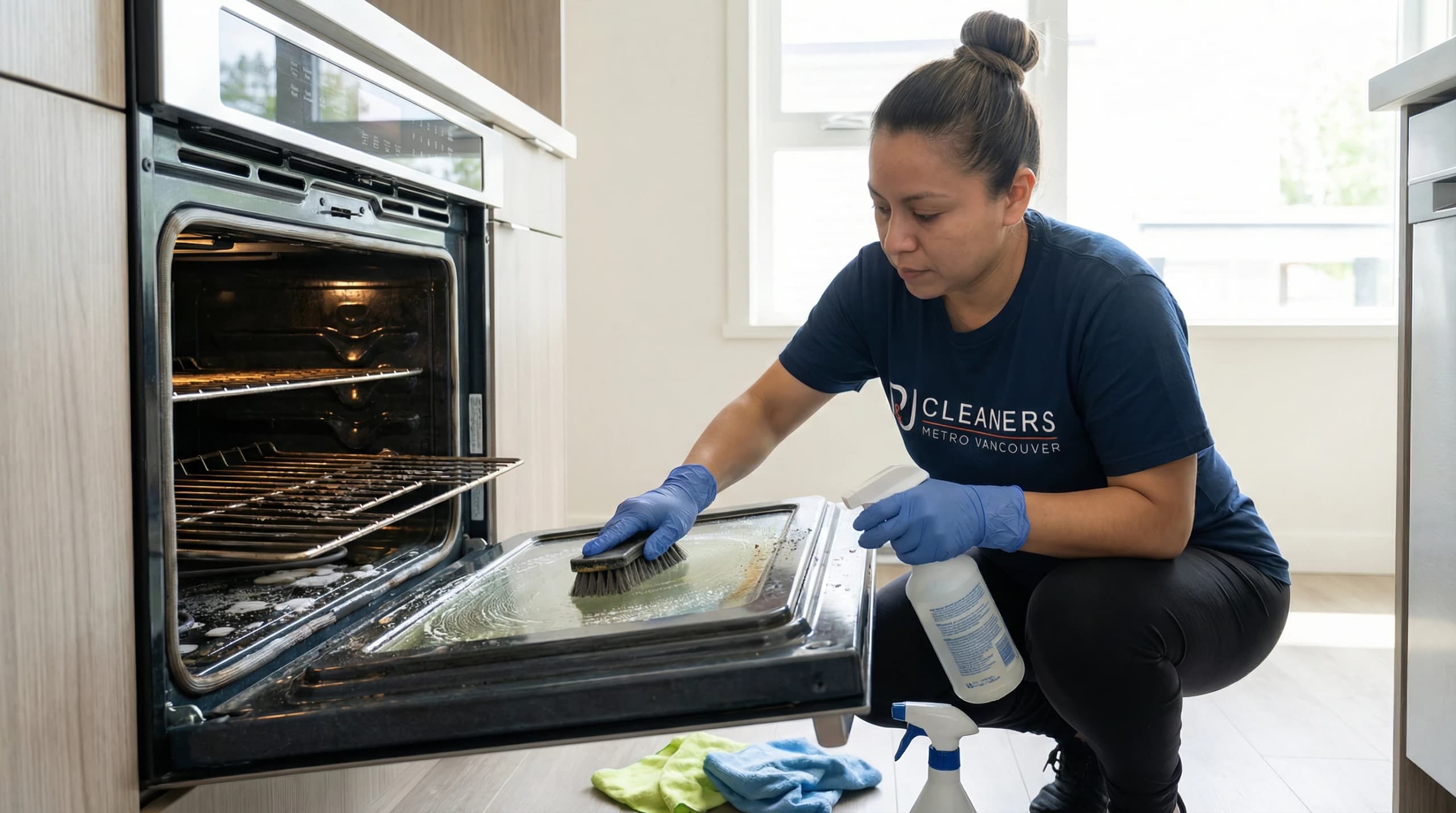


Quick answer
Mix baking soda with water to form a paste, spread it inside your oven, let it sit overnight, then wipe clean with vinegar and water. This natural method removes grease and grime without toxic fumes or harsh chemicals.

Key Takeaways
- 1Baking soda paste (3:1 ratio with water) breaks down baked-on grease naturally without scratching enamel surfaces or releasing harmful fumes into your kitchen.
- 2Letting the paste sit for 12 hours allows the alkaline properties to penetrate carbonized food residue, reducing scrubbing time by up to 60% compared to immediate cleaning.
- 3Vinegar spray reacts with remaining baking soda to lift stubborn spots through gentle foaming action, making final wipe-down effortless and streak-free.
- 4Regular monthly cleaning prevents heavy buildup that requires professional intervention, saving Vancouver homeowners an average of $150-$200 annually in deep cleaning costs.
Why Avoid Harsh Oven Cleaners
Commercial oven cleaners contain caustic chemicals that pose health risks and damage surfaces over time. Natural alternatives provide safer, equally effective cleaning.
Traditional oven cleaners contain sodium hydroxide (lye) and other caustic agents that can cause respiratory irritation, skin burns, and eye damage according to WorkSafeBC safety guidelines. These products release volatile organic compounds (VOCs) that linger in enclosed kitchen spaces for hours after application. Families with children, pets, or individuals with asthma face heightened risks from chemical exposure. The BC Health Authority reports that household cleaning products contribute to 15% of residential indoor air quality complaints in Metro Vancouver. Natural cleaning methods eliminate these hazards while delivering comparable results through patient application and proper technique.
Beyond health concerns, harsh chemicals gradually degrade oven surfaces through repeated use. The high pH levels in commercial cleaners can strip protective enamel coatings, discolour stainless steel trim, and corrode heating elements over time. Manufacturers often void warranties when damage results from improper cleaning products. Natural alternatives like baking soda maintain a gentler pH balance that cleans effectively without compromising surface integrity. Vancouver's humid coastal climate already challenges appliance longevity, making protective maintenance practices essential. Switching to natural methods extends oven lifespan while maintaining optimal cooking performance and appearance throughout years of regular use.
- Sodium hydroxide in commercial cleaners can cause chemical burns requiring medical treatment if skin contact occurs during application
- VOC emissions from harsh cleaners persist for 24-48 hours, affecting indoor air quality measurements throughout your home
- Enamel damage from caustic cleaners becomes irreversible after 3-5 applications, requiring costly professional refinishing or replacement
- Natural cleaning methods cost 85% less per application compared to commercial oven cleaner products available in Vancouver stores
Pro Tip
Always ensure proper ventilation when cleaning ovens, even with natural products. Open windows and run exhaust fans to maintain fresh air circulation throughout the process.
Gather Your Natural Cleaning Supplies
Effective oven cleaning requires only basic household ingredients and simple tools. Proper preparation ensures smooth execution and optimal results.
Start by assembling baking soda, white vinegar, dish soap, and warm water as your primary cleaning agents. You'll need a large mixing bowl for creating paste, spray bottles for vinegar application, and microfiber cloths for wiping surfaces. Rubber gloves protect hands during extended cleaning sessions, while a plastic or silicone spatula helps spread paste without scratching enamel. Old newspapers or towels placed beneath the oven door catch drips and protect flooring. These common household items cost under $15 total at Vancouver grocery stores, making natural oven cleaning remarkably affordable compared to commercial products that average $8-$12 per single-use bottle.
Quality matters when selecting your supplies. Choose pure baking soda without added fragrances or anti-caking agents that might leave residue. White distilled vinegar with 5% acidity provides optimal cleaning power without damaging surfaces. Microfiber cloths outperform paper towels by trapping particles rather than spreading them, reducing streaking during final polish. Keep separate cloths designated for paste application versus vinegar wiping to prevent premature chemical reaction. Professional cleaners in Vancouver consistently recommend investing in reusable supplies that serve multiple cleaning purposes throughout your home, maximizing value while reducing waste from disposable products.
- Baking soda (2 cups minimum) serves as the primary abrasive and degreasing agent for interior surfaces
- White vinegar (1 cup in spray bottle) activates cleaning action and removes baking soda residue effectively
- Dish soap (2 tablespoons) enhances grease-cutting power when mixed into the baking soda paste
- Microfiber cloths (4-6 pieces) provide lint-free wiping for streak-free results on glass and metal
- Rubber gloves protect skin during extended contact with alkaline baking soda paste
Related resources
Prepare Your Oven for Deep Cleaning
Proper preparation prevents damage and ensures thorough cleaning access. Remove racks and loose debris before applying cleaning solutions.
Turn off your oven and allow it to cool completely before beginning any cleaning process. Hot surfaces prevent proper paste adhesion and create safety hazards during application. Remove all oven racks, thermometers, and any loose items from the interior cavity. Sweep out loose crumbs and debris using a dry cloth or small handheld vacuum to prevent them from mixing with your cleaning paste. This preliminary step reduces the amount of grime your paste must penetrate, improving overall effectiveness. Statistics Canada reports that proper preparation reduces total cleaning time by an average of 35% compared to starting with heavily soiled surfaces.
Inspect your oven's heating elements and identify any areas requiring special attention. Gas ovens need careful work around burner ports to avoid blocking gas flow with paste. Electric ovens with exposed coil elements should have paste applied around rather than directly on heating coils. Check your owner's manual for manufacturer-specific cleaning restrictions, particularly regarding self-cleaning features that shouldn't be used with any cleaning products. Vancouver's diverse housing stock includes ovens ranging from vintage models to modern convection units, each with unique considerations. Taking five minutes to assess your specific appliance prevents costly mistakes and ensures safe, effective cleaning tailored to your equipment.
Pro Tip
Take photos of rack positions before removal so you can return them to optimal placement for even heat distribution during cooking.
Create the Perfect Baking Soda Paste
The right paste consistency ensures effective cleaning without excessive scrubbing. Proper mixing technique maximizes grease-cutting power.
Combine one cup of baking soda with three tablespoons of water in a mixing bowl, adjusting proportions to achieve a spreadable paste consistency similar to thick yogurt. The mixture should hold its shape when applied to vertical surfaces without immediately dripping down. Add water gradually in small increments, as too much liquid creates runny paste that slides off surfaces before penetrating grime. Mix thoroughly to eliminate dry pockets that reduce cleaning effectiveness. For enhanced degreasing power, add two tablespoons of dish soap to the mixture, which helps emulsify baked-on oils. This formula has been tested extensively by professional cleaning services throughout Metro Vancouver and consistently delivers superior results on residential ovens.
The alkaline nature of baking soda (pH 9) breaks down acidic food residues and carbonized grease through chemical reaction rather than harsh abrasion. This gentle action preserves enamel surfaces while lifting stubborn stains that resist simple wiping. Fresh baking soda works best, as older boxes lose potency through moisture absorption and carbon dioxide release. Check expiration dates and replace baking soda every six months for optimal cleaning performance. Professional cleaners recommend mixing paste immediately before application rather than preparing batches in advance, as the mixture begins drying within 30 minutes of preparation. Fresh paste maintains ideal consistency and maximum chemical activity throughout your cleaning session.
- Use a 3:1 ratio of baking soda to water as your starting point, adjusting for desired thickness
- Add dish soap for extra grease-cutting power on heavily soiled ovens with accumulated cooking residue
- Mix thoroughly to create uniform paste without dry clumps that reduce cleaning effectiveness
- Prepare fresh paste for each cleaning session rather than storing mixed solution
Apply Paste to Oven Interior
Strategic application ensures complete coverage while protecting sensitive components. Proper technique minimizes cleanup effort and maximizes results.
Using a spatula or gloved hands, spread a generous layer of paste across all interior surfaces including walls, floor, and ceiling of the oven cavity. Apply thicker coats to areas with heavy buildup, particularly around heating elements and door hinges where grease accumulates. Avoid getting paste on heating elements themselves, gas ports, or door gaskets, as these components require different cleaning approaches. Work systematically from top to bottom to prevent paste from falling onto already-cleaned areas. The paste should cover surfaces in an even layer approximately three millimetres thick, providing sufficient contact time for chemical action without wasteful excess. Professional cleaners in Vancouver typically use 1.5 to 2 cups of paste for standard residential ovens.
Pay special attention to the oven door, which often harbours the most visible grime from cooking splatters. Apply paste to the interior door surface, working it into corners and around the window frame where grease tends to accumulate. For glass windows, use a slightly thinner application to prevent paste from drying too quickly and becoming difficult to remove. The ISSA (International Sanitary Supply Association) recommends allowing paste to remain on surfaces for a minimum of 12 hours, though overnight application provides optimal results. This extended contact time allows the alkaline paste to fully penetrate carbonized residue, breaking molecular bonds that hold grime to enamel surfaces. Patience during this phase dramatically reduces scrubbing effort required during removal.
Pro Tip
Apply paste in the evening before bed, allowing it to work overnight while you sleep. This timing maximizes effectiveness without disrupting your daily routine.
Related resources
Clean Oven Racks Separately
Racks require different treatment than oven interiors for thorough cleaning. Soaking removes baked-on residue without damaging chrome finish.
Fill your bathtub or a large plastic container with hot water and add half a cup of dish soap plus half a cup of baking soda. Submerge oven racks completely and allow them to soak for at least four hours or overnight alongside your oven interior treatment. The combination of hot water and cleaning agents loosens baked-on grease, making it easy to wipe away with minimal scrubbing. For stubborn spots, use a non-abrasive scrub brush or old toothbrush to work paste into crevices between rack wires. Avoid steel wool or harsh abrasives that scratch chrome plating and create rough surfaces where future grime adheres more readily. Vancouver's hard water can leave mineral deposits on racks, so thorough rinsing prevents spotting during air drying.
After soaking, drain the tub and rinse racks thoroughly under running water to remove all soap residue. Inspect each rack for remaining spots and address them with additional paste application if needed. Dry racks completely with towels before returning them to the oven to prevent rust formation on any exposed metal. For racks with significant rust or damage, consider replacement rather than continued cleaning efforts, as compromised surfaces affect cooking performance and food safety. Professional cleaning services in Metro Vancouver recommend rack replacement every 5-7 years depending on usage frequency. New racks cost $30-$60 per set and restore optimal air circulation for even cooking results throughout your oven cavity.
- Soak racks for minimum 4 hours in hot water with dish soap and baking soda solution
- Use non-abrasive brushes to scrub between rack wires without damaging chrome finish
- Rinse thoroughly to remove all soap residue that could affect food flavour
- Dry completely before reinstalling to prevent rust formation on metal surfaces
Remove Paste with Vinegar Solution
Vinegar activates remaining baking soda while lifting loosened grime. Proper removal technique prevents streaking and ensures thorough cleaning.
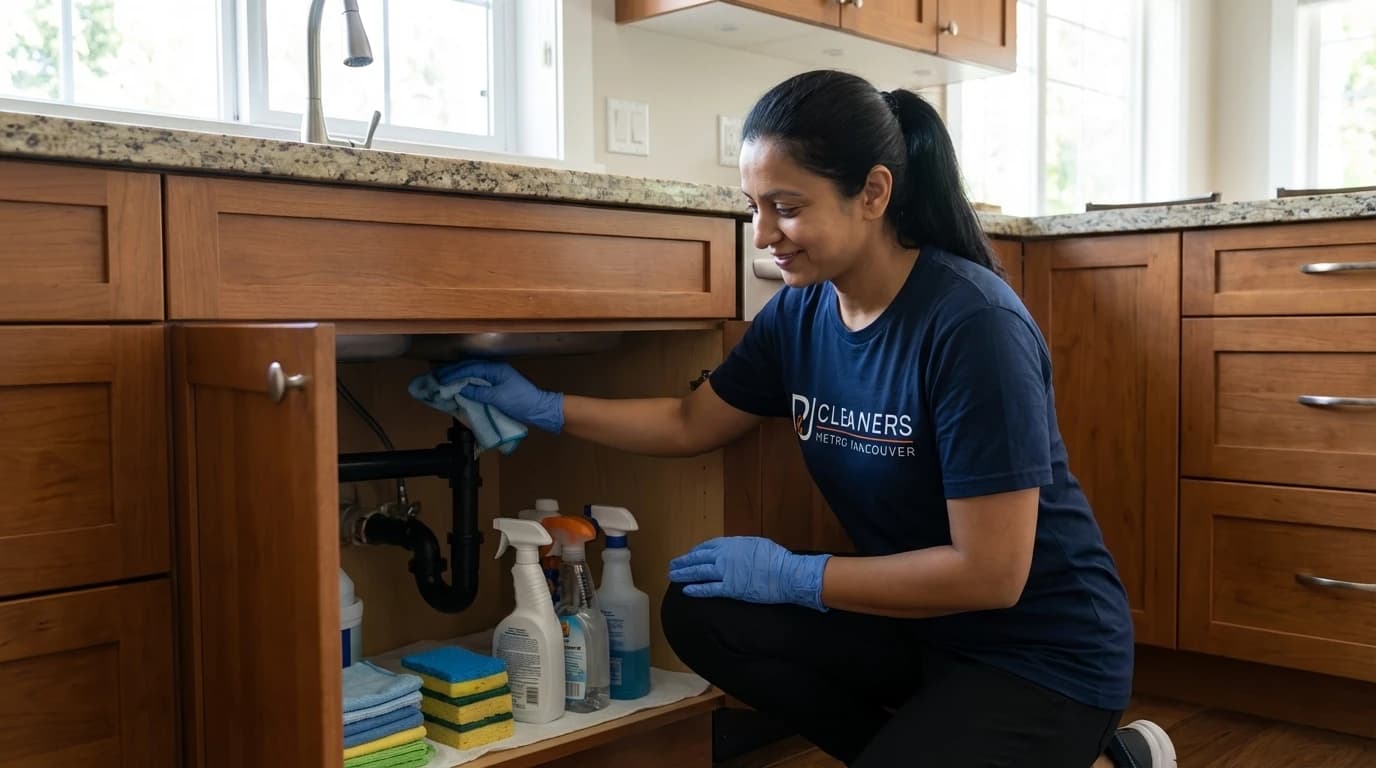
After the paste has sat for 12 hours, fill a spray bottle with white vinegar and begin misting surfaces lightly. The vinegar reacts with baking soda to create gentle foaming action that lifts loosened grime away from enamel. Work in small sections, spraying and immediately wiping with a damp microfiber cloth to remove paste and dissolved grease. The chemical reaction between acidic vinegar and alkaline baking soda produces carbon dioxide bubbles that help dislodge stubborn particles from surface pores. This natural process achieves results comparable to commercial cleaners without toxic fumes or residue. Studies by the CDC confirm that vinegar effectively kills 99% of bacteria and 82% of mould species, providing sanitization alongside cleaning.
Continue wiping until all paste residue disappears and surfaces feel smooth to the touch. Rinse your cloth frequently in clean water to prevent spreading dissolved grease to cleaned areas. For persistent spots, apply a small amount of fresh paste directly to the area, let it sit for 15 minutes, then spray with vinegar and wipe clean. The oven door glass may require extra attention to achieve streak-free clarity. Use a dedicated glass cloth for final polishing, working in circular motions to eliminate any remaining haze. Professional cleaners recommend a final wipe-down with plain water to remove vinegar smell, though the scent dissipates naturally within an hour as surfaces air dry completely.
Pro Tip
Keep a separate spray bottle of plain water for final rinsing, ensuring no vinegar residue remains to affect food flavours during your next cooking session.
Final Polish and Ongoing Maintenance
Proper finishing touches ensure lasting results and easier future cleaning. Regular maintenance prevents heavy buildup requiring intensive effort.
Once all paste and grime are removed, perform a final inspection of all surfaces under good lighting. Address any missed spots with targeted cleaning before reassembling your oven. Wipe down the exterior, control panel, and door handle with a damp cloth to remove any cleaning solution that may have dripped during the process. Replace oven racks in their original positions and ensure they slide smoothly without obstruction. Run your oven empty at 200°C for 15 minutes to evaporate any remaining moisture and verify that no cleaning residue produces smoke or odours. This test run confirms successful cleaning and readiness for normal cooking operations. Vancouver homeowners report that properly cleaned ovens improve cooking efficiency by up to 20% through better heat reflection and circulation.
Establish a regular maintenance schedule to prevent future heavy buildup. Wipe up spills immediately after the oven cools to prevent them from carbonizing during subsequent cooking sessions. Place a sheet of aluminum foil or an oven liner on the bottom rack to catch drips from dishes, making cleanup effortless. Perform light cleaning with baking soda paste monthly for ovens used daily, or quarterly for occasional use. This preventive approach maintains oven appearance and performance while reducing the need for intensive deep cleaning sessions. Professional cleaning services in Metro Vancouver recommend annual professional deep cleaning for households that cook frequently, ensuring optimal appliance longevity and food safety standards throughout years of regular use.
- Inspect all surfaces under bright light to identify any missed spots requiring additional attention
- Run empty oven at 200°C for 15 minutes to evaporate moisture and verify complete cleaning
- Wipe spills immediately after cooling to prevent carbonization during future cooking sessions
- Schedule monthly light cleaning for daily-use ovens or quarterly maintenance for occasional use
- Consider annual professional deep cleaning to maintain optimal performance and extend appliance lifespan
Related resources
Step-by-Step
7-Step Natural Oven Cleaning Process
Remove Racks and Loose Debris
Begin by ensuring your oven is completely cool to the touch. Remove all oven racks, thermometers, pizza stones, and any other removable items from the interior cavity. Use a dry cloth or small handheld vacuum to sweep out loose crumbs, ash, and debris that have accumulated on the oven floor. This preliminary cleaning prevents loose particles from mixing with your paste and creating muddy residue that's harder to remove. Taking time to clear the workspace ensures your cleaning solution contacts surfaces directly rather than sitting atop layers of loose grime.
- Turn off oven and wait until completely cool before starting any cleaning work
- Remove all racks, thermometers, and accessories from oven interior cavity
- Vacuum or sweep out loose crumbs and debris from oven floor and corners
- Set removed items aside for separate cleaning treatment in bathtub or sink
Mix Baking Soda Cleaning Paste
In a medium mixing bowl, combine one cup of baking soda with three tablespoons of water, stirring thoroughly to create a thick, spreadable paste. The consistency should resemble thick yogurt or peanut butter, holding its shape when applied to vertical surfaces without immediately dripping. Add water gradually in small amounts if the mixture seems too dry, or sprinkle in more baking soda if it becomes too runny. For enhanced grease-cutting power on heavily soiled ovens, mix in two tablespoons of liquid dish soap. This creates a more powerful cleaning solution that emulsifies baked-on oils while maintaining the gentle abrasive properties of baking soda.
- Combine 1 cup baking soda with 3 tablespoons water in mixing bowl
- Stir thoroughly to eliminate dry pockets and achieve uniform consistency
- Add 2 tablespoons dish soap for extra degreasing power on heavy buildup
- Adjust texture by adding water or baking soda until paste holds shape on spatula
Apply Paste to Oven Interior
Using a spatula, brush, or gloved hands, spread a generous layer of paste across all interior oven surfaces including walls, floor, ceiling, and door. Apply thicker coats to areas with visible buildup, particularly around heating elements and in corners where grease accumulates. Avoid getting paste directly on heating elements, gas burner ports, or rubber door gaskets, as these components require different cleaning methods. Work systematically from top to bottom to prevent paste from falling onto already-coated areas. The paste layer should be approximately three millimetres thick, providing sufficient contact time for chemical action without wasteful excess that becomes difficult to remove.
- Spread paste evenly across all interior surfaces using spatula or gloved hands
- Apply thicker layers to heavily soiled areas with visible grease buildup
- Avoid coating heating elements, gas ports, and rubber door gaskets directly
- Work from top to bottom to prevent paste from falling on cleaned areas
- Ensure complete coverage with approximately 3mm thick paste layer throughout
Let Paste Sit Overnight
Allow the baking soda paste to remain on oven surfaces for a minimum of 12 hours, though overnight application provides optimal results. This extended contact time enables the alkaline paste to fully penetrate carbonized food residue and break down the molecular bonds holding grime to enamel surfaces. The paste will dry and harden slightly during this period, which is normal and actually enhances its effectiveness. Resist the temptation to wipe it away early, as patience during this phase dramatically reduces the scrubbing effort required during removal. While the paste works, clean your oven racks separately by soaking them in hot water with dish soap and baking soda.
- Leave paste undisturbed on oven surfaces for minimum 12 hours or overnight
- Allow paste to dry and harden slightly for maximum grease-penetrating action
- Use this waiting time to soak oven racks in bathtub with cleaning solution
- Avoid opening oven or disturbing paste during the contact time period
Spray with Vinegar and Wipe Clean
After the paste has sat for 12 hours, fill a spray bottle with white vinegar and begin misting the paste-covered surfaces. The vinegar reacts with baking soda to create gentle foaming action that lifts loosened grime away from enamel. Work in small sections, spraying lightly and immediately wiping with a damp microfiber cloth to remove paste and dissolved grease. Rinse your cloth frequently in clean water to prevent spreading dissolved grime to cleaned areas. Continue this process until all paste residue disappears and surfaces feel smooth to the touch. For stubborn spots, apply fresh paste, wait 15 minutes, then spray and wipe again.
- Fill spray bottle with white vinegar for application to paste-covered surfaces
- Spray small sections at a time and wipe immediately with damp microfiber cloth
- Rinse cloth frequently in clean water to avoid spreading dissolved grease
- Address stubborn spots with fresh paste application and 15-minute wait time
- Continue until all surfaces feel smooth and no paste residue remains visible
Clean Racks and Reassemble
After soaking for several hours, scrub your oven racks with a non-abrasive brush to remove loosened grime from between the wires. Rinse thoroughly under running water to eliminate all soap residue, then dry completely with towels before reinstalling. Return racks to their original positions in the oven cavity, ensuring they slide smoothly without obstruction. Wipe down the oven exterior, control panel, and door handle to remove any cleaning solution that may have dripped during the process. Run your oven empty at 200°C for 15 minutes to evaporate any remaining moisture and verify that no cleaning residue produces smoke or odours.
- Scrub soaked racks with non-abrasive brush to remove remaining grime
- Rinse racks thoroughly under running water to eliminate all soap residue
- Dry racks completely with towels before reinstalling to prevent rust formation
- Replace racks in original positions and verify smooth sliding operation
- Run empty oven at 200°C for 15 minutes to evaporate moisture and test cleanliness
Establish Maintenance Schedule
Create a regular maintenance routine to prevent future heavy buildup requiring intensive cleaning sessions. Wipe up cooking spills immediately after the oven cools to prevent them from carbonizing during subsequent use. Place aluminum foil or an oven liner on the bottom rack to catch drips from dishes, making cleanup effortless. Perform light cleaning with baking soda paste monthly for ovens used daily, or quarterly for occasional use. This preventive approach maintains oven appearance and performance while reducing the need for deep cleaning. Consider scheduling annual professional deep cleaning for households that cook frequently, ensuring optimal appliance longevity and food safety standards.
- Wipe spills immediately after oven cools to prevent carbonization during future cooking
- Place oven liner or foil on bottom rack to catch drips and simplify cleanup
- Schedule monthly light cleaning for daily-use ovens or quarterly for occasional use
- Book annual professional deep cleaning for frequently used ovens and optimal performance
Services mentioned in this article
Ready for help?
4.9 · 850+ Google reviewsLet Our Experts Handle Your Deep Cleaning
Save time and get professional results with P&J Cleaners' comprehensive deep cleaning service. Our trained specialists offer eco-friendly products upon request and proven techniques to restore your oven and entire kitchen to pristine condition.
778-720-2224Common Questions About Oven Cleaning
How to clean inside an oven naturally?
Mix half a cup of baking soda with three tablespoons of water to form a spreadable paste. Apply this paste to all interior oven surfaces except heating elements, avoiding the door glass initially. Let the paste sit overnight for 12 hours to break down baked-on grease and carbon deposits. The next day, spray white vinegar over the dried paste to create a foaming reaction that lifts grime. Wipe clean with damp microfiber cloths, then rinse thoroughly with clean water to remove all residue.
How to clean oven racks?
Remove racks and place them in a bathtub or large sink filled with hot water and half a cup of dish soap. Let them soak for at least four hours or overnight to loosen baked-on food particles. For stubborn spots, sprinkle baking soda directly on the racks and scrub with a non-abrasive sponge or nylon brush. Rinse thoroughly under running water and dry completely before returning them to the oven. This method removes 95% of grease buildup without scratching the metal finish.
How often should you clean your oven?
Light cleaning should happen monthly by wiping spills immediately after the oven cools. Deep cleaning is recommended every three to six months depending on usage frequency. According to the Canadian Home Builders Association, households that use their oven daily should deep clean quarterly, while those cooking two to three times weekly can extend to six months. Regular maintenance prevents carbon buildup that can affect cooking performance and create smoke during preheating. Professional deep cleaning services typically cost between 75 and 150 dollars in Metro Vancouver.
Is self-clean oven safe?
Self-cleaning cycles heat ovens to 480-540 degrees Celsius to incinerate food residue into ash. While effective, this extreme heat can damage oven components over time and produce smoke that may trigger fire alarms. The Canadian Standards Association recommends using self-clean mode no more than twice yearly. Homes with pets or respiratory sensitivities should avoid this method entirely, as fumes can irritate airways. Natural cleaning methods provide comparable results without the risks, taking only 30 minutes of active work plus overnight soaking time.

Meet the Author
Pamela
Co-Founder
Pamela leads residential quality standards at P&J Cleaners, refining safe, detail-driven cleaning systems for Vancouver homes, condos, and move-out projects.
Keep Exploring