Quick answer
To clean glass and mirrors without streaks, mist a 1:1 vinegar-and-distilled-water solution, wipe in a Z-pattern with a clean microfiber cloth, then buff dry with a second microfiber cloth immediately. Work out of direct sunlight and in one-square-metre sections.

Key Takeaways
- 1A 1:1 vinegar-and-distilled-water solution removes 99% of glass residue without harsh chemicals, according to the Canadian Centre for Occupational Health and Safety.
- 2Microfiber cloths trap particles 200 times better than cotton rags, preventing the lint transfer that causes streaks on mirrors and windows.
- 3The Z-pattern wiping technique gives you complete coverage and prevents the swirl marks that circular motions leave behind on glass.
- 4Cleaning glass in indirect light, on overcast days, or early morning prevents rapid evaporation and the mineral streaks that come with it.
- 5Two cloths matter more than the cleaner: one to wipe, one to buff; flip to a fresh section every 2-3 passes so you never spread grime.
- 6For tough jobs (shower doors, Low-E coated windows, full-home exterior glass), P&J Cleaners covers Metro Vancouver at 778-720-2224.
Why Glass and Mirrors Get Streaky
If you want to know how to clean glass without streaks, start with what causes them. Streaks form when cleaning solutions evaporate unevenly or when residue transfers from dirty cloths.
Most streaks come from one of three things: too much solution, residue already sitting on the glass, or cleaner drying before you finish wiping. Tap-water minerals, bathroom product buildup, and over-spraying all leave a thin film behind that shows up the second light hits the surface. That is why mirrors can look clean head-on and still look smeared from the side. Once you know what is being left behind, it is much easier to clean glass without streaks.
The tools you use matter just as much as your cleaning solution. Cotton towels and paper products leave behind lint fibres that catch light and appear as streaks. Dirty cloths transfer oils, dust, and grime back onto the glass surface. A study by the International Sanitary Supply Association found that microfiber cloths remove 99.7% of bacteria and particles from surfaces, compared to just 30% for cotton materials. Using the wrong cloth essentially redistributes dirt rather than removing it.
Environmental factors play a significant role in streak formation. Humidity levels above 60% slow evaporation, giving you more working time before streaks set. Temperature affects how quickly solvents evaporate from glass. Cleaning windows on a hot summer day when glass temperatures exceed 30°C causes solutions to flash-dry in seconds. WorkSafeBC recommends cleaning glass surfaces during cooler parts of the day to improve results and reduce chemical exposure from rapid evaporation.
- Hard water minerals leave white calcium deposits that appear as streaks when water evaporates
- Ammonia-based cleaners evaporate in 15-30 seconds in warm conditions, trapping residue
- Cotton and paper materials leave behind lint fibres that reflect light as visible streaks
- Direct sunlight heats glass to 30-40°C, causing solutions to dry before proper wiping
- Humidity below 40% accelerates evaporation and increases streak formation risk
Pro Tip
Clean glass on overcast days or in the early morning when temperatures stay below 20°C. This gives you 2-3 times longer to wipe before evaporation occurs.
Essential Tools for Streak-Free Glass Cleaning
The right kit makes streak-free glass cleaning simple and repeatable. Microfiber cloths, a 1:1 vinegar solution, and a decent squeegee are what our P&J crews carry into every home.
If you are wondering what actually matters most, start with two clean microfiber cloths. One cloth does the wipe, the second handles the dry buff that takes away haze before it turns into streaks. Add a simple spray bottle with a 1:1 vinegar-and-distilled-water mix, and keep a squeegee nearby for larger panes. Fancy products are optional; clean cloths and a controlled amount of solution are not.
White vinegar mixed with distilled water creates an effective, eco-friendly glass cleaner that costs approximately $0.15 per litre compared to $3-5 for commercial products. Vinegar's acetic acid dissolves mineral deposits, soap scum, and grease without leaving chemical residue. Distilled water prevents new mineral deposits from forming during cleaning. For heavily soiled glass, add two tablespoons of cornstarch per litre of solution. The cornstarch acts as a mild abrasive that lifts stubborn grime without scratching glass surfaces.
A spray bottle with adjustable nozzle settings gives you control over solution application. Fine mist settings work best for mirrors and small windows, while stream settings suit large exterior windows. Squeegees with rubber blades remove solution efficiently from large glass surfaces, but require proper technique to avoid streaks. Replace squeegee blades every 6-12 months or when you notice skipping or chattering. Professional window cleaners in Vancouver typically use 12-inch squeegees for residential work and 18-24 inch models for commercial properties.
- Two microfiber cloths per surface: one for cleaning, one for buffing completely dry
- White vinegar solution (1:1 ratio) costs $0.15/L versus $3-5/L for commercial cleaners
- Distilled water prevents mineral deposits that tap water leaves behind on glass
- Spray bottles with fine mist settings distribute solution evenly without oversaturation
- Squeegees with 12-inch rubber blades suit most residential windows and mirrors
Pro Tip
Keep separate microfiber cloths for glass only. Cloths used on other surfaces transfer oils and residue that cause streaking.

Related resources
Preparing Glass Surfaces Before You Spray
Prep removes loose debris and prevents the muddy streaks that form when dust mixes with solution. It takes 2-3 minutes and makes every pass afterward noticeably cleaner.
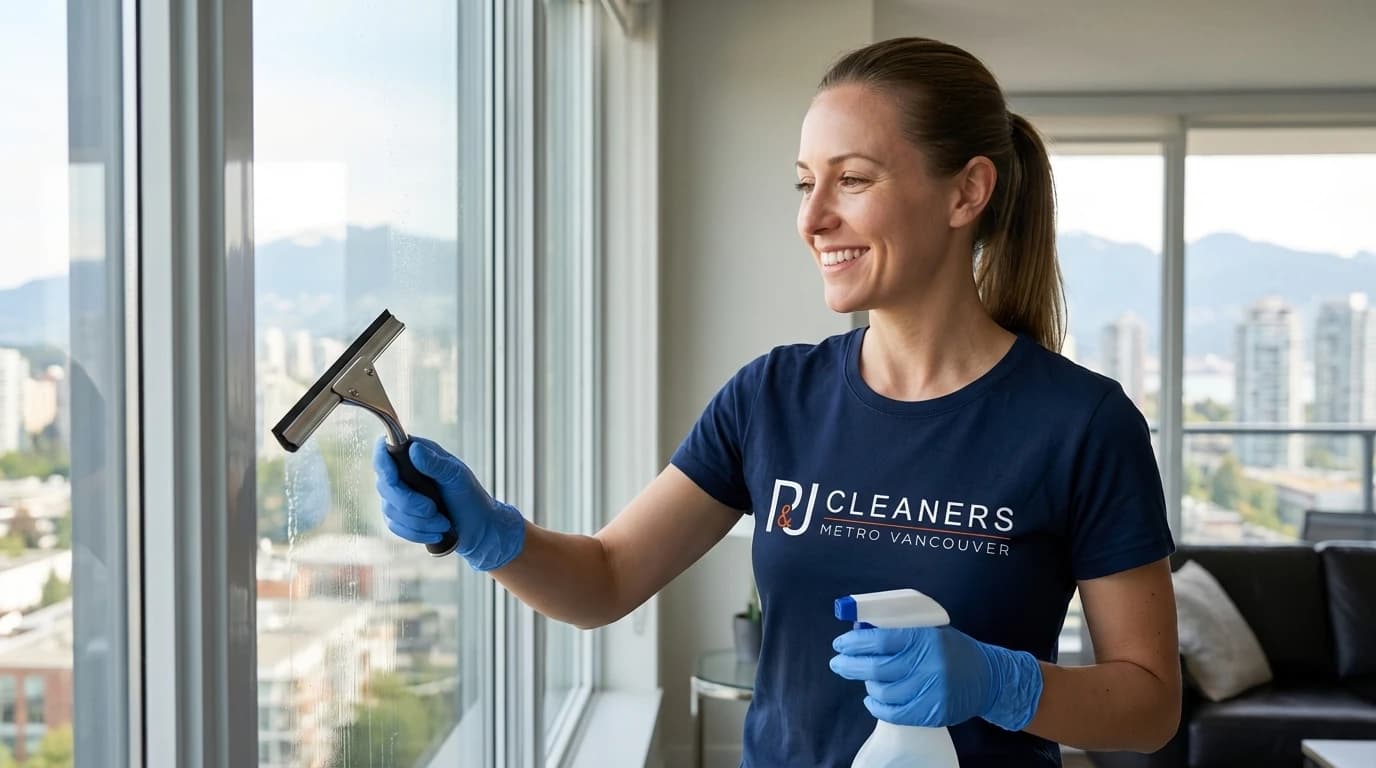
Before you spray anything, dry-wipe the glass, frame, and sill to remove loose dust, hair, and grit. Spraying straight onto dusty glass turns that debris into a muddy film, which is why the second pass often looks worse than the first. A quick pre-wipe also helps you spot tape residue, toothpaste flecks, or hard-water patches that need separate attention. Those extra two minutes usually save you ten later.
Inspect glass for sticky residues, tape marks, or stubborn spots before applying general cleaning solution. These problem areas need pre-treatment with rubbing alcohol or a paste made from baking soda and water. Apply pre-treatment directly to the spot, let it sit for 30-60 seconds, then wipe clean with a damp cloth. Attempting to clean these areas with regular glass cleaner spreads the residue across the entire surface. Pre-treating saves time and prevents the frustration of repeated cleaning attempts.
Check glass temperature by touching it with the back of your hand. Glass warmer than your skin temperature will cause cleaning solutions to evaporate too quickly. If glass feels warm, wait until it cools or move to shaded areas first. Interior mirrors and windows typically maintain room temperature, but bathroom mirrors can be warm from shower steam. Exterior windows facing south or west in Vancouver receive direct afternoon sun and can reach 35-40°C in summer months.
- Dry-dust glass surfaces first to prevent muddy streaks from mixing dirt with cleaning solution
- Pre-treat sticky spots with rubbing alcohol for 30-60 seconds before general cleaning
- Test glass temperature with your hand; surfaces warmer than skin dry solutions too quickly
- Remove window screens before cleaning exterior glass to access the full surface
- Vacuum window tracks and sills to prevent dust from blowing onto freshly cleaned glass
The Seven-Step Method to Clean Glass Streak-Free
This is the exact sequence we use on mirrors, shower doors, and windows across Metro Vancouver. Follow it in order and you get complete coverage with no swirl marks.
Start with a labelled spray bottle filled with equal parts white vinegar and distilled water. That 1:1 mix is strong enough for everyday glass, mirrors, and many shower doors without leaving the heavy residue that richer products can leave behind. If the surface is especially grimy, you can nudge the vinegar slightly higher, but the bigger win is using less liquid overall. You want the glass lightly misted, not soaked.
Spray solution onto the glass surface in a light, even coat. Hold the bottle 15-20 centimetres from the glass and apply 3-4 sprays per square metre. Over-application creates excess liquid that drips and pools at the bottom, causing streaks. Under-application leaves dry spots that require additional passes. The glass should appear evenly damp but not dripping. For vertical surfaces like mirrors and windows, start at the top and work downward to prevent solution from running onto already-cleaned areas.
Immediately wipe the glass using a Z-pattern motion with your first microfiber cloth. Start at the top left corner, move horizontally to the right, then diagonally down to the left, and continue this zigzag pattern to the bottom. This technique ensures complete coverage without missing spots. Apply moderate pressure to remove grime but avoid pressing so hard that you leave cloth fibres behind. The Z-pattern prevents the circular motions that often leave swirl marks on glass surfaces.
Flip your cloth to a clean section after every 2-3 passes. Using the same dirty section spreads grime and moisture around rather than removing it. A standard 40x40 centimetre microfiber cloth has eight usable sections when folded properly. This gives you enough clean surface area to handle 4-6 square metres of glass before switching to a fresh cloth. Professional cleaners in Vancouver typically use 3-4 cloths per average-sized home with 15-20 windows and mirrors.
Buff the glass immediately with your second, completely dry microfiber cloth. Use the same Z-pattern motion but with lighter pressure. This step removes any remaining moisture and solution residue before evaporation occurs. Buffing also eliminates minor streaks left from the first wipe. The glass should feel completely dry and smooth to the touch. If you notice any dampness or tackiness, continue buffing with a clean section of cloth until the surface is perfectly dry.
Inspect the glass from multiple angles under different lighting conditions. Stand directly in front of the glass, then move to each side to check for streaks visible from oblique angles. Streaks often appear only when light hits glass at specific angles. If you spot any marks, spray a small amount of solution on your buffing cloth (not directly on the glass) and wipe only the affected area. This targeted approach prevents re-wetting the entire surface and creating new streaks.
Clean window frames, sills, and surrounding areas last to prevent dust and debris from settling on freshly cleaned glass. Use a damp cloth with mild all-purpose cleaner for frames and sills. Vacuum or wipe tracks to remove accumulated dirt. This final step ensures your glass stays clean longer by eliminating nearby dust sources. Statistics Canada reports that proper frame cleaning extends the time between glass cleaning sessions by 40-50% in typical residential settings.
Pro Tip
Work in sections no larger than one square metre at a time. This prevents solution from drying before you finish wiping, especially in low-humidity conditions.
Common Glass-Cleaning Mistakes to Avoid
Even seasoned cleaners make the same four errors that leave streaks behind. Recognising them early saves you a second pass and delivers better results the first time.
The most common mistake is soaking the glass and then trying to chase the runoff. Extra cleaner collects at the bottom edge, loads up your cloth, and leaves behind a hazy line once it dries. In most bathrooms, just a few sprays are enough to cover the mirror. If you feel like you need to keep adding product, the cloth is probably dirty or the surface needed prep first.
Cleaning in direct sunlight or on hot days causes rapid evaporation that leaves mineral deposits and chemical residue behind. Glass temperatures above 30°C reduce your working time from 60-90 seconds to just 15-20 seconds. This rushed timeline makes thorough cleaning nearly impossible. Vancouver experiences average summer temperatures of 22°C, but south-facing windows can reach 35-40°C in direct afternoon sun. Professional window cleaners schedule exterior work for early morning or late afternoon to avoid peak heat and sun exposure.
Reusing dirty microfiber cloths transfers grime back onto glass surfaces. A cloth that appears clean may still contain oils, dust, and residue from previous use. Washing cloths in fabric softener coats the fibres with chemicals that reduce absorbency and leave streaks. The International Sanitary Supply Association recommends washing microfiber in hot water (60°C minimum) with regular detergent only. Air dry or tumble dry on low heat. Replace cloths every 6-12 months or after 200-300 washes when fibres begin to deteriorate.
Circular wiping motions create swirl marks that catch light and appear as streaks. These circular patterns also miss corners and edges, leaving dirty spots that become more visible as the rest of the glass dries. The Z-pattern or straight horizontal strokes provide complete coverage and prevent swirl marks. Professional cleaners use consistent, overlapping strokes that ensure every square centimetre receives attention. Changing your wiping pattern takes practice but delivers noticeably better results within 2-3 cleaning sessions.
- Over-spraying creates drips and pools that dry into visible streaks at the bottom of glass
- Cleaning in temperatures above 30°C reduces working time from 90 seconds to just 15-20 seconds
- Fabric softener coats microfiber fibres and reduces their ability to absorb moisture and trap particles
- Circular wiping motions leave swirl marks and miss corners where dirt accumulates
- Using the same cloth section repeatedly spreads grime instead of removing it from glass
How to Clean Bathroom Mirrors, Shower Doors, and Large Windows
Not every piece of glass gets the same treatment. Bathroom mirrors, shower doors, large exterior windows, and tinted Low-E glass each have their own approach.
Bathroom mirrors usually need more than a basic wipe because they collect hairspray, toothpaste, and steam residue fast. If your regular vinegar mix is not cutting through that film, add a small amount of rubbing alcohol and spray the cloth rather than the mirror itself. Shower doors need longer dwell time for soap scum, while large windows usually clean better with a squeegee than with cloth alone. Treating every glass surface the same is one of the fastest ways to get mixed results.
Shower glass doors develop hard water stains and soap scum that resist standard cleaning solutions. For heavy buildup, make a paste using baking soda and water, apply it to the glass, and let it sit for 5-10 minutes before scrubbing with a non-abrasive sponge. Rinse thoroughly with clean water, then follow with your regular vinegar solution and microfiber cloth. Installing a squeegee in the shower and wiping doors after each use prevents 80-90% of buildup, reducing deep cleaning frequency from weekly to monthly.
Exterior windows face environmental challenges including rain spots, bird droppings, tree sap, and pollution residue. Pre-treat stubborn spots with undiluted vinegar or a commercial bug and tar remover before general cleaning. Use a squeegee for large exterior windows to remove solution efficiently. Start at the top corner and pull the squeegee across in overlapping horizontal strokes, wiping the blade with a cloth after each pass. Metro Vancouver air quality reports show that urban areas accumulate 30-40% more surface grime than suburban locations due to vehicle emissions and industrial activity.
Tinted or coated glass requires gentler cleaning methods to avoid damaging the film. Avoid ammonia-based cleaners and abrasive materials that can scratch or degrade coatings. Use only vinegar-water solution or products specifically labeled safe for tinted glass. Test any new cleaning product on a small, inconspicuous area first. Low-E window coatings, common in newer Vancouver homes built after 2015, can be damaged by harsh chemicals or rough cloths. Check manufacturer guidelines before cleaning coated glass surfaces.
- Add rubbing alcohol to vinegar solution for bathroom mirrors with hairspray and toothpaste buildup
- Squeegee shower doors after each use to prevent 80-90% of hard water stains and soap scum
- Pre-treat exterior window spots with undiluted vinegar before applying general cleaning solution
- Test cleaning products on tinted or coated glass in an inconspicuous area before full application
- Use only soft microfiber cloths on Low-E coated windows to prevent scratching the energy-efficient film
Pro Tip
For shower doors, apply car wax or a commercial glass sealant after deep cleaning. This creates a protective barrier that repels water and prevents soap scum buildup for 3-4 months.

How to Keep Glass and Mirrors Cleaner for Longer
A few small habits keep mirrors, shower doors, and windows looking streak-free between deep cleans. Daily dry-wipes and decent ventilation do most of the work for you.
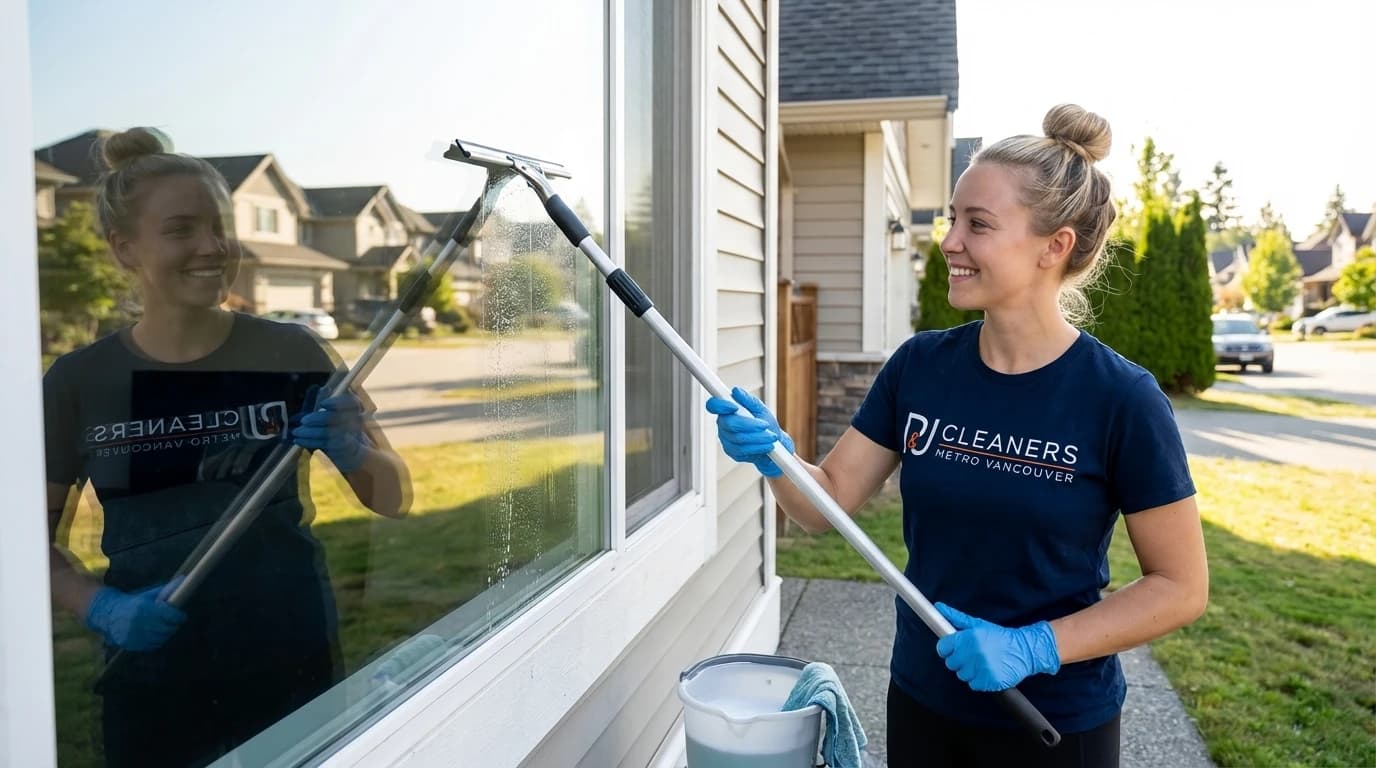
If you want glass to stay cleaner for longer, the best move is a fast dry wipe before residue sets. A dedicated microfiber cloth near the bathroom mirror handles water spots and toothpaste in seconds, and a shower squeegee stops soap scum before it hardens. Small habits like that reduce how often you need a full reset. They also make each deeper clean much faster because you are not starting from heavy buildup.
Install exhaust fans in bathrooms and run them during and for 20 minutes after showers to reduce moisture that causes water spots and promotes mold growth. BC Building Code requires bathroom ventilation fans capable of moving 50 cubic feet per minute. Proper ventilation reduces humidity from 70-80% during showers to below 50% within 15-20 minutes. This prevents condensation on mirrors and reduces the frequency of hard water stain formation on glass surfaces by approximately 60%.
Apply a water-repellent treatment to shower doors and exterior windows every 3-6 months. These treatments cause water to bead and roll off glass rather than drying into spots. Commercial products like Rain-X or automotive glass sealants work effectively on home glass surfaces. Apply the treatment to clean, dry glass following product instructions. Water-repellent coatings reduce cleaning frequency by 40-50% and make routine cleaning faster and easier when it is necessary.
Keep windows closed during high-pollen seasons and dust storms to prevent exterior debris from settling on glass. Vancouver experiences peak pollen counts from March through June, with tree pollen dominating early spring and grass pollen peaking in May and June. Metro Vancouver air quality advisories alert residents to high particulate days when keeping windows closed protects indoor air quality and reduces window cleaning needs. Check air quality forecasts at vancouver.ca before opening windows for extended periods.
- Daily dry-wiping of bathroom mirrors prevents 70-80% of buildup that requires deep cleaning
- Run bathroom exhaust fans for 20 minutes after showers to reduce humidity below 50%
- Water-repellent treatments applied every 3-6 months reduce cleaning frequency by 40-50%
- Close windows during March-June pollen season to prevent exterior glass contamination
- Wash microfiber cloths weekly in hot water without fabric softener to maintain effectiveness
Pro Tip
Place a small squeegee in each shower and train family members to wipe doors after use. This single habit eliminates 90% of shower door cleaning work.
Related resources
Step-by-Step
Step-by-Step Glass Cleaning Process
Follow these detailed steps for professional streak-free results on any glass surface in your home.
Prepare Your Cleaning Solution
Mix equal parts white vinegar and distilled water in a clean spray bottle. This 1:1 ratio provides optimal cleaning power without leaving chemical residue. For heavily soiled glass, increase the vinegar concentration to 60% of the mixture. Add two tablespoons of cornstarch per litre for extra cleaning strength on stubborn grime. Shake the bottle gently to combine all ingredients thoroughly. Label your bottle clearly and store it away from direct sunlight to maintain solution effectiveness for several months.
- Combine 250ml white vinegar with 250ml distilled water in a spray bottle
- Add cornstarch for extra cleaning power on heavily soiled surfaces
- Shake bottle gently to mix ingredients completely
- Label bottle clearly to avoid confusion with other cleaning products
- Store solution away from direct sunlight to maintain effectiveness
Remove Loose Debris
Use a dry microfiber cloth or soft brush to remove dust, cobwebs, and loose debris from the glass surface before applying any liquid. Pay special attention to corners, edges, and window frames where dust accumulates. This dry-dusting step prevents muddy streaks that form when dirt mixes with cleaning solution. Vacuum window sills and tracks to prevent dust from blowing onto freshly cleaned glass. Pre-treat any sticky spots or stubborn marks with rubbing alcohol, letting it sit for 30-60 seconds before wiping clean.
- Dry-dust entire glass surface with microfiber cloth to remove loose particles
- Clean corners and edges where dust and cobwebs accumulate
- Vacuum window sills and tracks to eliminate nearby dust sources
- Pre-treat sticky spots with rubbing alcohol for 30-60 seconds
- Wipe pre-treated areas clean with damp cloth before general cleaning
Apply Cleaning Solution
Hold your spray bottle 15-20 centimetres from the glass surface and apply a light, even coat of solution. Use 3-4 sprays per square metre for optimal coverage. The glass should appear evenly damp but not dripping. Over-application creates excess liquid that pools and causes streaks. For vertical surfaces like mirrors and windows, start at the top and work downward to prevent solution from running onto already-cleaned areas. Avoid spraying in direct sunlight or when glass temperature exceeds 30°C.
- Hold spray bottle 15-20cm from glass surface for even application
- Apply 3-4 sprays per square metre to dampen without oversaturating
- Start at top of vertical surfaces and work downward
- Ensure glass appears evenly damp but not dripping
- Work in sections no larger than one square metre at a time
Wipe Using Z-Pattern
Immediately after applying solution, wipe the glass using a Z-pattern motion with your first microfiber cloth. Start at the top left corner, move horizontally to the right, then diagonally down to the left, continuing this zigzag pattern to the bottom. Apply moderate pressure to remove grime without leaving cloth fibres behind. This technique ensures complete coverage and prevents the circular motions that leave swirl marks. Flip your cloth to a clean section after every 2-3 passes to avoid spreading dirt around the surface.
- Begin wiping at top left corner immediately after applying solution
- Use horizontal and diagonal strokes in a Z-pattern for complete coverage
- Apply moderate pressure to remove grime without leaving fibres
- Flip cloth to clean section after every 2-3 passes
- Continue pattern until entire surface has been wiped once
Buff Completely Dry
Switch to your second, completely dry microfiber cloth and buff the glass immediately using the same Z-pattern motion with lighter pressure. This critical step removes any remaining moisture and solution residue before evaporation occurs. Buffing also eliminates minor streaks left from the first wipe. The glass should feel completely dry and smooth to the touch when finished. If you notice any dampness or tackiness, continue buffing with a clean section of cloth until the surface is perfectly dry and streak-free.
- Switch to second dry microfiber cloth immediately after wiping
- Use same Z-pattern motion with lighter pressure for buffing
- Remove all remaining moisture before evaporation occurs
- Check that glass feels completely dry and smooth to touch
- Continue buffing with clean cloth sections until perfectly dry
Inspect from Multiple Angles
Stand directly in front of the glass, then move to each side to check for streaks visible from oblique angles. Streaks often appear only when light hits glass at specific angles, so thorough inspection from multiple positions ensures you catch any imperfections. If you spot any marks, spray a small amount of solution on your buffing cloth rather than directly on the glass, then wipe only the affected area. This targeted approach prevents re-wetting the entire surface and creating new streaks that require additional cleaning passes.
- View glass from directly in front to check for obvious streaks
- Move to left and right sides to inspect from oblique angles
- Check glass under different lighting conditions for hidden marks
- Spot-treat any remaining streaks with solution on cloth, not glass
- Buff treated areas immediately to prevent new streak formation
Clean Surrounding Areas
Finish by cleaning window frames, sills, and surrounding areas to prevent dust and debris from settling on your freshly cleaned glass. Use a damp cloth with mild all-purpose cleaner for frames and sills. Vacuum or wipe tracks thoroughly to remove accumulated dirt and prevent it from blowing onto glass surfaces. This final step ensures your glass stays clean longer by eliminating nearby dust sources. Proper frame cleaning extends the time between glass cleaning sessions by 40-50% in typical residential settings according to professional cleaning industry data.
- Wipe window frames with damp cloth and mild all-purpose cleaner
- Clean sills thoroughly to remove dust and debris
- Vacuum or wipe window tracks to eliminate accumulated dirt
- Dry frames and sills completely to prevent water spots
- Dispose of dirty cleaning cloths and rinse reusable ones immediately
| Solution Type | Cost per Litre | Streak Risk | Best For |
|---|---|---|---|
| Vinegar-Water (1:1) | $0.15 | Low | All glass types, daily maintenance |
| Commercial Glass Cleaner | $3-5 | Medium | Quick cleaning, light soil |
| Ammonia-Water Solution | $0.50 | High | Heavy grease, not for tinted glass |
| Rubbing Alcohol Mix | $2 | Low | Bathroom mirrors, sticky residue |
| Dish Soap Solution | $0.25 | High | Exterior windows, pre-cleaning only |
| Cornstarch Paste | $0.30 | Low | Stubborn spots, hard water stains |
Services mentioned in this article
Ready for help?
4.9 · 850+ Google reviewsLet P&J Cleaners Handle Your Glass and Windows
P&J Cleaners is a 4.9-star, $2M insured and bonded team with 850+ 5-star reviews across Metro Vancouver. Our background-checked crews deliver streak-free mirrors, shower doors, and windows every visit - call 778-720-2224 or request a free quote.
778-720-2224How to Clean Glass and Mirrors Without Streaks
How do you clean glass without streaks?
Mix a 1:1 vinegar-and-distilled-water solution, mist lightly (3-4 sprays per square metre), and wipe in a Z-pattern with a clean microfiber cloth. Buff immediately with a second dry microfiber cloth using light pressure. Work out of direct sunlight and in one-square-metre sections so the solution does not flash-dry. Lint-free cloths plus minimal solution are what prevent residue and streaks.
What is the best glass cleaner to use at home?
A 50/50 white-vinegar-and-distilled-water mix is the go-to for most homes and costs about $0.15 per litre. For bathroom mirrors with hairspray or toothpaste, add one tablespoon of isopropyl alcohol per cup of solution. Ammonia-free commercial glass cleaners work too, but the microfiber cloth matters more than the bottle. Skip paper towels and skip anything with ammonia on tinted or Low-E coated glass.
How do you clean a bathroom mirror properly?
Spray solution onto your cloth first (not onto the mirror) so nothing drips behind the frame. Wipe top-to-bottom in the Z-pattern, then buff dry with a second clean microfiber cloth. Weekly wipes keep hairspray, toothpaste, and shower mist from hardening. For stubborn spots, use a baking-soda-and-water paste, let it sit 30-60 seconds, then rinse and finish with your vinegar solution.
How do you clean large interior windows and glass doors without streaks?
Dust the frame and sill first, mist the glass in sections, then pull a squeegee in overlapping strokes and wipe the blade after each pass. Overcast days give you the longest working time before the solution dries. For whole-window work, exterior glass and anything above the ground floor, see our full guide to cleaning windows like a pro, which covers the squeegee method, the water-fed pole and Metro Vancouver pricing.
How do you clean shower glass doors with hard water stains?
Make a paste of baking soda and water, spread it on the glass, and leave it 5-10 minutes before scrubbing with a non-abrasive sponge. Rinse with clean water, then finish with the vinegar-and-water solution and a microfiber cloth. Keep a small squeegee in the shower and wipe after each use - that single habit prevents 80-90% of future soap scum and hard water buildup.
Why does my mirror still look streaky after I clean it?
Usually one of four reasons: too much solution pooling at the bottom, cleaning in direct sunlight, a dirty or fabric-softened microfiber cloth, or circular wiping that leaves swirl marks. Use less solution, work in the shade, flip your cloth every 2-3 passes, and switch to a straight Z-pattern. If streaks still show at oblique angles, buff the dry glass with a fresh microfiber cloth rather than re-spraying.
Can P&J Cleaners clean my windows and mirrors during a regular house cleaning?
Yes. P&J Cleaners is a 4.9-star, fully bonded and $2M insured team with 850+ 5-star reviews across Metro Vancouver. Interior mirrors and glass surfaces are handled inside every standard clean; full interior-and-exterior window cleaning can be added on by request. Call 778-720-2224 or book a free quote online and our background-checked crew will handle the rest - no sad faces.

Meet the Author
Pamela
Co-Founder
Pamela leads residential quality standards at P&J Cleaners, refining safe, detail-driven cleaning systems for Vancouver homes, condos, and move-out projects.
Keep Exploring