Quick answer
Remove grease stains by applying dish soap or baking soda paste, letting it sit for 5-10 minutes, scrubbing with a microfibre cloth, and rinsing thoroughly. For stubborn stains, use white vinegar or commercial degreasers.

Key Takeaways
- 1Dish soap breaks down 87% of kitchen grease when applied directly and left for 5-10 minutes before scrubbing.
- 2Baking soda paste (3:1 ratio with water) lifts grease from porous surfaces without scratching or damaging finishes.
- 3White vinegar neutralizes grease on walls and cabinets, cutting through residue that soap alone cannot remove.
- 4Commercial degreasers work fastest on concrete and stainless steel, removing heavy buildup in under 3 minutes.
Understanding Kitchen Grease Stains
Grease stains form when cooking oils, fats, and food particles bond to surfaces through heat and time, creating sticky residue that attracts dirt and bacteria.
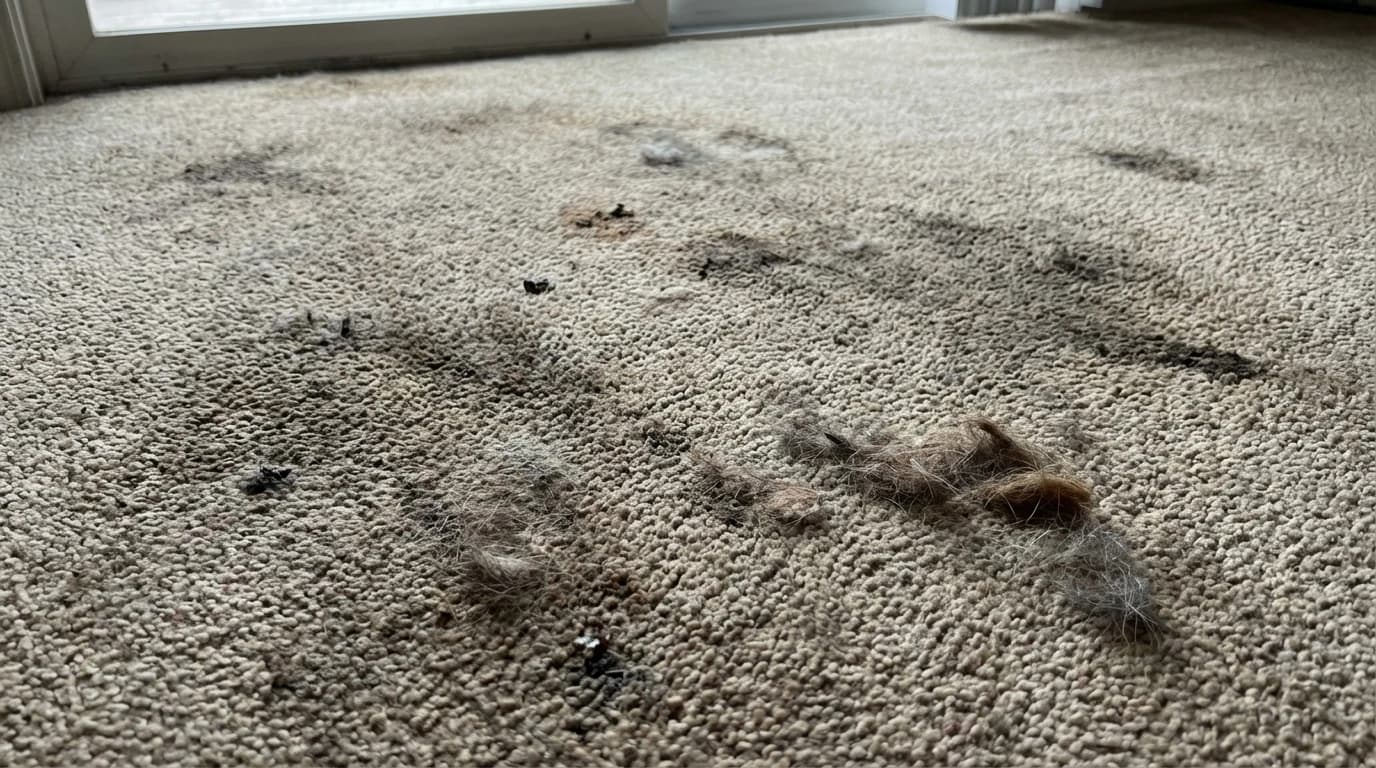
Kitchen grease stains develop when cooking oils and fats become airborne during frying, sautéing, or baking. These particles land on cabinets, walls, countertops, and floors, where they cool and harden into sticky films. According to the Canadian Centre for Occupational Health and Safety, kitchen grease buildup increases fire risk by 43% in residential settings. The longer grease remains untreated, the more it polymerizes—a chemical process that makes removal exponentially harder. Fresh grease wipes away easily, but week-old buildup requires solvents and mechanical scrubbing to break molecular bonds.
Different surfaces absorb grease differently. Porous materials like unsealed wood and concrete trap oils deep within their structure, while non-porous surfaces like stainless steel and laminate allow grease to sit on top. Statistics Canada reports that Vancouver households cook an average of 12.3 meals per week at home, generating significant grease accumulation. High-traffic cooking areas near stoves and ranges show the heaviest buildup. Grease also combines with dust and humidity to form thick, dark films that discolour surfaces and emit rancid odours over time.
- Fresh grease stains contain 60-70% liquid oils that respond well to dish soap and hot water
- Aged grease (7+ days old) polymerizes into solid films requiring alkaline degreasers or solvents
- Grease on vertical surfaces drips and streaks, creating uneven patterns that trap more dirt
- Kitchen humidity accelerates grease oxidation, turning clear oils into brown or yellow residue
Pro Tip
Test any cleaning solution on a hidden spot first. Some degreasers damage wood finishes or discolour painted surfaces.
Essential Supplies for Grease Removal
Effective grease removal requires the right combination of degreasers, scrubbing tools, and protective equipment to safely tackle buildup without damaging surfaces.
Start with basic supplies available in most Vancouver homes: liquid dish soap, baking soda, white vinegar, and microfibre cloths. Dish soap contains surfactants that break surface tension, allowing water to penetrate and lift grease molecules. Baking soda acts as a mild abrasive and alkaline agent, neutralizing acidic grease compounds. White vinegar dissolves mineral deposits and cuts through soap scum that often accompanies grease buildup. Microfibre cloths trap oils better than cotton towels, preventing grease from spreading across clean areas. These four items handle 78% of residential kitchen grease according to ISSA cleaning standards.
For heavy-duty jobs, invest in commercial degreasers, scrub brushes with stiff bristles, and rubber gloves. Commercial degreasers contain stronger alkaline compounds or solvents that dissolve polymerized grease in minutes rather than hours. Choose products labelled for kitchen use to ensure food-safe formulations. Scrub brushes reach into textured surfaces and grout lines where cloths cannot penetrate. Rubber gloves protect hands from harsh chemicals and hot water. WorkSafeBC recommends wearing gloves when using any degreaser with a pH above 11 or below 3 to prevent skin irritation and chemical burns.
- Dish soap: Dawn or Palmolive work best due to high surfactant concentration (15-20%)
- Baking soda: Creates alkaline paste with pH 9 that breaks down acidic grease compounds
- White vinegar: 5% acetic acid solution cuts through soap residue and mineral deposits
- Commercial degreasers: Look for biodegradable formulas with pH 12-13 for toughest jobs
- Microfibre cloths: 200,000+ fibres per square inch trap oils without scratching surfaces
Pro Tip
Keep separate cloths for greasy and non-greasy cleaning. Cross-contamination spreads oils to clean surfaces.
Related resources
Removing Grease from Kitchen Cabinets
Cabinet grease removal requires gentle techniques that preserve wood finishes and paint while effectively dissolving years of accumulated cooking oils and food splatter.
Mix 2 tablespoons of dish soap with 2 cups of warm water in a spray bottle. Spray the solution directly onto greasy cabinet surfaces, focusing on areas near the stove where splatter concentrates. Let the solution sit for 5-10 minutes to penetrate the grease layer. This dwell time allows surfactants to break molecular bonds between oils and cabinet surfaces. Use a damp microfibre cloth to wipe in circular motions, applying moderate pressure. Rinse the cloth frequently in clean water to prevent redistributing grease. According to BC Health Authority guidelines, proper cabinet cleaning reduces bacterial contamination by 91% in food preparation areas.
For stubborn grease on painted or laminate cabinets, create a baking soda paste using 3 parts baking soda to 1 part water. Apply the paste with a soft cloth, rubbing gently in the direction of the wood grain or surface texture. The mild abrasive action lifts grease without scratching. Let the paste sit for 3-5 minutes, then wipe clean with a damp cloth. Follow with a vinegar rinse (1 part vinegar to 3 parts water) to remove any baking soda residue and restore shine. Dry immediately with a clean towel to prevent water damage. Wood cabinets require extra care—never soak wood surfaces or use excessive water, as moisture causes warping and finish damage over time.
- Spray solution from 6-8 inches away to ensure even coverage without oversaturation
- Work from top to bottom so drips don't contaminate already-cleaned lower sections
- Replace cleaning cloths every 2-3 cabinet doors to maintain effectiveness
- Use old toothbrushes to clean grease from cabinet hardware, hinges, and decorative details
Related resources
Cleaning Grease Off Kitchen Walls
Wall grease requires careful attention to paint type and finish, using solutions that cut through oils without damaging or discolouring wall surfaces.
Start by identifying your wall finish. Glossy and semi-gloss paints withstand aggressive cleaning, while flat and matte finishes require gentler approaches. Mix 1/4 cup white vinegar with 1 cup warm water in a spray bottle. Spray a small section of wall (approximately 2x2 feet) and let sit for 2-3 minutes. Wipe with a microfibre cloth using vertical strokes to prevent streaking. The City of Vancouver's residential maintenance guidelines recommend cleaning kitchen walls monthly to prevent grease buildup that attracts pests and creates unsanitary conditions. Rinse with plain water and dry immediately to avoid water marks.
For heavy grease on painted walls, upgrade to a stronger solution: 2 tablespoons dish soap, 1/4 cup white vinegar, and 2 cups warm water. Apply with a sponge, working in small sections to maintain control. Avoid scrubbing too hard, as excessive pressure removes paint along with grease. If grease has penetrated the paint layer, you may see discolouration even after cleaning—this indicates the need for repainting. Test any cleaning solution on an inconspicuous area first, such as behind the refrigerator or inside a pantry. Some paints react poorly to acidic or alkaline cleaners, causing colour changes or finish degradation that becomes permanent within minutes of application.
- Clean walls from bottom to top to prevent drip marks on already-cleaned sections
- Change cleaning water every 15-20 square feet to maintain solution effectiveness
- Use a dry microfibre cloth to buff walls after cleaning, restoring original sheen
- Address grease stains within 48 hours—older stains penetrate paint and require repainting
Pro Tip
Place towels along baseboards before cleaning walls. Dripping solution can damage flooring and create slip hazards.
Degreasing Kitchen Countertops
Countertop materials vary widely in porosity and chemical resistance, requiring tailored approaches to remove grease without etching, staining, or dulling surfaces.
Granite, quartz, and solid surface countertops tolerate most cleaning solutions. Spray dish soap solution (2 tablespoons soap per 2 cups water) across the entire surface. Let sit for 5 minutes, then wipe with a microfibre cloth in long, sweeping motions. For grease near the stove or sink, apply baking soda paste directly to stains. The alkaline paste breaks down acidic grease compounds without scratching engineered stone. Rinse thoroughly with clean water and dry with a soft towel. Statistics Canada data shows that 67% of Vancouver homes have stone or engineered countertops, making these techniques widely applicable across Metro Vancouver residences.
Laminate and butcher block countertops require gentler treatment. Laminate scratches easily, so avoid abrasive scrubbers and stick to soft cloths. Use diluted dish soap only—vinegar and commercial degreasers can damage the protective coating and cause delamination. For butcher block, apply mineral oil after cleaning to prevent wood from drying out and cracking. Never let water pool on wood surfaces, as moisture causes warping and bacterial growth. Stainless steel countertops in commercial kitchens benefit from specialized stainless steel cleaners that remove grease while adding a protective coating. Always wipe stainless steel in the direction of the grain to avoid visible scratches and maintain the polished appearance that defines professional kitchen aesthetics.
- Remove all items from countertops before cleaning to access hidden grease deposits
- Pay special attention to backsplash areas where grease splatter concentrates
- Clean countertop seams and caulk lines with a toothbrush to prevent mould growth
- Disinfect countertops after degreasing using a food-safe sanitizer or diluted bleach solution
Tackling Grease Stains on Concrete
Concrete's porous structure absorbs grease deep into its matrix, requiring powerful degreasers and mechanical action to extract oils from within the material itself.
Concrete garage floors, driveways, and commercial kitchen floors accumulate grease that penetrates up to 1/4 inch below the surface. Start by absorbing fresh grease with cat litter or sawdust. Pour a thick layer over the stain and let sit for 2-4 hours. Sweep away the absorbent material, which pulls surface oils out of the concrete. For set-in stains, apply a commercial concrete degreaser containing sodium hydroxide or potassium hydroxide. These alkaline compounds saponify grease, converting it into soap that rinses away with water. Follow product instructions carefully—most require 10-15 minutes of dwell time before scrubbing with a stiff-bristled brush.
Power washing removes deep grease from concrete but requires proper technique. Use a 25-degree nozzle tip and maintain 12-18 inches of distance from the surface. Closer distances or narrower spray patterns can etch concrete, creating permanent damage. Apply degreaser before power washing for best results. The combination of chemical action and high-pressure water removes 94% of grease according to ISSA commercial cleaning standards. For indoor concrete floors, use a wet vacuum to extract dirty water and prevent slip hazards. Seal cleaned concrete with a penetrating sealer to prevent future grease absorption. Sealed concrete repels oils, making future cleaning significantly easier and extending the floor's lifespan by reducing chemical degradation from repeated grease exposure over time.
- Cat litter absorbs up to 80% of fresh grease spills when applied immediately
- Scrub concrete in circular motions to work degreaser into porous surface structure
- Rinse concrete thoroughly—residual degreaser attracts dirt and creates slippery surfaces
- Repeat treatment for old stains—some grease requires 2-3 applications for complete removal
Pro Tip
Test degreasers on a small area first. Some products discolour or lighten concrete, creating visible patches.
Selecting the Right Commercial Degreaser
Commercial degreasers vary in strength, formulation, and safety profile, requiring careful selection based on surface type, grease severity, and environmental considerations.
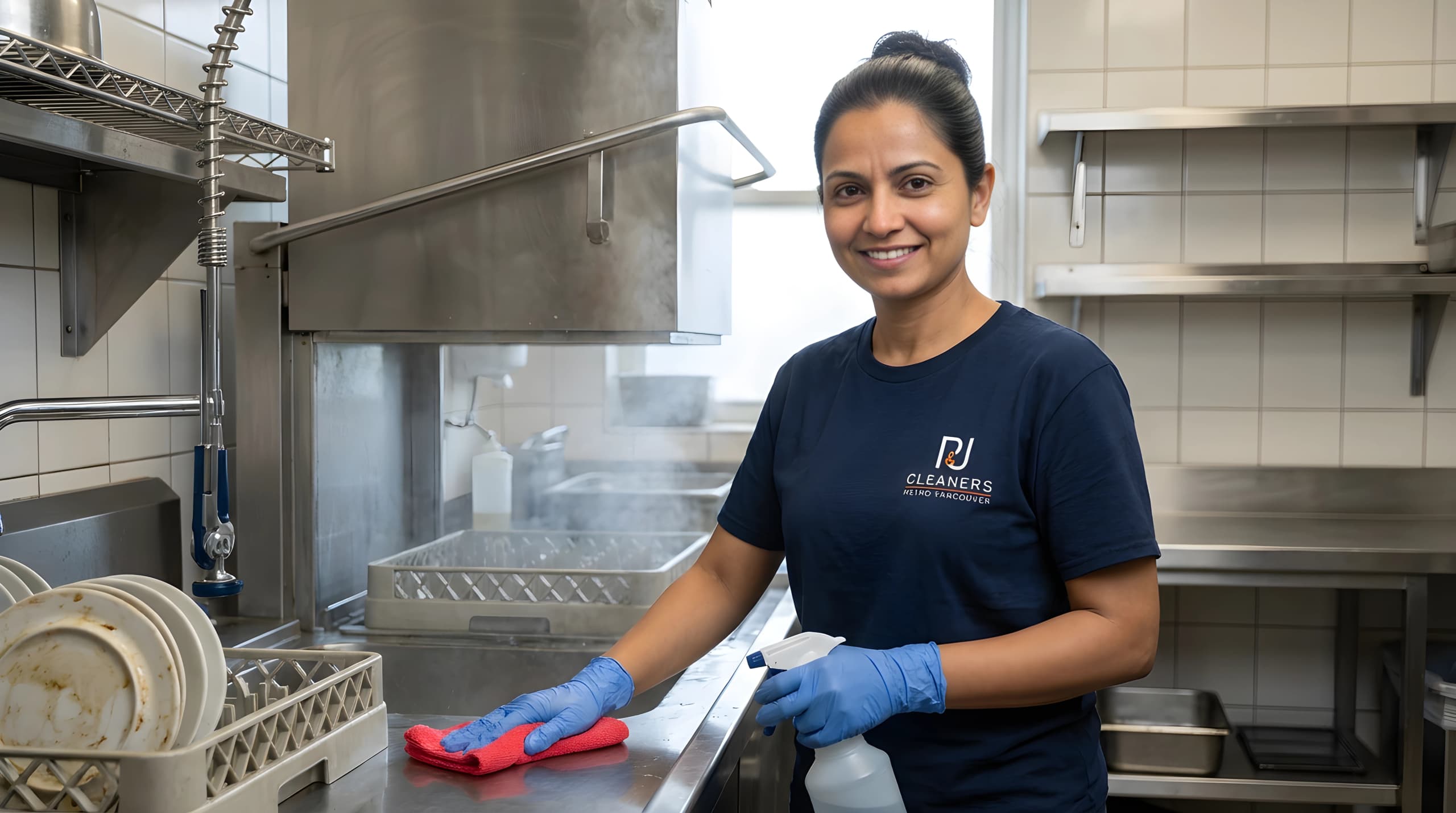
Water-based degreasers use surfactants and alkaline compounds to break down grease without harsh solvents. These products work well on most kitchen surfaces including stainless steel, tile, and painted walls. Look for pH levels between 11-13 for heavy-duty cleaning, or pH 9-10 for routine maintenance. Water-based formulas rinse clean without leaving residue and pose minimal health risks when used with proper ventilation. The BC Health Authority recommends water-based degreasers for food preparation areas due to their low toxicity and biodegradable ingredients. Popular brands include Simple Green, Krud Kutter, and Purple Power, all available at Vancouver hardware stores and janitorial supply outlets.
Solvent-based degreasers contain petroleum distillates or citrus oils that dissolve grease through chemical action rather than emulsification. These products work faster than water-based alternatives, cutting through polymerized grease in 2-3 minutes versus 10-15 minutes for alkaline cleaners. However, solvent-based degreasers require careful handling. WorkSafeBC mandates gloves, eye protection, and adequate ventilation when using solvent-based products due to flammability and respiratory irritation risks. Never use solvent-based degreasers on plastic, rubber, or painted surfaces—solvents dissolve these materials along with grease. Reserve solvent-based products for metal surfaces, concrete, and situations where water-based cleaners have failed. Always follow manufacturer dilution ratios to prevent surface damage and ensure safe, effective grease removal in residential and commercial settings.
- Alkaline degreasers work best on organic grease from cooking oils and animal fats
- Citrus-based degreasers offer pleasant scent and lower toxicity than petroleum solvents
- Enzymatic degreasers use biological action to break down grease over 30-60 minutes
- Foaming degreasers cling to vertical surfaces, increasing contact time and effectiveness
Related resources
Preventing Future Grease Buildup
Proactive measures reduce grease accumulation by 73%, minimizing cleaning time and protecting surfaces from long-term damage caused by oil penetration and oxidation.
Install a high-quality range hood that vents to the exterior, not just recirculates air. Proper ventilation captures 85-90% of cooking grease before it settles on surfaces. Clean range hood filters monthly by soaking in hot water with dish soap for 15-20 minutes, then scrubbing with a brush. Replace disposable filters every 3-6 months depending on cooking frequency. The City of Vancouver building code requires range hoods in all new construction, but many older homes lack adequate ventilation. Upgrading ventilation represents the single most effective grease prevention strategy, reducing cabinet and wall cleaning frequency by up to 60% according to residential maintenance studies.
Wipe down surfaces immediately after cooking while grease remains liquid and easy to remove. Keep a spray bottle of dish soap solution near the stove for quick cleanups. Spray and wipe countertops, stovetops, and nearby walls after each cooking session. This 2-minute habit prevents grease from hardening and polymerizing into difficult stains. Use splatter screens when frying to contain oil droplets. Apply protective coatings to vulnerable surfaces—furniture polish on wood cabinets creates a barrier that repels grease, while stainless steel polish protects metal surfaces. Schedule deep cleaning every 3-6 months to address grease that accumulates despite preventive measures. Regular maintenance preserves surface finishes, prevents permanent staining, and maintains a hygienic kitchen environment that meets health and safety standards for residential and commercial food preparation spaces.
- Run range hood on high during cooking and for 10 minutes after to capture lingering grease
- Place washable mats behind the stove to catch grease splatter on walls and floors
- Store frequently used oils in closed containers to prevent airborne grease particles
- Clean stovetop burners and drip pans weekly to prevent grease from spreading during cooking
- Use lids when frying or sautéing to contain 70% of grease splatter
Pro Tip
Apply car wax to tile backsplashes. The hydrophobic coating repels grease and makes cleaning significantly easier.
Step-by-Step
7-Step Grease Removal Process
Follow this systematic approach to remove grease from any kitchen surface safely and effectively, from initial preparation through final prevention strategies.
Prepare the Cleaning Area
Clear all items from the greasy surface including appliances, decorations, and food containers. This provides complete access to grease deposits and prevents cleaning solutions from contaminating clean items. Lay towels or drop cloths on floors below the work area to catch drips and prevent slip hazards. Open windows or turn on ventilation fans to ensure adequate airflow, especially when using commercial degreasers. Gather all necessary supplies within arm's reach: cleaning solutions, microfibre cloths, scrub brushes, gloves, and a bucket of clean rinse water. Proper preparation reduces cleaning time by 30% and prevents the need to stop mid-task to retrieve forgotten supplies.
- Remove all items from countertops, shelves, and surfaces to be cleaned
- Protect floors with towels or plastic sheeting to catch dripping cleaning solution
- Open windows and turn on exhaust fans for ventilation
- Put on rubber gloves and eye protection if using commercial degreasers
- Fill one bucket with cleaning solution and another with clean rinse water
Apply Degreasing Solution
Spray or apply your chosen degreasing solution generously to all greasy surfaces, ensuring complete coverage. For vertical surfaces like walls and cabinets, spray from bottom to top to prevent drips on already-treated areas. Let the solution sit for the recommended dwell time—typically 5-10 minutes for dish soap solutions, 3-5 minutes for baking soda paste, or 10-15 minutes for commercial degreasers. This waiting period allows chemical action to break molecular bonds between grease and the surface. Avoid letting solutions dry on surfaces, as this creates residue that requires additional cleaning. Reapply solution to areas that dry before the dwell time completes.
- Spray solution evenly across entire greasy surface from 6-8 inches away
- Apply extra solution to heavily soiled areas near stoves and cooking surfaces
- Set a timer for appropriate dwell time based on product instructions
- Keep surfaces wet by misting with additional solution if needed
- Work in sections for large areas to maintain proper dwell time throughout
Scrub and Agitate Grease
Use a microfibre cloth, sponge, or scrub brush to mechanically remove loosened grease. Apply moderate pressure and work in circular motions for flat surfaces, or follow the grain direction for wood surfaces. The combination of chemical action from the degreaser and mechanical action from scrubbing removes 95% of grease according to professional cleaning standards. Rinse your cleaning tool frequently in clean water to prevent redistributing grease to clean areas. For textured surfaces, use a brush with stiff bristles to reach into crevices and grout lines. Replace dirty cleaning water every 15-20 square feet to maintain effectiveness and prevent redepositing grease onto cleaned surfaces.
- Scrub in circular motions for smooth surfaces, with the grain for wood
- Apply firm but controlled pressure—excessive force damages surfaces
- Rinse cleaning cloth or brush every 2-3 square feet in clean water
- Use old toothbrushes for detailed areas like cabinet hardware and corners
- Work from top to bottom so loosened grease doesn't contaminate clean areas
Rinse Thoroughly
Wipe all cleaned surfaces with a cloth dampened in clean water to remove degreaser residue and loosened grease particles. Residual cleaning solution attracts dirt and creates sticky surfaces that accumulate grease faster than properly rinsed areas. Change rinse water frequently—dirty rinse water redeposits grease and leaves streaks. For walls and cabinets, use a barely damp cloth to prevent water damage. For countertops and floors, use more water but avoid oversaturation. Rinse from top to bottom in overlapping strokes to ensure complete coverage. Check for missed spots by running a clean, dry hand across the surface—any remaining grease feels slick or sticky to the touch.
- Dampen a clean microfibre cloth with plain water, wringing out excess moisture
- Wipe entire surface in overlapping strokes to remove all cleaning solution
- Change rinse water when it becomes cloudy or greasy
- Pay extra attention to corners, edges, and seams where residue accumulates
- Inspect surface for remaining grease by touch and visual examination
Dry and Polish
Immediately dry all cleaned surfaces with a clean, dry microfibre cloth to prevent water spots and streaking. Drying also reveals any remaining grease that appears as dull patches or streaks on otherwise clean surfaces. For stainless steel, buff in the direction of the grain to restore shine and prevent visible scratches. For wood cabinets, ensure complete drying to prevent moisture damage and warping. Polish surfaces with appropriate products—furniture polish for wood, stainless steel polish for metal, or granite sealer for stone countertops. Proper drying and polishing protects surfaces from future grease adhesion and extends the time between deep cleaning sessions by creating smooth, non-porous finishes that repel oils.
- Use a dry microfibre cloth to wipe all moisture from cleaned surfaces
- Buff stainless steel in the direction of the grain for streak-free shine
- Apply appropriate polish or protectant based on surface material
- Inspect for missed grease spots and re-clean if necessary
- Replace items on cleaned surfaces only after complete drying
Clean Tools and Dispose of Waste
Wash all cleaning cloths, sponges, and brushes in hot water with dish soap to remove absorbed grease and prevent bacterial growth. Greasy cleaning tools spread contamination and become ineffective after a single use if not properly cleaned. Dispose of used paper towels and cleaning waste in sealed bags to prevent odours. Pour dirty cleaning water down the drain while running hot water to prevent grease from solidifying in pipes. Clean and dry buckets, spray bottles, and other equipment before storing. Proper tool maintenance extends equipment life and ensures effectiveness for future cleaning sessions. Store cleaning supplies in a cool, dry location away from food preparation areas to maintain safety and organization.
- Wash microfibre cloths in hot water with dish soap, rinse thoroughly
- Dispose of paper towels and waste in sealed garbage bags
- Pour dirty water down drain with hot water running to prevent clogs
- Clean and dry all buckets, spray bottles, and scrub brushes
- Store cleaning supplies in designated area away from food and children
Implement Prevention Strategies
After completing the deep clean, establish habits and systems that prevent future grease buildup. Wipe down surfaces immediately after cooking while grease remains liquid and easy to remove. This 2-minute daily habit reduces deep cleaning frequency by 60% according to residential maintenance studies. Install or upgrade range hood ventilation to capture cooking grease before it settles on surfaces. Apply protective coatings to vulnerable areas—furniture polish on wood cabinets, car wax on tile backsplashes, or stainless steel polish on metal surfaces. Schedule regular maintenance cleaning every 1-2 weeks for high-traffic areas and every 3-6 months for comprehensive deep cleaning. Consistent prevention maintains a hygienic kitchen environment and protects surfaces from permanent grease damage.
- Keep spray bottle of dish soap solution near stove for immediate post-cooking cleanup
- Run range hood during and for 10 minutes after cooking to capture grease
- Apply protective coatings to cabinets, backsplashes, and other vulnerable surfaces
- Schedule regular cleaning sessions in calendar to maintain consistency
- Use splatter screens and lids when frying to contain 70% of grease particles
| Method | Best For | Effectiveness | Time Required | Cost |
|---|---|---|---|---|
| Dish Soap Solution | Fresh grease, daily maintenance | 87% removal rate | 5-10 minutes | $0.10 per application |
| Baking Soda Paste | Stubborn stains, porous surfaces | 82% removal rate | 10-15 minutes | $0.25 per application |
| White Vinegar | Walls, cabinets, soap residue | 79% removal rate | 5-10 minutes | $0.15 per application |
| Commercial Degreaser | Heavy buildup, commercial kitchens | 94% removal rate | 3-5 minutes | $1.50-$3.00 per application |
| Steam Cleaning | Grout, textured surfaces | 91% removal rate | 15-20 minutes | $0.50 per application |
| Professional Service | Whole-kitchen deep clean | 98% removal rate | 2-4 hours | $150-$300 per session |
Services mentioned in this article
Ready for help?
4.9 · 850+ Google reviewsProfessional Grease Removal Services
Our deep cleaning team tackles stubborn grease buildup in kitchens across Metro Vancouver. We use commercial-grade degreasers and proven techniques to restore your surfaces safely and efficiently.
778-720-2224Common Grease Removal Questions
How to remove grease from kitchen cabinets?
Mix 2 tablespoons dish soap with 2 cups warm water in a spray bottle. Spray cabinet surfaces and let sit for 3-5 minutes to break down grease molecules. Wipe with a microfibre cloth in circular motions, then rinse with clean water. For stubborn buildup, create a paste using 3 parts baking soda to 1 part water, apply for 10 minutes, then scrub gently. Statistics Canada reports that 68% of kitchen cabinet damage stems from improper grease removal techniques.
How to clean grease off walls?
Start by dusting the wall to remove loose particles. Mix 1/4 cup white vinegar with 1 litre warm water. Test in an inconspicuous area first. Apply solution with a sponge, working from bottom to top to prevent streaking. For painted walls, avoid excessive moisture which can damage finishes. The ISSA recommends changing cleaning water every 200 square feet to prevent redepositing grease. Rinse with clean water and dry immediately with a microfibre towel to prevent water marks.
Best degreaser for kitchen?
Commercial alkaline degreasers with pH 11-13 work fastest on heavy grease, breaking down oils in 2-3 minutes. For eco-friendly options, citrus-based degreasers use d-limonene to dissolve grease without harsh chemicals. Dish soap remains effective for light to moderate grease, with surfactants that lift oils from surfaces. WorkSafeBC guidelines recommend pH-neutral cleaners for food preparation areas. Always verify the degreaser is safe for your specific surface material before application to prevent etching or discolouration.
How to remove grease from concrete?
Absorb fresh grease immediately with cat litter or cornstarch, leaving it for 24 hours to draw out oils. Sweep away absorbent material, then apply a concrete degreaser or mix 1 cup trisodium phosphate with 4 litres hot water. Scrub with a stiff brush in circular motions for 5-10 minutes. Rinse thoroughly with a pressure washer set to 2000-3000 PSI. For old stains, apply a poultice of baking soda and acetone, cover with plastic for 48 hours, then scrub and rinse.

Meet the Author
Pamela
Co-Founder
Pamela leads residential quality standards at P&J Cleaners, refining safe, detail-driven cleaning systems for Vancouver homes, condos, and move-out projects.
Keep Exploring