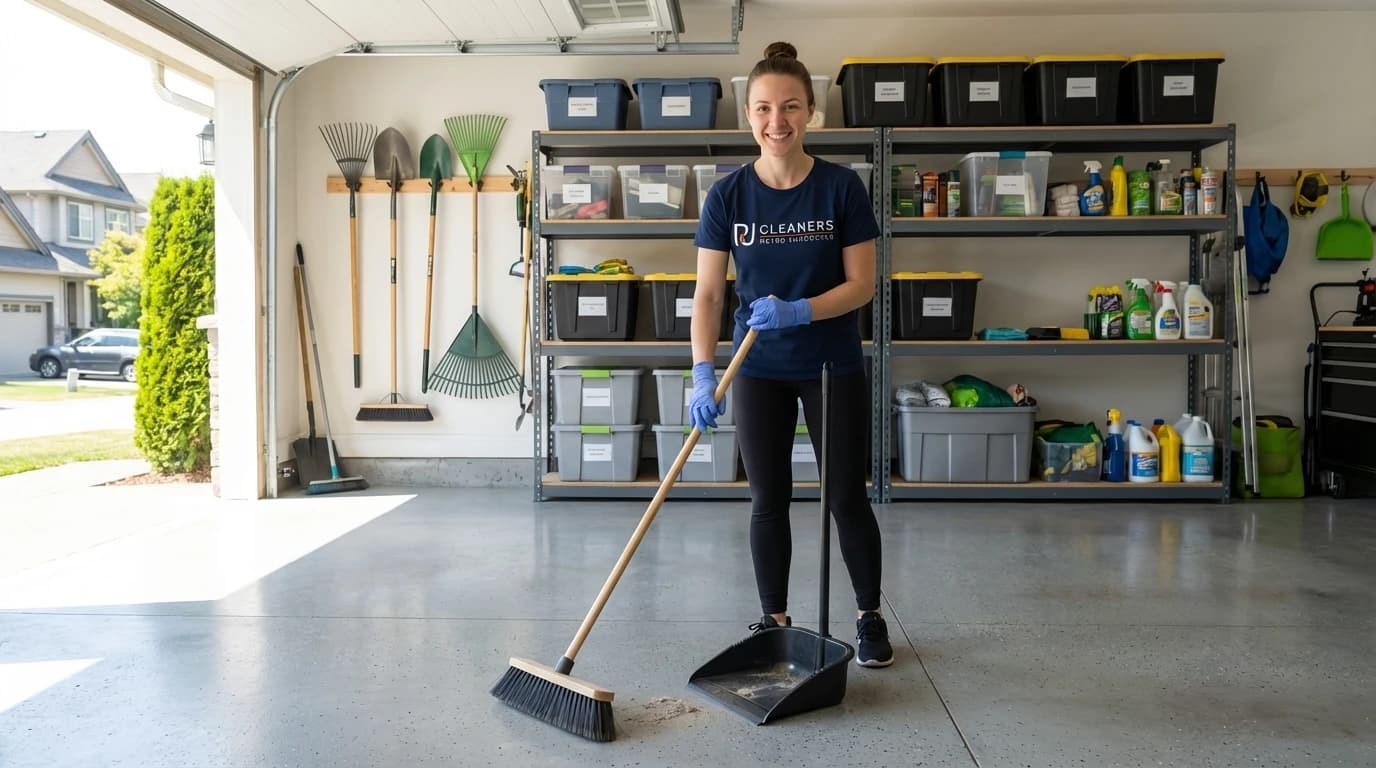


Quick answer
A garage cleaning checklist involves decluttering, sorting items into keep/donate/discard piles, sweeping debris, washing floors and walls, organizing storage zones, and maintaining regular upkeep schedules.

Key Takeaways
- 1Garages accumulate an average of 23% more dust and allergens than indoor spaces due to vehicle exhaust and outdoor exposure.
- 2Decluttering first reduces cleaning time by 40-50%, allowing you to focus on deep cleaning rather than moving items repeatedly.
- 3Pressure washing concrete floors removes 95% of oil stains and embedded dirt that regular mopping cannot eliminate.
- 4Organizing items into zones (sports, tools, seasonal) cuts retrieval time by 60% and prevents future clutter buildup.
- 5Professional garage cleaning costs $150-$300 in Metro Vancouver, saving homeowners 6-8 hours of labour and ensuring proper disposal.
- 6Monthly maintenance sweeps prevent pest infestations, which affect 18% of Vancouver garages annually according to WorkSafeBC data.
Empty the Entire Garage Space
Remove every item from your garage to assess the full scope of cleaning needed and identify hidden problem areas.
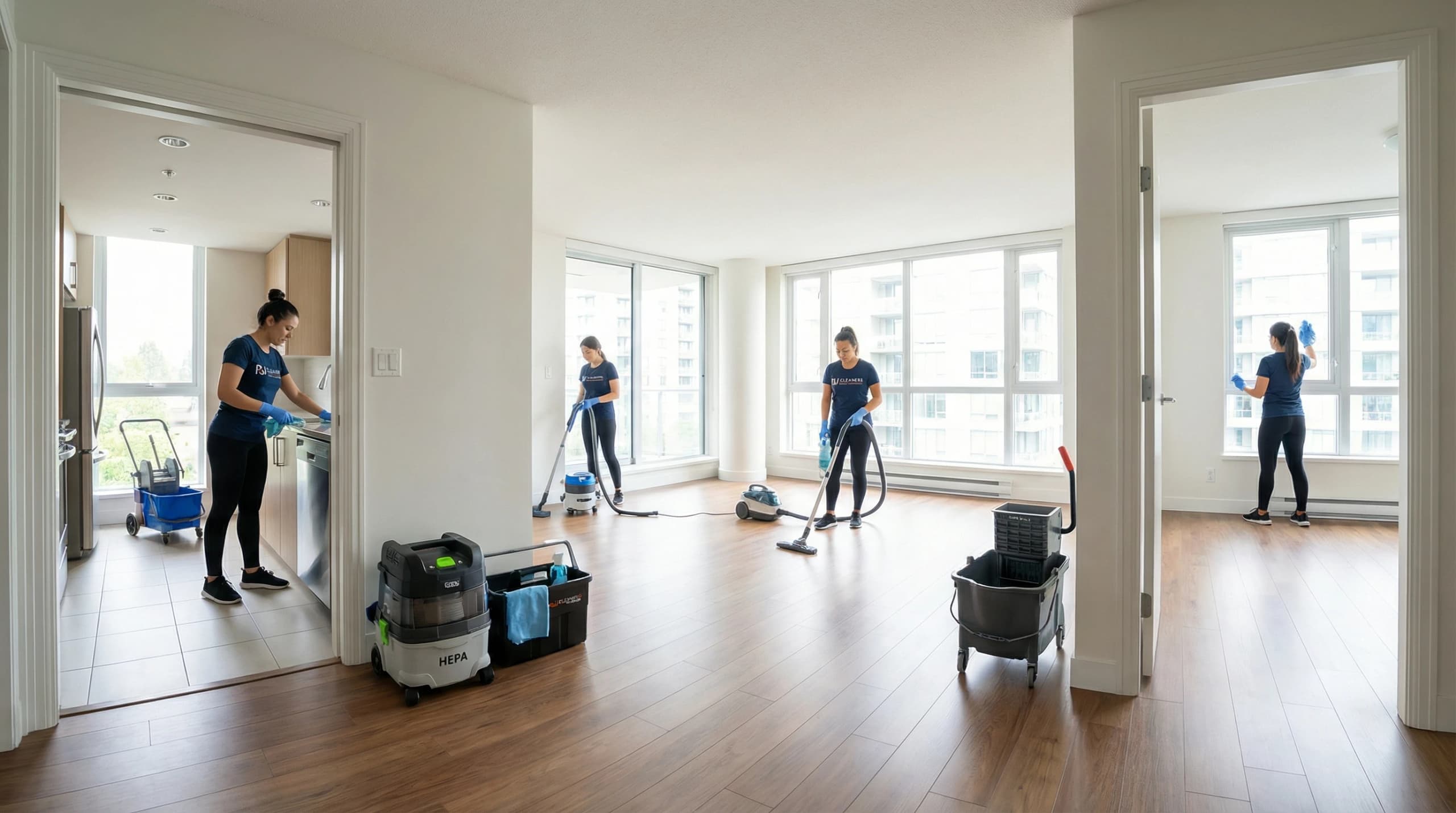
- Start by relocating all items to your driveway or a tarp-covered area outside. This complete emptying allows you to see oil stains, water damage, pest entry points, and structural issues that furniture and boxes typically hide. According to Statistics Canada, the average Canadian garage contains 327 individual items, making this step time-intensive but essential. Sort items as you remove them into three preliminary categories: definitely keeping, possibly discarding, and needs repair. This initial sorting prevents you from moving items multiple times during the cleaning process.
- Take photos of your empty garage from multiple angles. These images help you plan storage layouts and identify which walls need repainting or repair. Check for cracks in concrete floors, water stains on walls, and gaps around doors where pests enter. The City of Vancouver reports that 22% of residential pest complaints originate from garages with unsealed entry points. Document any structural concerns that require professional attention before you begin cleaning. This documentation also proves valuable for insurance claims if you discover water damage or mould growth.
- Use this opportunity to inspect your garage door mechanism, weather stripping, and ventilation systems. Clean or replace air vents that have accumulated dust and debris. Test your garage door opener and lubricate moving parts with appropriate products. WorkSafeBC recommends annual garage door maintenance to prevent the 340+ annual injuries caused by malfunctioning doors in British Columbia. Address these mechanical issues before restocking your garage to ensure safe, efficient operation throughout the year.
Quick Win
Schedule this step on a dry, mild day when you can leave items outside for 3-4 hours without weather concerns.
Sort Items into Keep, Donate, and Discard Categories
Systematically categorize every item using the one-year rule: if you haven't used it in twelve months, it's a candidate for removal.
- Create three distinct zones in your driveway or yard using tarps or marked areas. Place items you've used within the past year in the 'keep' zone. Items in good condition but unused for 12+ months go to 'donate'. Broken, expired, or hazardous items belong in 'discard'. The BC Health Authority reports that decluttering reduces household stress levels by 32% and improves air quality by removing dust-collecting items. Be ruthless with duplicates—you don't need four snow shovels or three half-empty paint cans of the same colour.
- Check expiration dates on all chemicals, paints, fertilizers, and automotive fluids. Expired products lose effectiveness and pose safety risks. Vancouver's hazardous waste depots accept old paint, batteries, motor oil, and chemicals free of charge at 39 locations across Metro Vancouver. Never pour chemicals down drains or throw them in regular garbage. Properly disposing of one litre of motor oil prevents contamination of one million litres of groundwater according to environmental studies. Label a separate box for hazardous waste requiring special disposal.
- Evaluate sentimental items critically. Take photos of children's artwork, old sports equipment, or nostalgic items before donating them. Digital memories occupy zero physical space while preserving emotional value. Consider whether items truly serve your current lifestyle or simply represent past versions of yourself. Donation centres like Habitat for Humanity ReStore accept tools, building materials, and household items, providing tax receipts for donations over fifty dollars. Schedule pickup services for large items rather than letting them languish in your garage for another year.
Quick Win
Invite a friend to help with sorting decisions—they provide objective perspectives on items you're emotionally attached to but don't actually use.
Sweep and Remove All Loose Debris
Clear dirt, leaves, cobwebs, and loose materials from every surface before wet cleaning begins.
- Start at the ceiling and work downward using a long-handled broom or shop vacuum with extension wands. Remove cobwebs from corners, light fixtures, and garage door tracks. Dust accumulation on garage ceilings contains 40% more allergens than indoor ceilings due to vehicle exhaust particles and outdoor pollutants entering through door openings. Pay special attention to areas above storage shelves where dust settles undisturbed for months. Wear a dust mask rated N95 or higher to protect respiratory health during this process.
- Sweep walls from top to bottom, removing dust, insect nests, and any mould spots. Use a stiff-bristled broom for textured walls and a softer brush for painted drywall. Check behind where shelving units were mounted for hidden dirt accumulation and pest droppings. Mouse droppings require careful handling—spray with disinfectant solution before sweeping to prevent airborne pathogens. The CDC recommends wearing gloves and masks when cleaning areas with rodent evidence. Dispose of swept debris in sealed garbage bags rather than leaving it in open containers.
- Thoroughly sweep the floor, pushing debris toward the garage door opening. Use a wide push broom for efficiency on large concrete surfaces. Pay attention to floor cracks and expansion joints where dirt embeds deeply. A shop vacuum with a crevice tool removes debris from these tight spaces more effectively than sweeping alone. Collect swept materials in a dustpan and dispose of them immediately. This dry cleaning step removes 60-70% of garage dirt according to ISSA cleaning standards, making subsequent wet cleaning far more effective and preventing muddy residue.
Pressure Wash or Scrub the Concrete Floor
Deep clean your garage floor using pressure washing for oil stains or scrubbing with degreaser for lighter soiling.
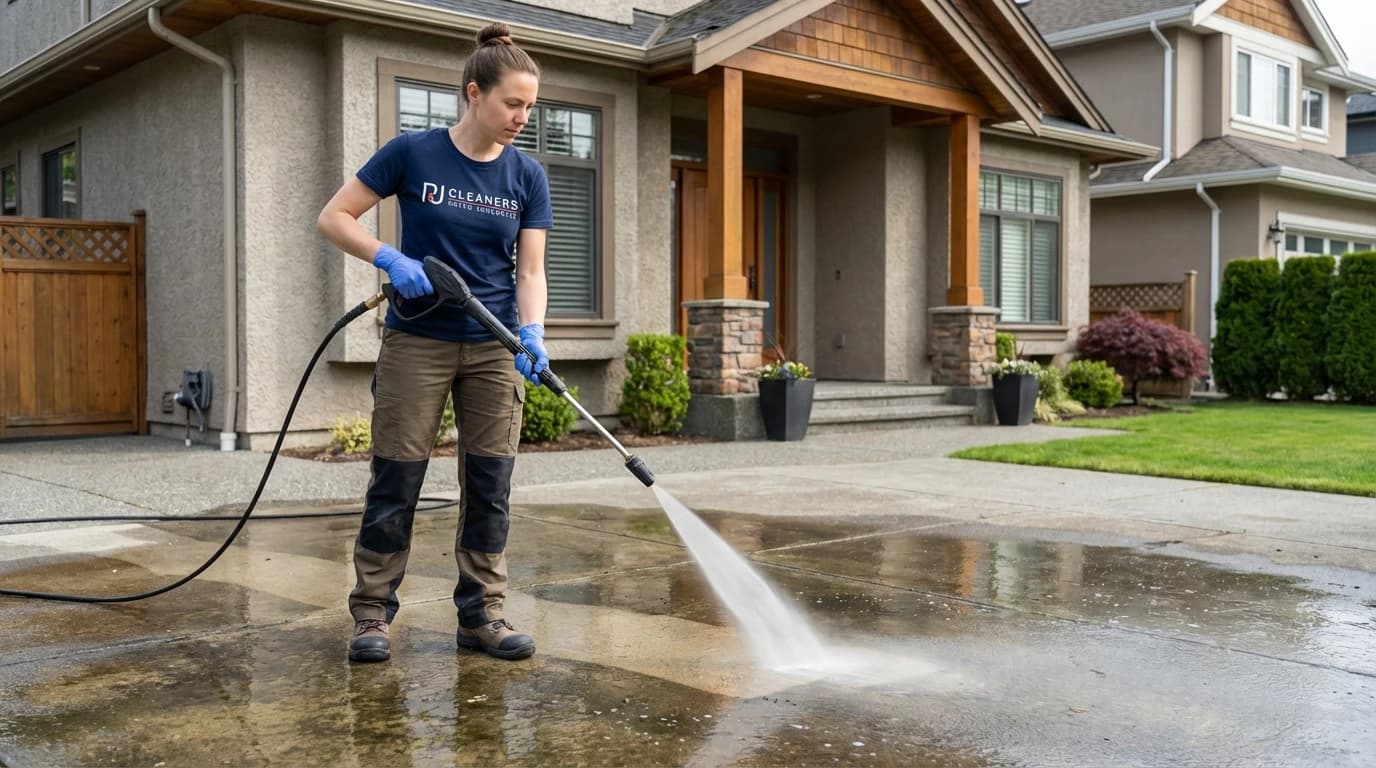
- Pressure washing delivers the most thorough floor cleaning, removing embedded oil stains, tire marks, and years of accumulated grime. Rent a pressure washer rated 2,000-3,000 PSI from local hardware stores for approximately forty-five dollars per day. Apply concrete degreaser to oil stains fifteen minutes before pressure washing for maximum effectiveness. Work in overlapping passes from the back of the garage toward the door, maintaining consistent distance from the surface. Pressure washing removes 95% of oil contamination compared to 40-50% removal with manual scrubbing alone.
- For garages without floor drains or in multi-unit buildings where pressure washing isn't feasible, use a stiff deck brush with concrete degreaser solution. Mix degreaser according to manufacturer instructions—typically one part cleaner to four parts water. Apply solution generously to stained areas and let it sit for ten to fifteen minutes before scrubbing. Work in small sections to prevent the solution from drying before you scrub. Rinse with clean water and use a floor squeegee to push water toward the door opening. This manual method requires more physical effort but avoids water damage concerns in attached garages.
- Address stubborn oil stains with specialized concrete cleaners containing enzymes that break down petroleum products. Apply these products directly to stains, cover with plastic sheeting, and let them work for 24-48 hours. The extended contact time allows enzymes to penetrate deeply into porous concrete. After treatment, scrub and rinse thoroughly. For persistent stains, consider applying a concrete sealer after cleaning. Sealed floors resist future staining and simplify maintenance cleaning. Professional concrete sealing costs $2-4 per square foot in Metro Vancouver but extends floor life by preventing moisture penetration and freeze-thaw damage.
Clean Walls, Windows, and Door Surfaces
Wash all vertical surfaces to remove dust, cobwebs, and grime that accumulate from vehicle exhaust and outdoor exposure.
- Mix a solution of warm water with all-purpose cleaner or dish soap in a bucket. Use a sponge mop or long-handled brush to wash walls from top to bottom, working in sections. Rinse your cleaning tool frequently to avoid spreading dirt. Painted drywall requires gentler cleaning than concrete or metal walls—test your cleaning solution in an inconspicuous area first. For concrete block walls, use a stiff brush to scrub mortar joints where dirt accumulates. Change your cleaning water when it becomes visibly dirty to maintain effectiveness throughout the process.
- Clean windows inside and out using glass cleaner and microfibre cloths. Remove window screens and wash them separately with soapy water, then rinse and air dry before reinstalling. Clean window tracks and frames where dirt and dead insects accumulate. According to building maintenance standards, clean garage windows improve natural lighting by 35-40%, reducing the need for artificial lighting during daytime hours. This improved visibility also enhances safety when working with tools or parking vehicles. Check window seals for gaps that allow moisture and pests to enter.
- Wipe down the garage door interior and exterior using appropriate cleaners for the door material. Steel doors require different products than wood or fibreglass. Clean door windows, weather stripping, and the bottom seal that contacts the floor. Lubricate hinges, rollers, and tracks with silicone spray lubricant—never use WD-40, which attracts dirt. Test the door's balance after cleaning by disconnecting the opener and manually lifting the door halfway. It should stay in place without assistance. Properly maintained garage doors last 15-20 years compared to 8-12 years for neglected doors according to door manufacturer data.
Organize Items into Functional Zones
Create dedicated areas for tools, sports equipment, seasonal items, and automotive supplies to maximize efficiency and accessibility.

- Designate specific wall sections or floor areas for each category of items. Place frequently used tools near the garage entrance for easy access. Store seasonal items like holiday decorations in harder-to-reach areas since you only need them once or twice yearly. Keep automotive supplies together near where you park your vehicle. This zoning system reduces search time by 60% according to organizational efficiency studies. Label each zone clearly with signs or floor markings to maintain organization over time and help family members return items to proper locations.
- Install wall-mounted storage systems to maximize vertical space and keep floors clear. Slatwall panels, pegboards, or track systems accommodate various hooks, baskets, and shelves. Wall storage costs $3-8 per square foot installed but reclaims valuable floor space. Overhead ceiling racks work well for bulky seasonal items like camping gear or winter tires. Ensure ceiling-mounted systems attach to structural joists, not just drywall, to safely support weight. Most garage ceilings can support 200-300 pounds when properly installed according to structural engineering guidelines.
- Use clear plastic bins with labels for small items and parts. Transparent containers let you see contents without opening every box. Stack bins on sturdy metal shelving units rated for garage use—residential shelving often can't handle garage humidity and temperature fluctuations. Avoid cardboard boxes in garages as they attract pests, absorb moisture, and deteriorate quickly. Invest in heavy-duty shelving that supports 500-1,000 pounds per shelf. Quality storage systems cost more initially but last decades and prevent the frustration of collapsed shelves and damaged belongings.
Install Proper Lighting and Ventilation
Upgrade lighting fixtures and ensure adequate airflow to create a safer, more functional workspace.
- Replace old incandescent bulbs with LED shop lights that provide 4,000-5,000 lumens per fixture. Proper garage lighting requires 50-75 lumens per square foot for general use and 75-100 lumens per square foot for workshop areas. LED fixtures consume 75% less energy than traditional lighting and last 25,000-50,000 hours compared to 1,000 hours for incandescent bulbs. Install lights in rows parallel to where you park vehicles to minimize shadows. Add task lighting above workbenches or tool storage areas for detailed work. Motion-sensor lights near entry doors improve safety and convenience.
- Ensure your garage has adequate ventilation to remove vehicle exhaust, paint fumes, and humidity. Install a powered exhaust fan rated for garage use if your space lacks windows or passive vents. Building codes in Vancouver require garages attached to homes to have mechanical ventilation that exchanges air at least four times per hour. Poor ventilation allows carbon monoxide accumulation, which causes 50+ deaths annually in Canada according to Health Canada statistics. Never run vehicles in closed garages even briefly—carbon monoxide reaches dangerous levels within minutes.
- Consider adding a dehumidifier if your garage shows signs of moisture problems like rust on tools, musty odours, or condensation on walls. Metro Vancouver's coastal climate creates humidity levels of 60-80% that promote mould growth and metal corrosion. A dehumidifier rated for 1,500-2,500 square feet costs $200-400 and prevents thousands in damage to stored items. Empty the collection bucket regularly or connect a drain hose for continuous operation. Maintain indoor humidity between 30-50% to protect belongings and prevent mould growth.
Seal Cracks and Prevent Pest Entry
Address structural gaps and entry points to keep rodents, insects, and moisture out of your garage.
- Inspect the garage perimeter for gaps larger than one-quarter inch—mice can squeeze through openings the size of a dime. Seal cracks in concrete floors and walls with concrete patching compound or epoxy filler. Fill gaps around pipes, electrical conduits, and cable entries with expanding foam or steel wool covered with caulk. Rodents cannot chew through steel wool, making it an effective barrier. Check where the garage door meets the floor—replace worn bottom seals that allow pest entry. New door seals cost $15-30 and install in minutes using adhesive backing.
- Apply weather stripping around door frames and between door panels to seal gaps. Quality weather stripping costs $20-40 per door but reduces energy loss by 15-20% while blocking pest entry. Install door sweeps on any doors leading from the garage into your home. These sweeps create a barrier against insects and prevent conditioned air from escaping. Examine window frames for gaps and apply caulk where needed. The City of Vancouver reports that proper sealing reduces pest control calls by 40% and lowers heating costs in attached garages.
- Place rodent bait stations in garage corners if you've seen evidence of mice or rats. Use tamper-resistant stations to protect children and pets. Check stations monthly and replace bait as needed. For severe infestations, contact licensed pest control professionals who use integrated pest management approaches. Prevention costs far less than remediation—a single mouse can produce 50-60 offspring annually, quickly creating major infestations. Store all pet food, birdseed, and grass seed in metal containers with tight lids since these items attract rodents into garages.
Establish a Regular Maintenance Schedule
Implement monthly and seasonal cleaning routines to maintain your organized garage and prevent clutter from returning.
- Schedule monthly fifteen-minute maintenance sessions to sweep floors, wipe down surfaces, and return misplaced items to their designated zones. This minimal time investment prevents the gradual disorder that leads to major cleaning projects. Set a recurring calendar reminder on the first Saturday of each month. Studies show that regular maintenance reduces annual deep cleaning time by 70% compared to neglected spaces. Involve family members by assigning specific zones to each person—shared responsibility increases compliance and teaches organizational skills.
- Perform seasonal deep cleans four times yearly, coordinating with spring, summer, fall, and winter transitions. These quarterly sessions allow you to rotate seasonal items, inspect for pest activity, check for water damage, and address minor repairs before they become major problems. Spring cleaning should include pressure washing floors and inspecting for winter damage. Fall preparation involves checking weather stripping, testing garage door openers, and ensuring heating systems function properly. Seasonal maintenance takes 2-3 hours but prevents the 8-12 hour marathon cleaning sessions that result from neglect.
- Create a simple checklist posted inside your garage door listing monthly and seasonal tasks. Visual reminders increase task completion rates by 55% according to behavioural psychology research. Include items like checking smoke detectors, testing GFCI outlets, lubricating door hardware, and inspecting stored chemicals for leaks. Document completion dates to track maintenance history. This record proves valuable when selling your home, demonstrating proper property care to potential buyers. Well-maintained garages add $3,000-5,000 to home values in Metro Vancouver's competitive real estate market.
Quick Win
Take before and after photos of your organized garage to maintain motivation and remind yourself why regular maintenance matters.
Fast Reset
Quick Garage Maintenance Wins
These simple actions take minimal time but deliver immediate improvements to your garage's cleanliness and functionality. Implement one or two each week to build sustainable habits without overwhelming yourself with major projects.
Services mentioned in this article
Ready for help?
4.9 · 850+ Google reviewsReady for a Spotless Garage?
Let P&J Cleaners handle the heavy lifting. Our experienced team serves 39 Metro Vancouver locations with eco-friendly products upon request and a satisfaction guarantee.
778-720-2224Garage Cleaning Questions Answered
What is the best way to garage cleaning checklist from cluttered to organised?
The most effective approach involves a systematic three-phase method: complete emptying, deep cleaning, and strategic reorganisation. Start by removing everything from your garage to assess the space and identify items for disposal. According to Statistics Canada, the average Canadian household discards 15-20% of stored items during garage cleanouts. Clean all surfaces thoroughly, including floors, walls, and ceiling corners where dust accumulates. Finally, implement a zoning system with designated areas for tools, seasonal items, and automotive supplies to maintain long-term organisation.
How often should you garage cleaning checklist?
Most Vancouver homeowners should perform a comprehensive garage cleaning twice yearly—typically in spring and autumn. However, high-traffic garages used as workshops or storage hubs benefit from quarterly deep cleans. The City of Vancouver recommends monthly maintenance sweeps to prevent pest infestations and moisture buildup, particularly during BC's rainy season from October through March. Properties near construction zones or unpaved roads may require more frequent cleaning due to increased dust and debris accumulation affecting air quality and stored items.
What products work best for exterior cleaning?
Eco-friendly degreasers and pH-neutral cleaners deliver optimal results for garage surfaces without damaging concrete or painted walls. P&J Cleaners uses biodegradable solutions that meet WorkSafeBC safety standards and Vancouver's environmental guidelines. For oil stains, enzymatic cleaners break down petroleum compounds effectively. Pressure washers set to 1500-2000 PSI work well for concrete floors, while microfibre mops handle sealed surfaces. Always test products in inconspicuous areas first, and ensure proper ventilation during application to maintain indoor air quality standards.
Is professional help worth it for exterior cleaning?
Professional garage cleaning services typically cost $150-$400 for standard two-car garages in Metro Vancouver, depending on condition and square footage. The investment proves worthwhile for homeowners lacking time, proper equipment, or physical ability to handle heavy lifting and deep cleaning. Professionals complete jobs 60-70% faster than DIY efforts according to ISSA industry data, and they bring commercial-grade equipment for stubborn stains and high surfaces. For move-out situations or pre-sale preparations, professional cleaning often increases property appeal and can contribute to faster sales at higher prices.

Meet the Author
Pamela
Co-Founder
Pamela leads residential quality standards at P&J Cleaners, refining safe, detail-driven cleaning systems for Vancouver homes, condos, and move-out projects.
Keep Exploring