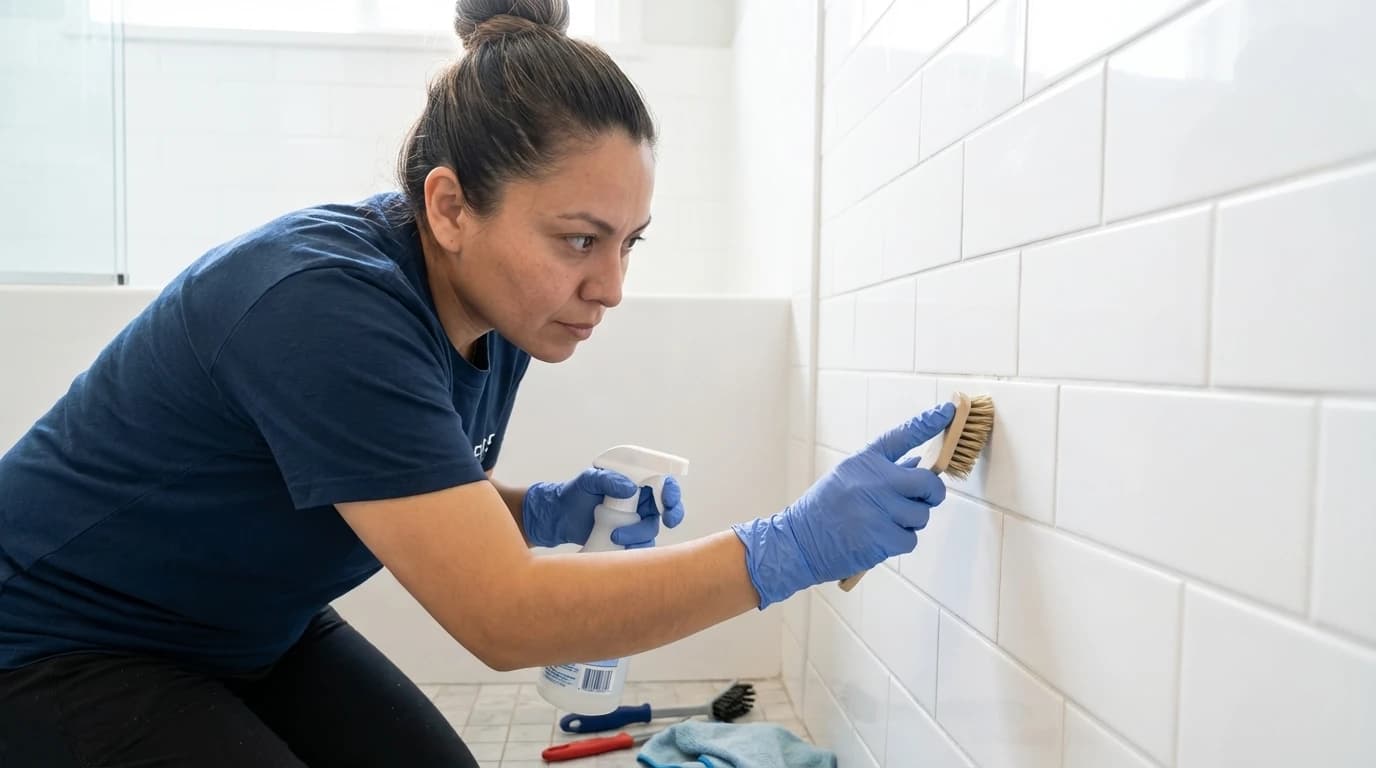


Quick answer
Deep cleaning a bathroom requires systematic sanitization of all surfaces, fixtures, and hidden areas using proper products and techniques to eliminate bacteria, mold, and buildup that regular cleaning misses.

Key Takeaways
- 1Professional bathroom deep cleaning follows a 7-step process covering every surface from ceiling to floor for complete sanitization.
- 2Bathrooms harbour over 500,000 bacteria per square inch on average, making deep cleaning essential every 2-3 weeks according to CDC guidelines.
- 3Proper ventilation and eco-friendly products upon request prevent mold growth while protecting surfaces from harsh chemical damage and respiratory irritation.
- 4Grout cleaning requires specialized brushes and pH-neutral solutions to remove embedded dirt without eroding tile adhesive or causing discolouration.
- 5Professional deep cleaning services in Vancouver cost $150-$300 per bathroom depending on size, condition, and required treatments for stubborn stains.
Why Deep Cleaning Your Bathroom Matters
Regular surface wiping misses hidden bacteria, mold spores, and mineral deposits that accumulate in bathroom environments, creating health risks and surface damage over time.
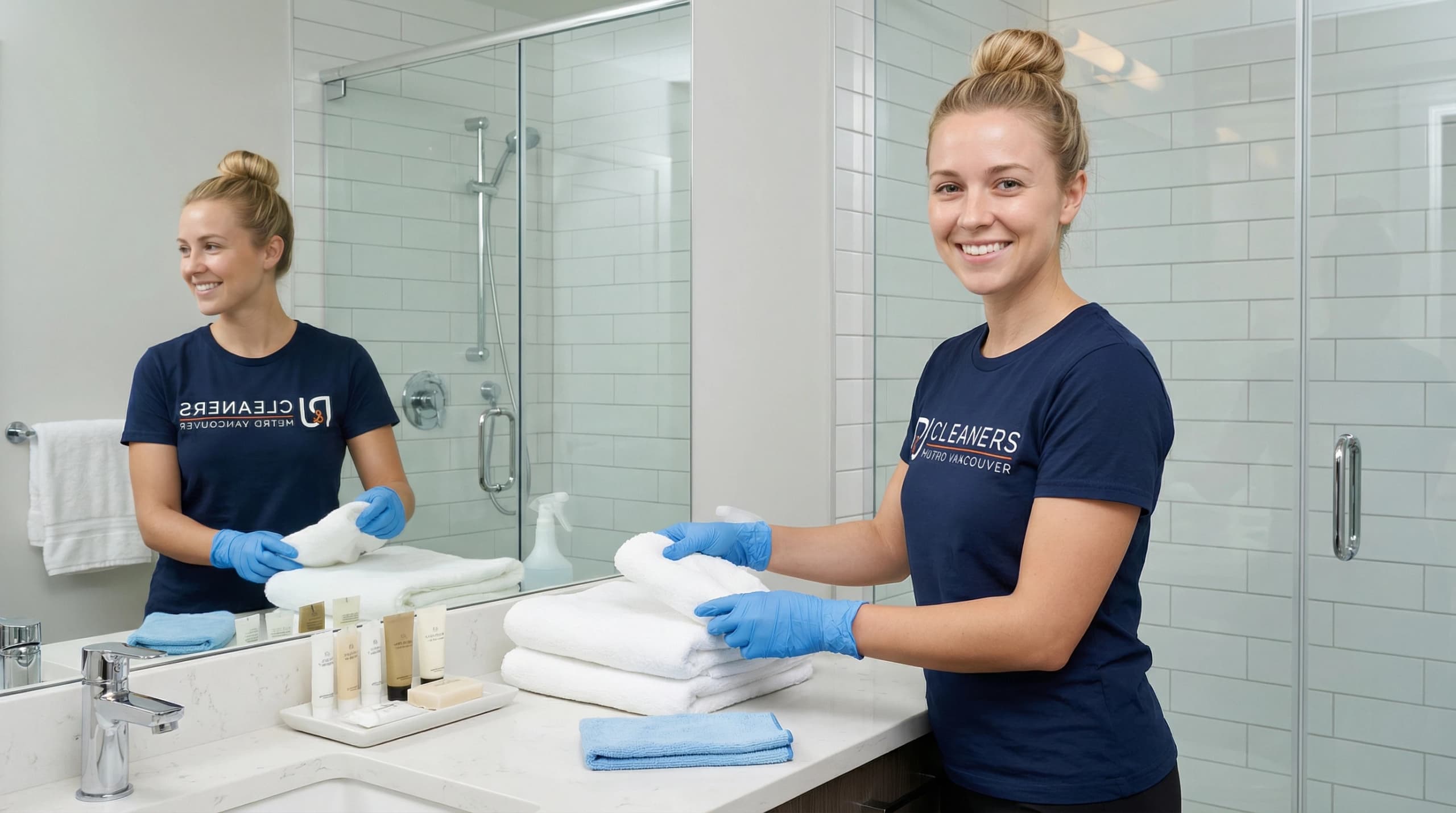
Bathrooms create the perfect environment for bacterial growth due to constant moisture, warmth, and organic matter. The CDC reports that bathroom surfaces can harbour over 500,000 bacteria per square inch, including E. coli, staphylococcus, and streptococcus. Regular cleaning addresses visible dirt, but deep cleaning targets hidden contamination in grout lines, fixture crevices, and behind toilets where pathogens thrive. Vancouver's humid coastal climate accelerates mold growth, making thorough sanitization even more critical for Metro Vancouver homes.
Beyond health concerns, neglecting deep cleaning leads to permanent surface damage. Hard water deposits etch glass and chrome, soap scum bonds to tile surfaces, and mold penetrates porous grout. These issues require expensive repairs or replacements when left untreated. A systematic deep cleaning every two to three weeks prevents buildup, extends fixture lifespan, and maintains your bathroom's appearance. Professional cleaners use specialized products and techniques that homeowners often overlook, ensuring complete sanitization without damaging delicate surfaces or finishes.
- Eliminates 99.9% of bacteria and viruses when proper sanitizers are used with adequate contact time
- Prevents mold and mildew growth that can trigger allergies, asthma, and respiratory issues
- Removes hard water stains and mineral deposits before they permanently etch glass and chrome
- Extends the lifespan of fixtures, tiles, and grout by preventing corrosive buildup
- Improves air quality by eliminating mold spores and bacteria that circulate through ventilation systems
Pro Tip
Schedule deep cleaning sessions during low-humidity days when possible. Open windows and run exhaust fans for at least 30 minutes after cleaning to prevent moisture from reactivating cleaning solutions and encouraging new mold growth.
Related resources
Essential Supplies and Tools for Deep Cleaning
Professional-grade cleaning requires specific tools and products designed for bathroom surfaces, including microfibre cloths, specialized brushes, and pH-balanced cleaners that sanitize without causing damage.
Gathering the right supplies before starting prevents interruptions and ensures effective cleaning. You'll need microfibre cloths in multiple colours to avoid cross-contamination between toilet areas and other surfaces. Invest in a grout brush with stiff nylon bristles, a toilet brush with replaceable heads, and a squeegee for glass surfaces. Spray bottles allow you to dilute concentrated cleaners properly and control application. A bucket, scrub sponges with non-scratch backing, and rubber gloves protect your hands while providing the tools needed for thorough scrubbing.
Product selection matters as much as tools. Choose an all-purpose bathroom cleaner with disinfecting properties, a specialized toilet bowl cleaner with hydrochloric acid for mineral deposits, and a glass cleaner that doesn't streak. For grout, select a pH-neutral cleaner that won't erode tile adhesive. Eco-friendly options using hydrogen peroxide, citric acid, and plant-based surfactants provide effective cleaning without harsh fumes. Vancouver residents should look for products certified by EcoLogo or Green Seal that meet Canadian environmental standards while delivering professional results.
Organization streamlines the cleaning process and prevents missed areas. Use a cleaning caddy to transport supplies between bathroom zones. Keep separate cloths for mirrors, countertops, and toilet areas to prevent bacterial transfer. Label spray bottles clearly to avoid mixing incompatible chemicals. Professional cleaners follow a top-to-bottom, clean-to-dirty approach, starting with mirrors and ending with floors. This systematic method ensures that debris falls to uncleaned areas rather than contaminating freshly sanitized surfaces, reducing the need for repeated cleaning.
- Microfibre cloths in three colours: blue for mirrors and glass, green for counters and sinks, red for toilets
- Grout brush with angled head to reach corners and tile edges without damaging surrounding surfaces
- Disinfectant spray with at least 70% alcohol or quaternary ammonium compounds for effective sanitization
- Squeegee with replaceable rubber blade for streak-free glass shower doors and mirrors
- Extendable duster for ceiling corners, light fixtures, and exhaust fan covers
Pro Tip
Mix your own all-purpose cleaner using one part white vinegar to three parts water with ten drops of tea tree oil. This solution costs pennies per bottle, kills mold and bacteria naturally, and works on most bathroom surfaces except natural stone.
Related resources
Preparing Your Bathroom for Deep Cleaning
Proper preparation removes obstacles, protects surfaces, and creates an efficient workflow that reduces cleaning time while improving results through strategic organization and ventilation.
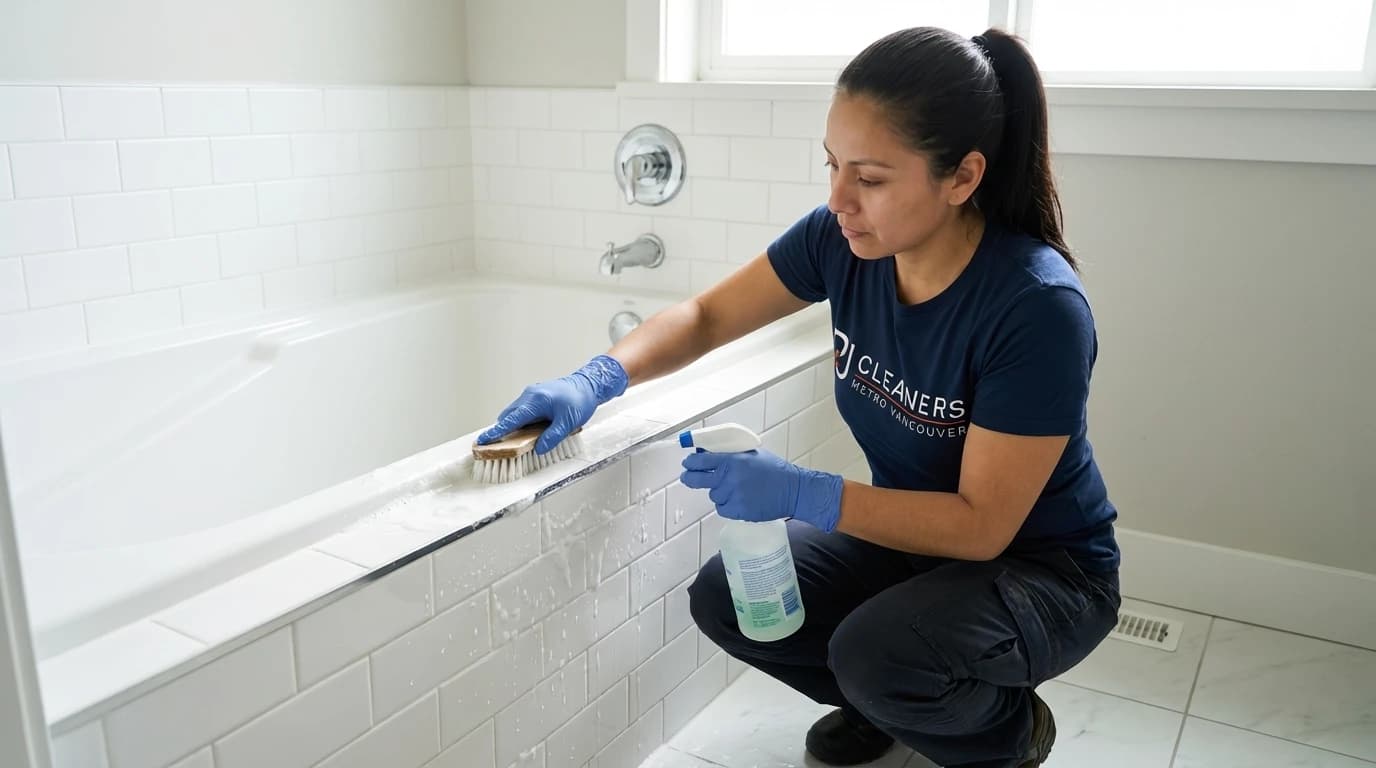
Start by removing all items from countertops, shower shelves, and the toilet tank top. This includes toiletries, decorative items, bath mats, and towels. Clearing surfaces allows you to clean thoroughly without working around obstacles or accidentally knocking products into the sink. Check expiration dates on medications and cosmetics, discarding anything outdated. Wipe down bottles and containers before returning them to prevent transferring grime back to freshly cleaned surfaces. This decluttering step often reveals hidden mold, soap scum, and dust that accumulates behind bottles and containers.
Ventilation prevents moisture buildup and disperses cleaning product fumes that can cause respiratory irritation. Open windows if weather permits, and turn on the exhaust fan before starting. If your bathroom lacks a window, run the fan continuously throughout the cleaning process and for thirty minutes afterward. Good airflow accelerates drying time, reducing the risk of mold growth on damp surfaces. Vancouver's rainy climate makes proper ventilation especially important, as trapped moisture can undo your cleaning efforts within hours.
Protect surfaces that shouldn't get wet or could be damaged by cleaning products. Place towels along the base of cabinets if you're cleaning floors with significant water. Remove fabric shower curtains and liners for separate washing in hot water with bleach or vinegar. Check drain covers and remove hair or debris that could cause clogs when you rinse cleaning solutions. Pre-treating heavily soiled areas with appropriate cleaners allows products to work while you clean other zones, maximizing efficiency and reducing scrubbing time.
- Remove all personal items, toiletries, and decorative objects from every surface including shelves and windowsills
- Open windows and run exhaust fans for at least five minutes before applying any cleaning products
- Sweep or vacuum floors to remove loose hair, dust, and debris before wet cleaning begins
- Pre-spray heavily soiled areas like shower walls and toilet bowls to allow cleaners to penetrate buildup
Tackling Mold and Mildew Growth
Mold requires specific treatment approaches using fungicidal cleaners and proper application techniques to kill spores, remove stains, and prevent regrowth in moisture-prone bathroom areas.
Mold appears as black, green, or pink discolouration on grout, caulking, and shower surfaces. Vancouver's coastal humidity creates ideal conditions for mold growth, with spores germinating within 24 to 48 hours on damp surfaces. The BC Centre for Disease Control identifies bathroom mold as a common trigger for respiratory issues, allergies, and asthma attacks. Effective treatment requires killing existing mold, removing stains, and addressing moisture sources that allow regrowth. Surface cleaning alone won't eliminate mold that has penetrated porous materials like grout or drywall.
Apply a fungicidal cleaner specifically formulated for mold removal, not just a general disinfectant. Products containing hydrogen peroxide, bleach, or quaternary ammonium compounds kill mold spores effectively. Spray affected areas generously and allow the product to sit for ten to fifteen minutes without wiping. This contact time ensures the fungicide penetrates porous surfaces and kills embedded spores. For stubborn mold on grout, use a grout brush to scrub in circular motions, reapplying cleaner as needed. Never mix bleach with ammonia or vinegar, as this creates toxic chlorine gas.
Prevention stops mold from returning after deep cleaning. Improve bathroom ventilation by running exhaust fans during showers and for thirty minutes afterward. Wipe down shower walls and doors after each use to remove standing water. Fix leaking faucets, pipes, and toilet seals that create constant moisture. Apply a grout sealer after cleaning to create a water-resistant barrier that prevents mold penetration. Consider using a dehumidifier in bathrooms without windows, especially during Vancouver's wet winter months when natural ventilation is limited.
- Spray mold with undiluted white vinegar or 3% hydrogen peroxide and let sit for 15 minutes before scrubbing
- Use a grout brush with stiff bristles to scrub mold from tile joints without damaging surrounding surfaces
- Replace severely molded caulking around tubs and sinks, as surface cleaning won't eliminate embedded spores
- Apply mold-resistant paint or sealant to walls and ceilings in poorly ventilated bathrooms
- Run exhaust fans for 30 minutes after showers to reduce humidity below 60%, the threshold for mold growth
Pro Tip
For persistent mold stains on grout, make a paste using baking soda and hydrogen peroxide. Apply to affected areas, let sit for one hour, then scrub with a grout brush. This combination lifts stains while killing spores without harsh chemical fumes.
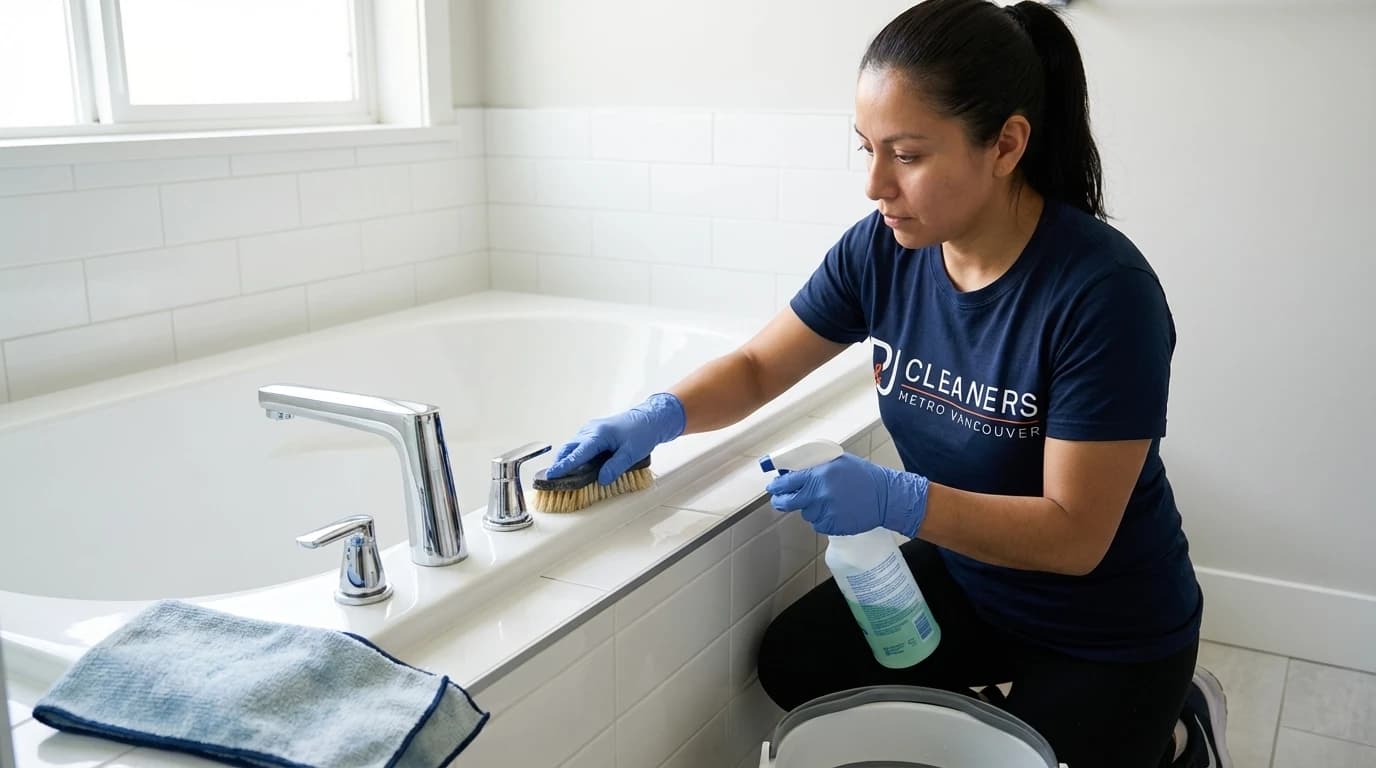
Cleaning Grout and Tile Surfaces
Grout cleaning requires pH-neutral products and specialized brushes to remove embedded dirt and stains without eroding tile adhesive or causing discolouration in porous cement-based materials.
Grout absorbs dirt, soap scum, and moisture due to its porous cement composition, creating dark lines between tiles that regular mopping can't address. The International Sanitary Supply Association recommends deep cleaning grout every two to four weeks in high-use bathrooms to prevent permanent staining. Acidic cleaners like vinegar can erode grout over time, while alkaline products may cause discolouration. Professional cleaners use pH-neutral solutions specifically formulated for grout that lift dirt without chemical damage. For heavily stained grout, oxygen bleach provides effective whitening without the harsh fumes of chlorine bleach.
Apply grout cleaner using a spray bottle, working in small sections to prevent the product from drying before scrubbing. Use a grout brush with angled bristles that fit into narrow joints without scratching adjacent tiles. Scrub in circular motions with moderate pressure, allowing the brush bristles to penetrate the grout surface. For stubborn stains, apply a second coat of cleaner and let it sit for five to ten minutes before scrubbing again. Rinse thoroughly with clean water and a microfibre cloth, changing the water frequently to avoid spreading dirty residue across clean tiles.
Sealing grout after deep cleaning creates a protective barrier that repels water, soap scum, and stains. Apply a penetrating grout sealer using a small brush or applicator bottle, working carefully to avoid getting sealer on tile surfaces. Allow the sealer to absorb for the time specified on the product label, typically five to fifteen minutes, then wipe away excess with a clean cloth. Properly sealed grout resists staining and mold growth, reducing the frequency of deep cleaning needed. Reapply sealer every six to twelve months depending on bathroom usage and moisture levels.
- Use a grout brush with nylon bristles angled at 45 degrees to reach into joints without damaging tiles
- Apply pH-neutral grout cleaner and let it dwell for 5-10 minutes to break down embedded dirt
- Scrub in circular motions with moderate pressure, working in 3-foot sections to prevent cleaner from drying
- Rinse with clean water and microfibre cloths, changing water frequently to avoid spreading dirty residue
- Apply penetrating grout sealer after cleaning to create a water-resistant barrier against future staining
Pro Tip
For white grout that has yellowed over time, make a paste using oxygen bleach powder and water. Apply to grout lines, let sit for 30 minutes, then scrub and rinse. This method whitens grout without the harsh fumes of chlorine bleach.
Related resources
Sanitizing the Toilet Thoroughly
Complete toilet sanitization requires cleaning all surfaces including the bowl, seat, base, and behind the tank where bacteria accumulate in hidden areas that regular cleaning misses.
Toilets harbour the highest concentration of bacteria in bathrooms, with studies showing over 3.2 million bacteria per square inch on toilet seats and even higher counts inside bowls. Effective sanitization requires a systematic approach that addresses every surface, not just visible areas. Start by applying toilet bowl cleaner under the rim, allowing it to run down the sides and sit for ten minutes while you clean exterior surfaces. This dwell time allows the cleaner to break down mineral deposits, kill bacteria, and loosen stubborn stains without excessive scrubbing.
Clean the exterior starting from the top and working downward to prevent spreading bacteria to already-cleaned areas. Spray disinfectant on the tank, lid, seat (both sides), and base. Wipe each surface with a dedicated microfibre cloth, paying special attention to hinges, bolts, and the area where the toilet meets the floor. These crevices collect dust, hair, and bacteria that regular wiping misses. Use a small brush or old toothbrush to scrub around bolts and tight spaces. Don't forget the flush handle, which gets touched frequently but rarely receives thorough cleaning.
Scrub the toilet bowl using a brush with stiff bristles, working under the rim where mineral deposits and bacteria accumulate. Use firm circular motions to remove stains and buildup, reapplying cleaner if needed for stubborn rings. For hard water stains that resist regular cleaners, use a pumice stone designed for toilets, keeping both the stone and porcelain wet to prevent scratching. Flush to rinse away loosened debris and cleaner residue. Finish by wiping the exterior one more time with a clean, dry cloth to remove any remaining moisture or cleaner residue.
- Apply toilet bowl cleaner under the rim and let sit for 10-15 minutes while cleaning exterior surfaces
- Spray disinfectant on all exterior surfaces including tank, lid, seat, hinges, and base
- Use a dedicated cloth for toilet cleaning to prevent cross-contamination with other bathroom surfaces
- Scrub under the rim with a toilet brush using firm circular motions to remove mineral deposits
- Clean the area behind and around the toilet base where dust, hair, and bacteria accumulate
Pro Tip
Pour one cup of white vinegar into the toilet bowl and let it sit overnight once a month. This dissolves mineral deposits and kills bacteria without scrubbing, maintaining a cleaner bowl between deep cleaning sessions.
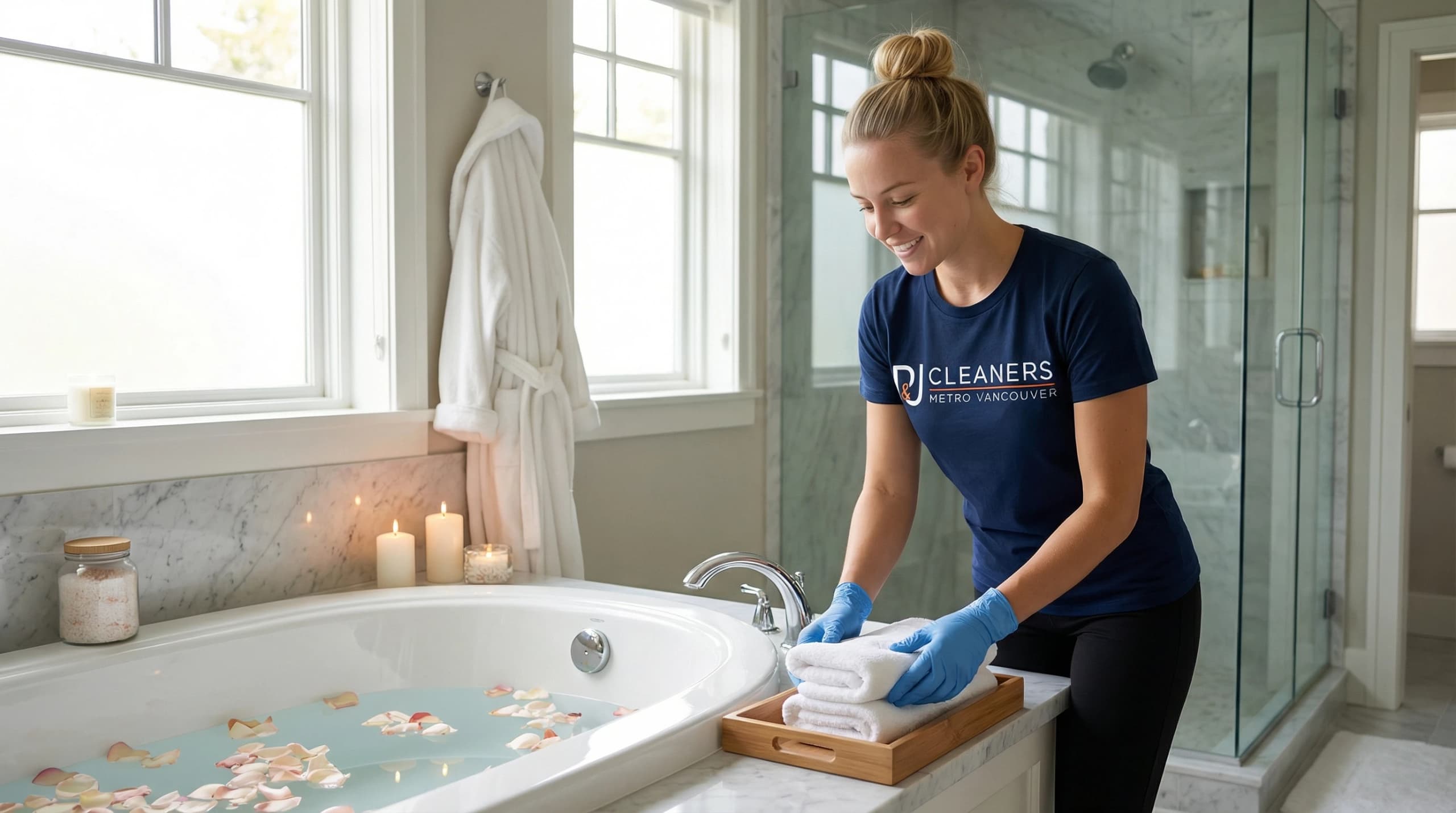
Deep Cleaning Showers and Bathtubs
Shower and tub cleaning requires removing soap scum, hard water deposits, and mold from walls, doors, fixtures, and drains using appropriate products for different surface materials.
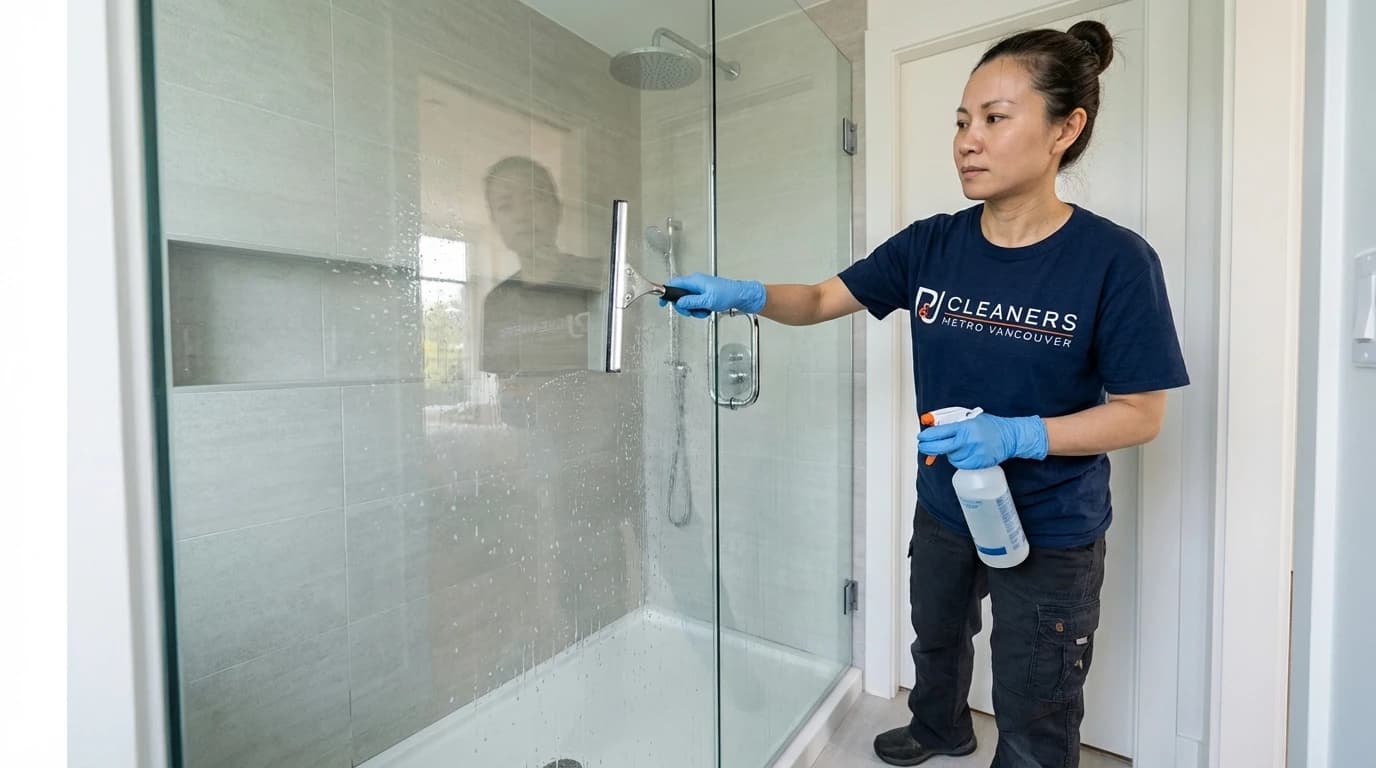
Soap scum forms when soap combines with hard water minerals, creating a stubborn film on glass, tile, and acrylic surfaces. Vancouver's moderately hard water (averaging 30-50 mg/L calcium carbonate according to Metro Vancouver) accelerates soap scum buildup. Regular shower sprays prevent some accumulation, but deep cleaning requires stronger products that dissolve bonded residue. For glass doors, use a cleaner containing citric acid or phosphoric acid that breaks down mineral deposits without etching the glass. Acrylic tubs and shower surrounds need gentler, non-abrasive cleaners to avoid scratching the surface.
Spray shower walls, doors, and tub surfaces with appropriate cleaner, working from top to bottom. Let the product sit for five to ten minutes to break down soap scum and mineral deposits. Use a non-scratch scrub sponge for acrylic and fibreglass surfaces, or a more aggressive scrub pad for tile and glass. Pay special attention to corners, door tracks, and the area around fixtures where buildup concentrates. For glass doors, use a squeegee after scrubbing to remove cleaner and water, then buff with a microfibre cloth for a streak-free finish.
Clean showerheads and faucets by removing mineral deposits that restrict water flow and harbour bacteria. Unscrew the showerhead if possible and soak it in white vinegar for thirty minutes to dissolve calcium buildup. For fixed showerheads, fill a plastic bag with vinegar, secure it around the showerhead with a rubber band, and let it soak. Scrub fixtures with an old toothbrush to remove deposits from crevices and aerator screens. Clear drain covers of hair and debris, then pour a mixture of baking soda and vinegar down the drain to eliminate odours and minor clogs.
- Spray shower walls and doors with soap scum remover and let sit for 10 minutes before scrubbing
- Use a squeegee on glass doors after each shower to prevent water spots and soap scum buildup
- Soak showerheads in white vinegar for 30 minutes to dissolve mineral deposits and restore water flow
- Clean door tracks with an old toothbrush and all-purpose cleaner to remove accumulated grime
- Apply a water-repellent coating to glass doors after cleaning to make future cleaning easier
Pro Tip
For stubborn soap scum on glass doors, apply a paste of baking soda and dish soap. Let it sit for 15 minutes, then scrub with a non-scratch sponge. The mild abrasive action removes buildup without scratching glass.
Finishing Touches and Ongoing Maintenance
Final steps include cleaning mirrors, fixtures, and floors, followed by establishing a maintenance routine that keeps bathrooms cleaner longer and reduces the effort required for future deep cleaning.
Clean mirrors and glass surfaces using a streak-free glass cleaner or a mixture of equal parts water and white vinegar. Spray the solution onto a microfibre cloth rather than directly on the mirror to prevent drips that can damage frames or walls. Wipe in a Z-pattern from top to bottom, then buff with a dry cloth for a crystal-clear finish. Polish chrome and stainless steel fixtures with a dedicated metal cleaner or a small amount of baby oil on a soft cloth. This removes water spots and creates a protective coating that repels future buildup.
Mop bathroom floors last, after all other surfaces are clean, to capture any debris or cleaner residue that has fallen during the cleaning process. Sweep or vacuum first to remove hair and dust, then mop with a disinfecting floor cleaner appropriate for your flooring material. Pay special attention to corners, around the toilet base, and along baseboards where dirt accumulates. For tile floors, clean grout lines with the same technique used on wall grout. Allow floors to air dry completely before replacing bath mats and returning items to the bathroom.
Establish a maintenance routine that extends the time between deep cleaning sessions. Wipe down shower walls with a squeegee after each use to prevent soap scum and water spots. Clean the toilet bowl with a brush and cleaner twice weekly. Spray and wipe countertops and sinks daily to prevent toothpaste and soap buildup. Run the exhaust fan during showers and for thirty minutes afterward to control humidity. These simple habits, taking less than five minutes daily, dramatically reduce the buildup that makes deep cleaning necessary and keep your bathroom consistently fresh.
- Clean mirrors with glass cleaner sprayed on a microfibre cloth, wiping in a Z-pattern for streak-free results
- Polish chrome fixtures with metal cleaner or baby oil to remove water spots and create a protective coating
- Mop floors last using a disinfecting cleaner appropriate for your flooring material
- Replace bath mats, shower curtains, and towels with freshly laundered items
- Empty and wipe down trash cans, replacing liners to eliminate odours
Pro Tip
Keep a spray bottle of diluted all-purpose cleaner and a microfibre cloth under the sink for quick daily touch-ups. Spending two minutes wiping surfaces after morning routines prevents buildup and reduces deep cleaning frequency.
Related resources
Step-by-Step
7-Step Professional Bathroom Deep Cleaning Process
Follow this systematic approach used by professional cleaners to achieve thorough sanitization and lasting results in any bathroom size or condition.
Clear and Prepare the Space
Remove all items from countertops, shelves, and the shower. This includes toiletries, decorative objects, towels, and bath mats. Open windows and turn on exhaust fans to improve ventilation. Sweep or vacuum floors to remove loose debris. Pre-spray heavily soiled areas like the toilet bowl and shower walls with appropriate cleaners, allowing them to sit while you gather supplies. This preparation creates an efficient workflow and ensures you can access all surfaces without obstacles.
- Remove all personal items, toiletries, and decorative objects from every surface
- Open windows and run exhaust fans for proper ventilation
- Sweep or vacuum floors to remove hair, dust, and loose debris
- Pre-spray toilet bowl and shower walls with cleaners to allow dwell time
- Gather all cleaning supplies in a caddy for easy access
Clean from Top to Bottom
Start with ceiling corners, light fixtures, and exhaust fan covers using an extendable duster. Wipe down walls, paying attention to areas around light switches and door frames where fingerprints accumulate. Clean mirrors and glass surfaces with streak-free glass cleaner. This top-to-bottom approach ensures that dust and debris fall onto surfaces you haven't cleaned yet, preventing the need to re-clean areas. Work systematically around the room to avoid missing spots.
- Dust ceiling corners, light fixtures, and exhaust fan covers
- Wipe down walls, focusing on high-touch areas like light switches
- Clean mirrors and glass surfaces with streak-free cleaner
- Wipe window sills and frames if applicable
- Clean any artwork or decorative items before returning them
Tackle Mold and Mildew
Apply fungicidal cleaner to areas with visible mold or mildew, including grout lines, caulking, and shower corners. Let the product sit for ten to fifteen minutes to kill spores and break down stains. Scrub affected areas with a grout brush using circular motions. For persistent mold on caulking, consider removing and replacing the caulk entirely, as surface cleaning won't eliminate embedded spores. Rinse thoroughly and dry the area to prevent immediate regrowth.
- Spray mold-affected areas with fungicidal cleaner
- Allow cleaner to sit for 10-15 minutes without wiping
- Scrub grout lines and corners with a stiff grout brush
- Remove and replace severely molded caulking
- Rinse thoroughly and dry to prevent regrowth
Deep Clean Grout and Tile
Apply pH-neutral grout cleaner to tile joints, working in small sections. Use a grout brush with angled bristles to scrub in circular motions, applying moderate pressure to lift embedded dirt without damaging the grout. Rinse each section with clean water and a microfibre cloth before moving to the next area. After cleaning all grout, apply a penetrating grout sealer to create a protective barrier against future staining and moisture penetration.
- Apply pH-neutral grout cleaner to joints in 3-foot sections
- Scrub with angled grout brush using circular motions
- Rinse with clean water and microfibre cloths
- Change rinse water frequently to avoid spreading dirt
- Apply penetrating grout sealer after grout is completely dry
Sanitize the Toilet Completely
Apply toilet bowl cleaner under the rim and let it sit while cleaning exterior surfaces. Spray disinfectant on the tank, lid, seat (both sides), hinges, and base. Wipe each surface with a dedicated cloth, using a small brush for crevices around bolts and the base. Scrub the bowl with a toilet brush, working under the rim and around the water line. Flush to rinse, then wipe exterior surfaces one final time with a dry cloth.
- Apply toilet bowl cleaner under rim and let sit for 10 minutes
- Spray and wipe all exterior surfaces with disinfectant
- Clean hinges, bolts, and base crevices with a small brush
- Scrub bowl interior thoroughly, especially under the rim
- Flush and do a final wipe-down with a dry cloth
Deep Clean Shower and Tub
Spray shower walls, doors, and tub surfaces with appropriate cleaner for your surface material. Let it sit for five to ten minutes, then scrub with a non-scratch sponge or scrub pad. Use a squeegee on glass doors, then buff with a microfibre cloth. Clean showerheads by soaking in vinegar to remove mineral deposits. Clear drain covers of hair and debris, then flush drains with baking soda and vinegar to eliminate odours.
- Spray all surfaces with appropriate cleaner and let sit
- Scrub walls, doors, and tub with non-scratch sponge
- Use squeegee on glass doors and buff with microfibre cloth
- Soak showerhead in vinegar for 30 minutes to remove deposits
- Clear drains and flush with baking soda and vinegar
Finish with Fixtures and Floors
Clean countertops and sinks with all-purpose cleaner, paying attention to faucet bases and drain areas. Polish chrome fixtures with metal cleaner or baby oil. Sweep or vacuum floors again to capture any debris from cleaning, then mop with disinfecting floor cleaner. Work from the far corner toward the door, allowing floors to air dry. Replace bath mats, return cleaned items to their places, and empty the trash with a fresh liner.
- Clean and disinfect countertops and sinks thoroughly
- Polish all chrome and metal fixtures to remove water spots
- Sweep or vacuum floors to remove cleaning debris
- Mop floors with disinfecting cleaner, working toward the door
- Replace bath mats, return items, and empty trash with fresh liner
| Task | Regular Cleaning | Deep Cleaning |
|---|---|---|
| Toilet | Bowl scrub and exterior wipe | Complete sanitization including base, hinges, and behind tank |
| Shower/Tub | Quick spray and rinse | Soap scum removal, grout scrubbing, fixture descaling |
| Grout | Surface mop only | Scrubbing with specialized brush and pH-neutral cleaner |
| Mirrors | Quick wipe | Streak-free cleaning and frame dusting |
Services mentioned in this article
Ready for help?
4.9 · 850+ Google reviewsLet Professionals Handle Your Deep Cleaning
Our certified cleaning team uses professional-grade equipment and eco-friendly products upon request to deep clean your bathroom in half the time. Backed by our satisfaction guarantee.
778-720-2224Common Bathroom Deep Cleaning Questions
How to deep clean a bathroom?
Deep clean a bathroom by following a top-to-bottom approach: ventilate the space, remove all items, spray surfaces with appropriate cleaners, scrub tiles and grout with a stiff brush, clean the toilet inside and out, wash the shower and tub, wipe down all surfaces, clean mirrors and fixtures, mop the floor, and replace items. The CDC recommends using EPA-registered disinfectants and allowing proper contact time of 3-5 minutes for effective sanitization.
How to remove mold from bathroom?
Remove bathroom mold by spraying affected areas with a solution of one part bleach to ten parts water, or use hydrogen peroxide for coloured surfaces. Let the solution sit for 10-15 minutes, then scrub with a stiff brush. Rinse thoroughly and dry completely. According to Health Canada, bathrooms should maintain humidity below 50% to prevent mold regrowth. Fix any leaks immediately and ensure proper ventilation during and after showers.
How to clean bathroom grout?
Clean bathroom grout by making a paste of baking soda and water, applying it to grout lines, and scrubbing with a stiff brush or old toothbrush. For stubborn stains, spray with white vinegar after applying the paste. The ISSA recommends sealing grout annually to prevent moisture penetration and staining. Professional steam cleaning can restore heavily stained grout without harsh chemicals, reaching temperatures of 200°F to sanitize and lift embedded dirt.
How often should you clean your bathroom?
Clean high-touch bathroom surfaces like sinks, toilets, and counters weekly, while deep cleaning the entire bathroom monthly. The CDC recommends daily disinfection of toilet handles and faucets in shared bathrooms. Vancouver's humid climate requires more frequent mold checks, especially in poorly ventilated bathrooms. Shower walls should be wiped down after each use to prevent soap scum buildup, and bath mats should be washed weekly to prevent bacterial growth.

Meet the Author
Pamela
Co-Founder
Pamela leads residential quality standards at P&J Cleaners, refining safe, detail-driven cleaning systems for Vancouver homes, condos, and move-out projects.
Keep Exploring