

Quick answer
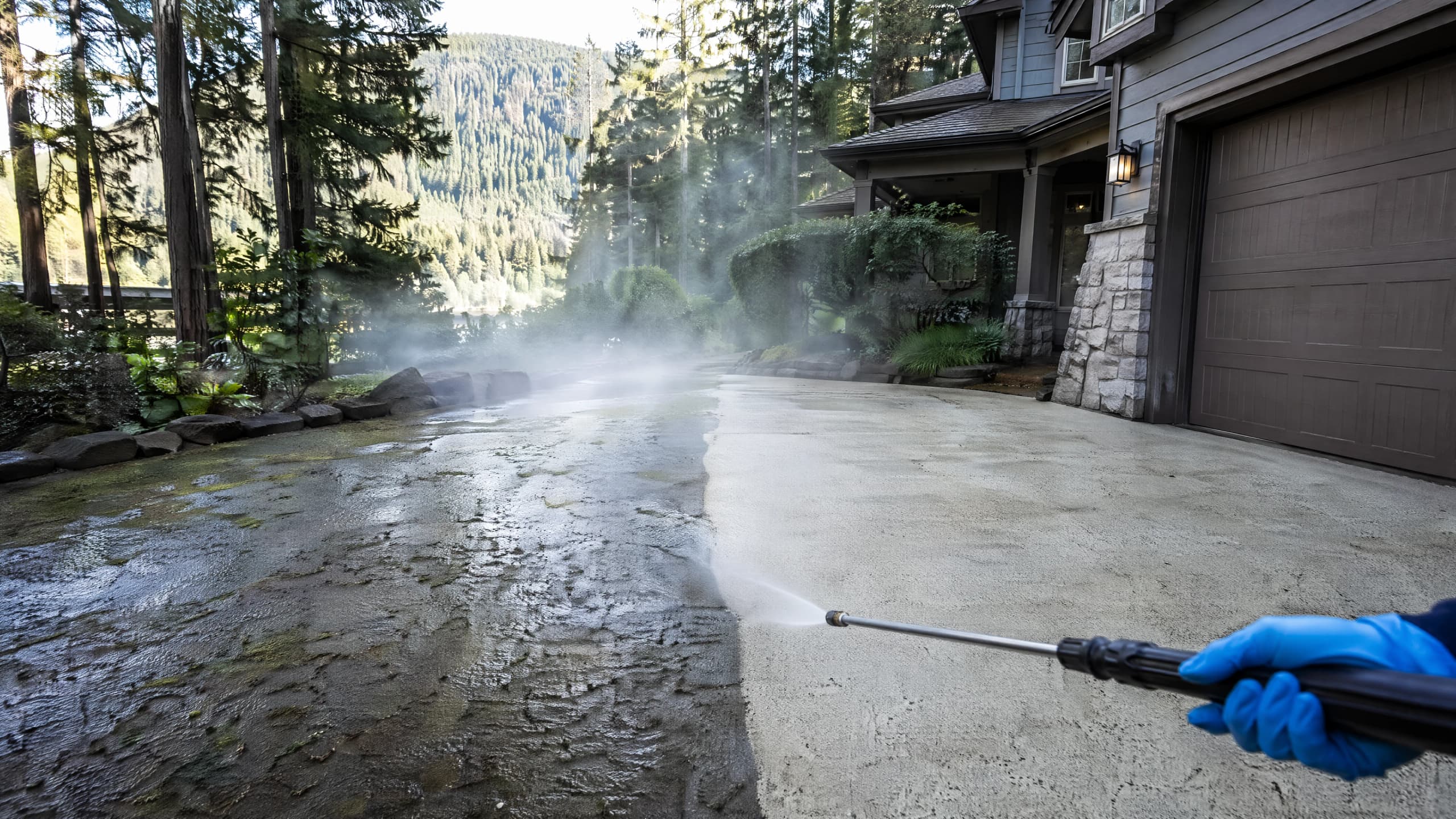
In Metro Vancouver, the best time to pressure wash a house is May through September, when surfaces get the 24 to 48 dry hours a proper wash needs to work. Book siding for late spring once pollen settles, driveways twice a year, and any pre-painting wash for a stretch of clear summer forecast.

Key Takeaways
- 1May through September is Vancouver's reliable washing window; outside it, surfaces rarely stay dry long enough for cleaning solutions to do their work.
- 2Aim for a 5 to 24 C day with no rain in the next 24 to 48 hours; strong heat flash-dries detergents on siding and leaves streaks.
- 3With about 1,100 mm of rain a year, local siding needs washing annually and driveways every six months, roughly double what national guides recommend.
- 4Moss and green algae return fastest on north- and east-facing walls and under tree cover, so shaded North Shore homes should claim the earliest spring slots.
- 5Painting or sealing afterward? The surface needs 24 to 72 fully dry hours post-wash, so schedule both jobs inside the same dry week.
- 6Strata common-area washing books out weeks ahead in summer; raise it at a spring council meeting, not in August.
Why Timing Matters More Here Than Almost Anywhere
Vancouver's climate is engineered to regrow whatever you wash off. Working with the dry season, not against it, is most of the job.
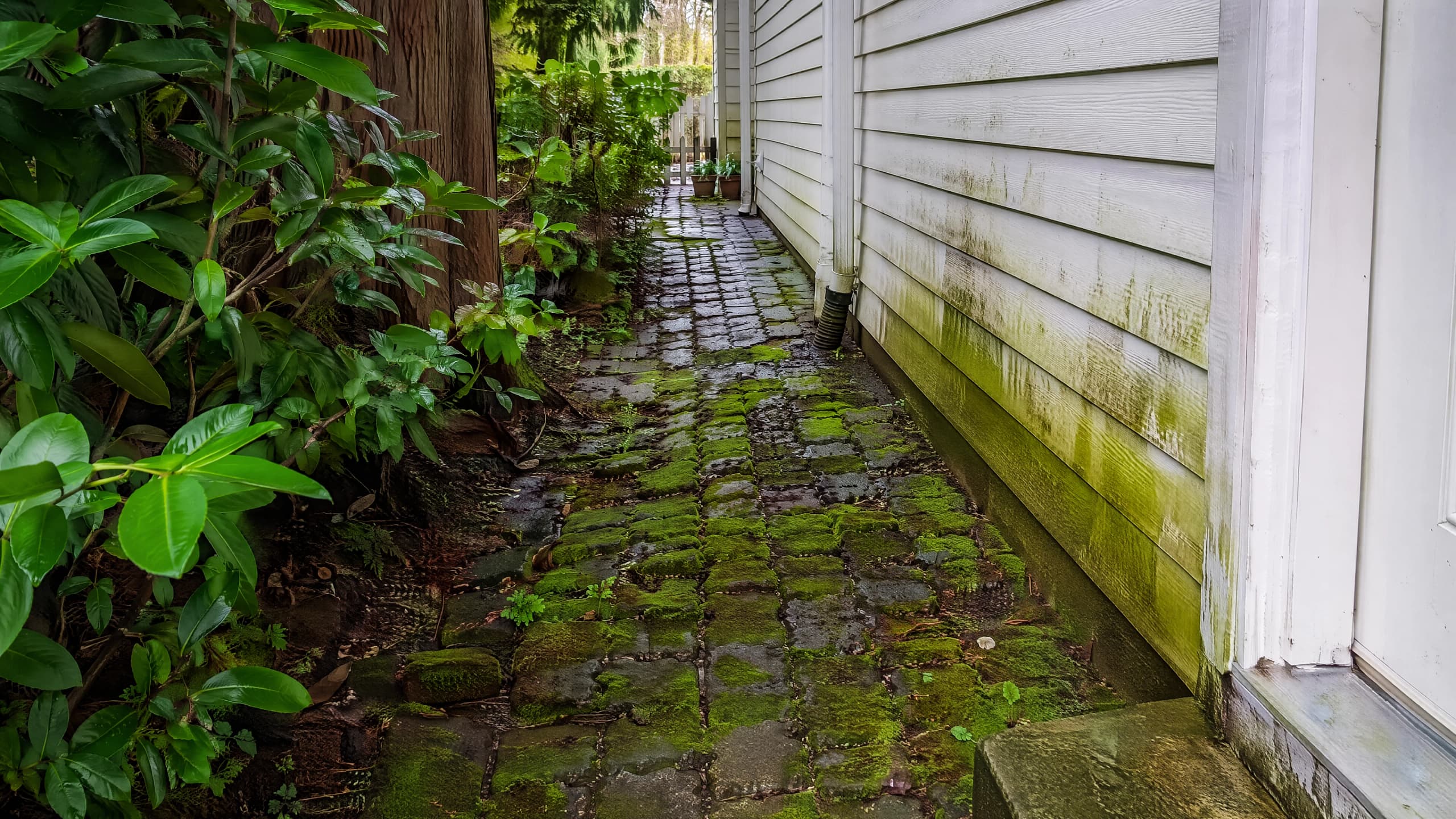
Metro Vancouver takes on roughly 1,100 mm of rain in a normal year, and the bulk of it lands between October and April. For an exterior surface, that means eight months of near-continuous moisture at mild temperatures, which is precisely the recipe moss, green algae, and lichen are waiting for. Moss anchors into siding and concrete with root-like rhizoids that hold a film of water against the surface long after the rain stops, quietly accelerating decay underneath.
Green algae is the other regular. It feeds on the organic film our tree canopy supplies, cedar debris, alder and birch pollen, and general urban grime, and it shows up first as a faint green shadow on the shady side of the house. Left through a winter, that shadow becomes a slick coating on walkways and a stain on siding that a garden hose will not touch.
That is why the generic advice you will read in national guides, wash anytime it is warm, undersells the problem here. In this climate the question is not just when washing is comfortable; it is when washing will actually hold. Wash in late fall and the regrowth season starts the same week. Wash at the front of the dry season and you bank five or six clean months before the rain returns.
Pro Tip
Walk your property after three dry days and look at the north and east walls specifically. If they are still showing damp patches, that is where moss will establish first, and where your wash should start.
The Best Time to Pressure Wash a House in Vancouver, Month by Month
The practical local window runs April to early October, but each stretch inside it suits a different job.
April is the earliest sensible start, and only for hard surfaces. Driveways, walkways, and patios can be washed between showers because nobody needs them bone dry afterward. It is also when winter's black algae film is most obvious, so you can see exactly what you are removing.
Siding season lands in May and June. Temperatures sit comfortably in the 5 to 24 C band that cleaning solutions like, the cedar and alder pollen dump is mostly finished, and there is enough forecast reliability to find a 48-hour dry stretch. Washing in this window removes winter grime and pollen film in one pass, which is exactly what the annual siding wash is for.
July through September is the money window for anything that has a second step. Exterior painting, deck sealing, fence staining, and pre-sale spruce-ups all need the surface genuinely dry, and these are the only months Vancouver hands out 72-hour dry guarantees with any regularity. It is also when strata corporations run building-wide washing of parkades, walkways, and garbage areas, because notice periods and dry forecasts finally line up.
October is the closing bell. An early-October wash of flatwork ahead of the rain season is a defensive move that keeps walkways safe through winter, but siding washed this late will not stay clean for long. From November to March, washing is triage only: a slippery walkway or an emergency before a listing, done between systems, with expectations set accordingly.
- April: hard surfaces only; first pass at winter's algae film
- May-June: the annual siding wash; pollen is down, drying is reliable
- July-September: paint prep, deck sealing, strata common areas, anything needing 72 dry hours
- Early October: final defensive wash of walkways and driveways before the rain returns
- November-March: emergencies and safety washes only
Can You Pressure Wash in the Rain?
Sometimes, and it depends entirely on what the job needs afterward.
For a plain water rinse of concrete, light rain is mostly harmless; the surface is getting wet either way. Where rain wrecks the job is everywhere else. Detergents and moss treatments dilute before they finish working, so the organic growth you thought you killed comes back within weeks. Siding washed in the rain never dries, which defeats the point of removing the moisture-holding growth in the first place.
There is also a safety line that gets crossed quickly. Wet algae on a sloped driveway is one of the most slippery surfaces a homeowner will ever stand on, and adding a pressure washer's recoil to that footing is how people get hurt. Professional crews will rinse flatwork in drizzle, but they will not run detergent passes, ladder-adjacent work, or wood in active rain.
The working rule we use on scheduling: if the job involves cleaning solutions, wood, or any follow-up coat of paint, stain, or sealer, it waits for a dry window. If it is bare concrete and a rinse, the forecast can be imperfect.
How Often Each Surface Needs Washing in This Climate
Rainfall roughly doubles the maintenance frequency you will see quoted in national guides. Here is the local schedule by surface.
Frequency is where Vancouver diverges hardest from the standard advice. A once-a-year siding wash is still right, but flatwork that a drier city could leave for eighteen months will be green and slick here within eight. Homes under mature trees, common across North Vancouver, West Vancouver, and Burke Mountain, sit at the aggressive end of every range because canopy shade and debris feed regrowth all year.
In practice that means siding once a year in late spring, driveways and walkways every six months, decks annually before sealing, and fences every year or two. The table below lays out the full cadence, window by window.
Washing Before Painting, Sealing, or Selling
The wash is step one of these projects, and the drying time between steps is where Vancouver schedules go wrong.
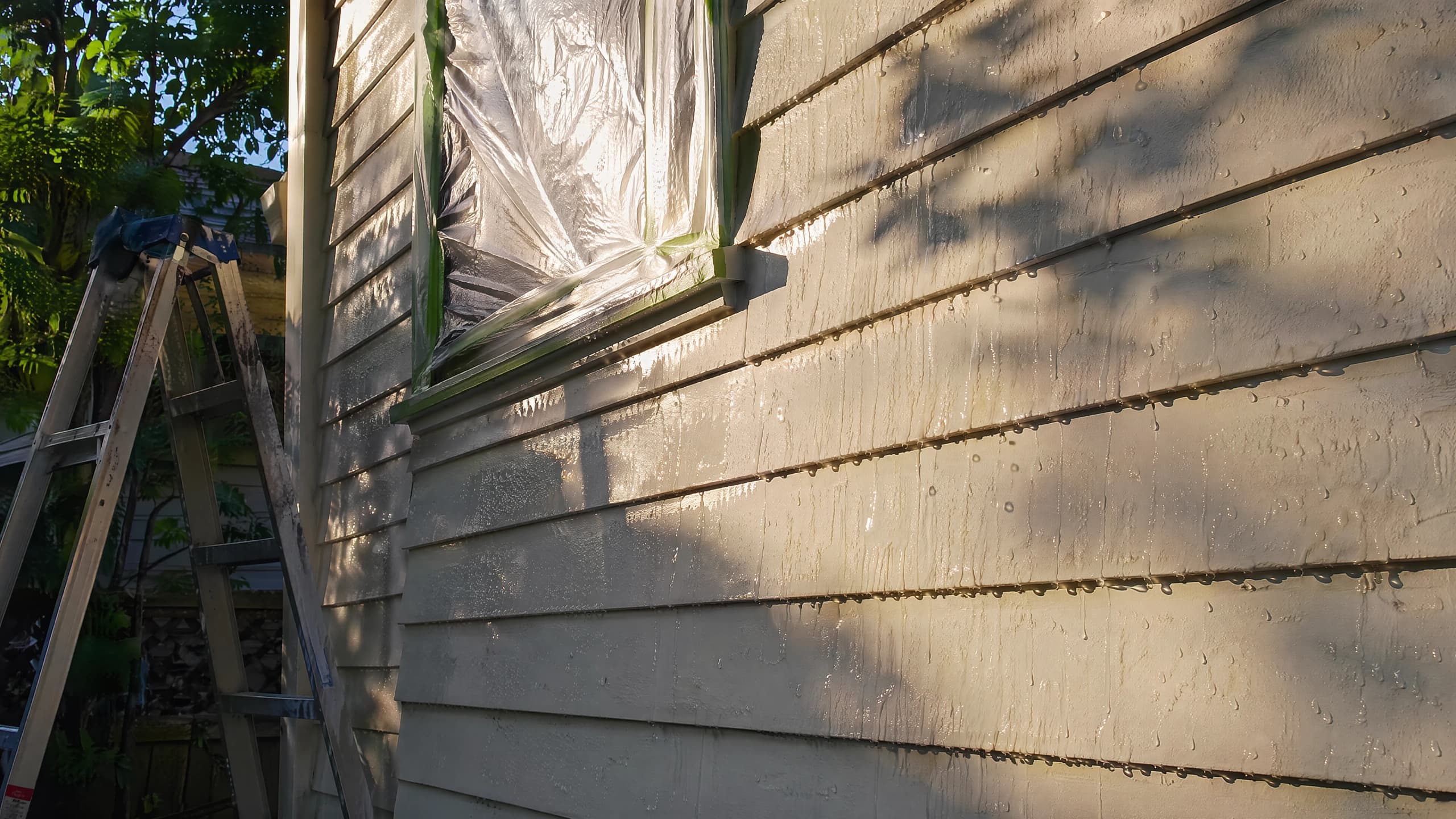
Paint does not bond to chalk, mildew, or algae, so every exterior painting project here starts with a wash. The part that surprises homeowners is the wait afterward. You need 24 to 72 hours of genuinely dry weather before the first coat, at least 48 for wood, and painters will want surface moisture under about 15 percent before they commit. That means the wash and the paint job need to live inside the same dry week, which in practice means booking both for July, August, or early September.
Deck sealing and fence staining follow the same logic with even less forgiveness, because horizontal wood drinks water and gives it back slowly. Wash the deck, give it two full dry days, then seal, and do all three before the September long weekend rather than gambling on October.
Pre-sale washes are their own category. If a listing is going live, washing the driveway, entry, and siding a week before photos is one of the highest-return jobs in the exterior category, and pairing it with a window cleaning pass makes the whole frontage read as maintained. Realtors book these year-round, which is fine, as long as everyone understands a November wash is for the photos, not for longevity.
Pro Tip
Sequence a full exterior refresh in this order: gutters and roofline first, then siding, then windows, then flatwork. Water runs downhill, so anything washed above a finished surface will streak it.
DIY or Book a Crew?
Plenty of local flatwork is a fine weekend job. The cases below are where a crew earns its fee.
A rented or consumer machine handles flat concrete well, and a careful homeowner can keep a driveway respectable on the six-month cycle. The jobs worth handing off share a theme: risk that is not obvious until it goes wrong. High pressure aimed up under vinyl laps drives water into the wall assembly. Older stucco and cedar want a soft wash, low pressure plus the right solution, or they scar; and two-storey walls put untrained hands on ladders with recoil, the single most common way these projects end badly.
There are also two local wrinkles worth knowing. During summer water restrictions, regional rules limit some residential washing, while professional outfits run efficient equipment that stays onside. And for strata buildings, councils typically require proof of insurance before anyone washes shared surfaces, which takes DIY off the table for common areas entirely.
If you want the timing handled for you, our pressure washing service runs across Metro Vancouver through the dry season, and we schedule shaded, moss-prone properties into the earliest windows on purpose. Either way, put the wash on the calendar in spring; the good weeks go fast.
Step-by-Step
Plan Your Wash in Five Checks
Run these before you book a machine rental or a crew, in order.
Check the three-day forecast
You need the wash day plus 24 to 48 dry hours behind it. For paint or sealer prep, hold out for a 72-hour window.
- Wash day: dry, wind under about 20 km/h
- Day two and three: no rain if detergents, wood, or coatings are involved
Confirm the temperature band
5 to 24 C is the working range. Below it, solutions slow down and overnight ice becomes possible; well above it, detergent flash-dries on warm siding and streaks.
- Morning starts beat afternoon heat in July and August
- Skip mornings after a near-freezing night in early spring
Walk the perimeter
Note what you are actually removing and where. Green film and moss concentrate on north and east faces and under trees, and those areas dictate where the work starts.
- Mark delicate surfaces: cedar, older stucco, painted wood
- Check for failed caulking or gaps where water could be driven in
Match the method to the surface
Pressure is for concrete and stone. Siding, roofs edges, and anything soft or aged wants a soft wash: low pressure with a solution that kills growth at the root.
- Concrete and pavers: standard pressure
- Vinyl, stucco, wood: soft wash, never a narrow high-pressure tip
Book the notice, then the date
Strata common areas need council approval and posted notice; detached homes just need the calendar. Either way, lock a dry-season date early because May to September fills up across the region.
- Strata: raise it at the spring council meeting
- Homeowners: pair the wash with windows or gutters to save a second visit
| Surface | Best window | Local frequency | Watch for |
|---|---|---|---|
| Vinyl or fibre-cement siding | May-June | Every 12 months | Green shadow on north and east faces |
| Driveways and walkways | Any dry week, April-October | Every 6 months | Slippery black algae film after winter |
| Decks and patios | Late spring; before sealing | Every 12 months | Moss rooting between boards |
| Fences | Summer | Every 12-24 months | Grey weathering plus algae at the base |
| Strata common areas | July-September | Every 6-12 months | Grease and odour at garbage and parkade pads |
Services mentioned in this article
Ready for help?
4.9 · 800+ Google reviewsBook Your Exterior Clean Inside the Dry Window
P&J Cleaners schedules pressure washing across Metro Vancouver from May to September, when surfaces actually dry. Tell us the surface and the goal, whether that is moss gone, paint prep, or strata common areas, and we will slot you into the right week.
778-720-2224Pressure Washing Timing Questions
What time of year is best to pressure wash a house in Vancouver?
May through September. Those are the months when Metro Vancouver reliably delivers the mild, dry 24 to 48 hour stretch a proper wash needs. Late May and June are ideal for siding because winter grime and spring pollen are both down; July and August are safest for anything that must dry fully, like decks before sealing or walls before painting.
How often should you pressure wash a house in this climate?
Once a year for siding, and every six months for driveways, walkways, and patios. That is roughly double the frequency national guides suggest, because 1,100 mm of annual rain feeds moss and algae for eight months straight. Homes under heavy tree cover on the North Shore often need the six-month cycle on shaded walls too.
Is it OK to pressure wash in the rain?
A light drizzle will not ruin a plain rinse of concrete, but it undermines everything else. Cleaning solutions dilute before they can work, siding never dries, and wet algae is dangerously slippery underfoot. If the job involves detergents, wood, or any follow-up painting or sealing, wait for a dry stretch.
How long does a house need to dry after pressure washing?
Plan on 24 to 72 hours of dry weather before painting or sealing, and at least 48 hours for wood. Painters want surface moisture under about 15 percent before they open a can. In Vancouver that drying window is easy to find in July and nearly impossible in November, which is why wash-then-paint projects belong in summer.
Can pressure washing damage siding?
Yes, if the pressure or angle is wrong. High pressure aimed upward drives water behind vinyl laps and into wall assemblies, and it can etch soft wood and older stucco. Delicate surfaces should get a soft wash instead: low pressure with a cleaning solution that kills moss and algae at the root rather than blasting the surface.

Meet the Author
Jason
Co-Founder
Jason oversees commercial operations, workflow design, and quality control for office, restaurant, and specialty cleaning programs across Metro Vancouver.
Keep Exploring