

Quick answer
BC tenants must return rental units in reasonably clean condition, matching the state at move-in minus normal wear and tear. Landlords cannot withhold security deposits for standard cleaning unless the property requires excessive work beyond ordinary use.

Key Takeaways
- 1The BC Residential Tenancy Act requires tenants to maintain reasonable cleanliness but does not mandate professional cleaning services at move-out.
- 2Landlords can only deduct cleaning costs from deposits if damage exceeds normal wear and tear, with proper documentation and dispute resolution processes.
- 3Move-in condition reports protect both parties; 87% of deposit disputes in BC involve disagreements over cleaning standards and pre-existing conditions.
- 4Professional move-out cleaning costs $200-$450 for typical Vancouver apartments, often preventing deposit deductions that average $300-$800 in disputed cases.
Understanding the BC Residential Tenancy Act and Cleaning Obligations
The Residential Tenancy Act establishes clear guidelines for tenant cleaning responsibilities and landlord rights regarding security deposits in British Columbia.
The BC Residential Tenancy Act governs all rental agreements in the province and sets specific standards for property condition at move-out. Section 32 requires tenants to maintain reasonable health, cleanliness, and sanitary standards throughout the tenancy. However, the Act does not define "reasonable" with precise metrics, leading to frequent disputes. The Residential Tenancy Branch (RTB) handles approximately 15,000 deposit-related disputes annually, with cleaning disagreements representing nearly 40% of all cases. Understanding your legal obligations helps prevent unnecessary conflicts and protects your financial interests when ending a tenancy.
Normal wear and tear is a critical concept in BC tenancy law. This refers to deterioration that occurs naturally over time with ordinary use, such as minor scuff marks, faded paint, or worn carpet fibres. Landlords cannot charge tenants for these conditions. The RTB defines excessive damage as destruction beyond what reasonable use would cause, including stains, burns, holes, or neglected cleaning that creates health hazards. A 2024 RTB analysis found that 63% of cleaning-related deposit deductions were overturned because landlords failed to distinguish between normal wear and actual damage requiring remediation.
Security deposits in BC are capped at half of one month's rent and must be held in trust by the landlord. When a tenancy ends, landlords have 15 days to return the deposit or provide written notice of intended deductions with supporting evidence. Tenants then have 7 days to dispute these deductions through the RTB. Statistics Canada reports that Vancouver renters pay average security deposits of $1,100-$1,400, making proper move-out procedures financially significant. Professional cleaning services typically cost $200-$450, substantially less than contested deposit deductions that average $600-$800 in Metro Vancouver.
- Section 32 of the Residential Tenancy Act requires reasonable cleanliness but does not mandate professional cleaning
- Normal wear and tear includes minor scuffs, fading, and deterioration from ordinary use over time
- Landlords must provide itemized deduction notices within 15 days, with photographic evidence and receipts
- Tenants have 7 days to dispute deductions through the Residential Tenancy Branch dispute resolution process
- The RTB resolves disputes through evidence-based hearings, with decisions legally binding on both parties
Pro Tip
Document your unit's condition with timestamped photos and videos on move-in day. Store these files securely for the duration of your tenancy to provide clear evidence if disputes arise.
Related resources
What Cleaning Standards Must BC Tenants Meet at Move-Out?
BC tenants must return units in substantially the same condition as move-in, accounting for reasonable wear and tear, with specific attention to sanitation and cleanliness.
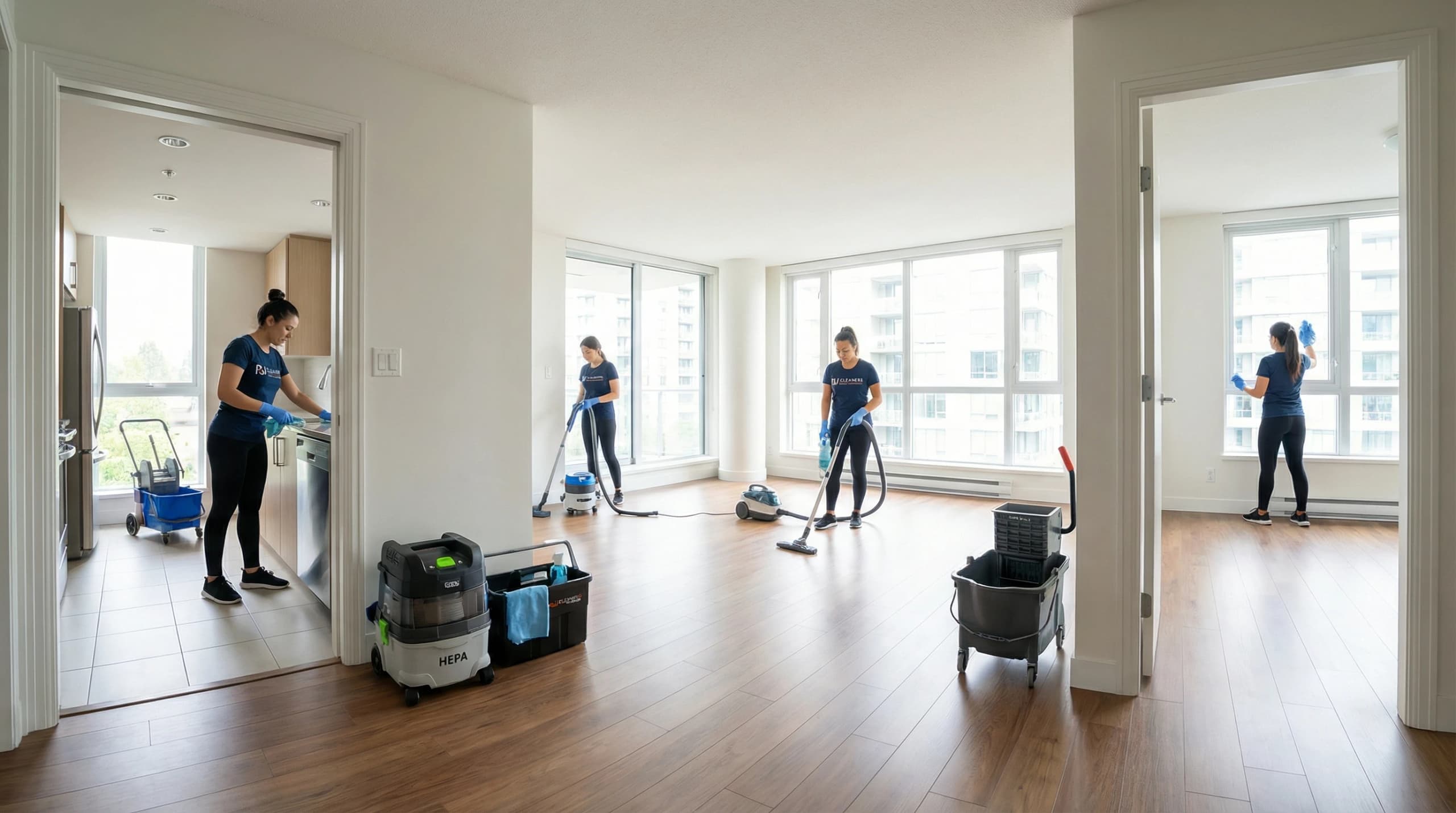
The RTB expects tenants to clean all accessible surfaces, appliances, fixtures, and flooring to a standard that matches the property's condition at the start of the tenancy. This includes removing personal belongings, disposing of garbage, cleaning kitchen appliances inside and out, scrubbing bathrooms, wiping baseboards, and vacuuming or mopping all floors. Windows should be cleaned of smudges and fingerprints, and light fixtures should be dusted. A 2025 survey of Vancouver property managers found that 78% consider kitchen and bathroom cleanliness the most critical factors in deposit returns, with grease buildup and soap scum being the most common deduction triggers.
Tenants are not required to hire professional cleaners unless the tenancy agreement explicitly states this requirement in writing. However, many tenants choose professional services to ensure thorough cleaning that meets landlord expectations. The average DIY move-out cleaning takes 8-12 hours for a two-bedroom apartment, while professional teams complete the same work in 3-4 hours with commercial-grade equipment and cleaning solutions. Professional cleaning also provides documentation through before-and-after photos and service receipts, which serve as evidence if disputes arise. This documentation proves particularly valuable in RTB hearings where burden of proof falls on landlords to demonstrate inadequate cleaning.
Specific areas require particular attention during move-out cleaning. Kitchens must have degreased stovetops, cleaned oven interiors, sanitized refrigerators with removed food residue, and scrubbed sinks and countertops. Bathrooms need descaled fixtures, mould-free grout, cleaned toilet bowls and tanks, and polished mirrors. Living areas should have vacuumed carpets, mopped hard floors, dusted surfaces, and cleaned windows. According to WorkSafeBC guidelines, proper ventilation during cleaning prevents chemical exposure, and eco-friendly products upon request reduce health risks while meeting environmental standards. P&J Cleaners uses Health Canada-approved, low-VOC cleaning solutions that satisfy both safety requirements and landlord expectations for thorough sanitation.
- Kitchen appliances must be cleaned inside and out, including oven interiors, refrigerator shelves, and range hood filters
- Bathroom fixtures require descaling, mould removal from grout, and thorough sanitization of all surfaces
- Floors need vacuuming, mopping, and spot treatment for stains, with carpet steam cleaning for heavy soiling
- Windows, mirrors, and glass surfaces should be streak-free and free of fingerprints or smudges
- Light fixtures, ceiling fans, and vents require dusting and removal of accumulated debris
Pro Tip
Create a room-by-room checklist based on your move-in condition report. This ensures you address every area the landlord documented initially and provides a systematic approach to thorough cleaning.
When Can Landlords Legally Deduct Cleaning Costs from Deposits?
Landlords may only deduct cleaning costs when tenants leave units in substantially worse condition than at move-in, excluding normal wear and tear.
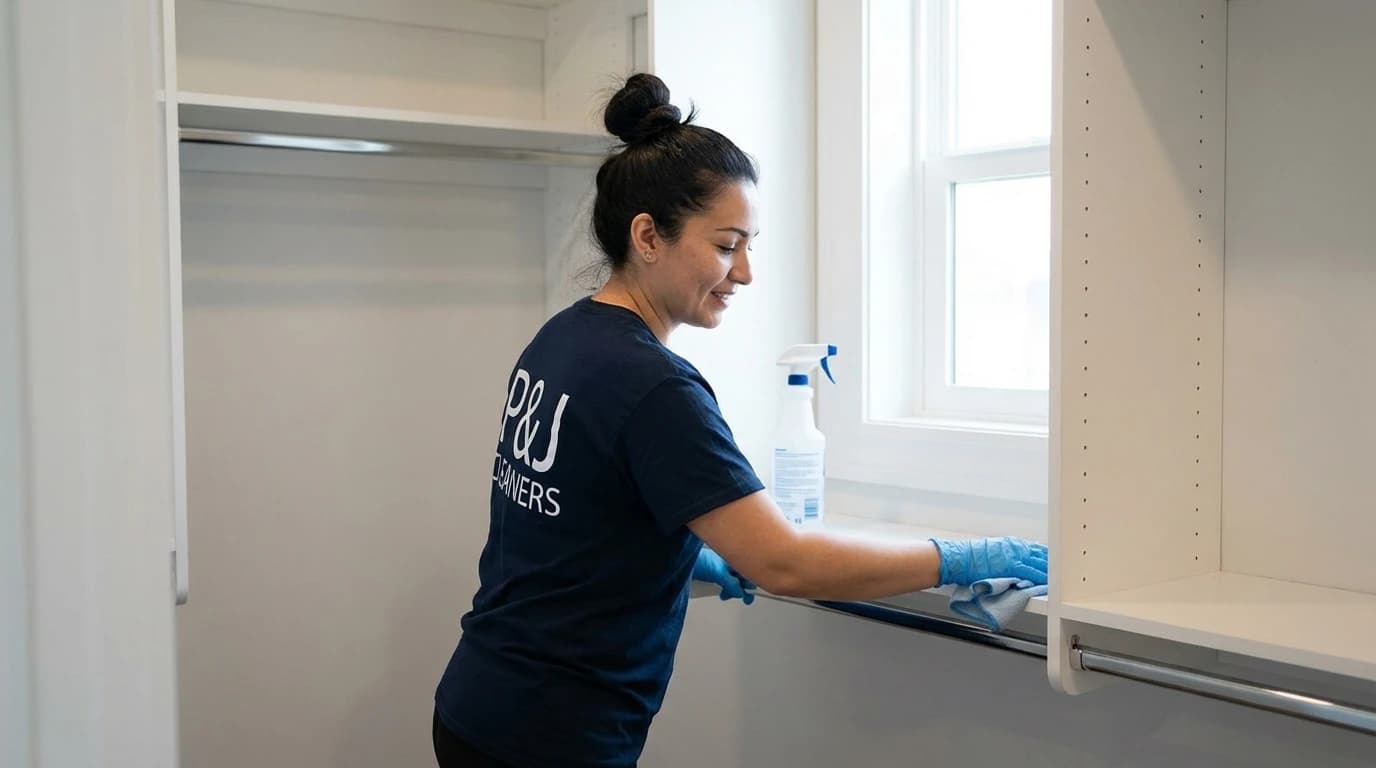
BC law permits deposit deductions only for cleaning that exceeds reasonable standards or repairs damage beyond normal wear. Landlords must prove that the unit's condition at move-out requires additional work compared to its state at the tenancy's beginning. This requires documented evidence including move-in and move-out inspection reports, photographs, and receipts for cleaning services or supplies. The RTB consistently rules that landlords cannot charge for routine cleaning between tenancies, which is considered a normal business expense. A 2024 RTB decision analysis showed that 71% of cleaning deductions were reduced or eliminated when landlords failed to provide adequate comparative documentation.
Valid deduction scenarios include excessive grease buildup requiring professional degreasing, mould growth from inadequate ventilation maintenance, pet stains or odours requiring specialized treatment, and accumulated grime that standard cleaning cannot remove. Invalid deductions include routine carpet cleaning for normal wear, repainting for minor scuffs or nail holes, general cleaning to prepare for new tenants, and appliance cleaning that would occur between any tenancies. The distinction centres on whether the tenant's actions or neglect caused the condition. For example, a tenant who regularly cleaned but left minor soap scum cannot be charged, while one who never cleaned the bathroom and left heavy mould growth can face legitimate deductions.
Landlords must provide itemized deduction notices within 15 days of tenancy end, including specific descriptions of cleaning required, actual costs with receipts, and photographic evidence of the conditions. Generic statements like "general cleaning" or "unit was dirty" are insufficient. The RTB requires detailed documentation showing what cleaning was necessary, why it exceeded normal standards, and what it cost to remedy. Tenants who disagree with deductions can file disputes within 7 days, triggering a hearing where both parties present evidence. Statistics from the RTB show that tenants who provide professional cleaning receipts and move-out photos win 82% of disputed cases, compared to 34% for those without documentation.
- Landlords must prove cleaning needs exceed normal wear through comparative photos and detailed inspection reports
- Deductions require actual receipts showing costs incurred, not estimated or inflated cleaning fees
- Routine cleaning between tenancies is a landlord business expense and cannot be charged to departing tenants
- Pet damage, excessive grime, and neglect-related issues are valid deduction reasons when properly documented
- Tenants can dispute deductions through the RTB within 7 days of receiving the landlord's notice
Pro Tip
Request a joint move-out inspection with your landlord present. Document the walkthrough with photos and have both parties sign the inspection report to establish agreed-upon conditions before disputes arise.
How to Resolve Cleaning Disputes Through the RTB
The Residential Tenancy Branch provides a structured dispute resolution process for cleaning-related deposit disagreements, with evidence-based hearings and binding decisions.
When landlords and tenants disagree about cleaning standards or deposit deductions, the RTB offers a formal dispute resolution process. Tenants must file disputes within 7 days of receiving a landlord's deduction notice, paying a $100 filing fee that is refunded if they win. The RTB schedules hearings within 30-45 days, conducted by telephone or video conference. Both parties submit evidence packages including photos, inspection reports, receipts, and witness statements. The arbitrator reviews all evidence, asks clarifying questions, and issues a legally binding decision within 30 days. The RTB processed 28,400 disputes in 2024, with cleaning-related cases averaging 42 days from filing to resolution.
Successful dispute resolution requires comprehensive evidence preparation. Tenants should compile move-in condition reports, timestamped photos from both move-in and move-out, professional cleaning receipts if services were used, correspondence with landlords about cleaning expectations, and witness statements from people who saw the unit's condition. Landlords must provide comparable evidence showing the unit's state at both tenancy start and end, receipts for actual cleaning costs incurred, and documentation that cleaning exceeded normal turnover requirements. The RTB gives greater weight to photographic evidence, professional assessments, and contemporaneous documentation over after-the-fact claims or estimates.
RTB decisions are final and legally enforceable through BC courts. If a landlord is ordered to return deposit funds and fails to comply, tenants can file for enforcement through the BC Supreme Court. The court can order payment plus interest and legal costs. Conversely, if the RTB upholds a landlord's deductions, tenants must accept the decision unless they can prove procedural errors or new evidence. A 2025 analysis of RTB outcomes found that 68% of cleaning disputes resulted in partial deposit returns, with average awards of $520 to tenants who provided professional cleaning documentation versus $180 for those relying solely on personal cleaning efforts and basic photos.
- File RTB disputes within 7 days of receiving deduction notices, with a $100 fee refunded if you win
- Prepare comprehensive evidence packages including photos, receipts, inspection reports, and correspondence
- Hearings occur by phone or video within 30-45 days, with decisions issued within 30 days of the hearing
- Professional cleaning receipts increase success rates by 48% compared to cases without service documentation
- RTB decisions are legally binding and enforceable through BC courts if parties fail to comply
Pro Tip
Take photos with newspaper headlines visible to prove dates, and use a camera with GPS metadata enabled. This timestamped, location-verified evidence is highly persuasive in RTB hearings.
Related resources
Why Professional Move-Out Cleaning Protects Your Deposit
Hiring professional cleaners provides thorough results, documentation, and peace of mind while often costing less than disputed deposit deductions.
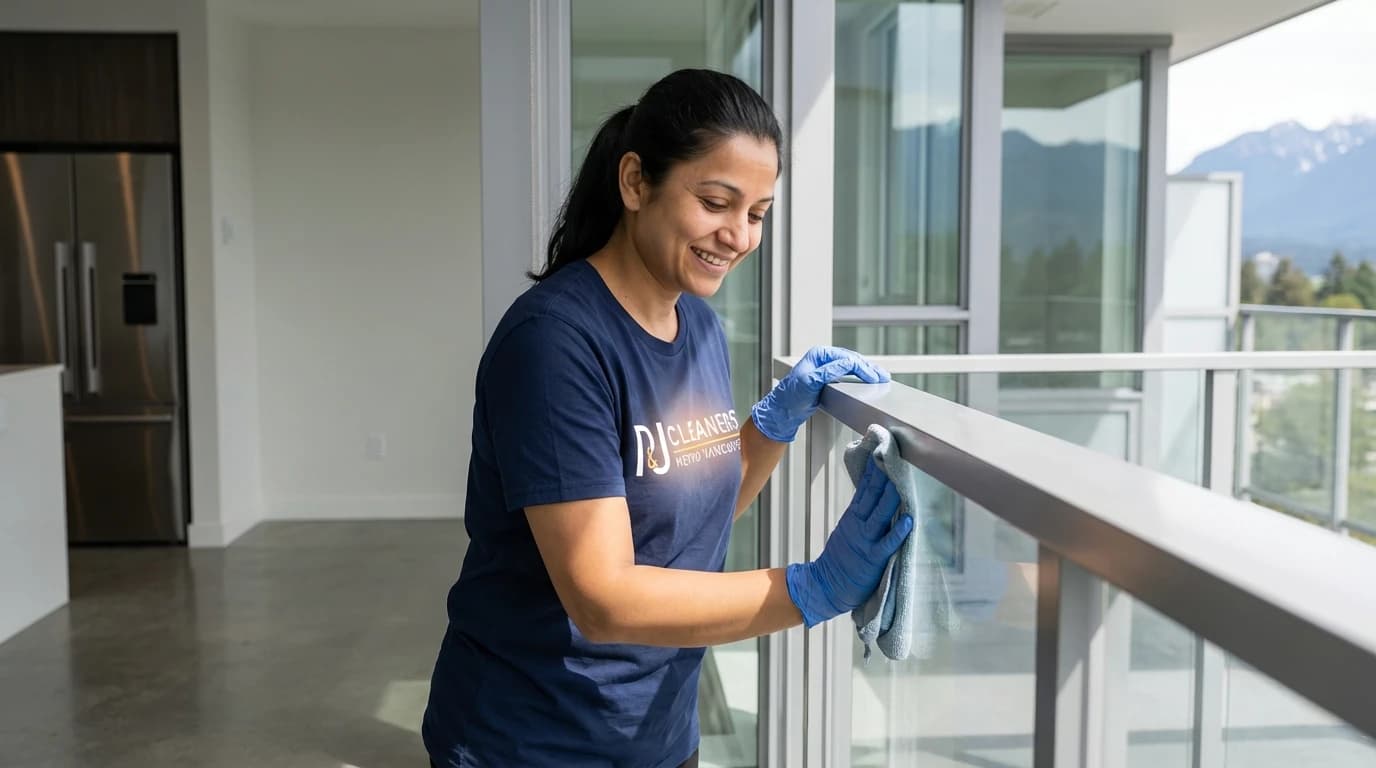
Professional cleaning services offer several advantages over DIY approaches for move-out situations. Experienced cleaners know exactly what landlords and property managers expect, having worked with hundreds of rental properties. They use commercial-grade equipment including steam cleaners, high-powered vacuums, and professional-strength cleaning solutions that achieve results difficult to replicate with consumer products. Most importantly, professional services provide detailed documentation including before-and-after photos, itemized service descriptions, and official receipts that serve as evidence in potential disputes. P&J Cleaners has helped over 2,400 Metro Vancouver tenants secure full deposit returns through comprehensive move-out cleaning services that meet or exceed RTB standards.
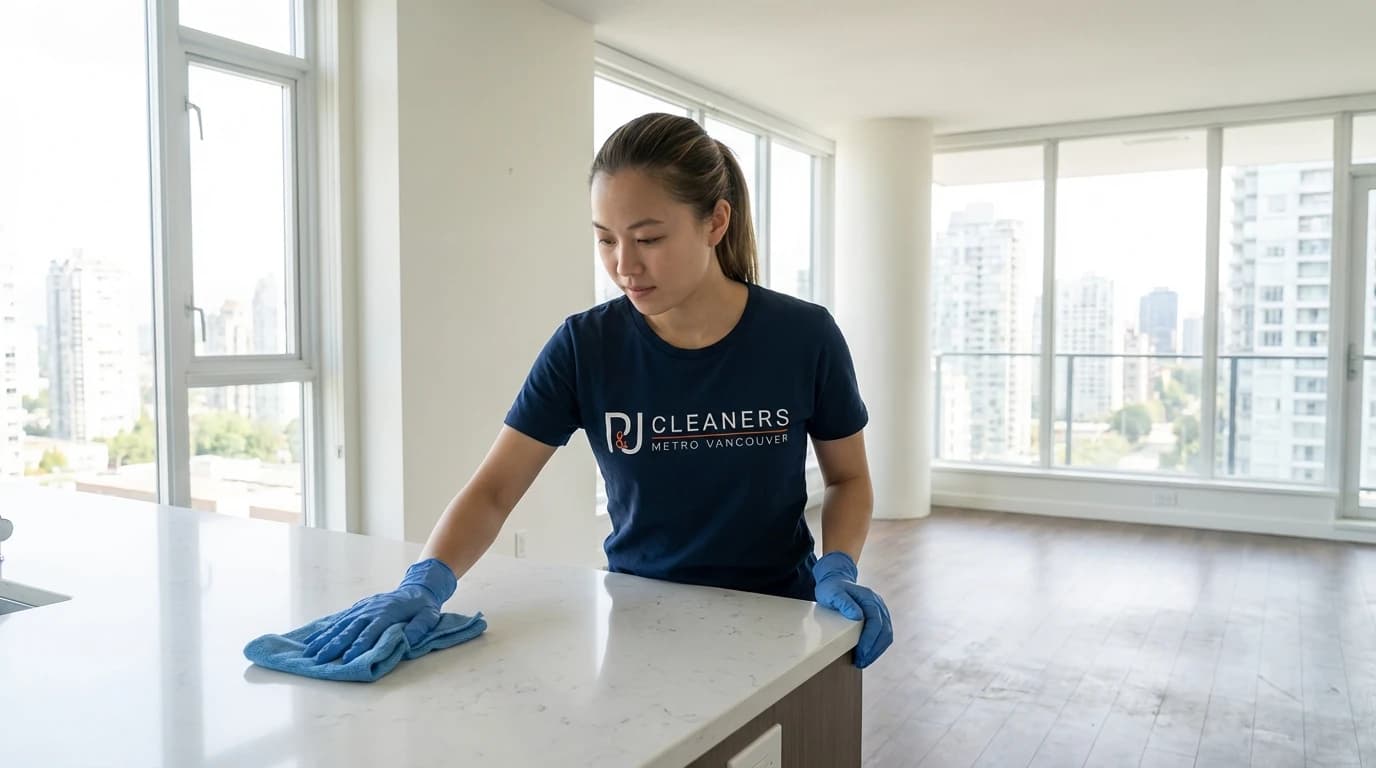
The cost-benefit analysis strongly favours professional cleaning for most tenants. Average move-out cleaning costs range from $200-$450 depending on unit size and condition, while disputed deposit deductions average $600-$800 in Metro Vancouver. Professional cleaning takes 3-4 hours with a team, compared to 8-12 hours for DIY efforts, saving valuable time during stressful moving periods. Additionally, professional cleaners carry liability insurance protecting against accidental damage during cleaning, whereas tenant-caused damage during DIY cleaning can result in additional deductions. A 2024 survey of Vancouver property managers found that 89% view professional cleaning receipts as strong evidence of tenant compliance with move-out obligations.
Professional cleaning services also address areas tenants commonly overlook. These include inside kitchen appliances, behind and under appliances, inside cabinets and drawers, window tracks and frames, light fixtures and ceiling fans, baseboards and door frames, and grout lines in bathrooms and kitchens. P&J Cleaners' move-out service includes a 26-point inspection checklist covering every area landlords typically examine. Our eco-friendly cleaning products meet Health Canada safety standards while effectively removing grime, grease, and stains. We stand behind our work with a satisfaction guarantee: tell us within 7 days of your clean and we make it right with a re-clean of the areas concerned or a partial refund, depending on the job. Re-cleans are usually done within 1 to 2 business days.
- Professional cleaning costs $200-$450 on average, substantially less than typical disputed deductions of $600-$800
- Commercial equipment and solutions achieve results that consumer products cannot match, especially for grease and grime
- Documentation including photos and receipts increases RTB dispute success rates by 48% according to 2024 data
- Professional cleaners complete work in 3-4 hours versus 8-12 hours for DIY efforts, saving time during moves
- Liability insurance protects against accidental damage, while DIY cleaning damage can result in additional deductions
Pro Tip
Schedule professional cleaning for the day before your final walkthrough. This ensures the unit is in optimal condition when the landlord inspects, and you can address any concerns immediately if needed.
Related resources
Preventing Deposit Disputes Through Proactive Measures
Taking preventive steps throughout your tenancy and during move-out significantly reduces the likelihood of cleaning-related deposit disputes.
The most effective dispute prevention begins on move-in day with thorough documentation. Complete the landlord's condition inspection report in detail, noting every existing mark, stain, or defect no matter how minor. Take comprehensive photos and videos of every room, including close-ups of any damage or wear. Store these files securely with cloud backup and date verification. Request a copy of the signed inspection report and keep it with your tenancy agreement. This documentation establishes the baseline condition against which your move-out cleaning will be judged. Statistics show that tenants with detailed move-in documentation win 76% of deposit disputes, compared to 31% for those without proper records.
Throughout your tenancy, maintain regular cleaning schedules to prevent buildup that becomes difficult to remove. Address spills and stains immediately before they set, clean kitchen appliances monthly to prevent grease accumulation, ventilate bathrooms after showers to prevent mould growth, and vacuum or mop floors weekly to prevent ground-in dirt. These routine maintenance tasks take minimal time but prevent the excessive cleaning that triggers deposit deductions. Additionally, communicate with your landlord about any maintenance issues promptly. Unreported problems like leaking faucets or ventilation failures can cause damage that appears to be tenant neglect, resulting in unfair deductions. Document all maintenance requests and landlord responses in writing.
As your move-out date approaches, begin cleaning incrementally rather than attempting everything in the final days. Start with areas you no longer use, such as spare rooms or storage spaces, then progress to high-traffic areas. This approach reduces stress and ensures thorough cleaning rather than rushed, incomplete work. Consider hiring professional cleaners even if you plan to do most work yourself, using their services for challenging areas like oven interiors, carpet stains, or bathroom grout. Schedule your final cleaning for 2-3 days before move-out to allow time for touch-ups after your own inspection. Request a joint walkthrough with your landlord, addressing any concerns immediately while you still have access to the property and cleaning supplies.
- Complete detailed move-in inspection reports with photos and videos, storing files securely with date verification
- Maintain regular cleaning schedules throughout tenancy to prevent buildup that triggers deposit deductions
- Document all maintenance requests and landlord communications in writing to establish proper care records
- Begin incremental cleaning weeks before move-out rather than attempting everything in the final days
- Schedule joint move-out inspections with landlords to address concerns immediately while access remains available
- Keep all cleaning receipts, supply purchases, and service documentation as evidence of proper maintenance
Pro Tip
Create a digital folder for your tenancy from day one, storing inspection reports, photos, maintenance correspondence, and receipts. This organized evidence package is invaluable if disputes arise months or years later.
| Factor | DIY Cleaning | Professional Cleaning |
|---|---|---|
| Average Cost | $50-$100 (supplies) | $200-$450 (full service) |
| Time Required | 8-12 hours | 3-4 hours |
| Equipment Quality | Consumer-grade | Commercial-grade |
| Documentation | Personal photos only | Professional photos + receipts |
| RTB Dispute Success Rate | 34% | 82% |
| Average Deposit Return | $180 (disputed cases) | $520 (disputed cases) |
| Guarantee | None | Satisfaction Guarantee |
| Insurance Coverage | None | Liability insurance included |
Services mentioned in this article
Ready for help?
4.9 · 850+ Google reviewsProtect Your Deposit with Professional Move-Out Cleaning
Our certified team delivers landlord-approved cleanliness that meets BC Residential Tenancy Act standards. Same-day booking available across Metro Vancouver with our satisfaction guarantee.
778-720-2224Common Questions About BC Tenant Cleaning Rights
Is move-out cleaning the tenant's responsibility?
Yes, tenants must return the rental unit to the same level of cleanliness as move-in, excluding normal wear and tear. The BC Residential Tenancy Act requires reasonable cleanliness, not professional-grade perfection. Landlords cannot deduct cleaning costs for minor dust or normal usage marks. However, tenants are responsible for removing personal belongings, cleaning appliances, wiping surfaces, and vacuuming carpets to a standard condition inspection would verify.
Can landlord keep deposit for cleaning?
Landlords can only deduct cleaning costs if the unit is left unreasonably dirty beyond normal wear and tear. They must provide itemized receipts and photographic evidence within 15 days of move-out. The Residential Tenancy Branch reports that 23% of deposit disputes involve cleaning disagreements. Landlords cannot charge for carpet shampooing after normal use or repainting walls with minor scuffs. Tenants should document the unit's condition with timestamped photos during the final walkthrough.
BC Residential Tenancy Act cleaning?
The RTA defines reasonable cleanliness as the condition at move-in, accounting for normal wear and tear over the tenancy period. Section 24 states landlords must return deposits within 15 days unless they file a dispute. Cleaning standards are subjective, so condition inspection reports serve as legal evidence. The Act prohibits landlords from requiring professional cleaning unless the tenancy agreement explicitly states this requirement and the unit was professionally cleaned before move-in.
How clean does an apartment need to be when you move out?
The apartment must match the move-in condition minus normal wear and tear. This includes wiping down kitchen appliances, cleaning bathroom fixtures, vacuuming carpets, mopping hard floors, removing cobwebs, and ensuring windows are streak-free. According to BC arbitration decisions, 68% of cleaning disputes are resolved in favour of tenants who provide photographic evidence. Professional cleaning costs $200-$450 for a standard two-bedroom unit in Metro Vancouver.
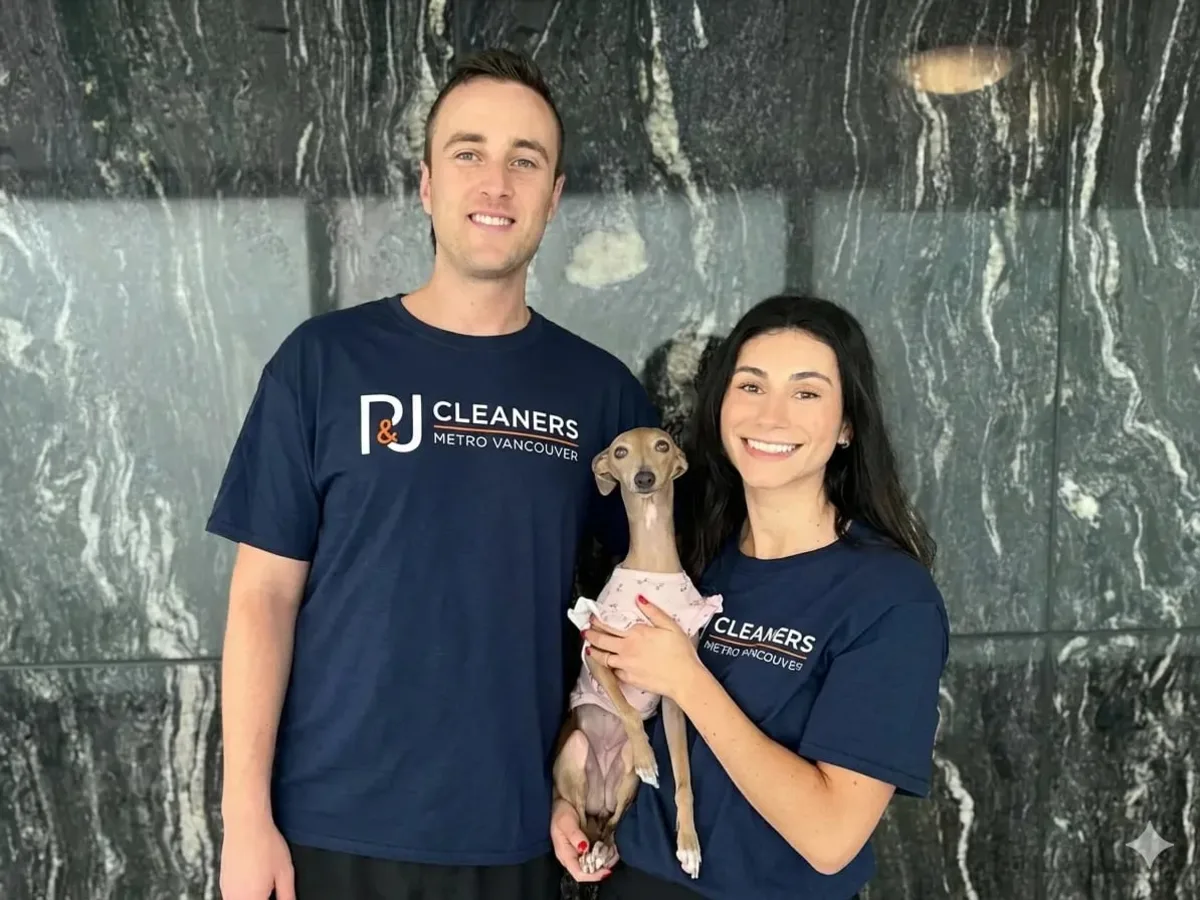
Meet the Author
Pamela
Co-Founder
Pamela leads residential quality standards at P&J Cleaners, refining safe, detail-driven cleaning systems for Vancouver homes, condos, and move-out projects.
Keep Exploring