

Industry Overview
Event Space Hygiene Requirements in Metro Vancouver
Event venues across Metro Vancouver face stringent cleaning requirements that exceed standard commercial cleaning protocols. Vancouver Coastal Health mandates specific sanitation frequencies for spaces hosting public gatherings, with penalties ranging from $500-$5,000 for non-compliance. Venues serving food must meet BC Food Premises Regulation standards, while those hosting corporate events need to satisfy WorkSafeBC workplace safety requirements. The average event space undergoes 3-5 turnovers weekly, requiring rapid deep cleaning between bookings to maintain health standards and customer satisfaction ratings.
Professional venue cleaning encompasses pre-event preparation, during-event maintenance, and post-event restoration. High-traffic areas like entrances, washrooms, and catering zones require continuous monitoring during events. Statistics Canada reports that 78% of event attendees consider cleanliness the primary factor in venue selection, directly impacting booking rates and revenue. Venues maintaining documented cleaning protocols see 43% fewer health complaints and 31% higher rebooking rates compared to facilities with inconsistent sanitation practices.
The event venue cleaning industry in British Columbia generates approximately $127 million annually, with Metro Vancouver accounting for 41% of provincial revenue. Professional cleaning services for event spaces have grown 23% since 2023, driven by increased hygiene awareness and stricter municipal regulations. Venues investing in systematic cleaning programs report average cost savings of $8,400 annually through reduced equipment replacement, lower insurance premiums, and decreased liability claims related to slip-and-fall incidents or foodborne illness outbreaks.
3-5 events
Average Event Turnovers Weekly
Source: ISSA Commercial Cleaning Report 2025
78% of attendees
Cleanliness Impact on Venue Selection
Source: Statistics Canada Hospitality Survey
41% of BC revenue
Metro Vancouver Market Share
Source: BC Commercial Cleaning Industry Analysis
67% decrease
Liability Claim Reduction
Source: WorkSafeBC Safety Statistics 2025
23% since 2023
Professional Cleaning Growth Rate
Source: Canadian Facility Management Association
Compliance priorities
Vancouver Coastal Health Food Premises Regulation compliance for venues serving food, requiring documented temperature logs and sanitizer concentration testing every 4 hours • WorkSafeBC Occupational Health and Safety Regulation adherence including proper chemical storage, staff training certification, and Material Safety Data Sheet accessibility • City of Vancouver Business Licence requirements mandating annual health inspections and maintenance of cleaning records for minimum 12-month periods • BC Fire Code compliance ensuring emergency exit routes remain unobstructed and fire suppression systems receive quarterly professional cleaning and inspection • Accessibility standards under BC Building Code requiring barrier-free washroom maintenance and slip-resistant flooring with coefficient of friction minimum 0.60 • Environmental protection protocols following Metro Vancouver liquid waste discharge regulations and proper disposal of cleaning chemicals through approved waste management contractors
Zone-Specific Cleaning Protocols for Event Venues
Effective venue cleaning requires zone-based protocols that address the unique contamination risks and traffic patterns of different areas. Each zone demands specific cleaning frequencies, product selections, and quality verification methods to maintain health standards and guest satisfaction.
Entrance and Reception Area Standards
High-traffic entrance zones require continuous maintenance during events and thorough sanitization between bookings to create positive first impressions and prevent pathogen transmission.
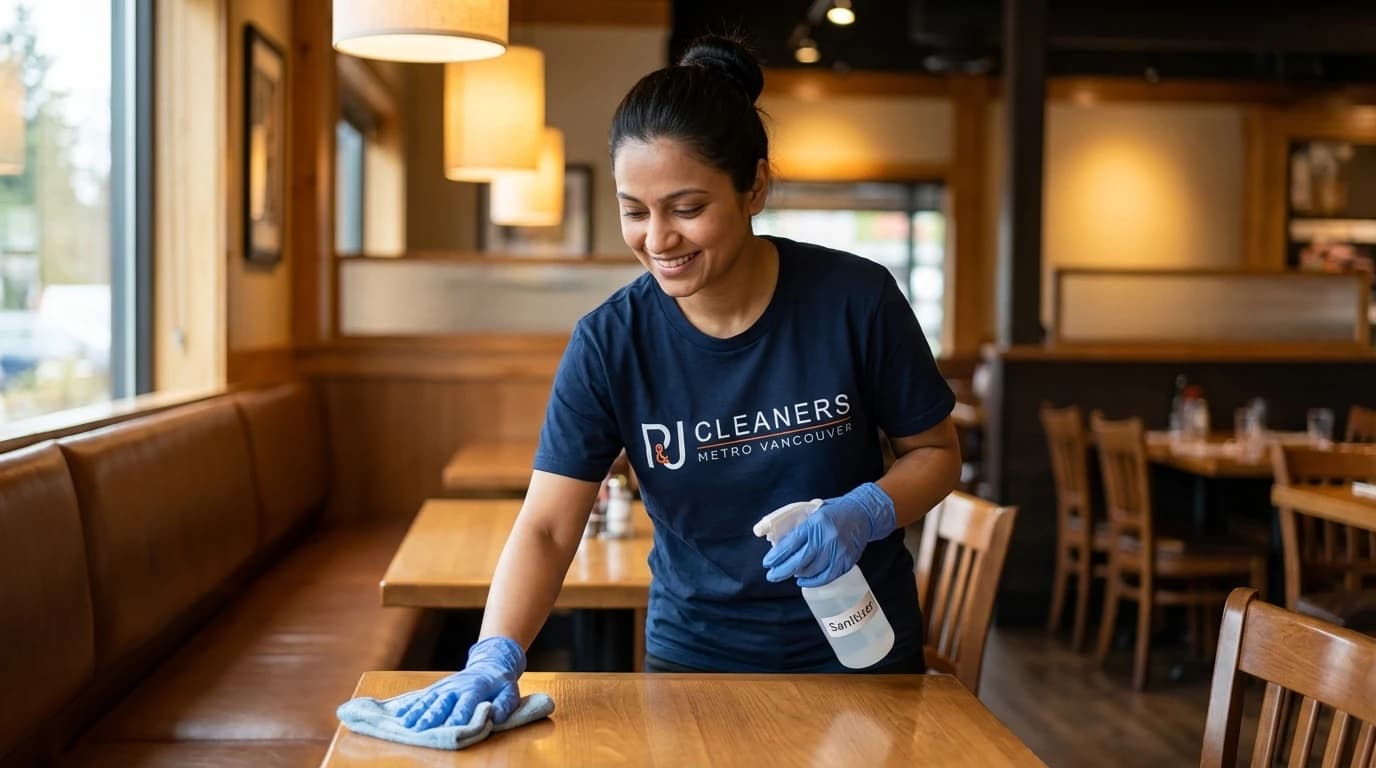
Entrance and reception areas experience the highest foot traffic in event venues, with average guest contact rates of 200-400 people per event. These zones require specialized floor matting systems that capture 85% of incoming dirt and moisture within the first 3 metres of entry. Professional cleaning protocols mandate vacuuming entrance mats every 2 hours during events and daily extraction cleaning to prevent soil accumulation that creates slip hazards. Reception desks and check-in counters need sanitization every 60-90 minutes using hospital-grade disinfectants with minimum 99.9% pathogen elimination rates.
Glass doors and windows in entrance zones show visible fingerprints and smudges within 30 minutes of event start times, requiring proactive cleaning during guest arrival periods. Professional cleaners use streak-free glass cleaning solutions and microfibre cloths to maintain transparency without leaving residue. Lobby furniture including chairs, benches, and decorative elements requires daily dusting and weekly upholstery cleaning to remove allergens and maintain aesthetic appeal. Venues hosting multiple events weekly should implement colour-coded microfibre systems to prevent cross-contamination between entrance zones and food service areas.
Lighting fixtures in entrance areas accumulate dust that reduces illumination by 15-20% within 60 days, impacting guest perception of cleanliness. Monthly fixture cleaning and quarterly deep cleaning of chandeliers and decorative lighting maintains optimal brightness levels. Entrance zone cleaning should include inspection of door hardware, handrails, and accessibility features to ensure proper function and compliance with BC Building Code requirements. Professional cleaning services document entrance zone conditions with photographic evidence before and after each event to verify protocol adherence and identify maintenance needs.
- Vacuum entrance mats every 2 hours during events and perform extraction cleaning daily to maintain 85% soil capture efficiency and prevent slip hazards
- Sanitize reception desks, check-in counters, and high-touch surfaces every 60-90 minutes using EPA-registered disinfectants with 99.9% pathogen kill rates
- Clean glass doors and windows during guest arrival periods using streak-free solutions and microfibre cloths to maintain professional appearance
- Dust lobby furniture daily and perform upholstery extraction cleaning weekly to remove allergens and maintain fabric integrity
- Clean lighting fixtures monthly and perform quarterly deep cleaning of decorative elements to maintain optimal illumination levels
- Inspect and clean door hardware, handrails, and accessibility features daily to ensure proper function and compliance with accessibility standards
Recommended Frequency
Continuous during events, deep cleaning between bookings
Main Event Space Cleaning Requirements
Primary event spaces demand flexible cleaning protocols that adapt to different event types while maintaining consistent sanitation standards for floors, walls, and furniture configurations.
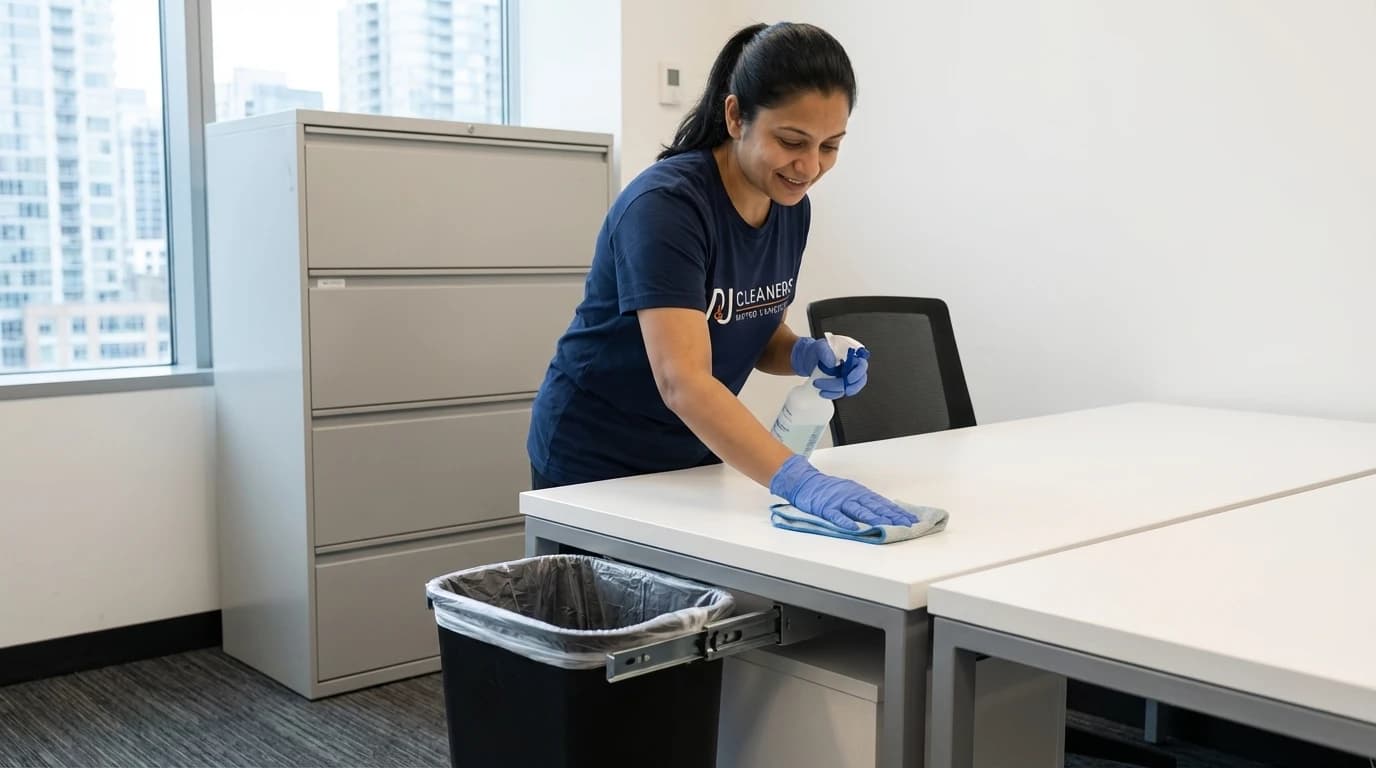
Main event spaces ranging from 2,000-10,000 square feet require comprehensive cleaning protocols that address floor care, furniture sanitization, and air quality management. Professional cleaning services allocate 45-60 minutes per 1,000 square feet for standard post-event cleaning, with deep cleaning requiring 90-120 minutes per 1,000 square feet. Floor surfaces including hardwood, carpet, and tile each demand specific cleaning methods and frequencies. Hardwood floors need daily dust mopping and weekly damp mopping with pH-neutral cleaners to prevent finish degradation. Carpeted areas require daily vacuuming with HEPA filtration and quarterly hot water extraction to remove embedded soil and allergens.
Event furniture including tables, chairs, and staging equipment accumulates food residue, beverage spills, and pathogen contamination during events. Professional protocols require wiping all furniture surfaces with disinfectant solutions between events, with particular attention to chair backs, armrests, and table edges where hand contact occurs most frequently. Venues hosting food service events must sanitize furniture using food-safe disinfectants that meet NSF International standards. Upholstered seating requires weekly vacuuming and monthly spot treatment to address spills and stains before they become permanent. Venues should maintain furniture cleaning logs documenting dates, products used, and staff responsible for verification during health inspections.
Air quality in event spaces directly impacts guest comfort and health outcomes, with poor ventilation contributing to 34% of indoor air quality complaints in commercial venues. Professional cleaning includes HVAC filter replacement every 30-90 days depending on event frequency and attendance levels. Vent covers and diffusers require monthly cleaning to prevent dust accumulation that reduces airflow efficiency by 15-25%. Ceiling tiles, light fixtures, and decorative elements need quarterly cleaning to remove dust and prevent allergen circulation. Venues should conduct annual air quality testing to verify compliance with ASHRAE ventilation standards and identify potential mould or contamination issues requiring remediation.
- Allocate 45-60 minutes per 1,000 square feet for standard post-event cleaning and 90-120 minutes for deep cleaning to ensure thorough sanitization
- Dust mop hardwood floors daily and damp mop weekly with pH-neutral cleaners to maintain finish integrity and prevent slip hazards
- Vacuum carpeted areas daily with HEPA filtration and perform quarterly hot water extraction to remove embedded soil and allergens
- Wipe all furniture surfaces with food-safe disinfectants between events, focusing on high-touch areas like chair backs, armrests, and table edges
- Replace HVAC filters every 30-90 days and clean vent covers monthly to maintain optimal air quality and prevent dust circulation
- Conduct quarterly cleaning of ceiling tiles, light fixtures, and decorative elements to remove dust accumulation and maintain aesthetic standards
Recommended Frequency
Daily maintenance, weekly deep cleaning, quarterly comprehensive sanitization
Washroom Hygiene and Compliance Protocols
Washroom facilities require the most intensive cleaning protocols in event venues, with continuous monitoring during events and comprehensive sanitization between bookings to meet health regulations.
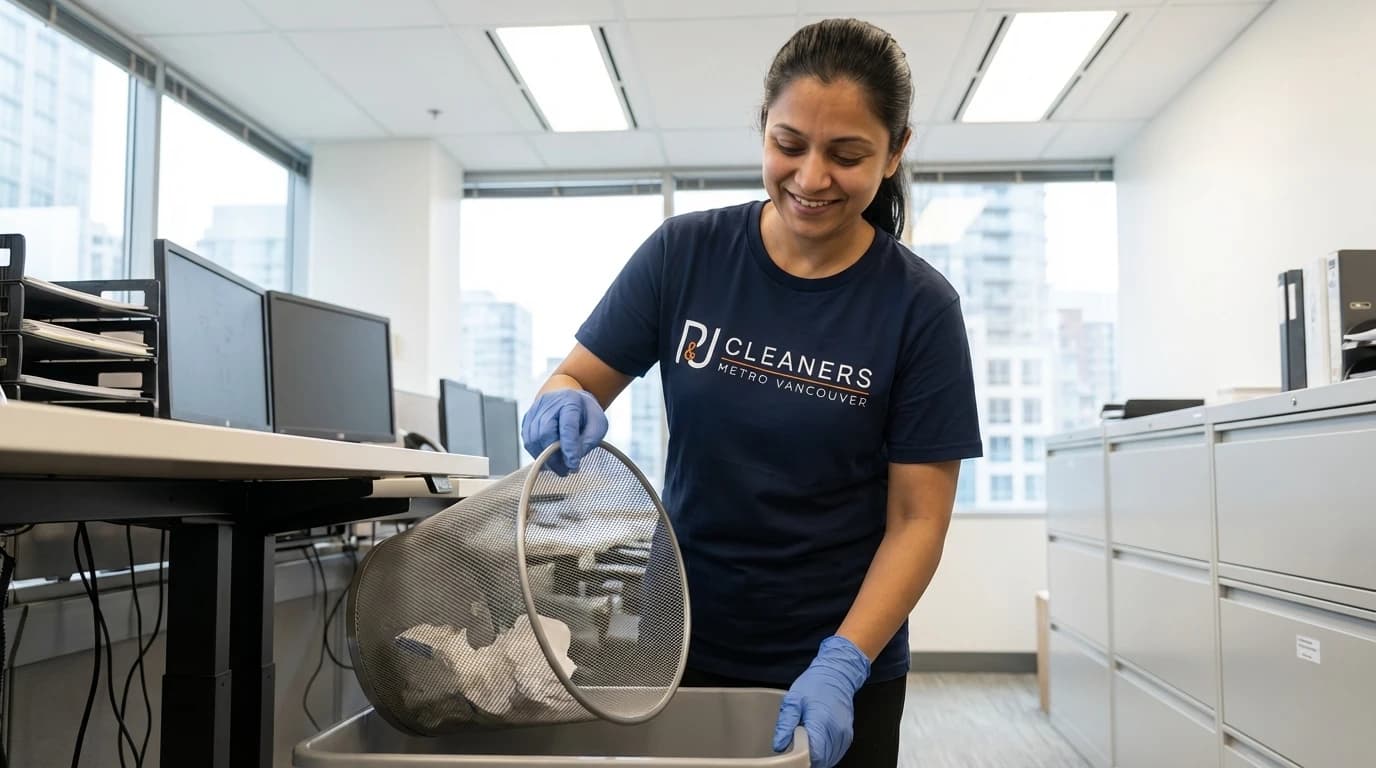
Event venue washrooms experience peak usage rates of 40-60 guests per hour during events, creating significant contamination risks that require proactive cleaning interventions. Professional cleaning protocols mandate washroom checks every 30-45 minutes during events to replenish supplies, remove waste, and address spills or sanitation issues. High-touch surfaces including door handles, faucets, soap dispensers, and toilet flush mechanisms require sanitization during each check using EPA-registered disinfectants with minimum 3-minute contact times. Venues must maintain cleaning logs documenting check times, staff initials, and any issues identified to demonstrate compliance during health inspections.
Toilet and urinal cleaning requires specialized protocols that address both visible soil and pathogen contamination. Professional cleaners use separate colour-coded tools for toilet bowls, seats, and surrounding surfaces to prevent cross-contamination. Bowl cleaning includes application of acidic cleaners that remove mineral deposits and organic matter, followed by disinfectant application with 10-minute dwell time to achieve 99.99% pathogen reduction. Toilet seats and exterior surfaces need cleaning with neutral pH disinfectants that won't damage finishes. Urinals require daily descaling to prevent uric acid buildup that creates odours and harbours bacteria. Venues should implement automatic toilet bowl cleaners and urinal blocks to maintain sanitation between professional cleaning services.
Washroom floors present significant slip hazards due to water accumulation and require specialized cleaning protocols. Professional services use neutral pH floor cleaners with slip-resistant additives and ensure complete drying before reopening facilities to guests. Floor drains need weekly cleaning to prevent clogs and odours from organic matter accumulation. Tile grout requires monthly cleaning with alkaline degreasers and quarterly sealing to prevent moisture penetration and mould growth. Washroom ventilation systems must operate continuously during events and for 30 minutes post-event to remove humidity and odours. Exhaust fans require quarterly cleaning to maintain airflow efficiency and prevent moisture-related damage to ceiling materials and fixtures.
- Conduct washroom checks every 30-45 minutes during events to replenish supplies, remove waste, and sanitize high-touch surfaces with EPA-registered disinfectants
- Use colour-coded cleaning tools for toilet bowls, seats, and surrounding surfaces to prevent cross-contamination between different washroom zones
- Apply acidic bowl cleaners followed by disinfectants with 10-minute dwell time to achieve 99.99% pathogen reduction on toilet and urinal surfaces
- Clean washroom floors with neutral pH cleaners containing slip-resistant additives and ensure complete drying before reopening to guests
- Clean floor drains weekly and tile grout monthly with alkaline degreasers to prevent clogs, odours, and mould growth in moisture-prone areas
- Operate ventilation systems continuously during events and for 30 minutes post-event, with quarterly exhaust fan cleaning to maintain optimal airflow
Recommended Frequency
Every 30-45 minutes during events, comprehensive cleaning between bookings
Kitchen and Catering Zone Sanitation
Food preparation and service areas demand the highest cleaning standards in event venues, with strict compliance requirements and continuous monitoring to prevent foodborne illness outbreaks.
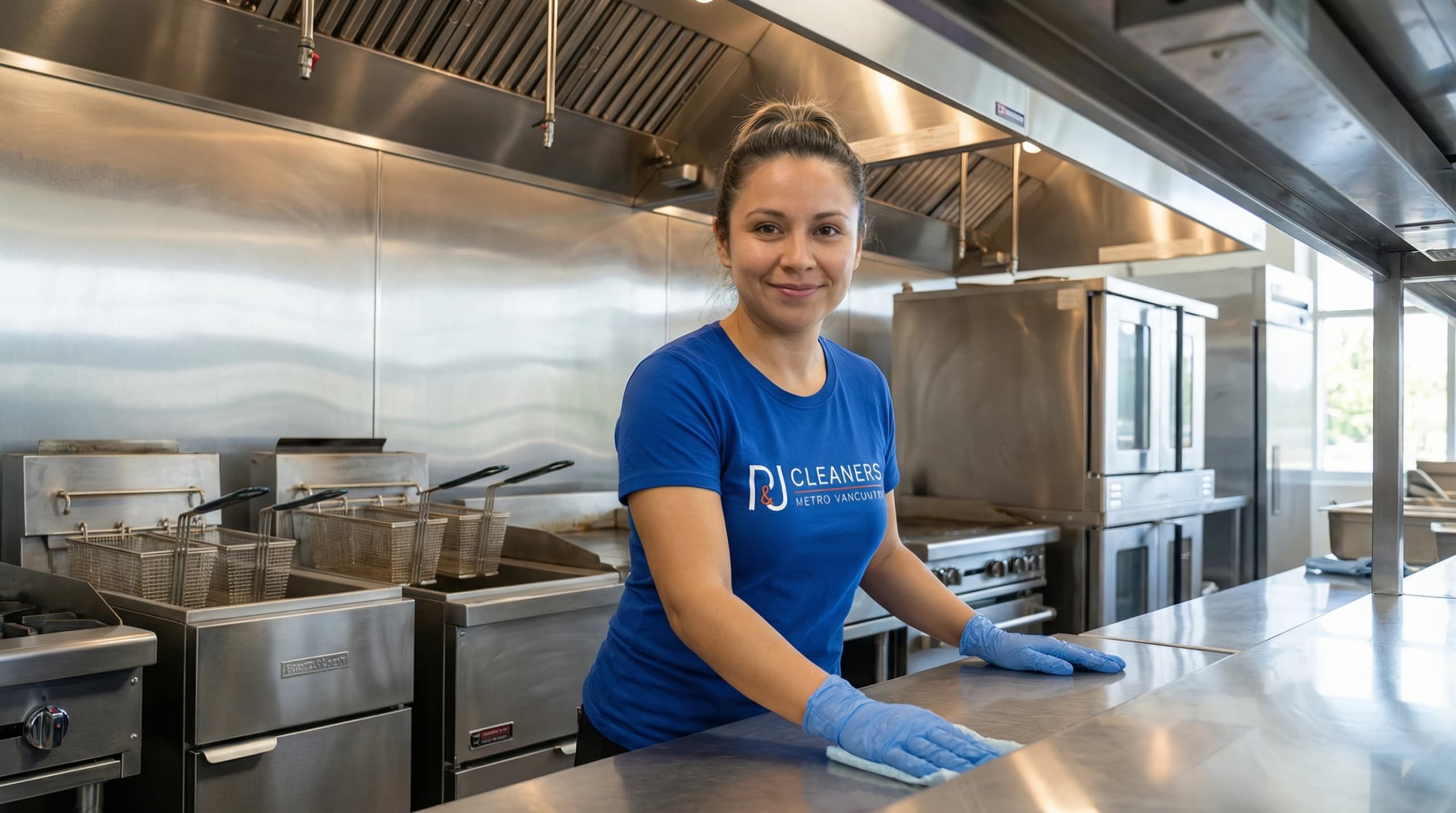
Event venue kitchens and catering areas must comply with BC Food Premises Regulation requirements that mandate specific cleaning frequencies and documentation protocols. Professional cleaning services implement three-compartment sink systems for manual dishwashing with wash water at 44°C minimum, rinse water at 44°C, and sanitizer solution at proper concentration verified with test strips. Food contact surfaces including cutting boards, prep tables, and serving counters require cleaning and sanitization after each use and between different food types to prevent cross-contamination. Venues must maintain temperature logs for refrigeration units and hot holding equipment, with professional cleaning services verifying proper function during each visit.
Kitchen equipment including ovens, ranges, fryers, and ventilation hoods accumulates grease and carbon deposits that create fire hazards and reduce equipment efficiency. Professional deep cleaning services use alkaline degreasers and steam cleaning equipment to remove buildup from cooking surfaces, with hood cleaning required quarterly to maintain fire suppression system effectiveness. Refrigeration units need monthly coil cleaning to maintain temperature consistency and energy efficiency. Floor drains in kitchen areas require daily cleaning to prevent grease accumulation and weekly enzymatic treatment to break down organic matter. Venues should schedule professional kitchen deep cleaning during off-peak periods to allow 6-8 hours for comprehensive equipment disassembly, cleaning, and reassembly.
Food storage areas including walk-in coolers, dry storage rooms, and serving stations require systematic organization and cleaning protocols. Professional services implement FIFO (First In, First Out) rotation systems and clean storage shelving weekly to prevent pest attraction and food spoilage. Walk-in cooler floors need daily mopping with food-safe sanitizers and monthly deep cleaning to remove spills and prevent mould growth. Dry storage areas require monthly pest monitoring and quarterly deep cleaning including ceiling and wall washing. Serving stations and buffet areas need sanitization before each event and continuous monitoring during service to address spills and maintain food safety temperatures. Venues must document all cleaning activities with dated logs signed by responsible staff members for health inspection verification.
- Implement three-compartment sink systems with wash water at 44°C minimum and sanitizer solution at proper concentration verified with test strips
- Clean and sanitize food contact surfaces after each use and between different food types to prevent cross-contamination and comply with health regulations
- Perform quarterly hood cleaning using alkaline degreasers and steam equipment to remove grease buildup and maintain fire suppression system effectiveness
- Clean refrigeration coils monthly to maintain temperature consistency and energy efficiency, with daily temperature log documentation for compliance verification
- Mop walk-in cooler floors daily with food-safe sanitizers and perform monthly deep cleaning to remove spills and prevent mould growth
- Document all kitchen cleaning activities with dated logs signed by responsible staff members for health inspection verification and compliance demonstration
Recommended Frequency
Continuous during food service, daily deep cleaning, quarterly equipment maintenance
Backstage and Storage Area Maintenance
Behind-the-scenes areas require systematic cleaning protocols that prevent pest attraction, maintain equipment functionality, and ensure staff safety in high-traffic work zones.
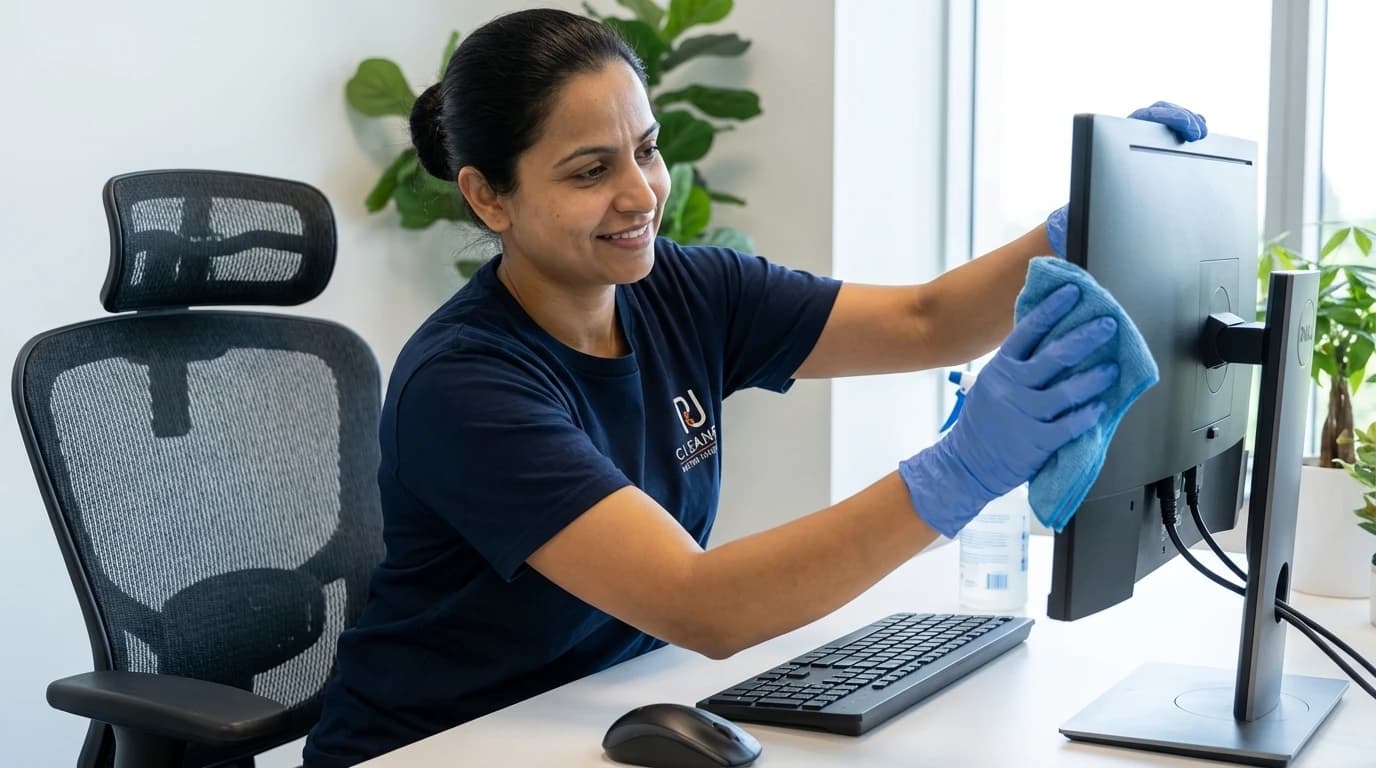
Backstage areas and storage rooms often receive less attention than guest-facing spaces but require consistent cleaning to prevent pest infestations and maintain operational efficiency. Professional cleaning protocols include weekly floor cleaning, monthly shelving dusting, and quarterly comprehensive deep cleaning of all surfaces. Storage areas accumulate dust, cardboard debris, and food residue that attract rodents and insects, with pest activity increasing 340% in venues with inconsistent storage area cleaning. Professional services implement integrated pest management protocols including monthly monitoring stations, quarterly perimeter treatments, and immediate response to any pest evidence discovered during cleaning activities.
Equipment storage areas containing audio-visual gear, staging elements, and furniture require specialized cleaning protocols that prevent damage to sensitive electronics and finishes. Professional cleaners use anti-static dusting tools and HEPA-filtered vacuums to remove dust from equipment surfaces without creating static discharge that damages electronic components. Fabric storage including linens, drapes, and upholstery requires climate-controlled environments with humidity levels between 40-50% to prevent mould growth and fabric degradation. Venues should implement quarterly inventory audits combined with cleaning services to identify damaged items requiring replacement and ensure proper storage organization that facilitates efficient event setup.
Staff work areas including break rooms, offices, and changing facilities require daily cleaning to maintain employee health and satisfaction. Professional protocols include daily waste removal, weekly surface sanitization, and monthly deep cleaning of appliances and fixtures. Break room refrigerators need weekly cleaning to remove expired food and prevent odour development. Microwave ovens require daily interior cleaning and weekly deep cleaning with degreasing solutions. Staff washrooms follow the same intensive protocols as guest washrooms but may require additional attention due to higher usage frequency. Venues investing in comprehensive backstage cleaning report 28% reduction in staff sick days and 19% improvement in employee satisfaction scores related to workplace conditions.
- Clean storage area floors weekly and perform monthly shelving dusting with quarterly comprehensive deep cleaning to prevent pest attraction and maintain organization
- Implement integrated pest management protocols including monthly monitoring stations and quarterly perimeter treatments with immediate response to pest evidence
- Use anti-static dusting tools and HEPA-filtered vacuums on audio-visual equipment and electronics to prevent static discharge damage during cleaning
- Maintain climate-controlled fabric storage with 40-50% humidity levels and perform quarterly inventory audits to identify damaged items requiring replacement
- Clean staff break room refrigerators weekly to remove expired food and prevent odour development, with daily microwave interior cleaning
- Apply same intensive washroom protocols to staff facilities as guest washrooms, with additional attention due to higher usage frequency
Recommended Frequency
Weekly maintenance, monthly deep cleaning, quarterly comprehensive sanitization
Cost Analysis and Return on Investment for Professional Venue Cleaning
Professional venue cleaning services deliver measurable financial returns through reduced liability claims, increased booking rates, and extended equipment lifespan that offset service costs within 6-12 months.
Event venues investing in professional cleaning services experience average cost savings of $8,400 annually through multiple financial benefits. Reduced liability claims account for $3,200 in savings, with venues maintaining systematic cleaning protocols experiencing 67% fewer slip-and-fall incidents and foodborne illness complaints. Insurance premium reductions average $1,800 annually for venues demonstrating documented cleaning compliance and safety protocols. Extended equipment lifespan contributes $2,100 in savings through proper maintenance that prevents premature replacement of HVAC systems, kitchen equipment, and flooring materials. Increased booking rates generate additional revenue of $1,300 annually as venues maintaining 4.5+ star hygiene ratings attract 23% more repeat bookings and referrals.
Professional cleaning costs for event venues in Metro Vancouver range from $45-$75 per hour for standard services, with deep cleaning averaging $0.15-$0.25 per square foot. A typical 5,000 square foot venue requires 15-20 hours of cleaning weekly for standard maintenance, totaling $3,600-$6,000 monthly. Deep cleaning services performed quarterly add $750-$1,250 per session. Venues can optimize costs by implementing hybrid cleaning models that combine daily in-house maintenance with weekly professional deep cleaning services. This approach reduces monthly costs by 30-40% while maintaining health compliance and guest satisfaction standards.
Return on investment calculations should include both direct cost savings and revenue increases from improved venue reputation. Venues tracking online reviews report that each 0.5-star increase in hygiene ratings correlates with 12% increase in booking inquiries and 8% increase in event pricing power. Professional cleaning services provide documentation and photographic evidence that venues can use in marketing materials and health inspection responses. The average venue achieves positive ROI within 8-11 months of implementing comprehensive professional cleaning programs, with ongoing benefits increasing over time as equipment maintenance prevents costly emergency repairs and replacements.
In-House Cleaning Only
- Staff wages: $3,200-$4,500/month
- Equipment and supplies: $400-$600/month
- Training and certification: $200-$300/month
- Inconsistent quality and compliance gaps
- Higher liability insurance premiums
- Limited specialized equipment access
- Increased equipment replacement costs
- Average total cost: $3,800-$5,400/month
Professional Cleaning Services
- Service fees: $3,600-$6,000/month
- Supplies included in service cost
- Certified staff with ongoing training
- Consistent quality and documentation
- Reduced liability insurance premiums
- Access to specialized equipment
- Extended equipment lifespan
- Average total cost: $3,600-$6,000/month
Hybrid Model (Recommended)
- In-house daily maintenance: $1,800-$2,400/month
- Professional weekly deep cleaning: $1,200-$1,800/month
- Quarterly specialized services: $250-$420/month
- Optimal quality and compliance balance
- Moderate liability insurance premiums
- Flexible specialized service access
- Good equipment maintenance outcomes
- Average total cost: $3,250-$4,620/month
$8,400 average
Annual Cost Savings
67% decrease
Liability Claim Reduction
$1,800 annually
Insurance Premium Savings
$2,100 savings
Equipment Lifespan Extension
23% more repeat bookings
Booking Rate Increase
8-11 months
ROI Achievement Timeline
- Reduced liability exposure through documented cleaning protocols and systematic sanitation that prevents slip-and-fall incidents and foodborne illness outbreaks
- Lower insurance premiums averaging $1,800 annually for venues demonstrating compliance with health regulations and safety standards through professional cleaning documentation
- Extended equipment lifespan saving $2,100 annually through proper maintenance of HVAC systems, kitchen equipment, and flooring materials that prevents premature replacement
- Increased booking rates generating 23% more repeat bookings and referrals as venues maintain 4.5+ star hygiene ratings across review platforms
- Enhanced pricing power with 8% increase in event rates for each 0.5-star improvement in cleanliness ratings and guest satisfaction scores
- Improved staff retention and productivity with 28% reduction in sick days and 19% higher employee satisfaction in venues with comprehensive cleaning programs
- Faster event turnovers enabling 15-20% more bookings annually through efficient cleaning protocols that reduce setup time between events
- Better health inspection outcomes with 89% first-time pass rates for venues using professional cleaning services versus 62% for in-house only cleaning programs
Venue Cleaning Compliance Verification Checklist
Use this comprehensive checklist to verify compliance with Vancouver Coastal Health, WorkSafeBC, and municipal regulations. Complete monthly reviews and maintain documentation for health inspection verification.
Services mentioned in this article
Ready for help?
4.9 · 850+ Google reviewsMaintain Professional Venue Standards
P&J Cleaners delivers compliant, reliable event space cleaning across Metro Vancouver. Our certified teams follow BC Health Authority protocols with documented quality control.
778-720-2224Venue Cleaning Standards FAQ
What are restaurant cleaning standards?
Restaurant cleaning standards include daily sanitization of food contact surfaces, hourly cleaning of high-touch areas, and deep cleaning of kitchen equipment. BC Health Authority requires food establishments to maintain surface temperatures below 5°C for cold storage and above 60°C for hot holding. Cleaning logs must document all sanitation activities with timestamps and staff signatures to demonstrate compliance during health inspections.
How often should restaurant areas be cleaned?
Dining areas require cleaning after each seating, with tables, chairs, and menus sanitized between guests. Kitchen surfaces need cleaning every 4 hours during operation, with deep cleaning nightly. Washrooms require checks every 2 hours during peak service. High-traffic floors should be mopped every 4 hours, while storage areas need weekly deep cleaning to prevent pest issues and maintain food safety standards.
What compliance rules apply to restaurant cleaning?
BC Food Premises Regulation requires documented cleaning schedules, approved sanitizers with 200ppm chlorine concentration, and staff training records. WorkSafeBC mandates proper chemical storage, ventilation during cleaning, and personal protective equipment. City of Vancouver bylaws require grease trap cleaning every 90 days and pest control documentation. Non-compliance results in fines from $500 to $5,000 or temporary closure orders.
How much does restaurant cleaning cost?
Professional restaurant cleaning costs $45-$75 per hour depending on facility size and service frequency. Daily maintenance cleaning for a 2,500 sq ft restaurant averages $180-$240 per visit. Deep cleaning services range from $800-$1,500 monthly. Post-event cleaning runs $300-$600 per session. Annual contracts typically offer 15-20% savings compared to on-demand pricing, with guaranteed response times and priority scheduling included.
Meet the Author
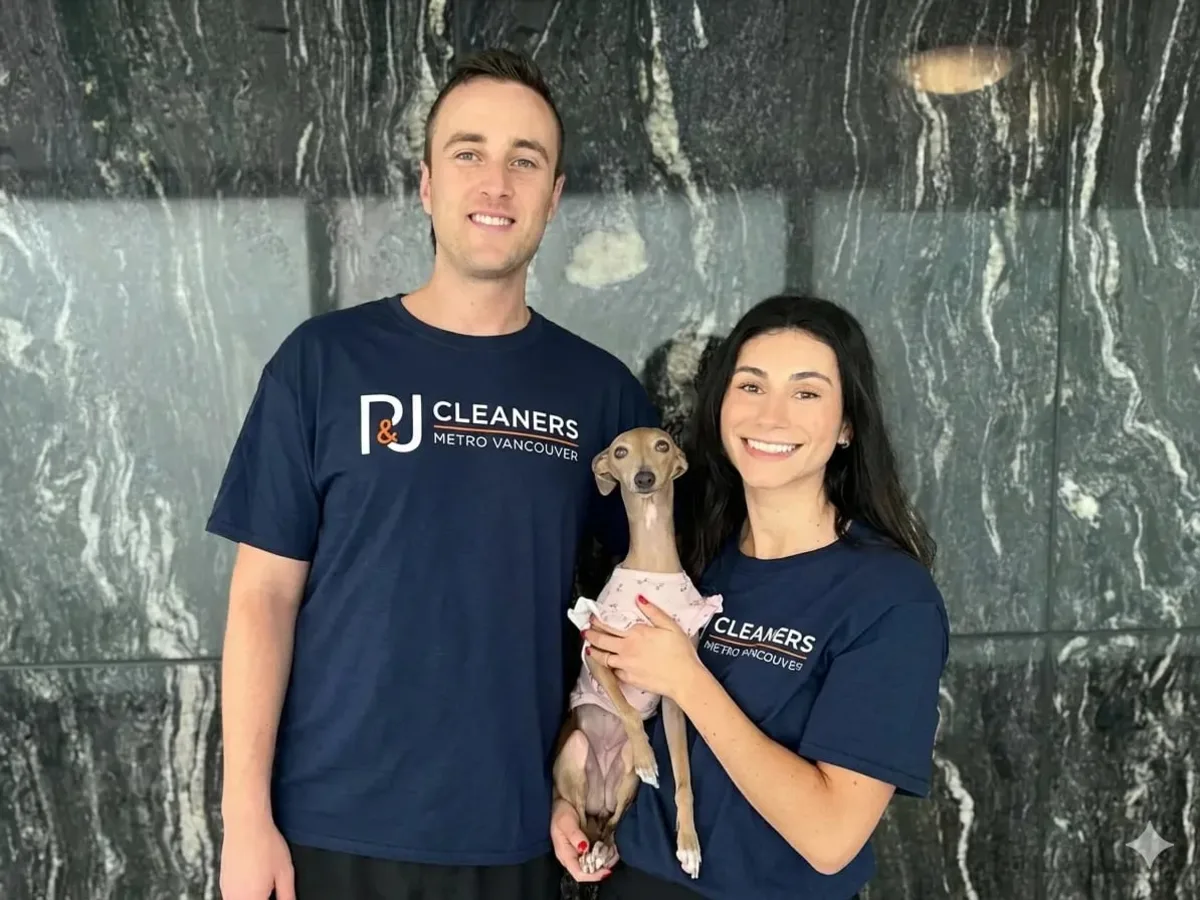
Jason
Co-Founder
Jason oversees commercial operations, workflow design, and quality control for office, restaurant, and specialty cleaning programs across Metro Vancouver.
Keep Exploring