

Quick answer
An apartment cleaning checklist works room by room in this order: entryway, kitchen, bathroom, bedroom, living area, in-suite laundry, and balcony. Clean each zone top to bottom. In a studio or one-bedroom, the whole list fits into a single focused session.

Key Takeaways
- 1The 80/20 rule holds in small spaces: about 20 percent of tasks, the visible surfaces, create about 80 percent of the clean.
- 2Clean in a fixed order, entryway to balcony, and top to bottom in each room so dust never falls onto a surface you already finished.
- 3Two rooms make an apartment checklist different from a house checklist: the in-suite laundry closet and the private balcony with its sliding glass door.
- 4Health Canada recommends keeping indoor humidity below 50 percent, which matters more in a tight Vancouver suite where rain and short ventilation encourage mould.
- 5Renters should clean to the BC Residential Tenancy Branch 'reasonably clean' standard, the benchmark that protects a damage deposit at move-out.
- 6A studio or one-bedroom can be reset in one or two 20-minute blocks, which is why cleaning rules fit apartments better than houses.
How Often to Clean an Apartment (and the 80/20, 30/3, and 20/10 Rules)
Small spaces reward a light, frequent touch over marathon sessions. Three simple cleaning rules explain why, and each one fits a different slot in your week.
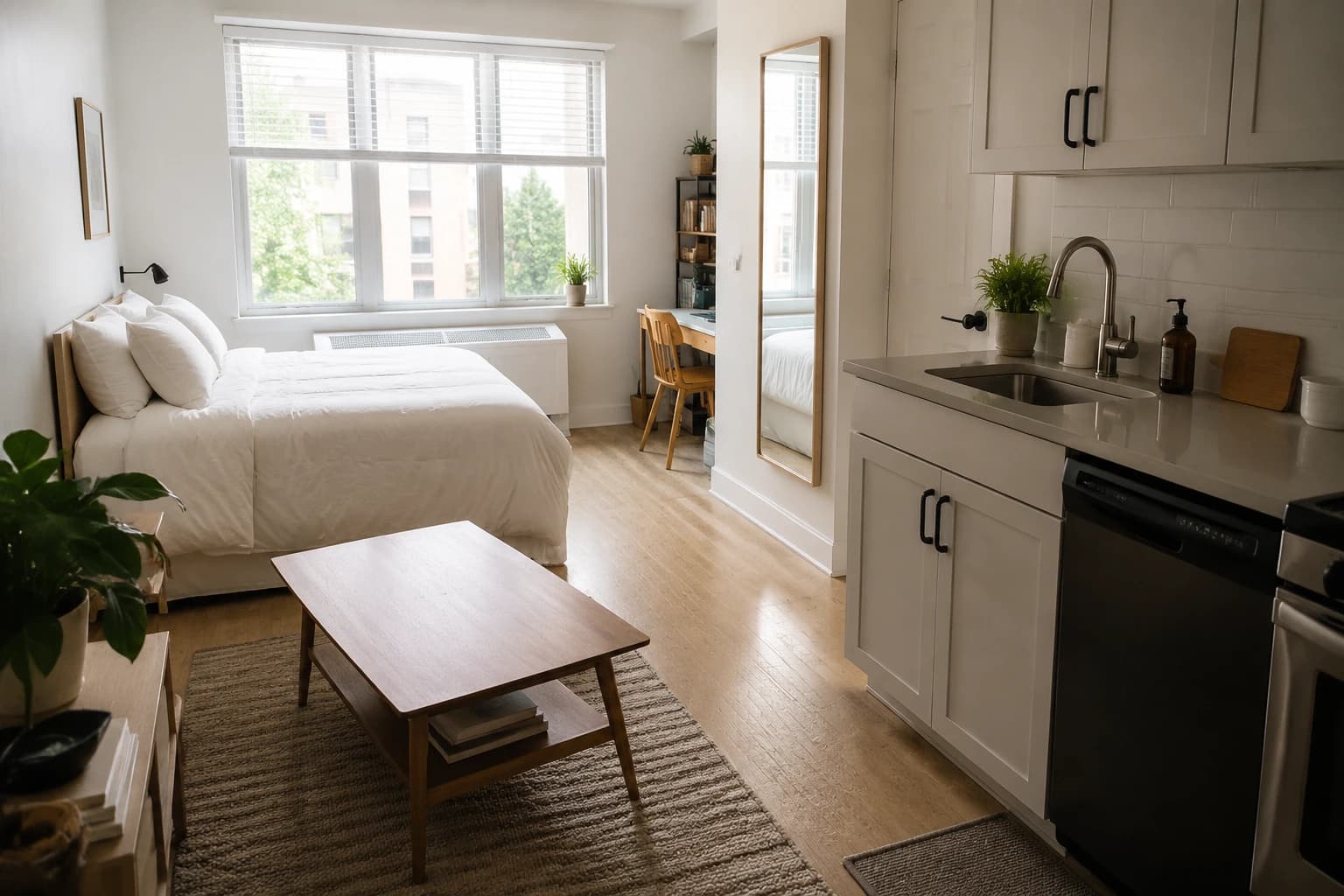
The honest answer to how often you should clean an apartment is: a little most days, a proper pass once a week, and a deep clean every few months. A compact suite gets dirty fast because everything happens in a few square metres, but it also cleans fast for the same reason. That is where the popular cleaning rules earn their keep, and each one suits a different moment.
The 80/20 rule is the Pareto principle applied to housework. Roughly 20 percent of your tasks, the visible surfaces people actually notice, deliver about 80 percent of the perceived clean. Wipe the kitchen counters and sink, clear the coffee table, clean the bathroom mirror and sink, and run a quick vacuum, and the whole suite reads as tidy. It is the fastest weeknight reset there is.
The 20/10 rule and the 30/3 rule are about momentum rather than surfaces. With the 20/10 rule you clean for 20 minutes, then take a real 10-minute break, which makes starting feel small. The 30/3 rule uses longer 30-minute blocks with a 3-minute reset in each room before moving on, so one messy corner does not quietly undo the room you just finished. Use 20/10 to beat procrastination on a weeknight, and 30/3 for a longer weekend clean. For a ready-made short version, our 15-minute cleaning routine turns the 80/20 idea into a daily habit.
- 80/20 rule: about 20 percent of tasks create about 80 percent of the visible clean. Best for a fast weeknight reset.
- 20/10 rule: 20 minutes of cleaning, then a 10-minute break. Best for getting started when you would rather not.
- 30/3 rule: focused 30-minute blocks with a 3-minute reset per room. Best for a full weekend deep clean.
- Daily: reset high-touch surfaces in a few minutes. Weekly: a full pass. Quarterly: a deep clean.
Pro Tip
When you are short on time, hit the shiny surfaces first: the bathroom mirror, the kitchen sink and faucet, and any glass. Chrome and glass are what the eye reads as clean, so those few minutes buy more perceived tidiness than any counter wipe.
Related resources
What You Need to Clean an Apartment
A small suite calls for a small kit. You want tools that clean well and store flat, not bulky equipment that eats a closet you do not have.
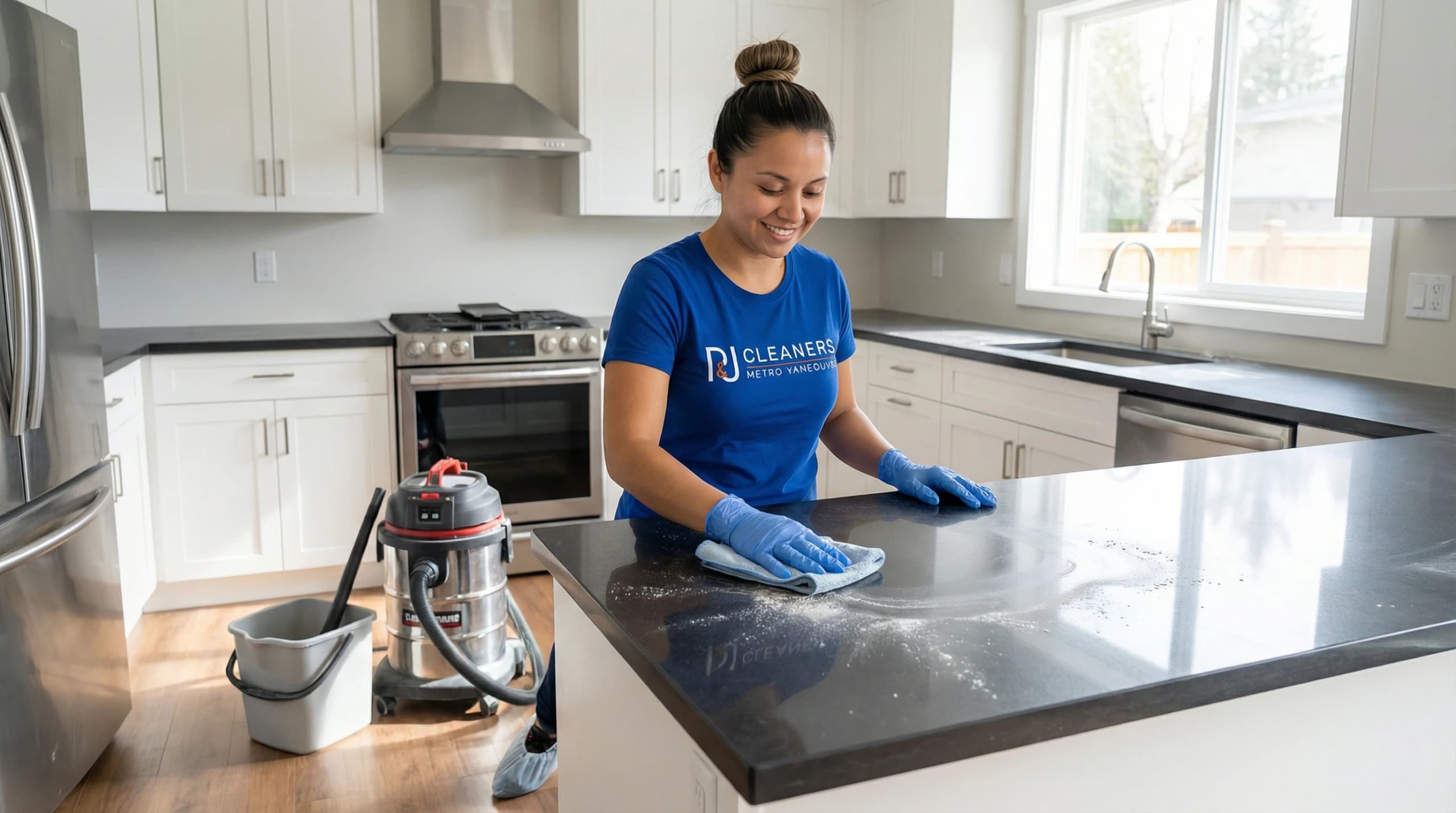
The supply question trips people up because most checklists assume a house with a garage. In an apartment, storage is the constraint, so the goal is a caddy that lives under one sink and covers every surface. You need an all-purpose cleaner for counters and general wiping, a glass cleaner for mirrors and balcony doors, and a bathroom disinfectant for the toilet, tub, and sink. Add a bottle of pH-neutral floor cleaner suited to your flooring, whether that is engineered hardwood, laminate, or tile.
For tools, keep it to a stack of microfibre cloths in two or three colours so you never wipe the bathroom and the kitchen with the same cloth, a non-scratch scrub sponge, a grout or detail brush, and a squeegee. The squeegee is the one apartment-specific splurge, because it is what makes balcony glass and shower doors go clear instead of streaky. Metro Vancouver water is soft to moderately hard, so glass and chrome still film over time and a squeegee plus glass cleaner keeps them bright.
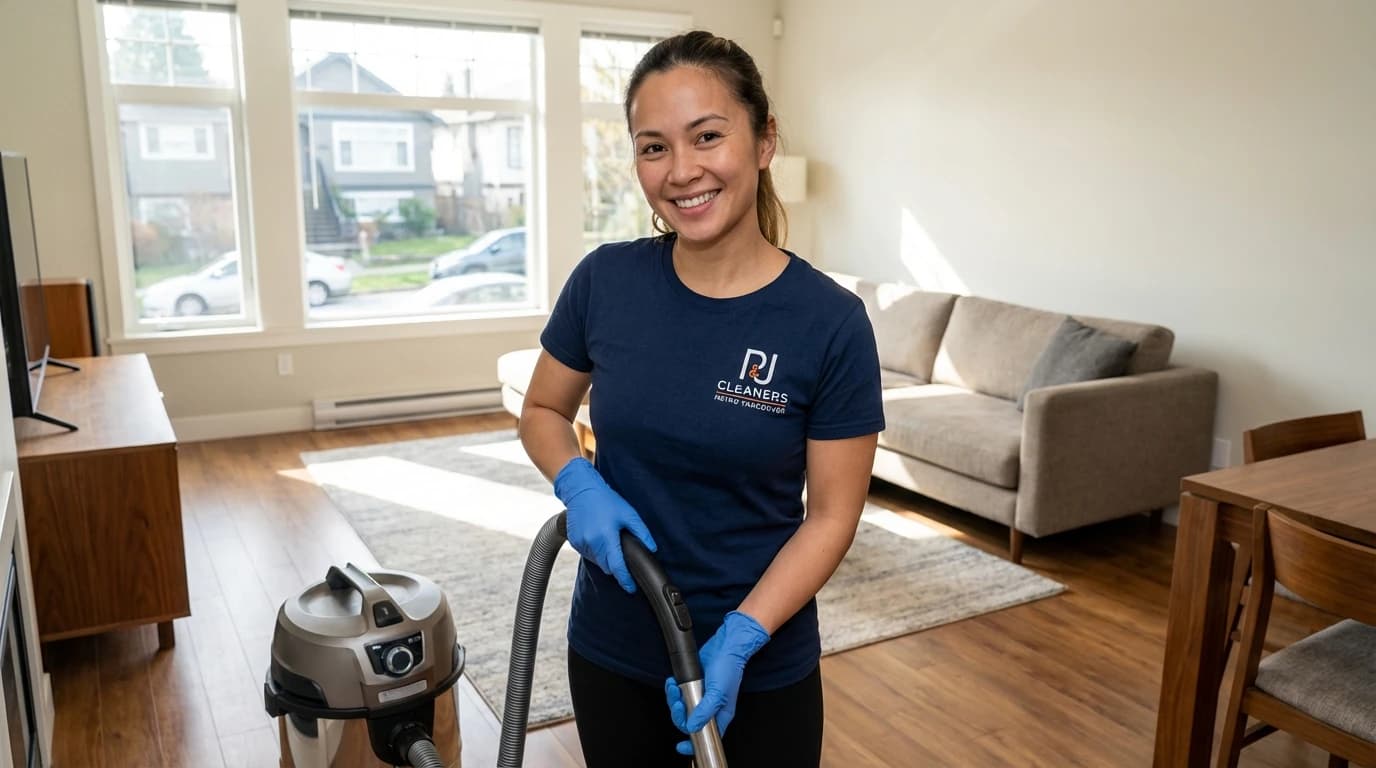
The last piece is a way to pick up dust and hair. A compact stick vacuum handles most suites, and a broom with a dustpan covers hard floors if you would rather not store a vacuum. Skip the specialty machines. If a surface genuinely needs equipment you do not own, that is usually the signal to book a one-off deep cleaning rather than buy a tool you will use twice a year. For the full weekly rhythm, our regular cleaning checklist lays out what to touch and how often.
- All-purpose cleaner, glass cleaner, bathroom disinfectant, and a pH-neutral floor cleaner matched to your flooring
- Microfibre cloths in two or three colours to keep bathroom and kitchen jobs separate
- A non-scratch scrub sponge and a small detail brush for grout, taps, and tight corners
- A squeegee for balcony glass and shower doors, the one apartment-specific tool worth owning
- A compact stick vacuum or a broom and dustpan, whichever fits your storage
Pro Tip
Decant concentrated cleaners into clearly labelled spray bottles and keep them in a single caddy. Carrying one caddy from room to room saves the back-and-forth trips that make a small clean feel bigger than it is.
Related resources
The Order That Makes a Small Apartment Fast
Sequence matters more in a small space than a large one, because an open plan means the kitchen, dining, and living areas share air and floor. Clean in the wrong order and you redo work.
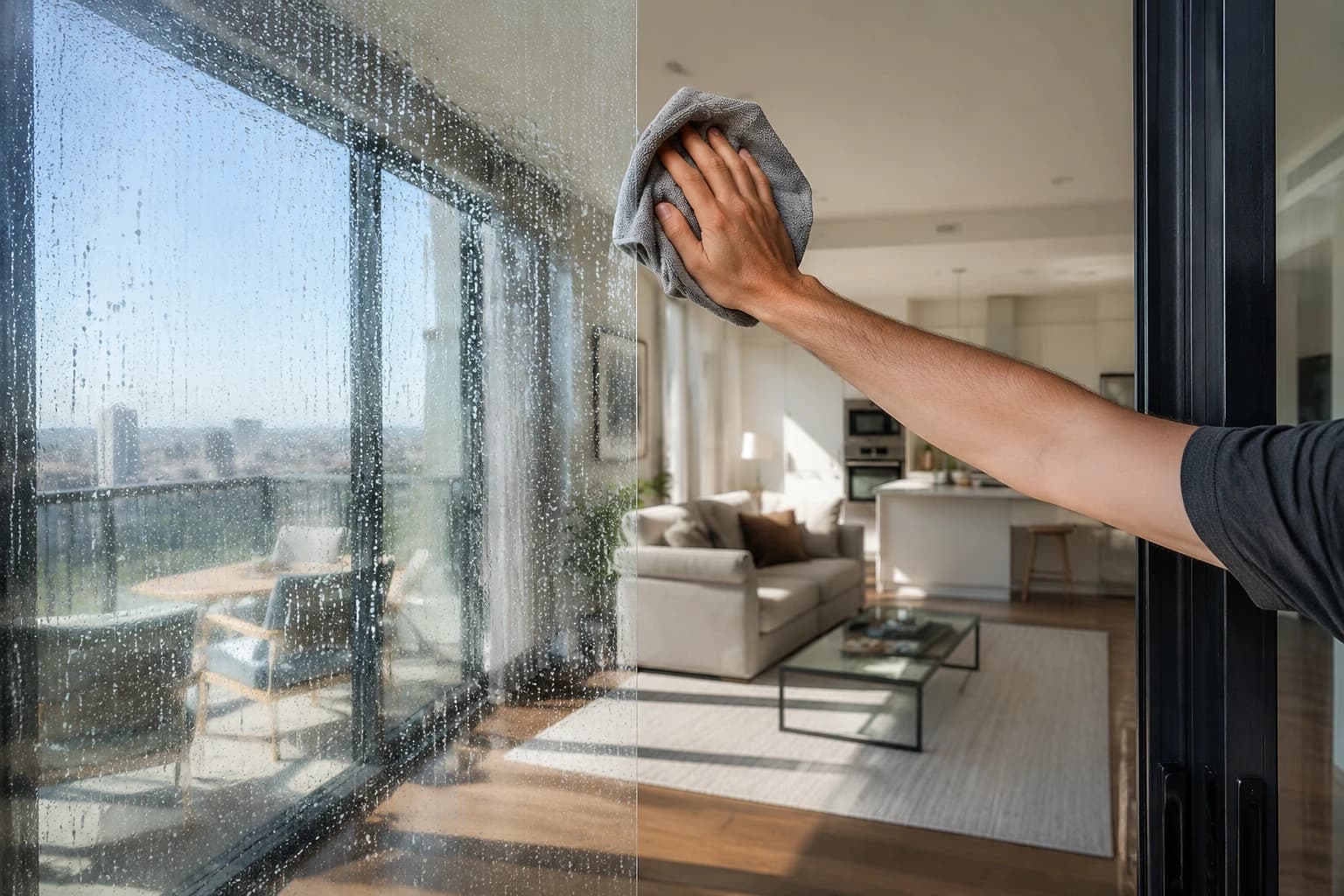
The rule that saves the most time is top to bottom, back to front. Start high with light fixtures, the tops of cabinets, and shelves, then work down to surfaces, and finish with the floor. Dust falls, so cleaning the floor first just means vacuuming twice. In each room, work from the far corner toward the door so you are not walking back across floors you already finished.
For the apartment as a whole, follow a fixed room order: entryway, kitchen, bathroom, bedroom, living area, in-suite laundry, and finally the balcony. Doing the wet rooms, the kitchen and bathroom, before the living area means any splashes or drips land on surfaces you have not cleaned yet. Saving the balcony for last keeps outdoor grit from tracking back through a suite you just finished.
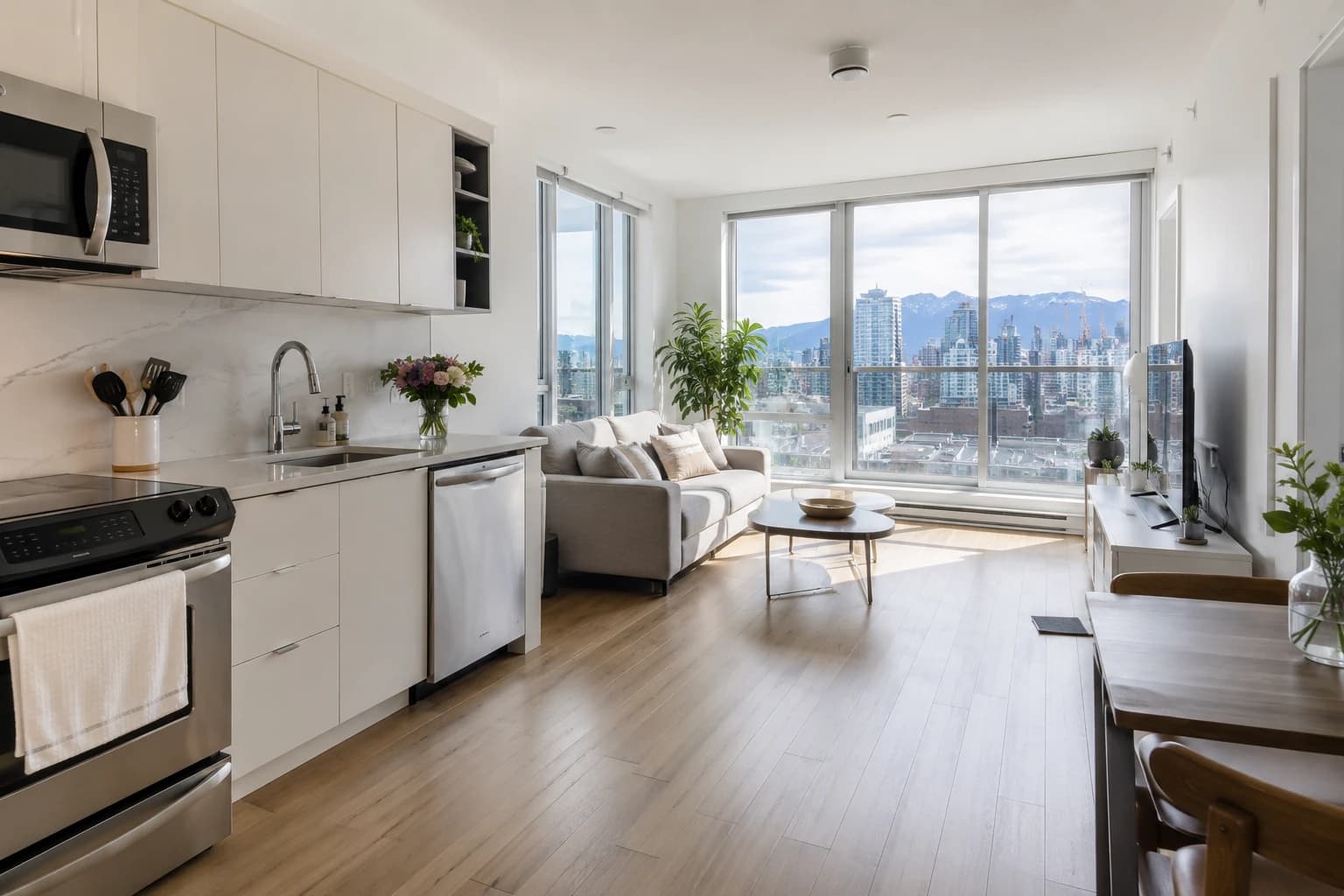
In an open-plan studio or one-bedroom, the kitchen and living area blur together, so treat them as one continuous zone and simply move along the walls. That is the whole reason the 20/10 and 30/3 rules fit apartments so well: the footprint is small enough that a single focused block often carries you through several rooms at once. If a suite has reached the point where a normal clean will not bring it back, a one-time deep clean resets it so the weekly routine can keep up again.
- Work top to bottom: fixtures and shelves first, surfaces next, floors last
- Work back to front: start at the far corner and clean toward the door
- Room order: entryway, kitchen, bathroom, bedroom, living area, laundry, balcony
- Do wet rooms before living areas so splashes land on uncleaned surfaces
- Treat an open-plan kitchen and living area as one continuous zone
Pro Tip
Set a timer for your first 20-minute block and start in the kitchen. Momentum is the hardest part of cleaning a small space, and a ticking timer plus a visible finish line usually carries you straight through the bathroom too.
The Condo-Only Zones Most Checklists Skip
The reason generic apartment checklists feel incomplete is that they leave out the two spaces that define condo living: the in-suite laundry closet and the private balcony with its sliding glass door.
Start with the in-suite laundry closet, usually a stacked washer and dryer tucked behind a bifold door. Wipe the machine exteriors and the control panels, clean the lint trap on the dryer after every load, and wipe the rubber door gasket on a front-load washer where lint and damp gather. The single most useful habit is leaving the washer door open between loads so the drum airs out, because a sealed drum in a warm closet is exactly where a musty smell starts. We never clean inside these appliances, and neither should you go beyond the trap and the gasket, but keeping the closet floor and the space behind the units free of lint makes a real difference.
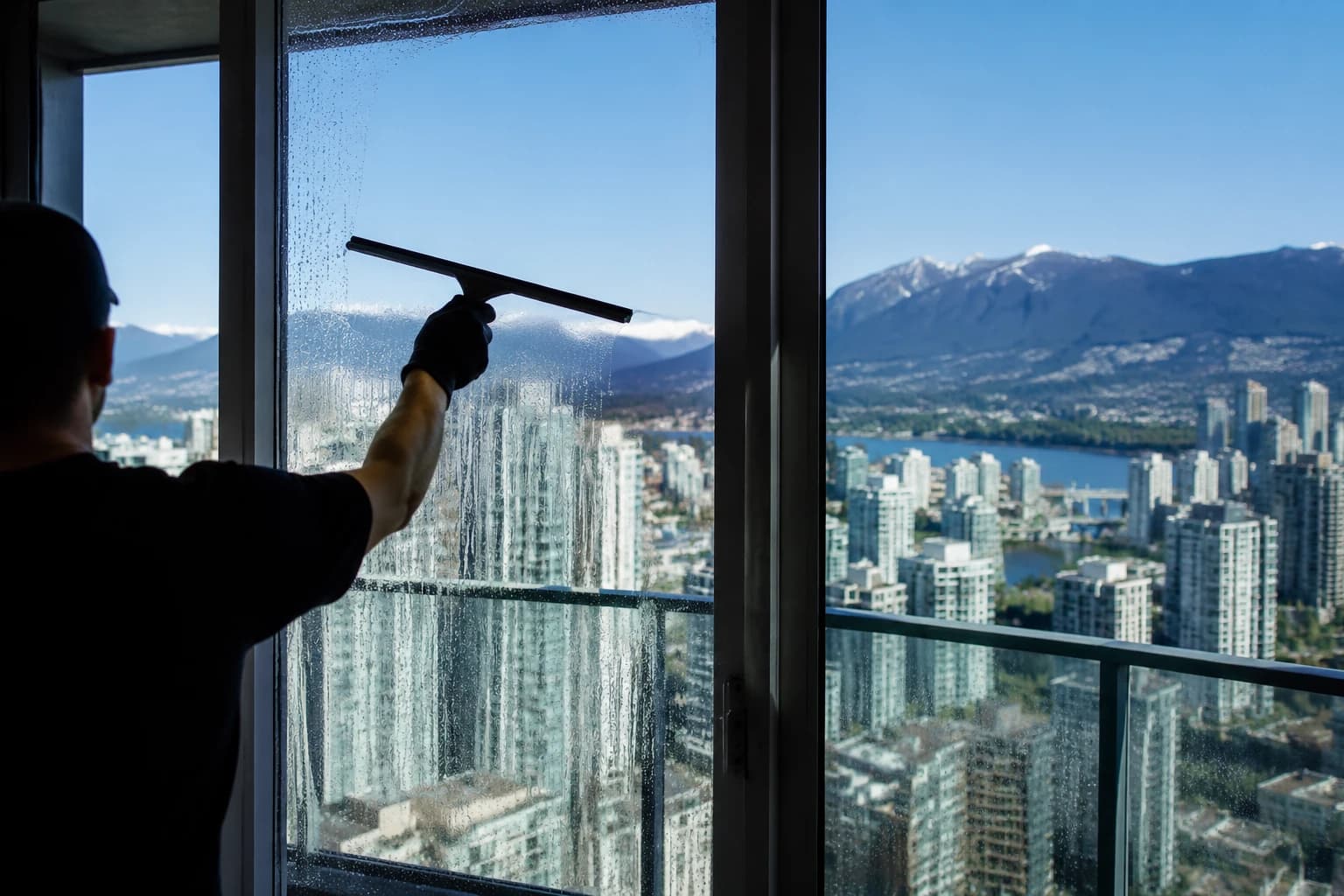
The balcony and its sliding glass door are the other missing piece, and in a Vancouver high-rise they take a beating. Rain drives road film and city dust onto the outside of the glass, so it streaks in a way an interior window never does. Sweep the balcony floor, wipe the railing, then clean both sides of the sliding glass with glass cleaner and finish with a squeegee for a clear result. Vacuum the door track, where grit collects and eventually stops the door from sliding smoothly. If you clean condos in Yaletown or downtown Vancouver, the balcony glass is often the difference between a suite that looks maintained and one that looks tired.
There is also a shared-space courtesy that comes with strata living. When you carry cleaning water, recycling, or a full vacuum canister through common hallways and elevators, keep drips and dust to yourself, and rinse bins in your own suite rather than a shared utility area. It is a small thing, but it is the kind of detail that separates a good condo neighbour from a source of complaints. This is exactly the ground our condo cleaning service is built around, so if the balcony and laundry closet are the parts you keep putting off, that is the clean to hand over.
- Laundry closet: wipe exteriors and control panels, clean the lint trap every load, wipe the front-load door gasket
- Leave the washer door open between loads so the drum airs out and does not turn musty
- Balcony: sweep the floor, wipe the railing, clean both sides of the sliding glass, and squeegee it clear
- Vacuum the sliding-door track so grit does not jam the door over time
- Strata etiquette: contain drips and dust in shared hallways and elevators, rinse bins in your own suite
Pro Tip
Clean balcony glass on an overcast day, not in direct sun. Sun dries the cleaner before you can squeegee it, which is what leaves those stubborn streaks. Vancouver's grey mornings are perfect for it.
Related resources
Vancouver Rain, Small Suites, and Keeping Mould Out
A tight apartment plus a rainy climate is the classic recipe for mould in bathrooms and closets. Ventilation and humidity control do more for a small suite than any amount of scrubbing.
Mould needs moisture, warmth, and still air, and a compact Vancouver suite can supply all three during a wet winter. The fix is less about cleaning harder and more about drying faster. Health Canada recommends keeping indoor relative humidity below 50 percent in summer and lower in winter to discourage mould, guidance that is easy to hit with a few habits. Run the bathroom fan during every shower and for twenty to thirty minutes afterward, and crack a window when the weather allows.
Give the damp spots the most attention on your weekly pass. Squeegee the shower glass after use so soap scum and water spots never build, wipe down the tub and tiles, and check the window sills and closet corners that see the least airflow. Because Metro Vancouver water leaves a light mineral film, a glass cleaner and a squeegee keep shower doors and mirrors bright without harsh scrubbing.
If your bathroom is the room that always seems to fight back, our detailed bathroom cleaning checklist walks through grout, glass, and ventilation in order. The goal in a small suite is simple: clean the surfaces, then get the moisture out, so you are preventing the next problem instead of only treating the last one.
- Run the bathroom fan during every shower and for 20 to 30 minutes after
- Squeegee shower glass after use to stop soap scum and water spots forming
- Check window sills and closet corners, the low-airflow spots where mould starts
- Keep indoor humidity under 50 percent, using a small dehumidifier in a windowless suite if needed
- Use glass cleaner and a squeegee to keep Metro Vancouver's mineral film off glass and chrome
Pro Tip
Leave interior doors and closet doors ajar on the wettest days. Air movement is free, and a closet that never gets a breath of air is the first place a musty smell takes hold.
Related resources
Renters: Cleaning to the BC Deposit Standard
For renters, cleaning is not only about comfort, it is about the damage deposit. Knowing the standard your landlord is measuring against tells you exactly how far to take a move-out clean.
When you move out in British Columbia, the benchmark is that the unit be left 'reasonably clean.' The BC Residential Tenancy Branch sets out what that covers in its landlord and tenant responsibility guideline, including the stove and oven, defrosting and wiping the fridge, cleaning inside windows and tracks, removing any mould, and clearing scuff marks. It is not the same as a white-glove show-home clean, but it is more thorough than a normal weekly pass, and it is the line a deposit is judged against.
The practical move is to run your usual room-by-room checklist, then add the move-out extras the guideline calls out. Get behind and under the fridge and stove if they roll out, do the inside of windows and their tracks, and hit the light fixtures and vent covers that rarely get touched. Photograph the suite once it is done, because a dated record of a clean unit is the best protection if a deposit is ever disputed.
Move-out cleaning is genuinely time-consuming, which is why many renters in the West End and across the city hand the final clean to us. Our apartment cleaning team knows the standard landlords inspect against, and a dedicated move-out cleaning covers the deposit-critical extras, so the deposit conversation is about the paperwork, not the baseboards. If you would rather do it yourself, keep the guideline handy and treat it as your finish line.
- The BC standard at move-out is 'reasonably clean,' more thorough than a weekly clean but not a show-home clean
- Add move-out extras: behind and under appliances on rollers, inside windows and tracks, vents, and light fixtures
- Remove any visible mould, especially around the bathroom and window sills
- Photograph the finished suite with a date, as protection in a deposit dispute
- Budget more time than a normal clean, or hand the move-out clean to a service that knows the standard
Pro Tip
Do the deposit-critical extras first, not last. Fridge coils, window tracks, and vent covers are the tasks people run out of energy for, so tackling them while you are fresh is what actually protects the money.
Related resources
Keeping It Clean Between Deep Cleans
The secret to a small space that always looks presentable is not a bigger weekend clean, it is a tiny daily one. A few minutes a day keeps the deep clean small.
A daily reset is where the 80/20 rule pays off most. Spend ten minutes hitting only the high-impact surfaces: wipe the kitchen counters after cooking, rinse the sink, clear the coffee table, and give the bathroom sink a quick pass. None of it is deep, but it is the visible layer, so the suite stays presentable and the weekly clean never becomes a project.
Two habits do the heavy lifting in an apartment. Squeegee the shower after you use it, and deal with dishes the same day rather than letting them stack in a small kitchen where there is nowhere to hide them. Both take under two minutes and both prevent the buildup that turns a quick clean into a scrub. Our kitchen cleaning checklist has more of these small, compounding wins for the busiest room in the suite.
Print the room-by-room checklist below and keep it on the fridge, or browse our full set of printable cleaning checklists for other rooms and situations. Checking off a physical list is oddly motivating in a small space, and it means anyone in the household can pick up the clean without asking what still needs doing.
- Ten-minute daily reset on high-impact surfaces: counters, sink, coffee table, bathroom sink
- Squeegee the shower after every use to keep glass and tiles clear
- Handle dishes the same day so they never take over a small kitchen
- Keep the printable checklist visible so the whole household can share the load
Pro Tip
Tie the daily reset to something you already do, like starting the dishwasher or making the morning coffee. Habits stick far better when they piggyback on an existing routine than when they rely on willpower.
Related resources
Step-by-Step
The Printable Room-by-Room Apartment Cleaning Checklist
Work top to bottom, one zone at a time. In a studio or one-bedroom you can finish the whole list in a single focused session. Print it, keep it on the fridge, and check off each room as you go.
Entryway and Closet
The entryway is the first thing guests and inspectors see, so it earns a spot at the top of the list. Shake out or vacuum the mat, wipe the door handle and light switch, clean the entry mirror, and tidy the coat closet floor where grit and dust collect. In a condo this zone is small, so it takes only a few minutes and sets the tone for the rest of the suite.
- Shake out or vacuum the entry mat
- Wipe the door handle, light switch, and any intercom panel
- Clean the entry mirror with glass cleaner
- Tidy and wipe the coat closet floor
- Sweep or vacuum the entry floor last
Kitchen (Open-Plan or Galley)
Grease and food residue build up faster here than anywhere else, so give the kitchen your energy while it is fresh. Clear the counters, wipe them down along with the backsplash, and degrease the stovetop. Clean the sink and taps, wipe appliance fronts and cabinet handles, then finish with the floor. If your oven needs interior attention, that is a move-out or deep-clean add-on rather than a weekly task.
- Clear and wipe all counters and the backsplash
- Degrease the stovetop and wipe control knobs
- Clean and rinse the sink and taps
- Wipe appliance fronts, cabinet handles, and the microwave interior
- Sweep and mop the floor last
Bathroom
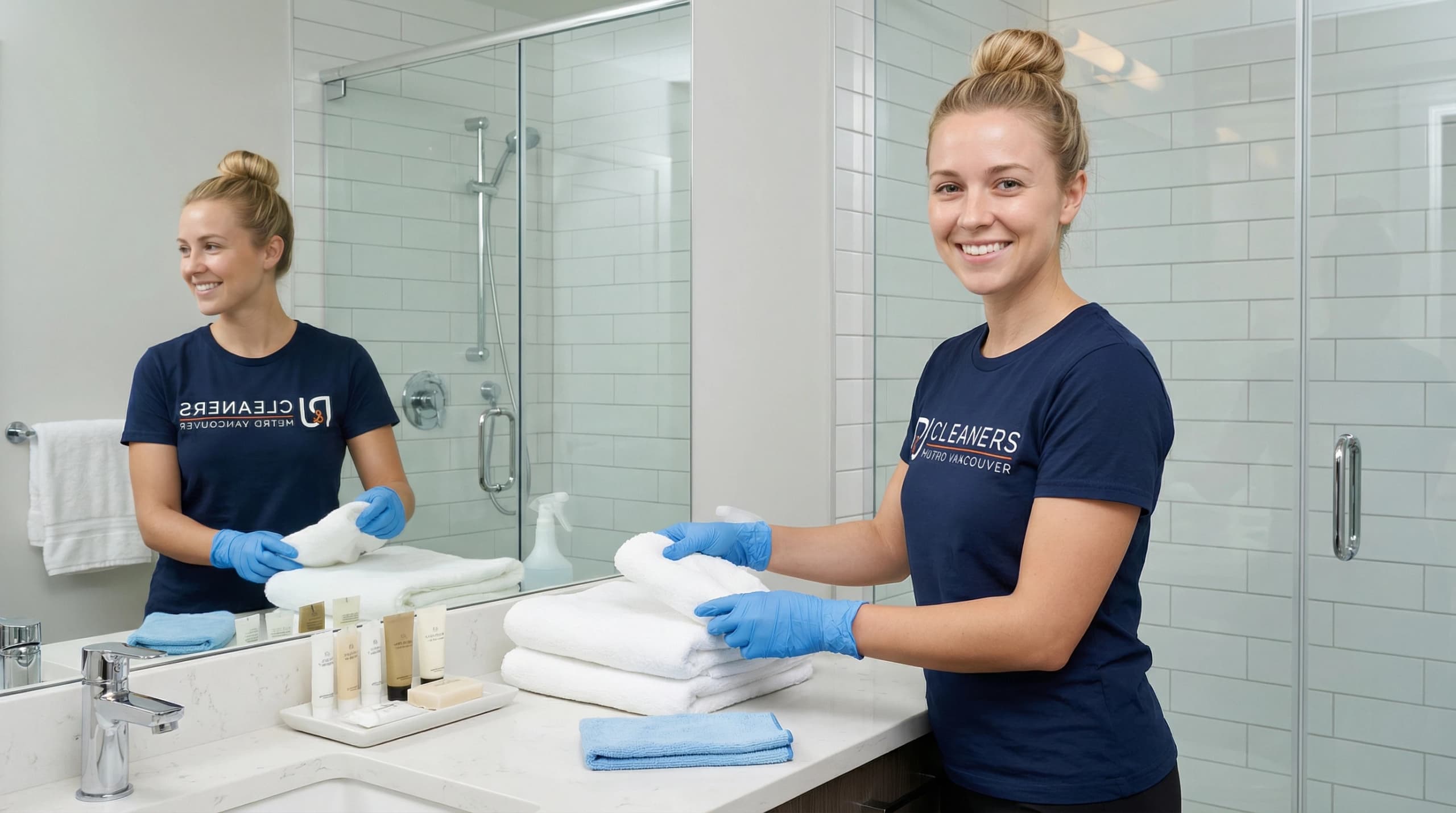
Work top to bottom so nothing drips onto a finished surface. Clean the mirror, then the sink and counter, then the tub and shower, squeegeeing the glass clear. Clean the toilet inside and out, wipe the exhaust fan cover, and finish with the floor. Run the fan throughout and for twenty minutes after, which is your best defence against mould in a damp Vancouver suite.
- Clean the mirror and wipe the sink and counter
- Scrub the tub and shower, then squeegee the glass
- Clean the toilet bowl, seat, base, and behind the tank
- Wipe the exhaust fan cover and switch plates
- Mop the floor and run the fan for 20 minutes after
Bedroom
Bedrooms collect dust and allergens quietly, so strip the bed and wash the sheets and pillowcases in hot water. Dust the nightstands, dresser tops, and any shelves, wipe the window sill, and vacuum the floor including under the bed where dust gathers. Tidy and vacuum the closet floor while you are here, since it is easy to skip and quick to do.
- Strip bedding and wash sheets and pillowcases in hot water
- Dust nightstands, dresser tops, and shelves
- Wipe the window sill and any ledges
- Vacuum the floor, including under the bed
- Tidy and vacuum the closet floor
Living Area
In an open-plan suite the living area flows straight out of the kitchen, so keep moving along the walls. Dust surfaces, shelves, and electronics with a dry microfibre cloth, then vacuum the sofa and lift the cushions to catch crumbs underneath. Wipe the coffee table and any high-touch items like remotes and switches, then vacuum or mop the floor and wipe the baseboards.
- Dust surfaces, shelves, and electronics with a dry cloth
- Vacuum the sofa and under the cushions
- Wipe the coffee table, remotes, and light switches
- Vacuum or mop the floor
- Wipe the baseboards and door frames
In-Suite Laundry Closet
This is the room house checklists forget. Wipe the exteriors of the washer and dryer and their control panels, clean the dryer lint trap, and wipe the rubber door gasket on a front-load washer where lint and damp collect. Clear the floor behind and under the units. Do not clean inside the machines. Leave the washer door open between loads so the drum airs out and never turns musty.
- Wipe the washer and dryer exteriors and control panels
- Clean the dryer lint trap
- Wipe the front-load washer door gasket
- Clear lint and dust from the floor behind and under the units
- Leave the washer door open between loads to air the drum
Balcony and Sliding Glass Door
Save the balcony for last so outdoor grit does not track back through the suite. Sweep the floor, wipe the railing, and clean both sides of the sliding glass door, since the outside takes rain-driven road film that the inside never sees. Squeegee the glass clear and vacuum the door track so grit does not jam the slide over time. On an overcast day the cleaner will not dry before you squeegee.
- Sweep the balcony floor and clear any debris
- Wipe the railing and any built-in ledges
- Clean both sides of the sliding glass with glass cleaner
- Squeegee the glass clear, ideally on an overcast day
- Vacuum the sliding-door track so it keeps sliding smoothly
| Rule | What It Means | Best For |
|---|---|---|
| 80/20 rule | About 20 percent of tasks, the visible surfaces, deliver about 80 percent of the clean | A fast weeknight reset |
| 20/10 rule | Clean for 20 minutes, then take a real 10-minute break | Beating procrastination in a studio |
| 30/3 rule | Focused 30-minute blocks with a 3-minute reset in each room | A full weekend deep clean |
Services mentioned in this article
Ready for help?
4.9 · 850+ Google reviewsWant the Condo Cleaned Without the Weekend Gone?
Our team cleans hundreds of Metro Vancouver condos and high-rise suites, so we know the balcony glass, the laundry closet, and the strata rules. Book an apartment or condo clean and get your weekend back, backed by our 200% satisfaction guarantee.
778-720-2224Apartment Cleaning Checklist Questions
What is the 80/20 rule for cleaning?
The 80/20 rule means that about 20 percent of your cleaning tasks deliver about 80 percent of the visible result. In an apartment, that 20 percent is usually the kitchen counters and sink, the bathroom sink and mirror, and the floors people actually see. Hit those first and the whole suite reads as clean, even before you get to the deeper tasks.
What is the 30/3 rule for cleaning?
The 30/3 rule means working in focused 30-minute blocks, then doing a quick 3-minute reset in each room before you move on. The short reset stops one messy corner from undoing the room you just finished. It suits a longer weekend clean, where the blocks keep you moving instead of drifting from task to task.
What is the 20/10 rule in cleaning?
The 20/10 rule means you clean for 20 minutes, then take a real 10-minute break, similar to the Pomodoro technique. The break is the point, because it makes starting feel low-stakes. In a studio or one-bedroom, one or two 20-minute rounds is often the entire clean.
What do you need to clean an apartment?
A small apartment needs a short kit, not a garage full of gear: an all-purpose cleaner, a glass cleaner, a bathroom disinfectant, a stack of microfibre cloths, a scrub brush, and a vacuum or broom. Add a squeegee for balcony glass and a lint brush for the laundry closet. Everything fits under one sink.
How often should you clean a small apartment?
Reset high-touch surfaces daily, do a proper clean once a week, and deep clean roughly every three months. Small footprints work in your favour here, because a weekly clean of a one-bedroom is often under an hour. Renters preparing to move out should plan a longer session to meet their landlord's cleanliness standard.
Sources & References
The facts in this guide come from the primary sources below. Links open in a new tab.
- 1Residential Tenancy Branch Policy Guideline 1: Landlord & Tenant Responsibility for Residential PremisesGovernment of British Columbia
- 2Guide to Addressing Moisture and Mould in Your HomeHealth Canada

Meet the Author
Pamela
Co-Founder
Pamela leads residential quality standards at P&J Cleaners, refining safe, detail-driven cleaning systems for Vancouver homes, condos, and move-out projects.
Keep Exploring