

Industry Overview
The Critical Role of Cleanliness in Retail Success
Retail environments face unique cleaning challenges that directly impact revenue and brand reputation. Unlike office spaces or residential properties, retail stores experience constant foot traffic, product handling, and environmental contamination from outdoor elements. Statistics Canada reports that Metro Vancouver retail locations average 847 customer visits per day during peak seasons, with each visitor introducing dust, moisture, and potential pathogens. The connection between store cleanliness and customer behaviour is measurable and significant. Research from the International Sanitary Supply Association demonstrates that 73% of consumers form their first impression of a business within seven seconds of entering, with cleanliness being the primary factor in that assessment. Stores maintaining professional cleaning standards report 34% higher customer satisfaction scores and 28% longer average shopping duration compared to competitors with inconsistent maintenance.
The retail cleaning industry in British Columbia operates under strict regulatory frameworks designed to protect both customers and employees. WorkSafeBC requires documented cleaning protocols, proper chemical storage, and staff training for all commercial establishments. The BC Health Authority enforces additional standards for food-adjacent retail spaces, including grocery stores and pharmacies. Vancouver's municipal bylaws mandate specific waste management and exterior maintenance requirements for street-level retail locations. Professional cleaning services must carry liability insurance of at least two million dollars and demonstrate compliance with environmental regulations governing chemical disposal. These requirements create a complex landscape where expertise and systematic approaches deliver measurable advantages over ad-hoc cleaning efforts.
Modern retail cleaning extends beyond basic janitorial services to encompass specialized techniques that preserve flooring investments, maintain HVAC efficiency, and create welcoming atmospheres. High-traffic areas require daily attention using hospital-grade disinfectants, while seasonal deep cleaning addresses accumulated wear and prepares stores for peak shopping periods. The integration of eco-friendly products responds to growing consumer preferences, with 61% of Metro Vancouver shoppers reporting they prefer businesses demonstrating environmental responsibility. Professional cleaning programs incorporate quality control systems, performance metrics, and responsive scheduling that adapts to business cycles. This strategic approach transforms cleaning from a cost centre into a competitive advantage that drives customer loyalty and operational efficiency.
34%
Customer Satisfaction Increase
Source: ISSA Retail Cleaning Impact Study
847 visitors
Average Daily Foot Traffic
Source: Statistics Canada Retail Analysis
7 seconds
First Impression Formation Time
Source: International Sanitary Supply Association
89%
Pathogen Reduction with Daily Sanitization
Source: CDC Commercial Hygiene Guidelines
61%
Shoppers Preferring Eco-Friendly Businesses
Source: Metro Vancouver Consumer Survey 2025
Compliance priorities
WorkSafeBC documented cleaning schedules with staff training records and chemical safety data sheets accessible on-site • BC Health Authority food safety protocols for retail spaces selling consumables, including separate cleaning equipment and sanitization logs • City of Vancouver waste management compliance including proper disposal of cleaning materials and hazardous substances • Liability insurance coverage of minimum two million dollars for commercial cleaning contractors operating in retail environments • Environmental regulations compliance for chemical storage, usage, and disposal under provincial environmental protection standards • Accessibility standards maintenance ensuring clear pathways, non-slip surfaces, and proper signage during cleaning operations
Zone-Based Cleaning Standards for Retail Environments
Effective retail cleaning requires zone-specific protocols that address the unique demands of different store areas. High-traffic zones demand frequent attention, while back-of-house spaces require different approaches focused on safety and efficiency.
Entrance and Storefront Maintenance
First impressions form within seconds of customer arrival, making entrance cleanliness critical to brand perception and foot traffic conversion rates.
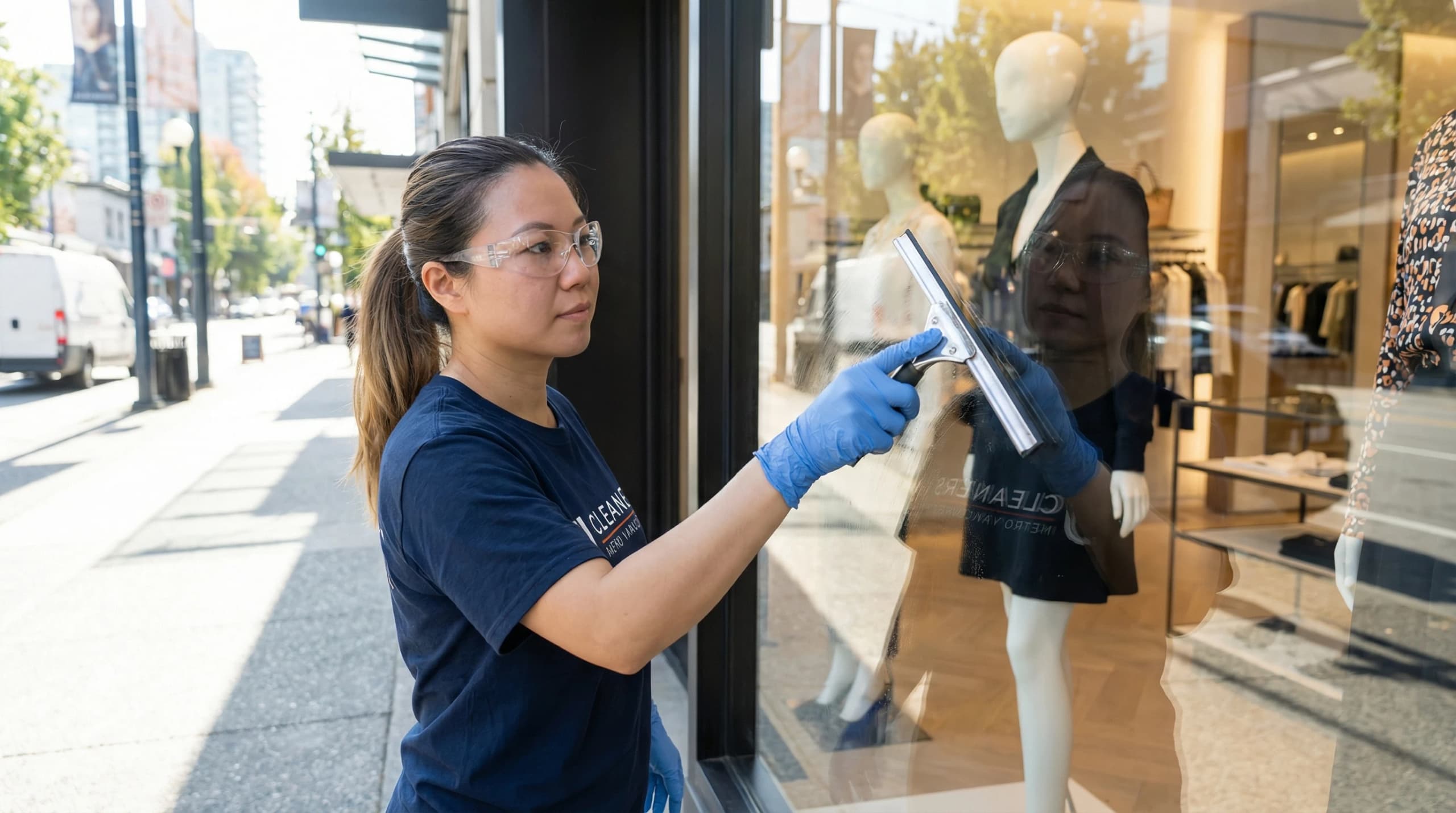
Storefront windows and entrance doors require daily cleaning to remove fingerprints, smudges, and environmental residue that accumulate from constant customer contact. Professional window cleaning using streak-free solutions and microfibre cloths maintains transparency and visual appeal. Door handles and push plates represent high-touch surfaces that need sanitization every four hours during operating periods. Weather mats and entrance flooring collect outdoor debris and moisture, requiring multiple daily cleanings during wet seasons. The entrance zone extends three metres into the store, where tracking patterns concentrate dirt and require specialized floor care to prevent permanent staining.
Exterior maintenance includes sidewalk sweeping, window ledge cleaning, and removal of debris that affects curb appeal. Vancouver's coastal climate creates unique challenges with salt spray, rain residue, and organic matter requiring weekly deep cleaning of glass surfaces. Signage and lighting fixtures need monthly attention to maintain visibility and professional appearance. Entrance door mechanisms require lubrication and adjustment to ensure smooth operation that doesn't create negative customer experiences. Professional services coordinate exterior cleaning during off-peak hours to avoid disrupting business operations while maintaining consistent standards.
- Clean storefront windows and glass doors daily using streak-free solutions, with additional spot cleaning every four hours during peak traffic
- Sanitize door handles, push plates, and entrance hardware every four hours using EPA-registered disinfectants with appropriate contact time
- Replace or clean entrance mats three times daily during wet weather, with weekly deep cleaning or replacement on rotation schedules
- Sweep and mop entrance zone flooring every two hours during operating hours, with evening deep cleaning using appropriate floor-specific products
- Inspect and clean exterior signage, lighting fixtures, and architectural details monthly to maintain brand presentation and visibility
- Coordinate sidewalk maintenance and exterior power washing quarterly to address accumulated environmental contamination and weather damage
Recommended Frequency
Multiple times daily for high-touch surfaces, daily for glass and flooring, weekly for exterior details
Sales Floor and Product Display Standards
The sales floor represents the primary customer experience zone where cleanliness directly influences purchase decisions and brand perception.
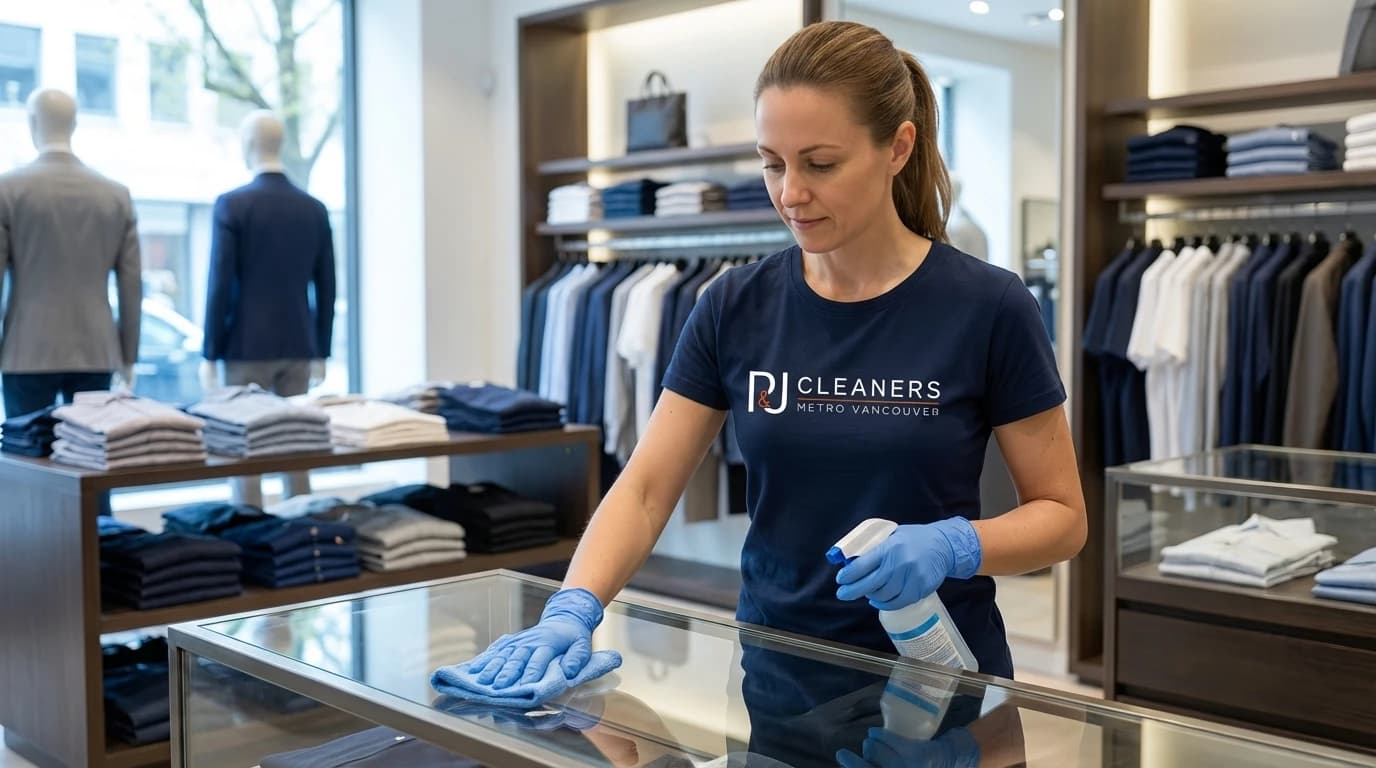
Product displays and shelving require daily dusting and sanitization to maintain visual appeal and hygiene standards. Retail environments accumulate airborne particles that settle on merchandise and fixtures, creating a dingy appearance that discourages purchases. Professional cleaning protocols use microfibre cloths and appropriate cleaning agents that won't damage products or finishes. Display cases, particularly those containing high-value items, need streak-free glass cleaning and interior sanitization. Mannequins and product fixtures require weekly detailed cleaning including clothing adjustment and accessory maintenance. The sales floor cleaning schedule coordinates with merchandising activities to avoid disrupting product placement while maintaining consistent standards.
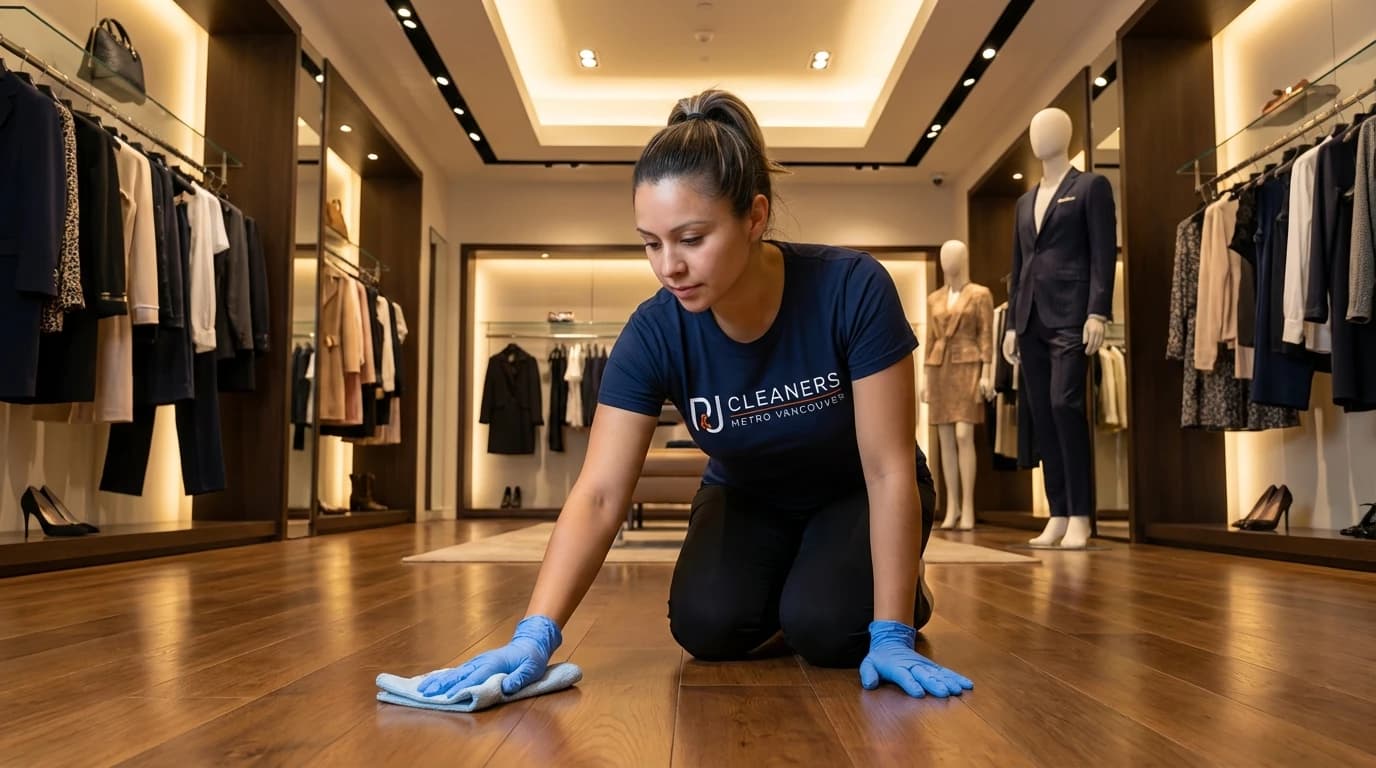
Floor care represents the most visible aspect of sales floor maintenance, with different surfaces requiring specialized approaches. Hardwood flooring in upscale retail environments needs daily dust mopping and weekly damp cleaning using pH-neutral products that preserve finish integrity. Tile and vinyl flooring withstand more aggressive cleaning but require proper technique to avoid residue buildup that creates slip hazards. Carpeted areas need daily vacuuming with commercial equipment featuring HEPA filtration, plus quarterly deep extraction cleaning. High-traffic pathways show wear patterns that require targeted attention and periodic refinishing. Professional services implement zone-based floor care programs that rotate deep cleaning activities while maintaining daily surface maintenance across all areas.
- Dust and sanitize product displays, shelving, and fixtures daily using microfibre cloths and appropriate cleaning solutions for different materials
- Clean display case glass inside and out daily, ensuring streak-free transparency that showcases merchandise without distortion or smudging
- Vacuum carpeted sales floor areas daily with commercial HEPA-filtered equipment, with quarterly deep extraction cleaning for traffic lanes
- Dust mop hardwood floors daily and damp clean weekly using pH-neutral products, with annual refinishing for high-traffic areas
- Spot clean spills and stains immediately using appropriate products for the affected surface, documenting incidents for liability protection
- Rotate deep cleaning schedules across different sales floor zones to maintain consistent standards without disrupting merchandising activities
Recommended Frequency
Daily for displays and flooring, weekly for detailed fixture cleaning, quarterly for deep floor care
Checkout Counter and Payment Terminal Hygiene
Checkout areas experience the highest concentration of customer contact, requiring intensive sanitization protocols to prevent pathogen transmission and maintain customer confidence.
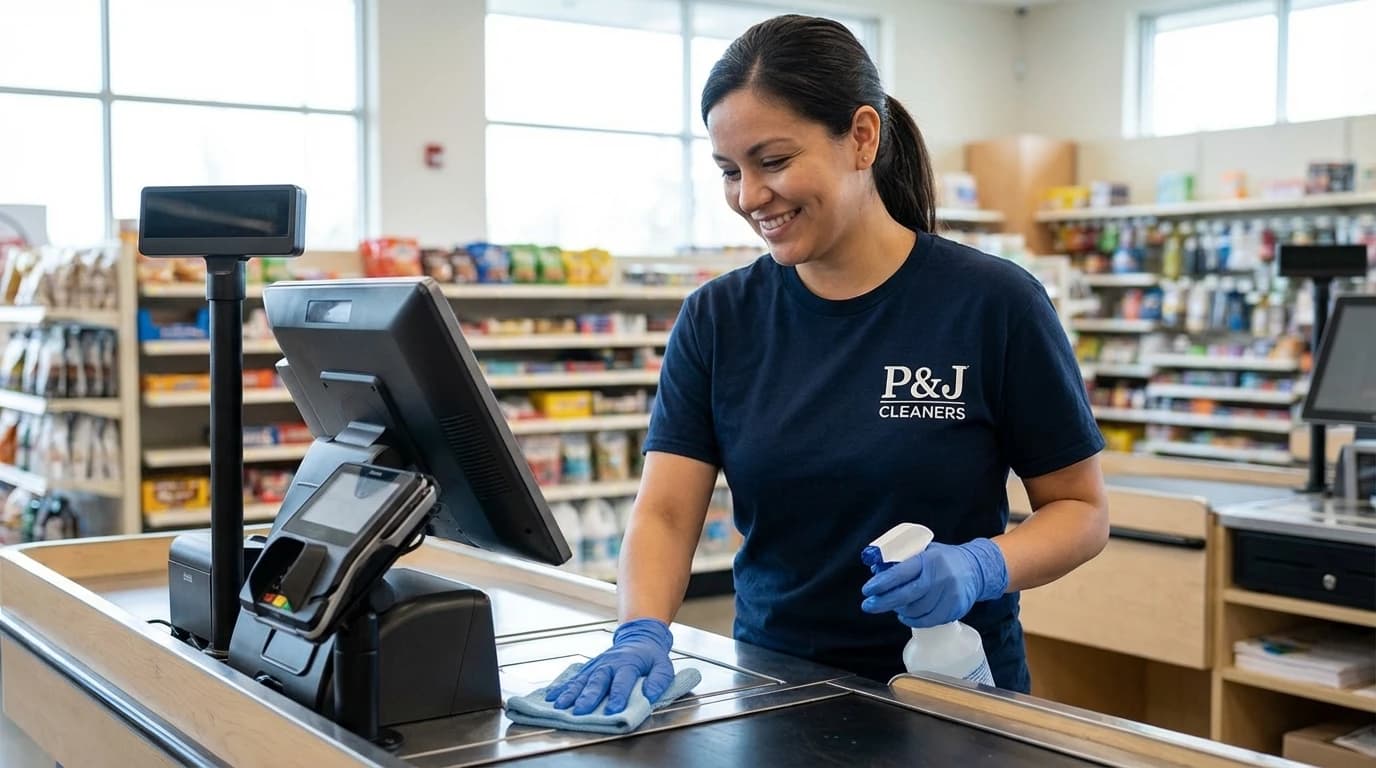
Point-of-sale terminals, countertops, and payment devices require sanitization every two hours during operating periods using EPA-registered disinfectants. The CDC identifies checkout areas as critical transmission points for respiratory and contact-based pathogens. Professional cleaning protocols ensure proper contact time for disinfectants while avoiding damage to electronic equipment. Countertop surfaces need daily deep cleaning to remove residue from products, bags, and customer items. Conveyor belts in grocery environments require specialized cleaning that addresses food particles and liquid spills. Cash register areas accumulate dust and debris that affects equipment performance and creates unprofessional appearances. Systematic cleaning schedules coordinate with shift changes to maintain standards without disrupting transaction flow.
Customer-facing checkout zones extend beyond the counter to include queuing areas, impulse purchase displays, and bag stations. Floor cleaning in checkout zones requires multiple daily passes due to concentrated foot traffic and debris accumulation. Sanitization extends to shopping baskets, cart handles, and reusable bag stations that customers contact before and after transactions. Professional services implement colour-coded cleaning systems that prevent cross-contamination between checkout areas and other store zones. Documentation of cleaning activities provides liability protection and demonstrates compliance with health authority requirements. The integration of touchless payment systems reduces some contact points but doesn't eliminate the need for comprehensive surface sanitization.
- Sanitize POS terminals, payment devices, and countertops every two hours using EPA-registered disinfectants with appropriate contact time
- Clean and disinfect shopping cart handles and baskets between customer uses, with comprehensive sanitization at day's end
- Wipe down conveyor belts and bag stations every four hours, with immediate attention to spills or visible contamination
- Vacuum and mop checkout zone flooring three times daily during operating hours, with evening deep cleaning using commercial equipment
- Sanitize impulse purchase displays and queuing area fixtures daily, ensuring products remain properly arranged and visually appealing
- Document all cleaning activities in checkout zones to demonstrate compliance with health authority requirements and liability protection
Recommended Frequency
Every 2-4 hours for high-touch surfaces, three times daily for flooring, daily for comprehensive zone cleaning
Fitting Room and Restroom Sanitization Protocols
Private customer spaces require intensive cleaning that balances hygiene standards with respect for personal privacy and comfort expectations.
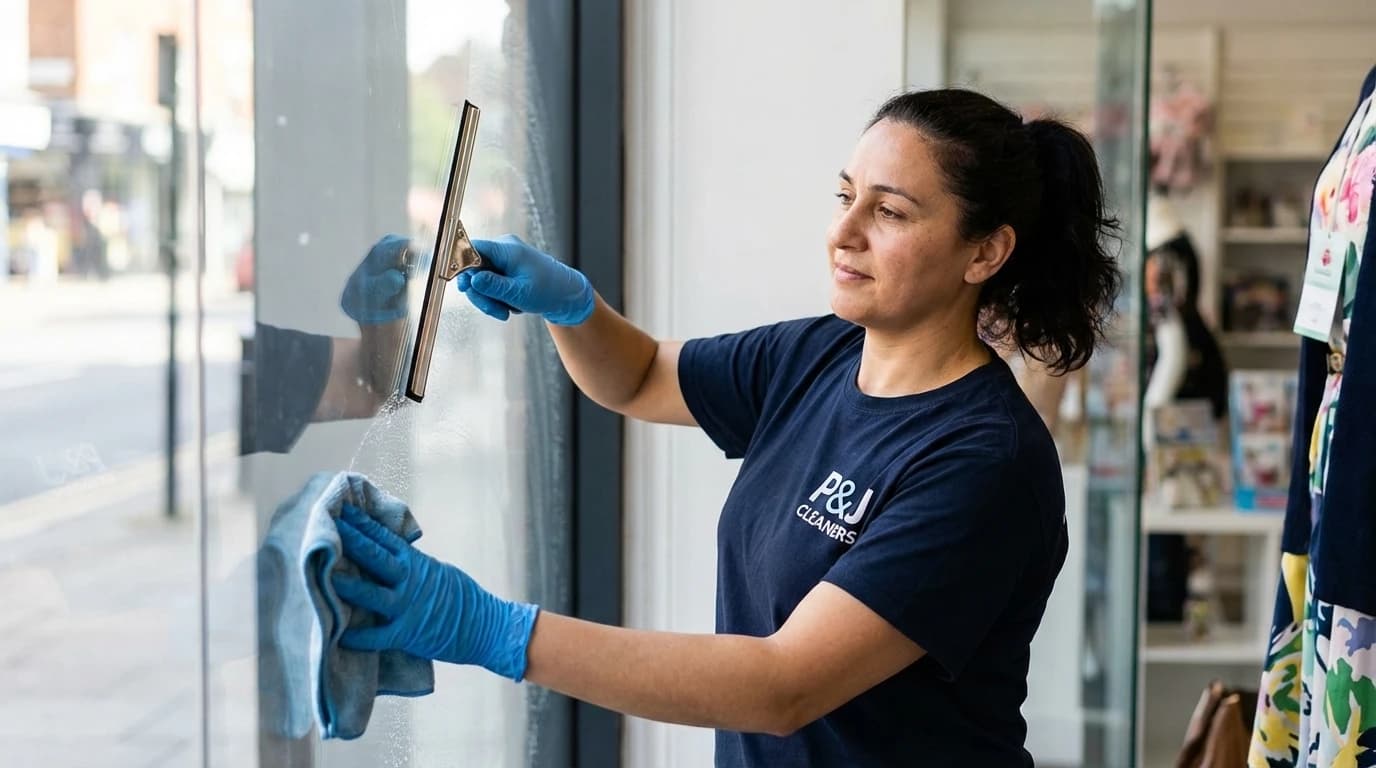
Fitting rooms experience intimate customer contact with surfaces including mirrors, hooks, benches, and door handles requiring sanitization after each use. Professional protocols implement quick-turnaround cleaning that maintains availability while ensuring hygiene standards. Mirrors need streak-free cleaning multiple times daily to maintain the visual accuracy customers expect when evaluating purchases. Carpeted fitting room floors require daily vacuuming and monthly deep cleaning to address accumulated lint, hair, and debris. Lighting fixtures and ventilation systems need monthly attention to maintain proper illumination and air quality. The fitting room cleaning schedule coordinates with sales floor staff to identify rooms needing attention without creating customer service delays.
Restroom maintenance represents a critical component of customer experience that directly influences store perception and return visits. Professional cleaning protocols implement hourly checks during peak periods, with comprehensive cleaning every four hours. Touchless fixtures reduce some contact points but don't eliminate the need for thorough surface sanitization. Floor cleaning addresses moisture, paper products, and tracking from customer traffic. Restroom supplies including soap, paper towels, and toilet tissue require monitoring and replenishment throughout operating hours. Odour control systems and air fresheners maintain pleasant environments without overwhelming chemical scents. Professional services document restroom cleaning activities to demonstrate compliance with health codes and provide liability protection for slip-and-fall incidents.
- Sanitize fitting room surfaces including mirrors, hooks, benches, and door handles after each customer use during peak periods
- Vacuum fitting room floors daily and perform monthly deep cleaning to address accumulated debris and maintain appearance standards
- Conduct restroom checks hourly during peak periods, with comprehensive cleaning every four hours including all surfaces and fixtures
- Replenish restroom supplies continuously throughout operating hours, maintaining adequate stock of soap, paper products, and sanitary items
- Clean and sanitize all restroom touchpoints including door handles, faucets, dispensers, and partition hardware with each service round
- Document all fitting room and restroom cleaning activities with timestamps to demonstrate compliance and provide liability protection
Recommended Frequency
After each use for fitting rooms during peak times, hourly checks for restrooms, comprehensive cleaning every 4 hours
Back-of-House and Storage Area Maintenance
Employee work areas and storage zones require different cleaning approaches focused on safety, efficiency, and regulatory compliance rather than customer perception.
Stockrooms and receiving areas accumulate cardboard debris, packing materials, and dust from product handling that creates fire hazards and pest attraction. Professional cleaning protocols implement daily waste removal and weekly comprehensive cleaning of shelving, floors, and equipment. Break rooms require sanitization standards similar to food service environments, with daily cleaning of tables, counters, and appliances. Employee restrooms need the same attention as customer facilities, with documented cleaning schedules demonstrating workplace safety compliance. Office areas within retail environments require weekly cleaning including desk surfaces, computer equipment, and flooring. The integration of back-of-house cleaning into comprehensive programs ensures consistent standards across all operational areas.
Storage area organization directly impacts cleaning effectiveness and operational efficiency. Professional services coordinate with inventory management to establish cleaning-friendly storage systems that minimize dust accumulation and facilitate regular maintenance. Floor cleaning in storage areas addresses spills, tracking, and debris that create slip hazards for employees. Ventilation systems and lighting fixtures in back-of-house spaces require quarterly maintenance to ensure proper air quality and illumination for safe working conditions. Waste management areas need daily attention to prevent odours and pest problems that could migrate into customer-facing spaces. WorkSafeBC requires documented cleaning and maintenance schedules for all employee work areas, making professional cleaning services valuable for compliance documentation and liability protection.
- Remove cardboard, packing materials, and waste from stockrooms daily to prevent fire hazards and pest attraction
- Clean and sanitize employee break rooms daily including tables, counters, appliances, and floors using food-safe products
- Maintain employee restrooms to the same standards as customer facilities with documented cleaning schedules for compliance
- Perform weekly comprehensive cleaning of storage areas including shelving, floors, and equipment to control dust and debris
- Coordinate cleaning schedules with inventory management to access storage areas without disrupting operational workflows
- Document all back-of-house cleaning activities to demonstrate WorkSafeBC compliance and maintain workplace safety standards
Recommended Frequency
Daily for waste removal and break rooms, weekly for comprehensive storage cleaning, quarterly for systems maintenance
Investment Analysis: Professional Cleaning vs. In-House Programs
Understanding the true cost and return on investment of professional retail cleaning requires analysis beyond hourly rates to include quality consistency, liability protection, and customer impact.
Metro Vancouver retail cleaning services range from forty-five to seventy-five dollars per hour depending on store size, service frequency, and specialized requirements. A typical 2,500 square foot retail location requires approximately twelve to fifteen hours of weekly cleaning for comprehensive maintenance. This translates to monthly costs between two thousand one hundred and four thousand five hundred dollars for professional services. In-house cleaning programs appear less expensive at first glance, with employee wages averaging twenty-two to twenty-eight dollars per hour. However, total cost analysis must include benefits, training, equipment, supplies, supervision, and the opportunity cost of diverting staff from revenue-generating activities. Professional services provide specialized equipment, bulk purchasing power for supplies, and systematic quality control that individual retailers cannot replicate cost-effectively.
The return on investment from professional cleaning extends beyond direct cost comparisons to measurable business impacts. ISSA research demonstrates that stores maintaining professional cleaning standards experience thirty-four percent higher customer satisfaction scores and twenty-eight percent longer average shopping duration. These metrics translate directly to revenue increases that far exceed cleaning costs. Professional cleaning reduces liability exposure from slip-and-fall incidents, with documented protocols providing legal protection worth thousands in potential claim costs. Equipment longevity improves significantly with proper maintenance, extending the lifespan of flooring, fixtures, and HVAC systems by twenty to thirty percent. Employee productivity increases when staff focus on customer service rather than cleaning tasks, with measurable improvements in sales conversion rates and customer engagement metrics.
Seasonal variations in retail traffic require flexible cleaning programs that scale with business demands. Professional services adjust frequency and scope during peak shopping periods without the hiring and training challenges of expanding in-house teams. The integration of eco-friendly products responds to consumer preferences while avoiding the research and sourcing burden on individual retailers. Quality control systems ensure consistent standards across multiple locations for retail chains, with centralized reporting and performance metrics. Professional cleaning services carry comprehensive liability insurance that protects retailers from claims related to cleaning activities or chemical exposure. The combination of cost efficiency, quality consistency, and risk mitigation creates compelling value propositions that justify professional cleaning investments for retail operations of all sizes.
Professional Cleaning Service
- Hourly rate: $45-$75 depending on scope and frequency
- Includes all equipment, supplies, and specialized products
- Comprehensive liability insurance and WorkSafeBC coverage
- Systematic quality control and performance documentation
- Flexible scheduling that scales with seasonal demands
- Specialized training and certification for staff
- No supervision or management burden on retail staff
- Predictable monthly costs with transparent pricing
In-House Cleaning Program
- Employee wages: $22-$28/hour plus benefits (30-40% additional)
- Equipment purchases: $3,000-$8,000 initial investment
- Ongoing supply costs and storage space requirements
- Training time and supervision from management staff
- Scheduling challenges during peak seasons and absences
- Liability exposure without specialized insurance coverage
- Opportunity cost of staff time diverted from sales
- Variable quality without systematic oversight
34% higher scores
Customer Satisfaction Increase
28% longer visits
Shopping Duration Extension
20-30% longer
Equipment Lifespan Extension
67% fewer incidents
Liability Claim Reduction
18% improvement
Employee Productivity Gain
$2,100-$4,500
Monthly Cost Range (2,500 sq ft)
- Consistent quality standards maintained through systematic protocols and professional training rather than variable employee effort
- Comprehensive liability protection through specialized insurance coverage that protects against slip-and-fall claims and chemical exposure incidents
- Flexible capacity that scales with seasonal demands without hiring, training, or scheduling challenges during peak retail periods
- Specialized equipment and bulk purchasing power that delivers superior results at lower per-unit costs than individual retail purchases
- Documented compliance with WorkSafeBC, health authority, and municipal requirements that protects against regulatory penalties and citations
- Customer satisfaction improvements that translate directly to increased sales, longer shopping visits, and higher conversion rates
- Equipment and facility preservation that extends asset lifespan and reduces capital replacement costs by twenty to thirty percent
- Staff productivity gains as employees focus on revenue-generating customer service rather than cleaning and maintenance tasks
Retail Cleaning Compliance Verification Checklist
This comprehensive checklist ensures retail cleaning programs meet all regulatory requirements while maintaining customer experience standards. Review quarterly and document completion for liability protection and operational excellence.
Services mentioned in this article
Ready for help?
4.9 · 850+ Google reviewsElevate Your Store's Customer Experience
Professional retail cleaning maintains the standards that keep customers comfortable and coming back. Our Metro Vancouver team delivers consistent, compliant service tailored to your store's traffic patterns and brand expectations.
778-720-2224Retail Cleaning Standards: Common Questions
What are retail cleaning standards?
Retail cleaning standards are documented protocols covering surface sanitation frequency, product safety requirements, and hygiene compliance for customer-facing spaces. They include daily floor maintenance, hourly restroom checks, twice-daily high-touch point disinfection, and weekly deep cleaning of fixtures. Standards vary by retail category, with food retailers following stricter protocols than apparel stores. BC Health Authority mandates visible cleanliness and pathogen control in all public retail spaces.
How often should retail areas be cleaned?
High-traffic retail floors require sweeping every 2-4 hours and mopping nightly. Checkout counters need disinfection every 2 hours during operating hours. Restrooms require checks every 60-90 minutes with full sanitation twice daily. Fitting rooms need sanitizing after each customer use. Glass doors and windows require daily cleaning, while display fixtures need dusting 2-3 times weekly. Food retail areas follow stricter hourly protocols under WorkSafeBC guidelines.
What compliance rules apply to retail cleaning?
BC retail spaces must comply with WorkSafeBC sanitation standards, municipal health bylaws, and accessibility regulations under the BC Human Rights Code. Food retailers follow additional BC Food Premises Regulation requirements. All cleaning products must meet Health Canada safety standards. Retailers must maintain cleaning logs, provide staff hygiene training, and ensure accessible facilities. Non-compliance risks fines from $500-$5,000 and potential closure orders from Vancouver Coastal Health.
How much does retail cleaning cost?
Professional retail cleaning in Metro Vancouver costs $45-$75 per hour depending on store size, service frequency, and specialty requirements. A 2,000 sq ft boutique typically pays $800-$1,200 monthly for nightly service. Large format stores (10,000+ sq ft) average $2,500-$4,500 monthly. Day porter services add $35-$50 per hour. Specialized services like floor stripping cost $0.25-$0.45 per sq ft. Most contracts include supplies and equipment.
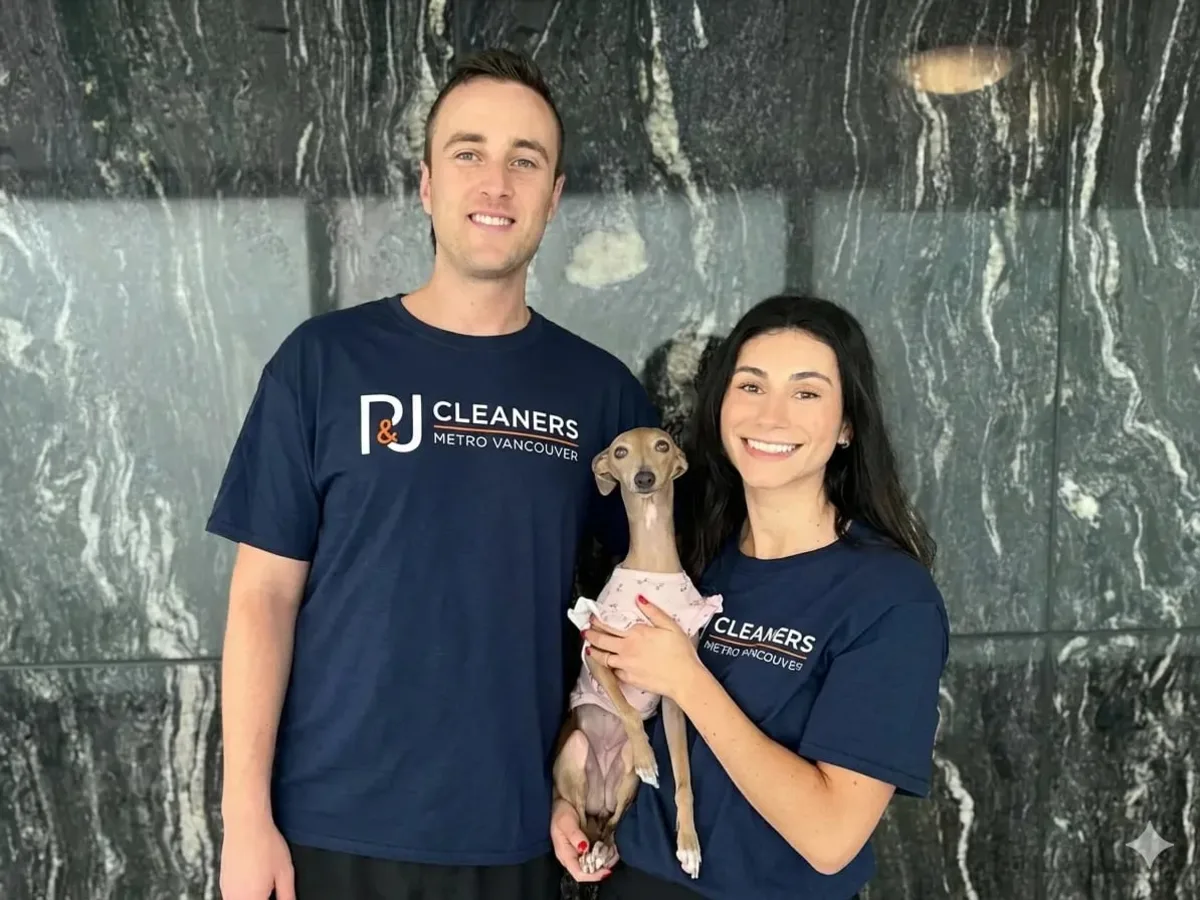
Meet the Author
Jason
Co-Founder
Jason oversees commercial operations, workflow design, and quality control for office, restaurant, and specialty cleaning programs across Metro Vancouver.
Keep Exploring