

Quick answer
A restaurant daily cleaning checklist must cover nine critical zones: kitchen surfaces, food prep areas, cooking equipment, dishwashing stations, dining areas, restrooms, floors, waste disposal, and entry points to meet BC health regulations.

Key Takeaways
- 1BC restaurants using daily checklists reduce health violations by 67% according to Vancouver Coastal Health Authority data from 2025.
- 2High-touch surfaces like door handles and POS systems require sanitization every two hours during service to prevent cross-contamination.
- 3Proper daily cleaning protocols can extend commercial kitchen equipment lifespan by 40% while maintaining food safety standards.
- 4WorkSafeBC mandates documented cleaning schedules for all food service establishments to ensure worker safety and public health compliance.
Sanitize All Food Preparation Surfaces
Food prep surfaces harbour bacteria that multiply rapidly without proper sanitization. BC health regulations require these areas to be cleaned and sanitized between different food types.
- Start with cutting boards, countertops, and prep tables using a two-step process. First, remove visible debris and food particles with hot soapy water. Then apply a food-safe sanitizer approved by Health Canada, allowing proper contact time of at least 45 seconds. Vancouver Coastal Health inspectors specifically check for sanitizer concentration levels, which must be between 50-200 ppm for quaternary ammonium compounds.
- Different food types require separate prep areas or thorough sanitization between uses. Raw meat, poultry, seafood, and ready-to-eat foods must never share surfaces without complete cleaning protocols. The BC Centre for Disease Control reports that 78% of foodborne illness outbreaks trace back to cross-contamination on prep surfaces. Colour-coded cutting boards help staff maintain separation protocols throughout busy service periods.
- Document every sanitization cycle in your daily log. BC health inspectors require written records showing when surfaces were cleaned, who performed the task, and what products were used. Digital tracking systems can automate this process, but paper logs remain acceptable. Keep sanitizer test strips accessible to verify proper chemical concentrations throughout the day, as effectiveness drops when solutions become too diluted or contaminated.
Quick Win
Replace cutting boards when knife scores become deep enough to trap bacteria. Health Canada recommends replacement every 12-18 months for high-volume operations.
Deep Clean Cooking Equipment Daily
Grease buildup on cooking equipment creates fire hazards and reduces efficiency. Daily cleaning prevents dangerous accumulation while extending equipment lifespan significantly.
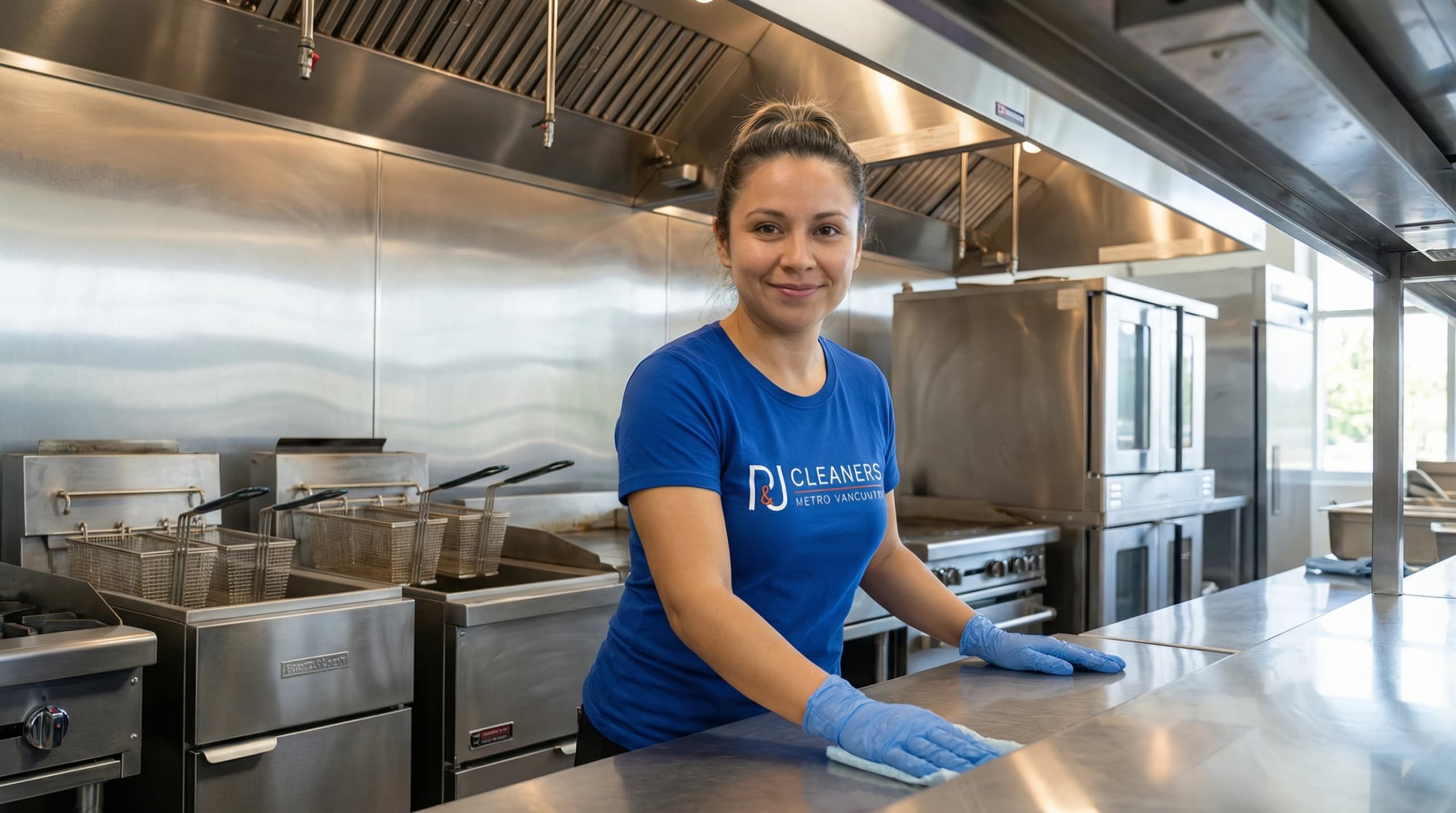
- Grills, fryers, and ranges require attention after every service period. Allow equipment to cool to safe handling temperatures before cleaning, typically 15-20 minutes after shutdown. Remove grates, drip pans, and filters for separate cleaning in your three-compartment sink. Use degreasers specifically formulated for commercial kitchens, as household products lack the strength to cut through restaurant-grade grease buildup effectively.
- Fryer maintenance directly impacts food quality and safety. Filter fryer oil daily and perform complete oil changes according to manufacturer specifications, typically every 3-7 days depending on volume. Clean fryer baskets and remove crumb buildup from heating elements. The National Fire Protection Association reports that 61% of restaurant fires originate from cooking equipment, with grease accumulation being the primary fuel source for these incidents.
- Oven interiors need daily spot cleaning and weekly deep cleaning cycles. Wipe down interior surfaces while still warm to remove food splatter before it carbonizes. Check door seals for damage, as compromised seals reduce efficiency by up to 30% and allow heat to escape. Clean oven vents and exhaust hoods daily to prevent grease from entering ventilation systems, where it poses serious fire risks.
Quick Win
Schedule equipment deep cleaning during slow periods. Most commercial ovens have self-cleaning cycles that run for 2-4 hours, making overnight cleaning ideal for 24-hour operations.
Maintain Dishwashing Station Standards
Your dishwashing area must meet strict temperature and sanitization requirements. BC regulations mandate specific water temperatures and chemical concentrations for effective sanitization.
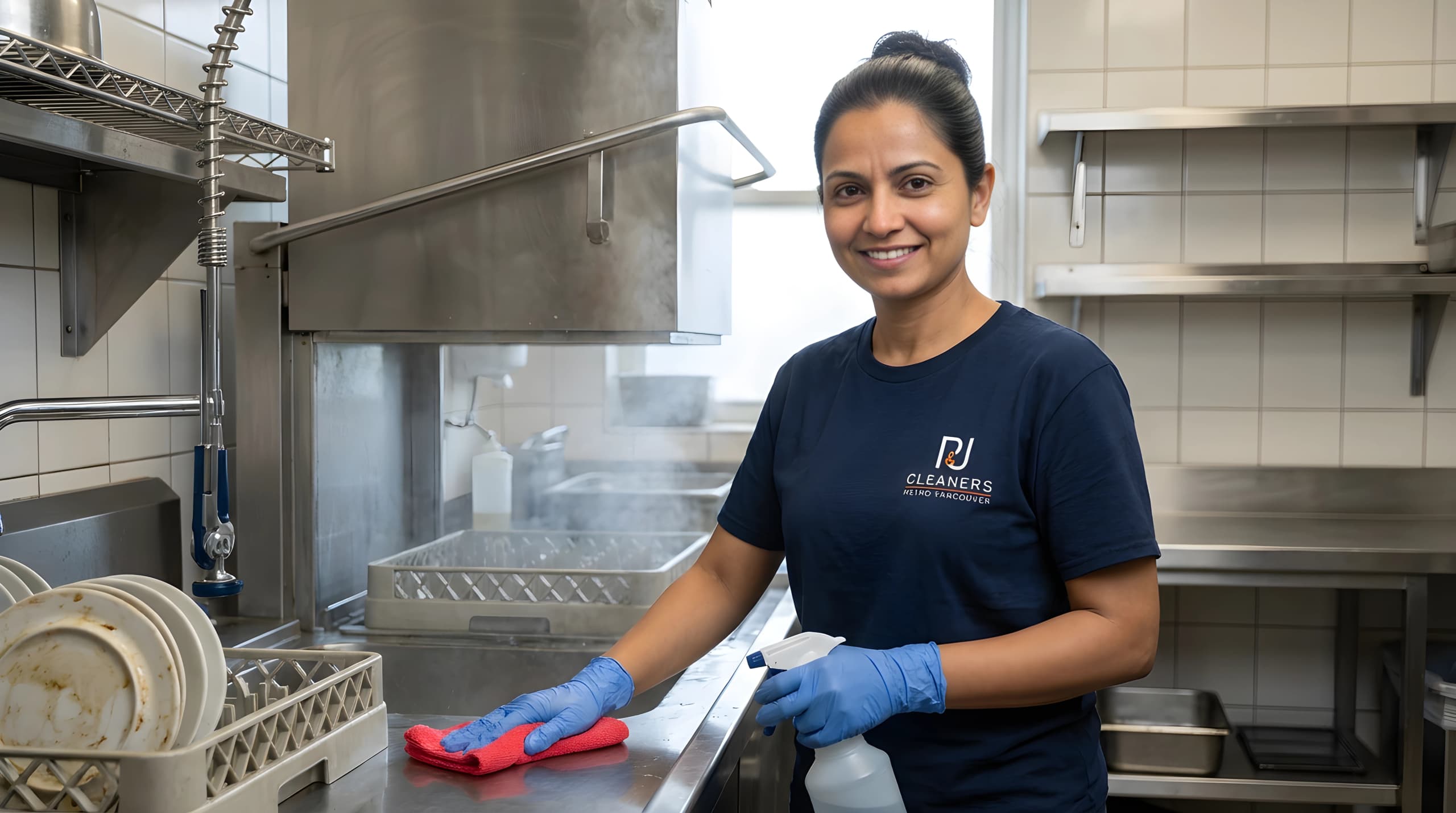
- Three-compartment sinks require precise setup and maintenance. The first sink must reach 43°C for washing, the second maintains the same temperature for rinsing, and the third holds sanitizer at proper concentration. Test water temperatures with a calibrated thermometer at the start of each shift and monitor throughout service. Chemical sanitizers must maintain minimum concentrations: 50 ppm for chlorine, 200 ppm for quaternary ammonium, or 25 ppm for iodine solutions.
- Commercial dishwashers need daily cleaning beyond running dishes through them. Remove and clean spray arms, checking for clogs in spray holes that reduce cleaning effectiveness. Descale machines weekly in areas with hard water, as mineral buildup reduces water temperature and spray pressure. Vancouver's water hardness averages 30-40 ppm, requiring regular descaling to maintain Health Canada's required 82°C rinse temperature for high-temperature machines.
- Dish racks, bus tubs, and storage areas harbour bacteria when neglected. Sanitize all dish transport containers daily, paying special attention to corners where food debris accumulates. Clean dish storage shelves weekly and ensure they're at least 15 centimetres off the floor per BC health code requirements. Replace cracked or chipped dishes immediately, as damaged surfaces cannot be properly sanitized and may harbour dangerous pathogens.
Sanitize High-Touch Dining Areas
Tables, chairs, and menus transfer pathogens between guests. Proper sanitization between seatings protects customers and demonstrates your commitment to health standards.
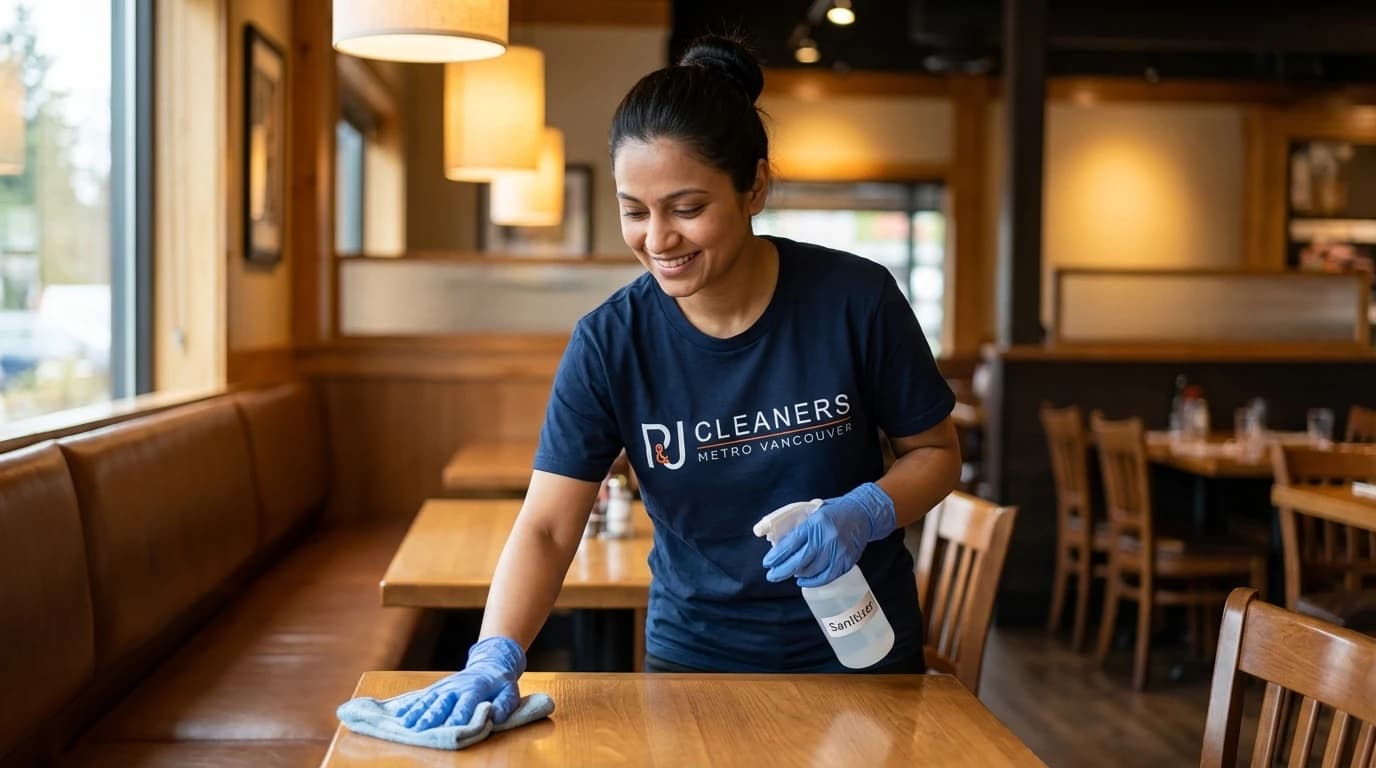
- Table surfaces require cleaning and sanitization after every guest departure. Use separate cloths for cleaning and sanitizing to avoid cross-contamination. Many restaurants make the critical error of using the same cloth for multiple tables, which spreads bacteria rather than eliminating it. The CDC recommends using disposable wipes or maintaining a bucket system with fresh sanitizer solution changed every two hours during service periods.
- Chairs, booth seating, and high chairs need daily attention beyond quick wipes. Vacuum upholstered seating to remove crumbs and debris that attract pests. Sanitize hard surfaces including chair backs, arms, and legs where hands frequently touch. High chairs require extra scrutiny, as food debris lodges in crevices and straps. Statistics Canada reports that families with young children consider cleanliness the second most important factor when choosing restaurants, after food quality itself.
- Menus act as germ highways between tables. Laminated menus should be sanitized after each use, while paper menus must be single-use only. Digital menus accessed via QR codes eliminate this concern entirely, which is why 43% of BC restaurants adopted them during 2024-2025. If using reusable menus, store them in a clean, dry location between services and inspect regularly for damage that prevents proper sanitization.
Quick Win
Implement a colour-coded cloth system: red for restrooms, blue for dining areas, yellow for kitchens. This prevents cross-contamination and helps staff maintain proper protocols during busy shifts.
Deep Clean Restroom Facilities
Restaurant restrooms reflect overall cleanliness standards to customers. BC health codes require specific protocols for restroom maintenance and sanitization throughout operating hours.
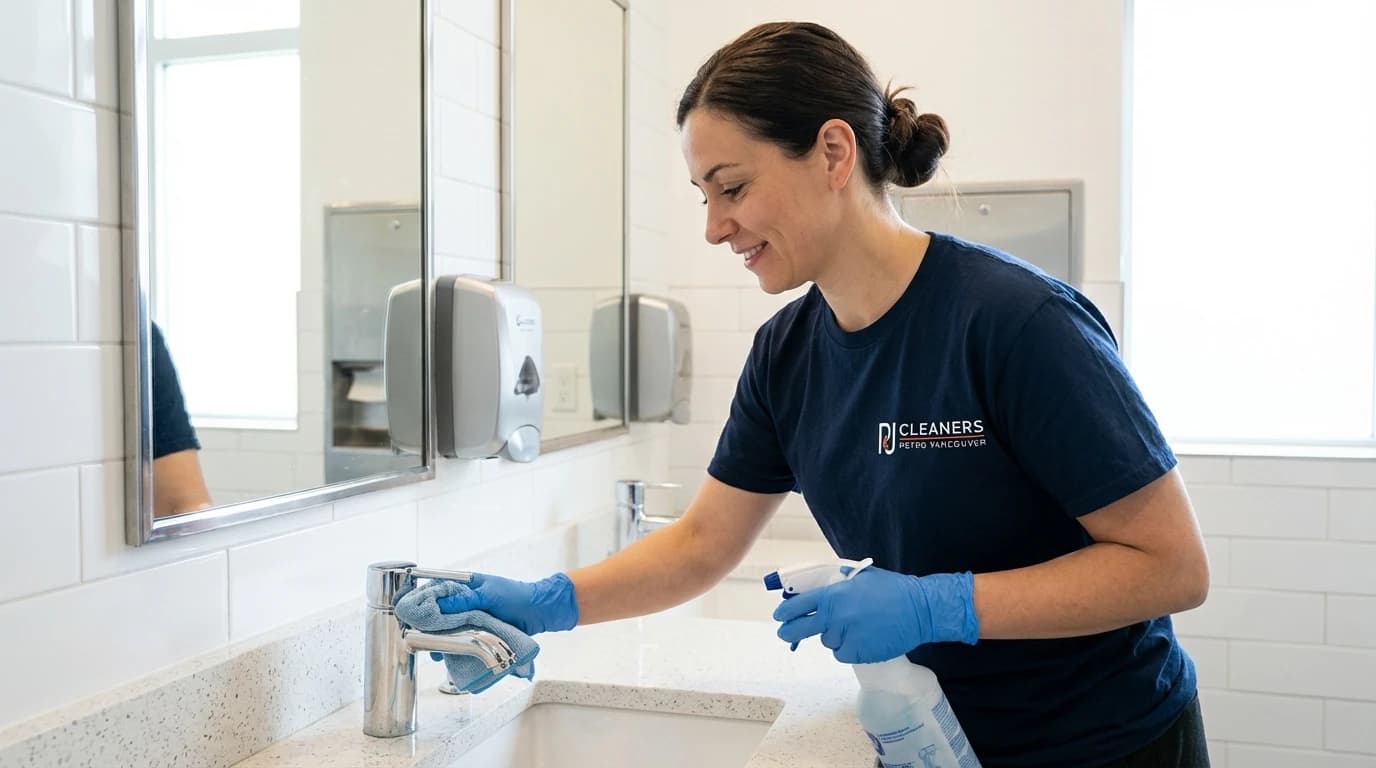
- Toilets, urinals, and sinks need sanitization every two hours during peak service. Use EPA-registered disinfectants that kill norovirus, which causes 58% of foodborne illness outbreaks according to the BC Centre for Disease Control. Pay special attention to toilet handles, faucet controls, and door handles where bacteria concentrate. Wear dedicated gloves for restroom cleaning that never touch food service areas, and wash hands thoroughly after completing restroom tasks.
- Floor cleaning in restrooms requires different protocols than dining areas. Mop restroom floors with disinfectant solution, working from the farthest corner toward the door to avoid walking on cleaned surfaces. Change mop water frequently, as dirty water spreads bacteria rather than removing it. Grout lines between tiles harbour mould and bacteria, requiring weekly scrubbing with specialized grout cleaners to maintain sanitary conditions and prevent permanent staining.
- Stock and inspect restroom supplies throughout each shift. BC regulations require hot water, soap, and single-use towels or air dryers in all public restrooms. Check toilet paper levels, refill soap dispensers, and empty waste bins before they overflow. Place a cleaning log visible to customers, documenting each restroom check with time and staff initials. This transparency builds customer confidence and demonstrates your commitment to maintaining high standards consistently.
Execute Comprehensive Floor Cleaning
Restaurant floors accumulate grease, food debris, and spills that create slip hazards. Daily floor maintenance prevents accidents while meeting WorkSafeBC safety requirements.
- Sweep all floor areas before mopping to remove loose debris. Kitchen floors require sweeping after each service period, as food particles attract pests overnight. Use commercial-grade dust mops or brooms with fine bristles that capture small particles effectively. Pay attention to corners, under equipment, and along baseboards where debris accumulates. The International Sanitary Supply Association reports that proper sweeping removes 80% of soil before wet cleaning begins.
- Mop kitchen floors with degreasing solution strong enough to cut through oil buildup. Standard floor cleaners lack the power to remove restaurant grease, which creates dangerous slip hazards when wet. Use figure-eight mopping patterns to avoid spreading dirty water across clean areas. Change mop water every 200-300 square feet, or when water becomes visibly dirty. Dirty mop water leaves residue that attracts more soil and creates sticky floors that trap debris.
- Floor drains need daily attention to prevent backups and odours. Pour hot water down drains to flush away grease and food particles. Remove drain covers weekly to clean trap areas where buildup occurs. Vancouver Coastal Health inspectors specifically check floor drains during inspections, as clogged drains indicate poor maintenance practices. Install drain screens to catch large debris before it enters plumbing systems, preventing costly repairs and service interruptions.
Quick Win
Place wet floor signs immediately when mopping, even during slow periods. WorkSafeBC reports that slip-and-fall accidents cost BC restaurants an average of $28,000 per incident in 2025.
Manage Waste Disposal Systems
Proper waste handling prevents pest infestations and odours. BC regulations specify requirements for waste storage, disposal frequency, and container maintenance.
- Empty all waste bins before they reach capacity, typically every 2-3 hours during busy service. Overfilled bins attract pests and create unsanitary conditions that violate health codes. Use bin liners rated for commercial use, as household garbage bags tear easily under restaurant waste loads. Tie bags securely before transport to prevent leaks and spills. The City of Vancouver requires restaurants to use pest-proof containers with tight-fitting lids for all outdoor waste storage.
- Clean waste bins daily with hot soapy water and disinfectant. Bacteria multiply rapidly in waste containers, creating odours and health hazards. Spray bin interiors with disinfectant and allow proper contact time before rinsing. Dry bins completely before inserting new liners, as moisture promotes bacterial growth. Replace damaged bins immediately, as cracks and holes harbour bacteria that cannot be effectively cleaned or sanitized.
- Grease traps require regular maintenance to function properly and meet municipal requirements. Schedule professional grease trap cleaning every 30-90 days depending on volume, as mandated by Metro Vancouver bylaws. Document all grease trap services in your maintenance log. Improper grease disposal causes sewer backups that can cost thousands in repairs and fines. Never pour grease down drains, as it solidifies in pipes and creates blockages that affect entire buildings.
Sanitize Entry Points and Vestibules
Front doors, vestibules, and entry areas create first impressions while transferring outdoor contaminants inside. These high-traffic zones need multiple daily cleanings.
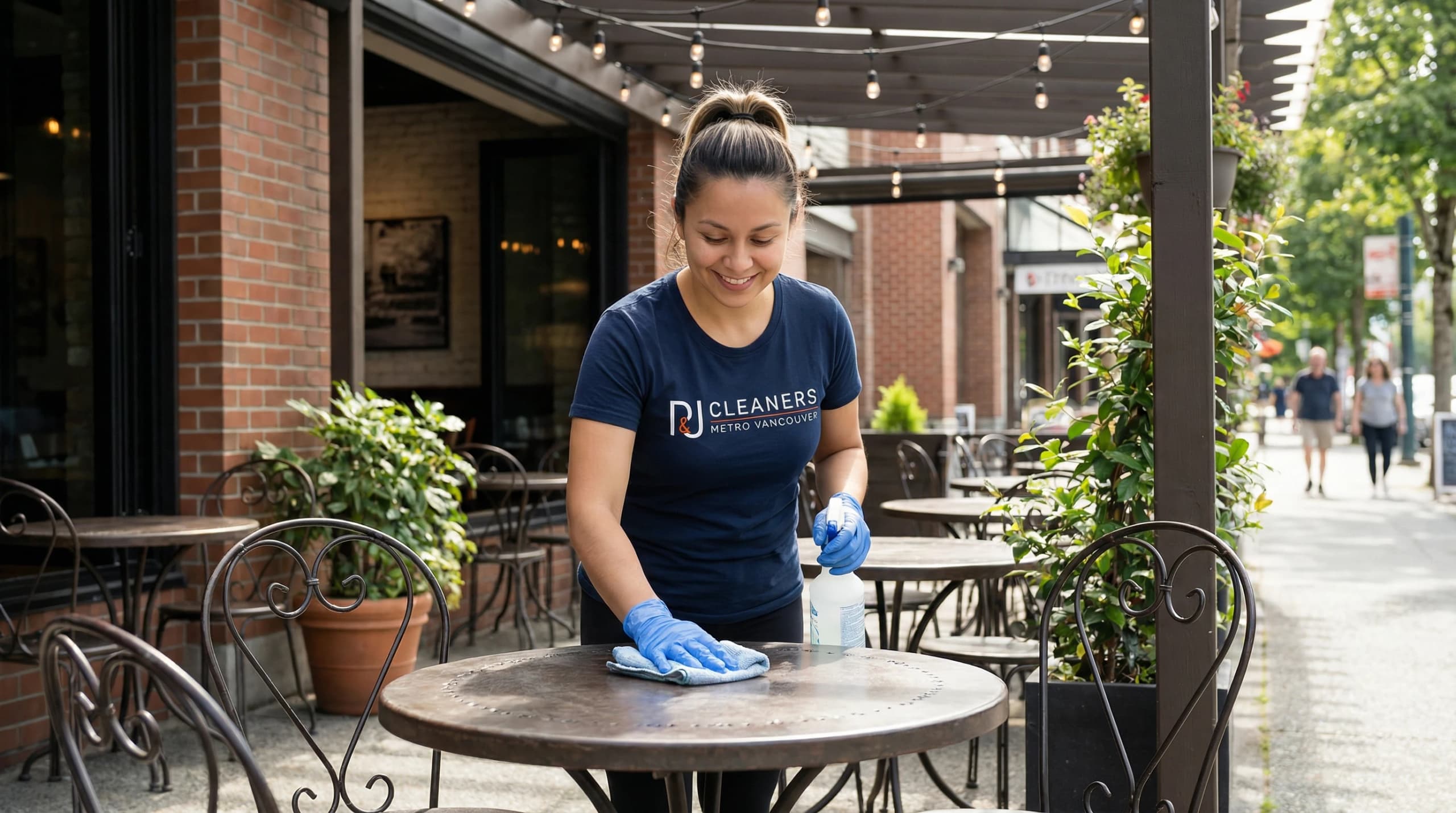
- Door handles and push plates require sanitization every two hours during operating hours. These surfaces contact hundreds of hands daily, making them primary transmission points for pathogens. Use disinfectant wipes or spray with proper contact time to ensure effectiveness. Glass doors and windows need cleaning multiple times daily to remove fingerprints, smudges, and weather-related debris that make restaurants appear neglected to potential customers passing by.
- Entry mats trap dirt and moisture before they spread throughout your restaurant. Vacuum or shake out mats twice daily during wet weather, as saturated mats lose effectiveness and create slip hazards. Replace worn mats that no longer trap debris effectively. The ISSA estimates that proper entry matting prevents 80% of outdoor soil from entering buildings, significantly reducing overall cleaning requirements and extending floor finish lifespan.
- Vestibule areas accumulate debris from foot traffic and weather. Sweep and mop these spaces at opening, mid-day, and closing. Check for water pooling during rainy periods, as wet floors create liability issues. Clean light fixtures and ceiling areas monthly, as dust and cobwebs in entry areas signal poor maintenance standards to customers. First impressions form within seven seconds of entering a restaurant, making entry cleanliness critical for customer perception and repeat business.
Document All Cleaning Activities
BC health regulations require written records of cleaning activities. Proper documentation protects your business during inspections and demonstrates consistent compliance.
- Create detailed cleaning logs that track every task completion. Include date, time, task description, staff member name, and any issues encountered. Vancouver Coastal Health inspectors review these logs during routine inspections to verify consistent cleaning practices. Digital systems offer advantages like automatic reminders and cloud storage, but paper logs remain acceptable if maintained properly and stored securely for the required three-year retention period.
- Temperature logs document that equipment maintains safe food storage conditions. Record refrigerator and freezer temperatures twice daily, at opening and closing. Log dishwasher temperatures and sanitizer concentrations for every service period. These records prove due diligence if foodborne illness complaints arise. Health Canada requires restaurants to maintain temperatures below 4°C for refrigeration and -18°C for freezing, with documentation showing consistent compliance over time.
- Schedule deep cleaning tasks on a rotating calendar to ensure nothing gets overlooked. Weekly tasks include hood cleaning, walk-in organization, and equipment maintenance. Monthly tasks cover areas like ceiling vents, light fixtures, and behind equipment. Annual tasks include professional hood system cleaning and equipment servicing. P&J Cleaners provides customized cleaning schedules for BC restaurants, ensuring all regulatory requirements are met while optimizing staff efficiency and reducing labour costs by up to 25% through systematic approaches.
Quick Win
Take photos of cleaned areas as visual documentation. Time-stamped images provide additional proof of compliance and help train new staff on proper cleaning standards and expectations.
Fast Reset
Quick Daily Cleaning Wins for Busy Restaurants
These rapid tasks take under five minutes each but significantly impact cleanliness, compliance, and customer perception. Integrate them into shift change routines for maximum efficiency.
Services mentioned in this article
Ready for help?
4.9 · 850+ Google reviewsKeep Your Restaurant Health-Code Compliant
P&J Cleaners provides professional restaurant cleaning services across Metro Vancouver with same-day availability, eco-friendly products upon request, and a satisfaction guarantee. Our trained crews follow BC Health Authority protocols and provide documentation for inspections.
778-720-2224Restaurant Cleaning Checklist FAQs
What is the best way to implement a restaurant daily cleaning checklist for BC compliance?
Start by dividing tasks into opening, mid-shift, and closing protocols. Assign specific staff members to each zone and use digital checklists with timestamps for accountability. BC Health Authority requires documented cleaning logs, so maintain records for at least 12 months. Focus on high-touch surfaces every 2 hours during service, deep-clean food prep areas after each shift, and sanitize restrooms minimum 3 times daily. Train all staff on proper dilution ratios for sanitizers and ensure they understand cross-contamination prevention.
How often should you complete restaurant cleaning checklist tasks?
Critical tasks happen multiple times daily: sanitize food contact surfaces after each use, clean high-touch points every 2 hours during service, and mop floors after each meal period. Daily tasks include deep-cleaning cooking equipment, emptying grease traps, sanitizing restrooms 3-4 times, and wiping down all dining surfaces. Weekly deep cleans cover exhaust hoods, walk-in coolers, and behind equipment. Monthly tasks include drain cleaning and pest control inspections as required by WorkSafeBC and local health units.
What products work best for restaurant cleaning in BC?
Use Health Canada-approved sanitizers with DIN numbers for food contact surfaces. Quaternary ammonium compounds work well for general sanitizing, while chlorine-based solutions handle heavy-duty degreasing. Eco-friendly options like hydrogen peroxide-based cleaners meet BC environmental standards while maintaining efficacy. Always follow manufacturer dilution ratios: typically 200ppm for food surfaces and 400ppm for floors. Keep separate colour-coded tools for different zones to prevent cross-contamination, and replace cleaning cloths every 4 hours during service.
Is professional help worth it for restaurant cleaning?
Professional restaurant cleaning services reduce health violations by 67% according to ISSA research, and prevent costly closures that average $2,400 per day in lost revenue. Trained crews complete deep cleans 40% faster than in-house staff, freeing your team for customer service. Professional services also provide documentation for health inspections, use commercial-grade equipment that removes 99.9% of pathogens, and stay current with evolving BC regulations. Most Metro Vancouver restaurants save 15-20 hours weekly by outsourcing deep cleaning tasks.
Meet the Author
Jason
Co-Founder
Jason oversees commercial operations, workflow design, and quality control for office, restaurant, and specialty cleaning programs across Metro Vancouver.
Keep Exploring