

Quick answer
A moving cleaning checklist has two halves. Before you move in, deep clean the empty unit and document its condition so you are not charged for old damage later. Before you move out, leave it reasonably clean, as required by BC's Residential Tenancy Act, so your deposit comes back in full.

Key Takeaways
- 1In BC, tenants must return a unit 'reasonably clean' under Residential Tenancy Act Section 37; you are not responsible for reasonable wear and tear.
- 2The move-in condition inspection should happen while the suite is empty, and the landlord must give you a copy within seven days; if they skip it, they lose the right to claim your deposit for damage.
- 3Carpets must be steam cleaned or shampooed at move-out after a tenancy of one year or longer, or any length involving pets or smoking, per RTB Policy Guideline 1.
- 4After you serve your forwarding address in writing, the landlord has 15 days to return your deposit or can be ordered to pay double.
- 5Clean an empty suite before your furniture arrives; a move-in deep clean of a one-bedroom runs about 4 to 6 hours, a move-out clean of the same size 6 to 10.
- 6The 80/20 rule keeps a place presentable between the big cleans; the 30/3 and 20/10 rules break a long move-out clean into blocks you can actually finish.
Why a Moving Cleaning Checklist Is Really Two Checklists
The clean you do walking into a new place and the clean you do walking out of the old one look similar but serve opposite goals, and mixing them up costs people their deposits.
Most moving checklists treat cleaning as one job. It is really two, and they point in opposite directions. The move-in clean is for you: you are making an empty suite healthy and yours before your life fills it with boxes. The move-out clean is for your deposit: you are meeting a legal standard so a landlord has nothing to charge you for. Same rooms, same supplies, completely different reasons.
That difference decides your priorities. A move-in clean cares about the things you will touch and breathe, so it leans on floors, cupboard interiors, and any sign of damp in a suite that has been closed up. A move-out clean cares about the things an inspector looks for, so it leans on the oven, the window tracks, the baseboards, and the carpets. Knowing which clean you are doing tells you where to spend your hours.
There is also a paper trail that ties the two together, and it is the single most important thing renters miss. What you photograph on your way in is the evidence that protects your deposit on your way out. Get that right and a move-out dispute usually never happens. We run move-out cleaning turnovers across the Lower Mainland every week, and the tenants who sail through inspection are almost always the ones who documented the place the day they got the keys.
- Move-in clean: protects your health and sets your documented baseline
- Move-out clean: meets BC's 'reasonably clean' legal standard for your deposit
- The move-in photos you take become your evidence at move-out
- Both cleans are far easier in an empty suite than a furnished one
Pro Tip
Do both cleans while the suite is empty. That is a five-minute reach into a corner on move-in day and a twenty-minute fight around a couch on any other day.
What to Clean Before You Move In
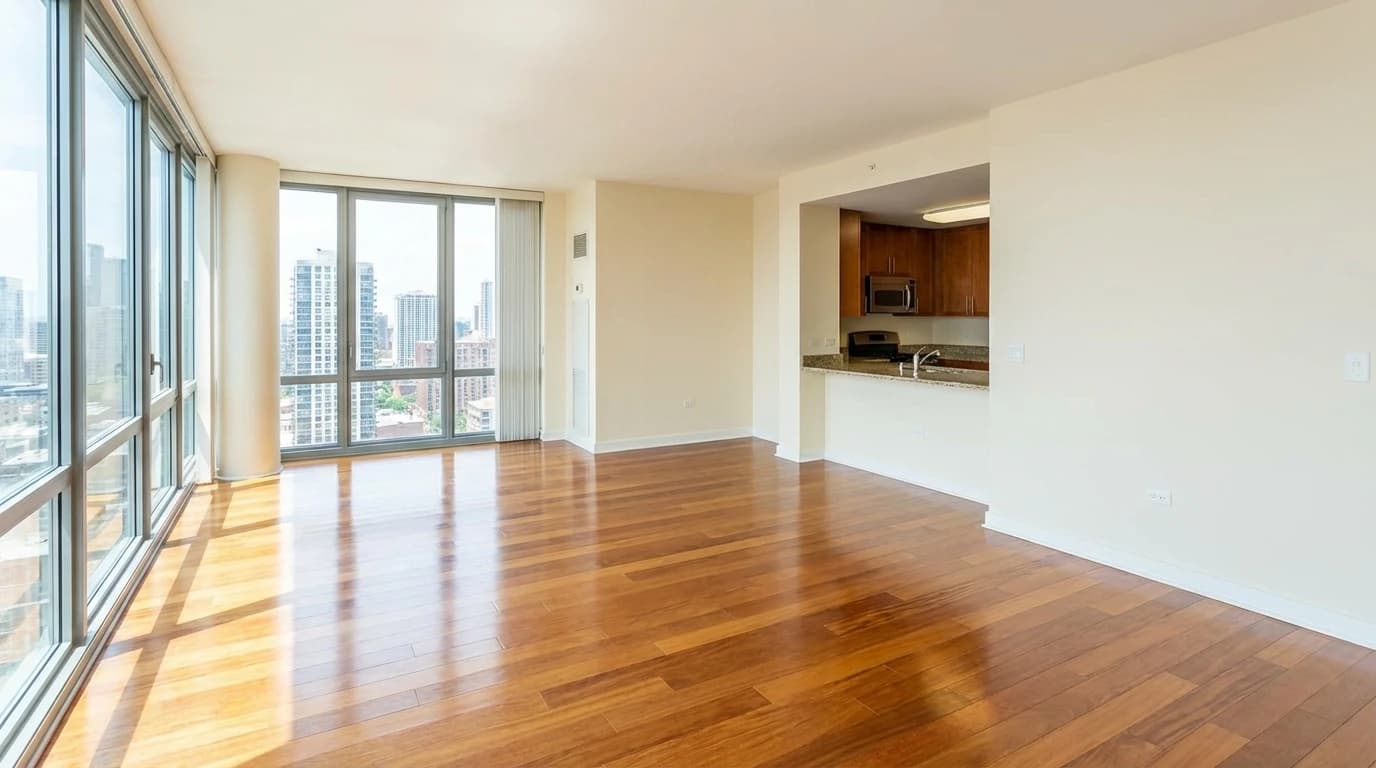
An empty unit is the one chance you get to clean everything at once. Here is the room-by-room list, plus the Vancouver damp check most people skip.
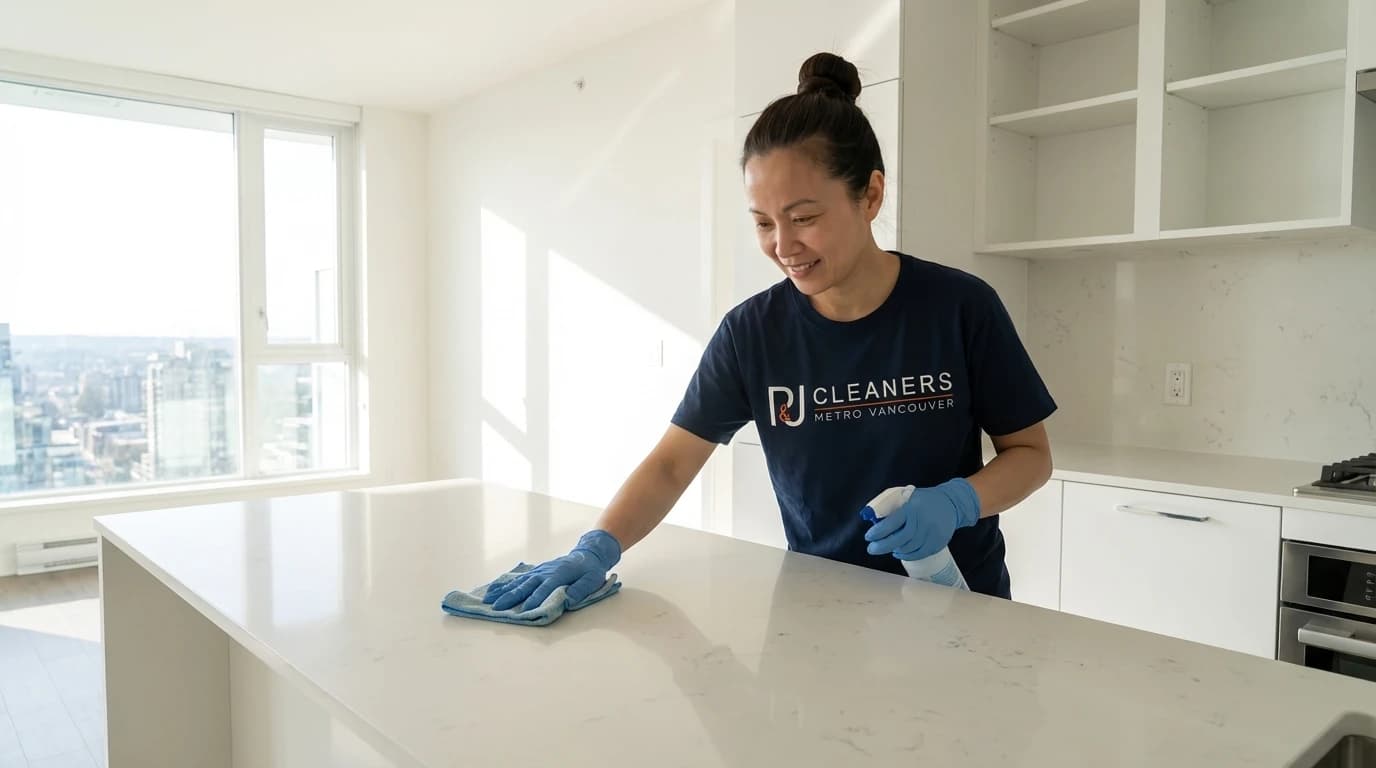
Start in the kitchen, because it is where hidden grime hides. Wipe every cupboard and drawer inside and out, clean the counters and backsplash, and wipe down the outside of the fridge, dishwasher, and range. Leave appliance interiors to a move-out deep clean or a professional package; for a move-in, airing them out and wiping the visible surfaces is what matters. Finish with the sink and faucet, which pick up the last tenant's soap film and water spotting fast.
Move to the bathrooms next. Scrub the toilet, tub, and sink, clear any soap scum or mineral film from the shower glass, and wipe the inside of the vanity and medicine cabinet. Run the exhaust fan while you work. Then do the whole-suite passes that only work in an empty space: dust from the ceiling down, wipe light switches and door handles, clean both sides of every window and the tracks, and clean the floors last so anything that fell during dusting gets picked up.
The step Vancouver renters forget is the damp check. A suite that sat empty and closed through a wet winter can hold stale, humid air, and older character rentals in Kitsilano and Point Grey are especially prone to it. Health Canada advises controlling indoor moisture and drying wet areas quickly to keep mould from taking hold. Open the windows, run the bathroom and range fans, and check the corners of closets, under-sink cabinets, and window reveals before you unpack. If a suite needs more than a wipe to feel fresh, that is when a one-off deep cleaning earns its cost before your things ever arrive.
- Kitchen: cupboards and drawers inside and out, counters, appliance exteriors, sink and faucet
- Bathrooms: toilet, tub, shower glass, vanity, mirror, exhaust fan
- Whole suite: dust top-down, wipe switches and handles, clean windows and tracks, floors last
- Damp check: air it out, run the fans, inspect closets and under-sink cabinets for mould
Pro Tip
Bring your own toilet seat wipes and a fresh shower liner for day one. It is a small thing that makes a stranger's bathroom feel like yours immediately.
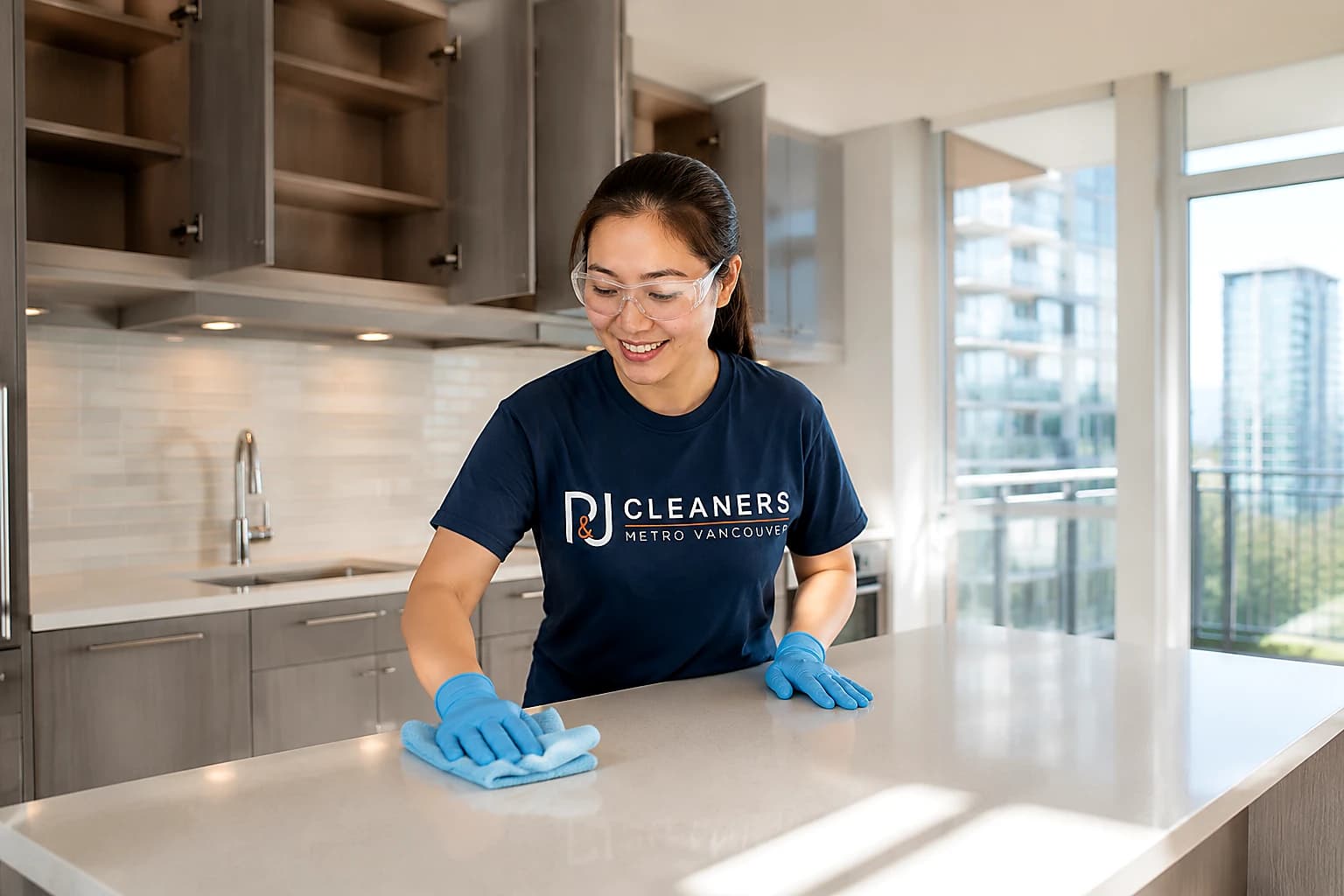
Document the Condition Before You Unpack
This is the step most checklists skip, and it is the one that actually protects your money.
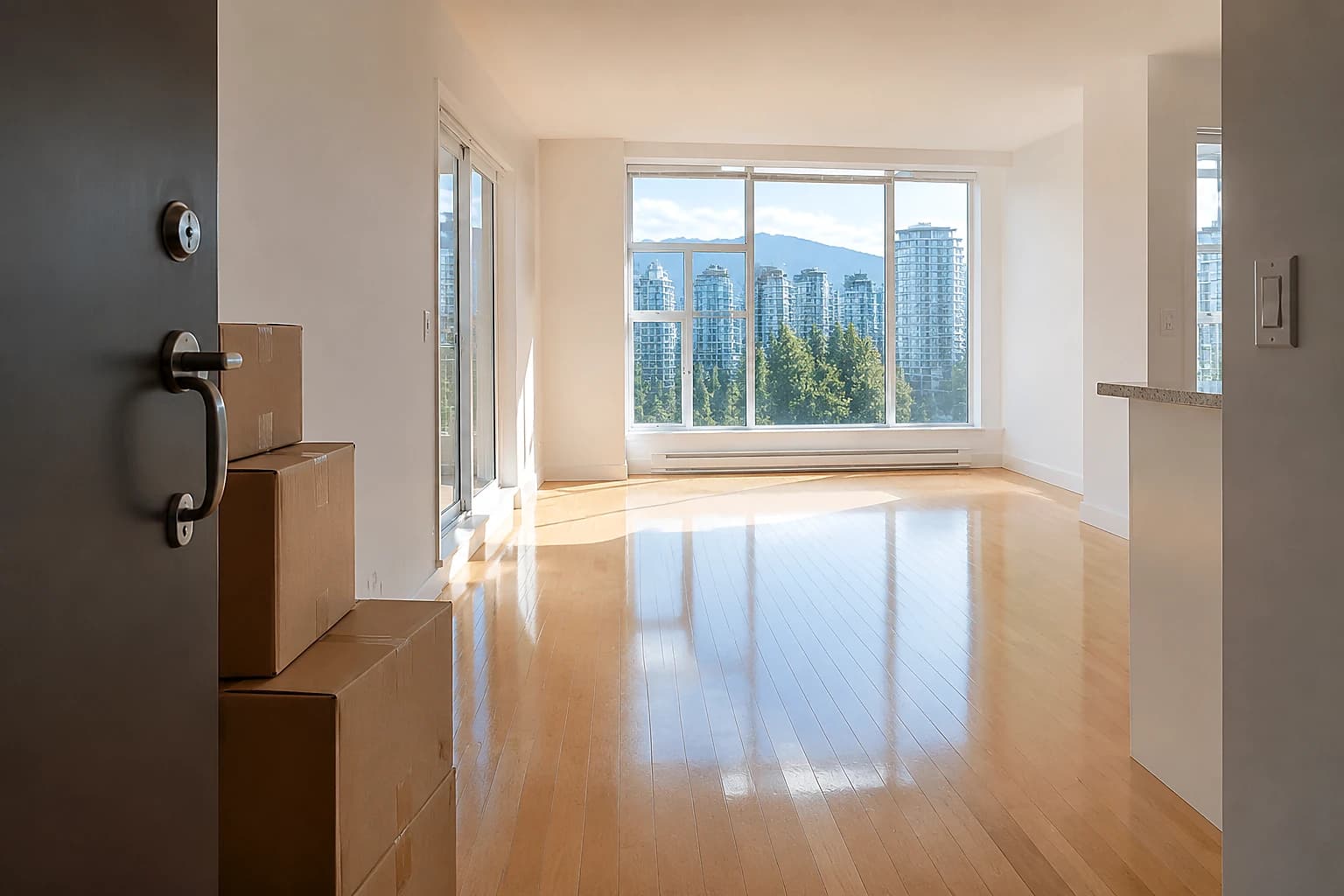
Before a single box comes in, walk the empty suite with your phone and record its exact condition. In BC this is formalized as the move-in Condition Inspection Report, and it is your legal baseline for the entire tenancy. According to the Tenant Resource & Advisory Centre, the inspection should happen on the day your tenancy begins while the unit is still empty, and the landlord must give you a copy within seven days of completing it.
The consequences are worth understanding, because they favour a careful tenant. If the landlord fails to do a move-in inspection, or fails to give you a copy within seven days, they lose the right to claim against your security or pet damage deposit for damage to the unit. That is a powerful protection, but only if you have done your part: participate in the inspection, note every existing mark, and keep your dated photos.
Photograph anything already worn or damaged, scuffed floors, a chip in the counter, a stain in the carpet, a cracked tile, and make sure it lands on the report. Those images do double duty later. They prove what was already there when you arrived, so you are not charged for it at move-out, and they set the standard your move-out clean has to match. For a deeper look at how these rights work in a dispute, our guide to BC tenant cleaning and deposit rights walks through the Act section by section.
- Complete the move-in inspection while the unit is empty, on the day you take possession
- Confirm the landlord gives you a copy of the report within seven days
- Photograph every pre-existing mark and note it on the report
- Store the dated photos safely; they protect you until the day you move out
Pro Tip
Email the move-in photos to yourself the same day. The timestamp on the email is independent proof of when they were taken, which matters if a dispute ever reaches the Residential Tenancy Branch.
What to Clean Before You Move Out
The move-out clean is judged against a legal standard, not your own eye, so it targets the specific areas landlords inspect.
The benchmark for a move-out clean in BC is that the unit be left 'reasonably clean.' The BC Residential Tenancy Branch frames this as leaving the place as clean as it was at move-in, minus reasonable wear and tear, which it defines as natural deterioration from aging and ordinary use. You are not on the hook for faded paint or a worn traffic path in the carpet. You are on the hook for a greasy oven, mildewed grout, and dirty window tracks, because those are cleaning failures, not wear.
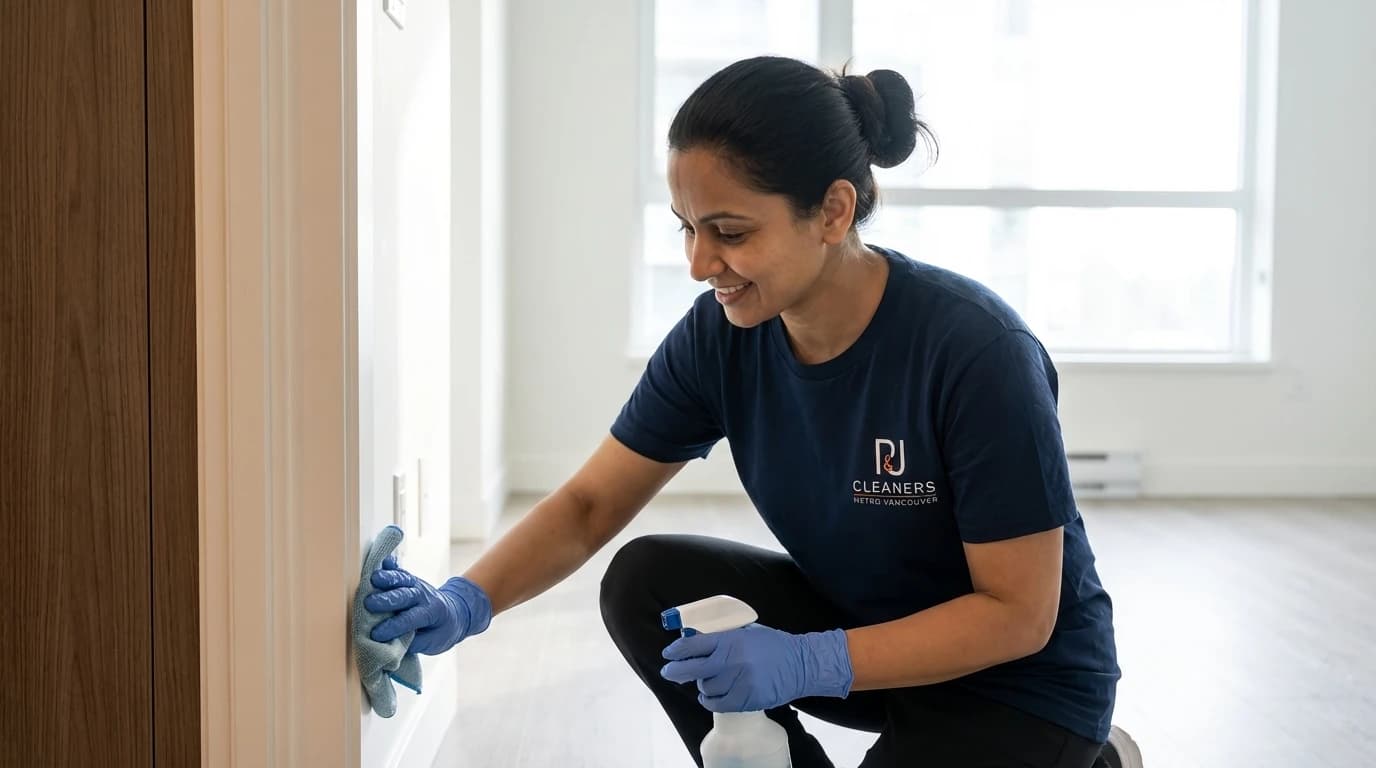
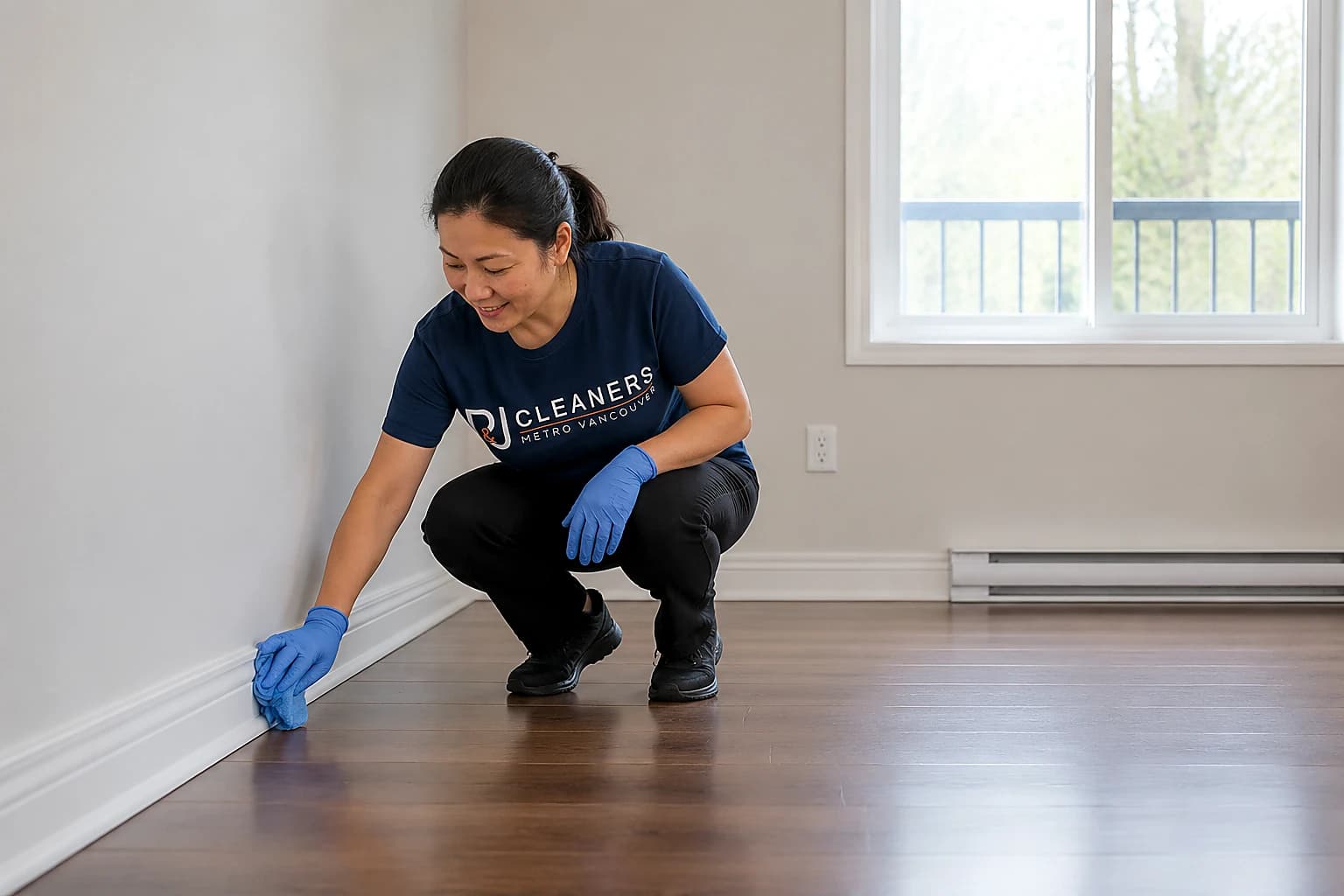
Go room by room and clean to that standard. In the kitchen, degrease the stovetop and range hood, wipe cabinets inside and out, and clean the oven and fridge, which for a full move-out are the details inspectors open first. In the bathrooms, remove soap scum and mineral film, scrub the toilet and grout, and polish the fixtures. Through the rest of the suite, wash the walls and baseboards, wipe light fixtures and switch plates, clean the windows and their tracks, and finish with the floors. In a high-rise condo downtown, do not forget the balcony glass and the sliding-door track, which road film and rain foul faster than any interior surface.
Carpets have their own rule, and it catches people out. Under RTB Policy Guideline 1, tenants are generally expected to steam clean or shampoo the carpets after a tenancy of one year or longer, or after any tenancy that involved pets or smoking. If that applies to you, book a carpet machine or a specialist before your final inspection. If you would rather hand the whole thing over, a professional move-out cleaning is built to hit exactly the 'reasonably clean' bar landlords measure against, in a fraction of the time a DIY clean of an empty Kitsilano suite takes. See our full move-out cleaning checklist for the room-by-room task list.
- Kitchen: degrease stovetop and range hood, clean oven and fridge, wipe cabinets inside and out
- Bathrooms: soap scum and mineral film, toilet, grout, polished fixtures
- Whole suite: walls, baseboards, light fixtures, windows and tracks, floors
- Carpets: steam clean or shampoo if the tenancy was a year or more, or involved pets or smoking
- Condos: balcony glass and the sliding-door track are the commonly missed spots
Pro Tip
Clean the oven early in your move-out timeline, not last. Degreaser needs dwell time, and a baked-on oven is the single most common reason a landlord flags a kitchen at inspection.
How the Deposit and Inspection Actually Work
The clean is only half the deposit story; the inspection and the timeline are the other half, and both run on rules worth knowing.
Just as your tenancy started with an inspection, it ends with one. The move-out Condition Inspection Report is completed by both parties together, ideally once the suite is empty and cleaned, and it is compared directly against your move-in report. This is the moment your day-one photos pay off: if a mark was documented at move-in, it cannot be charged to you now. If the two reports match except for reasonable wear, there is nothing to deduct.
The timeline after that is strict. Once you have given the landlord your forwarding address in writing, they have 15 days to either return your deposit in full or file a claim against it with the Residential Tenancy Branch. Doing neither is a costly mistake for a landlord: a tenant can apply to the Branch and the landlord may be ordered to pay double the deposit. Serve that forwarding address promptly and in writing so the clock actually starts.
Documentation protects you at both ends. Photograph the suite again after your final clean, dated, from the same angles as your move-in shots, and keep them until the deposit is back in your account. If you want a refresher on preparing a brand-new place the same careful way, our move-in cleaning checklist covers the empty-suite routine, and tenants in family neighbourhoods like Point Grey tell us the paired photo sets are what ended their disputes before they started.
- The move-out report is compared against your move-in report, so matching photos close disputes
- Serve your forwarding address in writing to start the 15-day deposit clock
- The landlord must return the deposit or file a claim within 15 days
- A landlord who does neither can be ordered to pay double the deposit
Pro Tip
Take your final move-out photos from the exact camera positions you used on move-in day. A side-by-side pair is far more convincing at the Residential Tenancy Branch than a set of random angles.
Three Cleaning Rules That Make a Move Manageable
A move-out clean of an empty suite is a marathon. Three popular cleaning rules turn it into something you can actually finish without burning out.
The 80/20 rule is the one to use while you are still living in and packing up the old place. It borrows the Pareto principle: about 20 percent of the work, the visible surfaces, produces about 80 percent of the look of a clean home. Wipe the counters and sink, clear the coffee table, and run a quick vacuum, and the suite reads as tidy for a viewing even mid-pack. It keeps the place presentable; it does not replace the full move-out clean your deposit depends on.
The 20/10 rule and the 30/3 rule are for the real move-out clean, when the furniture is gone and the empty suite feels endless. With the 20/10 rule you clean for 20 minutes, then take a genuine 10-minute break, which makes starting feel small and keeps you from burning out on hour three. The 30/3 rule uses longer 30-minute focused blocks with a 3-minute reset, ideal for working one room fully before moving to the next so you never re-dirty a finished space.
Match the rule to the moment. Use 80/20 to stay presentable while you pack, 20/10 to push through the tired middle of a big clean, and 30/3 to keep a room-by-room clean orderly. If you would rather skip the marathon entirely, that is exactly what a professional turnover is for. Renters moving between downtown Vancouver high-rises often book the clean for the day after the truck leaves, so the empty suite gets one focused pass instead of a week of tired evenings.
- 80/20 rule: hit the visible 20 percent to keep the old place presentable while packing
- 20/10 rule: clean 20 minutes, break 10, to beat burnout during the big clean
- 30/3 rule: 30-minute focused blocks with a 3-minute reset, room by room
- None of the rules replace the full move-out clean your deposit is measured against
Pro Tip
Save a copy of your move-out task list on your phone before the truck arrives, because once the furniture is gone the empty rooms blur together and it is easy to skip a whole wall of windows.
Should You Do It Yourself or Book a Pro?
The honest answer depends on your time, the size of the deposit, and whether carpets are in play. Here is how the math usually shakes out.
A DIY move-out clean is realistic if you have the hours and the discipline. Budget 6 to 10 hours for a one-bedroom done properly, more if the oven is neglected or carpets need shampooing, and gather your supplies before the furniture leaves so you are not running to the store with a truck idling outside. The upside is cost; the downside is that a move week is already full, and cleaning is the task that gets squeezed when the movers run late.
Hiring makes sense when the numbers or the calendar say so. If your deposit is several hundred to a couple of thousand dollars and your last days are packed, a professional clean that meets the 'reasonably clean' standard is cheap insurance against a deduction. It also solves the carpet rule cleanly and returns the empty suite in one focused pass. For a fresh place, the same logic applies to a move-in deep cleaning: a few hours of pro work before you unpack versus a weekend of your own.
There is no wrong answer here, only a tradeoff between your time and your money. If you clean it yourself, follow the room-by-room list above and document everything. If you book it, book early, because the last and first days of the month are the busiest of the Metro Vancouver moving calendar and the good slots go first. Either way, the goal is the same: an empty suite that matches its move-in report so the deposit comes home.
- DIY: budget 6 to 10 hours for a one-bedroom, plus carpet time, and buy supplies in advance
- Pro: worth it when the deposit is large, the week is packed, or carpets must be shampooed
- Book early; the last and first of the month are the busiest moving days in Metro Vancouver
- Whichever you choose, photograph the finished suite against your move-in shots
Pro Tip
If you book a pro, schedule the clean for the day after your furniture leaves, not the same day. An empty suite cleans faster and better than one with a truck being loaded in the next room.
| Question | Move-In Clean | Move-Out Clean |
|---|---|---|
| Who it protects | You: your health and your baseline | Your deposit |
| Legal driver | Condition Inspection Report, document it | 'Reasonably clean' standard, RTA Section 37 |
| Best timing | While empty, before furniture arrives | 2 to 3 days before keys are due |
| Carpets | Optional, for your own comfort | Steam clean if 1 year+, pets, or smoking |
| Rough time, one-bedroom | 4 to 6 hours | 6 to 10 hours |
| Proof to keep | Dated move-in photos on the report | Dated after-cleaning photos |
Services mentioned in this article
Ready for help?
4.9 · 850+ Google reviewsMoving This Summer? Hand the Deposit Clean to Us
Our move-out specialists clean to the 'reasonably clean' standard BC landlords inspect against, so you can focus on the move itself. Booking across Metro Vancouver with our 200% satisfaction guarantee.
778-720-2224Moving Cleaning Checklist: Common Questions
What should a move-out clean consist of?
A move-out clean covers the kitchen appliances and cabinets, both bathrooms, all floors, walls and baseboards, windows and their tracks, and carpet steam cleaning where it is required. The target is 'reasonably clean' under BC's Residential Tenancy Act, which means as clean as the unit was at move-in minus reasonable wear and tear. Work top to bottom in each room so dust falls onto surfaces you have not cleaned yet.
How clean does an apartment need to be when you move out in BC?
It has to be 'reasonably clean' under Section 37 of the Residential Tenancy Act, meaning as clean as it was when you moved in, minus reasonable wear and tear. It does not need to be showroom perfect. A dirty oven, mildew in the grout, or grimy window tracks are cleaning failures a landlord can legitimately claim against your deposit, while faded paint or minor scuffs are not.
Do I have to steam clean the carpets when I move out in BC?
Usually, yes. RTB Policy Guideline 1 says tenants are generally expected to steam clean or shampoo carpets after a tenancy of one year or longer, or after any tenancy that involved pets or smoking. For a shorter, pet-free and smoke-free tenancy, a thorough vacuum is often enough unless the carpet has stains that go beyond normal wear.
When does my landlord have to return my deposit?
Once you serve your forwarding address in writing, the landlord has 15 days to either return the deposit or file a claim against it with the Residential Tenancy Branch. If they do neither within that window, you can apply to the Branch, and the landlord may be ordered to pay you double the original deposit amount.
Should I clean before or after moving my furniture in?
Before. An empty suite is the only time you can reach every corner, wipe inside every cupboard, and clean floors and windows without working around boxes and furniture. Do your move-in deep clean the day you get keys, while the place is empty, then unpack onto clean shelves and freshly wiped surfaces.
What is the 80/20 rule for cleaning?
The 80/20 rule applies the Pareto principle to housework: roughly 20 percent of your tasks, the visible surfaces people actually notice, deliver about 80 percent of the perceived clean. During a move it is how you keep your old place presentable for viewings while you pack. It is a maintenance trick, not a replacement for the full move-out clean your deposit depends on.
What is the 30/3 rule for cleaning?
The 30/3 rule breaks a big clean into 30-minute focused blocks with a 3-minute reset before you move to the next room. It keeps a room-by-room clean orderly, so one messy corner does not quietly undo the room you just finished. It works well for the marathon feel of cleaning an empty suite at move-out.
What is the 20/10 rule in cleaning?
The 20/10 rule means you clean for 20 minutes, then take a genuine 10-minute break. Starting feels small, and the breaks keep you from burning out partway through a long clean. It is the rule to reach for when you are staring at an empty suite that needs a full move-out clean and do not know where to begin.
Sources & References
The facts in this guide come from the primary sources below. Links open in a new tab.
- 1Moving Out: Cleaning, Condition Inspection and DepositsGovernment of British Columbia, Residential Tenancy Branch
- 2Condition Inspection ReportsTenant Resource & Advisory Centre (TRAC)
- 3Policy Guideline 1: Landlord & Tenant Responsibility for Residential PremisesGovernment of British Columbia
- 4Addressing Moisture and Mould in Your HomeHealth Canada

Meet the Author
Pamela
Co-Founder
Pamela leads residential quality standards at P&J Cleaners, refining safe, detail-driven cleaning systems for Vancouver homes, condos, and move-out projects.
Keep Exploring