


Quick answer
To deep clean a kitchen safely, clean from top to bottom, separate degreasing from sanitizing, and match each product to the surface you are touching. Start with dust and loose debris, then work through cabinetry, counters, appliances, sink areas, and finally floors.

Key Takeaways
- 1Use a top-to-bottom cleaning order so grease and dust do not fall onto finished surfaces.
- 2Treat quartz, natural stone, stainless steel, wood, and painted cabinets differently.
- 3Separate heavy degreasing from final sanitizing for better results and safer product use.
- 4Focus on handles, backsplash seams, vent covers, and appliance edges where buildup hides.
Why kitchen deep cleaning matters more than routine wipe-downs
Routine cleaning keeps a kitchen presentable, but deep cleaning removes the invisible buildup that affects hygiene, odor control, and surface longevity.
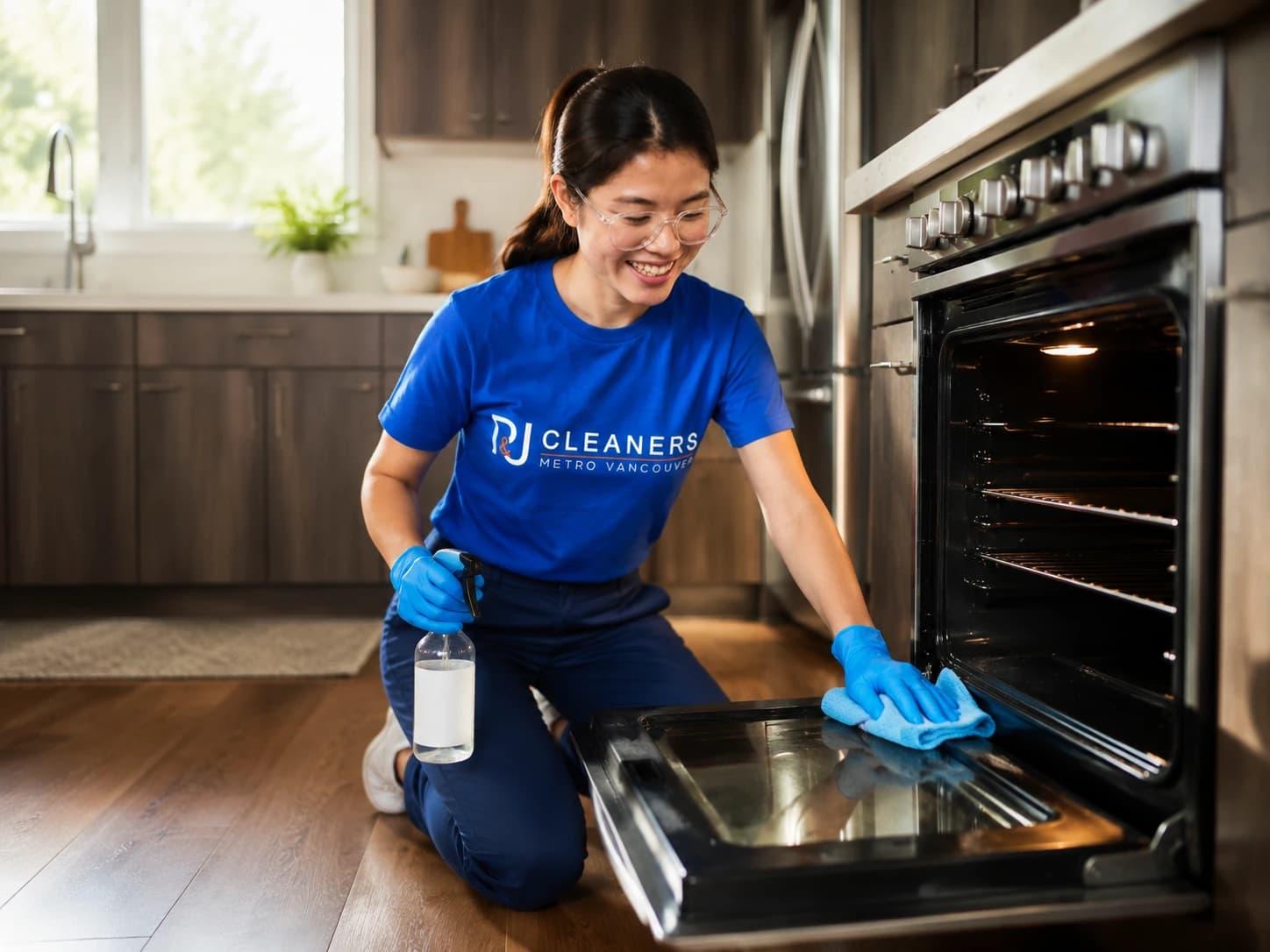
Grease vapor settles on cabinet faces, light switches, appliance handles, and backsplash seams long before it looks dramatic in daylight. Once that film starts trapping dust, every quick wipe becomes less effective and the whole room feels dingy faster.
A structured deep clean also protects expensive finishes. Quartz can dull if the wrong products sit too long, stainless steel can streak, and painted cabinet fronts can soften when over-wet. The goal is not just to make the kitchen sparkle today. It is to preserve the materials that make the room look premium.
- Reduces grease film on touchpoints and food-prep areas
- Improves airflow by removing dust from vents and trim lines
- Helps appliances perform better when coils, gaskets, and surfaces are maintained
- Extends the visual life of cabinetry, counters, and flooring
Pro Tip
Take a quick phone photo before you start. It makes it easier to spot clutter zones and check whether you truly reset the room when you finish.
Related resources
Assemble safe supplies before you touch any premium surface
The fastest way to avoid accidental damage is to separate tools and products before you begin.
Gather microfiber cloths by task, not just by room. Keep one set for degreasing, one for polished surfaces, and one for drying. This reduces streaking and stops residue from being transferred onto stainless steel or glossy cabinetry.
Choose a neutral pH cleaner for most counters and cabinet exteriors, a dedicated degreaser for backsplash and stove zones, and a glass-safe cleaner for reflective surfaces. The fewer all-purpose shortcuts you take, the better your finish will look.
- Microfiber cloths in separate use groups
- Neutral cleaner for counters and cabinet faces
- Degreaser for backsplash and cooking zones
- Soft detailing brush for trim, hinges, and grout lines
- Dry finishing cloth for stainless steel and polished fixtures
Pro Tip
Spray product into the cloth first when working on painted cabinets or wood details so you control moisture instead of flooding the finish.
Clean cabinetry, counters, and appliances in the right sequence
The safest sequence is upper cabinetry first, then backsplash and counters, then appliance exteriors and interiors, and finally the sink zone.
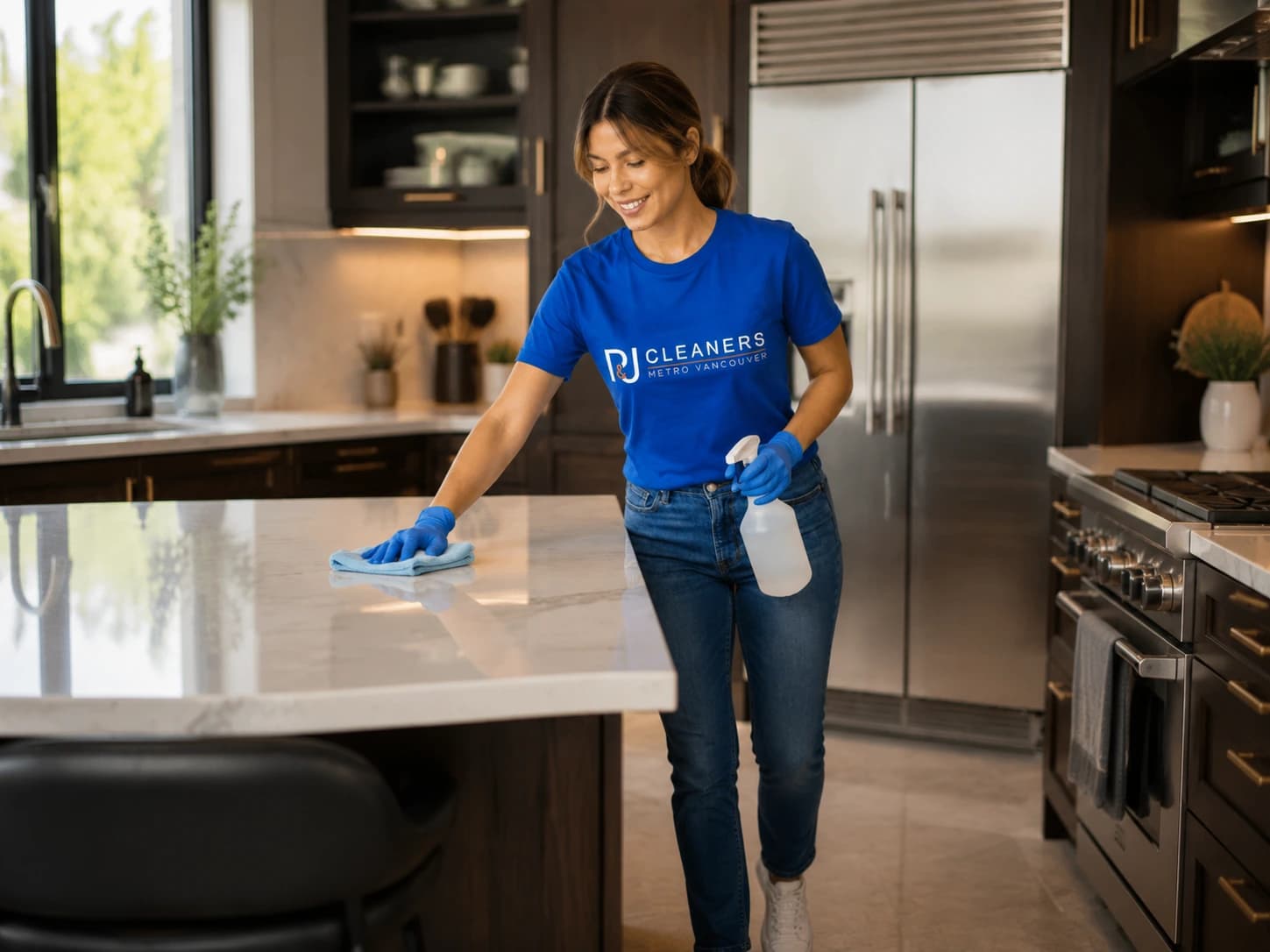
Start with cabinet tops, crown molding, and upper trim to remove dust. Then wipe cabinet fronts and handles with a lightly damp cloth. If grease is visible near the range, use a product-safe degreaser there and immediately follow with a clean damp cloth to remove residue.
After that, move to counters and backsplash seams. Work in small zones, especially around coffee stations and spice areas where oils collect. Finish the pass by cleaning appliance fronts, seals, controls, and the sink area, because those spots pick up both grease and hand oils throughout the day.
- Upper cabinets and trim first
- Backsplash seams and outlet plates second
- Countertops third
- Appliance fronts and handles fourth
- Sink, faucet, and drain zone last
Related resources
Finish with floors, baseboards, and air circulation zones
Floors only stay clean when you leave them for the end, after dust, crumbs, and debris from upper surfaces are already removed.
Vacuum edges, under kick plates, and around stools before you mop. Those are the places where crumbs and dust collect after upper-surface work. Then damp mop with the right floor-safe solution, keeping excess moisture away from seams and transitions.
If your kitchen still feels stale after cleaning, check vent grilles, window ledges, and nearby fabric surfaces like dining chairs or runners. Odor control in an open-plan kitchen often depends on surrounding surfaces, not just the counters and sink.
- Vacuum edges before mopping
- Detail baseboards and toe-kicks
- Clean vent covers and window ledges
- Refresh nearby textiles if odors linger
Pro Tip
End with a dry microfiber pass on faucets and appliance handles. That final polish makes the whole room look intentionally finished instead of just wiped down.
Step-by-Step
A room-safe kitchen deep cleaning sequence
Follow these steps in order to get better results while protecting premium surfaces and finishes.
Remove loose clutter and empty high-use zones
Clear counters, dish racks, and food-prep areas so you can clean entire surfaces rather than working around items.
- Remove countertop appliances if possible
- Empty crumb trays
- Sort items into keep, relocate, discard
Dust upper surfaces first
Work from the highest points downward so dust does not settle on cleaned counters later.
- Cabinet tops
- Range hood exterior
- Light trim and window frames
Degrease cooking zones carefully
Target the backsplash, cooktop edges, controls, and nearby cabinetry with a controlled amount of degreaser.
- Test surfaces first
- Avoid over-saturating wood or paint
- Rinse residue with clean damp cloth
Reset counters and sink area
Clean counters, faucet bases, sink rims, and drains after upper zones are completed.
- Wipe counters by section
- Polish faucet and handles
- Sanitize high-touch areas
Clean appliance interiors and gaskets
Finish the detail work on the microwave, fridge seals, and frequently missed handles and edges.
- Microwave interior
- Fridge gasket check
- Dishwasher lip and seals
Vacuum and mop floors last
Catch the final dust and crumbs after all vertical and countertop work is complete.
- Vacuum edges
- Damp mop lightly
- Dry any wet seams or thresholds
| Surface | Use | Avoid |
|---|---|---|
| Quartz counters | Neutral cleaner + microfiber | Acidic vinegar soaks |
| Stainless steel | Soft cloth + stainless-safe polish | Abrasive pads |
| Painted cabinets | Lightly damp cloth | Heavy degreaser overspray |
| Glass cooktop | Glass-top cleaner | Dry scrapers used aggressively |
Services mentioned in this article
Ready for help?
4.9 · 850+ Google reviewsWant the same kitchen reset done professionally?
If your kitchen needs a full grease reset, detailed appliance cleaning, or a whole-home deep clean, our team can handle the hard parts safely and efficiently.
778-720-2224Kitchen Deep Cleaning FAQs
How often should you deep clean a kitchen?
Most kitchens benefit from a true deep clean every 3 to 4 months. Homes with heavy daily cooking, children, or frequent entertaining usually need shorter intervals, while lighter-use kitchens can stretch closer to every 6 months.
Can vinegar damage kitchen surfaces?
Yes. Vinegar can etch natural stone and dull some countertop sealants over time. It can also damage certain appliance finishes and wood coatings, so it should only be used on surfaces that explicitly tolerate mild acids.
What is the biggest mistake during a kitchen deep clean?
The biggest mistake is cleaning in the wrong order. If you start with floors or polished surfaces before dusting cabinets, vents, and upper zones, you will re-soil everything and waste time.
Should you empty cabinets during a deep clean?
For a true deep clean, yes. Emptying cabinets lets you remove crumbs, grease film, and shelf dust, and it gives you a chance to wipe handles, hinges, and shelf liners thoroughly.

Meet the Author
Pamela
Co-Founder
Pamela leads residential quality standards at P&J Cleaners, refining safe, detail-driven cleaning systems for Vancouver homes, condos, and move-out projects.
Keep Exploring