

Quick answer
Yes. Professional cleaning helps with allergies and dust buildup by removing the settled reservoir of dust mite allergen, pet dander and fine particles from bedding, floors and high surfaces. It does not cure an allergy and it does not control humidity, which in Vancouver's damp climate decides whether dust mites breed at all.

Key Takeaways
- 1Dust mites cannot hold a population below roughly 50% relative humidity, so Health Canada's 30% to 50% indoor target doubles as allergen control.
- 2Water needs to reach about 55 C to kill dust mites in bedding. Cooler washes rinse allergen away but leave live mites, which makes a hot dryer cycle the practical backstop.
- 3Allergen does not mostly float. It settles into bedding, soft furnishings and the dust on top of cabinets, trim and door frames, which is the load cleaning is actually able to remove.
- 4The US EPA states duct cleaning has never been shown to prevent health problems, and advises it only for visible mould, vermin, or debris actually entering rooms.
- 5Air filtration lowers airborne allergen but cannot reach what is embedded in a mattress or sofa, so filtration and cleaning solve different halves of the problem.
- 6Dry dusting and an unsealed vacuum relaunch fine particles into the room. Damp microfibre plus sealed HEPA filtration is what makes the difference measurable.
- 7Vancouver's outdoor humidity averages about 70% across the year, so drying laundry indoors through winter pushes a suite straight into mite-friendly territory.
What a Deep Clean Actually Removes, and What It Cannot
Cleaning works on the reservoir, not on the air. Once you see that split, the rest of the decisions get simple.
Allergy triggers in a home sit in two different places and behave differently. There is airborne allergen, the fraction floating in the room at any given moment, and there is the reservoir, the much larger amount settled into bedding, soft furnishings, floors and the horizontal surfaces nobody wipes. Filtration works on the first. Cleaning works on the second. Almost every argument about whether cleaning helps allergies comes from people comparing results without noticing they are talking about different halves.
That split explains a familiar disappointment. Someone runs an air purifier for a month, feels little change, and concludes nothing works. The purifier was doing its job on a small airborne fraction while the reservoir restocked it every time somebody sat down on the sofa or turned over in bed. A study in Clinical and Translational Allergy found home air filtration does lower airborne mite, cat and dog allergen, but it cannot address what is embedded in bedding and soft furnishings.
A thorough clean goes at the reservoir directly. It takes settled dust off the tops of cabinets, door frames, trim, blinds and light fittings, and takes floors back to bare. It also resets the bedroom, where a dust mite allergic person gets their longest continuous exposure of the day. What it will not do is change the conditions that let mites breed in the first place, and that is the part most guides skip entirely.
- Airborne allergen: the small floating fraction, reduced by filtration and ventilation.
- Reservoir allergen: the much larger settled load in textiles, floors and high surfaces, reduced by cleaning.
- Source conditions: temperature and humidity, which decide whether mites can breed at all.
Pro Tip
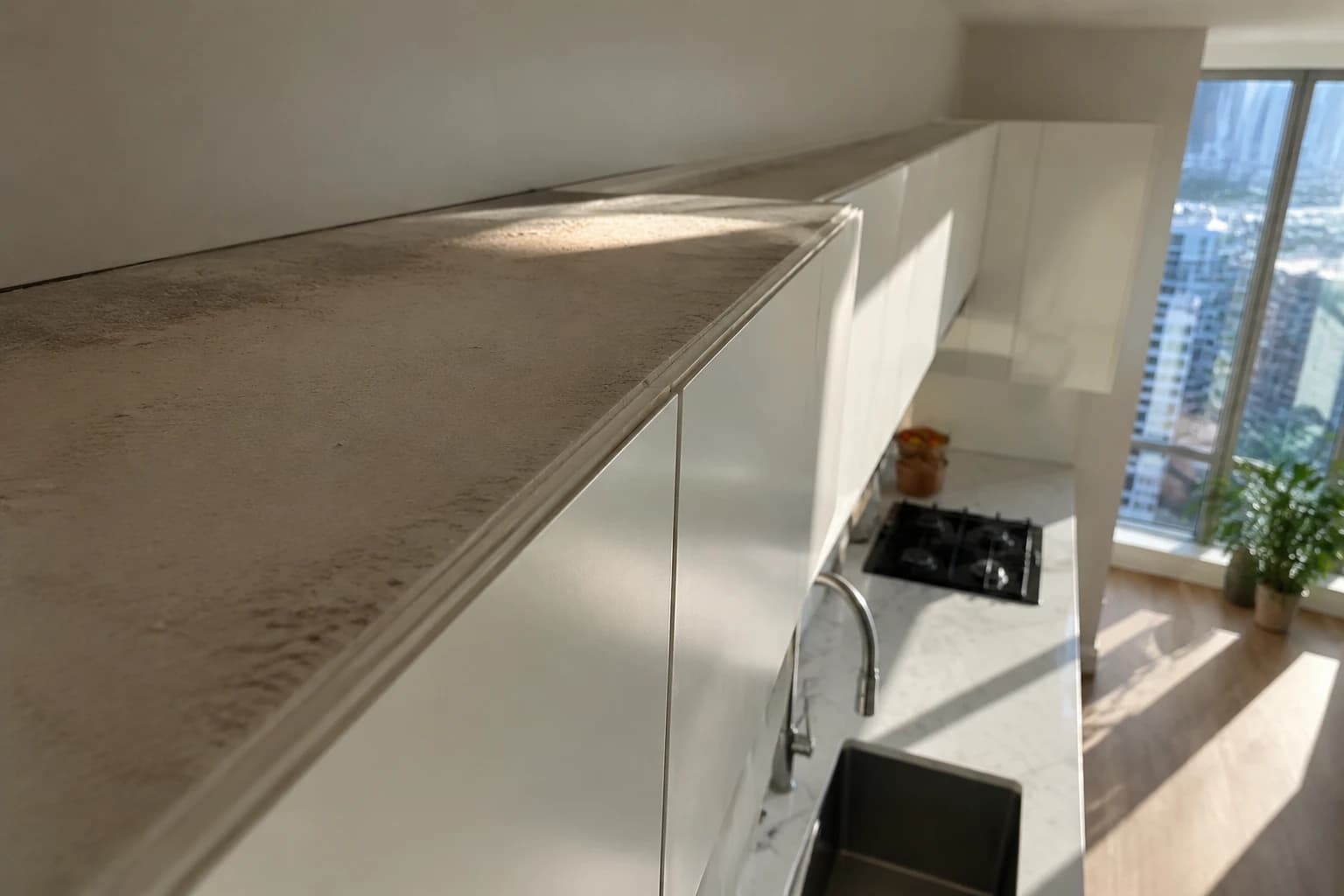
Judge a clean by the surfaces nobody photographs. Run a finger along the top edge of a door frame and across the top of the upper kitchen cabinets. If those come back grey, the reservoir is still intact no matter how good the counters look.
Where the Allergens Actually Live in a Vancouver Home
Rank the rooms by allergen load and the cleaning order stops being guesswork.
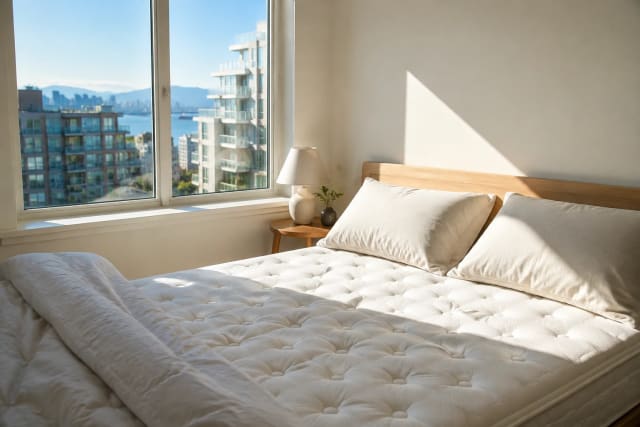
The bedroom carries the highest exposure of any room in the house, and it is not close. You spend a whole night there with your face inches from the largest soft surface you own, breathing warm humid air into it until morning. Dust mites feed on shed skin and need moisture, and a bed supplies both on a schedule. If you only have the energy to properly reset one room, it is this one, and our bedroom cleaning checklist walks the order.
After the bedroom, the load concentrates in soft furnishings and low-traffic horizontal surfaces. Sofas, fabric chairs, rugs, curtains and cushions hold allergen the way a sponge holds water, releasing a puff each time they are compressed. In a compact Vancouver condo there is no distance between the sofa and the bed, so the same soft-furnishing load is in play whichever room you are standing in. Hard floors are easier: allergen sits on top and lifts off cleanly, which is why bare floors in a bedroom beat any amount of rug maintenance for a mite-sensitive sleeper.
Then there is the layer people genuinely never touch. Tops of upper cabinets, the flat edge of door frames, window tracks, baseboards, the upper faces of picture frames, blinds, and the fan grilles in the bathroom and kitchen. None of that is visible at eye level, all of it collects fine dust for years, and every time the heating kicks on it gets stirred. If the dust keeps coming back in a condo specifically, the building is usually the reason, and we take that apart in why your apartment is so dusty.
- Highest load: mattress, pillows, duvet and the bedding you sleep against nightly.
- High load: upholstery, rugs, curtains and cushions, which release a puff of allergen every time they are compressed.
- Overlooked load: cabinet tops, door frame edges, window tracks, baseboards, blinds and vent grilles.
- Lowest load: sealed hard floors and wiped counters, which is exactly where most cleaning effort goes.
Pro Tip
Encase the mattress and pillows in zippered allergen-proof covers before you spend anything else, then check nobody has buried the cover under a mattress topper. A topper laid over an encasement becomes a fresh, uncovered reservoir sitting directly under your sheet, and it quietly undoes the one measure that has a positive randomised trial behind it.
The Vancouver Variable: Humidity Decides Whether Mites Breed
Dust mites drink from the air. In a damp coastal city that single fact outranks every cleaning decision you make.
House dust mites have no way to drink. They absorb water vapour directly from the air around them, which makes them unusually vulnerable to dry conditions and unusually happy in ours. Below roughly 50% relative humidity they do not survive well, and a population cannot sustain itself. Above it they breed comfortably. Lawrence Berkeley National Laboratory's Indoor Air Quality Scientific Findings Resource Bank treats holding relative humidity under 50% as the recognised control measure.
Now put that against Metro Vancouver. Outdoor relative humidity here averages around 70% across the year, running from roughly 61% in July to 81% in January. We are not a dry climate at any point, and the housing stock compounds it: sealed condo envelopes, limited ventilation, bathroom fans that get switched off too early, and North Shore homes sitting under tree cover where nothing dries out. In North Vancouver especially, damp is the default state rather than the exception.
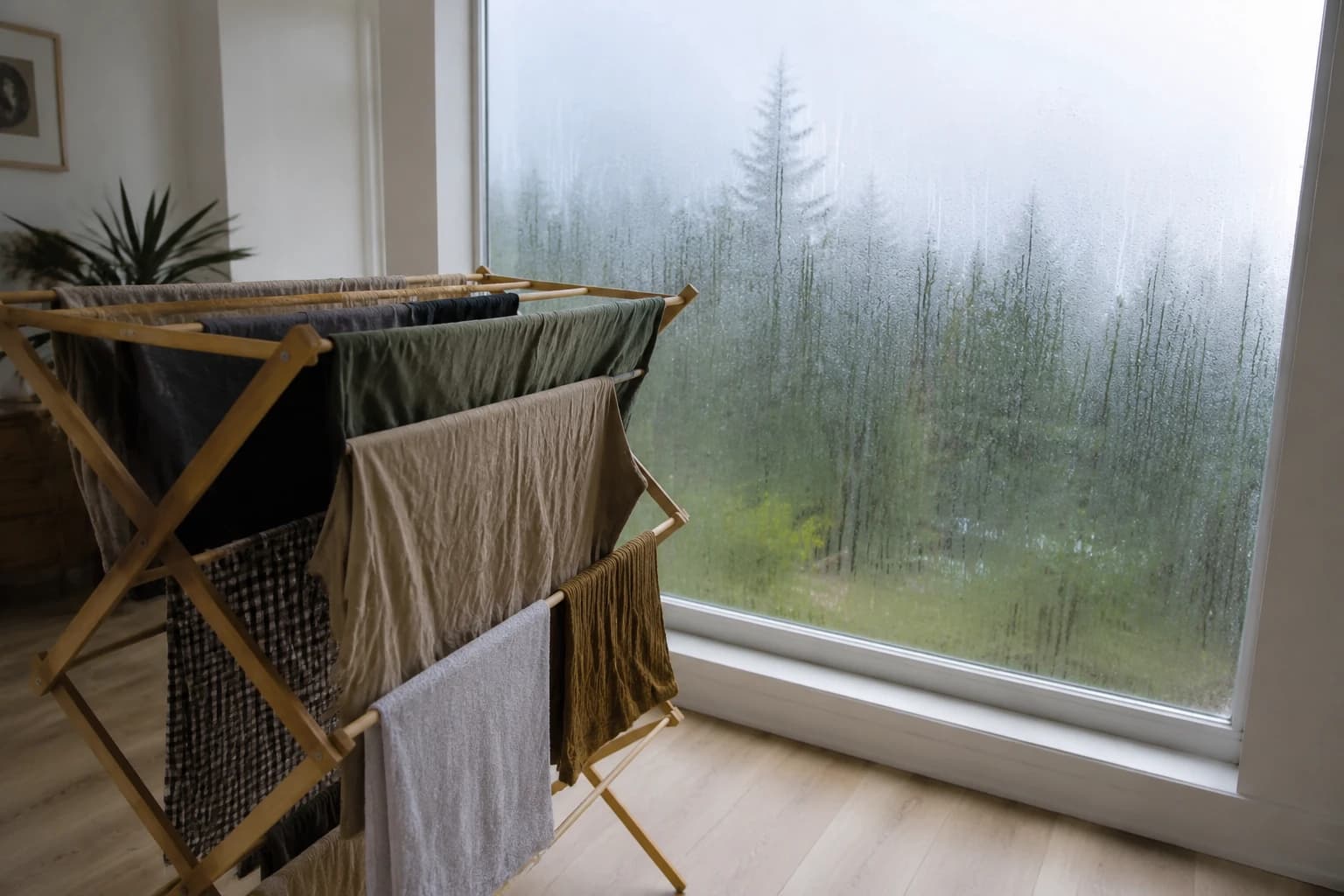
Conveniently, the number that controls mites is the same number that controls mould. Health Canada advises maintaining indoor relative humidity between 30% and 50%, and the same guidance flags that hanging wet laundry indoors pushes indoor humidity up. That last point lands hard in a Vancouver winter, when the drying rack in the spare room is quietly raising humidity in every room around it. If damp has already turned into visible growth, that is a different job with different rules, covered in our mould and mildew removal guide.
- Buy a hygrometer early. They cost very little and end the guessing immediately.
- Run bathroom and kitchen fans for a full twenty minutes after showering or cooking, not until the mirror clears.
- Dry laundry outdoors or in a vented dryer through the wet months rather than on an indoor rack.
- Use a dehumidifier in the dampest room if readings sit above 50% for weeks at a time.
Pro Tip
Take readings in the bedroom at 6am, not in the living room in the afternoon. A closed bedroom with two sleeping adults runs far more humid overnight than the same home does at midday, and overnight is when the exposure that matters is happening.
The Bedding Routine That Actually Kills Dust Mites
The standard advice to wash bedding hot is right, but the temperature that matters is higher than most machines reach on their own.
Laundering does two separate jobs, and they need different temperatures. Washing at any temperature rinses accumulated allergen out of fabric, which is worth doing on its own. Killing the live mites is a higher bar. The research on laundry temperature and dust mite populations found mites were reliably killed at water temperatures of about 55 C and above, while cooler washes left survivors behind even when the fabric came out cleaner.
This is where the usual advice quietly fails. Many high-efficiency washers use very little hot water and rely on whatever the tap supplies, and hot water sheds temperature on the pipe run to the machine, so the label on the dial tells you less than it seems to. Rather than trying to work out what arrives at the inlet, look at what the machine itself can do.
Most sanitize, allergen and 60 C cycles run off an internal heater. If your washer has one, it hits the temperature on its own, whatever arrives at the inlet. If it does not, the dryer is your backstop: a full hot tumble dry comfortably exceeds the threshold and finishes off anything that survived the wash. Either route works. What does not work is a warm wash, a low tumble, and the assumption that hot meant hot.
- Wash sheets and pillowcases weekly, and the duvet cover on the same cycle.
- Use a sanitize or 60 C cycle if your machine heats its own water.
- If it does not, finish the load on the dryer's highest heat setting rather than low or eco.
- Put the rarely-touched items through the same cycle: mattress protectors, cushion covers, throws and the pet's bedding.
Pro Tip
Pillows are the reservoir people forget. Most synthetic pillows tolerate a hot wash and a full dry cycle, and doing two at a time keeps the drum balanced. Check the care label first, then treat them like sheets rather than like furniture.
How You Clean Matters More Than What You Clean With
The same two hours of work can lower allergen exposure or briefly raise it, depending entirely on method.
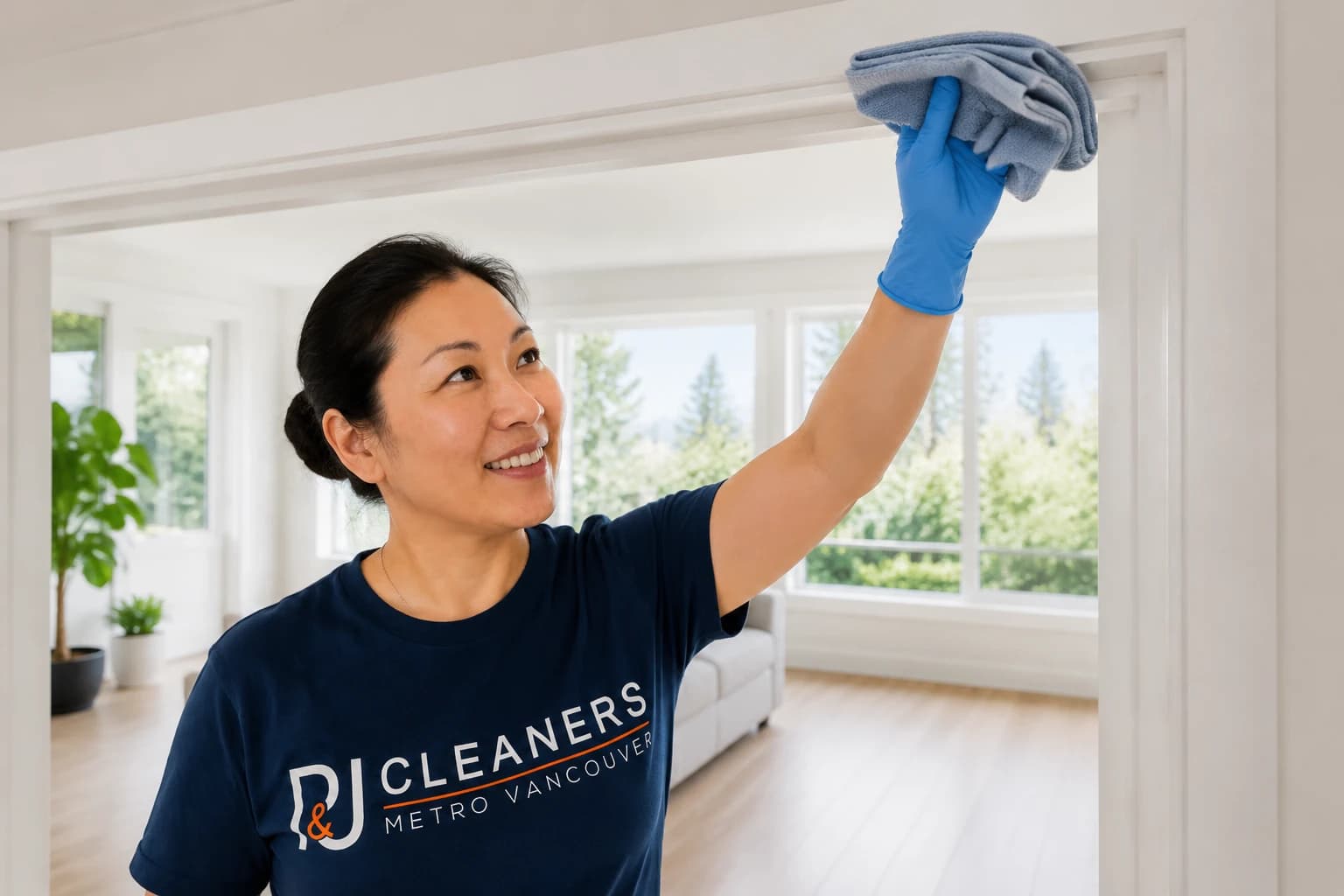
A feather duster and a dry cloth do not remove fine dust. They lift it, hold it in the air for twenty minutes or more, and let it resettle across the room you just finished. Damp microfibre traps particles against the cloth instead, and the difference is not subtle if you are sensitive. The same logic applies to vacuuming: a machine without sealed filtration passes fine particles straight through the motor housing and back into the room, so the floor looks better while the air gets worse.
Order matters just as much. Working top down means the dust you dislodge from cabinet tops and trim lands on floors you have not vacuumed yet, rather than on surfaces you already finished. Going the other way guarantees a second pass. Slow, overlapping vacuum strokes also pull far more from a rug than fast ones, because the airflow needs contact time to lift anything below the surface fibres.
This is the part that is genuinely hard to do well on your own while symptomatic, and it is a reasonable moment to hand it over. A deep cleaning visit is built around exactly this sequence: HEPA-filtered vacuums, damp microfibre throughout, top-down order, and the high surfaces, trim and door frames that routine tidying never reaches. We clean under and around furniture rather than moving heavy pieces, so if you want the floor behind the sofa reached, pull it out before we arrive. For anyone reactive to scent as well as dust, our eco cleaning option can be run with unscented products throughout on request, which matters because a strongly perfumed clean can trigger symptoms that have nothing to do with allergen at all.
- Damp microfibre over dry cloths and feather dusters, always.
- Sealed HEPA filtration on the vacuum, checked at the filter rather than assumed from the box.
- Top down: light fittings and cabinet tops first, floors last.
- Slow overlapping vacuum passes, and an N95 if you are the one doing the work.
- Let the room settle for twenty minutes before you sit in it.
Pro Tip
Vacuum the mattress surface and the bed base before you strip the bedding, not after. Stripping the bed first throws the surface load into the air, and you end up vacuuming a mattress that has already redistributed itself across the room.
What Not to Spend Money On
Three popular allergy purchases have weak evidence behind them, and the one sold hardest is the one with the least.
Duct cleaning is sold hard as an allergy fix and the evidence does not carry it. The US Environmental Protection Agency states plainly that the practice has never been shown to actually prevent health problems, and that studies do not conclusively show particle levels in homes rise because of dirty ducts. Much of what is in a duct adheres to the duct wall and never reaches the room. The EPA does recommend cleaning for cause: substantial visible mould growth, a vermin infestation, or ducts so clogged that debris is visibly blowing into rooms. Those are real reasons. Routine allergy prevention is not one of them.
Ozone generators are the second. They are marketed for air purification and they work by producing a lung irritant, which is a poor trade for anyone whose airways are already reactive. More broadly, be sceptical of anything sold on the promise of a fresh smell afterwards. Scent masks the problem rather than removing it, and fragrance is itself a common trigger.
The third is subtler: buying more product. Antibacterial sprays, scented all-purpose cleaners and allergen neutralising mists do very little against a physical reservoir that needs to be lifted out of the home rather than chemically treated in place. Dust mite allergen is not a germ. Water, microfibre, filtration and laundry heat are what move it, and none of those come in an aerosol.
- Skip routine duct cleaning unless there is visible mould, vermin, or debris actually entering rooms.
- Avoid ozone generators entirely if anyone in the home has asthma or reactive airways.
- Treat any product promising to neutralise allergens in place with caution.
- Put the money into encasements, a hygrometer and a dehumidifier instead.
Pro Tip
If a duct cleaning quote arrives before anyone has asked whether you have actually seen mould, pests, or debris coming out of the vents, you are being sold a package rather than a diagnosis. Ask what they expect to find in there. The answer, or the lack of one, tells you which of the two you are dealing with.
Does Professional Cleaning Help With Allergies? What the Evidence Says
The honest answer has more nuance than either the cleaning industry or the sceptics usually admit.
A large Cochrane review of 54 trials concluded that dust mite avoidance measures showed no significant benefit for asthma outcomes, and that finding gets quoted often as proof that none of this matters. The picture is more complicated than the headline. Cochrane has since flagged that review as predating current methodological standards, and later trial work on mite-impermeable bed encasings found reduced emergency hospital attendance for severe asthma in children.
The reasonable reading is that single isolated measures rarely move symptoms much, while sustained combinations aimed at the largest reservoir do better. One good vacuum session changes very little. Stack four and you have a different proposition. Encase the bed. Hold humidity under 50%. Launder weekly at a temperature that actually kills mites. Clear the settled load two to four times a year. Each measure covers a gap the others leave open.
Be clear about what cleaning is not. It is exposure reduction, not treatment. If symptoms are persistent, a clinician can establish what you are actually reacting to. That matters, because the plan for dust mite allergy looks nothing like the plan for a cat, a mould sensitivity or seasonal pollen. Cleaning is worth doing either way, and it works far better aimed at something confirmed than at something assumed. For most households the sustainable version is a maintained house cleaning rhythm with periodic deeper resets, rather than one heroic weekend that nobody repeats.
Pro Tip
Change one thing at a time and give it three weeks. If you encase the mattress, add a dehumidifier and switch products in the same week, you will have no idea which one helped, and no way to decide what to keep paying for.
| Measure | What it reduces | What it will not fix |
|---|---|---|
| Deep clean of surfaces and floors | Settled reservoir on high surfaces, trim, floors and under furniture | Humidity, and allergen sealed inside a mattress or sofa |
| Weekly hot bedding laundry | Live mites and allergen in sheets, covers and pillowcases | The mattress core and anything not laundered |
| Allergen-proof encasements | Exposure to the largest reservoir in the home | Allergen already present elsewhere in the room |
| Dehumidifier and ventilation | The ability of mites to breed at all | Allergen already deposited, which stays until removed |
| HEPA air purifier | Airborne allergen while it runs | Anything embedded in textiles or settled on surfaces |
| Duct cleaning | Visible debris in ducts, when there is a genuine problem | Allergy symptoms, per current EPA guidance |
Services mentioned in this article
Ready for help?
4.9 · 850+ Google reviewsCleaning Sets Off Your Symptoms Every Time?
If dusting and vacuuming reliably leave you congested for the rest of the day, the job itself is part of the exposure. Our team runs HEPA-filtered vacuums and damp microfibre, works top down so the reservoir goes out the door instead of back into the air, and can use fragrance-free products throughout on request.
778-720-2224Cleaning and Allergies: Common Questions
Does cleaning actually help allergies?
Cleaning helps by lowering how much allergen you are exposed to, which is not the same as treating the allergy. A thorough clean lifts the load off floors, high surfaces and the trim and cabinet tops where dust settles, and weekly hot laundry handles the bedding. It cannot change humidity, and it is not a substitute for medical treatment if your symptoms persist.
What humidity level stops dust mites?
Below about 50% relative humidity, dust mites cannot take in enough moisture to sustain a colony, because they absorb water from the air rather than drinking it. Health Canada separately advises keeping indoor relative humidity between 30% and 50%. In Vancouver, where outdoor humidity averages around 70%, hitting that range takes deliberate ventilation and often a dehumidifier.
How do you clean a house when you are allergic to dust?
Work top down, use damp microfibre rather than a dry cloth or feather duster, and vacuum with a sealed HEPA machine so fine particles are captured instead of blown back out. Wear an N95 while you do it, and leave the room to settle for twenty minutes afterwards. If cleaning reliably sets off symptoms, having someone else do the heavy resets is a legitimate reason to book help.
Do air purifiers help with dust allergies?
Air purifiers reduce airborne allergen, which is real but partial. Studies of home air filtration show lower airborne mite, cat and dog allergen, but a purifier cannot reach what is embedded in a mattress, a sofa or a rug. Filtration and physical cleaning solve different halves of the problem, so running a purifier while the reservoir goes untouched tends to disappoint.
Does duct cleaning help with allergies?
The evidence does not support it as a routine allergy measure. The US Environmental Protection Agency says the practice has no demonstrated health benefit, and recommends it only where there is visible mould growth, a vermin infestation, or debris blowing into rooms. Put the money into humidity control and bedding first.
How often should I deep clean if I have dust allergies?
A full reset two to four times a year clears the settled load routine tidying leaves behind: cabinet tops, trim, door frames, blinds and baseboards. Between those, weekly bedding laundering and HEPA vacuuming of the bedroom does more for symptoms than cleaning the visible parts of the rest of the home.
Sources & References
The facts in this guide come from the primary sources below. Links open in a new tab.
- 1Guide to addressing moisture and mould indoorsHealth Canada
- 2Humidity and Dust Mite Allergies, Indoor Air Quality Scientific Findings Resource BankLawrence Berkeley National Laboratory
- 3The role of water temperature and laundry procedures in reducing house dust mite populations and allergen content of beddingJournal of Allergy and Clinical Immunology
- 4Should You Have the Air Ducts in Your Home Cleaned?United States Environmental Protection Agency
- 5Effect of air filtration on house dust mite, cat and dog allergens and particulate matter in homesClinical and Translational Allergy
- 6House dust mite control measures for asthma (Cochrane systematic review)Cochrane Database of Systematic Reviews

Meet the Author
Pamela
Co-Founder
Pamela leads residential quality standards at P&J Cleaners, refining safe, detail-driven cleaning systems for Vancouver homes, condos, and move-out projects.
Keep Exploring