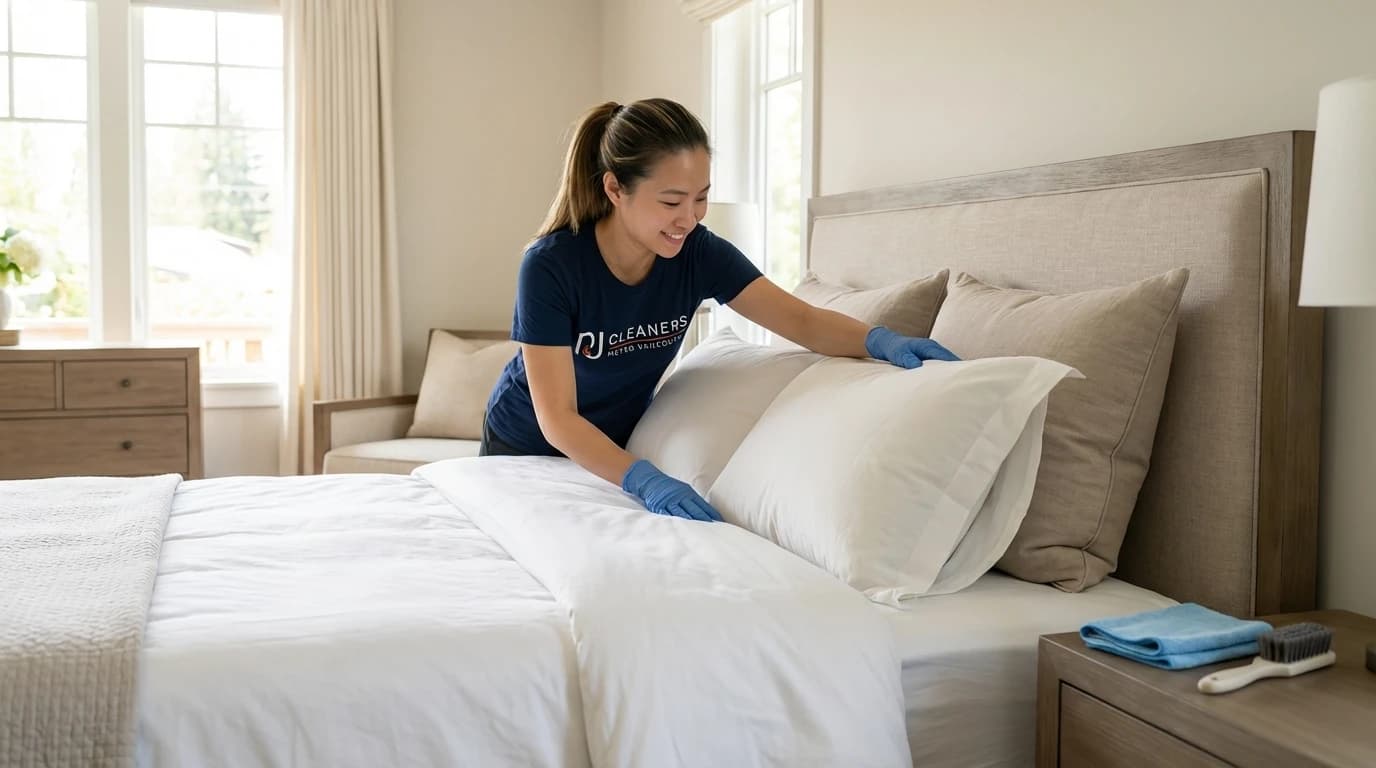


Quick answer
A complete bedroom cleaning checklist covers mattress rotation and vacuuming, dusting all surfaces from ceiling fans to baseboards, washing bedding and pillows, wiping windows and sills, vacuuming carpets and under furniture, and sanitizing high-touch areas like light switches and door handles.

Key Takeaways
- 1Bedrooms harbour 16 million colony-forming units of bacteria per square inch on average, making regular deep cleaning essential for health.
- 2Rotating your mattress every 3-6 months and vacuuming it monthly extends its lifespan by up to 2 years.
- 3Dust mites thrive in bedding—washing sheets weekly in hot water (60°C minimum) eliminates 95% of allergens.
- 4Professional bedroom cleaning services in Vancouver range from $80-$150 depending on room size and condition.
- 5Cleaning baseboards, window tracks, and under-bed areas quarterly prevents dust buildup that affects indoor air quality.
Strip and Wash All Bedding
Remove sheets, pillowcases, duvet covers, and mattress protectors. Wash in hot water to eliminate dust mites, bacteria, and allergens that accumulate during sleep.

- Start by stripping your bed completely—remove sheets, pillowcases, duvet covers, blanket covers, and mattress protectors. According to the Canadian Lung Association, bedding accumulates dead skin cells, sweat, and dust mites that trigger allergies and respiratory issues. Washing in hot water at minimum 60°C kills 95% of dust mites and removes allergen particles effectively. Use a gentle, fragrance-free detergent if you have sensitive skin, and add a half-cup of white vinegar to the rinse cycle to naturally soften fabrics and eliminate odours without harsh chemicals.
- While bedding is in the wash, inspect your pillows for stains, lumps, or odours. Most pillows should be replaced every 1-2 years as they accumulate body oils, dead skin, and dust mites that washing cannot fully remove. If your pillows are still in good condition, wash them according to care labels—most synthetic and down-alternative pillows are machine washable. Dry thoroughly on low heat with dryer balls to maintain loft and prevent mildew. The BC Centre for Disease Control recommends washing pillows every 3-6 months to maintain bedroom hygiene and reduce allergen exposure.
Quick Win
Add tennis balls or wool dryer balls when drying comforters and pillows to prevent clumping and restore fluffiness.
Vacuum and Rotate Your Mattress
Use your vacuum's upholstery attachment to remove dust, dead skin, and dust mites from the mattress surface. Rotate or flip the mattress to promote even wear.
- With bedding removed, vacuum the entire mattress surface using your vacuum's upholstery attachment. Pay special attention to seams, tufts, and edges where dust mites and debris accumulate. Studies show that mattresses can harbour up to 10 million dust mites, which feed on dead skin cells and produce allergens that affect sleep quality and respiratory health. Vacuum in overlapping strokes, working from top to bottom, and don't forget the sides and bottom if accessible. For stubborn stains, spot-treat with a mixture of cold water and mild dish soap, blotting gently without oversaturating the fabric.
- After vacuuming, rotate your mattress 180 degrees so the head becomes the foot. If you have a double-sided mattress, flip it over as well. Rotating every 3-6 months promotes even wear, prevents sagging, and extends mattress lifespan by up to 2 years according to Sleep Council Canada. Mark your calendar or set a reminder to make this a regular habit. If you notice persistent odours, sprinkle baking soda over the mattress surface, let it sit for 15-30 minutes to absorb smells, then vacuum thoroughly before making the bed with clean sheets.
Quick Win
Sprinkle baking soda on the mattress before vacuuming to neutralize odours naturally—let it sit for 20 minutes first.
Dust Ceiling Fans and Light Fixtures
Start cleaning from the top down. Use a microfibre cloth or extendable duster to remove dust from ceiling fans, light fixtures, and crown moulding.
- Always clean from top to bottom so falling dust doesn't resettle on already-cleaned surfaces. Begin with ceiling fans—turn them off and let blades stop completely before cleaning. Use a microfibre cloth or pillowcase to wipe each blade, trapping dust instead of scattering it into the air. For high ceilings, use an extendable duster with a washable microfibre head. According to the Asthma Society of Canada, ceiling fans can circulate dust and allergens throughout the room if not cleaned regularly, worsening respiratory symptoms for sensitive individuals.
- Next, clean light fixtures and lampshades. Remove glass covers or shades if possible and wash with warm soapy water, drying thoroughly before reinstalling. Wipe bulbs gently with a dry cloth when cool—dust buildup reduces light output by up to 30% and can create fire hazards on high-wattage bulbs. Don't forget crown moulding, picture rails, and the tops of door frames, which collect dust that often goes unnoticed. Use a slightly damp microfibre cloth to capture dust effectively without spreading it around the room.
Wipe Down All Surfaces and Furniture
Clean nightstands, dressers, shelves, and other furniture surfaces. Remove items first, dust thoroughly, and wipe with appropriate cleaner for the material.

- Clear nightstands, dressers, and shelves completely before cleaning. Remove lamps, books, decorative items, and personal belongings. Dust each surface with a microfibre cloth, working from back to front to avoid missing spots. For wood furniture, use a wood-safe cleaner or a mixture of water and a few drops of dish soap—avoid harsh chemicals that can damage finishes. For laminate or painted surfaces, an all-purpose cleaner works well. The Canadian Wood Council recommends avoiding excessive moisture on wood surfaces and drying immediately to prevent water damage and warping.
- Don't forget often-missed spots like the backs of nightstands, the undersides of shelves, and the tops of picture frames and mirrors. These areas accumulate dust quickly but are frequently overlooked during routine cleaning. Wipe down drawer fronts, handles, and knobs, which collect oils from hands and harbour bacteria. If you have upholstered furniture like a reading chair or bench, vacuum it thoroughly using the upholstery attachment, paying attention to crevices and seams where dust and debris hide. Clean mirrors and glass surfaces with a streak-free glass cleaner or a solution of equal parts water and white vinegar.
Quick Win
Use a clean paintbrush to dust intricate picture frames, lamp bases, and decorative items without damaging delicate surfaces.
Clean Windows, Sills, and Tracks
Wash windows inside and out if accessible. Vacuum and wipe window sills and tracks, which collect dust, dead insects, and moisture that can lead to mould.
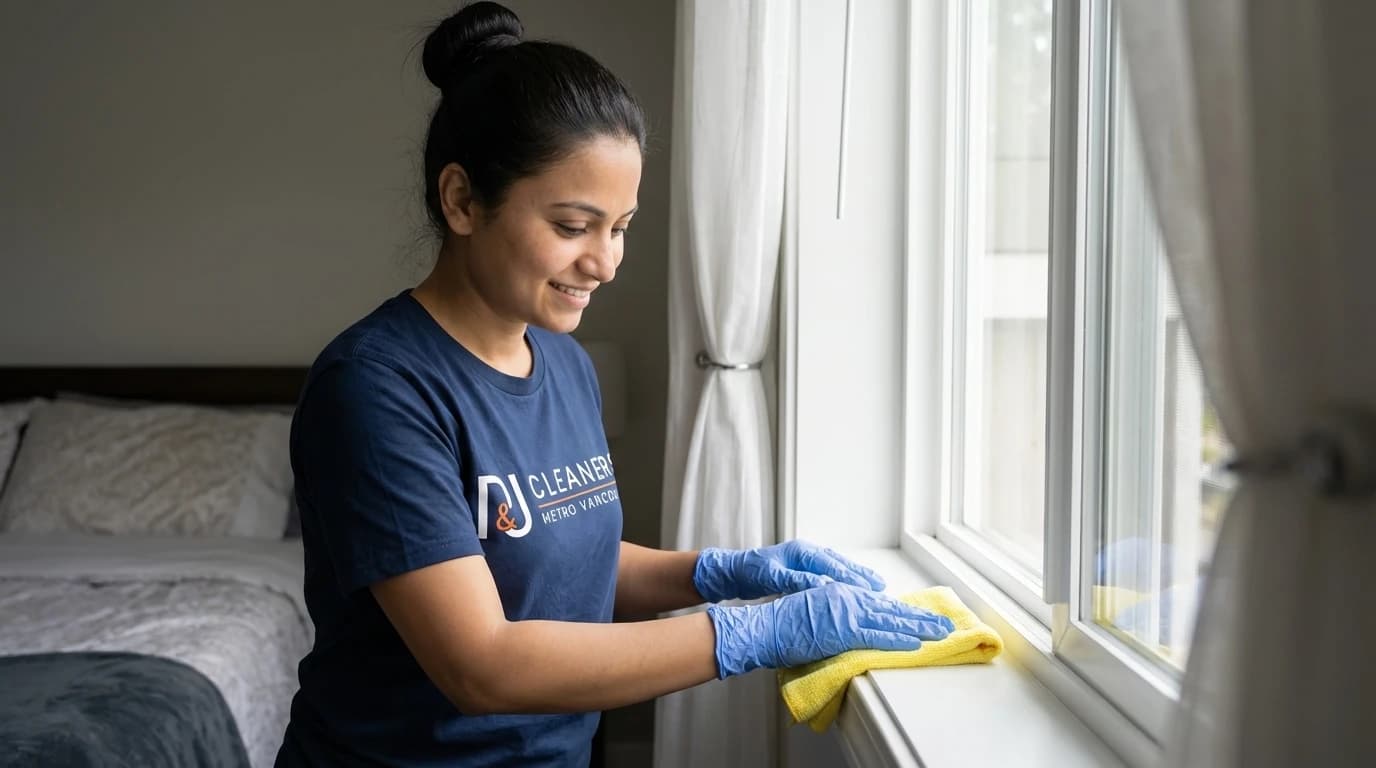
- Windows significantly impact bedroom air quality and natural light. Start by vacuuming window sills and tracks with a brush attachment to remove loose dust, dirt, and dead insects. Use a damp cloth or small brush to scrub tracks thoroughly—these narrow channels trap moisture and debris that can lead to mould growth, especially in Vancouver's humid climate. According to BC Housing, mould in window tracks is a common issue in coastal regions and should be addressed promptly with a solution of water and white vinegar or a mild bleach solution for stubborn growth.
- Wash window glass with a streak-free cleaner or a homemade solution of water, white vinegar, and a drop of dish soap. Use a microfibre cloth or squeegee for best results, working from top to bottom in overlapping strokes. Clean both interior and exterior surfaces if accessible—exterior windows collect pollen, rain spots, and environmental pollutants that reduce natural light penetration. Wipe down window frames and sills with an all-purpose cleaner, checking for signs of water damage, peeling paint, or gaps that may need caulking to prevent drafts and moisture intrusion.
Sanitize High-Touch Surfaces
Disinfect light switches, door handles, closet knobs, and remote controls. These surfaces harbour bacteria and viruses from frequent hand contact.
- High-touch surfaces in bedrooms are often overlooked but harbour significant amounts of bacteria and viruses. Research from the University of British Columbia found that light switches and door handles can contain up to 217 bacteria per square inch. Use a disinfecting wipe or spray cleaner with antibacterial properties to wipe down all light switches, door handles, closet knobs, drawer pulls, and thermostat controls. Pay attention to both sides of door handles and the areas immediately surrounding switches, which also collect oils and grime from hands.
- Don't forget electronics like remote controls, alarm clocks, phone chargers, and bedside lamps. These items are touched daily but rarely cleaned. Use electronics-safe wipes or a cloth lightly dampened with isopropyl alcohol to clean remote controls, paying attention to buttons and crevices where dirt accumulates. Unplug alarm clocks and lamps before wiping them down. If you have a ceiling fan remote or smart home controls mounted on the wall, clean these as well. Regular sanitization of high-touch surfaces reduces the spread of germs and helps maintain a healthier bedroom environment, especially during cold and flu season.
Quick Win
Keep disinfecting wipes in your nightstand for quick weekly touch-ups of light switches and door handles between deep cleans.
Vacuum Carpets and Under Furniture
Thoroughly vacuum all carpeted areas, including under the bed, behind furniture, and in corners. Move furniture to access hidden dust and debris.
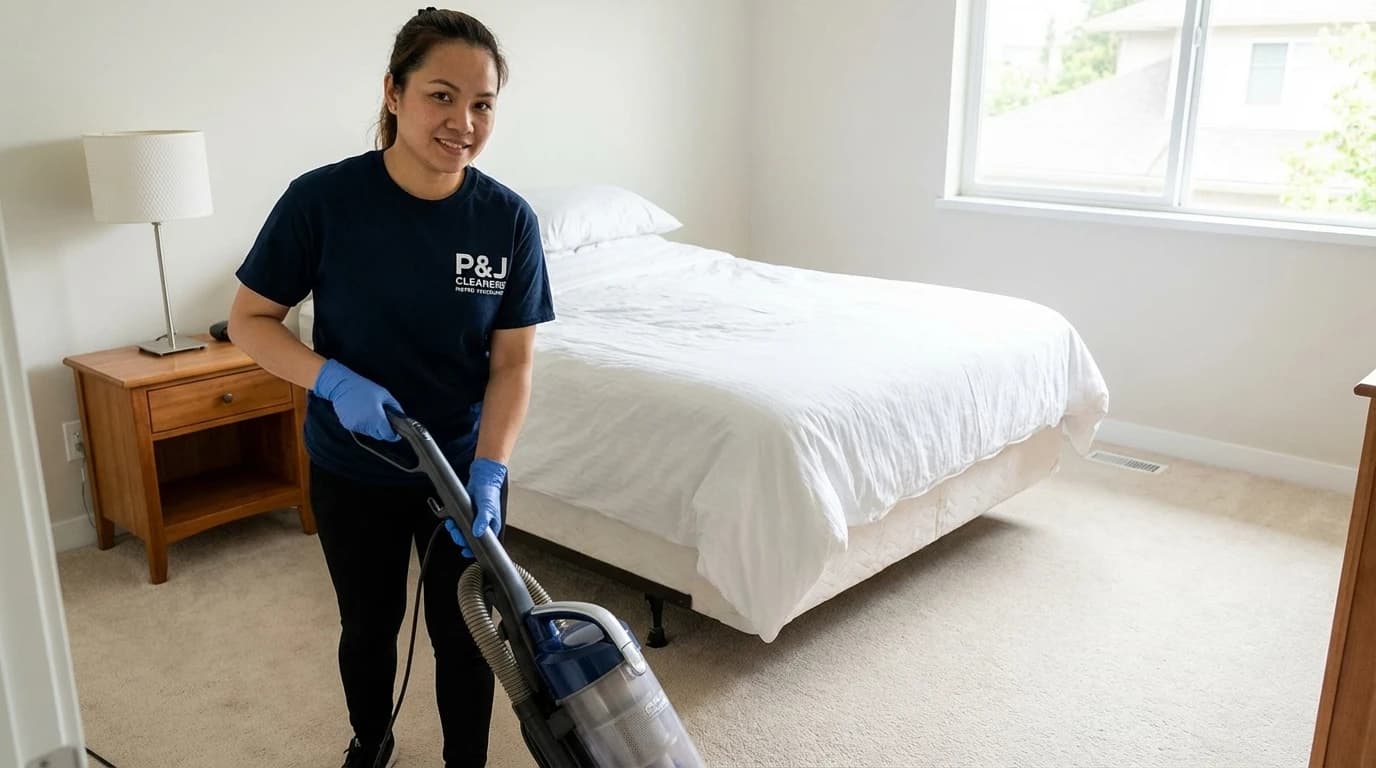
- Vacuum all carpeted areas systematically, working in overlapping rows to ensure complete coverage. Use the crevice tool for edges, corners, and along baseboards where dust accumulates. According to the Carpet and Rug Institute, carpets can trap up to four times their weight in dirt, dust, and allergens, making regular vacuuming essential for indoor air quality. Vacuum slowly—making multiple passes over high-traffic areas allows the vacuum to extract embedded dirt and dust mites more effectively than quick, single passes.
- Move furniture to vacuum underneath and behind pieces that rarely get moved. Under the bed is a notorious dust collector, often accumulating months or years of debris, pet hair, and lost items. Pull nightstands away from walls, move dressers if possible, and vacuum behind and underneath thoroughly. If furniture is too heavy to move alone, use a flat vacuum attachment or a long-handled duster to reach as far as possible. For hardwood or laminate floors, sweep or vacuum first, then mop with a floor cleaner appropriate for your flooring type, paying attention to corners and edges where dust collects.
Clean and Organize the Closet
Remove items from the closet, vacuum or sweep the floor, wipe shelves and rods, and reorganize clothing and accessories for better functionality.
- Closets accumulate dust, lint, and clutter quickly but are often neglected during regular cleaning. Start by removing all clothing, shoes, and accessories from the closet. Vacuum or sweep the floor thoroughly, paying attention to corners and along baseboards. Wipe down shelves, hanging rods, and any built-in organizers with a damp microfibre cloth. Check for signs of moisture, mildew, or pest activity—Vancouver's humid climate can create conditions for mould growth in poorly ventilated closets. If you notice musty odours, improve ventilation by leaving closet doors open periodically and consider using a moisture absorber or small dehumidifier.
- As you return items to the closet, take the opportunity to declutter and organize. Donate or discard clothing you haven't worn in over a year, items that no longer fit, or pieces that are damaged beyond repair. Organize remaining items by category and frequency of use, keeping everyday items at eye level and seasonal or occasional pieces on higher or lower shelves. Use matching hangers for a cohesive look and to prevent clothing from slipping. Store shoes in boxes or on racks to keep them organized and protected from dust. A well-organized closet not only looks better but also makes getting dressed easier and reduces stress.
Quick Win
Place cedar blocks or lavender sachets in your closet to naturally repel moths and keep clothing smelling fresh.
Wipe Down Baseboards and Trim
Clean baseboards, door frames, and window trim with a damp cloth. These areas collect dust and scuff marks that detract from overall room cleanliness.
- Baseboards and trim are often the last areas cleaned but make a significant visual impact when done properly. Dust accumulates quickly on these horizontal and vertical surfaces, and baseboards also collect scuff marks from shoes, vacuum cleaners, and furniture. Use a damp microfibre cloth or a baseboard cleaning tool with an extendable handle to wipe down all baseboards in the room. For stubborn marks or buildup, use a mild all-purpose cleaner or a magic eraser sponge, which effectively removes scuffs without damaging paint. Work in sections, rinsing your cloth frequently to avoid spreading dirt.
- Don't forget door frames, window trim, and any decorative moulding in the room. These areas collect dust and cobwebs, especially in upper corners. Wipe down the entire door frame, including the top edge which is rarely cleaned but highly visible when dusty. Clean both sides of the door itself, paying attention to the area around the handle where oils from hands accumulate. If you have painted trim, check for chips or damage that may need touch-up painting. Clean baseboards and trim quarterly as part of your deep cleaning routine to maintain a polished, well-maintained bedroom appearance.
Freshen Air Vents and Replace Filters
Remove vent covers, vacuum inside ducts, and wipe covers clean. Replace HVAC filters to improve air quality and system efficiency.
- Air vents and HVAC filters directly impact bedroom air quality but are frequently overlooked during cleaning. Remove vent covers by unscrewing or unclipping them, then vacuum inside the duct opening as far as your vacuum hose can reach. Dust, pet hair, and debris accumulate in ducts and get circulated throughout the room when the heating or cooling system runs. Wash vent covers in warm soapy water, scrubbing away dust and grime with a brush, then dry completely before reinstalling. According to the Canadian Mortgage and Housing Corporation, regular vent cleaning improves indoor air quality and reduces allergen circulation.
- Check your HVAC filter and replace it if it's been more than 1-3 months since the last change, depending on filter type and household conditions. A clogged filter reduces system efficiency, increases energy costs, and circulates dust and allergens throughout your home. Hold the old filter up to light—if you can't see through it clearly, it needs replacing. Choose a filter with a MERV rating between 8-13 for optimal balance between air quality and system performance. Mark your calendar to check filters monthly and replace as needed. Homes with pets, allergies, or high dust levels may require more frequent changes.
Quick Win
Set a recurring reminder on your phone to check HVAC filters monthly—consistent maintenance prevents costly repairs and improves air quality.
Make the Bed with Fresh Linens
Complete your bedroom deep clean by making the bed with freshly washed sheets, fluffed pillows, and a smoothed duvet for an inviting, hotel-quality finish.
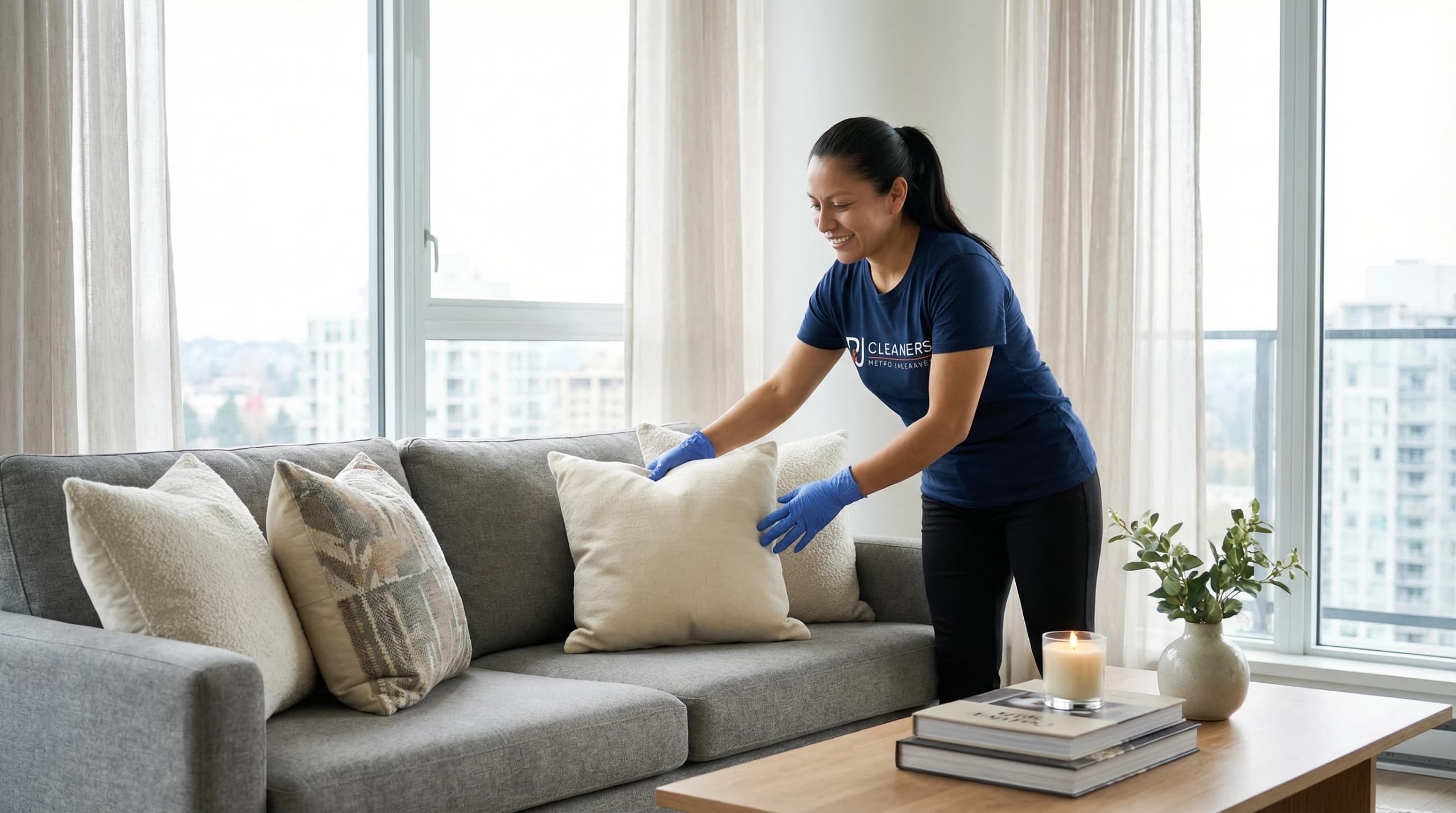
- After all cleaning tasks are complete, make your bed with the freshly washed bedding. Start with the fitted sheet, ensuring corners are tucked smoothly and the sheet is pulled taut across the mattress. Add the flat sheet if you use one, tucking the bottom edge under the mattress and creating hospital corners for a crisp, tailored look. Place pillows in clean pillowcases, fluffing them to restore loft and shape. Layer your duvet or comforter on top, smoothing out wrinkles and ensuring even distribution. A well-made bed instantly transforms the room's appearance and creates an inviting space for rest and relaxation.
- Consider adding decorative elements like throw pillows, a folded blanket at the foot of the bed, or a bed runner for a hotel-quality finish. These touches elevate the room's aesthetic and make the space feel more intentional and put-together. According to a National Sleep Foundation survey, people who make their beds daily report better sleep quality and feel more productive throughout the day. Take a moment to appreciate your clean, organized bedroom—the effort you've invested in deep cleaning creates a healthier, more comfortable environment that supports better sleep and overall well-being. Maintain this cleanliness with weekly surface cleaning and monthly deep cleaning sessions.
Fast Reset
Quick Bedroom Refresh Tips
Between deep cleans, maintain bedroom freshness with these simple daily and weekly habits that take just minutes but make a noticeable difference.
Services mentioned in this article
Ready for help?
4.9 · 850+ Google reviewsLet Us Handle Your Bedroom Deep Clean
Our trained team follows this exact checklist in every bedroom we service across Metro Vancouver. Book same-day service and experience the difference professional attention brings to your sleep space.
778-720-2224Bedroom Cleaning Questions Answered
What is the best way to bedroom cleaning checklist mattress to baseboard?
Start at the highest point and work downward to avoid re-contaminating cleaned surfaces. Strip bedding first, vacuum the mattress thoroughly including sides and seams, then dust ceiling fixtures and fans. Clean windows and sills, wipe all horizontal surfaces, vacuum or mop floors, and finish with baseboards. This top-to-bottom sequence prevents dust from settling on already-cleaned areas and reduces total cleaning time by approximately 23% according to ISSA efficiency studies.
How often should you bedroom cleaning checklist?
Complete the full bedroom cleaning checklist every two weeks for optimal hygiene and allergen control. Weekly tasks should include changing bedding, vacuuming floors, and dusting visible surfaces. Monthly deep cleaning should address mattress vacuuming, baseboard wiping, and window cleaning. The BC Health Authority recommends this frequency to maintain indoor air quality, especially in Metro Vancouver's humid climate where dust mites thrive. Homes with pets or allergy sufferers benefit from weekly deep cleaning instead.
What products work best for bedroom cleaning?
Microfibre cloths capture 99% of dust and bacteria without chemicals, making them ideal for bedroom surfaces. Use a HEPA-filter vacuum for mattresses and carpets to trap allergens effectively. For hard surfaces, pH-neutral cleaners prevent damage to wood furniture and floors. Avoid harsh chemicals in sleeping areas as they can off-gas for hours. P&J Cleaners uses eco-certified products that meet Health Canada's residential safety standards while delivering professional-grade results on all bedroom surfaces.
Is professional help worth it for bedroom cleaning?
Professional bedroom cleaning saves 3-4 hours per room and achieves deeper sanitation than typical household cleaning. Trained cleaners use commercial-grade equipment like HEPA vacuums and steam cleaners that remove 99.9% of dust mites and allergens from mattresses and carpets. For move-outs, deep cleans, or allergy management, professional service ensures thorough results. P&J Cleaners' bedroom deep clean includes mattress sanitization, baseboard detailing, and fixture cleaning that most homeowners lack time or equipment to complete properly.

Meet the Author
Pamela
Co-Founder
Pamela leads residential quality standards at P&J Cleaners, refining safe, detail-driven cleaning systems for Vancouver homes, condos, and move-out projects.
Keep Exploring