

Quick answer
Cleaning mold with baking soda works as physical removal, not as a kill treatment. Baking soda is a mild abrasive and deodorizer that lifts surface mold from non-porous materials like tile, glass and sealed stone. It cannot reach mold rooted in drywall, insulation or bare wood, and it does not fix the moisture causing the growth.

Key Takeaways
- 1Cleaning mold with baking soda removes it, it does not kill it. Baking soda abrades and deodorizes, which is why it only works on hard, non-porous surfaces.
- 2The US EPA states that dead mold may still cause allergic reactions, so killing mold is not enough, it must also be removed.
- 3Neither the EPA nor Canada Mortgage and Housing Corporation recommends baking soda or bleach for mold cleanup. Both recommend water and detergent.
- 4CMHC, which spells it mould, defines a small mould problem as fewer than three patches, each one square metre or less, and says a person in good health can clean that themselves.
- 5CMHC sends anything covering more than three square metres, or with large patches throughout the home, to a trained mould remediation contractor.
- 6The EPA advises drying damp building materials within 24 to 48 hours, which is the window that decides whether you clean a surface or replace it.
- 7Porous materials that stay moldy, including ceiling tiles and carpet, often have to be thrown out rather than cleaned.
What Cleaning Mold With Baking Soda Actually Does
Baking soda is a mild abrasive, a deodorizer and a mild alkali. Those three properties explain everything it can and cannot do to mold.
Baking soda is sodium bicarbonate: a soft crystal that dissolves in water and is just hard enough to abrade a surface without scratching it. That one physical fact is doing all the work in every recipe you have read. Nothing in the jar attacks the organism. A paste drags the colony off the material the way a scrub pad would. It takes the musty smell with it too, which is why a treated spot smells clean even though nothing was sterilized.
There is no fungicidal action in a baking soda paste, and it is not registered as a disinfectant in Canada. When a page tells you baking soda kills mold because it raises pH, treat that the way you would treat any other claim with nothing behind it.
None of this makes baking soda useless. Physical removal is a legitimate goal and, as the next section shows, arguably the correct one. It just means baking soda belongs in the same mental category as a scrub pad rather than a disinfectant. We use it constantly on grout haze and stained sealed surfaces, and there is a longer list of what baking soda is good for that has nothing to do with killing anything.
- Mild abrasive: scrapes surface growth loose without scratching glazed tile, glass or sealed stone.
- Deodorizer: absorbs the musty odour that lingers after the visible mark is gone.
- Mild alkali: helps break down the oily residue in an established colony so it wipes away instead of smearing.
- Not a fungicide: it does not sterilize the surface and does not stop regrowth if the surface stays damp.
Pro Tip
Mix the paste thicker than feels right. Our mix is roughly three parts baking soda to one part water, left to sit for ten minutes before you touch it. A runny paste slides off vertical grout lines and does no scrubbing at all.
Why Killing Mold Is the Wrong Target
There is one sentence in the official guidance that almost nobody quotes, and it settles the baking soda argument before the argument starts.
The US Environmental Protection Agency puts it plainly: dead mold may still cause allergic reactions in some people, so it is not enough to simply kill the mold, it must also be removed. That single line reframes the whole debate. If a product sterilizes a patch but leaves the dead colony sitting on your grout, you have not solved the thing you actually care about.
The same page goes further and says that using a chemical or biocide that kills organisms such as mold, chlorine bleach for example, is not recommended as a routine practice during mold cleanup. So the internet's two favourite home remedies sit on opposite sides of a debate that the agency does not think is the important one.
Read the question that way and baking soda scores better than its critics allow and worse than its fans claim. It removes. It does not kill. Removal is the goal. But removal only works where the growth is sitting on top of a surface you can physically reach, which is where materials come in.
- Sterilizing without removing leaves the allergenic material in place.
- Removing without fixing the moisture guarantees the patch returns, usually within weeks in a wet Vancouver winter.
- The EPA also warns never to mix chlorine bleach with cleaners containing ammonia, because toxic fumes can be produced.
Pro Tip
Before you scrub anything, photograph the patch with a ruler or a credit card next to it for scale. If it comes back, you will know within seconds whether it is spreading or holding, and that is the difference between a cleaning problem and a building problem.
Porous or Non-Porous: The Only Distinction That Changes the Answer
Every useful answer to this question splits on one variable. Can the growth get inside the material, or is it sitting on the face of it?
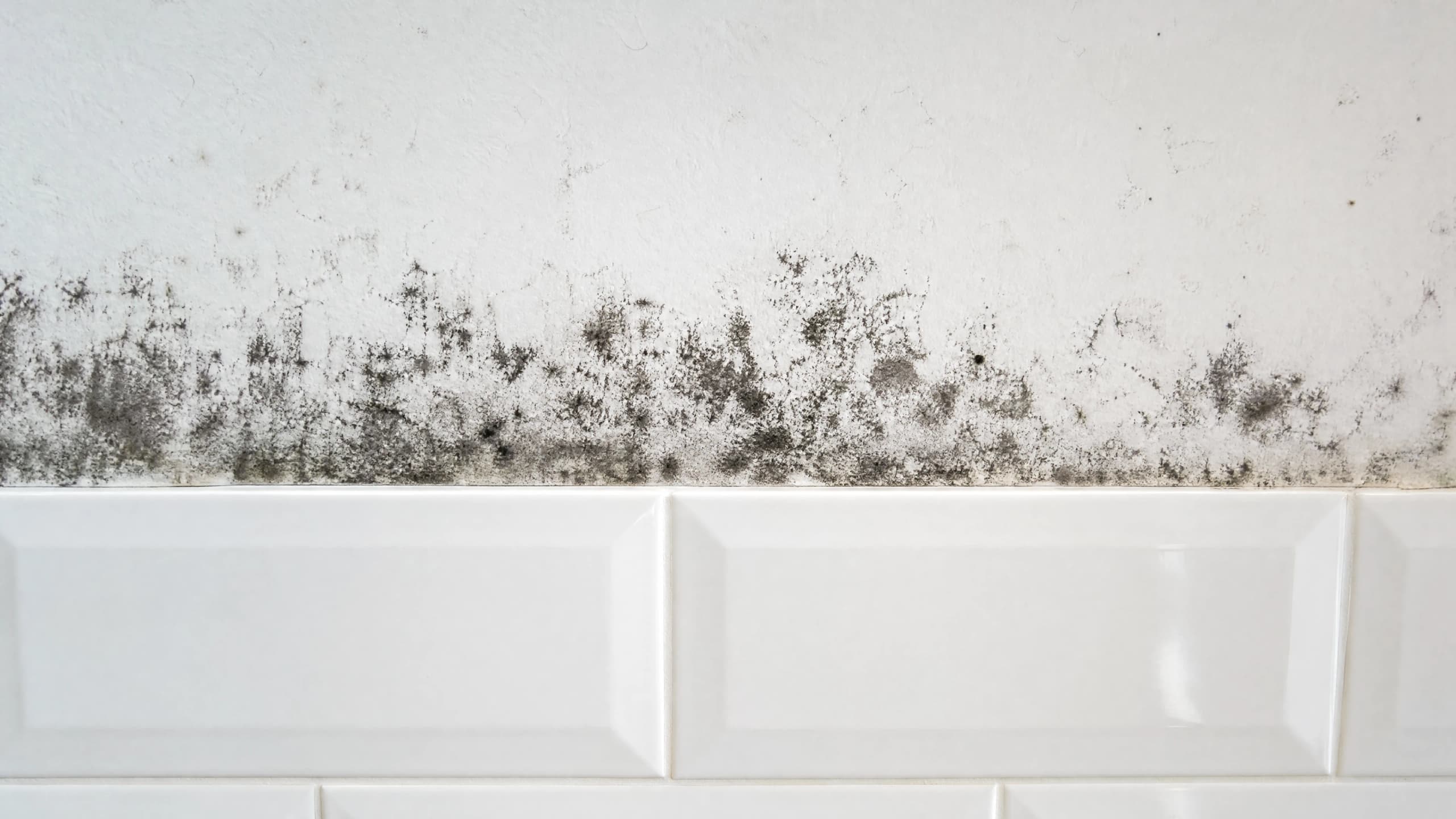
On glazed tile, glass, metal, sealed stone and finished countertops, mold sits on the surface. There is nowhere for it to go. Scrubbing removes it completely, and baking soda is a fine tool for that job.
On drywall, insulation, bare wood, ceiling tiles, carpet and fabric, the growth goes into the material. You can wipe the face clean and leave the colony intact a millimetre down. EPA guidance on mold cleanup is blunt about the consequence: absorbent or porous materials such as ceiling tiles and carpet may have to be thrown away if they become moldy. That is a replacement decision, not a cleaning decision, and no paste changes it.
Painted drywall sits awkwardly in the middle. A light surface bloom on intact, well-sealed paint often wipes off with detergent and water. If the drywall behind it is soft, or stained in a spreading ring, the paint film is the only thing you cleaned. The EPA notes that paint applied over moldy surfaces is likely to peel, which is the same problem returning later and more expensively.
A spelling note, because this section quotes both sides of the border. We write mold, because that is how almost everyone searches it. Canadian and British sources, including the CMHC guidance further down, write mould, and we have left their spelling alone inside their own words. The advice does not change with the letter.
Pro Tip
Press a fingernail into painted drywall an inch outside the visible mark. If it dents softly or feels cool and spongy compared to a clean wall two metres away, you are looking at a wet wall, and cleaning the surface is treating a symptom.
Why Vancouver Mold Shows Up on Windows and Cold Walls First
In a rain-city home, mold appears in a predictable pattern, and the pattern tells you what is actually wrong.
From October onward, the calls we get follow the same map. Black speckling along window reveals and sills. A furry grey patch in the corner of an exterior wall behind a dresser. Spotting on the ceiling of a north-facing bedroom. Growth inside a closet built against an outside wall. These are not random, and they are not a sign that anyone cleans badly.
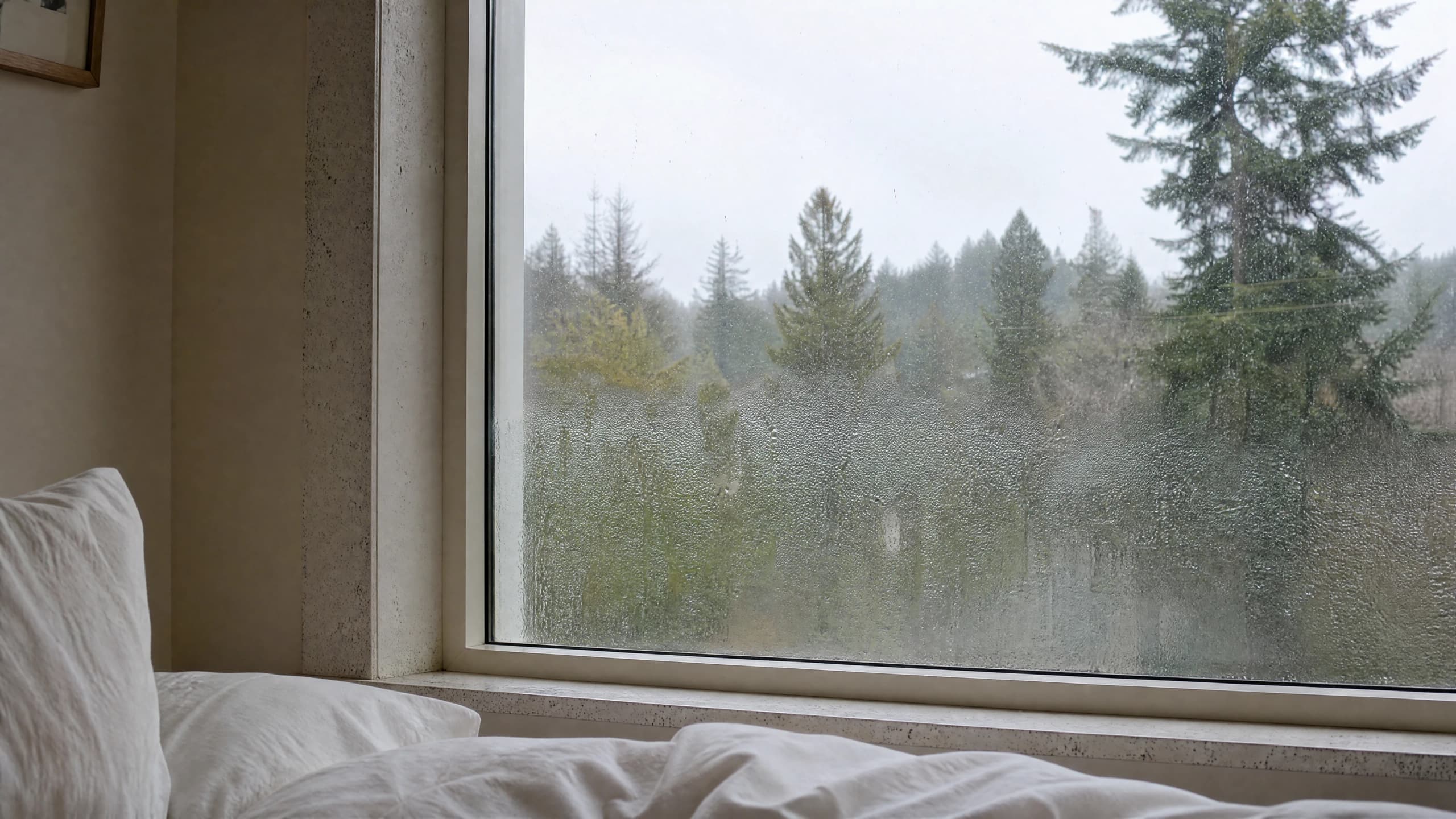
The EPA's ten points on mold name the cause directly, and the answer is building physics rather than cleaning. Reduce the potential for condensation on cold surfaces such as windows, piping, exterior walls, roof or floors by adding insulation. Warm, humid indoor air meets the coldest surface in the room, water condenses out of it, and growth starts on whatever is sitting there. In a Metro Vancouver winter that coldest surface is almost always a window frame or a poorly insulated corner of an outside wall.
That is why the same spot keeps coming back after a perfect scrub. You cleaned the growth; the condensation is still arriving every night. Older housing stock in East Vancouver and New Westminster with early double glazing condenses heavily, and homes in North Vancouver sitting under mature tree cover stay shaded and slow to dry out. Same weather, different failure point.
The EPA also puts a clock on it: clean and dry any damp or wet building materials and furnishings within 24 to 48 hours to prevent mold growth, and keep indoor humidity between 30 and 60 percent. That 24 to 48 hour window is the honest dividing line between a wipe-down and a replacement, which matters after a rain leak, an overflowing planter or a burst supply line.
- Run the bathroom fan for twenty minutes after a shower ends, not just during it. The moisture is still airborne when the water stops.
- Pull furniture two to three inches off exterior walls so air can move behind it, especially in bedrooms.
- Leave closet doors on outside walls slightly ajar through the wet months.
- Wipe window sills and reveals dry on cold mornings when you see condensation beading. It takes a minute and prevents the patch entirely.
- Do not stack damp laundry against an exterior wall to dry. It is the single most common cause of a bedroom corner patch.
Pro Tip
Buy a ten dollar hygrometer and put it in the room that grows mold, not in the hallway. Rooms differ by more than you would expect, and a bedroom sitting at 65 percent while the living room reads 45 percent tells you exactly where to point a dehumidifier.
How Much Mold Is Too Much to Clean Yourself in Canada?
Most articles quote the American 10 square feet rule. The Canadian threshold is stricter, more specific, and is the one that applies here.
Canada Mortgage and Housing Corporation sorts the problem into three sizes. A small mould problem has fewer than three patches, each one square metre or less in size, and CMHC says you can clean it yourself if you are in good health. A medium problem has more than three patches with a total area under three square metres, and should be handled by qualified and trained maintenance staff. A large problem covers more than three square metres or shows large patches throughout the home, and should go to qualified and trained mould remediation contractors.
Notice what CMHC recommends for the small job you are allowed to do yourself: water and unscented dishwashing detergent. Not baking soda. Not vinegar. Not bleach. The EPA lands in the same place, telling homeowners to clean mold off hard surfaces with water and detergent and dry completely. It sets its own DIY ceiling at under about 10 square feet, roughly a three foot square.
The two thresholds are close enough in practice to use the stricter one. One square metre is a little under eleven square feet, and CMHC's patch count is the more useful half of the rule anyway. Three separate patches in one room is a signal about the room, not about the patches.
CMHC also orders the work in a way worth copying. Find, stop and fix the moisture source. Prevent exposure to mould and debris. Remove all wet or damaged materials. Clean up the mould. Restore or renovate the cleaned area. Cleaning is the fourth of those five steps. Almost everyone treats it as the first, which is why almost everyone does it twice.
- Fewer than three patches, each under one square metre: a healthy adult can clean it, per CMHC.
- More than three patches, under three square metres in total: CMHC hands this to trained maintenance staff, not to you.
- Over three square metres, or patches throughout the home: a trained mould remediation contractor.
- Any size, if you have asthma, a compromised immune system or an existing respiratory condition: do not do it yourself.
- Any size, if it followed a flood, a sewer backup or a long-running hidden leak: get it assessed before anyone cleans.
Pro Tip
Measure before you decide, because eyes are terrible at this. One square metre is about the size of a standard bath towel laid flat. Hold a towel against the wall and you have your answer in five seconds.
What a Deep Clean Covers, and What It Does Not
Being straight about the boundary is more useful than pretending cleaning solves everything.
Surface mold on hard, non-porous materials is ordinary cleaning work. Grout lines, tile, glass, window frames and sills, sealed stone, the inside of a shower, the back of a bathroom cabinet. All of that comes off properly during a deep clean. It is also what we find most often behind furniture and inside closets once the wet months start. A move-out clean turns up the same thing in places that have sat shut for weeks. The one nobody expects is the fridge. A door seal traps moisture against food residue all year, whatever the weather is doing outside, and that has a method of its own in how to clean a moldy fridge.
What we do not do, and what no cleaning company should tell you they do, is remediation. Opening a wall, removing wet drywall or insulation, containing a work area, handling a large contaminated space: that is a different trade with different training, and CMHC is explicit that it belongs to a qualified mould remediation contractor. If we arrive and the patch is bigger than the guidance allows, or the wall is soft, we will say so rather than scrub it and take your money. If you are not sure which side of the line yours is on, send us a photo with something in frame for scale before you book anything.
The honest version of the boundary is this. Cleaning takes off what is sitting on the surface and gives you a clean baseline to watch. Only fixing the moisture makes that permanent, and the fix is ventilation, insulation, a seal or a repair. A steady house cleaning rhythm through the wet months stops the regrowth before it establishes, and our mold and mildew removal guide covers the wider subject. What none of it does is dry out a wall for you.
Pro Tip
If a patch has come back three times, stop cleaning it and start reading its shape. Evenly spaced vertical stripes mean the studs behind the drywall are running cold and pulling condensation onto the wall face, and no paste fixes a cold wall. The third return is data, not bad luck.
Step-by-Step
How to Clean a Small Mold Patch Safely
This is the CMHC sequence applied to a patch that is genuinely within the do-it-yourself range: fewer than three spots, each under one square metre, in a home where nobody has a respiratory condition. If your patch is larger than that, skip this and get it assessed.
Find and stop the water first
CMHC puts fixing the moisture source ahead of every cleaning step, and it is the step people skip. Look directly above and behind the patch before you look at the patch.
- Check for condensation on the nearest window, pipe or exterior wall on a cold morning
- Look for a leak above: roof, bathroom, planter, window seal, upstairs plumbing
- Note the room's humidity if you have a hygrometer, aiming for 30 to 60 percent
- If you cannot find a cause, stop here and get the room looked at rather than cleaned
Protect yourself and ventilate
Disturbing a colony puts spores in the air. This is basic and worth doing even on a small patch.
- Wear rubber or nitrile gloves and eye protection
- Use an N95 respirator, not a cloth or surgical mask
- Open a window in the room and close the door to the rest of the home
- Turn off central air or the HVAC fan so spores are not distributed through the house
Remove anything wet or damaged
Cleaning around a soaked material just relocates the problem. Take the damaged item out before you clean the surface underneath it.
- Bag soft items that are visibly moldy rather than carrying them uncovered through the house
- Set aside any porous material that stayed wet longer than 24 to 48 hours
- Move furniture well clear so you can reach the whole area and see its true size
- Re-measure once everything is out; patches are usually bigger than the visible edge
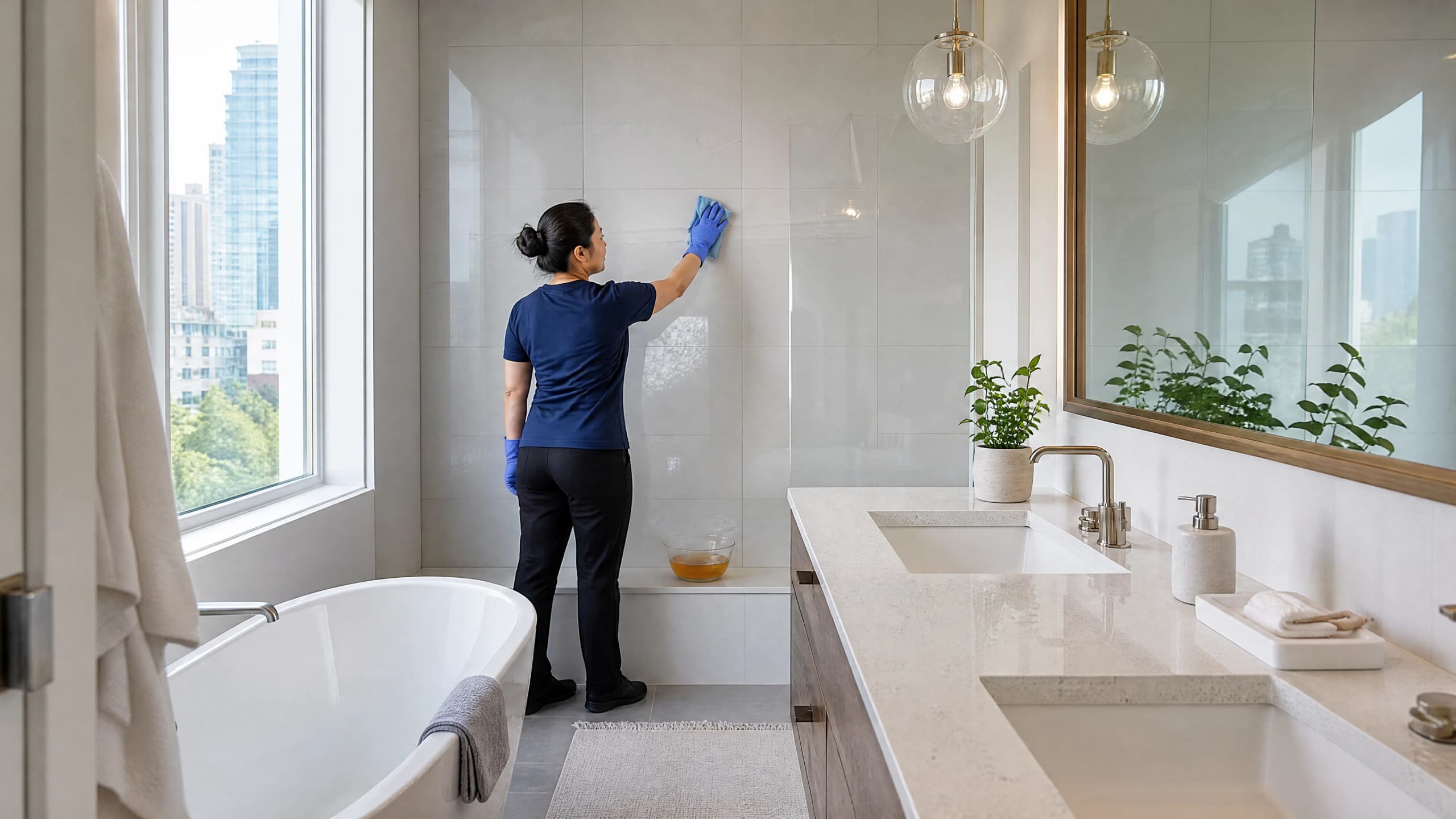
Wash with unscented dish detergent and water
This is what CMHC and the EPA both actually recommend, and it should be your first pass on every surface regardless of what you reach for afterwards.
- Mix a few drops of unscented dishwashing detergent into warm water
- Wipe rather than dry-brush, so you lift growth instead of launching it into the air
- Work top to bottom and rinse the cloth often, or use fresh cloths per section
- Do not use bleach as a routine step, and never combine it with an ammonia-based cleaner
Use baking soda only where it earns its place
After the detergent wash, a baking soda paste is a good second pass on hard surfaces where staining or smell survived. This is the step it was built for.
- Build a paste stiff enough to hold its shape when you tip the bowl
- Apply to grout lines, tile, glass, sealed stone or a window frame and leave ten minutes
- Agitate with a stiff nylon brush or an old toothbrush along grout, then rinse clean
- Skip this entirely on drywall, bare wood, fabric or anything absorbent
Dry completely, then watch the spot
Drying is the step that decides whether the work holds. A surface left damp is a surface that regrows, sometimes inside two weeks in a Vancouver winter.
- Dry the area fully with a towel, then leave a fan on it for an hour
- Photograph the finished surface so you have a clean baseline
- Check the same spot in two weeks and again in six
- If it comes back in the same place, that is a moisture problem, and re-cleaning it a third time will not change the answer
| Surface | Can mold get inside it? | Does baking soda help? | What to do instead |
|---|---|---|---|
| Glazed tile and grout lines | Grout is semi-porous, tile is not | Yes, as a gentle abrasive | Detergent and water first, paste on stubborn staining, then dry fully |
| Glass, mirrors, window frames and sills | No | Yes | Same wash, then keep the sill dry so it stops returning |
| Sealed stone and finished countertops | No | Yes, it will not scratch | Warm soapy water; test a hidden corner before you use paste |
| Painted drywall with light surface spotting | Only if the paint film is intact | Sometimes, surface only | Wash it; if the mark returns, the wall behind it is still wet |
| Soft or water-stained drywall | Yes | No | Replacement decision; cleaning cannot reach growth inside it |
| Bare or unsealed wood | Yes | No | Needs assessment; sanding and sealing is carpentry, not cleaning |
| Ceiling tiles, carpet, insulation | Yes | No | EPA says these may have to be thrown away |
| Fabric, curtains and soft furnishings | Yes | No | Launder to the care label or discard; do not dry-brush it indoors |
Services mentioned in this article
Ready for help?
4.9 · 800+ Google reviewsCleaned the Spot and It Came Back?
That usually means the moisture is still arriving, not that you scrubbed it wrong. Our deep cleaning team clears surface mold from tile, grout, glass and sealed surfaces in homes across Metro Vancouver. If a patch is past cleaning and needs a remediation contractor, we will say so.
778-720-2224Cleaning Mold With Baking Soda: Common Questions
Does baking soda actually kill mold?
No. Baking soda removes mold rather than killing it, working as a mild abrasive and deodorizer on hard surfaces. That distinction matters less than it sounds, because the US EPA notes that dead mold can still cause allergic reactions and has to be removed anyway. Removal is the goal, and baking soda is a reasonable tool for it on non-porous materials.
Is vinegar better than baking soda for mold?
Neither is what official guidance recommends. Both the EPA and Canada Mortgage and Housing Corporation point homeowners to plain water and detergent for small mold cleanups, and CMHC specifies unscented dishwashing detergent. Claims that vinegar penetrates and kills mold at the root are common online but we could not trace them to a primary source, so we do not repeat them.
Can I mix baking soda and vinegar to remove mold?
There is no benefit to it. The two neutralize each other on contact, and what is left after the fizzing stops is mostly salty water. If you want to use both, use them in separate passes on separate days. More importantly, the EPA warns never to mix chlorine bleach with any cleaner containing ammonia, because that combination can produce toxic fumes.
How much mold can I clean myself in Canada?
Less than most people assume. CMHC's do-it-yourself limit is three patches at most, none bigger than a square metre, and only if your health is good. Cross either line and it becomes trained maintenance work; past three square metres in total it belongs to a remediation contractor. The American ceiling is about 10 square feet, so roughly a three foot square. If your patch sits between the two, use the Canadian one.
Why does mold keep coming back on my window sills?
Because the growth was the symptom and condensation is the cause. The EPA recommends reducing condensation on cold surfaces such as windows and exterior walls by adding insulation, which tells you this is usually a building problem rather than a cleaning failure. Until the sill stops getting wet each cold morning, any cleaning you do is temporary by design.
Does baking soda remove black mold from drywall?
Not really. On painted drywall with an intact paint film you may lift a light surface bloom, but if the growth has gone into the paper facing, baking soda only cleans the paint. A mark that returns in the same outline, or drywall that feels soft or spongy, is a replacement decision rather than a cleaning one.
Sources & References
The facts in this guide come from the primary sources below. Links open in a new tab.
- 1Should I use bleach to clean up mold?US Environmental Protection Agency
- 2Ten Things You Should Know about MoldUS Environmental Protection Agency
- 3Mold Cleanup in Your HomeUS Environmental Protection Agency
- 4Mould in Housing: How to Clean Up Mould in Your HomeCanada Mortgage and Housing Corporation

Meet the Author
Pamela
Co-Founder
Pamela leads residential quality standards at P&J Cleaners, refining safe, detail-driven cleaning systems for Vancouver homes, condos, and move-out projects.
Keep Exploring