


Quick answer
How to choose a move-out cleaning company in BC comes down to three checks before price: a written scope naming the oven, fridge, window tracks and baseboards, proof of liability insurance plus WorkSafeBC registration, and a satisfaction guarantee tied to your landlord's inspection. A quote missing any of the three is cheap for the wrong reason.

Key Takeaways
- 1BC's Residential Tenancy Policy Guideline 1 names the stove top, elements and oven, the defrosted refrigerator, and the inside of the dishwasher as end-of-tenancy tenant cleaning, so a quote that skips appliances leaves a named item uncovered.
- 2Carpet steam cleaning is generally expected after a tenancy of one year, and regardless of length if there were uncaged pets or smoking in the unit. It is a separate trade line item, not part of a standard move-out clean.
- 3WorkSafeBC issues clearance letters at no cost, confirming a company is registered and current on premiums. As the customer of an unregistered business, you can be held responsible for that business's premiums.
- 4Hiring an individual directly as your own worker for ongoing household services makes WorkSafeBC coverage optional below 8 hours a week and required at 8 or more, and you are the one who carries it.
- 5A quote with no GST line means the operator sits under the Canada Revenue Agency's $30,000 small-supplier threshold. That is legal, and it also tells you the scale of the business standing behind the work.
- 6Move-out cleaning in Metro Vancouver runs roughly $200 to $300 for a studio or one-bedroom and $300 to $450 for a two or three-bedroom, with a one-bedroom taking three to four hours.
- 7Once a landlord has your forwarding address they have 15 days to return the deposit, and may be ordered to pay double the deposit amount if they miss that deadline.
Why Two Quotes on the Same One-Bedroom Are Rarely the Same Job
Price spread on the same unit is almost always a scope difference, not a skill difference.
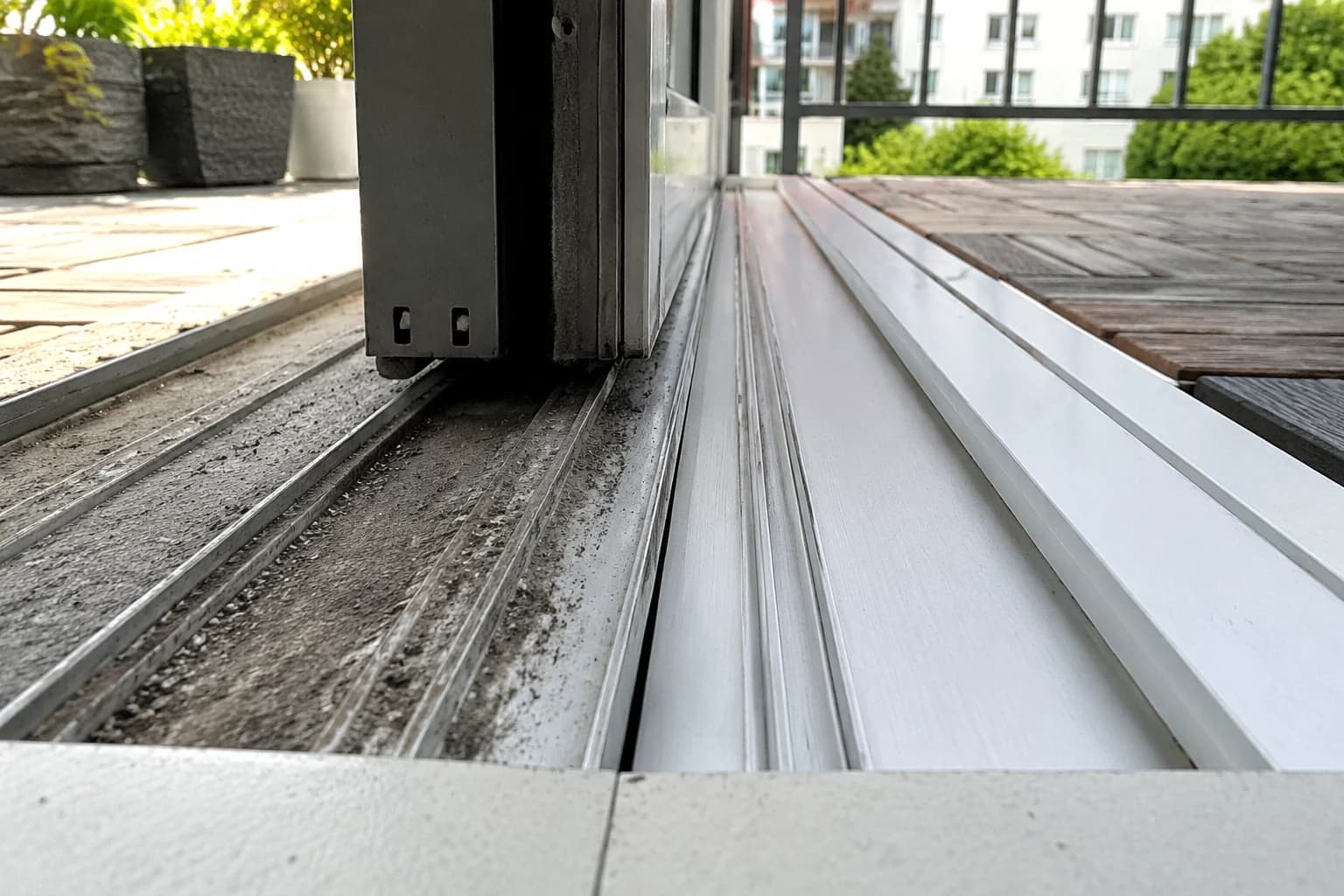
Call four companies about the same one-bedroom in East Vancouver and the numbers will not line up. Hourly rates around Metro Vancouver sit near $40 to $60 an hour, so one company quoting a short two-cleaner visit lands low. Another quotes a fully scoped flat rate, and flat rates run from about $200 to $600 depending on size and condition. It is tempting to read that as four opinions on the same job. It is not. It is four different jobs wearing the same name.
Move-out cleaning has no standard definition in BC. One company means a thorough surface clean of an empty suite. Another means every item a landlord scores on a condition inspection report, including the inside of the oven, the tracks under the balcony door, and the shelf edges inside every closet. Both are honest descriptions of what those crews will do. Only one of them matches what your landlord will be looking at.
So the useful question is never "what do you charge." It is "send me the list." A company that works from a fixed checklist can email it in a minute. A company that cannot produce one is quoting on time, and time is the thing that runs out first on moving day.
The bands are worth knowing before you dial. Across Metro Vancouver, a studio or one-bedroom move-out clean typically runs $200 to $300, and a two or three-bedroom $300 to $450, with condition and add-ons moving the number. If you want the full breakdown by unit size, our Metro Vancouver move-out cleaning cost guide breaks down every pricing model renters get quoted.
- A quote well under the usual $200 to $300 one-bedroom band is usually a short surface clean with appliances and window tracks excluded
- An hourly quote with no cap transfers all the schedule risk to you, which matters when your strata elevator booking ends at 4pm
- Flat-rate quotes force the company to define scope up front, which is exactly what you want in writing
- Quotes given without seeing photos or a unit size are placeholders and will be revised on site
Pro Tip
Ask for the quote as a scope list with a price attached, not a price with a scope described over the phone. Forward that email to yourself. If the crew misses an item later, you are pointing at a document instead of recalling a conversation.
The Cleaning Items BC's Tenancy Guideline Actually Names
The province publishes a list. Most quotes have never been checked against it.
BC does not leave end-of-tenancy cleanliness to interpretation as much as renters assume. Residential Tenancy Policy Guideline 1 sets out what a landlord and a tenant are each responsible for, and it names specific items.
On appliances, the guideline states that at the end of the tenancy the tenant must clean the stove top, elements and oven, defrost and clean the refrigerator, and wipe out the inside of the dishwasher. If the fridge and stove sit on rollers, the tenant is responsible for pulling them out and cleaning behind and underneath. If they are not on rollers, that only applies when the landlord has explained how to move them without injury or floor damage.
Windows are where Vancouver renters get caught. The guideline puts the inside windows and tracks on the tenant, mould included, along with the inside and outside of balcony doors, windows and tracks. Only the outside of the windows falls to the landlord, at reasonable intervals. In a rain-belt city that is not a small clause. Track grit and window-channel mould build faster here than almost anything else in a suite.
On carpets, the guideline says a tenant will generally be held responsible for steam cleaning or shampooing after a tenancy of one year, and regardless of length if an occupant had uncaged pets or smoked in the unit. This matters for budgeting because carpet work is a separate trade. It is rarely folded into a standard move-out flat rate, ours included, so ask before you book, because a quote that stays silent about it is not covering it.
The relief in the guideline is equally worth knowing. A tenant is not responsible for reasonable wear and tear, nor for cleaning the unit to a higher standard than the legislation sets. Faded paint and worn carpet traffic lanes are not your bill. Our guide to BC tenant cleaning and deposit rights goes deeper on where that line falls, and the move-out cleaning checklist turns the guideline into room-by-room tasks.
- Named for the tenant: stove top, elements, oven, defrosted fridge, inside of the dishwasher
- Named for the tenant: inside windows and tracks with mould removed, balcony door glass and tracks inside and out
- Also on the tenant: washing scuff marks and finger prints off walls
- Expected of the tenant: carpet steam cleaning after one year, or after pets or smoking at any tenancy length
- Not the tenant's bill: reasonable wear and tear, or cleaning beyond the standard the legislation sets
Pro Tip
Print the guideline's appliance and window clauses and take them to the walk-through. Arbitrators decide what meets the reasonably clean standard BC sets, and the guideline is explicit that this is not simply the landlord's personal standard. Quoting the actual document changes the tone of a disputed deduction quickly.
How to Verify Insurance and WorkSafeBC Coverage in Ten Minutes
Two free checks that almost no renter runs, and one of them protects your own wallet.
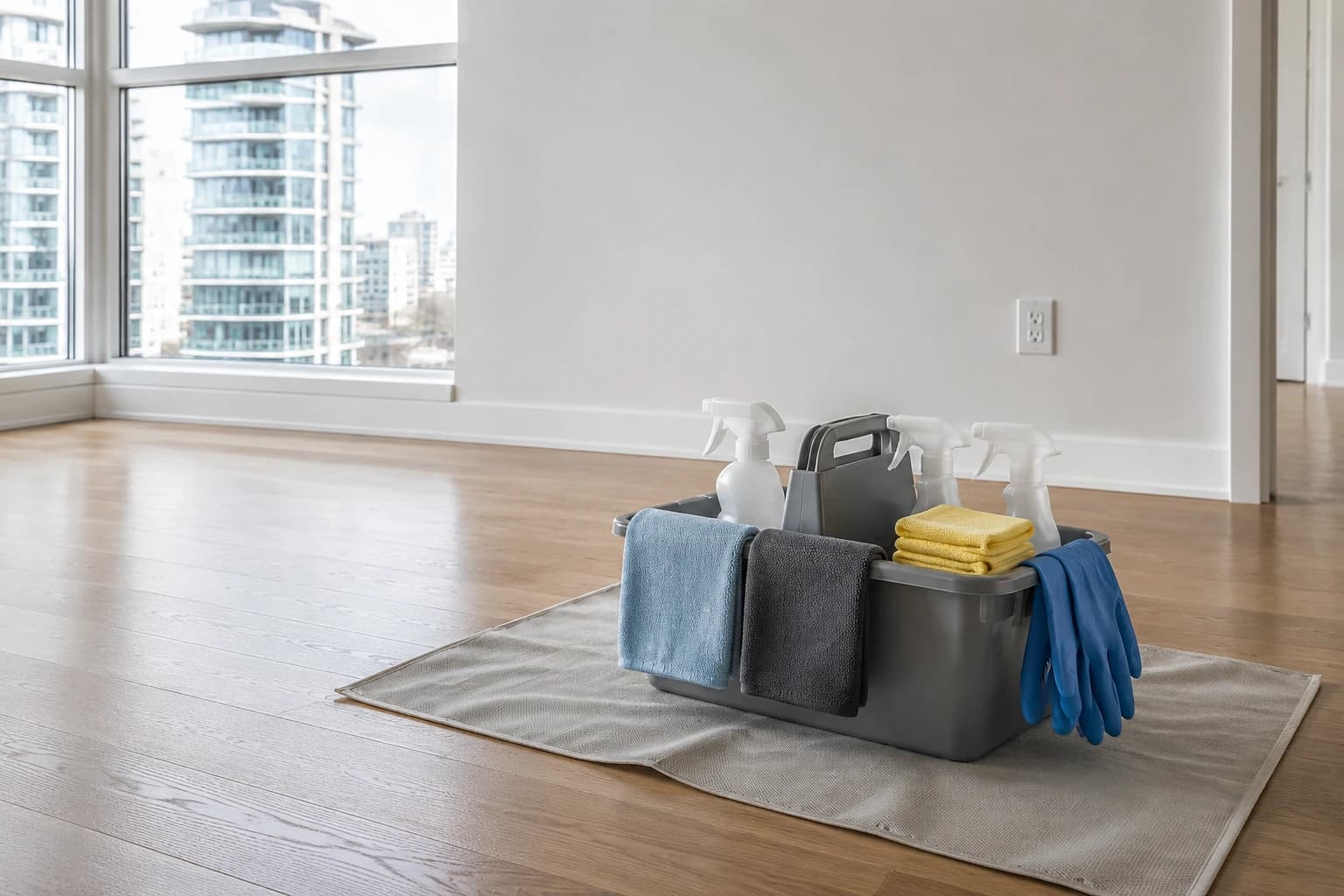
Every cleaning company in Metro Vancouver says it is insured. The word costs nothing to type on a website. Verifying it takes about ten minutes and changes what a low quote actually means.
Start with liability insurance. Ask for the certificate of insurance itself, not a claim of coverage, and check the named insured matches the business name on your invoice and that the policy dates cover your booking date. A crew that drops a cleaning caddy on a refinished hardwood floor in a suite you no longer control is a problem you want somebody else's policy to solve.
Then run the check that gets skipped. WorkSafeBC will tell you whether a business is registered and current on its premiums, and it issues a clearance letter confirming it. The reason to bother is direct self-interest: WorkSafeBC's own guidance is that if you hire a business that is not making required payments, you could be liable for premiums relating to the work it did for you. As a customer of an independent business you are also not covered by WorkSafeBC yourself, so the company's own standing is the only thing between you and that exposure.
There is a second trap for anyone thinking of skipping companies altogether and paying a person directly. If you hire someone as your own worker for ongoing household services, WorkSafeBC coverage is optional below 8 hours a week and required at 8 or more hours. At that point you are the employer, with the obligations that come with it. An hourly cash rate below what companies charge stops looking cheap once you are the one carrying coverage.
None of this is exotic due diligence. It is the same short list as vetting any trade, and our nine-step guide to vetting a cleaning company works through the rest, including reference checks and what a real satisfaction guarantee has to say to be worth anything.
- The certificate of insurance itself, with the named insured and the policy dates both checked
- A WorkSafeBC clearance letter addressed to you, which costs nothing
- Whether the cleaners are employees or subcontractors, since that changes whose coverage applies on site
- Who pays for accidental damage, answered in writing before any deposit changes hands
- Bonding read as a trust signal and not a legal one, since BC does not require bonded and insured cleaners
Pro Tip
Ask for the clearance letter under the company's legal business name, not the brand name on the van, since the two are often different and the WorkSafeBC account sits under the legal one. If the office cannot tell you the legal name of the business, you have already learned something.
Five Signals a Quote Is Cheap for the Wrong Reason
Low price is not the problem. These five things are what low price sometimes hides.
A low price on its own tells you almost nothing. Plenty of small operators are excellent, careful and genuinely cheap to run, and they pass that on. The five signals below sit underneath the price. Each is a piece of the job a quote can quietly leave out, and each has a question that surfaces it.
The GST one deserves an explanation, because it is a signal and not an accusation. Under the Canada Revenue Agency's small-supplier rule, a business with $30,000 or less in taxable revenue across four consecutive calendar quarters is not required to register for or charge GST. So a quote with no GST line is entirely legal. It also tells you the operation is smaller than $30,000 a year in billings, which is useful information when you are deciding who to trust with an empty suite and a deposit on the line.
The scheduling signal is the one that actually costs Vancouver renters money. Move-out weekends cluster hard around the end of the month and around September 1 lease turnover. An operator who has oversold that window will either arrive late or shorten your clean to make the next job. If your building requires a booked elevator and a fixed move-out slot, a crew running 90 minutes behind is not an inconvenience, it is a failed inspection.
If you are weighing several quotes side by side, our breakdown of how to compare cleaning quotes covers the arithmetic of hourly versus flat rate in more detail.
- No written scope. The job is whatever the crew has time for, and disputes become a memory contest.
- No GST line. Legal under the small-supplier threshold, and a reliable indicator of operation size.
- Hourly with no cap and no minimum standard. You are buying hours, not a finished result.
- No re-clean policy. If the landlord flags three items, the fix is a second booking at full price.
- Cash only, no invoice. Nothing to attach to a Residential Tenancy Branch dispute if the deduction is contested, since you cannot prove what you paid for.
Pro Tip
Ask one question that sorts operators fast: "If my landlord flags something at the walk-through, what happens?" A real answer names a window, such as a re-clean or a partial refund, depending on the job, when the landlord flags items on the agreed scope within 7 days of your clean. Re-cleans are usually done within 1 to 2 business days, which is the standard we hold ourselves to. A vague answer about customer satisfaction means there is no policy.
How to Choose a Move-Out Cleaning Company You Can Afford
Affordable should mean fully scoped at a fair price, not partially scoped at a low one.

Affordable and cheap part ways at the scope list. A fair price for a fully scoped clean beats a low price for a partial one every time, because a partial clean puts a deposit at risk that is usually worth several times the cleaning bill. Saving a little by narrowing scope is a bad trade the moment one missed item becomes a deduction.
So build your comparison around inclusions rather than the number at the bottom. A quote worth accepting names the appliance interiors, the cabinet and drawer interiors, the trim and the tracks, then says which items sit outside that price. Ours does both. The move-out cleaning page publishes the full room-by-room list. It also keeps garage floors, balconies, blind cleaning, exterior windows and carpet work on their own add-on line instead of inside the flat rate. If a company cannot show you both lists, you are comparing one price against one guess.
Being straight about the gaps matters more than sounding complete. Our crews clean the dishwasher exterior and control panel, not the interior, and carpet work is a separate trade that is not folded into the clean. Both of those are items the tenancy guideline puts on tenants, so plan for them rather than assume any move-out quote absorbs them. If a company says a single flat rate covers absolutely everything, ask which guideline items it means, because the list includes work no cleaning crew performs.
Timing is the other half of affordability. A one-bedroom takes three to four hours and a two to three-bedroom four to six. A crew of two starting at 9am in an empty suite is finished long before an afternoon walk-through. That certainty is what a flat rate is actually for. One caution on scope though. If the unit is still furnished, or you only want a reset with no inspection attached, you are not buying a move-out clean at all. That job is a standard apartment cleaning, and paying move-out rates for it is how renters overspend in the other direction.
Location changes scope more than renters expect. Older walk-ups around East Vancouver and New Westminster carry more baseboard, window-channel and painted-trim work than a newer Surrey build of the same square footage, and an honest quote reflects that rather than pricing by bedroom count alone.
- Written scope that names appliances, cabinet interiors, baseboards, tracks, wall marks and interior glass
- Add-ons itemised separately with their own prices, not implied as included
- Liability insurance certificate plus WorkSafeBC standing you have actually verified
- A stated re-clean window tied to the landlord's inspection, in writing
- An arrival time that lands the finished clean before the walk-through, not on top of it
Pro Tip
Book the clean for the day before the condition inspection and walk the unit yourself that evening with a flashlight held flat against the floor. Low raking light finds the baseboard film, track grit and streaked glass that overhead lighting hides, which is exactly what a landlord's daylight walk-through will find.
A Move-In Clean Is a Different Job With a Different Stake
The two cleans get quoted as a pair and should not be bought as one.
Companies advertise move-in and move-out cleaning together because the crew and the empty suite are the same. What is not the same is the stake. A move-out clean is measured against a landlord's condition inspection and a deposit. A move-in clean is measured against your own tolerance for what the last tenant left behind.
That difference should show up in what you buy. On a move-out clean, scope completeness is worth paying for because a missed item has a price attached. On a move-in clean you can prioritise: kitchen and bathrooms first, cabinet and closet interiors before anything gets stored in them, floors last. Skipping the ceiling fan blades in a suite you are about to live in costs you nothing except a Saturday later.
The one move-in item worth insisting on is anything you will never reach again. Inside cabinets, closet shelves, drawer runners and the tops of door frames are all easy in an empty suite and awkward forever afterwards. Our move-in cleaning checklist sequences it that way, and where the unit needs more than a reset, a full deep clean is the right scope rather than a padded move-in quote.
- Move-out clean: buy full scope, because a missed item can become a deposit deduction
- Move-in clean: buy priority order, since nothing is being scored by a landlord
- Both: do the empty-suite-only work first, meaning cabinet interiors, closet shelves and the tops of door frames
- Never pay for both cleans as a single bundled rate without two separate scope lists
Booking Timing and the 15-Day Deposit Clock
The cleaning date only matters in relation to the inspection date and the statutory clock that follows.
A perfect clean booked for the wrong day is a wasted clean. The sequence that works is simple: unit empty, clean completed, you walk it, then the condition inspection with the landlord. Every step compressed into one day is where things fail, because there is no time left to fix what the flashlight finds.
Participation in that inspection is not optional in practice. The Residential Tenancy Branch is explicit that a tenant who does not participate in the landlord's request for a move-out condition inspection may lose the right to have the damage or pet deposits returned. Showing up with the unit already clean is the whole strategy.
After that, a clock starts. Once the landlord has your forwarding address in writing, they have 15 days to return the deposit with interest if there are no issues, and a landlord who fails to act may be ordered to pay double the amount of the deposit. Give the forwarding address in writing on inspection day and note the date, because that date is what the 15 days runs from.
Aim for 7 to 10 days of lead time in a normal week. For an end-of-August or September 1 turnover, give yourself closer to two weeks, because every crew in the Lower Mainland is committed by then. Renters who call late in that window get the same two options every time: a rushed clean or a premium rate. Booking early is the cheapest thing on this entire list, and it costs nothing but a calendar reminder.
- Empty the unit first, since scope shrinks and price climbs when a crew works around boxes
- Leave one clear day between the clean and the inspection so there is room for touch-ups
- Walk the unit yourself the same evening, while there is still time to call the crew back
Pro Tip
Photograph every room after the clean and before you hand back the keys, then email the photos to yourself the same evening. A phone timestamp can be argued with. An email that arrived at 7:14pm on the last day of your tenancy is harder to wave off. Kept alongside the signed condition inspection report, that is the record the Residential Tenancy Branch expects you to have if a cleaning deduction is ever disputed.
| End-of-tenancy item | Named in Policy Guideline 1 | Typical budget quote | P&J move-out clean |
|---|---|---|---|
| Stove top, elements and oven | Yes | Surface wipe only | Inside oven and racks, stovetop and drip pans |
| Refrigerator, defrosted and cleaned | Yes | Frequently excluded | Inside and out |
| Inside of the dishwasher | Yes | Excluded | Exterior and control panel only, interior not included |
| Behind and under fridge and stove | Yes, where they roll out safely | Excluded | Not on our published checklist, confirm when booking |
| Inside windows, tracks and mould | Yes | Sills wiped, tracks skipped | Sills, tracks and interior glass |
| Scuff marks and finger prints on walls | Yes | Spot-checked | Wall marks and scuffs removed |
| Carpet steam cleaning after one year, pets or smoking | Yes | Excluded and unmentioned | Separate trade, quoted outside the clean |
| Reasonable wear and tear | Not the tenant's responsibility | Sometimes quoted as work | Not charged as cleaning |
Services mentioned in this article
Ready for help?
4.9 · 850+ Google reviewsComparing Move-Out Quotes? Ask Us for the Scope List First
We will send the full room-by-room move-out checklist and a flat-rate price for your exact unit, with add-ons itemised separately so nothing is hidden. Insured and bonded, 4.9 stars across 850 reviews, booking throughout Metro Vancouver.
778-720-2224Move-Out Cleaning Questions BC Renters Ask
How do I choose a reliable move-out cleaner in Vancouver?
Ask for the scope list before the price. A reliable company can email a fixed room-by-room checklist naming appliances, cabinet interiors, baseboards and window tracks, and will tell you which items are add-ons. Then verify liability insurance and WorkSafeBC standing, and confirm the re-clean policy in writing. Companies that pass all three are rarely the cheapest quote and almost never the most expensive one.
Can my landlord charge me a cleaning fee when I move out in BC?
A landlord can claim actual cleaning costs where the unit is left below the standard the legislation sets, but not a flat mandatory fee written into the tenancy agreement, since a tenancy agreement cannot contain terms that contradict the legislation. You are also not responsible for reasonable wear and tear or for cleaning to a higher standard than the law requires. Where a landlord and tenant disagree about a deduction, the Residential Tenancy Branch is the body that decides it.
Is cheap move-out cleaning worth it?
It depends entirely on what the low price excludes. A genuinely low overhead operator with a full written scope can be excellent value. A low quote that omits appliance interiors, window tracks and a re-clean policy is risking a deposit worth several times the saving. Compare scope lists first, then compare prices for the same scope.
How do I check if a cleaning company is insured in BC?
Request the certificate of insurance directly and confirm the named insured matches the business invoicing you and that the policy dates cover your booking. Separately, request a WorkSafeBC clearance letter, which is free and confirms the business is registered and current on premiums. This matters for you, not just for the crew, because a customer of an unregistered business can be held responsible for its premiums.
Is carpet steam cleaning included in a move-out clean?
No. At P&J it is a separate trade quoted outside the clean, and most Metro Vancouver companies price it the same way, so confirm it in writing rather than assuming a flat move-out rate absorbs it. BC's tenancy guideline generally puts steam cleaning or shampooing on the tenant once a tenancy passes the one-year mark, and at any length where an occupant kept uncaged pets or smoked indoors, so budget it alongside the clean.
How far ahead should I book move-out cleaning?
Seven to ten days is comfortable in an ordinary month. For the end of August and September 1, book about two weeks out, since that window fills first across Metro Vancouver. Leave at least one clear day between the clean and your condition inspection.
Sources & References
The facts in this guide come from the primary sources below. Links open in a new tab.
- 1Residential Tenancy Policy Guideline 1: Landlord and Tenant Responsibility for Residential PremisesGovernment of British Columbia, Residential Tenancy Branch
- 2Moving Out of Rental Units: Condition Inspections and Deposit ReturnsGovernment of British Columbia, Residential Tenancy Branch
- 3Why Do I Need a Clearance Letter?WorkSafeBC
- 4Insurance Coverage for Homeowners Hiring Workers and BusinessesWorkSafeBC
- 5When to Register for and Start Charging the GST/HSTCanada Revenue Agency

Meet the Author
Pamela
Co-Founder
Pamela leads residential quality standards at P&J Cleaners, refining safe, detail-driven cleaning systems for Vancouver homes, condos, and move-out projects.
Keep Exploring