

Quick answer
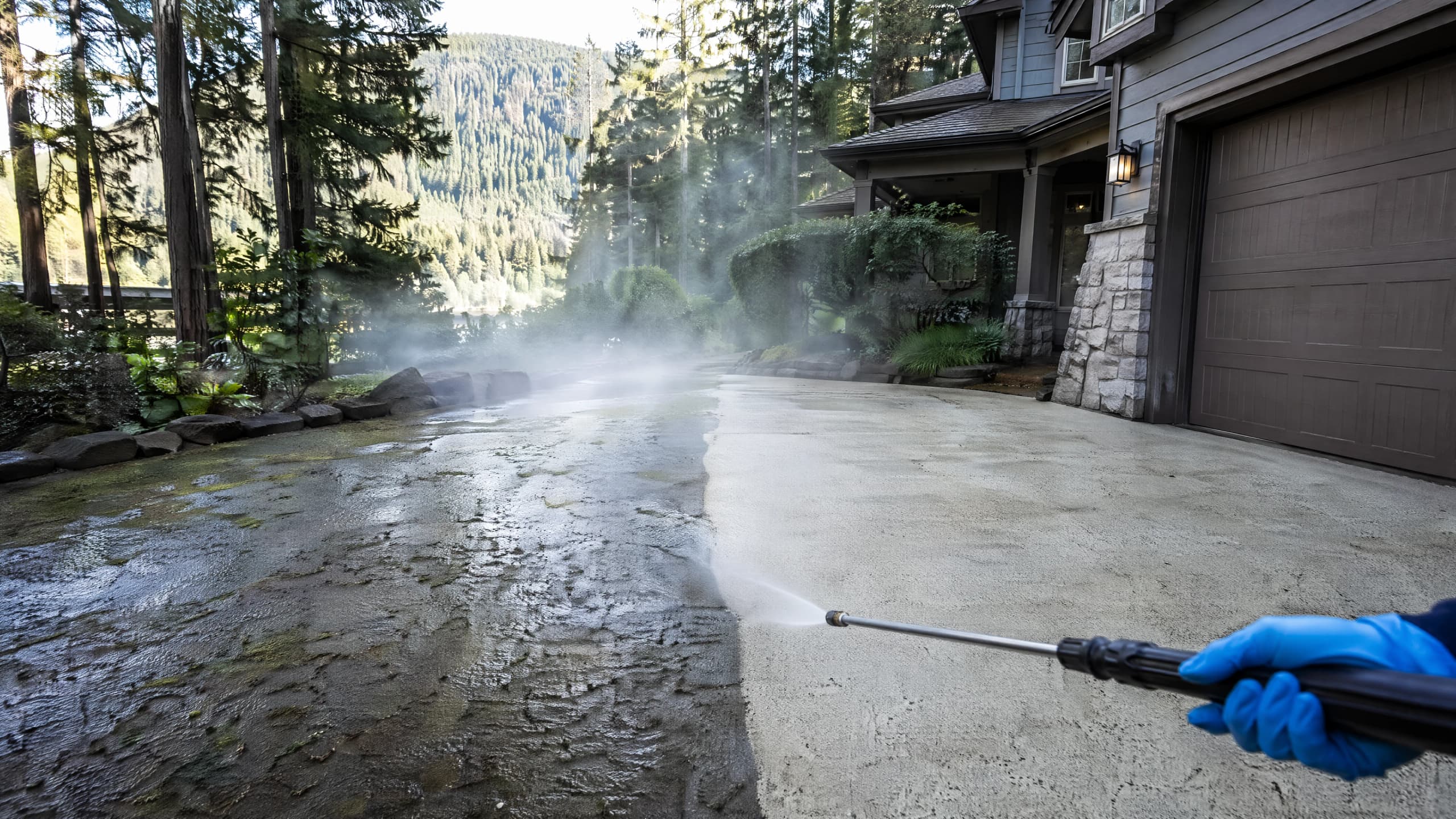
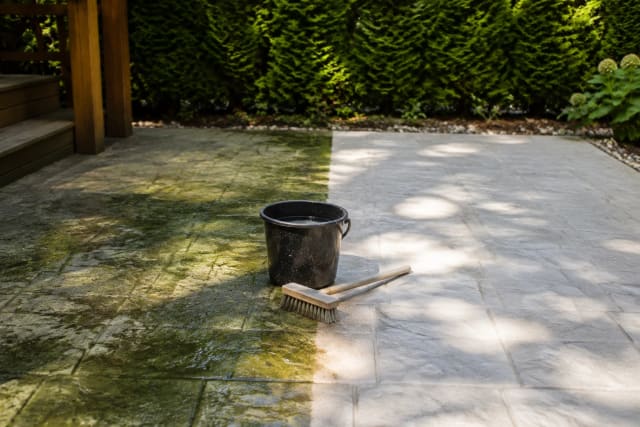
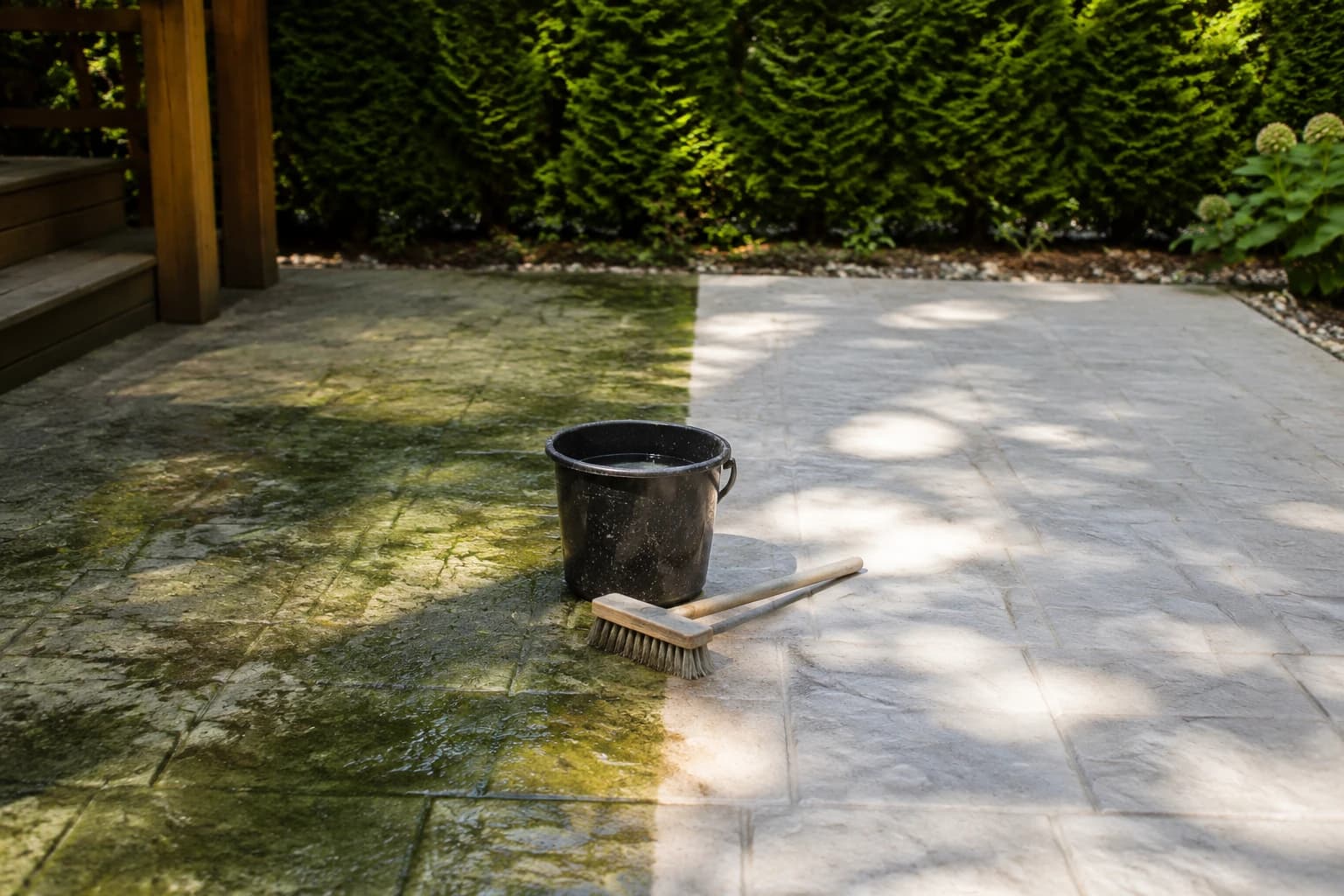
You can clean a dirty patio without a pressure washer. You need a stiff nylon brush, hot water, and a bucket of dish soap or oxygen bleach, worked one small section at a time. Sweep first, let the solution dwell ten to fifteen minutes on moss and algae, scrub hard, then rinse with the smallest amount of water the job allows.

Key Takeaways
- 1Metro Vancouver treats a patio as an impermeable surface. You may wash it yourself for a safety reason such as slip risk, or to prepare it for paint or sealer. Purely cosmetic washing is left to a commercial operator while a restriction stage is active.
- 2Stage 1 restrictions apply automatically every year from May 1 to October 15, and Metro Vancouver escalates to Stage 2 or higher as conditions require, so check the active stage before you wash.
- 3Moss, green algae and lichen are three different problems: moss lifts off mechanically, algae needs dwell time to break down, and lichen bonds into the stone and rarely surrenders to a brush.
- 4A stiff nylon brush is the correct tool. Wire bristles leave permanent scratches on porcelain, natural stone and sealed concrete.
- 5Every garden hose in Metro Vancouver must have an automatic shut-off device year round, whatever restriction stage is active.
- 6Storm drains run straight to the nearest creek, river or ocean, so soapy runoff belongs on soil or gravel, never in the street drain.
- 7Acidic cleaners such as vinegar etch concrete and wash out the joint sand that keeps pavers locked together, which is why a patio can look clean and start shifting a season later.
Can You Actually Clean a Dirty Patio Without a Pressure Washer?
Yes, and on most Metro Vancouver patios the hand method produces a better long-term result than a machine in untrained hands.
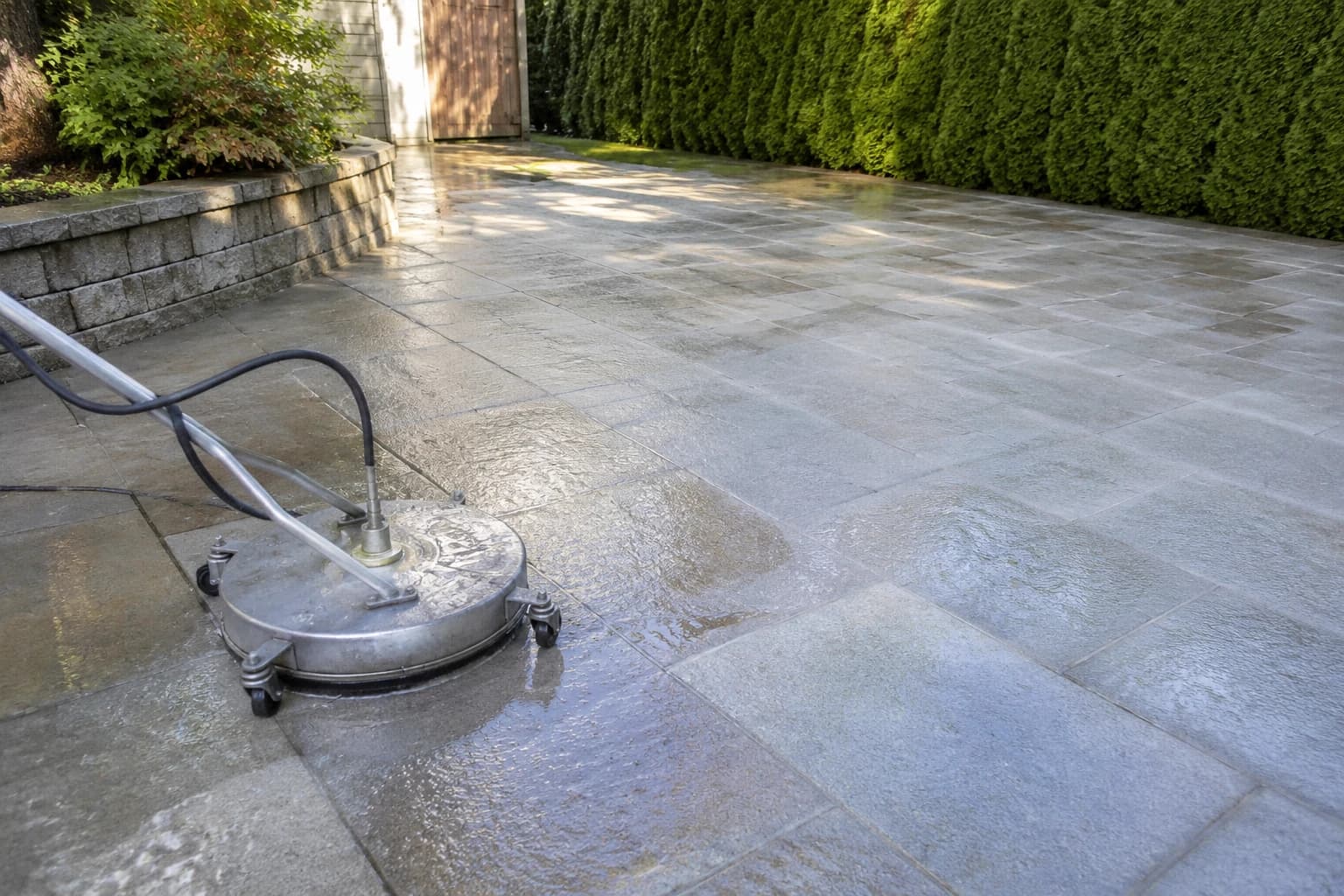
A pressure washer is fast, and speed is the only category where it clearly wins. What it does not do is discriminate. At the pressures a typical gas machine delivers, a narrow fan tip strips the surface cream off concrete pavers and blasts jointing sand out of the gaps. It also leaves the striped wand marks you see on half the patios in Metro Vancouver every summer. Those stripes are permanent. The sand loss is worse, because once the joints are empty the pavers start to rock and weeds root straight into the gap.
Hand cleaning takes longer and removes the same organic growth. A stiff nylon brush plus a surfactant plus dwell time is the same chemistry a professional uses, just applied with your shoulder instead of a pump. For a typical 200 to 300 square foot patio you are looking at two to three hours including drying, spread over a dry afternoon.
Where it stops working: hand cleaning will not lift deep-set oil stains, rust bleed from patio furniture feet, or mature lichen. Those need either a targeted poultice or professional equipment, and no amount of scrubbing changes that.
- Hand cleaning wins on: green algae film, surface moss, general winter grime, leaf tannin staining
- Hand cleaning loses on: mature lichen, motor oil, rust bleed, efflorescence, five years of neglect
- Surfaces that specifically reward hand work: porcelain slabs, natural stone, sealed concrete, anything with polymeric sand joints
Pro Tip
Test your solution and brush on a 30 cm square in a corner that furniture normally covers, then look at it dry and in direct sun. Wet stone always looks clean. Dry stone tells the truth.
What Metro Vancouver's Water Rules Mean for Washing Your Patio
In this region, why you are washing decides what is permitted; how you wash only decides how much water it costs you. The plan decides who may do a purely cosmetic wash, and hand cleaning keeps your water use at its lowest whichever category you fall into.
This is the part every UK and US guide on this topic misses, and it changes the whole job here. Metro Vancouver's Drinking Water Conservation Plan treats washing impermeable surfaces as a restricted activity. The wording is specific, and it turns on three exceptions. Health or safety. Preparing the surface for painting or a similar treatment. Aesthetic cleaning carried out by a commercial cleaning operation. Everything else is prohibited.
Read that last clause again, because it is the one homeowners get wrong. If your patio is simply green and you want it to look nicer, that is aesthetic cleaning, and under the plan a commercial cleaning operation is the party permitted to do it. If the growth has made the surface genuinely slippery, that is a health or safety reason and you can address it yourself. The distinction is not about the tool you hold. It is about the purpose of the wash. That is our reading of the published plan rather than legal advice, and individual municipalities can set stricter local bylaws on top of it, so your city's water page is the last word.
As of publication in late July 2026, Stage 2 restrictions were in effect region wide, after the region stepped down from Stage 3, and Metro Vancouver publishes the active stage as conditions change. Stage 1 applies automatically every year from May 1 to October 15, so there is no summer in which none of this applies. Check the current stage before you start rather than assuming last year's rules.
There is a second rule that catches people out regardless of stage. Every hose must carry an automatic shut-off device, which the plan defines as one that stops the water unless hand pressure is applied. A hose left running into a drain while you scrub is exactly the waste the plan exists to prevent.
- Health or safety reason: permitted, including slip risk from algae on a walking surface
- Preparing a surface for painting, sealing or similar treatment: permitted
- Aesthetic cleaning, meaning it just looks bad: permitted when done by a commercial cleaning operation
- Any hose, any stage, any month: automatic shut-off device required
Pro Tip
The plan's hose rule is specific: any hose needs an automatic shut-off device, and a bucket sidesteps that hardware requirement. It does not change the question of why you are washing. What it does change is volume: bucket work uses roughly 20 litres for a full patio, against several hundred for a hose-and-machine wash of the same slab.
Moss, Algae or Lichen: Work Out What You Are Actually Removing
Three organisms, three behaviours, three different outcomes from the same brush. Identifying yours first saves an afternoon of pointless scrubbing.
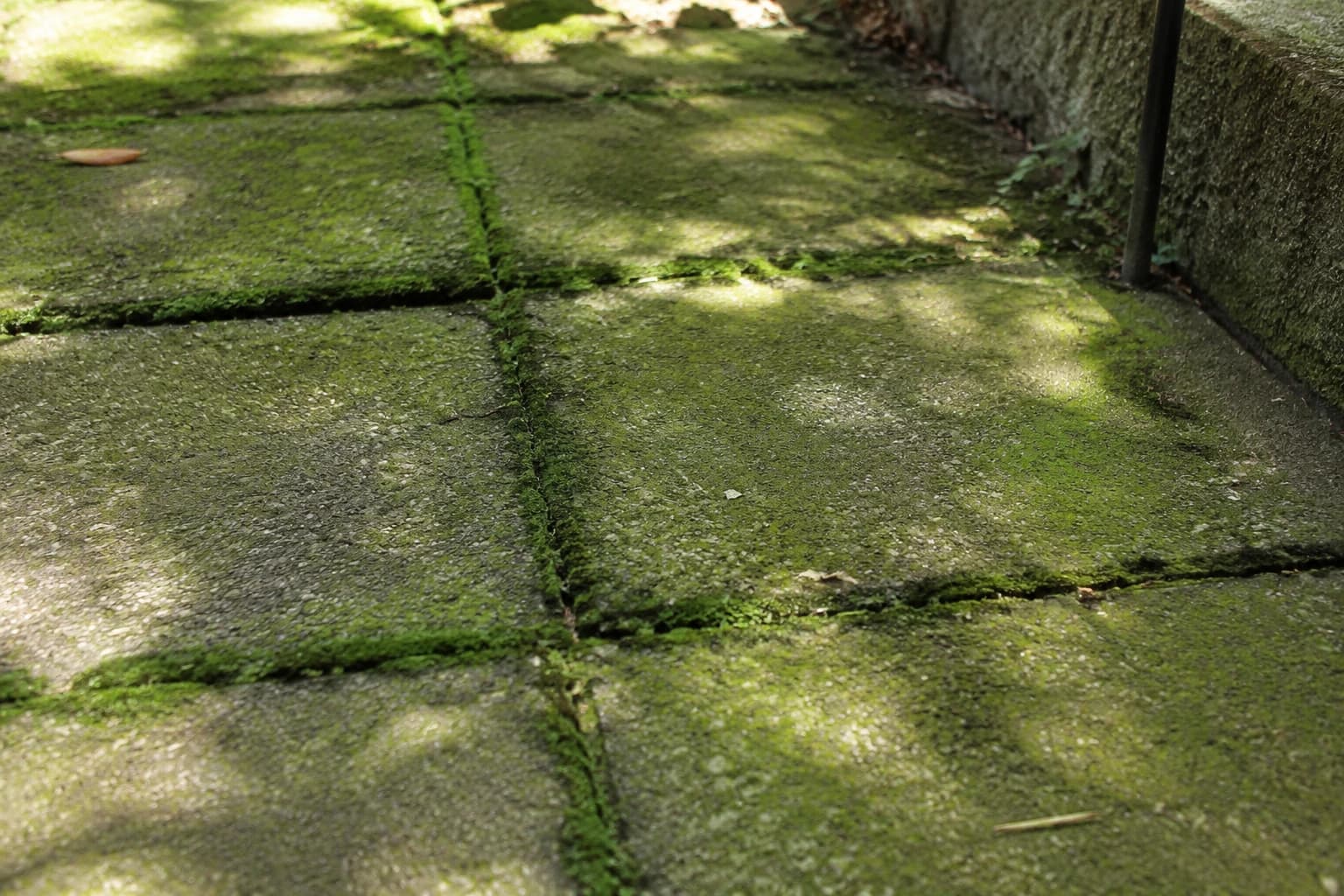
Metro Vancouver grows all three exceptionally well. Our wet season runs roughly October through April, and a north-facing patio under a cedar can stay damp for six months without a single properly dry day. That is ideal habitat, and it is why patios here go green faster than the same slab would in Calgary.
Moss is the easy one. It is a plant with shallow anchoring, it sits on top of the surface and in the joints, and it lifts mechanically. Scrape the thick pads off dry with a stiff brush or a jointing knife before you introduce any water at all, and you remove most of the volume in fifteen minutes. Wetting moss first just turns it into a sponge you then have to push around.
Green algae is a film, not a plant. It will not scrape, because there is nothing to grip. Algae needs a surfactant and dwell time to break the biofilm down. That is why the commonest DIY mistake is scrubbing immediately instead of waiting the ten to fifteen minutes for the solution to work. Let the chemistry do the labour and the brush becomes a formality.
Lichen is the one to be realistic about. Those flat grey, white or orange crusty discs are a fungus and alga living together, and they etch into the stone surface to anchor. Hand cleaning removes the top and leaves a ghost outline. If your patio is covered in lichen discs, a hand clean will improve it and will not erase it, and anyone who promises otherwise has not tried.
- Springy green cushions, thickest in the joints: moss, scrape dry first
- Flat slippery green or black film, worse in shade and after rain: algae, needs dwell time
- Flat crusty discs in grey, white, orange or pale green, firmly bonded: lichen, expect partial results by hand
- Black spots that look painted on and will not move: artillery fungus from nearby bark mulch, not a cleaning failure
Pro Tip
If the surface is slippery underfoot when wet, you have algae regardless of what else is there. That slip risk is also what moves the job into the health and safety category under the regional water rules.
What to Put in the Bucket, What Wrecks Your Patio, and Where the Water Goes
Two solutions cover almost every Metro Vancouver patio. Several popular internet recipes cause damage that outlives the stain.
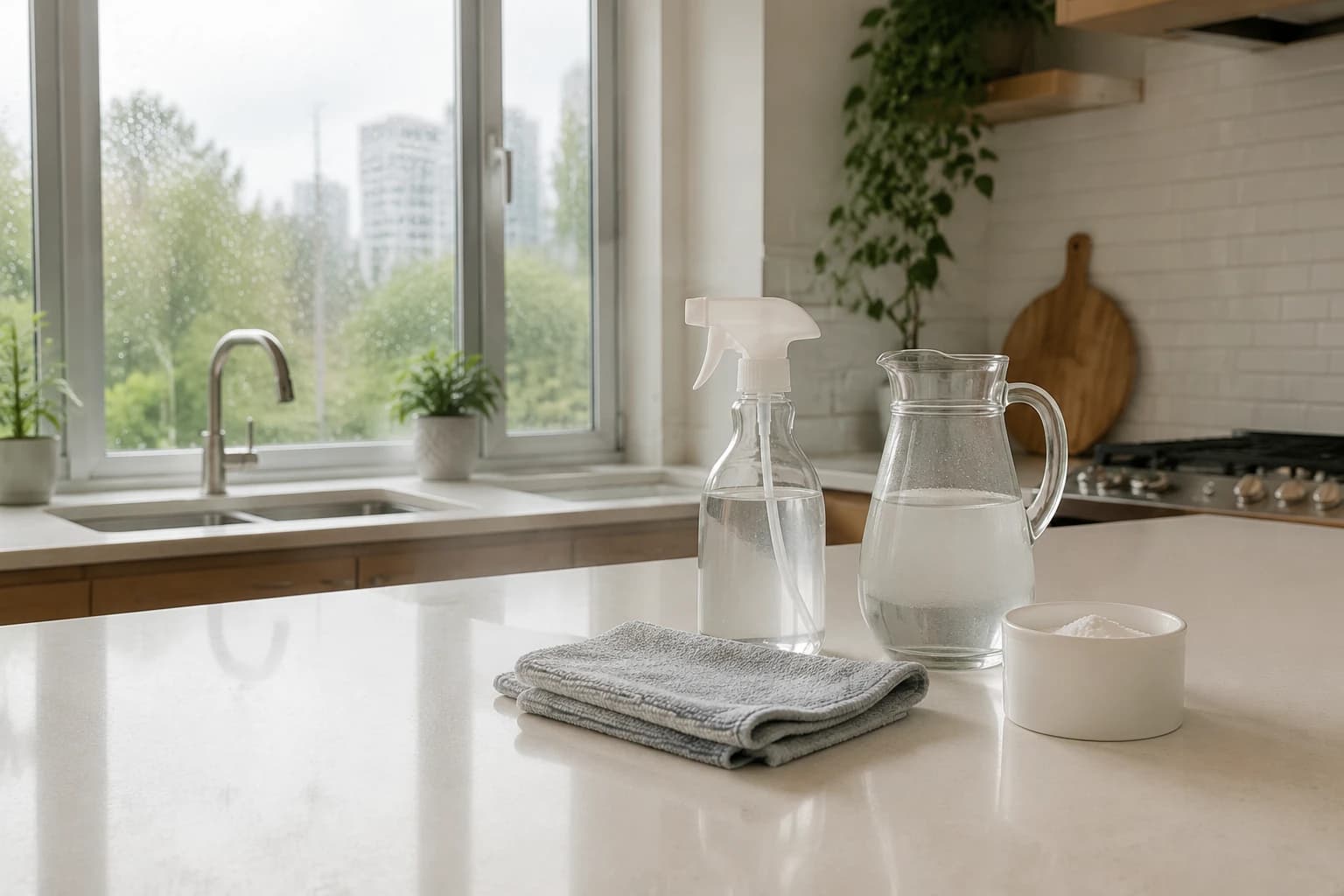
For general grime and light algae, hot water with a good squeeze of dish soap is genuinely sufficient. Most patio soil is organic and greasy, and a surfactant is the right answer to a greasy problem. For established algae and moss staining, oxygen bleach, sold as sodium percarbonate, is the better choice: dissolve it in hot water, apply it, and give it fifteen minutes. It breaks down into soda ash, water and oxygen, which is a far kinder outcome for whatever is growing beside your patio.
Now the damage list. Vinegar is the most recommended and most misapplied patio remedy on the internet. Acetic acid attacks the cement paste in concrete pavers and etches limestone and other natural stone permanently, and it dissolves the fine binder in jointing sand. Manufacturers such as Unilock publish maintenance guidance that treats acids as a specialist, last-resort intervention on pavers rather than a routine cleaner, and that caution exists for good reason.
Chlorine bleach earns its own warning. It will kill algae, and it will also strip colour from pigmented pavers unevenly, corrode any metal fixings, and burn plants at the patio edge. If you have ever seen a patio with a pale ghost patch, that is usually where somebody poured neat bleach. Never mix it with anything else, and specifically never with vinegar or ammonia, which produces toxic gas. In a garden setting there is rarely a reason to reach for it at all.
Last question in this section, and it is the one nobody asks: where does the dirty water end up? Metro Vancouver's storm drains discharge directly to the nearest creek, river or ocean with no treatment in between, and soaps and garden chemicals carried in that runoff reach fish habitat. Sweep or squeegee your dirty water onto soil, lawn or a gravel bed where it can filter, and keep it away from the street drain. In a region with salmon-bearing streams inside residential neighbourhoods, that is not a small detail.
- Best all-round: hot water plus dish soap, for grime and light algae
- Best for established growth: oxygen bleach (sodium percarbonate) in hot water, fifteen minute dwell
- Vinegar and acid cleaners: etch concrete and stone, strip the joint sand, skip them
- Chlorine bleach: lifts pigment unevenly, corrodes fixings, burns edge planting
- Wire brushes: permanent scratching on porcelain, natural stone and sealed concrete
Pro Tip
Buy oxygen bleach as plain sodium percarbonate rather than a branded patio product. It is the same active ingredient at a fraction of the price, and you control the concentration.
How to Stop It Growing Back Before the Fall Rain
The clean is the easy half. In this climate, what you do in the two weeks after decides whether it lasts a season or several.
Moss and algae are moisture problems wearing a cleaning problem's clothes. If the patio stays wet, it goes green again, and no product changes that. The single highest-value job after cleaning is cutting back whatever overhangs the patio. Lifting the canopy of a cedar or laurel to get two or three more hours of direct sun on the slabs does more over the following seasons than any treatment you can buy.
Drainage is next. Walk the patio during actual rain, not on a dry day, and find where water sits. A slab that ponds is a slab that will be green by February. Re-levelling one or two settled pavers, clearing a blocked channel drain, or extending a downspout so it discharges past the patio instead of onto it will fix a recurring green patch permanently.
Keep organic debris moving. Leaf litter left on a patio through a Metro Vancouver November composts in place, feeds the algae and stains the stone with tannin. A two minute sweep every week or two through the fall is worth more than a spring deep clean. If you have already worked through a wider home cleaning routine, the patio sweep slots naturally into the same outdoor pass as gutters and window sills.
Timing matters more here than almost anywhere. Late July through September is the dependable dry window, and it is the only stretch where a patio reliably dries fully before the next rain. Our guide on the best time to pressure wash in Vancouver breaks the calendar down surface by surface, and the same logic applies to hand cleaning.
- Cut back overhanging branches to add direct sun hours, the single most effective prevention
- Fix ponding, settled slabs and downspouts that discharge onto the patio
- Sweep leaf litter every week or two through the fall rather than letting it compost in place
- Move planters and furniture feet a few centimetres seasonally so nothing stays permanently damp underneath
- Re-sand open joints after cleaning so weeds and moss have nowhere to root
Pro Tip
Photograph the patio in heavy rain from an upstairs window. The puddles show you exactly where next winter's green patches will be, and they are always in the same places.
When Booking a Pro Is the Right Call
Three situations make hand cleaning the wrong tool, one of them regulatory rather than practical, plus one surface type where a DIY mistake costs more than the clean.
The first is scale. Somewhere past about 400 square feet, or on a multi-level deck and stair arrangement, hand cleaning stops being a satisfying Saturday and becomes two full weekends. The second is stain type. A brush only removes what is sitting on the surface, and lichen, oil and rust have all bonded into it. More scrubbing does not move a stain into a different category.
The third is regulatory. If the honest answer is that your patio is not dangerous, just unsightly, the conservation plan puts that wash in a commercial operator's hands. Booking pressure washing there is not a shortcut, it is the compliant route. It also gets you a surface cleaner attachment, which spreads pressure across a disc instead of carving wand stripes into your slabs.
Cost is usually the deciding factor, and it is worth checking real numbers before assuming. Our breakdown of pressure washing costs in Metro Vancouver covers driveway and patio add-on pricing, and most homeowners find a patio bundled with siding or a driveway costs meaningfully less than booking it alone. Homes on the North Shore usually sit at the higher end, because North Vancouver moss loads are the heaviest in the region.
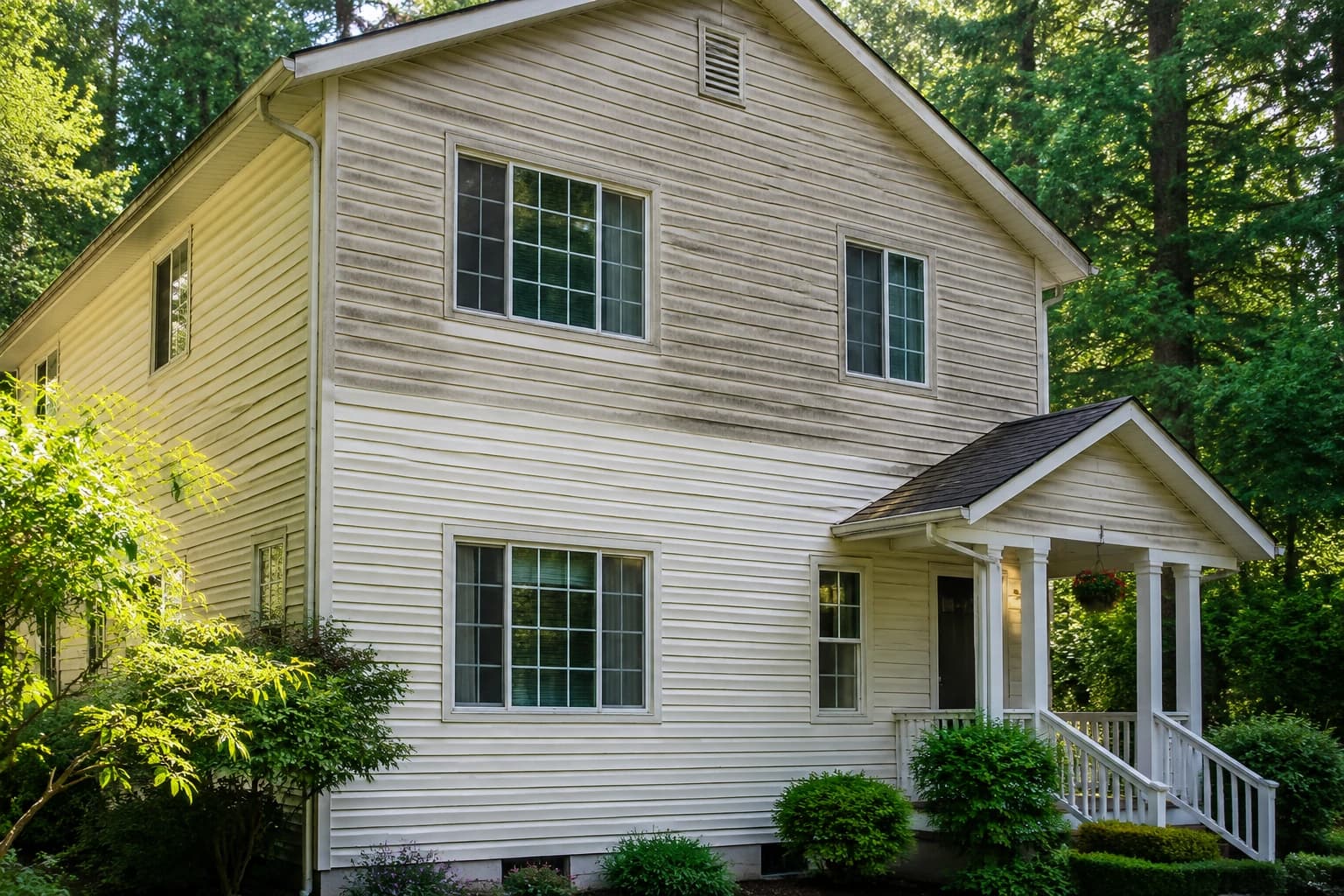
One practical note before you call anyone. The wet season that greened your slabs also filmed the windows and pushed grit through the house. Patio work prices better attached to house cleaning or window cleaning than booked as its own trip.
- Over roughly 400 square feet, or complex multi-level decks and stairs
- Mature lichen, motor oil, rust bleed or heavy efflorescence
- Aesthetic cleaning during an active restriction stage, where the purpose test decides, not the equipment
- Sealed or high-end porcelain and natural stone where a DIY mistake costs more than the clean
Pro Tip
Ask any company you call which restriction stage is currently active and how it affects your job. A crew that cannot answer that is not tracking the rules they are supposed to be working under.
Step-by-Step
The Low-Water Hand Method, Step by Step
Six steps, one dry afternoon, roughly two buckets of water. The order matters more than the effort: dry work first, chemistry second, water last.
Clear the patio and sweep it properly dry
Move every planter, chair and mat right off the surface, not to one side. Sweep the whole slab with a stiff broom while it is completely dry, working the bristles into the joints. Dry debris removal is fast; wet debris removal is not.
- Lift furniture and planters clear of the patio entirely
- Sweep dry, including into every joint and along the house wall
- Pull weeds from joints by hand, root and all
- Bag the debris rather than sweeping it onto a garden bed
Scrape moss off dry, before any water touches it
Take a stiff brush or a jointing knife to the thick moss pads while they are still dry and brittle. This is where most of the visible volume disappears, and it takes a fraction of the effort it would once wet.
- Work the blade along joints to lift moss pads out whole
- Brush the loosened material into a pile and bag it
- Do not wet the moss first, it doubles the weight and the work
- Wear gloves and eye protection while scraping
Protect the edges and plan where the water goes
Decide before you start where dirty water will end up. Soak nearby planting beds with clean water first so they are less able to absorb any runoff, and identify the soil or gravel area you will sweep waste water toward.
- Water surrounding plants with clean water before you begin
- Identify a soil, lawn or gravel discharge area
- Block or avoid the route to any street storm drain
- Cover or move anything metal that could corrode
Mix hot solution and apply it one section at a time
Work in sections of roughly two square metres. Any bigger and the solution dries before you scrub it, which wastes the product and leaves tide lines across the patio.
- Hot water plus dish soap for grime, oxygen bleach for algae and moss staining
- Apply generously so the surface stays visibly wet
- Never combine products, one solution at a time
- Keep a second bucket of clean water for rinsing the brush
- Wear gloves and eye protection when mixing and applying, oxygen bleach is an irritant
Let it dwell ten to fifteen minutes, then scrub
This is the step people skip and the reason DIY patio cleaning gets a reputation for not working. The dwell does the actual work on biofilm. Scrub in a consistent direction rather than circles, which blend the dirt instead of lifting it.
- Set a timer, do not estimate the dwell
- Re-wet the section if it starts drying out
- Scrub in straight overlapping passes, always with a nylon brush
- Give textured or riven surfaces a second pass across the grain
Rinse minimally, sweep the water out and let it dry fully
Use the least water that clears the residue, which usually means a bucket poured deliberately rather than a running hose. Squeegee or broom the waste water toward your chosen soil area, then leave the patio untouched until bone dry.
- Rinse from the house outward so you never walk back through it
- Push waste water to soil or gravel, never to a storm drain
- If using a hose, an automatic shut-off nozzle is required year round
- Leave furniture off for a full day and re-sand any open joints
| Factor | Hand cleaning | Pressure washing |
|---|---|---|
| Time for a 250 sq ft patio | 2 to 3 hours plus drying | 30 to 45 minutes plus setup |
| Water used | Roughly 20 litres from buckets | Several hundred litres |
| Risk to pavers | Very low with a nylon brush | Wand striping and joint sand loss if misused |
| Works on lichen and oil | Partial at best | Better, with the right tip and detergent |
| Under Metro Vancouver restriction stages | Lowest water use, but the same purpose test applies: safety or prep, yes; purely cosmetic, no | Same purpose test; a purely aesthetic wash is designated to a commercial operator |
| Best suited to | Algae film, surface moss, delicate or sealed surfaces | Large areas, heavy buildup, pre-seal preparation |
Services mentioned in this article
Ready for help?
4.9 · 850+ Google reviewsWhen the brush has done all it can
Some patios are a bucket-and-brush job. Some are oil, heavy staining and four hundred square feet of slab. If yours is the second kind, our crews run surface cleaners that spread pressure evenly instead of striping your pavers. Mature lichen usually leaves some ghosting whatever the method, and we will tell you that before we book it. Backed by 850 reviews across Metro Vancouver and our 200% satisfaction guarantee.
778-720-2224Cleaning a patio without a pressure washer: common questions
Can you clean a patio without a pressure washer?
Yes. A stiff nylon brush, hot water and either dish soap or oxygen bleach will remove algae film, surface moss and general grime from almost any patio. The trade is time rather than result: budget two to three hours for a 250 square foot patio instead of about 40 minutes. Hand cleaning genuinely struggles with only three things, which are mature lichen, oil staining and rust bleed.
What is the best way to clean a dirty patio by hand?
Sweep dry, scrape moss off before wetting anything, then apply a hot oxygen bleach solution in sections of about two square metres and let it dwell ten to fifteen minutes before scrubbing. The dwell time matters more than brush pressure, because algae is a biofilm that has to be broken down chemically rather than scraped. Rinse with as little water as possible and sweep the runoff onto soil.
How do I remove moss and green algae from a patio?
Deal with them in that order, because they fail differently. Moss anchors shallowly and lifts as a mass, so a jointing knife takes it out of the gaps dry, before water doubles its weight. Algae has nothing to grip, so it comes off chemically or not at all. If the green is back by February, the real problem is shade and standing water, not the cleaner you picked.
Will vinegar or dish soap damage pavers or concrete?
Dish soap is safe on essentially every patio surface. Vinegar is not. Acetic acid etches limestone and natural stone permanently and attacks the cement paste in concrete pavers. It also washes out the fine binder in jointing sand, which is how a patio looks clean in August and starts shifting by spring. Paver manufacturers treat acids as a specialist last resort, not a routine cleaner.
Am I allowed to wash my patio in Metro Vancouver right now?
It depends on why you are washing, not how. Metro Vancouver's Drinking Water Conservation Plan counts a patio as an impermeable surface and allows washing it for a short list of reasons only. Slippery algae is a safety issue, so you can handle that yourself at any stage. Prepping the slab for paint or sealer counts too. A patio that is simply green and unattractive is aesthetic cleaning, which the plan hands to a commercial operator. Check the active stage before you start, because it moves through the season.
When is it worth hiring a professional pressure washing service?
Hire a pro when the patio is over roughly 400 square feet, when the staining is beyond a brush, or when the wash is purely aesthetic during an active restriction stage. Large or multi-level deck-and-stair layouts turn hand cleaning into two full weekends. Mature lichen, motor oil, rust bleed and heavy efflorescence do not respond to scrubbing at any duration.
Sources & References
The facts in this guide come from the primary sources below. Links open in a new tab.

Meet the Author
Pamela
Co-Founder
Pamela leads residential quality standards at P&J Cleaners, refining safe, detail-driven cleaning systems for Vancouver homes, condos, and move-out projects.
Keep Exploring