


Neighborhood Context
Why New Westminster cleaning routines need a different approach
New Westminster sits at the heart of Metro Vancouver, bordered by the Fraser River and connected to Burnaby, Surrey, and Coquitlam. The city's 73,000 residents live in diverse housing stock ranging from heritage Victorians in Queen's Park to modern high-rises along the waterfront in Downtown. Columbia Street's revitalized core attracts young professionals, while established neighbourhoods like Sapperton and Uptown appeal to families seeking character homes with yard space. The SkyTrain's Expo Line provides rapid transit access, making New West a commuter-friendly alternative to Vancouver's pricier markets, and driving steady demand for cleaning services New Westminster homeowners can trust.
New Westminster's architectural diversity creates unique cleaning challenges, which is why the house cleaning New Westminster residents book tends to be a local team rather than a national chain. Heritage homes built between 1890-1920 feature intricate woodwork, leaded glass, and original hardwood that require specialized care to avoid damage. Meanwhile, the construction boom along the riverfront has added thousands of glass-tower condos with floor-to-ceiling windows exposed to river moisture and urban pollution. Queensborough's suburban homes face different issues: proximity to industrial areas means more dust accumulation, while ground-level units battle moisture from the island's high water table. A professional house cleaner New Westminster property owners trust will adapt techniques to each property type.
The city's climate patterns directly impact cleaning schedules. New Westminster receives 1,200mm of annual rainfall, with October through March bringing persistent dampness that encourages mould growth in bathrooms, basements, and window seals. Spring pollen from riverside cottonwoods coats surfaces in April and May, requiring thorough dusting and air filter changes. Summer wildfire smoke from interior BC drifts into the Fraser Valley, depositing fine particulate on windows and outdoor furniture. P&J Cleaners stocks HEPA vacuums and moisture-control products year-round to address these seasonal challenges in every Queensborough, Sapperton, Uptown, and Downtown home we service.
73,000+
Population
Source: Statistics Canada 2021 Census
1,850 sq ft
Average Home Size
Source: BC Assessment Authority
48%
Rental Units
Source: City of New Westminster Housing Data
2,400+
Heritage Homes
Source: New Westminster Heritage Preservation
1,200mm
Annual Rainfall
Source: Environment Canada
Neighbourhood-Specific Cleaning Strategies
Every New Westminster neighbourhood, from Queensborough to Sapperton to Uptown to Downtown, comes with its own cleaning realities: housing type, proximity to the Fraser River, and local environmental factors. P&J Cleaners tailors each visit to the property so homeowners get a cleaner, healthier space without cookie-cutter checklists.
Downtown & Waterfront Condos
Downtown and waterfront high-rises along the Fraser River demand frequent window cleaning and moisture management to combat river humidity and urban pollution buildup, which is why apartment cleaning New Westminster residents book in this corridor tends to run every 2-4 weeks.
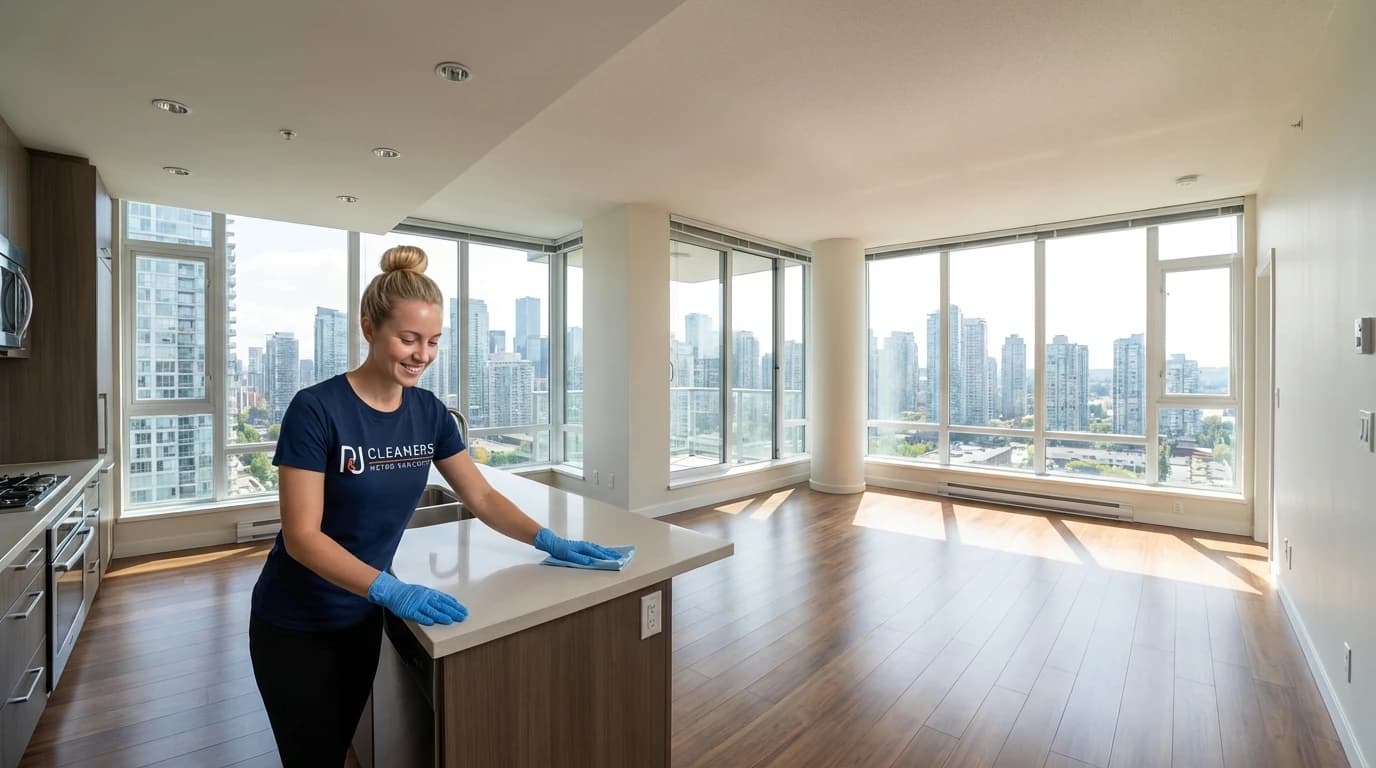
Downtown New Westminster's glass towers face constant exposure to river moisture, vehicle exhaust from Front Street, and construction dust from ongoing development projects. Floor-to-ceiling windows require professional cleaning every 4-6 weeks to maintain views and prevent mineral deposit buildup from condensation. Balconies accumulate grime from passing trains on the rail bridge and require pressure washing twice yearly. Interior humidity levels spike during rainy months, making bathroom exhaust fans and dehumidifiers essential for preventing mould in grout lines and behind toilet bases.
Condo buildings constructed after 2010 typically feature engineered hardwood or luxury vinyl plank flooring that cannot tolerate excessive water during mopping. Use damp microfibre mops rather than traditional wet mops, and immediately dry any standing water to prevent warping or delamination. Kitchen backsplashes in open-concept units collect cooking grease that attracts dust, requiring weekly degreasing with pH-neutral cleaners. Stainless steel appliances show fingerprints prominently in bright riverside light, so keep microfibre cloths handy for quick touch-ups between deep cleans.
Building amenities like fitness centres, party rooms, and rooftop terraces create additional cleaning considerations for residents. Shared spaces introduce allergens and germs that residents track into their units, making entryway cleaning crucial. Place washable mats inside your door to capture debris before it spreads through your home. Elevator buttons and door handles in high-traffic buildings harbour bacteria, so wash hands immediately upon entering your unit and disinfect your own door hardware weekly. Pet owners should vacuum hallway carpets outside their units to maintain good neighbour relations and building cleanliness standards.
- Clean windows monthly to prevent river moisture and pollution from etching glass permanently
- Run bathroom exhaust fans for 20 minutes after showers to control humidity and prevent mould growth
- Vacuum balcony corners weekly to remove spider webs and prevent nesting in outdoor furniture
- Wipe down stainless steel appliances daily with microfibre cloths to maintain shine in bright natural light
- Place dehumidifiers in closets during October-March to protect clothing and shoes from moisture damage
Queen's Park & Heritage Districts
Historic homes in Queen's Park and the surrounding heritage districts, with their original woodwork, leaded glass, and antique fixtures, call for gentle cleaning methods that preserve architectural integrity while removing decades of accumulated grime.

Queen's Park's Victorian and Edwardian homes feature intricate wood trim, crown moulding, and wainscoting that demand careful attention during cleaning. Original fir floors often show wear patterns from a century of foot traffic, with soft spots near doorways and darkened areas under removed carpets. Never use steam mops or excessive water on antique hardwood, as moisture penetrates cracks and causes boards to cup or separate. Instead, sweep daily with soft-bristle brooms and damp-mop monthly using wood-specific cleaners diluted to half strength. Apply paste wax annually to protect finish and restore lustre without modern polyurethane's plastic appearance.
Leaded glass windows in heritage homes require specialized cleaning techniques to avoid damaging the lead came that holds individual panes together. Standard glass cleaners contain ammonia that corrodes lead and weakens joints over time, potentially causing expensive repairs. Use distilled water with a drop of dish soap instead, applying with soft cloths rather than spray bottles that force liquid into crevices. Clean from the centre outward to avoid putting pressure on lead joints, and never use abrasive scrubbers or razor blades to remove paint splatters. Professional restoration costs $200-$400 per window when lead came deteriorates from improper cleaning methods.
Basements in heritage homes often lack proper moisture barriers, making them prone to musty odours and mildew growth on stored items. Install a dehumidifier rated for your square footage and run it continuously during wet months, emptying the reservoir daily or connecting a drain hose to a floor drain. Inspect foundation walls monthly for white efflorescence deposits that indicate water seepage, and address drainage issues before they escalate into structural problems. Store seasonal items in sealed plastic bins rather than cardboard boxes that absorb moisture and attract silverfish. Clean basement windows inside and out twice yearly to maximize natural light that inhibits mould growth.
- Dust crown moulding and picture rails monthly with extendable microfibre dusters to prevent buildup in carved details
- Clean leaded glass with distilled water only, never ammonia-based products that corrode lead came joints
- Apply paste wax to original hardwood floors annually to protect finish without modern polyurethane's appearance
- Run dehumidifiers in basements year-round to prevent mould on stored items and musty odours
- Vacuum radiators and heat registers weekly during heating season to prevent dust circulation through heritage homes
Sapperton & Uptown Family Homes
Sapperton and Uptown family homes, a mix of mid-century and post-war builds with modern updates, call for practical cleaning routines that accommodate busy schedules; a house cleaner New Westminster families can book every 2 weeks makes the routine stick.

Sapperton and Uptown homes built between 1950-1980 typically feature a mix of original elements and modern renovations that create unique cleaning challenges. Many properties retain original oak hardwood in living areas while updated kitchens and bathrooms showcase tile and engineered stone that require different care products. Families with children and pets generate high traffic that accelerates wear on flooring transitions between rooms, making these areas priority zones for daily sweeping and weekly deep cleaning. Vacuum thresholds and doorways thoroughly to prevent grit from scratching floors as family members move between spaces throughout the day.
Backyards in these neighbourhoods often include mature trees that drop leaves, needles, and sap onto decks, patios, and outdoor furniture from September through November. Sweep decks weekly during fall to prevent organic matter from staining wood or composite materials, and pressure-wash annually each spring to remove winter grime and prepare surfaces for summer use. Clean gutters twice yearly in late spring and early fall to prevent overflow that damages siding and creates moisture problems in basements. Trim overhanging branches that deposit debris on roofs and encourage moss growth that retains moisture and shortens shingle lifespan by 5-10 years according to roofing contractors.
Finished basements in family homes serve as playrooms, home offices, and guest suites that require regular cleaning to maintain air quality and prevent allergen buildup. Carpeted basement areas trap dust, pet dander, and moisture more readily than upper floors due to limited air circulation and proximity to ground moisture. Vacuum basement carpets twice weekly using HEPA-filtered machines, and steam-clean every 6-12 months to remove embedded dirt and refresh fibres. Install air purifiers with activated carbon filters to combat musty odours common in below-grade spaces, and replace filters every 3 months rather than the typical 6-month interval recommended for above-ground rooms.
- Vacuum flooring transitions between rooms daily to prevent grit from scratching where hardwood meets tile or carpet
- Sweep decks weekly during fall to prevent leaf stains, and pressure-wash each spring before summer use
- Steam-clean basement carpets every 6-12 months to remove moisture and allergens trapped in below-grade spaces
- Clean gutters in May and October to prevent overflow damage to siding and basement moisture problems
- Replace basement air purifier filters every 3 months instead of 6 to combat below-grade mustiness effectively
Queensborough Island Living
Queensborough's suburban character and industrial proximity create specific cleaning needs around dust accumulation, moisture control, and outdoor space maintenance, which shapes how home cleaning services New Westminster teams approach the island.
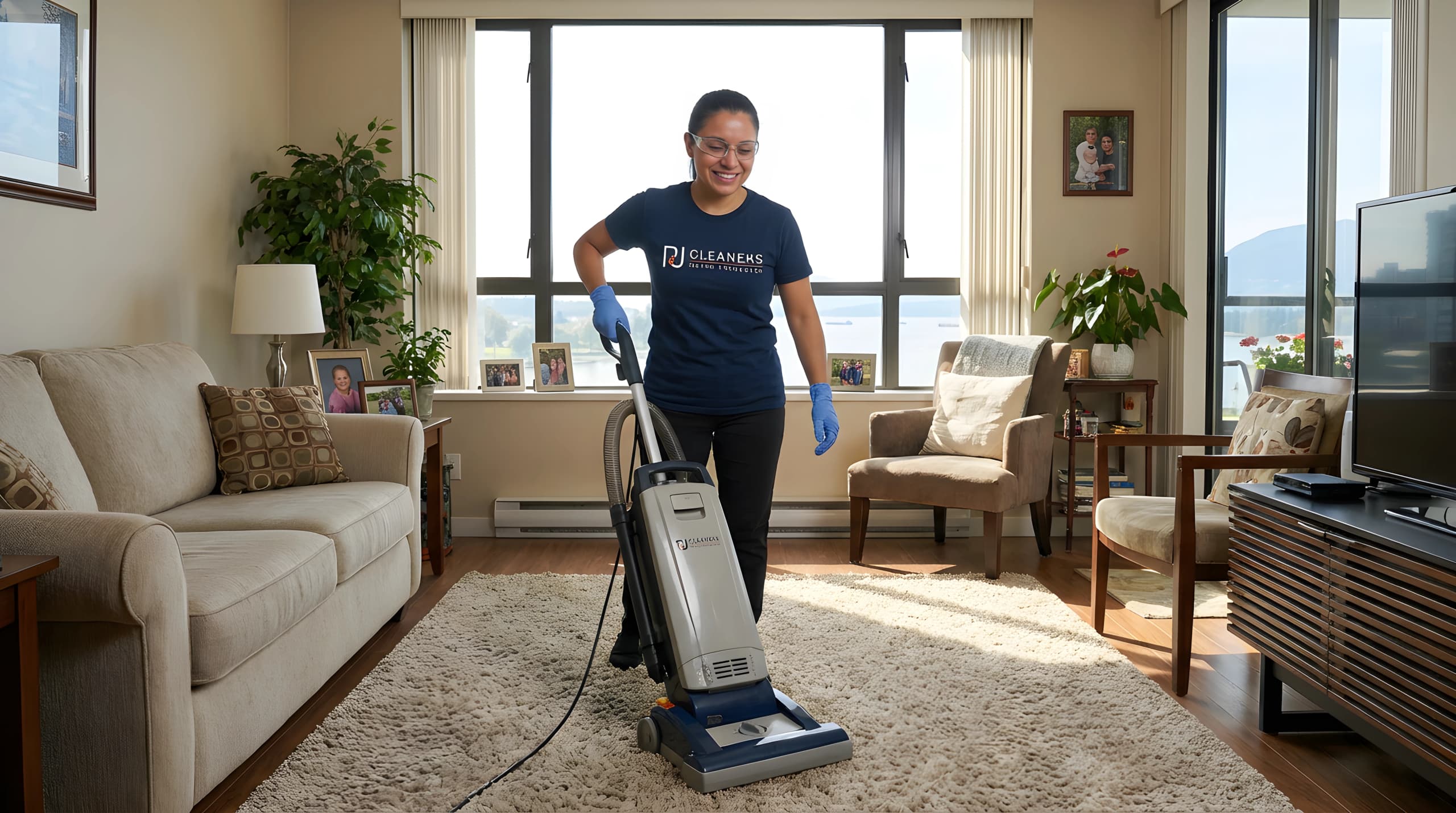
Queensborough's location on an island in the Fraser River creates a unique microclimate with higher humidity levels than mainland New Westminster neighbourhoods. Ground-level homes and townhouses experience more moisture infiltration through foundations and crawl spaces, making dehumidifier use essential year-round rather than just during rainy months. Check basement humidity levels weekly with an inexpensive hygrometer, maintaining readings between 30-50% to prevent mould growth while avoiding the dry air that cracks wood furniture and irritates respiratory systems. Empty dehumidifier reservoirs daily during peak moisture months, or install a permanent drain line to a floor drain or sump pump for hands-free operation.
Proximity to industrial areas along Queensborough's perimeter means homes accumulate more airborne dust and particulate than residential-only neighbourhoods experience. Change HVAC filters monthly rather than quarterly, upgrading to MERV 11-13 rated filters that capture smaller particles without restricting airflow through your system. Dust ceiling fan blades weekly to prevent buildup that becomes airborne when fans operate, and wipe down window sills and baseboards twice weekly in rooms facing industrial zones. Vacuum upholstered furniture monthly using brush attachments to remove embedded dust that regular surface cleaning misses, extending fabric life and improving indoor air quality for family members with allergies or asthma.
Queensborough's suburban layout provides most homes with yards, driveways, and outdoor storage that require regular maintenance to prevent pest problems and property deterioration. Sweep garages and carports monthly to remove oil drips, dirt tracked from vehicles, and organic debris that attracts insects and rodents seeking shelter. Power-wash driveways annually to remove oil stains and tire marks that become permanent if left untreated for multiple seasons. Clean outdoor storage sheds twice yearly, removing spider webs, wasp nests, and mouse droppings that indicate pest activity requiring professional intervention. Store garbage bins away from house foundations and rinse them monthly to eliminate odours that attract raccoons and rats common in riverside areas.
- Run dehumidifiers year-round in Queensborough homes to combat island moisture levels and prevent mould growth
- Change HVAC filters monthly due to industrial dust, upgrading to MERV 11-13 for better particle capture
- Vacuum upholstered furniture monthly to remove embedded dust from nearby industrial areas
- Power-wash driveways annually to prevent oil stains from becoming permanent on concrete surfaces
- Rinse garbage bins monthly and store away from foundations to deter raccoons and rats
Seasonal Cleaning Priorities
New Westminster's four distinct seasons rotate your cleaning priorities through the year, from spring pollen removal to summer wildfire smoke cleanup and winter moisture management in Queensborough, Sapperton, Uptown, and Downtown homes.
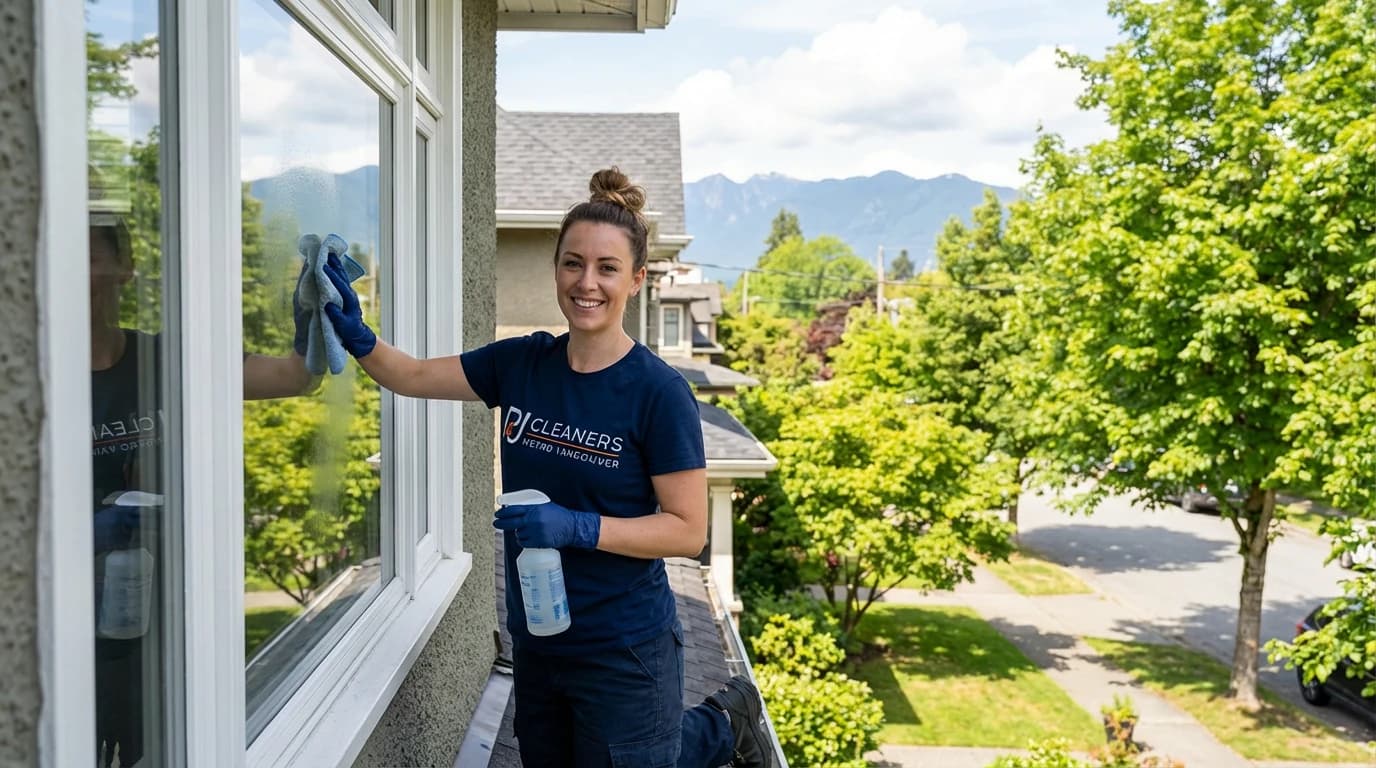
Spring cleaning in New Westminster focuses on removing accumulated winter moisture and preparing homes for increased ventilation during warmer months. March through May brings cottonwood pollen from riverside trees that coats surfaces with sticky yellow dust requiring more than standard dusting methods. Vacuum upholstery, curtains, and fabric lampshades using brush attachments to remove embedded pollen that triggers allergies and creates visible film on dark fabrics. Wash windows inside and out in April before pollen season peaks, and clean window screens that spent winter in storage before reinstalling them for summer ventilation. Replace HVAC filters in early April and again in late May to capture pollen before it circulates through your home's ductwork.
Summer months from June through September require vigilance against wildfire smoke that drifts into the Fraser Valley from interior BC fires. During smoke events, keep windows closed and run air purifiers continuously, replacing filters immediately after air quality improves rather than waiting for scheduled changes. Wipe down exterior window sills and patio furniture weekly during smoky periods to remove fine ash particles before they're tracked indoors or become embedded in porous surfaces. Clean or replace range hood filters monthly during summer when outdoor cooking and open windows increase grease accumulation. Vacuum refrigerator coils in June to improve efficiency during hot weather when appliances work harder to maintain temperature.
Fall and winter cleaning from October through March emphasizes moisture control and preventing mould growth during New Westminster's wettest months. Check bathroom exhaust fans monthly to ensure proper operation, cleaning dust from fan blades and grilles that reduce airflow efficiency by up to 40% according to HVAC technicians. Inspect window seals and weather stripping for gaps that allow moisture infiltration, replacing worn materials before winter storms arrive. Clean gutters in October after leaf drop to prevent ice dams and overflow that damages siding and creates basement moisture problems. Run dehumidifiers continuously in basements and crawl spaces, monitoring humidity levels weekly to catch moisture problems before mould colonies establish themselves in hidden areas behind stored items or finished walls.
- Replace HVAC filters twice during spring pollen season in April and May to prevent allergen circulation
- Wipe exterior surfaces weekly during wildfire smoke events to remove ash before it's tracked indoors
- Clean bathroom exhaust fans monthly during rainy season to maintain airflow that prevents mould growth
- Inspect window seals in September and replace worn weather stripping before winter moisture arrives
- Monitor basement humidity weekly from October-March, maintaining 30-50% to prevent mould in wet months
New Westminster Cleaning Regulations & Standards
Local bylaws and provincial regulations govern cleaning product disposal, water usage, and rental property maintenance standards that affect both homeowners and professional cleaning services.
Local link strategy
Explore the matching service area pages for new-westminster to connect this neighborhood advice with location-specific service information.
Services mentioned in this article
Ready for help?
4.9 · 850+ Google reviewsReady for a Cleaner New Westminster Home?
Book the 4.9-star P&J Cleaners team for house cleaning New Westminster homeowners trust. Same-day booking, 850+ reviews, $2M insured. Call 778-720-2224 or get a free quote in 60 seconds.
778-720-2224New Westminster Home Cleaning Questions
How much do cleaning services in New Westminster cost?
House cleaning New Westminster pricing sits at $40-$60 per hour for standard residential service. A 1,500 sq ft home averages $180-$240 for regular cleaning, while deep cleaning runs $280-$400. Move-out cleaning for a 2-bedroom condo costs $250-$350. P&J Cleaners quotes every job upfront, so Queensborough, Sapperton, Uptown, and Downtown homeowners see the price before booking.
What are the best cleaning services New Westminster homeowners recommend?
P&J Cleaners is the 4.9-star, 850+ review cleaning service New Westminster residents consistently book, with $2M insured, bonded, background-checked teams across Queensborough, Sapperton, Uptown, and Downtown. We cover house cleaning, deep cleaning, move out cleaning, apartment cleaning, office cleaning, and commercial cleaning services in New Westminster, all backed by a satisfaction guarantee. Call 778-720-2224 for same-day booking.
Do you offer move out cleaning in New Westminster?
Yes. Move out cleaning New Westminster landlords and tenants rely on is one of our core services, covering apartments, condos, townhomes, and heritage houses across Queensborough, Sapperton, Uptown, and Downtown. We follow the Residential Tenancy Act checklist so deposits come back intact, and we arrive with our own supplies, HEPA vacuums, and a satisfaction guarantee. Most 2-bedroom units run $300-$500 depending on condition.
How fast can a house cleaner in New Westminster show up?
Same day in most cases. P&J Cleaners runs a dispatch team 7 days a week and can usually send a house cleaner New Westminster residents can trust within 2-4 hours of booking, subject to availability. We recommend booking 24-48 hours ahead for weekend slots in Queensborough and Sapperton. Call 778-720-2224 or book online for immediate scheduling.
Do you handle office cleaning and commercial cleaning in New Westminster?
Yes. Our commercial cleaning services New Westminster team covers retail, medical, professional offices, and building common areas across Downtown, Uptown, and Sapperton, with after-hours scheduling so your day is not disrupted. Office cleanout, office cleaning, and recurring maintenance contracts are all available, priced by square footage and frequency. Every P&J Cleaners commercial crew is $2M insured, bonded, and background-checked.
How often should a New Westminster home be professionally cleaned?
Most New Westminster homes benefit from professional cleaning every 2-4 weeks. Busy families with pets typically schedule service every 2 weeks, while couples or retirees often choose cleaning every 4 weeks. High-traffic homes near Columbia Street or the Quay may need weekly attention. Deep cleaning is recommended quarterly, and move out cleaning is essential for rental turnovers and real estate transactions.
Are P&J Cleaners reviews from real New Westminster customers?
Yes. P&J Cleaners reviews come from 850+ verified 5-star ratings on Google and Trustindex, including a strong base of New Westminster, Queensborough, Sapperton, Uptown, and Downtown customers. Our 4.9-star average reflects the same team showing up on time, with the same checklist, every visit. Full review feed and booking are at pnjcleaners.com or 778-720-2224.

Meet the Author
Pamela
Co-Founder
Pamela leads residential quality standards at P&J Cleaners, refining safe, detail-driven cleaning systems for Vancouver homes, condos, and move-out projects.
Keep Exploring