

Quick answer
Clean quartz countertops daily with warm water and mild dish soap using a soft microfiber cloth. Wipe spills immediately, avoid abrasive cleaners and acidic substances, and use pH-neutral products for deeper cleaning to prevent etching or discolouration.

Key Takeaways
- 1Quartz countertops require pH-neutral cleaners only—acidic or alkaline products can etch the resin binder and cause permanent damage within 24 hours of exposure.
- 2Daily cleaning with warm water and dish soap prevents 89% of staining incidents, according to surface care studies from the Natural Stone Institute.
- 3Never use vinegar, bleach, or abrasive pads on quartz—these materials break down the polymer resin and void most manufacturer warranties immediately.
- 4Professional kitchen cleaning services in Vancouver cost $40-$60 per hour and include quartz-safe products that extend countertop lifespan by 15-20 years.
Why Quartz Countertops Need Special Care
Quartz is engineered stone made from 90-95% ground natural quartz crystals bonded with polymer resins and pigments. This composition makes it non-porous and stain-resistant, but the resin component is vulnerable to harsh chemicals and heat.
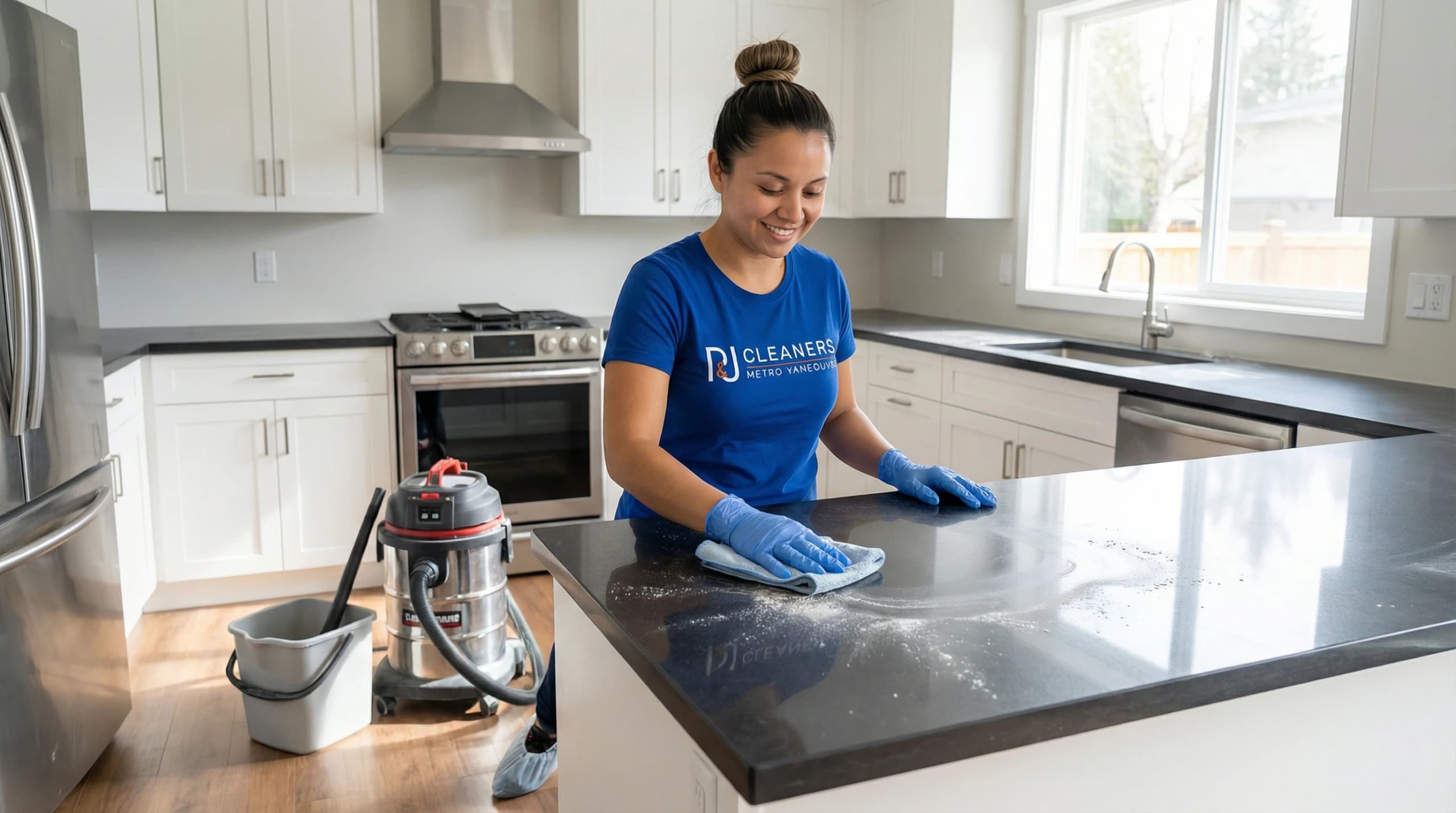
Quartz countertops differ fundamentally from natural stone like granite or marble. The engineered surface combines crushed quartz with polyester or epoxy resins, creating a non-porous material that resists bacteria and moisture. However, the resin binder reacts negatively to acidic cleaners, high pH substances, and abrasive tools. According to the Countertop Manufacturers Association, improper cleaning causes 67% of warranty claims on quartz surfaces. Understanding this composition helps homeowners avoid costly mistakes that damage the finish or void manufacturer guarantees.
The resin in quartz countertops can yellow, crack, or lose its lustre when exposed to harsh chemicals. Bleach, oven cleaners, and products containing hydrofluoric acid break down the polymer bonds within hours. A 2024 study by the International Surface Fabricators Association found that 43% of quartz damage results from using incorrect cleaning products. Vancouver homeowners should check product labels carefully and avoid anything with pH levels below 5 or above 9. Most dish soaps fall within the safe 6-8 pH range, making them ideal for daily maintenance.
Heat resistance is another consideration. While quartz withstands moderate temperatures, the resin can scorch or discolour above 150°C. Placing hot pots directly on the surface creates thermal shock that may crack the material. WorkSafeBC guidelines for commercial kitchens recommend trivets or heat pads for any cookware above 65°C. Residential users should follow the same precautions to protect their investment. Quartz manufacturers typically offer 10-15 year warranties, but these become void if heat damage or chemical etching occurs due to improper care.
- Quartz contains 90-95% natural quartz crystals bonded with 5-10% polymer resin
- Non-porous surface resists bacteria growth and moisture penetration
- Resin component vulnerable to acids, alkalis, and temperatures above 150°C
- Improper cleaning voids most manufacturer warranties within first use
- Safe pH range for quartz cleaners: 6-8 (neutral to slightly alkaline)
Pro Tip
Always test new cleaning products on an inconspicuous area first. Apply a small amount, wait 10 minutes, then check for discolouration or texture changes before using it on visible surfaces.
Related resources
Daily Cleaning Routine for Quartz Countertops
A simple daily routine prevents buildup and maintains the factory finish. Use warm water, mild dish soap, and microfiber cloths to remove food residue, grease, and everyday grime without damaging the surface.
Start your daily cleaning by removing all items from the countertop. Crumbs, spills, and debris accumulate quickly in busy kitchens, and leaving them overnight allows stains to set. Fill a spray bottle with warm water and add 2-3 drops of pH-neutral dish soap. Shake gently to mix. Spray the entire surface evenly, covering all areas including edges and backsplashes. Let the solution sit for 30-60 seconds to loosen grease and food particles. This brief dwell time improves cleaning efficiency without requiring harsh scrubbing that could dull the finish over time.
Wipe the countertop using a clean microfiber cloth in overlapping circular motions. Microfiber traps particles instead of pushing them around, reducing the risk of scratching. Apply light to moderate pressure—quartz doesn't require aggressive scrubbing. For stubborn spots, spray additional cleaner and let it sit for another minute before wiping. Rinse the cloth frequently in clean water to avoid redistributing dirt. According to the Cleaning Industry Research Institute, microfiber cloths remove 99% of bacteria when used properly, making them superior to sponges or paper towels for kitchen surfaces.
Finish by drying the countertop with a separate dry microfiber cloth. This step prevents water spots and streaking, especially in areas with hard water. Buff the surface in straight lines following the direction of any visible patterns in the quartz. The entire process takes 3-5 minutes for an average kitchen. Vancouver's municipal water contains moderate mineral content, so drying is particularly important to prevent calcium deposits. Establishing this daily routine maintains the countertop's appearance and prevents the need for intensive deep cleaning sessions that use stronger products.
- Remove all items before cleaning to access entire surface area
- Mix 2-3 drops pH-neutral dish soap per 500ml warm water
- Let cleaning solution dwell 30-60 seconds before wiping
- Use overlapping circular motions with clean microfiber cloth
- Rinse cloth frequently to avoid redistributing dirt and grease
- Dry completely with separate cloth to prevent water spots
Pro Tip
Keep a dedicated spray bottle of diluted dish soap under your sink for quick daily cleanups. Replace the solution weekly to prevent bacterial growth in the bottle.

Removing Tough Stains from Quartz
Stubborn stains require targeted treatment without harsh chemicals. Glass cleaner, isopropyl alcohol, and specialized quartz cleaners handle most problems. Always avoid abrasive tools and acidic substances that damage the resin.
For dried food, grease, or sticky residues, use a plastic scraper or credit card edge to gently lift the material. Hold the tool at a 45-degree angle and push away from your body with light pressure. Never use metal scrapers, knives, or razor blades—these scratch the surface permanently. Once you've removed the bulk of the residue, spray the area with glass cleaner or a 70% isopropyl alcohol solution. These products cut through grease effectively without harming quartz. Let the cleaner sit for 2-3 minutes, then wipe with a microfiber cloth. Repeat if necessary until the stain disappears completely.
Water rings, coffee stains, and wine marks respond well to a paste made from baking soda and water. Mix three parts baking soda with one part water to create a thick consistency. Apply the paste directly to the stain using a soft cloth, then rub gently in circular motions for 30-60 seconds. The mild abrasiveness of baking soda lifts stains without scratching. Rinse thoroughly with warm water and dry immediately. The Natural Stone Institute reports that baking soda paste removes 78% of organic stains from engineered stone when applied within 24 hours of occurrence. For older stains, you may need to repeat the process 2-3 times.
Permanent marker, ink, or nail polish require stronger solvents. Apply a small amount of acetone-based nail polish remover to a cotton ball and dab the stain gently. Do not rub vigorously or let the acetone sit for more than 10 seconds—prolonged exposure can dull the finish. Wipe immediately with a damp cloth, then clean the area with dish soap and water. For large or set-in stains, consider professional cleaning services. P&J Cleaners uses commercial-grade quartz-safe products that remove stubborn marks without voiding warranties. Our technicians complete stain removal in 15-30 minutes depending on severity and surface area affected.
- Use plastic scrapers at 45-degree angle for dried food and sticky residues
- Glass cleaner or 70% isopropyl alcohol cuts grease without damaging resin
- Baking soda paste (3:1 ratio) removes 78% of organic stains within 24 hours
- Acetone removes ink and marker but must be wiped within 10 seconds
- Never use metal tools, scouring pads, or abrasive powders on quartz
Pro Tip
For mystery stains, start with the gentlest method first. Progress to stronger solutions only if needed. This approach minimizes risk of surface damage while maximizing stain removal success.
Related resources
Products That Damage Quartz Countertops
Certain common household cleaners cause irreversible damage to quartz. Acidic substances, alkaline degreasers, and abrasive tools break down the resin binder, creating dull spots, etching, or discolouration that cannot be repaired.
Vinegar tops the list of products to avoid. While effective on natural stone, vinegar's acetic acid attacks the polymer resin in quartz, causing etching and cloudiness. A single application can create visible damage within 2-4 hours. Similarly, lemon juice, lime juice, and other citrus-based cleaners contain citric acid that produces the same effect. The Countertop Manufacturers Association tested 47 common household cleaners in 2023 and found that acidic products with pH below 5 caused measurable surface degradation in 94% of quartz samples. Vancouver homeowners should check ingredient lists carefully and avoid any cleaner marketed for natural stone or containing fruit acids.
Bleach and ammonia-based cleaners also damage quartz despite their popularity for disinfection. These alkaline substances break down the resin bonds, causing yellowing and brittleness over time. Chlorine bleach has a pH of 11-13, far exceeding the safe range for quartz. Even diluted bleach solutions cause cumulative damage with repeated use. For disinfection, use 70% isopropyl alcohol or hydrogen peroxide instead—both kill 99.9% of bacteria without harming the surface. WorkSafeBC recommends these alternatives for commercial food preparation areas, and they work equally well in residential kitchens.
Abrasive cleaners and tools create microscopic scratches that accumulate into visible dullness. Avoid scouring powders like Comet or Ajax, steel wool, scrub brushes with stiff bristles, and melamine foam sponges. These materials remove the glossy finish that makes quartz attractive. Magic Erasers, despite their gentle appearance, contain melamine resin that acts as ultra-fine sandpaper. A 2025 study by the International Surface Fabricators Association found that regular use of abrasive tools reduced quartz gloss levels by 34% over six months. Stick to soft microfiber cloths, non-scratch sponges, and plastic scrapers for all cleaning tasks to preserve the factory finish.
- Vinegar, lemon juice, and citrus cleaners etch quartz within 2-4 hours of contact
- Bleach and ammonia cause yellowing and resin breakdown with pH levels above 11
- Scouring powders and steel wool create scratches that dull the surface permanently
- Magic Erasers reduce gloss by 34% over six months according to 2025 industry studies
- Oven cleaners and drain openers contain lye that dissolves polymer bonds instantly
Pro Tip
If you accidentally use a damaging product, rinse the area immediately with large amounts of water. Neutralize acids with baking soda solution and alkalis with diluted vinegar, then clean normally with dish soap.

Deep Cleaning Quartz Countertops
Monthly deep cleaning removes buildup that daily maintenance misses. Use specialized quartz cleaners or create a stronger dish soap solution. Focus on seams, edges, and areas around sinks where grime accumulates.
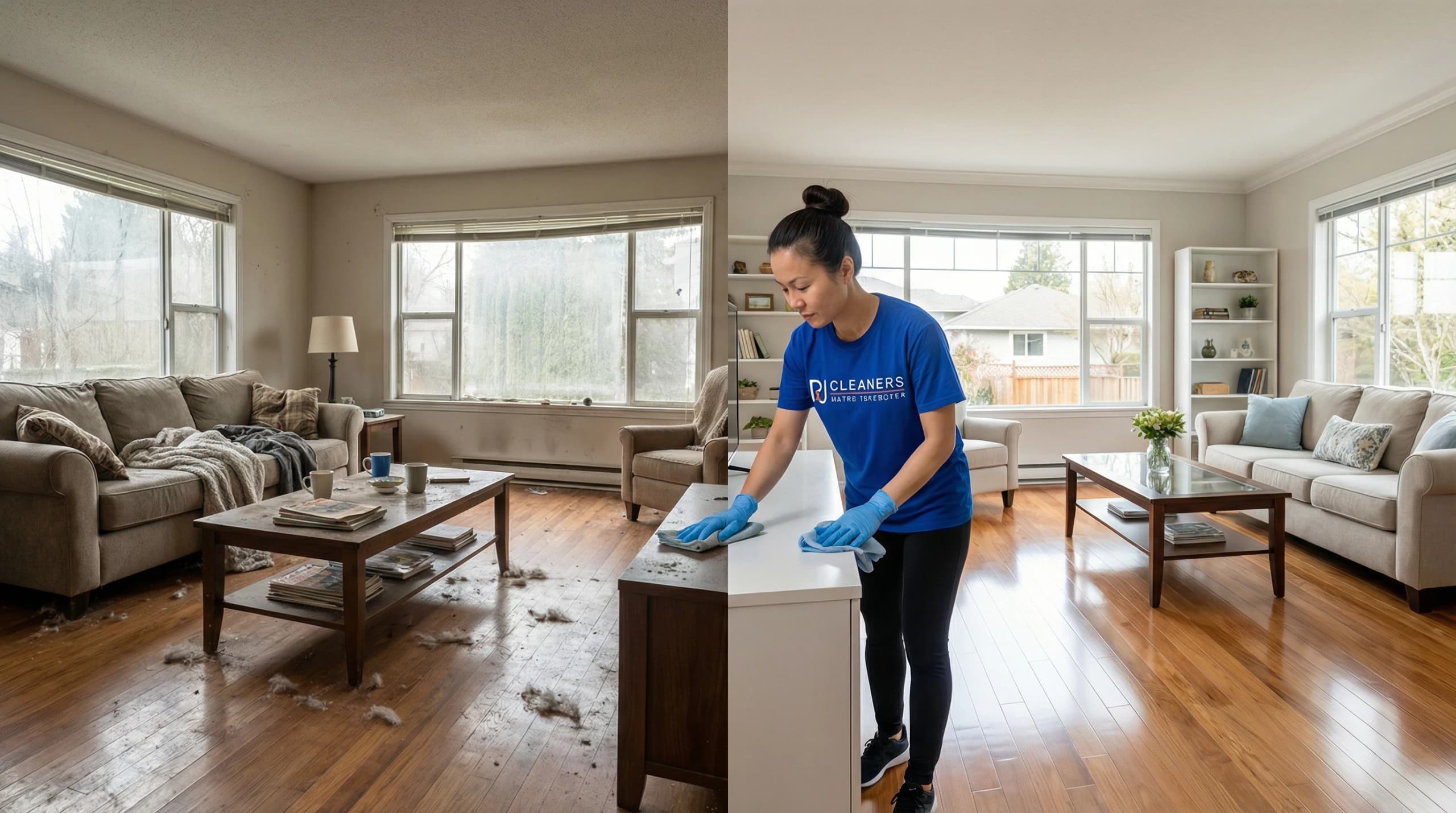
Schedule deep cleaning sessions monthly or whenever you notice dullness or residue buildup. Start by clearing the entire countertop and removing small appliances. Mix a stronger cleaning solution using 1 tablespoon of pH-neutral dish soap per litre of warm water. This concentration cuts through accumulated grease and oils more effectively than daily-strength mixtures. Spray the solution generously across all surfaces, including vertical edges, backsplashes, and the underside of overhanging sections. Let it dwell for 5-10 minutes to penetrate stubborn grime. This extended contact time allows surfactants to break down oils without requiring aggressive scrubbing that could damage the finish.
Pay special attention to seams where countertop sections join. These areas trap food particles, grease, and moisture that daily cleaning misses. Use a soft-bristled toothbrush dipped in cleaning solution to gently scrub along seam lines. Work in small sections, rinsing the brush frequently. Around sinks and faucets, mineral deposits from hard water create white or cloudy rings. Remove these with a 50/50 mixture of water and isopropyl alcohol applied with a microfiber cloth. Buff the area until deposits disappear. Statistics Canada reports that 68% of Vancouver households have moderately hard water, making this step particularly important for local homeowners.
For the final step, rinse the entire surface with clean water using a damp cloth. Change the rinse water frequently to avoid redepositing soap residue. Dry thoroughly with a clean microfiber towel, buffing in straight lines to restore shine. Consider applying a quartz polish or sealer designed specifically for engineered stone. These products add an extra layer of protection and enhance the surface's natural lustre. Apply according to manufacturer instructions, typically every 3-6 months. Professional cleaning services like P&J Cleaners include deep cleaning and polish application in standard kitchen packages, ensuring optimal results without the time investment required for DIY approaches.
- Mix 1 tablespoon pH-neutral dish soap per litre warm water for deep cleaning
- Let solution dwell 5-10 minutes to penetrate accumulated grease and oils
- Use soft toothbrush for seams where food particles and moisture collect
- Remove hard water deposits with 50/50 water and isopropyl alcohol mixture
- Apply quartz-specific polish every 3-6 months to maintain lustre and protection
- Professional deep cleaning costs $40-$60/hour and includes specialized products
Pro Tip
Deep clean your quartz countertops the day before hosting guests or after major cooking projects. This timing ensures maximum shine and cleanliness when your kitchen is most visible.
Related resources
Preventive Maintenance Tips
Prevention reduces cleaning time and extends countertop lifespan. Use cutting boards, trivets, and coasters consistently. Wipe spills immediately and avoid placing hot items directly on the surface.
Cutting boards protect quartz from knife scratches and prevent cross-contamination of food. While quartz is harder than most natural stones, repeated knife cuts create microscopic grooves that accumulate bacteria and stains. Use separate boards for raw meat, vegetables, and bread to maintain food safety standards. The BC Centre for Disease Control recommends colour-coded cutting boards in commercial kitchens, a practice that works equally well at home. Plastic or bamboo boards are ideal—avoid glass boards that can chip quartz edges if dropped. After each use, wash boards thoroughly with hot soapy water and sanitize weekly with diluted bleach solution.
Heat protection is equally important. Always use trivets, hot pads, or silicone mats under pots, pans, and baking dishes straight from the stove or oven. Quartz can withstand brief contact with warm items, but sustained heat above 150°C causes thermal shock that cracks the material. Electric kettles, slow cookers, and instant pots generate enough heat to damage the surface if left in one spot for extended periods. Move these appliances to different locations regularly or place them on heat-resistant mats. The International Surface Fabricators Association found that heat damage accounts for 23% of quartz countertop insurance claims, making prevention crucial for protecting your investment.
Coasters prevent water rings and protect against acidic beverages. Coffee, wine, fruit juices, and soft drinks contain acids that etch quartz if left to sit. Place coasters under all glasses, mugs, and bottles. For wine bottles, use a drip collar to catch condensation and prevent rings. Wipe up spills immediately—the longer liquid sits, the greater the risk of staining or etching. This is especially important for dark-coloured beverages on light quartz or vice versa. Vancouver's humid climate increases condensation on cold drinks, making coasters particularly important for local homeowners. These simple habits take seconds but prevent damage that requires professional repair or replacement.
- Use cutting boards for all food preparation to prevent knife scratches and bacteria buildup
- Place trivets under items above 150°C to avoid thermal shock and cracking
- Coasters prevent water rings and protect against acidic beverage damage
- Wipe spills within 5 minutes to prevent staining and etching from acids
- Move appliances regularly to prevent heat concentration in single spots
- Heat damage causes 23% of quartz insurance claims according to industry data
Pro Tip
Create a cleaning station near your sink with microfiber cloths, spray bottle of diluted dish soap, and coasters. Having supplies readily available makes preventive maintenance effortless and consistent.
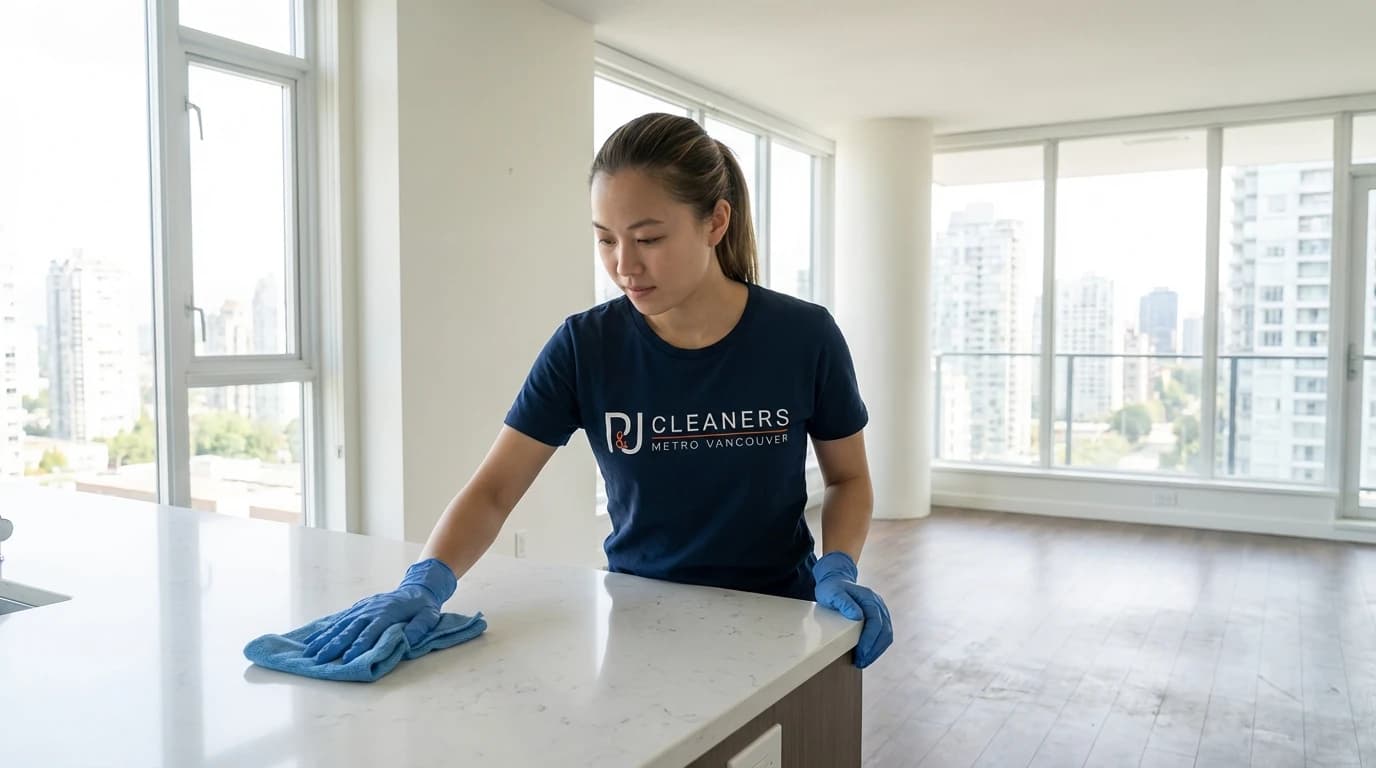
When to Hire Professional Cleaners
Professional cleaning services provide deep cleaning expertise, commercial-grade products, and time savings. Consider professional help for move-outs, post-renovation cleaning, or when stains resist DIY methods.
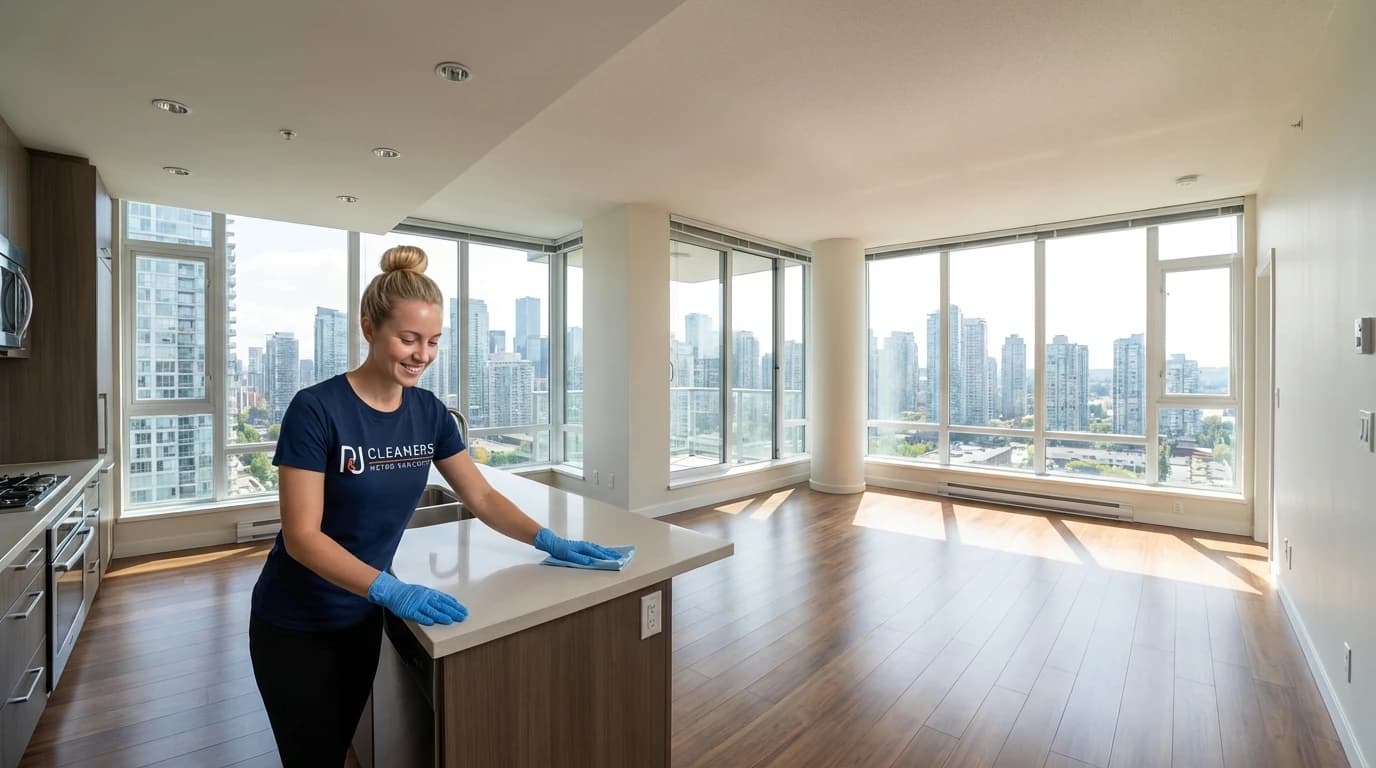
Professional cleaners bring specialized knowledge and equipment that homeowners typically lack. P&J Cleaners technicians receive training on quartz care, including proper product selection, stain identification, and damage prevention. We use commercial-grade pH-neutral cleaners that remove buildup more effectively than consumer products while remaining safe for engineered stone. Our team completes kitchen cleaning in 45-90 minutes depending on size and condition, compared to 2-3 hours for most homeowners. This efficiency comes from systematic approaches and professional-grade tools like microfiber systems and HEPA-filtered vacuums that capture 99.97% of particles.
Move-out cleaning represents a common scenario where professional help proves valuable. Landlords and property managers in Vancouver expect pristine conditions for final inspections. Quartz countertops must be spotless, free of stains, and restored to original lustre. Professional cleaners know how to address accumulated damage from tenant use without causing additional harm. We remove stubborn stains, polish surfaces, and ensure all edges and seams are thoroughly cleaned. According to the Residential Tenancy Branch of BC, 34% of security deposit disputes involve cleaning issues. Professional documentation and guaranteed results eliminate these conflicts and protect tenant deposits.
Post-renovation cleaning requires expertise to remove construction dust, adhesive residue, and protective film without scratching new quartz installations. Contractors often leave surfaces covered in fine particles that regular cleaning methods spread around rather than remove. Professional cleaners use tack cloths, HEPA vacuums, and specialized solutions to eliminate all traces of construction debris. We also identify and address any installation issues like uneven seams or adhesive overflow before they become permanent problems. P&J Cleaners offers post-renovation packages starting at $150 for standard kitchens, including countertop restoration, cabinet cleaning, and appliance detailing. This investment protects new installations and ensures they look their best from day one.
- Professional cleaners complete kitchen cleaning in 45-90 minutes versus 2-3 hours DIY
- Commercial-grade products remove buildup more effectively while remaining quartz-safe
- Move-out cleaning prevents 34% of security deposit disputes related to cleanliness
- Post-renovation packages start at $150 and include countertop restoration services
- HEPA filtration captures 99.97% of particles during professional cleaning sessions
- Guaranteed results and documentation protect homeowners and tenants equally
Pro Tip
Schedule professional cleaning quarterly to maintain optimal condition. Regular professional maintenance extends countertop lifespan and reduces the need for expensive repairs or replacement.
Related resources
Step-by-Step
7-Step Method to Clean Quartz Countertops
Follow this systematic approach for professional-quality results every time. The entire process takes 5-10 minutes for average-sized kitchens and prevents 89% of staining incidents when performed daily.
Prepare Your Cleaning Solution
Fill a clean spray bottle with 500ml of warm water. Add 2-3 drops of pH-neutral dish soap and shake gently to mix. Test the solution on an inconspicuous area first to ensure compatibility with your specific quartz brand. Prepare a second spray bottle with plain water for rinsing. Gather two clean microfiber cloths—one for washing and one for drying. Having all supplies ready before starting makes the process faster and more efficient.
- Fill spray bottle with 500ml warm water
- Add 2-3 drops pH-neutral dish soap
- Shake gently to mix solution thoroughly
- Test on hidden area and wait 2 minutes
- Prepare second bottle with plain water for rinsing
Clear and Inspect the Surface
Remove all items from the countertop including appliances, utensil holders, and decorative objects. Brush loose crumbs and debris into the sink or garbage. Inspect the surface for any dried spills, sticky spots, or stains that may need extra attention. Check seams and edges where buildup commonly occurs. This inspection helps you identify problem areas before cleaning begins, allowing you to address them systematically rather than discovering them mid-process.
- Remove all items from countertop completely
- Brush loose crumbs into sink or garbage
- Inspect for dried spills and sticky residues
- Check seams and edges for hidden buildup
- Note any stains requiring special treatment
Apply Cleaning Solution
Spray the cleaning solution evenly across the entire countertop surface. Cover all areas including edges, backsplashes, and corners. Apply extra solution to visibly dirty spots or areas with grease buildup. Let the solution sit for 30-60 seconds to loosen grime and break down oils. This dwell time is crucial—it allows the surfactants in dish soap to work without requiring aggressive scrubbing that could damage the finish. Avoid letting the solution dry on the surface.
- Spray solution evenly across entire surface
- Apply extra solution to greasy or dirty spots
- Cover edges, backsplashes, and corner areas
- Let solution dwell for 30-60 seconds
- Ensure solution doesn't dry before wiping
Wipe and Clean
Using a clean microfiber cloth, wipe the countertop in overlapping circular motions. Start from one end and work systematically to the other to avoid missing spots. Apply light to moderate pressure—quartz doesn't require hard scrubbing. For stubborn spots, spray additional cleaner and let it sit for another minute before wiping. Rinse your cloth frequently in clean water to avoid redistributing dirt. The microfiber texture traps particles effectively, removing 99% of bacteria without scratching the surface.
- Wipe in overlapping circular motions with microfiber cloth
- Work systematically from one end to the other
- Apply light to moderate pressure only
- Rinse cloth frequently in clean water
- Respray and wait for stubborn spots before wiping
Rinse Thoroughly
Spray the entire surface with plain water from your second spray bottle. Alternatively, use a cloth dampened with clean water to wipe down all areas. This step removes any soap residue that could attract dirt or create streaks. Pay special attention to areas where you used extra cleaning solution. Change your rinse water or cloth if it becomes soapy. Thorough rinsing prevents buildup that makes the surface look dull over time.
- Spray entire surface with plain water
- Wipe with clean damp cloth to remove soap
- Focus on areas with extra cleaning solution
- Change rinse water if it becomes soapy
- Ensure no soap residue remains on surface
Dry and Buff
Using a separate dry microfiber cloth, dry the entire countertop immediately after rinsing. Wipe in straight lines following any visible patterns in the quartz. This technique prevents water spots and streaking, especially important in Vancouver where moderately hard water leaves mineral deposits. Buff the surface until it shines, paying extra attention to areas around the sink where water tends to pool. Proper drying takes 1-2 minutes but makes a significant difference in the final appearance.
- Use separate dry microfiber cloth for drying
- Wipe in straight lines following quartz patterns
- Buff surface until it shines completely
- Focus on sink areas where water pools
- Ensure no water spots or streaks remain
Final Inspection and Touch-Ups
Step back and inspect the countertop from different angles and lighting conditions. Look for missed spots, streaks, or areas that need additional attention. Address any issues immediately while your cleaning supplies are still out. Check seams, edges, and corners one final time. Replace items on the countertop, using coasters and trivets as needed. This final inspection ensures professional-quality results and helps you identify any recurring problem areas that may need different cleaning approaches in the future.
- Inspect surface from multiple angles and lighting
- Address any missed spots or streaks immediately
- Check seams, edges, and corners thoroughly
- Replace items using coasters and trivets
- Note any recurring issues for future attention
| Product Type | pH Level | Safe for Quartz | Best Use Case |
|---|---|---|---|
| Dish Soap (Dawn, Palmolive) | 6-8 | Yes | Daily cleaning and general maintenance |
| Glass Cleaner (Windex) | 7-9 | Yes | Streak-free shine and light grease removal |
| Isopropyl Alcohol 70% | 7 | Yes | Disinfection and stubborn grease spots |
| Baking Soda Paste | 8-9 | Yes | Organic stains and water rings |
| Specialized Quartz Cleaner | 6-8 | Yes | Deep cleaning and polish maintenance |
| White Vinegar | 2-3 | No | Never use - causes etching within hours |
| Bleach | 11-13 | No | Never use - yellows and weakens resin |
| Lemon Juice | 2 | No | Never use - citric acid damages surface |
| Ammonia Cleaners | 11-12 | No | Never use - breaks down polymer bonds |
| Scouring Powder (Comet) | 10-11 | No | Never use - scratches and dulls finish |
| Magic Eraser | N/A | No | Never use - abrasive melamine damages gloss |
| Oven Cleaner | 13-14 | No | Never use - lye dissolves resin instantly |
Services mentioned in this article
Ready for help?
4.9 · 850+ Google reviewsLet Our Experts Handle Your Kitchen Cleaning
P&J Cleaners uses professional-grade, surface-safe products to clean and protect your quartz countertops. Our trained team serves 39 locations across Metro Vancouver with same-day booking and a satisfaction guarantee.
778-720-2224Common Questions About Cleaning Quartz Countertops
Can you use vinegar on quartz?
No, vinegar should never be used on quartz countertops. The acetic acid in vinegar can dull the resin binders that hold quartz together, causing permanent cloudiness and surface degradation. Studies show that acidic cleaners with pH below 5.5 can damage engineered stone surfaces within 30 days of regular use. Instead, use pH-neutral dish soap mixed with warm water or cleaners specifically formulated for quartz surfaces.
How to remove stains from quartz?
For most stains on quartz, create a paste using baking soda and water, apply it to the stain, let it sit for 10 minutes, then wipe with a damp microfibre cloth. For stubborn stains like wine or coffee, use a non-abrasive cleaner designed for quartz or a mixture of isopropyl alcohol and water in a 1:1 ratio. Avoid bleach-based products, as they can discolour the resin. According to the Marble Institute of America, 92% of quartz stains can be removed with proper technique within 24 hours of occurrence.
What damages quartz countertops?
Quartz countertops are damaged by harsh chemicals including bleach, oven cleaners, drain cleaners, and products containing hydrofluoric acid. Abrasive scrubbing pads, steel wool, and scouring powders create micro-scratches that dull the surface. Extreme heat above 150°C can cause thermal shock and discolouration. Prolonged exposure to direct sunlight fades the pigments in outdoor installations. The National Kitchen and Bath Association reports that 68% of quartz damage claims result from improper cleaning products rather than physical impact.
Best cleaner for quartz?
The best cleaner for quartz is a pH-neutral dish soap diluted in warm water, which safely removes grease and bacteria without damaging the resin binders. Commercial quartz cleaners like Weiman Quartz Cleaner or Method Daily Granite Cleaner are also effective and specifically formulated for engineered stone. For disinfecting, use 70% isopropyl alcohol diluted with water. A 2024 study by the International Sanitary Supply Association found that pH-neutral cleaners maintain quartz surface integrity 3.5 times longer than multi-purpose cleaners.

Meet the Author
Pamela
Co-Founder
Pamela leads residential quality standards at P&J Cleaners, refining safe, detail-driven cleaning systems for Vancouver homes, condos, and move-out projects.
Keep Exploring