

Quick answer
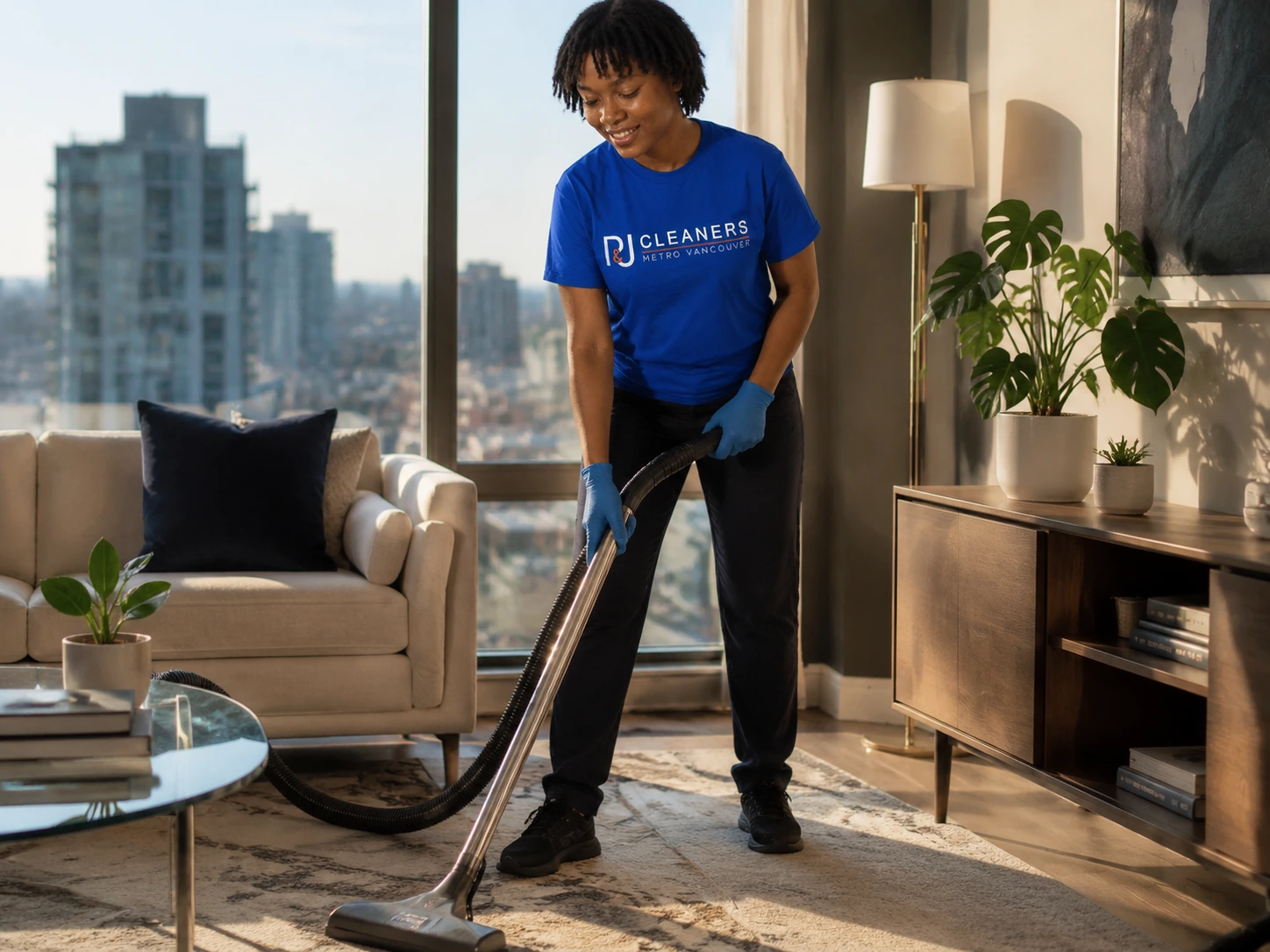
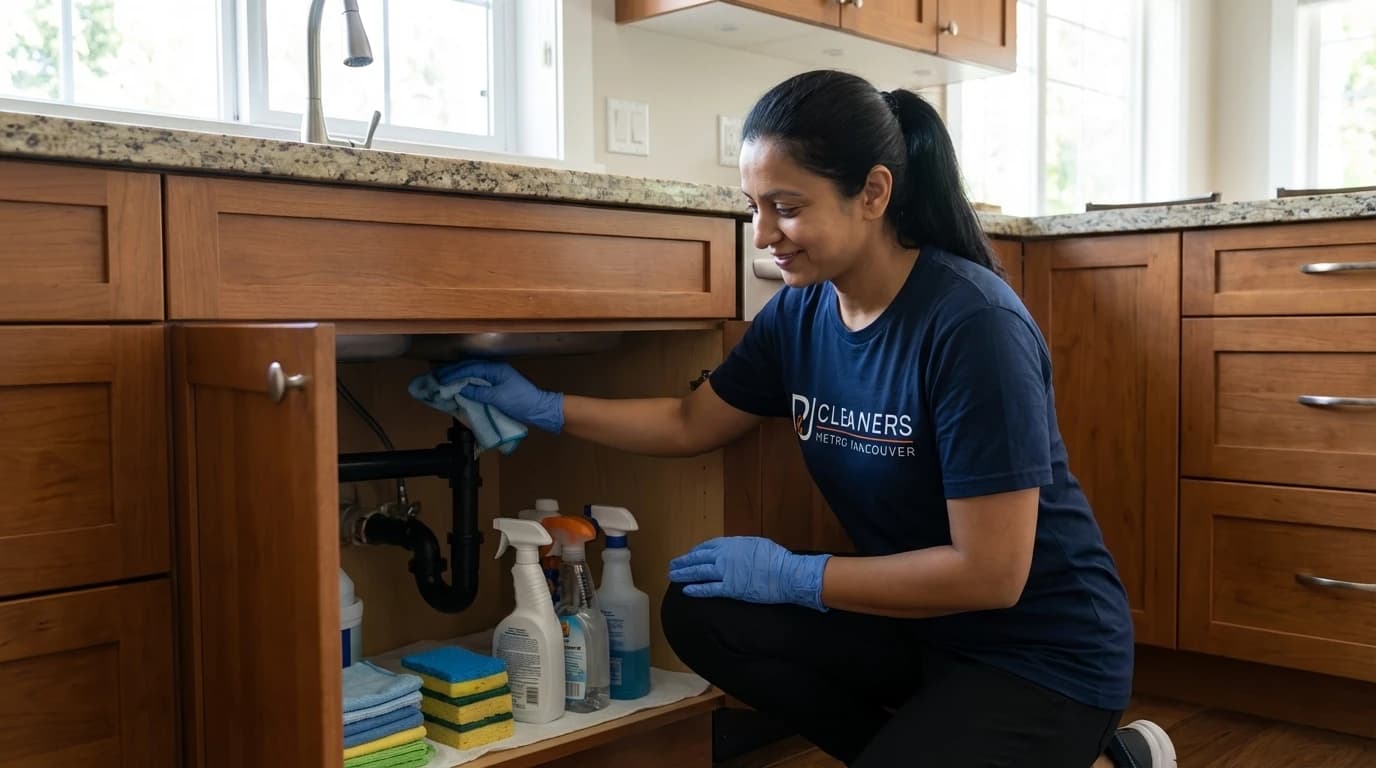
The best cleaning tools for home use are 11 essentials our P&J Cleaners team carries on every job: microfiber cloths, an all-purpose cleaner, glass cleaner, a Health Canada DIN-registered disinfectant, scrub brushes, a HEPA-filter vacuum, a flat microfiber mop and bucket, nitrile gloves, baking soda, white vinegar, and concentrated dish soap. Together they cover every surface in a typical Metro Vancouver home, from Yaletown high-rises to family houses in Burnaby and Surrey.

Key Takeaways
- 1The best cleaning tools for home use are built around a few great multi-taskers, not a drawer full of single-purpose gadgets.
- 2Microfiber cloths remove 99% of bacteria with water alone, making them the single highest-impact item on the list.
- 3A true HEPA vacuum captures 99.97% of particles down to 0.3 microns, key for Metro Vancouver's long pollen and wildfire-smoke seasons.
- 4White vinegar and baking soda together cost under $5 and replace most specialty cleaners for sinks, tubs, drains, and laundry.
- 5The best way to dust is always top-down with dry microfiber, then HEPA-vacuum the floor to catch anything that falls.
- 6Professional-grade household cleaning supplies cut cleaning time by roughly 40% once paired with a consistent room-by-room routine.
- 7If you'd rather hand it off, P&J Cleaners is Metro Vancouver's 4.9-star team (850+ reviews), $2M insured, bonded, and background-checked.
Microfiber Cloths
Microfiber cloths are the highest-ROI item on any best cleaning tools for home list: they trap dust, grease, and bacteria with water alone.
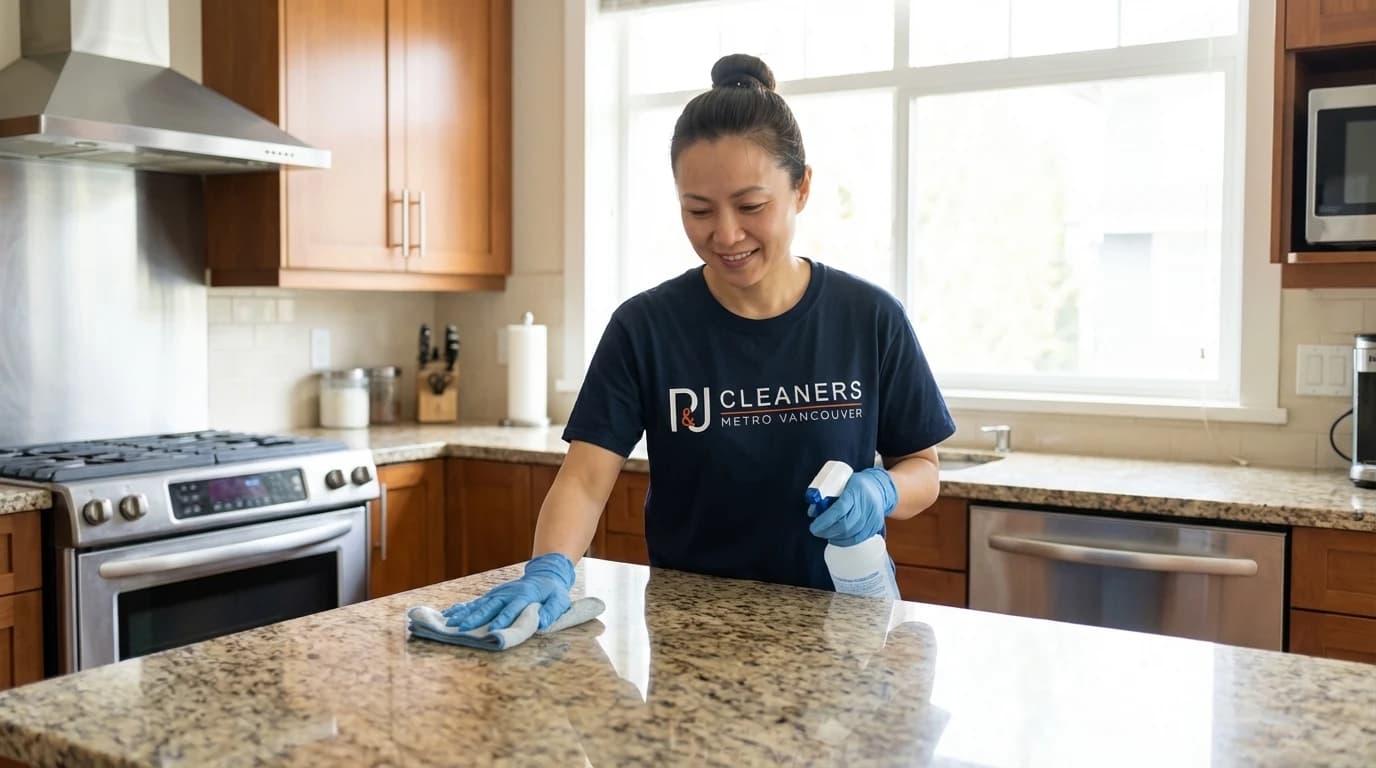
- Microfiber cloths contain fibres 100 times finer than human hair, creating millions of tiny hooks that capture particles conventional cloths miss. Research from the University of California Davis found microfiber removes 99% of bacteria from surfaces using only water, compared to 30% removal with cotton cloths and chemical cleaners. For Vancouver homes dealing with seasonal pollen and urban dust, this makes microfiber essential for maintaining indoor air quality without harsh products.
- Quality matters significantly with microfiber. Professional-grade cloths contain at least 90,000 fibres per square inch and last through 500 wash cycles when properly maintained. Colour-coding prevents cross-contamination: blue for glass and mirrors, green for kitchens, yellow for bathrooms, and red for high-touch surfaces. This system, recommended by WorkSafeBC for commercial facilities, reduces bacterial transfer by 87% compared to using single cloths throughout the home.
- Proper care extends microfiber lifespan and effectiveness. Wash cloths separately in warm water without fabric softener, which coats fibres and destroys their cleaning ability. Air-dry or tumble on low heat, never exceeding 60°C. Store clean cloths in sealed containers to prevent dust accumulation. Replace cloths when they feel rough or stop absorbing water effectively, typically after 18-24 months of regular residential use.
Quick Win
Keep separate microfiber sets for wet and dry cleaning tasks. Dry cloths excel at dusting and polishing, while damp cloths handle spills and surface cleaning.
All-Purpose Cleaner
A quality all-purpose cleaner handles 80% of household cleaning supplies work, from countertops to appliances, so it belongs near the top of every best home cleaning tools list.
- All-purpose cleaners work by combining surfactants that break down grease and dirt with solvents that dissolve residues. Professional formulations balance pH between 7-10 to clean effectively without damaging surfaces. The Canadian Centre for Occupational Health and Safety recommends choosing products with DIN numbers, indicating Health Canada approval for safety and efficacy. For Vancouver homes, select cleaners effective in the region's soft water, which requires less product than hard-water areas.
- Eco-friendly all-purpose cleaners meeting EcoLogo certification standards perform comparably to conventional products while protecting Metro Vancouver's watershed. Plant-based surfactants derived from coconut or corn break down within 28 days, compared to 6-12 months for petroleum-based alternatives. A 2024 study by Environment and Climate Change Canada found eco-certified cleaners reduced household chemical load by 73% without compromising cleaning effectiveness on common bacteria and viruses.
- Application technique maximizes cleaner effectiveness and reduces waste. Spray surfaces from 15-20 cm away, allowing 30-60 seconds of dwell time before wiping. This contact period lets surfactants penetrate and lift soil, reducing scrubbing effort by 65%. For heavily soiled areas, apply cleaner, let sit for 2-3 minutes, then wipe with a damp microfiber cloth. Dilute concentrated formulas precisely according to manufacturer instructions; over-dilution reduces effectiveness while under-dilution wastes product and leaves residue.
Quick Win
Mix your own all-purpose cleaner with 2 cups water, 1/2 cup white vinegar, and 1 teaspoon plant-based dish soap. This costs $0.15 per bottle versus $4-8 for commercial products.
Glass and Mirror Cleaner
Streak-free glass cleaner is a non-negotiable in any room cleaning equipment kit, especially in rainy Metro Vancouver where windows and mirrors spot constantly.
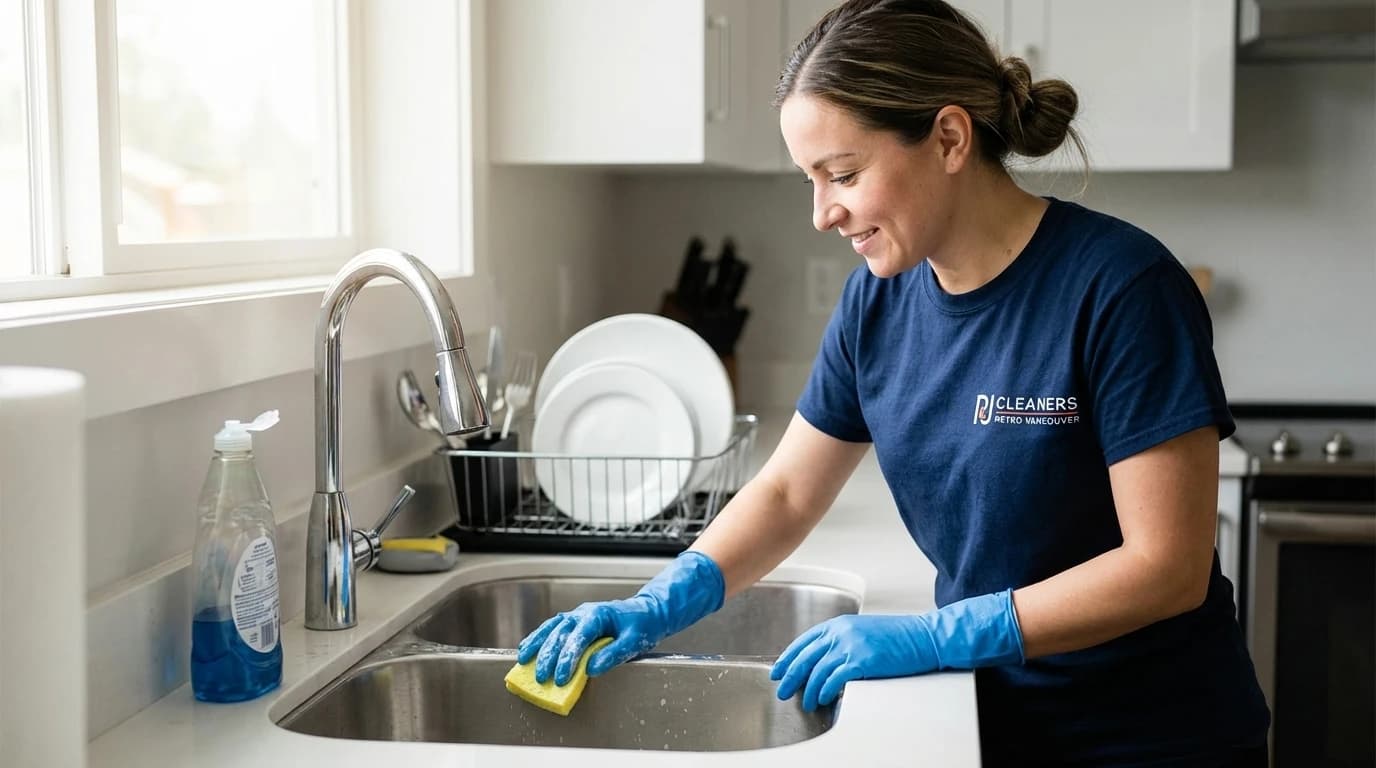
- Professional glass cleaners use alcohol or ammonia-based formulas that evaporate quickly, preventing the streaks caused by slower-drying products. The rapid evaporation rate, typically under 30 seconds, is crucial in Vancouver's humid climate where moisture can reactivate cleaning solution and create new streaks. Alcohol-based formulas work better in temperatures below 10°C, common during Vancouver's extended rainy season, while ammonia-based products excel in warmer conditions.
- Application method determines results more than product choice. Professional cleaners use a two-cloth system: spray glass lightly, wipe with a damp microfiber cloth in overlapping horizontal strokes, then immediately buff with a dry microfiber cloth in vertical strokes. This cross-pattern technique, recommended by the International Window Cleaning Association, eliminates streaks by removing all moisture and residue. For exterior windows facing Vancouver's frequent rain, clean on overcast days when direct sunlight won't cause premature drying and streaking.
- Newspaper as a glass-cleaning tool is outdated and ineffective. Modern soy-based inks transfer to glass and hands, while the paper's rough texture can scratch treated glass and mirrors. Microfiber cloths designed specifically for glass, with pile height under 3mm, provide superior results. For large windows, professional squeegees with rubber blades create perfectly clear glass in one pass. Replace squeegee blades every 6 months or when they develop nicks that cause streaks.
Quick Win
Clean mirrors and glass in a well-ventilated area to speed evaporation. Open windows or run bathroom fans to reduce humidity and prevent streaking.
Disinfectant
A Health Canada DIN-registered disinfectant handles the high-touch work your regular cleaning tools for home surfaces cannot, killing 99.9% of viruses and bacteria.
- Effective disinfectants contain active ingredients like quaternary ammonium compounds, hydrogen peroxide, or hypochlorous acid. Health Canada requires disinfectants to carry DIN numbers proving efficacy against specific pathogens. The BC Centre for Disease Control recommends disinfectants with contact times under 5 minutes for practical household use. During Vancouver's October-to-April cold season, when BC Health Authority data shows respiratory illness rates increase 340%, regular disinfection of doorknobs, light switches, and countertops reduces household transmission by 58%.
- Disinfectants require proper application to work effectively. Surfaces must be pre-cleaned to remove visible soil, as organic matter deactivates disinfectant molecules. Apply disinfectant generously, ensuring surfaces remain visibly wet for the full contact time listed on the product label, typically 3-10 minutes. Wiping too soon reduces kill rates from 99.9% to as low as 40%. For food-contact surfaces, rinse with clean water after the contact time to remove chemical residue, as required by Health Canada guidelines.
- Eco-friendly disinfectants using hydrogen peroxide or citric acid provide effective pathogen control without harsh fumes or residues. These products break down into water and oxygen within hours, compared to weeks or months for quaternary ammonium compounds. A 2025 study by the Canadian Institute for Health Information found hydrogen peroxide-based disinfectants achieved 99.8% kill rates against common household pathogens while reducing indoor air pollutants by 84% compared to bleach-based products.
Quick Win
Never mix disinfectants with other cleaning products. Combining bleach with ammonia or acids creates toxic gases that cause respiratory damage within minutes.
Scrub Brushes and Sponges
When readers ask which cleaning tools are best for scrubbing, the real answer is a set of brushes, one per stiffness, not a single do-it-all brush.
- Professional cleaning requires at least four brush types: soft sponges for countertops and appliances, medium-bristle brushes for sinks and tubs, stiff brushes for grout and outdoor surfaces, and detail brushes for fixtures and corners. Bristle stiffness, measured in durometer units, determines appropriate applications. Soft brushes (40-50 durometer) clean without scratching, while stiff brushes (70-80 durometer) remove embedded soil from textured surfaces. Using incorrect brush stiffness causes either ineffective cleaning or permanent surface damage.
- Sponge selection impacts both cleaning effectiveness and hygiene. Cellulose sponges absorb 20 times their weight in water, making them ideal for spill cleanup and general wiping. Melamine foam sponges, often called magic erasers, use micro-abrasion to remove marks without chemicals but wear quickly and can damage glossy surfaces. Silicone sponges resist bacterial growth and last 10 times longer than cellulose but provide less scrubbing power. Replace cellulose sponges weekly or when they develop odours, indicating bacterial colonization that can transfer pathogens to cleaned surfaces.
- Brush maintenance prevents cross-contamination and extends tool life. Rinse brushes thoroughly after each use, removing all soil and cleaning product residue. Disinfect weekly by soaking in a solution of 1 tablespoon bleach per litre of water for 5 minutes, then rinse and air-dry completely. Store brushes bristle-side up to prevent deformation and allow air circulation. Replace brushes when bristles become splayed or matted, typically every 3-6 months for daily-use tools. Worn brushes require 50% more effort and time to achieve the same cleaning results.
Quick Win
Colour-code brushes like microfiber cloths: separate tools for kitchens, bathrooms, and outdoor areas prevent spreading bathroom bacteria to food-prep surfaces.
HEPA-Filter Vacuum
Among innovative cleaning tools, a true HEPA vacuum is the single most impactful upgrade for Metro Vancouver homes: it captures 99.97% of particles down to 0.3 microns.
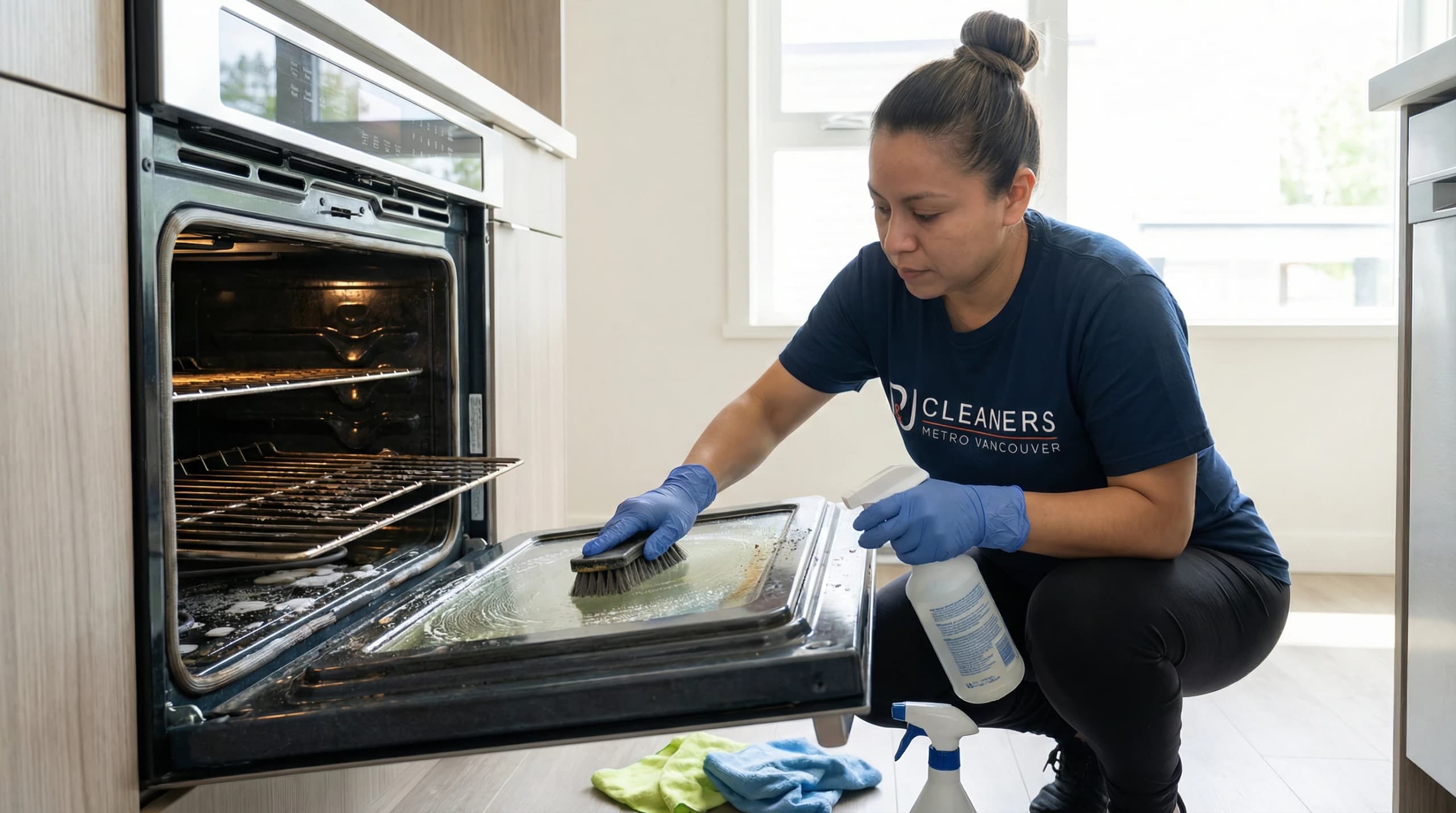
- HEPA (High-Efficiency Particulate Air) filters meet strict standards set by the US Department of Energy, capturing particles including pollen, pet dander, dust mites, and mould spores. Vancouver's extended pollen season, running March through October according to BC Health Authority data, makes HEPA filtration crucial for indoor air quality. Standard vacuum filters recirculate up to 40% of captured particles back into room air, while HEPA filters contain 99.97% of allergens. For homes with asthma or allergy sufferers, this difference reduces symptom triggers by 76%.
- Vacuum power and design affect cleaning effectiveness beyond filtration. Upright vacuums provide stronger suction for carpets, typically 150-200 air watts, while canister models offer better manoeuvrability for hard floors and stairs. Brush roll speed matters: 3,000-6,000 RPM effectively agitates carpet fibres to release embedded dirt, while adjustable or disengageable brush rolls prevent scratching hardwood and tile. For Vancouver's mix of carpet and hard flooring, combination tools with automatic height adjustment clean all surfaces without manual switching.
- Maintenance determines vacuum performance and longevity. Empty bagless canisters when half full; overfilling reduces suction by 50%. Replace or wash filters monthly, or more frequently in homes with pets. Check and clear brush rolls weekly, removing hair and string that reduce rotation speed. Replace HEPA filters annually, even if they appear clean, as microscopic pore clogging reduces filtration efficiency. Professional vacuum servicing every 2-3 years, including belt replacement and motor inspection, extends machine life from 5 to years.
Quick Win
Vacuum slowly, moving the machine at roughly 30 cm per second. This pace allows the brush roll to make 6-7 passes over each carpet area, removing 89% more embedded soil than quick passes.
Microfiber Mop and Dust Mop System
A flat microfiber mop plus a dedicated dust mop is the best way to dust and wash hard floors, three times faster than a traditional string mop and 90% less water.
- Flat microfiber mops with removable, washable pads have replaced traditional string mops in professional cleaning. The flat design maintains consistent floor contact, while microfiber pads trap dirt instead of spreading it. Professional systems use two-bucket methods: one for clean solution, one for dirty water. This prevents recontaminating floors with dirty mop water, a problem that leaves floors dirtier than before cleaning. For Vancouver homes with hardwood, laminate, or tile, microfiber mops reduce water exposure that causes warping and grout deterioration.
- Proper mopping technique maximizes cleaning while protecting floors. Sweep or vacuum first to remove loose debris that scratches floors when mopped over. Use minimal water; floors should dry within 2-3 minutes. Mop in overlapping figure-eight patterns, flipping the mop head to a clean side every 3-4 square metres. For heavily soiled areas, pre-treat with cleaning solution, let sit 2 minutes, then mop. Change mop pads every 30-40 square metres or when visibly soiled. Using dirty mop pads spreads bacteria and leaves residue that attracts new dirt.
- Steam mops offer chemical-free cleaning using 100°C steam to sanitize and dissolve soil. These work well on sealed tile and vinyl but can damage hardwood and laminate by forcing moisture into seams. The BC Centre for Disease Control confirms steam mops kill 99.9% of bacteria and viruses without chemicals, making them ideal for homes with children or pets. However, steam mops don't remove heavy soil; floors must be swept first. For Vancouver homes with mixed flooring, maintain both microfiber and steam mop systems for appropriate surface care.
Quick Win
Add 1/4 cup white vinegar per 4 litres of water for streak-free floor cleaning. This solution costs pennies and works on all sealed hard floors.
Rubber Gloves
Nitrile gloves protect your hands from cleaning products and hot water while giving you the grip every scrubbing task needs.
- Quality rubber gloves balance protection, dexterity, and durability. Nitrile gloves resist chemicals better than latex and avoid latex allergy concerns affecting 8-12% of healthcare workers according to WorkSafeBC data. Thickness matters: 15-mil gloves provide heavy-duty protection for harsh chemicals and hot water, while 8-mil gloves offer better dexterity for detailed work. Lined gloves with cotton or fleece interiors absorb perspiration during extended wear, preventing the skin maceration that occurs in unlined gloves after 20-30 minutes.
- Proper glove fit prevents fatigue and improves cleaning efficiency. Gloves should fit snugly without restricting movement or cutting off circulation. Fingers should reach the glove tips without excess material bunching. Loose gloves reduce grip strength by 40% and increase hand fatigue during scrubbing tasks. Size charts based on hand circumference ensure proper fit; most manufacturers offer 4-6 sizes. For households with multiple cleaners, maintain gloves in various sizes rather than sharing ill-fitting pairs.
- Glove care extends life and maintains protection. Rinse gloves thoroughly after each use, removing all cleaning product residue that degrades rubber. Turn inside-out to dry, preventing moisture accumulation that breeds bacteria and causes odours. Store away from direct sunlight and heat sources, which accelerate rubber deterioration. Inspect gloves before each use for holes, cracks, or thin spots. Replace immediately when damaged; compromised gloves expose skin to chemicals and hot water. Quality gloves last 6-12 months with proper care versus 2-3 months for budget options.
Quick Win
Keep separate glove pairs for kitchen and bathroom cleaning. This prevents cross-contamination and extends glove life by reducing chemical exposure variety.
Baking Soda
Baking soda is the quiet hero of household cleaning supplies, a gentle abrasive, deodorizer, and mild alkali rolled into a $2 box.
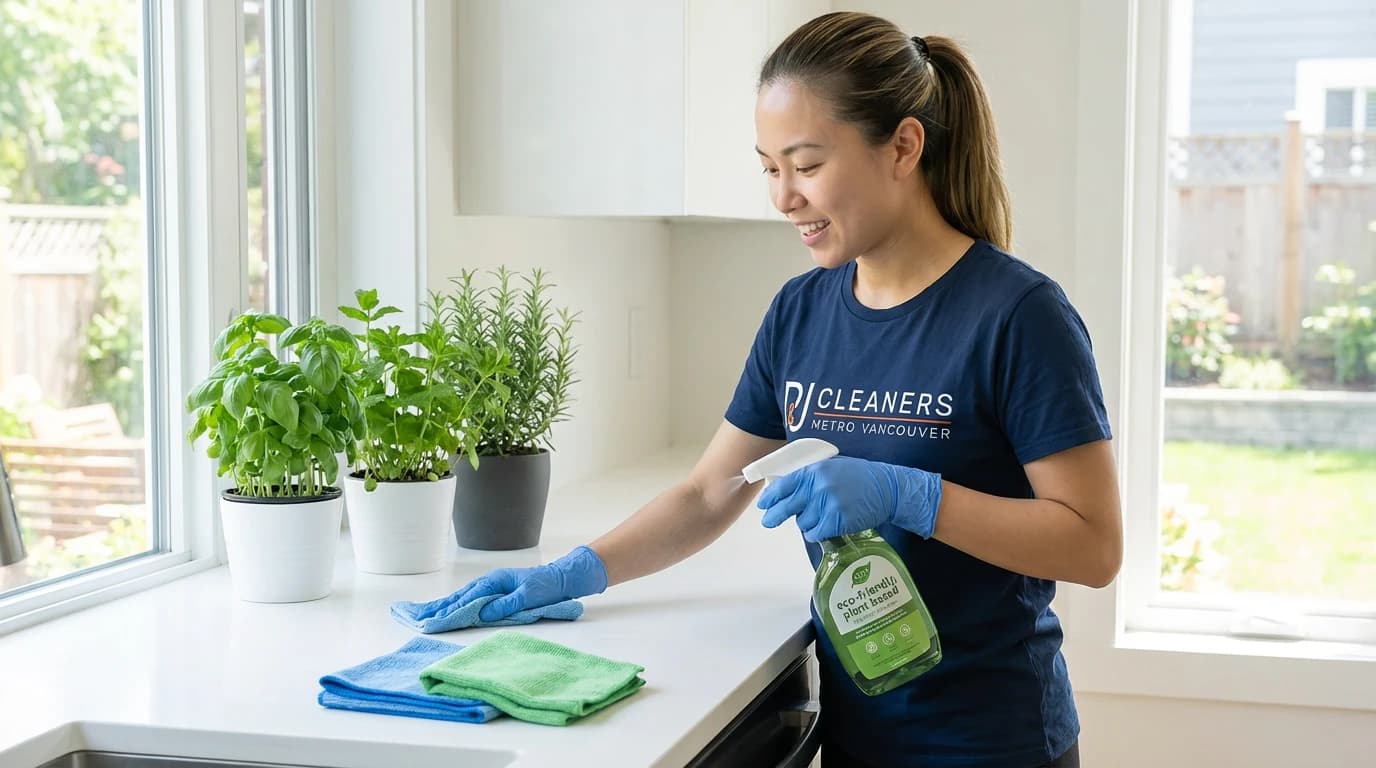
- Baking soda (sodium bicarbonate) cleans through mild abrasion and pH neutralization. Its crystalline structure provides gentle scrubbing power that removes stuck-on food and soap scum without scratching surfaces. The slightly alkaline pH of 8.3 neutralizes acidic odours and breaks down grease. A 500-gram box costs under $2 and replaces $40-60 worth of specialized cleaners for sinks, tubs, ovens, and carpets. The Canadian Environmental Protection Act classifies baking soda as non-toxic, making it safe for homes with children and pets.
- Baking soda applications span entire homes. Mix with water to form a paste for scrubbing sinks, tubs, and tile grout. Sprinkle dry on carpets, let sit 15 minutes, then vacuum to absorb odours and freshen fibres. Add 1/2 cup to laundry to boost detergent effectiveness and soften water. Place open boxes in refrigerators, closets, and under sinks to absorb odours for 30-60 days. For clogged drains, pour 1/2 cup baking soda followed by 1 cup vinegar, wait 15 minutes, then flush with hot water. This combination dissolves organic buildup without harsh drain chemicals.
- Baking soda has limitations despite its versatility. It doesn't disinfect; use it for cleaning but follow with disinfectant on high-touch surfaces. The mild abrasive action can dull some finishes with repeated use; avoid on marble, granite, and other natural stone. Don't mix with acidic cleaners in closed containers; the carbon dioxide gas produced can cause pressure buildup. Store baking soda in airtight containers to prevent moisture absorption that causes clumping and reduces effectiveness. Replace every 6 months for optimal cleaning power.
Quick Win
Make a baking soda spray by dissolving 2 tablespoons in 500ml warm water. This liquid form works better than paste for vertical surfaces and large areas.
White Vinegar
Distilled white vinegar dissolves mineral scale, cuts grease, and handles house deep cleaning tools work at a fraction of the cost of branded products.
- White vinegar contains 5% acetic acid, which dissolves calcium and lime deposits from Vancouver's moderately hard water (80-120 mg/L calcium carbonate). The acid breaks down mineral bonds, removing the white scale that builds on faucets, showerheads, and kettles. Vinegar also cuts through grease by breaking down fatty acid chains and kills 90% of bacteria and 80% of viruses, though it's not a registered disinfectant. A 4-litre jug costs $3-5 and replaces multiple specialized cleaners for glass, floors, and appliances.
- Vinegar applications require proper dilution and technique. For general cleaning, mix equal parts vinegar and water in a spray bottle. Use full-strength for heavy mineral deposits, applying with a cloth and letting sit 5-10 minutes before scrubbing. For coffee makers and kettles, run a brew cycle with 50% vinegar solution, then run 2-3 cycles with plain water to remove residue. Add 1 cup to washing machine rinse cycles as a natural fabric softener that also removes detergent buildup. The vinegar smell dissipates within 30 minutes as acetic acid evaporates.
- Vinegar limitations prevent damage to certain materials. Never use on natural stone (marble, granite, travertine), as acid etches and dulls surfaces permanently. Avoid on hardwood floors; repeated use strips protective finishes. Don't mix with bleach; this creates toxic chlorine gas. Don't use on electronics or screens; acid can damage coatings. For these surfaces, use pH-neutral cleaners instead. Store vinegar in original containers away from metal, as acetic acid corrodes some metals over time. Vinegar remains effective indefinitely when properly stored.
Quick Win
Soak showerheads in vinegar overnight to dissolve mineral buildup. Place in a plastic bag filled with vinegar, secure with a rubber band, and rinse in the morning.
Dish Soap
Concentrated dish soap cuts grease on dishes and across the home, one of the most versatile items in the tools for cleaning line-up.
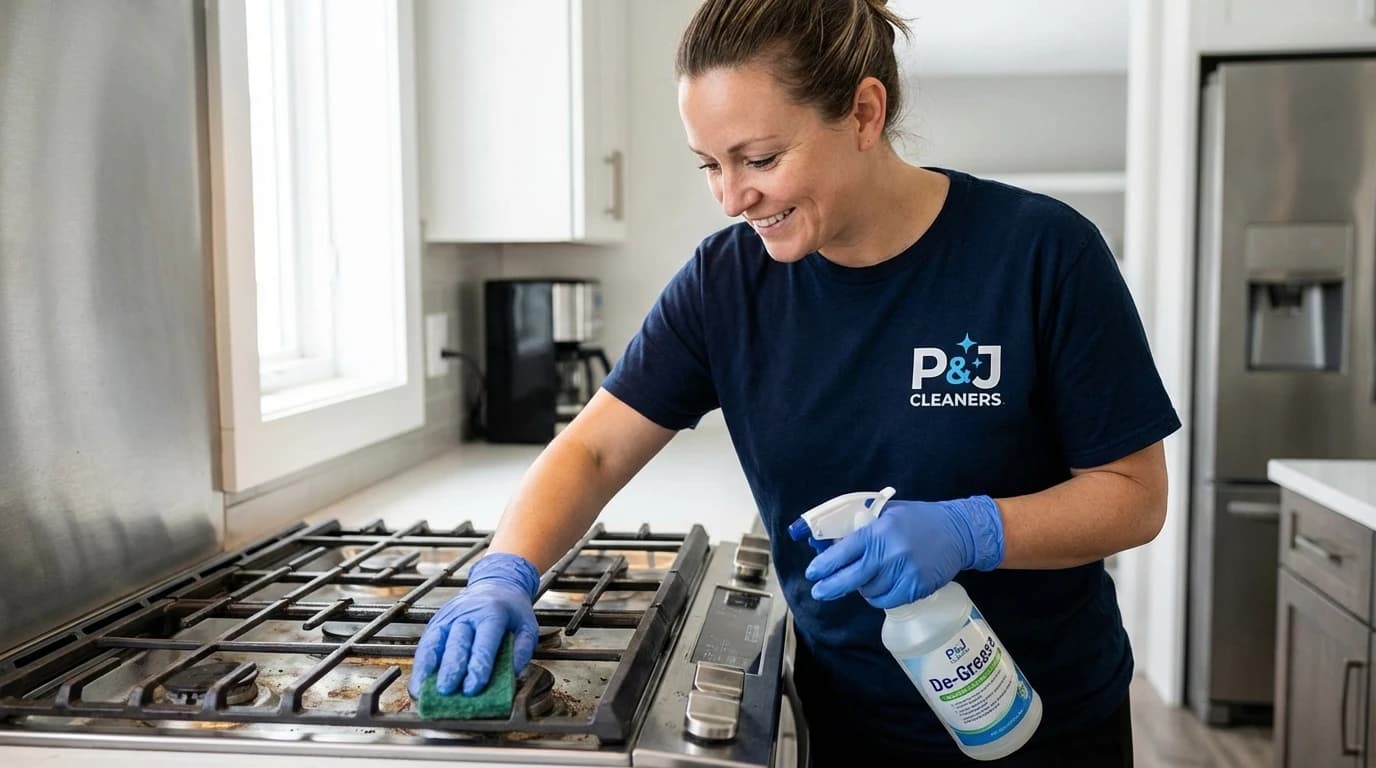
- Quality dish soap contains surfactants that break surface tension, allowing water to penetrate and lift grease and food residues. Professional formulas remain effective in Vancouver's soft water, requiring less product than hard-water regions. Concentrated formulas provide better value; 1-2 drops clean a sink full of dishes versus 1-2 tablespoons for diluted products. Plant-based dish soaps meeting EcoLogo standards biodegrade within 28 days while matching petroleum-based products for grease-cutting power. A 750ml bottle of quality dish soap costs $4-6 and lasts 2-3 months for average households.
- Dish soap applications extend beyond dishwashing. Add 1 teaspoon to 2 cups water for an effective all-purpose cleaner for countertops, appliances, and walls. Mix with baking soda to create a paste for scrubbing sinks and tubs. Use full-strength on grease stains in laundry; apply directly, let sit 5 minutes, then wash normally. For pest control, mix 2 tablespoons dish soap per litre of water and spray on aphids and other soft-bodied insects; the soap dissolves their protective coating. Clean makeup brushes and beauty tools by swirling in diluted dish soap, then rinsing thoroughly.
- Proper dish soap use maximizes effectiveness and prevents waste. Use hot water (50-60°C) to activate surfactants and dissolve grease faster. Add soap after filling the sink; adding first creates excessive suds that reduce cleaning power. For hand-washing dishes, wash glassware first, then plates and bowls, then utensils, and finally pots and pans. This order prevents redepositing grease on clean items. Change water when it becomes cloudy or greasy, typically after 15-20 items. Rinse dishes with hot water to remove soap residue that can cause spotting and streaking when air-dried.
Quick Win
Keep a spray bottle of diluted dish soap (1 teaspoon per 500ml water) for quick cleanup of kitchen spills and splatters. This prevents grease from setting and makes deep cleaning easier.
Fast Reset
Quick Wins: Smart Storage and Organization
Once you own the best home cleaning tools, the next win is keeping them organized so the whole kit is ready to grab in under a minute.
Services mentioned in this article
Ready for help?
4.9 · 850+ Google reviewsSkip the Supply Run, Book P&J Cleaners Instead
Our 4.9-star Metro Vancouver team arrives with every item on this list, $2M insured, bonded, and background-checked, backed by 850+ 5-star reviews. Book in 60 seconds or call 778-720-2224.
778-720-2224Common Questions About the Best Cleaning Tools for Home
What are the best cleaning tools for home use in a Vancouver apartment?
For Metro Vancouver apartments and condos, the best cleaning tools are a small HEPA vacuum, a flat microfiber mop, a caddy of microfiber cloths, a dust mop for hardwood, and a compact set of eco multi-surface and glass sprays. This 5-piece kit handles 90% of weekly cleaning in a 1-to-2 bedroom unit without taking up a full closet. P&J Cleaners brings an expanded version of this same kit on every job - $2M insured, bonded, and background-checked. To compare notes or book a walkthrough, call 778-720-2224.
Which cleaning tools are best for scrubbing tough stains and grout?
For scrubbing, keep three brush stiffnesses on hand: a soft nylon brush for countertops, a medium brush for tubs and sinks, and a stiff grout brush for tile lines and shower corners. Pair them with a baking soda paste for mineral scale and an oxygen-based cleaner for organic stains. Magic eraser pads work well on painted baseboards and scuff marks but will dull glossy finishes, so test a hidden corner first.
What is the best way to dust a home and stop dust from coming back?
The best way to dust is top-down with a dry microfiber cloth or extendable microfiber duster, then finish with a HEPA vacuum on hard floors and upholstery. Skip feather dusters, they only move dust around. In Metro Vancouver homes (think Lynn Valley, Kitsilano, Surrey-Guildford) we dust ceiling fans and light fixtures first, then shelves, then baseboards, so gravity works with us, not against us.
How often should essential cleaning supplies be replaced?
Replace microfiber cloths every 200-300 washes or about every 12-18 months, cellulose sponges every 2-4 weeks, and HEPA vacuum filters every 3-6 months depending on pet hair. Cleaning solutions last 1-2 years sealed; homemade vinegar or dish-soap sprays should be relabeled and refreshed every 30 days.
Are eco-friendly cleaning products as effective as chemical cleaners?
Yes, for roughly 80% of household tasks. White vinegar, baking soda, castile soap, and EcoLogo-certified multi-surface sprays match conventional cleaners for day-to-day dirt, grease, and odour control. For disinfection (flu season, after illness, raw-meat prep), step up to a Health Canada DIN-registered hydrogen peroxide or quat product and follow the full contact time on the label.
Is professional cleaning worth it if I already own the right tools?
Owning the best cleaning tools for home use is half the battle, the other half is time and technique. P&J Cleaners is Metro Vancouver's 4.9-star team with 850+ 5-star reviews, $2M insured, bonded, and background-checked, and same-day slots across 39 neighbourhoods from Downtown Vancouver to Langley. If you'd rather spend Saturday outside, book in 60 seconds or call 778-720-2224.

Meet the Author
Pamela
Co-Founder
Pamela leads residential quality standards at P&J Cleaners, refining safe, detail-driven cleaning systems for Vancouver homes, condos, and move-out projects.
Keep Exploring