



Quick answer
A cleaning checklist for home use should cover eight zones, in working order: bedrooms, bathrooms, stairs and hallways, living and dining areas, kitchen, laundry, entryway, and a whole-home finish. Work top to bottom and back to front, tag each task daily, weekly, monthly, or seasonal, and expect a full three-bedroom reset to take three to four hours.

Key Takeaways
- 1Clean top to bottom and back to front so gravity works for you: dust from high surfaces lands on floors you have not touched yet.
- 2A full reset of an average three-bedroom Metro Vancouver home runs about three to four hours solo, and the kitchen plus bathrooms account for close to half of that.
- 3Ten line items explain almost every home that looks clean but does not feel clean: window tracks, range hood filter, shower door bottom track, dishwasher filter, sink overflow hole, toilet bolt caps, door tops, blind slats, baseboards, and light switches.
- 4Mould that keeps coming back after a good scrub is an air problem, not a surface problem: Health Canada puts the target at under 50% relative humidity through summer and roughly 30% to 35% through winter.
- 5The metal filter above the stove runs on a three-to-six-month wash cycle per Broan-NuTone, and closer to three months if you fry or wok-cook most weeks.
- 6Disinfectant only works if the surface stays visibly wet for the contact time printed on the label, so spray the toilet and shower first and go clean something else while it sits.
- 7In BC a tenant must leave a unit reasonably clean, and Residential Tenancy Policy Guideline 1 itemizes the oven, the fridge, wall scuffs, and inside windows and tracks, which turns a move-out checklist into a deposit document.
What Is the Correct Order to Clean a House?
Order matters more than effort. The same tasks done in the wrong sequence cost you an extra hour and leave visible dust on surfaces you already wiped.
There are three rules, and every professional crew works to all three. First, top to bottom: light fixtures and shelf tops before counters, counters before floors. Dust is not destroyed when you disturb it, it relocates, and you want it landing on a floor you have not vacuumed yet. Second, back to front: start in the room furthest from your front door and finish at the entry, so you are never walking across floors you just mopped. Third, dry before wet: dust and vacuum a room fully before anything damp touches it, because a wet cloth on a dusty baseboard makes mud, not a clean baseboard.
The fourth habit is the one that separates a fast clean from a slow one. Chemistry needs time. Before you touch anything else in a bathroom, spray the toilet bowl, the shower walls, and any soap-scummed glass, then walk away and do the mirrors and the sink. Product labels give a contact time for a reason: a disinfectant that is wiped off in ten seconds has not disinfected anything. The same applies to a greasy stovetop and to oven racks left to soak. You are not waiting, you are working somewhere else while the product does its job.
One more piece of sequencing worth stealing: carry everything with you. A caddy, a bag for the garbage, a laundry basket for things that belong in other rooms, and a stack of cloths. The biggest time leak in a home clean is not the cleaning, it is walking back to the kitchen for the bottle you left there. If you only have a short window rather than a full session, our 15-minute cleaning routine shows how to compress this same order into a single pass.
- Top to bottom: fixtures, shelf tops, and door frames come before counters; counters come before floors.
- Back to front: furthest room first, entryway last, so clean floors stay clean.
- Dry before wet: dust and vacuum first, then anything damp.
- Spray first, wipe last: give bathroom and kitchen products their labelled contact time while you work elsewhere.
- Left to right within a room, so you never have to think about whether you already did a surface.
Pro Tip
If two of you are cleaning, split wet rooms and dry rooms rather than splitting by floor. One person owns bathrooms and kitchen, the other owns bedrooms and living areas. Split by floor and you will both want the vacuum at the same time, which is how a two-person clean ends up slower than a one-person clean.
The Supply Kit That Covers Every Room
You need six products and five tools. Anything past that is either a duplicate or a machine you will use twice a year.
An all-purpose cleaner handles counters, appliance exteriors, painted surfaces, and general wiping. A dedicated glass cleaner handles mirrors, windows, and shower doors, because all-purpose cleaner on glass leaves film. A bathroom disinfectant handles the toilet, tub, and sink. A pH-neutral floor cleaner matched to your flooring covers hardwood, laminate, tile, and vinyl plank without stripping finish. Add a mild abrasive cream for sinks and cooktops, and a degreaser for the range hood and the wall behind the stove. That is the whole chemical shelf.
Tools are simpler. Microfibre cloths in three colours so bathroom cloths never touch kitchen counters. A non-scratch scrub sponge. A detail brush, which is where an old toothbrush earns its retirement, for grout, taps, and tracks. A squeegee for glass and shower doors. A vacuum with a crevice tool and a hard-floor head, plus a flat microfibre mop. Nothing else earns the shelf space.
Be honest about the line where a checklist stops helping. If a surface needs equipment you do not own, or a room has gone past the point where wiping does anything, book a one-off deep cleaning. Do not buy the machine. Buying tools to avoid a two-hour job is how garages fill up.
- Six products: all-purpose, glass, bathroom disinfectant, pH-neutral floor cleaner, mild abrasive cream, degreaser.
- Five tools: colour-coded microfibre cloths, non-scratch sponge, detail brush, squeegee, vacuum plus flat mop.
- Colour-code by room and stick to it. Cross-contamination is the single most common mistake in home cleaning.
- Keep the caddy stocked and stored where you start, not where you finish.
Pro Tip
Wash microfibre cloths on their own, warm, with a small amount of detergent and zero fabric softener. Softener coats the fibres and kills the static grab that makes microfibre work, which is why a two-year-old cloth suddenly seems to just smear.
How Often Should Each Room Be Cleaned?
Four tiers cover everything: daily resets that take minutes, a weekly pass per room, monthly add-ons, and a handful of seasonal jobs.
Daily is small and non-negotiable: dishes cleared, kitchen counters wiped, the bathroom sink and toilet seat given ten seconds, and a walk-through that puts things back where they live. Ten to fifteen minutes total. Skipping daily does not save fifteen minutes, it moves an hour into your weekend.
Weekly is the real cleaning: full bathroom, kitchen surfaces and floor, vacuum and mop throughout, bedding changed, and dust on everything at hand height. Monthly is where most checklists thin out and where homes quietly decline: window and slider tracks, range hood filter, dishwasher filter, inside the microwave, fridge shelves, light fixtures and fan blades, baseboards, and the top edges of doors and frames.
Seasonal is four sessions a year, one per change of weather: windows inside and out, blind slats, behind and under large appliances, walls and switch plates, closets emptied and wiped, and the entryway stripped back. The table below is what we plan against on an average three-bedroom home in Burnaby or Coquitlam. If you would rather work from a schedule than a room list, our cleaning frequency guide maps the same tasks onto a calendar.
- Daily, 10 to 15 minutes: dishes, kitchen counters, bathroom sink and toilet seat, reset surfaces.
- Weekly, 3 to 4 hours: bathrooms, kitchen, all floors, bedding, hand-height dust.
- Monthly, 60 to 90 minutes: tracks, filters, baseboards, light fixtures, fridge shelves, door tops.
- Seasonal, 3 to 5 hours: windows, blinds, behind appliances, walls, closets, entryway reset.
- Adjust up if you have pets, allergies, a wood stove, or more than four people in the house.
Pro Tip
Attach monthly tasks to a fixed calendar anchor rather than a date. The first weekend of the month, one zone. Tracks in one month, filters the next. It stops the monthly list becoming a seasonal list by accident.
The 10 Things Almost Everyone Skips
These are the items our cleaners find untouched in home after home. Together they explain the gap between a house that looks clean and one that feels clean.
None of these are exotic. They are simply out of eye line, or they need a brush rather than a cloth, so a normal weekly pass slides past them. The compounding effect is what people feel when they walk into a professionally cleaned home and cannot name what is different.
Work through this list once, properly, then fold each item into the monthly tier. The first pass takes an hour or more because there is a backlog. After that, most of them are two minutes each.
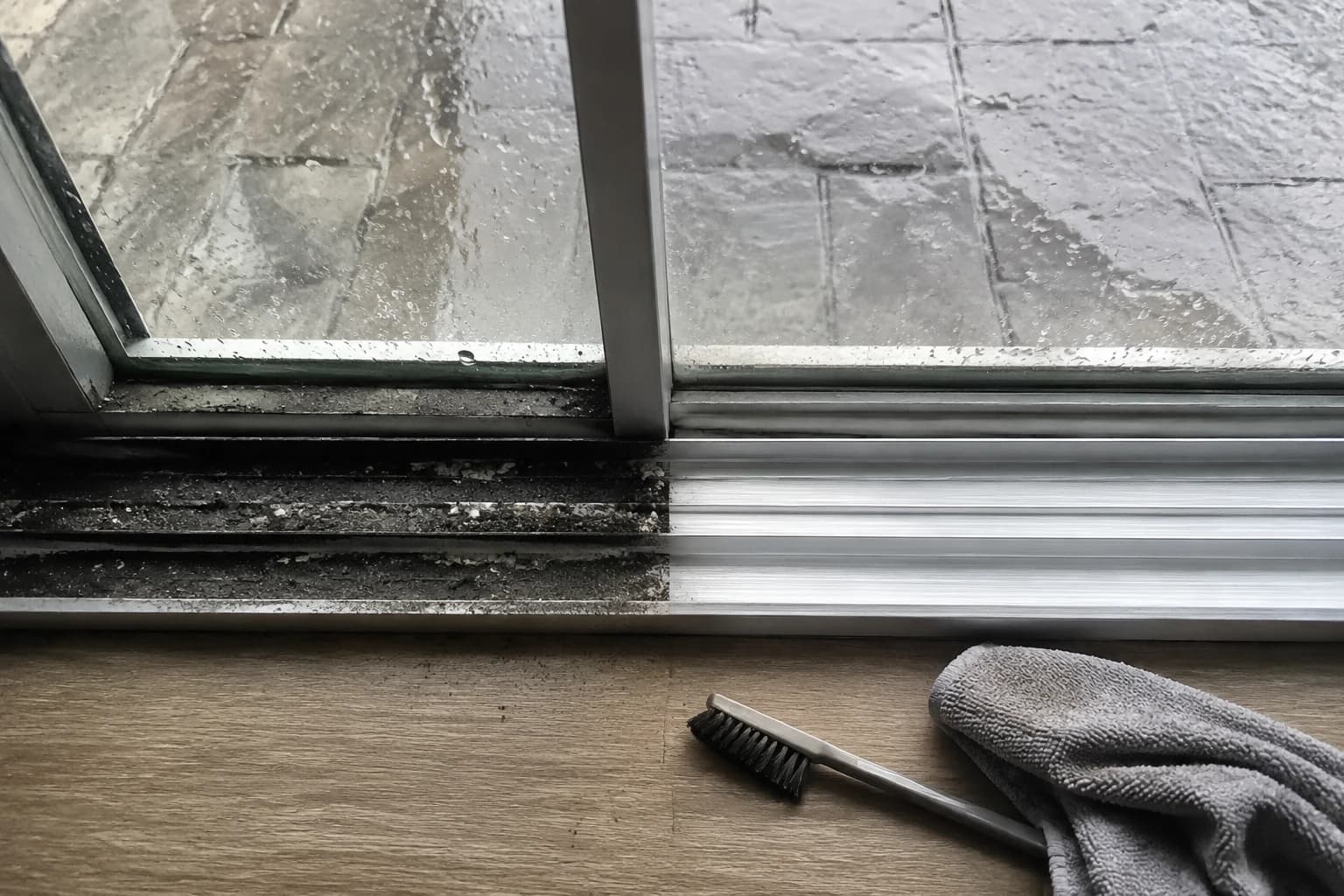
- Window and slider tracks. Grit plus rain equals a black paste that sets like grout. Vacuum the loose material with a crevice tool first, then a damp detail brush, then wipe.
- Range hood filter. The metal mesh above your stove holds months of aerosolised grease and is the single greasiest thing in most kitchens.
- Shower door bottom track. Water sits in it permanently. It is where pink and black growth starts before it appears anywhere visible.
- Dishwasher filter. Unscrew the basket at the bottom, rinse it, put it back. This is the fix for a dishwasher that has started to smell.
- Sink overflow hole. The little slot near the rim of a bathroom sink is a sealed damp cavity. A bottle brush and disinfectant sorts it.
- Toilet bolt caps and the base seam. Lift the caps, clean underneath, and run a damp cloth around the floor seam where the bowl meets the tile.
- Door tops and frame ledges. Run a finger along the top edge of any interior door. That grey band is on every door in the house.
- Blind slats. Close them one direction, wipe, close them the other, wipe again. Two minutes per window, and it changes how light reads in a room.
- Baseboards, especially behind furniture. Vacuum with the brush head first, then damp-wipe. Skipping the vacuum step just paints the dust on.
- Light switches, remotes, door handles, and the fridge handle. The four highest-touch objects in a home and the four least likely to be on a checklist.
Pro Tip
Photograph these ten spots before you start and again after. Nine of them sit out of eye line, so a photo is the only honest way to check the job actually got done. It is also exactly the evidence a landlord asks for at move-out.
What Metro Vancouver Homes Need That Generic Checklists Miss
Nine wet months reorder the priorities here. Tracks stop being a spring job and become a monthly one, the entryway earns its own weekly pass, and the bathroom fan gets a line of its own.
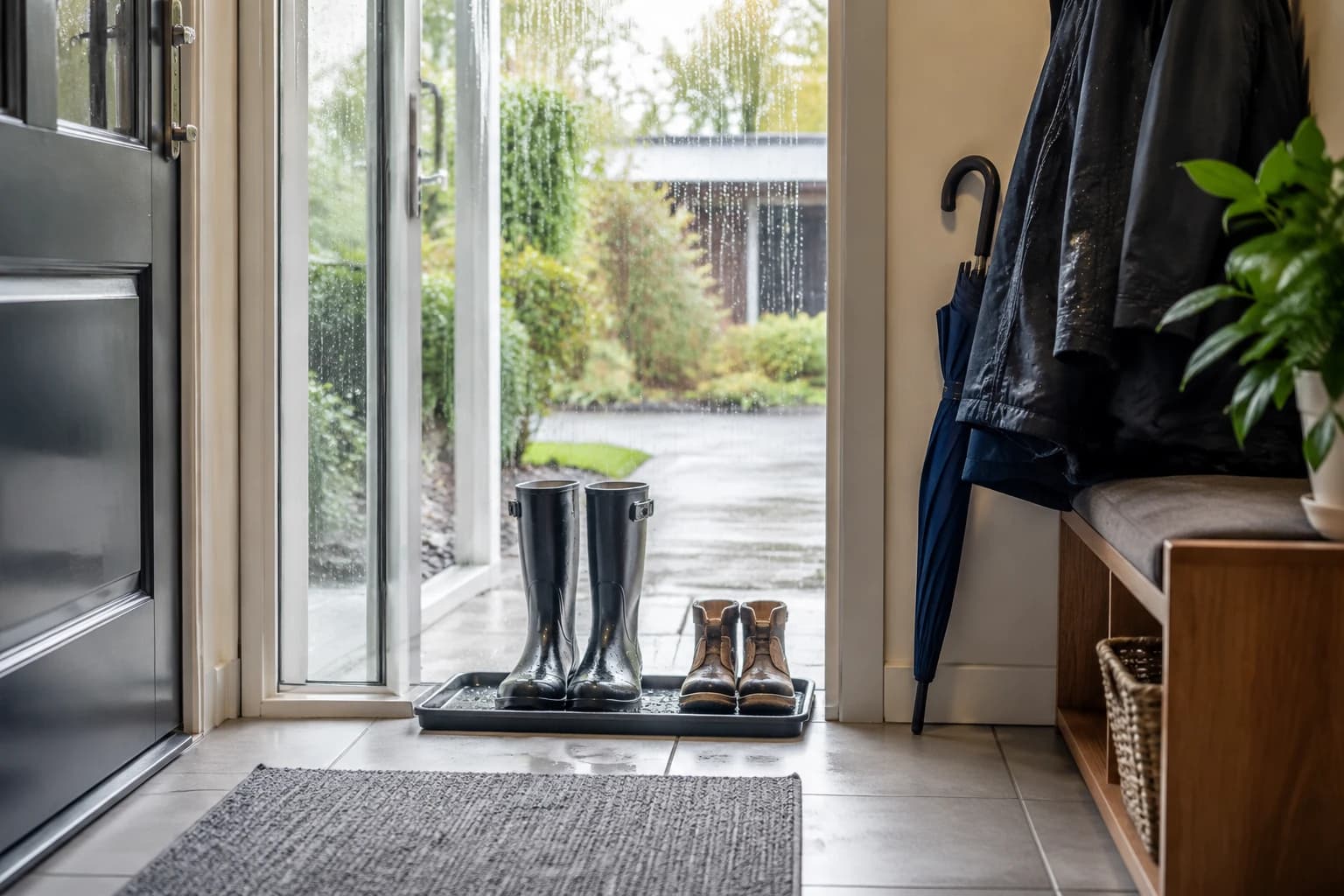
Rain is the variable no national checklist accounts for. It drives grit into window and sliding-door tracks continuously rather than seasonally, which is why tracks belong in the monthly tier here rather than the spring-clean tier. It also means entryways absorb far more than they do elsewhere: wet boots, dog paws, umbrella drip, and the grit that comes off all three. In our experience the entryway is the room that most changes a visitor's read of a whole house, and it is usually cleaned last or not at all.
The second Vancouver-specific issue is moisture. Older suites in East Vancouver, Burnaby, and New Westminster with aluminum-framed or single-pane windows collect condensation all winter, and that water pools in the one track nobody cleans. Scrubbing the mould off without fixing the moisture just resets a clock. Health Canada's guide to addressing moisture and mould puts the target at below 50% relative humidity in summer and around 30% to 35% in winter. Running the bathroom fan for a stretch after every shower is the cheapest way to hold that line.
Third: the bathroom fan itself. In a climate this damp, a fan cover packed with lint is a real reduction in the only ventilation many bathrooms have. Pull the cover down, wash it in the sink, vacuum what you can reach behind it, and put it back. Twice a year is enough, and it does more for bathroom mould than any product on the shelf.
- Move window and slider tracks from seasonal to monthly. Coastal rain refills them year round.
- Treat the entryway as a room with its own weekly pass, not as a hallway.
- Run the bathroom fan during the shower and for a stretch afterwards, then wash the fan cover twice a year.
- Wipe interior window glass and sills in winter when condensation appears, before it sits long enough to mark the paint.
- Keep a boot tray and a washable runner at the door through the wet season. Both are faster to clean than the floor underneath them.
Pro Tip
If a bathroom keeps growing mould in the same corner after a good clean, the problem is airflow, not product. Leave the door open a hand's width after a shower so the fan has somewhere to pull replacement air from, and watch how much longer the clean holds.
What a Professional House Cleaning Checklist Adds
The difference is rarely a secret product. It is the high-touch items a home routine keeps skipping, a fixed sequence that never stalls, and two people working in parallel.
A booked house cleaning works from a checklist much like this one, with three differences. Coverage: items a home routine keeps deferring are written into the standard visit, so light switches and outlets, door handles throughout, stair railings, ceiling fan blades, interior windows, and laundry room surfaces get touched every time rather than once a year. The heavier jobs on the monthly and seasonal tiers above sit outside a regular visit, so ask what is in scope when you book. Sequence: a crew that works the same order every time never loses the stop-and-think minutes that stretch a solo clean. Parallelism: two cleaners splitting wet rooms and dry rooms finish an average three-bedroom home in well under half the solo time, because nobody stands idle waiting for a product to dwell. Coverage is the one clients actually notice. Across 850 reviews, the line that comes up most is never about a product. It is about somebody having cleaned a place they did not expect anyone to look.
There is one point where all of this stops being about how a home feels and starts having a dollar value attached: the end of a tenancy. Section 37 of the BC Residential Tenancy Act requires a tenant to leave the unit reasonably clean and undamaged, fair wear and tear aside. The province's Policy Guideline 1 spells out what that actually means. Stove top, elements, and oven. A defrosted and cleaned fridge. Behind and under the fridge and stove where they sit on rollers. Scuff marks off the walls. Inside windows and tracks, with any mould removed. Read that list against the ten skipped items above and the overlap is close to total.
That is why move-out cleaning is priced and scoped differently from a regular clean, and why oven interiors sit inside a move-out or move-in scope rather than a weekly one. If you are handing back keys, work from the guideline rather than from a generic checklist, and photograph the finished unit.
- Standard pass: light switches, door handles, stair railings, fan blades, interior windows, and laundry room surfaces are written into every visit, not deferred.
- A fixed room order removes the stop-and-think minutes that stretch a solo clean.
- Two cleaners working wet rooms and dry rooms in parallel cut the clock by more than half, because dwell time stops being dead time.
- At move-out, the BC guideline, not a blog checklist, defines what reasonably clean means.
- Oven interiors are an add-on to a deep clean, and are inside a move-out or move-in scope rather than a regular visit.
Pro Tip
Book the first clean as a deep clean and everything after it as regular. Trying to hold a house at a standard it has never been brought to is the most common reason a cleaning routine collapses in the third week.
How to Print and Use This Cleaning Checklist for Home
The room list below is laid out to print straight from this page, one room per block, with the frequency tier attached to each task.
Print this page from your browser (Ctrl+P on Windows, Cmd+P on a Mac) and the room-by-room blocks below come out as a task list you can tick off. In the print dialog, use the page-range box to print only the pages holding the rooms you want, and turn off headers and footers if your browser adds them. Most people put it on the fridge or inside a cupboard door and work one room block at a time rather than trying to hold the whole house in their head.
If you are working from a condo or a smaller suite, the same order applies, but the room list shortens and the timings drop by roughly a third. We scaled a version to that in our apartment cleaning checklist. However you use it, the tiers matter more than the tasks: a weekly list that actually gets done beats a perfect list that gets attempted once.
Pro Tip
Do not print all eight blocks at once. Print the two rooms you keep avoiding, stick those on the fridge, and leave the rest on your phone. A checklist you can see is the only kind that gets ticked, and a full page of eight rooms is a page people fold in half and forget.
Step-by-Step
The Room-by-Room Cleaning Checklist
Eight blocks in working order, from the room furthest from your door to the front entry, closing with a whole-home pass. Each block lists the weekly pass first, then the monthly and seasonal add-ons.
Bedrooms
Start here because bedrooms are usually the furthest from the door and the fastest to reset. Strip and remake the bed first so the dust you disturb settles before you dust anything else. Then work the room high to low: light fixture, shelf tops, dresser and nightstand surfaces, then floors including under the bed. Fifteen minutes per bedroom is realistic once the room is picked up.
- Weekly: strip and change bedding, dust all hand-height surfaces, wipe mirrors and glass, vacuum including under the bed, empty the bin.
- Weekly: wipe door handles, light switches, and the top of the headboard.
- Monthly: baseboards, door tops and frame ledges, blind slats, light fixture and any ceiling fan blades.
- Monthly: vacuum the mattress surface and rotate it, and wipe inside window sills and tracks.
- Seasonal: wash or air pillows and duvets per their labels, clear and wipe closet shelves, wash curtains if washable.
Bathrooms
The highest-value room on the list and the one where sequencing pays most. Spray the bowl, the shower walls, and the glass first, then leave them alone while you do mirrors, sink, and taps. Come back and scrub once the product has had its labelled contact time. Twenty to twenty-five minutes per bathroom weekly, and the detail work is covered further in our [bathroom cleaning checklist](/blog/bathroom-cleaning-checklist).
- Weekly: spray toilet bowl, shower walls, and glass first and let them dwell while you work elsewhere in the room.
- Weekly: mirror, sink, taps, counter, then scrub the shower or tub, then the toilet outside and in, then the floor.
- Weekly: the toilet base seam and the floor behind the bowl, which is where odour actually lives.
- Monthly: shower door bottom track, sink overflow hole, grout lines, toilet bolt caps, and the drain.
- Monthly: wipe the extractor fan cover and vacuum the visible grille.
- Seasonal: wash the fan cover in the sink, clear and wipe the vanity interior, and reseal or report any failing silicone.
Stairs, Hallways, and Landings
Ten minutes, and the part of a house that shows wear first because everybody touches the same rail and walks the same line. Do it after the bedrooms so you are carrying the vacuum downstairs rather than up. Vacuum stair treads with the crevice tool along the back edge of each step, which is where the visible line of grit builds.
- Weekly: vacuum treads and landings, wipe the handrail and any spindles at hand height, spot-clean wall marks.
- Weekly: wipe light switches and the top of the newel post.
- Monthly: baseboards and stair skirting, corners and cobwebs at ceiling height, door tops along the hallway.
- Seasonal: wash walls along the traffic line, clean light fittings, and wipe any framed art glass.
Living and Dining Rooms
Twenty-five minutes for both in an average home. The trap here is furniture: a room can look done while the dust sits on the top of the picture frames, the TV frame edge, and behind the sofa. Move the cushions, vacuum underneath and down the sides, and put them back. Dust screens with a dry microfibre cloth only, never a wet one.
- Weekly: dust all surfaces high to low, wipe the table and any glass, vacuum the sofa cushions and underneath them, vacuum and mop floors.
- Weekly: remotes, door handles, light switches, and the coffee table underside edge.
- Monthly: baseboards, blind slats, light fixtures, TV and shelf frame edges, and under and behind large furniture.
- Monthly: window sills and interior glass, and the top edges of doors and frames.
- Seasonal: wash windows inside and out, clean light fittings fully, and wipe walls and switch plates.
Kitchen
The longest block at thirty-five to forty-five minutes weekly, and the room where the monthly items matter most. Work counters clockwise from the sink, degrease the wall behind the stove, then floors last. Put the metal mesh filter above your stove on the calendar. Broan-NuTone recommends [washing aluminum or baffle grease filters](https://broan-nutone.com/en-us/home/learn/filter-replacement) every three to six months, sooner if you fry or wok-cook. Charcoal filters cannot be washed at all, so those get replaced every six months. Full detail is in our [kitchen cleaning checklist](/blog/kitchen-cleaning-checklist).
- Weekly: clear and wipe all counters, backsplash, sink and taps, appliance fronts and handles, cooktop, and the wall behind the stove.
- Weekly: wipe the inside of the microwave, empty and wash the bin, then sweep and mop.
- Weekly: cupboard door fronts at handle height, which is where grease and fingerprints accumulate fastest.
- Monthly: range hood filter washed in hot degreasing water, dishwasher filter unscrewed and rinsed, fridge shelves and door seals wiped, and the drain flushed.
- Monthly: baseboards, toe-kicks under the cabinets, and the top edges of upper cabinets.
- Seasonal: pull out the fridge and stove where they are on rollers and clean behind, empty and wipe cupboards, and clean the oven interior.
Laundry Room and Utility Space
The room most likely to be missing from a checklist entirely, and ten minutes is all it takes. Lint is the theme: it collects in the trap, around the trap housing, behind the machines, and on every horizontal surface in the room. Wipe the machine tops and fronts, clear the lint trap, and vacuum the floor including the gap between and behind the units.
- Weekly: clear the dryer lint trap, wipe machine tops and fronts, wipe the folding surface, sweep or vacuum the floor.
- Monthly: vacuum inside and around the lint trap housing, wipe the washer door seal dry, and clean the detergent drawer.
- Monthly: baseboards, the shelf above the machines, and any utility sink including its overflow.
- Seasonal: pull the machines forward and vacuum behind them, check the dryer vent hose for kinks or lint build-up, and wipe the walls.
Entryway and Front Hall
Second to last, because everything you carry out of the house passes through it. In Metro Vancouver this is the hardest-working ten minutes on the list: wet boots, grit, and umbrella drip through most of the year. Shake out or wash the mat, wipe the door including the handle and the frame edge, and vacuum right into the corners where grit collects.
- Weekly: shake out or wash the entry mat, vacuum and mop the floor into the corners, wipe the door, handle, and frame.
- Weekly: wipe the boot tray, the bench, and any hooks or console surface.
- Monthly: baseboards, the closet floor, light fitting, and the top edge of the door.
- Seasonal: strip the closet, wipe shelves and rod, wash the walls along the traffic line, and clean the exterior side of the door and its glass.
The Whole-Home Finish
Fifteen minutes at the end that makes the difference between rooms that are clean and a house that is clean. This is the pass for the things that belong to no single room: switches and handles throughout, a final sweep for anything left out of place, mirrors and glass given a second look in daylight, and the bins consolidated and taken out.
- Every light switch, door handle, and the fridge handle wiped with disinfectant.
- A walk-through with a basket to return anything that ended up in the wrong room.
- Glass and mirrors checked in natural light for streaks, then squeegeed or buffed dry.
- All bins emptied, liners replaced, and the outdoor bin situation dealt with.
- Open two windows on opposite sides of the home for ten minutes to cross-ventilate, weather permitting.
| Room | Weekly time | Weekly must-dos | Monthly or seasonal add-on |
|---|---|---|---|
| Bedroom (each) | 15 min | Bedding, hand-height dust, vacuum under the bed | Baseboards, blind slats, door tops, mattress vacuum |
| Bathroom (each) | 20 to 25 min | Spray and dwell, shower, toilet inside and out, floor and base seam | Shower door track, overflow hole, grout, fan cover |
| Kitchen | 35 to 45 min | Counters, sink, cooktop, appliance fronts, microwave, floor | Range hood filter, dishwasher filter, fridge shelves, behind appliances |
| Living and dining | 25 min | High-to-low dust, sofa cushions, table, floors | Baseboards, blinds, light fittings, behind furniture |
| Entryway | 10 min | Mat, floor corners, door and handle, boot tray | Closet floor, walls along the traffic line, exterior door |
| Laundry room | 10 min | Lint trap, machine tops and fronts, floor | Behind the machines, vent hose, door seal, detergent drawer |
| Stairs and hallways | 10 min | Treads, handrail, wall spot-clean | Skirting, cobwebs, hallway door tops |
| Whole-home finish | 15 min | Switches and handles, glass check, bins, cross-ventilate | Wall wash, full fixture clean, window glass inside and out |
Services mentioned in this article
Ready for help?
4.9 · 850+ Google reviewsRather Hand the Checklist to Someone Else?
If the jobs at the bottom of your list are the ones that never get done, that is exactly what a booked clean is for. Our team works this same order through Metro Vancouver homes every day, backed by 850 reviews and our satisfaction guarantee. Tell us which jobs keep getting skipped and we will confirm what a regular visit covers and what is better booked as a deep clean.
778-720-2224Home Cleaning Checklist Questions
What should be on a house cleaning checklist?
Eight zones, in the order a crew would work them: bedrooms first, then bathrooms, stairs and hallways, living and dining rooms, the kitchen, laundry, the entryway, and a final whole-home pass. Under each zone list a weekly pass plus the monthly and seasonal add-ons, because the monthly items are the ones that quietly get dropped. Tracks, filters, baseboards, door tops, and light fixtures belong on the list even though nobody enjoys them.
What is the correct order to clean a house?
Top to bottom, back to front, and dry before wet. Dust high surfaces before you wipe counters, and wipe counters before you touch floors. Begin at the far end of the home and work toward the door you came in, so finished floors stay finished. Let bathroom and kitchen products sit for their labelled dwell time while you move on to the next surface.
How long does it take to clean a whole house?
About three to four hours for one person in an average picked-up three-bedroom, two-bathroom home. The kitchen and bathrooms account for close to half the total on their own. A pair splitting the job, one on wet rooms and one on dry, cuts the clock by more than half, because nobody is standing around waiting for a product to dwell.
What do most people forget to clean?
Window and slider tracks, the range hood filter, the shower door bottom track, and the dishwasher filter, in that order. Close behind them: blind slats, the tops of interior doors, baseboards hidden behind furniture, toilet bolt caps, the overflow slot in the bathroom sink, and high-touch items such as light switches, remotes, and the fridge handle. Almost every one of them sits outside normal eye line, or wants a detail brush instead of a wipe.
How often should each room be cleaned?
Kitchens and bathrooms need a daily touch and a full weekly pass. Bedrooms, living areas, hallways, entryway, and laundry room need a weekly pass. Monthly covers tracks, filters, baseboards, light fixtures, and fridge shelves. Seasonal covers windows, blinds, behind appliances, walls, and closets. Tighten the weekly cadence in a busy household, or one with pets or allergy sufferers.
What does a professional house cleaning include?
A standard professional clean covers the weekly list in every room, plus high-touch items home routines usually skip: light switches and outlets, door handles throughout, stair railings, ceiling fan blades, and interior windows. Heavier work is not part of a regular visit: inside cabinets, behind appliances, and the oven interior, which is an add-on to a deep clean and sits inside a move-out or move-in scope. Confirm exactly what is included when you book.
Sources & References
The facts in this guide come from the primary sources below. Links open in a new tab.
- 1Guide to Addressing Moisture and Mould in Your HomeHealth Canada
- 2Residential Tenancy Policy Guideline 1: Landlord & Tenant Responsibility for Residential PremisesGovernment of British Columbia
- 3Range Hood Filter Guide: How to Clean, Replace and Improve Your Kitchen AirBroan-NuTone
- 4Moving Out of a Rental Unit: Tenant Obligations Under Section 37Government of British Columbia

Meet the Author
Pamela
Co-Founder
Pamela leads residential quality standards at P&J Cleaners, refining safe, detail-driven cleaning systems for Vancouver homes, condos, and move-out projects.
Keep Exploring