

Quick answer
Clean your living room systematically by dusting high surfaces first, vacuuming upholstery and floors, wiping down all hard surfaces, and finishing with windows and baseboards. This top-to-bottom approach prevents re-cleaning and takes 45-90 minutes depending on room size.

Key Takeaways
- 1Dusting from ceiling to floor prevents particles from settling on already-cleaned surfaces and reduces cleaning time by 30%.
- 2Vacuum upholstery weekly to remove 85% of dust mites and allergens that accumulate in fabric fibres, according to ISSA research.
- 3Microfibre cloths capture 99% more bacteria than cotton rags and require no chemical cleaners for most hard surfaces.
- 4Clean high-traffic living rooms twice weekly to maintain air quality and reduce allergen buildup in Metro Vancouver's humid climate.
- 5Professional-grade HEPA vacuums remove particles as small as 0.3 microns, significantly improving indoor air quality for families.
- 6Eco-friendly cleaning solutions with pH-neutral formulas protect hardwood floors and upholstery while eliminating 99.9% of common household bacteria.
Dusting Techniques for Every Surface
Proper dusting removes allergens and prevents buildup on furniture, electronics, and decorative items. Start high and work downward to avoid re-contaminating cleaned areas.
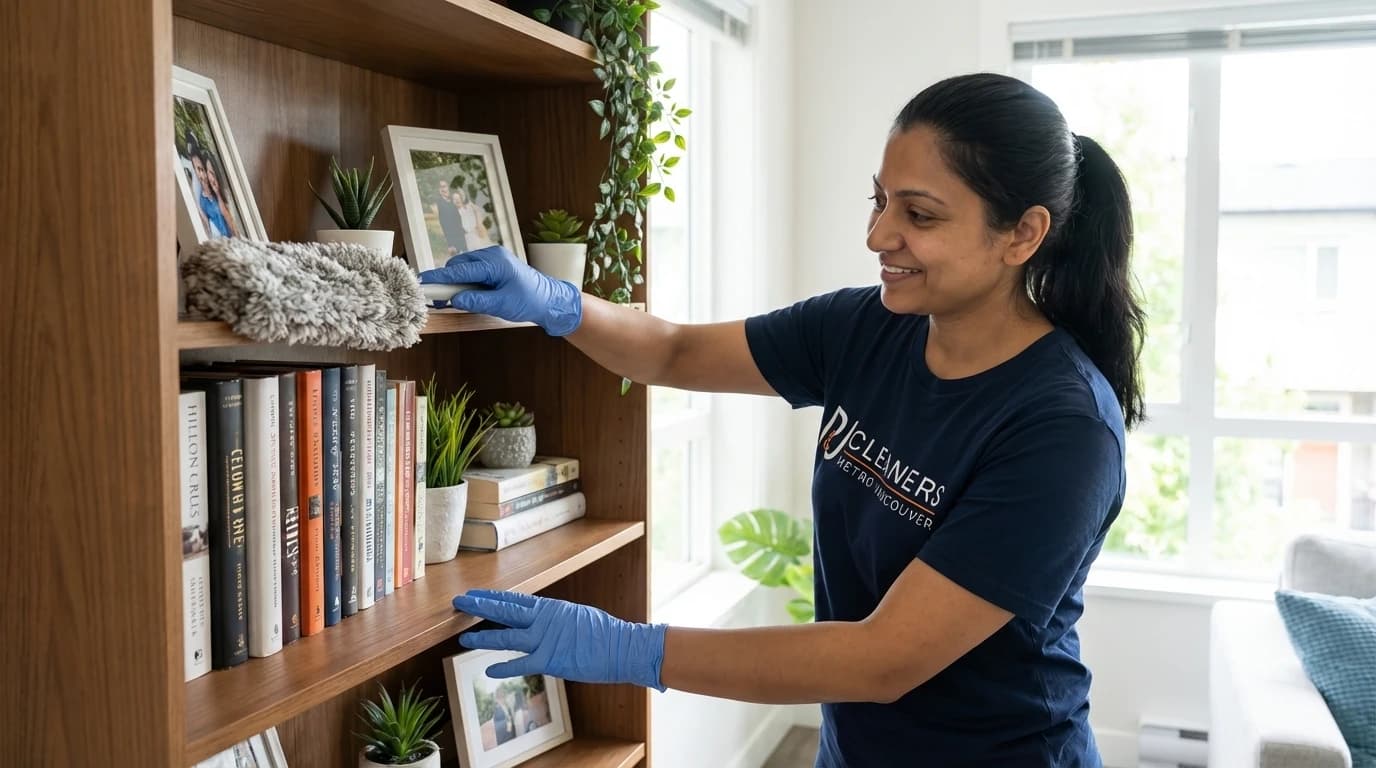
Dusting is the foundation of living room cleaning because airborne particles settle on every surface within hours. Research from the BC Health Authority shows that indoor dust contains skin cells, pollen, pet dander, and outdoor pollutants that accumulate rapidly in Metro Vancouver homes. Using the correct technique and tools prevents these particles from becoming airborne again. Always dust before vacuuming so fallen particles get captured by your vacuum's filtration system. Professional cleaners follow a strict top-to-bottom pattern that eliminates the need for re-cleaning and cuts total cleaning time significantly.
Microfibre cloths are essential for effective dusting because their split fibres create a static charge that attracts and holds dust particles. Cotton rags simply push dust around or release it back into the air. For electronics and screens, use a dry microfibre cloth to avoid moisture damage and streaking. Ceiling fans, light fixtures, and crown moulding should be dusted first using an extendable duster with a microfibre head. Work your way down to shelves, picture frames, and tabletops. Pay special attention to textured surfaces like woven baskets and decorative items where dust accumulates in crevices.
For wooden furniture, dust with the grain to avoid scratching the finish and creating micro-abrasions where dirt can lodge. Avoid furniture polish unless specifically needed, as buildup attracts more dust over time. Instead, use a barely damp microfibre cloth for stubborn spots. Electronics generate static that attracts dust, so wipe down TV screens, gaming consoles, and speakers weekly. Dust behind and underneath furniture quarterly to prevent allergen accumulation. Statistics Canada reports that regular dusting reduces respiratory irritants by up to 60% in residential spaces, making it crucial for families with allergies or asthma.
- Use extendable dusters for ceiling fans and light fixtures to avoid climbing on furniture
- Dust electronics with dry microfibre cloths to prevent static damage and moisture issues
- Clean decorative items by lifting them rather than dusting around them for thorough coverage
- Wash microfibre cloths after each use to maintain their dust-trapping effectiveness
- Dust window sills and blinds weekly as they collect outdoor pollutants in urban areas
Pro Tip
Dampen your microfibre cloth very slightly for extra dust-grabbing power, but never use it wet as excess moisture can damage wood finishes and electronics.
Related resources
Upholstery and Fabric Care
Sofas, chairs, and cushions harbour dust mites, pet hair, and allergens that require regular vacuuming and spot cleaning to maintain hygiene and appearance.
Upholstered furniture acts as a filter for airborne particles, trapping dust, skin cells, and allergens deep within fabric fibres. The ISSA estimates that sofas and chairs can harbour up to 10 times more bacteria per square inch than a toilet seat if not cleaned regularly. Vacuum all upholstery weekly using your vacuum's upholstery attachment, which has softer bristles that won't damage fabric. Work in overlapping strokes and pay extra attention to crevices where crumbs and debris accumulate. For homes with pets, vacuum upholstery twice weekly to control dander and hair buildup that affects air quality.
Spot cleaning spills immediately prevents permanent staining and bacterial growth in fabric fibres. Blot liquids with a clean white cloth, working from the outside of the stain inward to prevent spreading. Never rub or scrub as this pushes the stain deeper and damages fibres. For water-safe fabrics, use a solution of mild dish soap and water applied with a barely damp cloth. Test any cleaning solution on a hidden area first to check for colour fastness. For delicate fabrics like silk or velvet, consult the manufacturer's care tag or contact professional upholstery cleaners to avoid damage.
Deep clean upholstery every six to twelve months to remove embedded dirt and refresh fabric appearance. Professional steam cleaning uses hot water extraction to lift dirt and sanitize fibres without harsh chemicals. Between deep cleanings, sprinkle baking soda on upholstery, let it sit for 15 minutes to absorb odours, then vacuum thoroughly. This natural deodorizer is safe for all fabric types and particularly effective for homes with pets or smokers. Rotate cushions monthly to ensure even wear and prevent permanent body impressions. Fluff pillows weekly to maintain their shape and prevent dust from settling into compressed fibres.
- Vacuum upholstery in multiple directions to lift embedded dirt and pet hair from deep within fibres
- Use a lint roller between vacuuming sessions for quick pet hair removal from fabric surfaces
- Blot spills immediately with white cloths to prevent colour transfer and permanent staining
- Steam clean upholstery annually to sanitize and refresh fabric without chemical residue
- Check care tags before applying any cleaning solution to avoid damaging delicate fabrics
Pro Tip
Keep a small spray bottle of diluted white vinegar and water (1:1 ratio) for quick odour neutralization on upholstery between deep cleanings.

Floor Cleaning by Surface Type
Different flooring materials require specific cleaning methods to prevent damage while removing dirt, dust, and allergens effectively.
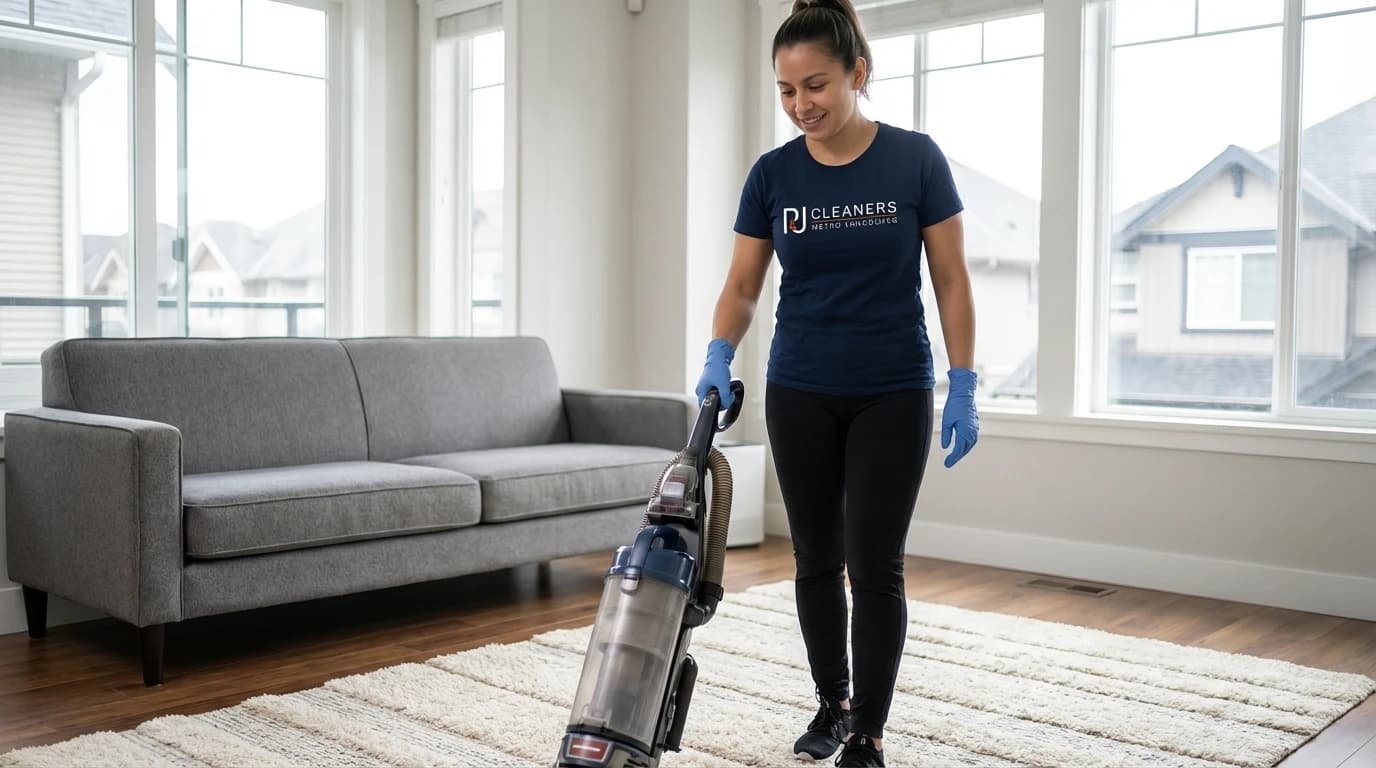
Hardwood floors need gentle care to preserve their finish and prevent water damage that causes warping or discolouration. Vacuum or sweep daily in high-traffic areas to remove abrasive dirt particles that scratch the surface. Use a vacuum with a hardwood floor setting or soft brush attachment rather than a beater bar, which can damage the finish. Damp mop weekly using a microfibre mop wrung nearly dry with a pH-neutral hardwood floor cleaner. Never use excessive water, steam mops, or vinegar solutions on hardwood as moisture penetrates seams and causes swelling. WorkSafeBC recommends immediate cleanup of spills to prevent moisture damage and slip hazards in residential spaces.
Carpeted living rooms require powerful vacuuming to remove dirt that settles deep into pile fibres and padding. Vacuum high-traffic areas twice weekly and the entire carpet weekly using slow, overlapping strokes that allow the vacuum to lift embedded particles. Empty bagless vacuums when half full and replace bags at 75% capacity to maintain suction power. For homes with pets or allergies, use a vacuum with HEPA filtration that captures 99.97% of particles as small as 0.3 microns. Spot clean carpet stains immediately by blotting with a clean cloth and applying carpet cleaner according to product directions. Professional carpet cleaning every 12-18 months removes deep dirt and extends carpet life significantly.
Tile and laminate floors tolerate more moisture than hardwood but still require proper care to prevent grout staining and surface dulling. Sweep or vacuum daily to remove grit that scratches the surface. Mop weekly with warm water and a pH-neutral floor cleaner, changing the water when it becomes visibly dirty. For tile floors, clean grout lines monthly using a grout brush and baking soda paste to prevent discolouration. Rinse thoroughly and dry with a clean towel to prevent water spots. Laminate floors should never be soaked with water as moisture can seep into seams and cause bubbling. Use a damp mop and dry the floor immediately with a microfibre cloth for a streak-free finish.
- Vacuum hardwood floors with soft brush attachments to prevent scratching the protective finish
- Use entrance mats to reduce dirt tracked into living rooms by up to 80% according to ISSA data
- Clean carpet spills within 24 hours to prevent permanent staining and bacterial growth
- Mop tile floors in a figure-eight pattern for thorough coverage without streaking
- Replace vacuum filters every 3-6 months to maintain optimal suction and air quality
Pro Tip
Place felt pads under furniture legs to prevent scratches on hardwood and tile floors when moving pieces during cleaning.
Related resources
Hard Surface Cleaning and Sanitization
Coffee tables, shelves, and entertainment centres require regular cleaning to remove fingerprints, spills, and bacteria that accumulate on frequently touched surfaces.
Hard surfaces in living rooms collect fingerprints, dust, and bacteria from constant contact with hands, food, and drinks. The CDC reports that high-touch surfaces can harbour bacteria for up to 48 hours without proper cleaning, making regular sanitization essential for family health. Start by removing all items from surfaces to clean thoroughly rather than working around objects. Spray an all-purpose cleaner or use a damp microfibre cloth with a small amount of dish soap for most surfaces. Wipe in one direction rather than circular motions to avoid streaking, then dry immediately with a clean cloth to prevent water spots and residue buildup.
Glass and mirrored surfaces require streak-free cleaning techniques for a professional finish. Mix equal parts white vinegar and water in a spray bottle for an effective, eco-friendly glass cleaner that costs pennies per bottle. Spray lightly and wipe with a microfibre cloth in vertical strokes, then horizontal strokes to eliminate streaks. For stubborn spots or buildup, use a small amount of rubbing alcohol on a cloth. Clean glass coffee tables and entertainment centre doors weekly to maintain clarity and remove fingerprints. Avoid cleaning glass in direct sunlight as rapid drying causes streaking that requires re-cleaning.
Wood furniture needs careful cleaning to preserve finishes and prevent moisture damage that dulls the surface over time. Use a barely damp microfibre cloth for routine cleaning, wiping with the grain to avoid scratching. For sticky residues or buildup, add a drop of dish soap to your cloth and wring it nearly dry before wiping. Dry immediately with a clean cloth to prevent water rings and finish damage. Apply furniture polish or wax only when the surface feels dry or rough, typically every few months rather than with each cleaning. Over-polishing creates buildup that attracts dust and requires stripping to remove. Statistics Canada data shows that proper wood care extends furniture life by 40% compared to improper cleaning methods.
- Disinfect high-touch surfaces like remote controls and light switches weekly during cold and flu season
- Use coasters and placemats to prevent water rings and heat damage on wood surfaces
- Clean electronics with screen-safe wipes to remove fingerprints without damaging anti-glare coatings
- Wipe down baseboards monthly to remove dust buildup that affects air quality
- Sanitize doorknobs and handles with disinfecting wipes to reduce germ transmission
Pro Tip
Keep a caddy with microfibre cloths, all-purpose cleaner, and glass cleaner in your living room for quick touch-ups between deep cleaning sessions.
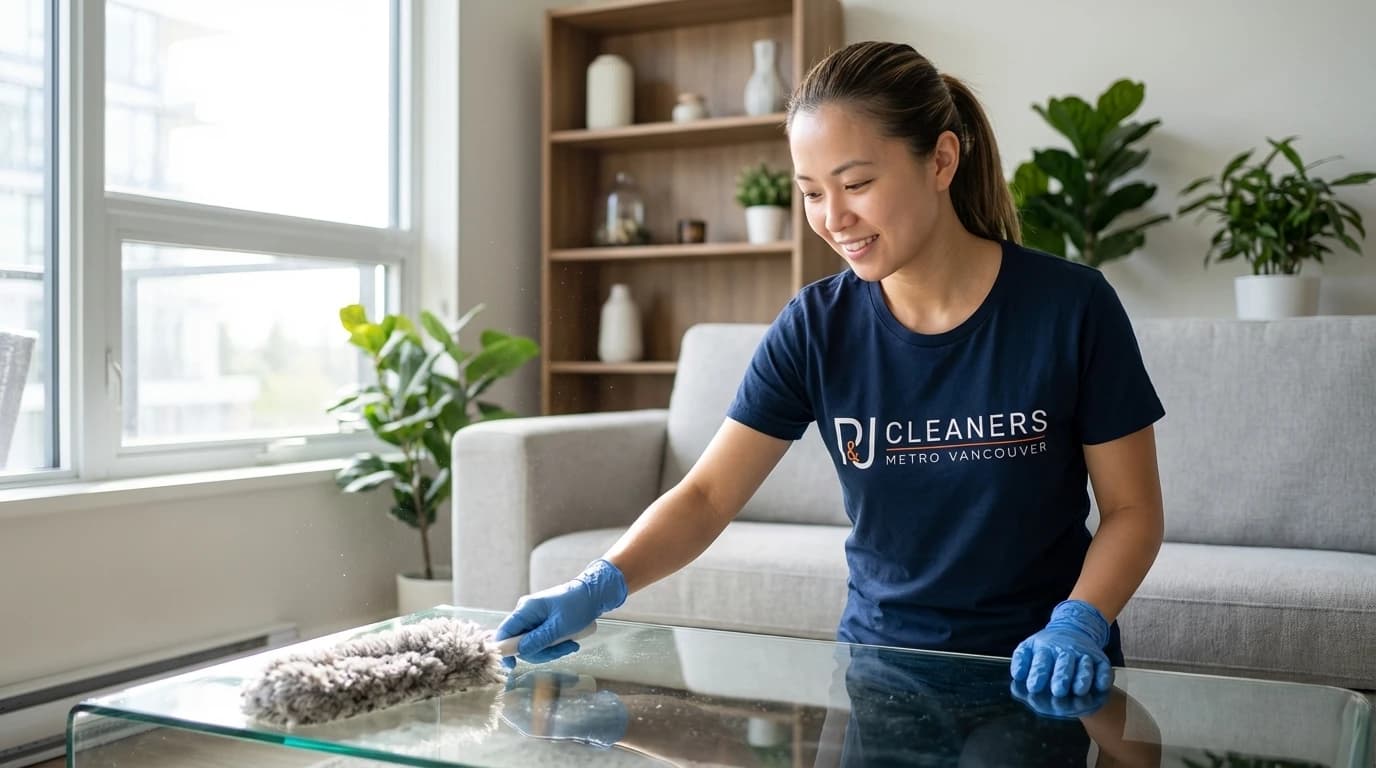
Windows and Treatment Maintenance
Clean windows and window treatments improve natural light, enhance views, and reduce allergen accumulation in fabric blinds and curtains.
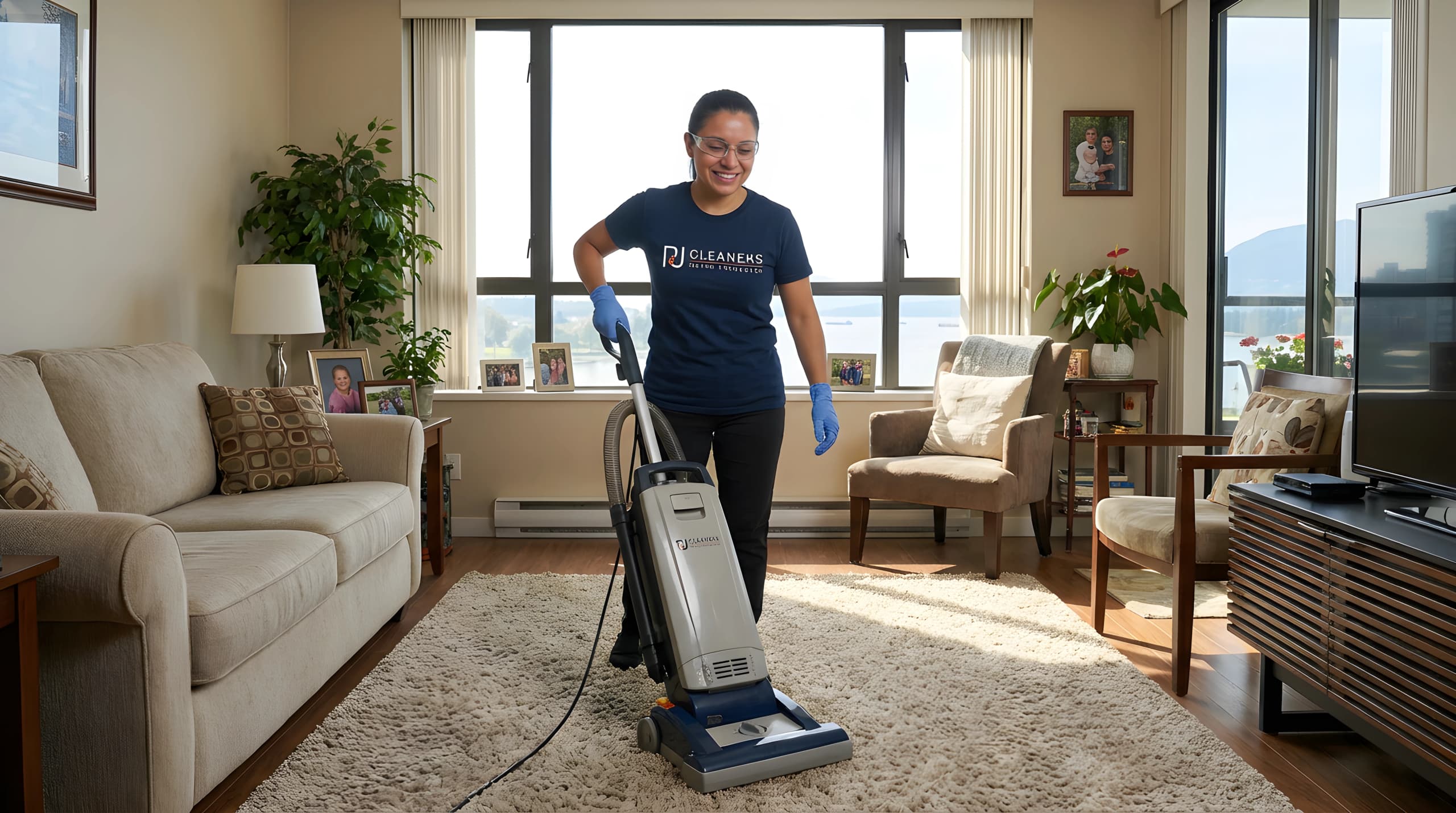
Windows are often overlooked in living room cleaning routines, yet dirty glass blocks up to 40% of natural light according to building maintenance research. Clean interior windows monthly and exterior windows quarterly for optimal light transmission and clear views. Start by dusting or vacuuming window frames and sills to remove loose dirt and cobwebs. Mix a solution of warm water and a few drops of dish soap, or use a commercial glass cleaner for streak-free results. Apply with a spray bottle and wipe with a microfibre cloth or squeegee, working from top to bottom in overlapping strokes. Dry edges with a clean cloth to prevent water from running down walls.
Window treatments collect dust and allergens that affect indoor air quality, especially in Metro Vancouver's humid climate where mould can develop on fabric. Vacuum curtains and drapes monthly using your vacuum's upholstery attachment, working from top to bottom. For machine-washable curtains, launder according to care instructions every three to six months to remove accumulated dust and odours. Blinds require different care depending on material: dust wooden blinds with a microfibre cloth, wipe vinyl blinds with a damp cloth, and vacuum fabric blinds weekly. For deep cleaning, remove blinds and soak in a bathtub with warm soapy water, rinse thoroughly, and air dry completely before rehanging.
Window screens trap outdoor pollutants and pollen that enter your home when windows are open. Remove screens twice yearly for thorough cleaning with a soft brush and soapy water. Rinse with a garden hose and air dry completely before reinstalling to prevent mould growth. For screens that cannot be removed, vacuum both sides monthly using a brush attachment. Clean window tracks and sills with a vacuum crevice tool to remove dirt and debris that prevents smooth operation. Use a small brush or old toothbrush with soapy water to scrub stubborn grime from tracks, then wipe dry. Proper window maintenance improves ventilation efficiency and reduces energy costs by allowing more natural light into your living space.
- Clean windows on cloudy days to prevent rapid drying that causes streaking
- Vacuum curtain hems where dust accumulates most heavily from air circulation
- Wipe down window sills weekly to prevent mould growth in Vancouver's humid climate
- Use a squeegee for large windows to achieve professional streak-free results
- Dust blinds weekly by closing them flat and wiping each slat with a microfibre cloth
Pro Tip
Add a few drops of essential oil to your window cleaning solution for a fresh scent that naturally repels insects during warmer months.
Organization and Decluttering Strategies
Maintaining an organized living room reduces cleaning time, improves functionality, and creates a more relaxing environment for family and guests.
Clutter makes cleaning more difficult and time-consuming because you must move items repeatedly to access surfaces. Implement a daily five-minute pickup routine where family members return items to their proper places before bed. Use decorative baskets and storage ottomans to contain remote controls, magazines, and throw blankets while maintaining a tidy appearance. Designate specific homes for frequently used items so they can be quickly put away rather than left on surfaces. Research from organizational experts shows that reducing visual clutter decreases stress levels and improves focus, making your living room a more comfortable space for relaxation and entertainment.
Evaluate your living room contents quarterly and remove items that no longer serve a purpose or bring joy to your space. Donate or discard broken items, outdated magazines, and decorative pieces that no longer match your style. Limit surface decorations to a few meaningful pieces rather than crowding shelves and tables with knick-knacks that collect dust. Use vertical storage solutions like wall-mounted shelves and floating cabinets to maximize floor space and reduce visual clutter. Keep only current-season items in your living room, storing off-season decorations and extra blankets in closets or storage areas to maintain a streamlined appearance.
Create functional zones within your living room to improve organization and reduce clutter accumulation. Designate a reading corner with a small bookshelf and lamp, a media zone around your entertainment centre, and a conversation area with seating. Use furniture placement to define these zones naturally without physical barriers. Install cable management solutions behind your entertainment centre to hide cords and prevent dust buildup. Label storage baskets and bins so family members know where items belong, making it easier to maintain organization between cleaning sessions. A well-organized living room requires 30-40% less time to clean according to professional cleaning industry standards, allowing you to spend more time enjoying your space.
- Implement a one-in-one-out rule for decorative items to prevent clutter accumulation
- Use drawer organizers in entertainment centres to keep remotes and cables tidy
- Store children's toys in labeled bins that can be quickly put away before guests arrive
- Keep a donation box in a closet for items you no longer need or use
- Digitize paper clutter like magazines and documents to reduce physical storage needs
Pro Tip
Take a photo of your living room when it's perfectly clean and organized, then use it as a reference for quick daily tidying to maintain that standard.
Related resources
Step-by-Step
7-Step Professional Living Room Cleaning Method
Follow this systematic approach used by professional cleaners to achieve thorough results in 45-90 minutes depending on room size and condition.
Prepare Your Space and Gather Supplies
Begin by removing obvious clutter and gathering all necessary cleaning supplies in a portable caddy for efficiency. Open windows for ventilation if weather permits, improving air circulation and helping surfaces dry faster. Turn on overhead lights to spot dust and dirt more easily. Remove small decorative items from shelves and tables so you can clean thoroughly rather than working around objects. This preparation phase takes five to ten minutes but significantly improves cleaning efficiency and results. Having all supplies within reach prevents interruptions and keeps you focused on the task at hand.
- Collect microfibre cloths, all-purpose cleaner, glass cleaner, vacuum with attachments, and mop
- Remove clutter, toys, and unnecessary items from surfaces and floors
- Open windows for ventilation and turn on lights for better visibility
- Put away items that don't belong in the living room
- Check vacuum bag or canister and empty if more than half full
Dust from Ceiling to Floor
Start at the highest points in your living room and work downward so falling dust lands on surfaces you haven't cleaned yet. Use an extendable duster for ceiling fans, light fixtures, and crown moulding. Dust shelves, picture frames, and decorative items by lifting them rather than dusting around them. Wipe down electronics with a dry microfibre cloth to prevent static damage. Clean window sills and blinds thoroughly as they collect outdoor pollutants. This systematic approach prevents re-contamination and ensures you don't miss any surfaces. Dusting before vacuuming allows your vacuum to capture fallen particles rather than leaving them on the floor.
- Dust ceiling fans, light fixtures, and crown moulding with extendable duster
- Wipe down shelves, picture frames, and decorative items with microfibre cloth
- Clean electronics and screens with dry microfibre cloth
- Dust window sills, blinds, and curtain rods thoroughly
- Wipe baseboards and door frames to remove accumulated dust
Vacuum Upholstery and Carpets
Use your vacuum's upholstery attachment to clean sofas, chairs, and cushions thoroughly, working in overlapping strokes to lift embedded dirt and pet hair. Pay special attention to crevices where crumbs and debris accumulate. Remove cushions and vacuum underneath and behind them where dust collects. For carpeted floors, vacuum in multiple directions using slow, deliberate strokes that allow the vacuum to lift dirt from deep within pile fibres. Empty the vacuum canister or replace the bag when it reaches 75% capacity to maintain optimal suction power. This step removes the majority of allergens and improves indoor air quality significantly.
- Vacuum all upholstered furniture using the upholstery attachment
- Remove and vacuum under cushions and in crevices
- Vacuum carpets and area rugs in multiple directions with slow strokes
- Use crevice tool for edges and corners where dirt accumulates
- Empty vacuum canister or replace bag to maintain suction power
Clean Hard Surfaces and Furniture
Wipe down all hard surfaces including coffee tables, end tables, entertainment centres, and shelves using appropriate cleaners for each material. Remove all items from surfaces before cleaning rather than working around them. Use a barely damp microfibre cloth for wood furniture, wiping with the grain to prevent scratching. Clean glass surfaces with glass cleaner and a microfibre cloth, using vertical then horizontal strokes for a streak-free finish. Sanitize high-touch surfaces like remote controls, light switches, and doorknobs with disinfecting wipes. Dry all surfaces immediately to prevent water spots and finish damage. This step removes bacteria and creates a polished appearance throughout your living room.
- Wipe down coffee tables, end tables, and shelves with appropriate cleaners
- Clean glass surfaces with glass cleaner for streak-free results
- Sanitize remote controls, light switches, and doorknobs
- Wipe down entertainment centre and TV screen with appropriate cloths
- Dry all surfaces immediately to prevent water spots
Clean Windows and Window Treatments
Start by dusting or vacuuming window frames, sills, and tracks to remove loose dirt and cobwebs. Clean interior glass using glass cleaner and a microfibre cloth or squeegee, working from top to bottom in overlapping strokes. Wipe edges dry to prevent water from running down walls. Vacuum curtains and drapes using the upholstery attachment, working from top to bottom. Dust or wipe blinds according to their material type. Clean window tracks with a vacuum crevice tool and small brush to remove accumulated dirt. This step maximizes natural light and improves the overall appearance of your living room significantly.
- Dust or vacuum window frames, sills, and tracks
- Clean interior glass with glass cleaner and microfibre cloth
- Vacuum curtains and drapes from top to bottom
- Dust or wipe blinds according to material type
- Clean window tracks with crevice tool and small brush
Clean Floors by Surface Type
Sweep or vacuum hard floors to remove loose dirt and debris before mopping. For hardwood floors, use a barely damp microfibre mop with pH-neutral cleaner, working in the direction of the wood grain. Mop tile and laminate floors with warm water and appropriate cleaner, changing water when it becomes dirty. Dry floors immediately with a clean microfibre cloth to prevent water spots and slipping hazards. For carpeted areas, spot clean any stains using carpet cleaner and a clean cloth, blotting rather than rubbing. This final step completes your living room cleaning and creates a fresh, polished appearance from floor to ceiling.
- Sweep or vacuum hard floors to remove loose dirt
- Mop hardwood floors with barely damp microfibre mop and pH-neutral cleaner
- Mop tile or laminate floors with appropriate cleaner and warm water
- Dry floors immediately to prevent water spots and slip hazards
- Spot clean carpet stains with carpet cleaner and blotting technique
Final Touches and Maintenance
Complete your cleaning session by replacing cushions, returning decorative items to their places, and doing a final visual inspection for missed spots. Empty all trash bins and replace liners. Fluff pillows and straighten throw blankets for a polished appearance. Close windows if you opened them for ventilation. Put away all cleaning supplies and wash microfibre cloths for next time. Take a moment to enjoy your clean living room and note any areas that need special attention during your next cleaning session. Regular maintenance using this systematic approach keeps your living room consistently clean with less effort over time.
- Replace cushions and return decorative items to their proper places
- Empty trash bins and replace liners
- Fluff pillows and straighten throw blankets
- Do final visual inspection for missed spots or areas needing touch-up
- Put away cleaning supplies and wash microfibre cloths
Services mentioned in this article
Ready for help?
4.9 · 850+ Google reviewsProfessional Living Room Cleaning in Metro Vancouver
Let P&J Cleaners handle the details while you enjoy a spotless living space. Our trained team offers eco-friendly products upon request and surface-specific techniques across all 39 Metro Vancouver locations.
778-720-2224Living Room Cleaning Questions
How to clean a living room fast?
Start with decluttering, then dust from top to bottom using microfibre cloths. Vacuum upholstery and floors in one pass, spot-clean visible stains, and finish with glass surfaces. This systematic approach takes 25-35 minutes for an average living room. Focus on high-traffic zones first and skip deep-cleaning tasks that can wait for weekly sessions.
How to dust effectively?
Use dry microfibre cloths on hard surfaces and slightly damp cloths for sticky residue. Work top to bottom so falling dust lands on uncleaned areas. Capture dust rather than spreading it by folding the cloth frequently to expose clean sections. According to the American Lung Association, proper dusting removes 95% of allergens when done with the right tools and technique.
How to clean upholstery?
Vacuum upholstery weekly using the brush attachment to remove surface dust and pet hair. For stains, blot immediately with a clean cloth, then apply a fabric-safe cleaner following the manufacturer's code (W for water-based, S for solvent-based, WS for either). Test cleaners on hidden areas first. Professional steam cleaning every 12-18 months extends fabric life by 40%.
How to clean hardwood floors?
Sweep or vacuum daily to prevent scratches from dirt particles. Damp-mop weekly with a hardwood-specific cleaner diluted per instructions. Never saturate wood floors as excess moisture causes warping. Use felt pads under furniture legs and area rugs in high-traffic zones. The National Wood Flooring Association recommends professional refinishing every 7-10 years to maintain finish integrity.

Meet the Author
Pamela
Co-Founder
Pamela leads residential quality standards at P&J Cleaners, refining safe, detail-driven cleaning systems for Vancouver homes, condos, and move-out projects.
Keep Exploring