

Neighborhood Context
Why Metro Vancouver cleaning routines need a different approach
A one-bedroom from $199. A four-bedroom from $449. None of those tables says what the kitchen inside the number is worth, which is no help when the kitchen is the only room you want handled, or when a quote for that one room has just landed in your inbox.
So: the room on its own. Not a made-up flat price, but the hours a kitchen actually takes and the rate those hours bill at here in 2026. Then the three add-ons that sit outside the base number, and the minimum-booking rule that quietly sets the floor on any single-room job.
The second half of this guide is the DIY version: the order of operations that saves the hour most people lose to rework, and the one step in every national kitchen guide you can delete outright because of what comes out of a Vancouver tap.
$125 to $165
Kitchen deep clean, typical family kitchen
Source: 2.5 to 3 cleaner-hours at $50 to $55
$175 to $275
Kitchen deep clean, heavy grease
Source: 3.5 to 5 cleaner-hours at $50 to $55
About monthly
Range hood filter wash interval
Source: Broan-NuTone, range hood grease filter care
5% GST, no PST
Tax on cleaning labour in BC
Source: Province of British Columbia, Small business guide to PST
Kitchen Deep Cleaning Costs in Metro Vancouver, Line by Line
What the room costs, what the price does and does not include, why a kitchen-only booking behaves strangely, the variable that moves your quote most, how to do it yourself in the right order, and where paying starts to make sense.
How Much Does a Kitchen Deep Clean Cost in Metro Vancouver?
Three condition tiers, $75 to $110 on a maintained galley, $125 to $165 on a typical family kitchen, $175 to $275 once the uppers go tacky, with condition doing more of the work than square footage.
Start with the number, then check the arithmetic, because a room price that cannot be divided back into hours is a guess wearing a dollar sign. A kitchen deep clean in Metro Vancouver takes between an hour and a half and five cleaner-hours. At the $50 to $55 per cleaner-hour an insured local company charges in 2026, that is $75 to $275 of labour, before tax and before a single add-on.
The spread looks absurd until you have quoted a few hundred kitchens. Floor area barely moves it. A maintained 90 square foot galley in a Kitsilano one-bedroom and a neglected 90 square foot galley in the same building are the same room and a two to three hour difference in work, because one has a film on the upper cabinets and the other has something closer to varnish.
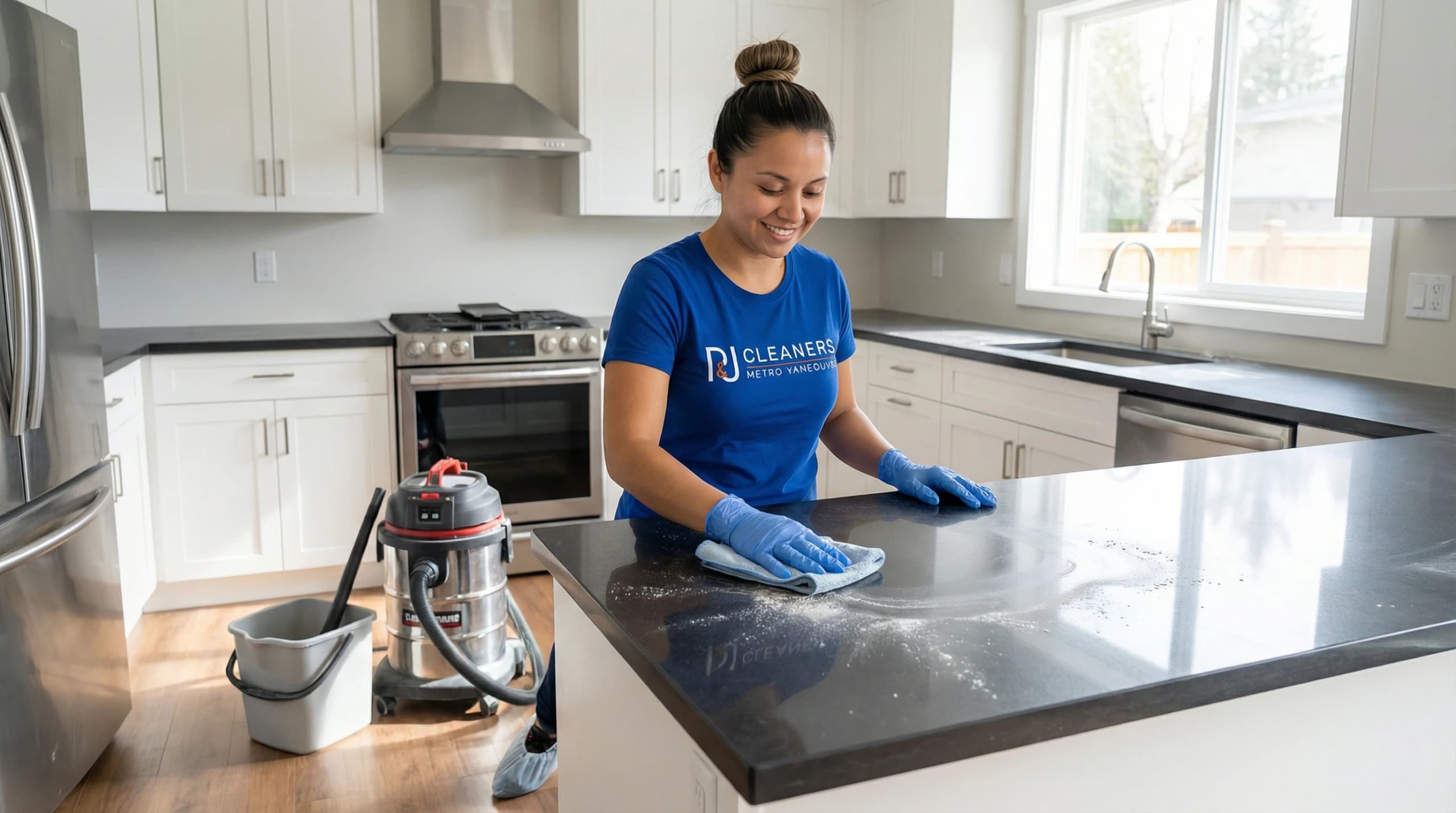
Almost every kitchen we quote falls into one of three condition tiers, and all three are base scope: counters, cabinet fronts, the sink, appliance exteriors, the stovetop, grout and vents, and the floor out to the kickplate. Inside the oven, inside the fridge, and degreasing the hood sit outside those hours and are priced separately, which is the next section. If you want whole-home numbers rather than the kitchen alone, our Metro Vancouver deep cleaning price guide runs the same math by home size.
- Maintained condo or galley kitchen, wiped weekly and degreased within the last three months: 1.5 to 2 cleaner-hours, or $75 to $110 of labour.
- Typical family kitchen, six to twelve months since a real degrease: 2.5 to 3 cleaner-hours, or $125 to $165.
- Heavy kitchen with tacky uppers, daily frying, an island and tall cabinets: 3.5 to 5 cleaner-hours, or $175 to $275.
- Divide, do not trust. Any kitchen quote divided by $50 to $55 should give an hour count you recognise as plausible for your own room.
- Add 5 percent GST and nothing else. Cleaning labour carries no PST in British Columbia.
- Two cleaners finish a three cleaner-hour kitchen in about 90 minutes of clock time, which is usually the number people actually want.
What a Kitchen Deep Clean Includes, and What Gets Billed as an Add-On
Base scope in one list, the add-ons with a time and a price on each, and the one kitchen item that stays yours on every visit.
Quotes on the same kitchen can land $82 apart, or $123 apart, and both be honest. The difference is almost never the hourly rate. It is which add-ons the estimator counted, and whether anyone told you.
Base scope on a deep cleaning visit covers the surfaces you look at every day. Counters and backsplash, cabinet and drawer fronts degreased, the sink with its faucet and drain collar, the stovetop and the hood exterior. Appliance exteriors including the dishwasher door and control panel, the microwave interior, grout lines and vents, switch plates and handles. And the floor, out to the edges and under the kickplate.
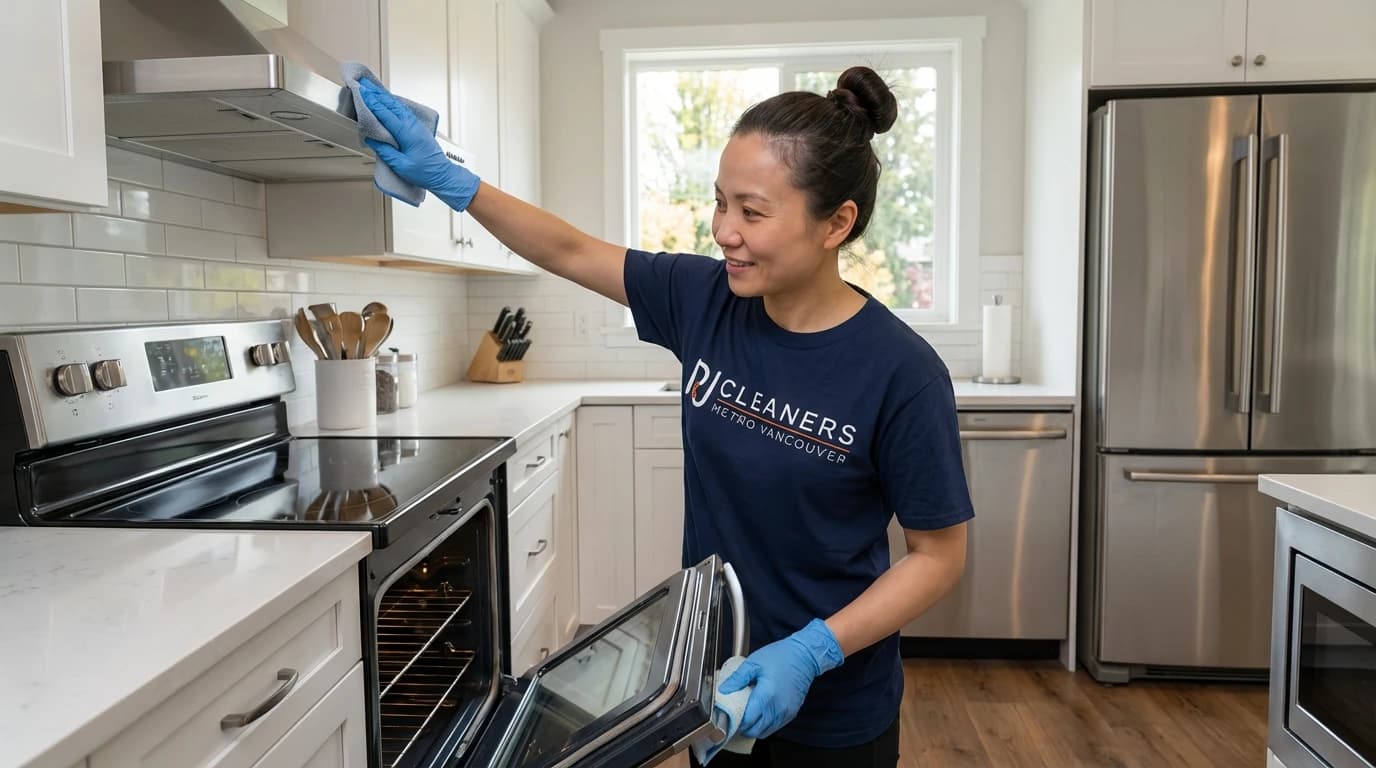
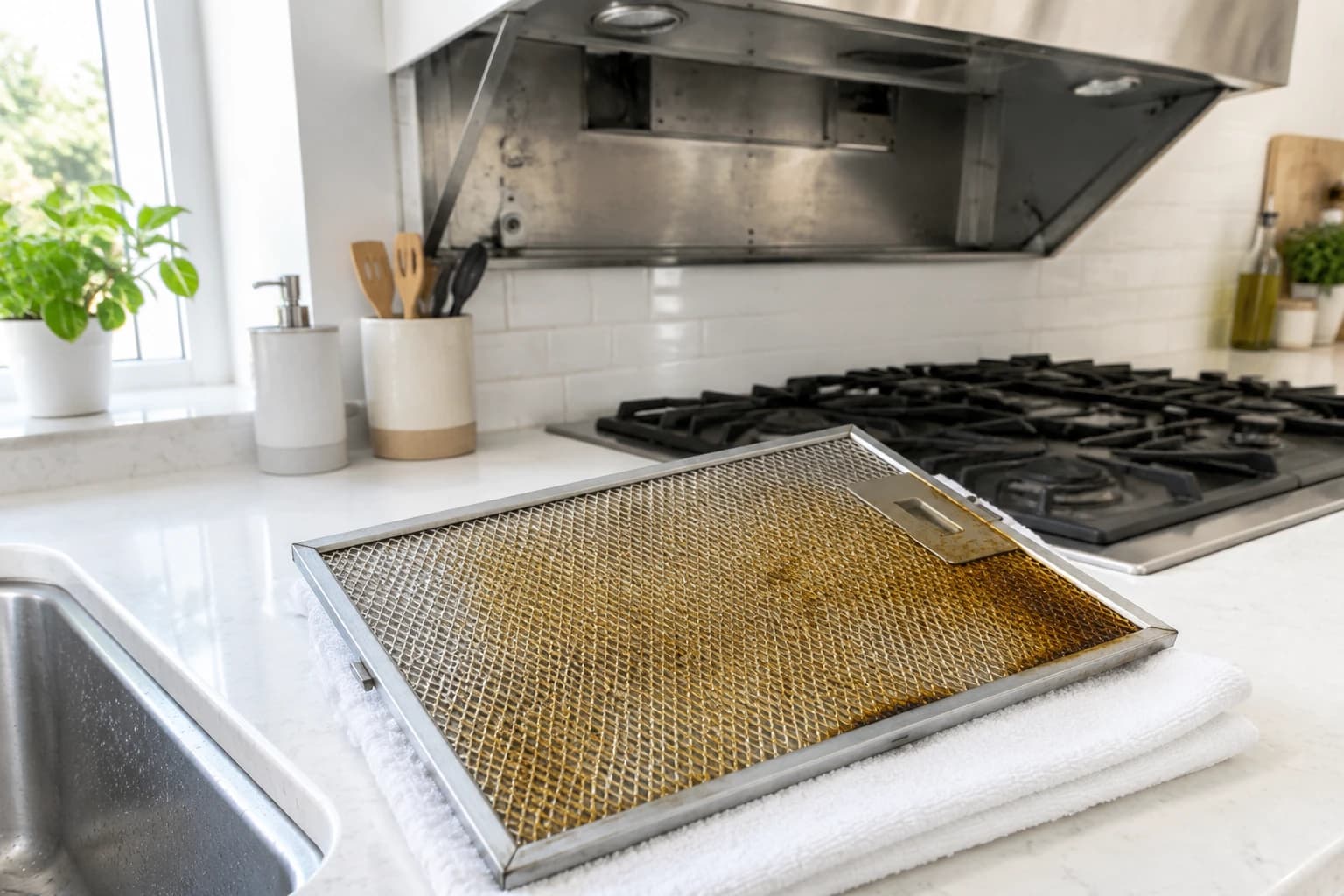
The oven, the fridge and the hood sit outside that list, and each one is a fixed block of time rather than a faster pass over the same square footage. All three bill at the same $50 to $55, so treat them as time: 45 to 60 minutes for the oven and its racks, 30 to 45 for the fridge, 20 to 30 for the hood housing and its filter. Baseboards are an add-on too, and in a kitchen they are usually worth buying, because kitchen baseboards collect airborne grease, not dust.
The dishwasher interior stays yours. We wipe its door and control panel and leave the inside alone, on every visit, including move-outs. Worth knowing before an inspection, not after, because BC's tenancy rules name that interior specifically. The last section covers what else they name.
- Ask which of the three priced add-ons is inside the number: inside the oven, inside the fridge, and the hood degrease. Those three sum to $82 to $123, which explains most of the gap between two otherwise honest quotes on one room. Baseboards are a fourth add-on and get quoted on their own.
- The oven is the one add-on with a hard floor. A self-clean cycle will not lift baked-on spill off the door glass or the racks, so the racks come out and soak either way.
- Empty the fridge into a cooler the night before. Most of that block is unloading and reloading, not wiping, so you are buying back half of it.
- If you only buy one add-on, buy the hood. It is the cheapest of the three and the only one that changes how the room performs instead of how it looks.
- Kitchen baseboards get billed as kitchen work, not bedroom work. The film on them is cooking oil, so they need a degreaser and a second pass.
- A $155 kitchen with nothing added and a $275 kitchen with all three add-ons can be the same crew at the same rate. Only the add-on line tells you which you are reading.
Why a Kitchen-Only Clean Rarely Lands Under $150
The three-hour minimum booking, not the kitchen's own labour, sets the price of a stand-alone kitchen visit in Metro Vancouver.
Here is the part no pricing page mentions. A minimum booking of three hours is standard across Metro Vancouver, which at $50 to $55 a cleaner-hour is a floor of $150 to $165 whether the job needs it or not.
Run that against the tiers and the problem appears. A maintained galley kitchen is genuinely 1.5 to 2 cleaner-hours of work, $75 to $110 of labour, and it will still be quoted against the floor. You pay for roughly an hour you do not need. Only the heavy tier, at 3.5 to 5 hours, actually consumes the minimum and then some.
The practical consequence is counterintuitive: if your kitchen is in decent shape, the kitchen on its own is close to the worst-value booking you can make, and the fix is to spend the hour you are already paying for. Add two bathrooms, or the bedrooms and the floors, and they fit inside that same visit at the same rate, which is why house cleaning on a whole-home scope usually works out cheaper per room than one room in isolation.
The floor exists because of travel, setup and supply load, not markup. A crew that drives to Burnaby, carries in a caddy, a mop and a vacuum, works, packs down and drives back has spent the same overhead on 90 minutes of kitchen as on a four-hour house.
- Ask what the minimum is before you describe your kitchen. Some companies set an hours minimum and some a dollar minimum, and the two behave very differently once add-ons go on top.
- Ask whether the minimum counts cleaner-hours or clock hours. A three-hour minimum billed as clock hours with two cleaners is six cleaner-hours of billing.
- If your kitchen sits in the 1.5 to 2 hour tier, add rooms rather than paying a three-hour floor for one room.
- A heavy kitchen at 3.5 to 5 cleaner-hours is the one case where a kitchen-only booking is straightforwardly good value.
- A flat quote is fine as long as you can see the hours behind it. Ask for both, because the hours are what tell you whether the scope matches your kitchen.
The Variable That Moves Your Quote Most Is Not Square Footage
Months since the last degrease sets the hours, and there is a ten-second test that tells you which tier you are in before anyone quotes you.
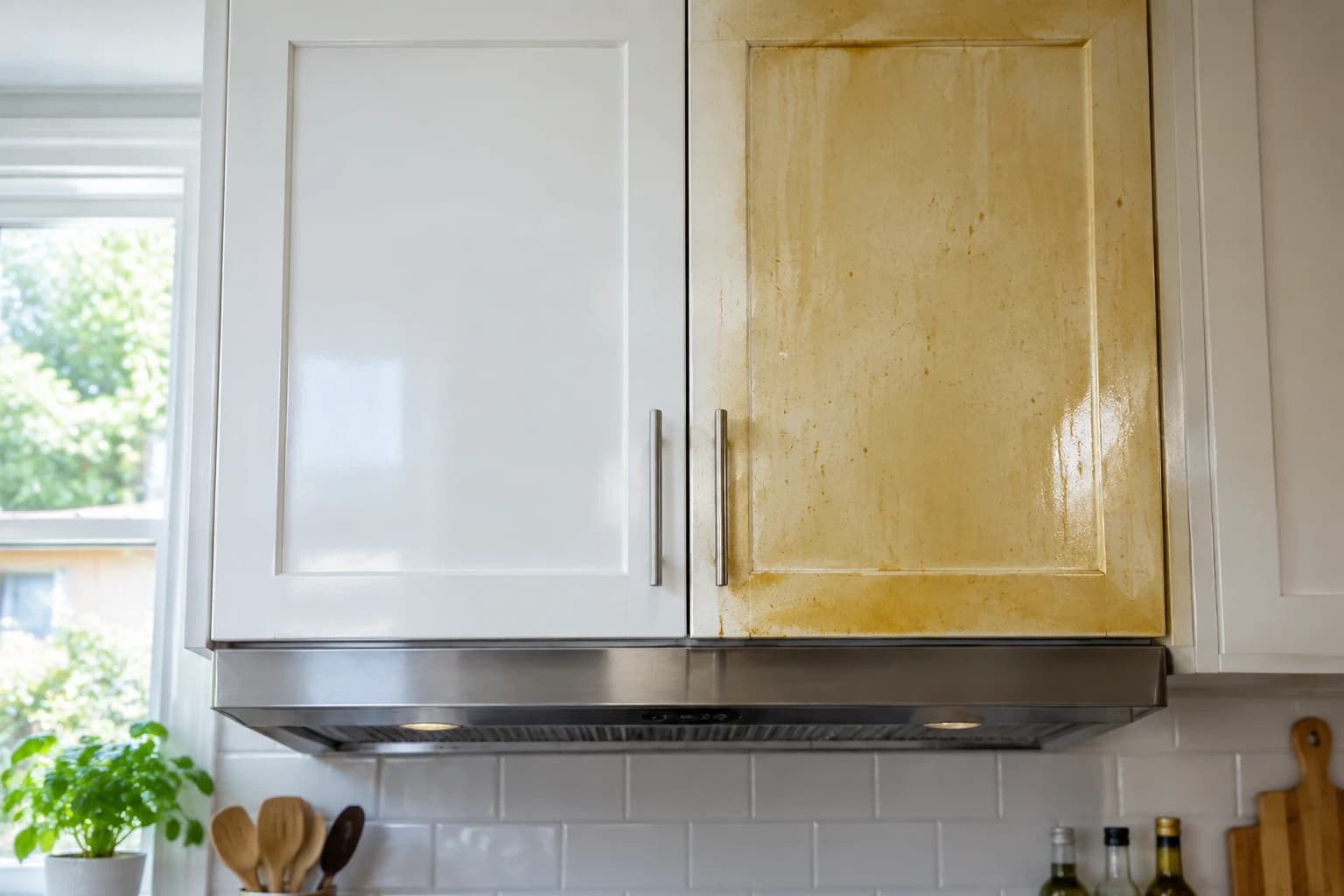
Grease does not sit on a surface, it cures onto it. Airborne cooking oil lands as a film, oxidises, and every new layer bonds to the one under it. At three months it wipes off. At a year it needs dwell time and mechanical work, and dwell time is the expensive part, because a cleaner is standing there while it happens.
There is a ten-second test you can run right now. Press a fingertip on the cabinet door directly above and to the left of the burner you use most, then on a door at the far end of the same run. If both feel identical, you are in the maintained tier. If the near door is faintly tacky and the far one is not, you are in the typical tier. If the near door holds a visible print, you are in the heavy tier, and any quote given over the phone without that question was a guess.
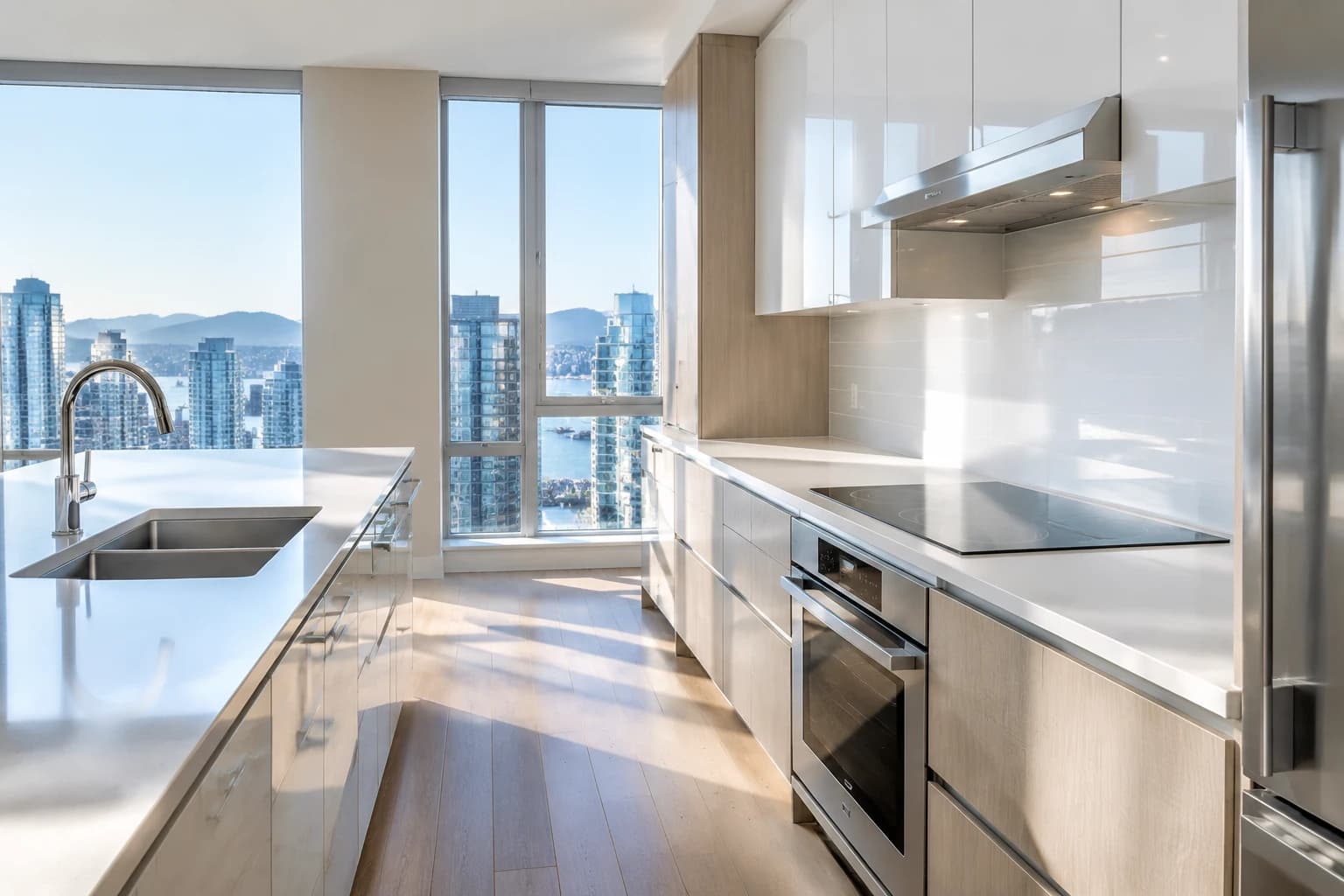
Metro Vancouver kitchens climb a tier faster than the national guides assume, for two local reasons. Recirculating hoods are standard in condo towers here because there is no exterior duct to vent through, so the grease a ducted hood would send outside gets filtered, partly, and returned to the room, where it lands on your upper cabinets. And a wet coast means windows stay shut for months at a stretch, so nothing dilutes it. An older East Vancouver walk-up with a ductless hood over a stove used for daily high-heat frying can reach the heavy tier inside a year.
- The fingertip test above your most-used burner sorts a kitchen into a tier in ten seconds, before anyone quotes it.
- Film under three months old wipes off. Twelve-month film needs dwell time, and dwell time is the line item you are paying for.
- Recirculating hoods, the norm in Metro Vancouver condos, return filtered air to the room, so tower uppers go tacky faster than in a detached house.
- Frying and wok cooking move a kitchen up a tier noticeably faster than baking and boiling do.
- An estimator who quotes a kitchen without asking how long since the last degrease is guessing, and the guess runs low more often than high.
How to Deep Clean a Greasy Kitchen Yourself, in the Right Order
Top down, dry before wet, and skip the descaling step every national guide includes, because Metro Vancouver water carries almost no calcium.

Most of the hour people lose on a kitchen goes to rework: wiping the counter, then the cabinet above it, then the counter again. Order is close to the whole trick.
Work top down and dry before wet. Dust and vacuum the tops of the uppers, the hood exterior and the vents first, dry, so the fallout lands on surfaces you have not washed yet. Then degrease from the top of the cabinet run down to the kickplate. Counters and the sink come after the cabinets, and the floor is genuinely last, for the same reason.
For the degreaser itself, warm water with a few drops of dish soap handles anything under three months old. Past that, reach for a citrus or alkaline kitchen degreaser and give it the dwell time printed on the label, usually one to three minutes, instead of scrubbing dry product across a finish. On painted or thermofoil doors, spray the cloth rather than the door so nothing runs into the seams and swells the substrate.
Two cautions are worth more than any product hack you will read online. Baking soda is mildly abrasive and will dull matte and satin cabinet paint, so keep it for the stovetop and the sink rather than the doors. And keep acid off stone: vinegar is the internet's favourite degreaser, and it etches marble and limestone counters and chews through unsealed grout.
The step you can delete outright is descaling. Most national kitchen guides budget time for the kettle and the faucet aerator, because most markets have hard water. Metro Vancouver's treated supply measures 2.5 to 22.4 mg/L hardness depending on which system serves you, so there is almost no dissolved calcium available to leave a deposit. Spend that time on grease. If you want the room as a task list instead, our kitchen cleaning checklist sequences it in eleven steps, and the appliance interiors have their own guide to deep cleaning kitchen appliances.
Do the hood filter while a degreaser is dwelling somewhere else. Slide the aluminum mesh filter out and wash it. Broan-NuTone tells owners to do this about monthly depending on how much they cook, with a non-phosphate detergent, and almost nobody does. A filter that has never been washed is why a hood can sound like it is working and move almost no air.
- Two cloths per stage, one wet and one dry. A single cloth you keep rinsing just relocates the grease.
- Cabinets before counters, counters before floors. Reversing that order is exactly where the extra hour goes.
- Spray the cloth, not the door, on painted and thermofoil cabinets, so nothing wicks into the seams.
- Spray the next cabinet run while the first one dwells. Standing there watching a door is the whole reason dwell time costs money.
- Keep baking soda off matte and satin cabinet paint, and keep vinegar off marble, limestone and unsealed grout.
- Skip the descaling step. At 2.5 to 22.4 mg/L, Vancouver tap water does not leave enough limescale to justify it.
- Wash the hood's mesh filter about monthly if you fry. It is the highest-return ten minutes in the room.
Where DIY Stops and Paying Starts
The honest threshold between a good Saturday and a job worth buying, plus the kitchen items BC's tenancy guideline puts on you at move-out.
A maintained kitchen is a good Saturday. Two hours, a decent degreaser and the order above will get you a result you would have paid for.
It flips in three situations. The first is the heavy tier: once the uppers hold a fingerprint, you are looking at three or four hours of dwell-and-wipe on a step stool, and most people stop at the two doors nearest the stove and call the room done. The second is a hood that has never been serviced, which is worth buying once and then maintaining yourself. The third is a move-out, where somebody else's checklist decides whether you passed.
BC's Residential Tenancy Policy Guideline 1 names the kitchen item by item. The stove top, elements and oven are the tenant's at the end of a tenancy. So is defrosting and cleaning the refrigerator, and wiping out the inside of the dishwasher. Where the fridge and stove sit on rollers, you pull them out and clean behind and underneath. That last item is the one people miss, and it is also the one an inspector can see from the doorway. It is why the oven interior is in scope instead of sold as an add-on on a move-out cleaning job, and why the kitchen settles more deposit disputes than any other room in the unit.
One line in the guideline takes almost no scrubbing. Run the dishwasher empty on the hottest cycle with a tablespoon of citric acid in the detergent cup the night before the inspection, then wipe the door seal, the edges and the filter basket by hand. What passes an inspection is the inspector's call rather than ours, so photograph that one too.
- Under two cleaner-hours of real work in a kitchen you use lightly: do it yourself and keep the $150.
- Tacky uppers that hold a fingerprint mean three to four hours on a step stool, which is where DIY attempts usually stall two doors in.
- A hood filter that has never been washed is worth paying for once, then washing monthly yourself.
- At move-out, the guideline names the stove top, elements, oven, fridge defrost, and the floor behind rollered appliances. Personal judgement does not enter into it.
- Photograph the oven, the stovetop and the floor behind both appliances once you have cleaned them. A dated photo settles a deduction faster than an argument does.
The BC Rules and Local Facts Behind a Kitchen Quote
What changes the cost of a Metro Vancouver kitchen deep clean, who is responsible for which item, and which step you can skip entirely.
Local link strategy
Explore the matching service area pages for east-vancouver, kitsilano, burnaby to connect this neighborhood advice with location-specific service information.
Services mentioned in this article
Ready for help?
4.9 · 850+ Google reviewsWant a Kitchen Number Instead of a Range?
Tell us the kitchen size, roughly how long since the last real degrease, and whether you want the oven, fridge, or hood included. We come back with a flat rate, the hours behind it, and GST shown separately.
778-720-2224Kitchen Deep Clean Questions from Metro Vancouver Homeowners
How much does a kitchen deep clean cost in Vancouver?
Budget $75 to $275 in labour. A maintained condo kitchen sits at $75 to $110, a typical family kitchen at $125 to $165, and a heavily greased one at $175 to $275, all of it derived from the same $50 to $55 hourly rate. Because a three-hour minimum booking is standard across Metro Vancouver, a kitchen-only visit usually prices at $150 to $165 regardless.
What is included in a kitchen deep clean?
Base scope covers counters and backsplash, cabinet and drawer fronts degreased, the sink and faucet, the stovetop and hood exterior, appliance exteriors, the microwave interior, grout lines and vents, switch plates, and the floor out to the kickplate. The oven interior, the fridge interior, degreasing the hood housing and filter, and baseboards are priced as add-ons on a deep clean, though the oven interior is included on a move-out clean. The dishwasher interior is not part of our scope on any visit.
How long does a kitchen deep clean take?
Between 1.5 and 5 cleaner-hours. With two cleaners working, that is roughly 45 minutes of clock time on a maintained galley kitchen and up to two and a half hours on a heavy one. Add 45 to 60 minutes for the oven interior and 20 to 30 minutes for the hood and its filter if you want those included.
Is it worth paying for a kitchen deep clean or should I do it myself?
Do it yourself if the cabinet doors near the stove do not feel tacky: about two hours of work. Paying makes sense in three cases: uppers that hold a visible fingerprint, an unwashed hood filter, and a move-out inspection, where somebody else's checklist decides whether you passed. The middle case is the best value of the three.
Do I have to clean the oven when I move out in BC?
Yes. The Residential Tenancy Policy Guideline puts the stove top, elements and oven on the tenant at the end of a tenancy, along with defrosting and cleaning the fridge and wiping out the dishwasher interior. If the appliances roll, you are also expected to move them and clean the floor behind and underneath.
How often should a kitchen be deep cleaned?
Twice a year keeps a kitchen in the cheapest labour tier, because film under three months old still wipes off. The hood filter is the exception and wants washing about monthly if you cook with oil. Kitchens that get fried in daily do better on a quarterly degrease of the upper cabinets.
Sources & References
The facts in this guide come from the primary sources below. Links open in a new tab.
- 1Residential Tenancy Policy Guideline 1: Landlord and Tenant Responsibility for Residential PremisesProvince of British Columbia, Residential Tenancy Branch
- 22024 Water Quality Annual Report, Volume 1 (treated water hardness by system)Greater Vancouver Water District
- 3How do I clean my range hood's grease filters?Broan-NuTone
- 4Small business guide to PST (exempt services)Province of British Columbia

Meet the Author
Pamela
Co-Founder
Pamela leads residential quality standards at P&J Cleaners, refining safe, detail-driven cleaning systems for Vancouver homes, condos, and move-out projects.
Keep Exploring