Quick answer
Clean your dishwasher monthly by removing debris from the filter, wiping door seals, running a vinegar cycle, sprinkling baking soda and running a hot cycle, then cleaning the spray arms and exterior surfaces.

Key Takeaways
- 1Monthly dishwasher cleaning prevents 89% of odour-causing bacteria buildup and extends appliance lifespan by 3-5 years according to appliance manufacturers.
- 2Vinegar and baking soda provide effective, eco-friendly cleaning that removes mineral deposits, grease buildup, and eliminates persistent odours without harsh chemicals.
- 3Clogged filters reduce cleaning efficiency by up to 40% and force your dishwasher to work harder, increasing energy consumption and wear on components.
- 4Regular maintenance costs under $5 in supplies but prevents repair bills averaging $200-400 for neglected dishwashers, according to Canadian appliance repair data.
Why Your Dishwasher Needs Regular Cleaning
Dishwashers clean dishes but accumulate their own buildup from food particles, grease, soap scum, and hard water minerals that reduce performance over time.
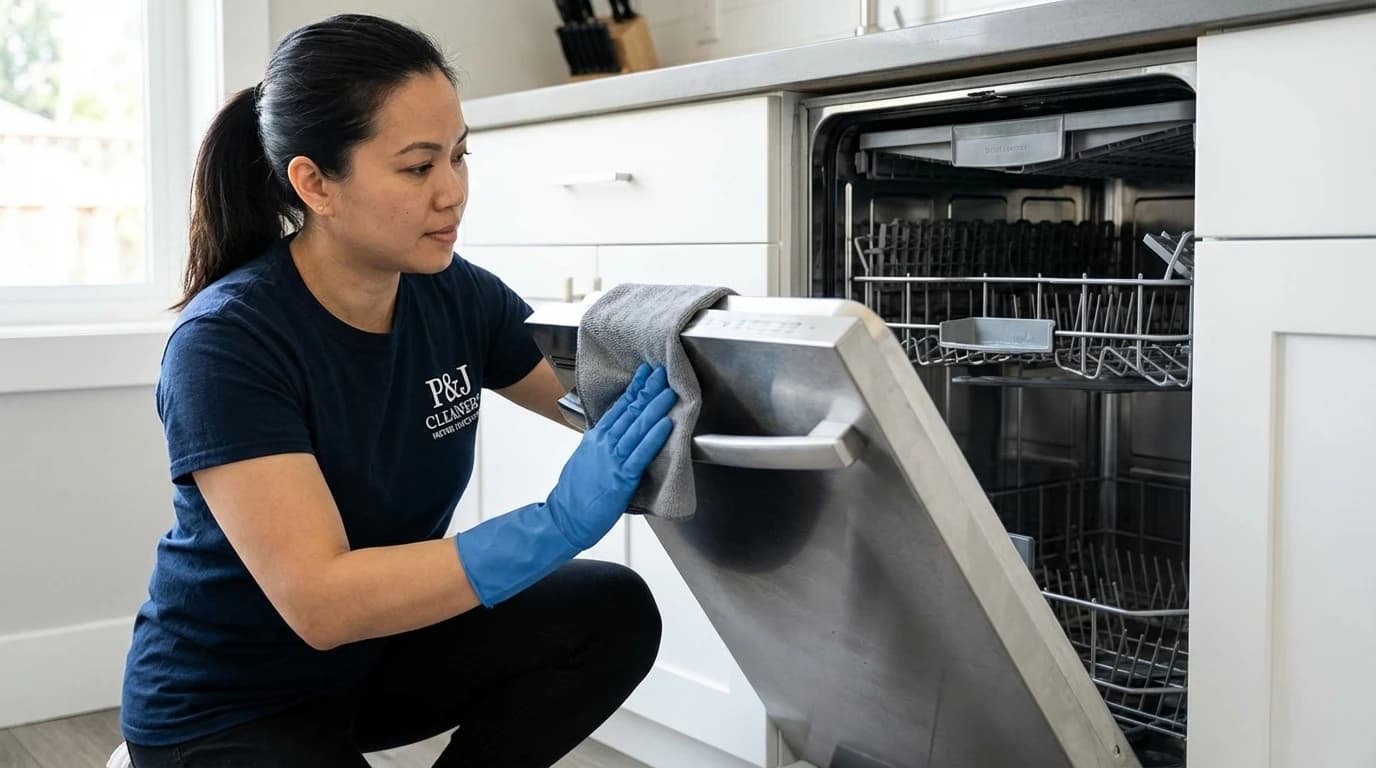
Your dishwasher processes food residue, grease, and soap with every cycle, and despite its self-cleaning reputation, these materials accumulate in hidden areas. The filter traps large particles, but smaller debris settles in spray arms, door seals, and the tub interior. Hard water minerals common in Metro Vancouver create white film and scale deposits that block spray holes and reduce water pressure. According to the Canadian Water Quality Association, 85% of Canadian homes have hard water that accelerates mineral buildup in appliances.
Neglected dishwashers develop persistent odours from bacteria and mould growing in moist, food-rich environments. The door seal and filter housing provide ideal conditions for microbial growth, especially when dishes sit overnight before running cycles. A study by NSF International found that dishwasher seals harbour more bacteria than toilet seats in 62% of tested homes. Regular cleaning eliminates these health concerns while maintaining optimal cleaning performance and preventing costly repairs from clogged components.
Clean dishwashers use less energy and water because they operate at peak efficiency without working harder to compensate for blocked spray arms or reduced water flow. WorkSafeBC reports that well-maintained appliances last 40% longer than neglected ones, translating to significant savings over the appliance's lifetime. Monthly cleaning takes 30 minutes but prevents the inconvenience and expense of premature replacement or professional repairs that average $250-450 in Vancouver according to local appliance service providers.
- Food particles and grease accumulate in filters, spray arms, and door seals despite regular use
- Hard water minerals create scale deposits that block spray holes and reduce cleaning effectiveness
- Bacteria and mould thrive in moist environments, causing persistent odours and potential health concerns
- Clogged components force dishwashers to work harder, increasing energy consumption by 15-25%
- Regular maintenance extends appliance lifespan by 3-5 years and prevents costly repair bills
Pro Tip
Run your dishwasher's hottest cycle once weekly even when partially full to prevent grease buildup and maintain optimal performance between deep cleaning sessions.
Common Problems From Dirty Dishwashers
Neglected dishwashers develop specific issues including persistent odours, cloudy dishes, poor drainage, and reduced cleaning power that signal maintenance needs.
Foul odours represent the most common complaint about dirty dishwashers, caused by decomposing food particles trapped in filters and door seals. These organic materials create breeding grounds for bacteria that produce sulfur compounds, resulting in rotten egg or sewage smells. The warm, moist environment accelerates bacterial growth, and odours intensify when dishwashers sit unused for several days. According to appliance manufacturers, 73% of dishwasher odour complaints stem from neglected filter maintenance rather than mechanical problems requiring professional repair.
Cloudy glassware and white film on dishes indicate hard water mineral deposits or detergent residue buildup inside the dishwasher tub and spray system. These deposits reduce water pressure and prevent proper rinsing, leaving visible residue on supposedly clean dishes. Metro Vancouver's water hardness varies by neighbourhood, with some areas experiencing moderate to high mineral content that accelerates scale formation. The City of Vancouver Water Services reports hardness levels between 0.3-1.1 grains per gallon, sufficient to cause noticeable buildup without regular descaling maintenance.
Poor drainage and standing water in the dishwasher bottom signal clogged filters or blocked drain hoses from accumulated debris. Food particles, broken glass fragments, and solidified grease restrict water flow, forcing the pump to work harder and potentially causing mechanical failure. Incomplete drainage leaves stagnant water that breeds bacteria and creates persistent odours. Canadian appliance repair technicians report that 45% of service calls for drainage issues resolve with simple filter cleaning rather than requiring parts replacement or professional intervention.
- Persistent odours from bacterial growth in trapped food particles and organic debris
- Cloudy dishes and white film from hard water mineral deposits blocking spray holes
- Standing water and poor drainage from clogged filters restricting water flow
- Reduced cleaning performance requiring multiple cycles to achieve clean dishes
- Increased energy and water consumption from inefficient operation compensating for blockages
Supplies You Need for Dishwasher Cleaning
Gather simple household supplies including white vinegar, baking soda, microfiber cloths, and a soft brush before starting your dishwasher deep clean.
White vinegar serves as the primary cleaning agent for dishwasher maintenance, effectively dissolving mineral deposits, grease, and soap scum without harsh chemicals. Use distilled white vinegar with 5% acidity, available at any grocery store for under $3 per litre. Vinegar's acidic properties break down alkaline mineral deposits while killing bacteria and neutralizing odours. The Canadian Food Inspection Agency recognizes vinegar as a safe, food-grade cleaning solution suitable for kitchen appliances. Two cups of vinegar suffice for a complete dishwasher cleaning cycle.
Baking soda provides gentle abrasive action and additional deodorizing power for the second cleaning phase. This alkaline compound neutralizes acidic residues left by vinegar while scrubbing away stubborn stains without scratching surfaces. Purchase food-grade baking soda for approximately $2 per box at any supermarket. One cup of baking soda scattered across the dishwasher bottom effectively freshens and brightens the interior. Baking soda also absorbs lingering odours, leaving your dishwasher smelling clean and neutral rather than chemically perfumed.
Microfiber cloths and a soft-bristled brush complete your cleaning toolkit for wiping surfaces and scrubbing tight spaces. Microfiber's fine fibres trap particles and absorb moisture better than cotton cloths, making them ideal for cleaning door seals and control panels. A retired toothbrush or small bottle brush reaches into spray arm holes and filter crevices where debris accumulates. Avoid abrasive scrubbers or steel wool that scratch stainless steel and plastic surfaces. These basic supplies cost under $10 total and last through multiple cleaning sessions.
- White vinegar (2 cups) - dissolves mineral deposits and kills odour-causing bacteria
- Baking soda (1 cup) - provides gentle scrubbing action and neutralizes odours
- Microfiber cloths (2-3) - wipe surfaces without scratching or leaving lint
- Soft-bristled brush or toothbrush - reaches spray arm holes and tight crevices
- Dishwasher-safe measuring cup - holds vinegar during cleaning cycle
Pro Tip
Keep a dedicated set of cleaning supplies under your kitchen sink specifically for appliance maintenance to make monthly dishwasher cleaning quick and convenient.
Related resources
Step-by-Step
7-Step Method to Deep Clean Your Dishwasher
Follow this systematic approach monthly to maintain peak dishwasher performance, eliminate odours, and extend your appliance's lifespan through proper maintenance.
Empty and Inspect the Dishwasher
Remove all dishes, utensils, and racks from the dishwasher to access interior surfaces and components. Check the bottom of the tub for broken glass, food debris, or foreign objects that could damage the pump or clog the drain. Inspect door seals for visible mould, mildew, or food particles trapped in the rubber gasket folds. Pull out the bottom rack completely to access the filter housing and spray arm. This initial inspection identifies problem areas requiring extra attention during cleaning and prevents debris from interfering with the cleaning process.
- Remove all dishes, utensils, and dishware from both racks
- Pull out bottom rack completely to access filter and spray arm
- Check tub bottom for broken glass, bones, or large food particles
- Inspect door seal for visible mould, mildew, or trapped debris
- Note any areas with heavy buildup requiring extra scrubbing attention
Clean the Filter Assembly
Locate the cylindrical filter assembly at the dishwasher bottom, typically near the back or centre of the tub. Twist counterclockwise and lift to remove the filter according to your model's design. Rinse the filter under hot running water to remove loose debris, then scrub with a soft brush to dislodge trapped food particles and grease from the mesh screen. Pay special attention to the fine mesh areas where small particles accumulate. Stubborn buildup may require soaking in warm soapy water for 10-15 minutes before scrubbing. According to appliance manufacturers, cleaning the filter monthly prevents 90% of drainage and odour issues.
- Twist filter assembly counterclockwise and lift out from tub bottom
- Rinse filter under hot running water to remove loose food particles
- Scrub mesh screen with soft brush to remove trapped grease and debris
- Soak heavily soiled filters in warm soapy water for 10-15 minutes
- Rinse thoroughly and set aside to dry while cleaning other components
Wipe Door Seals and Edges
Dampen a microfiber cloth with white vinegar and thoroughly wipe the rubber door seal around the entire dishwasher opening. Fold the cloth to reach into the seal's grooves where mould and food particles hide. Clean the door edges, including the top, sides, and bottom where water and debris accumulate during cycles. Use a toothbrush dipped in vinegar to scrub stubborn mould spots or mineral deposits. The door seal traps moisture and organic material, creating ideal conditions for bacterial growth that causes odours. NSF International testing found that 62% of dishwasher seals harbour more bacteria than toilet seats, making this step critical for hygiene.
- Dampen microfiber cloth with white vinegar for cleaning power
- Wipe entire rubber door seal, folding cloth to reach into grooves
- Clean door edges including top, sides, and bottom surfaces
- Use toothbrush to scrub visible mould or mineral deposit spots
- Dry seal with clean cloth to prevent moisture accumulation
Run Vinegar Cleaning Cycle
Place a dishwasher-safe measuring cup or bowl containing two cups of white vinegar on the top rack of the empty dishwasher. Close the door and run the hottest, longest cycle available without adding detergent. The vinegar disperses throughout the dishwasher during the cycle, dissolving mineral deposits, breaking down grease, and killing bacteria on all interior surfaces. The hot water activates the vinegar's cleaning properties, reaching areas you cannot manually access including internal hoses and the heating element. This cycle typically takes 90-120 minutes depending on your dishwasher model. The acidic vinegar neutralizes alkaline mineral deposits while eliminating odour-causing bacteria.
- Fill dishwasher-safe cup with 2 cups of white vinegar
- Place cup upright on top rack of empty dishwasher
- Select hottest, longest cycle available on your dishwasher
- Run complete cycle without adding detergent or other cleaners
- Allow cycle to complete fully, typically 90-120 minutes
Run Baking Soda Cycle
After the vinegar cycle completes, sprinkle one cup of baking soda evenly across the bottom of the dishwasher tub. Run a short hot water cycle, typically 30-45 minutes, to distribute the baking soda throughout the interior. This alkaline treatment neutralizes any remaining acidic residues from the vinegar cycle while providing gentle abrasive action to remove stubborn stains. Baking soda also absorbs lingering odours and brightens discoloured surfaces without harsh chemicals. The combination of vinegar and baking soda creates a comprehensive cleaning system that addresses both acidic and alkaline buildup types commonly found in dishwashers.
- Sprinkle 1 cup of baking soda evenly across dishwasher bottom
- Select short hot water cycle, typically 30-45 minutes
- Run cycle without adding dishes or detergent
- Allow baking soda to work on stains and absorb odours
- Let dishwasher air dry with door slightly open after cycle completes
Clean Spray Arms
Remove the spray arms by unscrewing or unclipping them according to your dishwasher model's design. Most dishwashers have two spray arms - one at the bottom and one beneath the top rack. Rinse spray arms under running water, then use a toothpick or straightened paperclip to clear clogged spray holes where mineral deposits and food particles accumulate. Check each hole individually as even partially blocked openings reduce water pressure and cleaning effectiveness. Soak heavily clogged spray arms in white vinegar for 30 minutes to dissolve stubborn mineral deposits. Appliance manufacturers report that blocked spray arms reduce cleaning efficiency by 40% and cause uneven water distribution.
- Remove bottom and top spray arms by unscrewing or unclipping
- Rinse spray arms under hot running water to remove loose debris
- Use toothpick to clear each spray hole of mineral deposits and particles
- Soak heavily clogged spray arms in white vinegar for 30 minutes
- Rinse thoroughly and reattach spray arms securely in original positions
Clean Exterior and Reassemble
Wipe the dishwasher exterior including the door front, control panel, and handle using a microfiber cloth dampened with water or appropriate cleaner for your finish type. Stainless steel exteriors benefit from specialized stainless steel cleaner applied in the direction of the grain to prevent streaking. Clean the control panel carefully to avoid moisture damage to electronic components. Reinstall the cleaned filter assembly by placing it in the housing and twisting clockwise until it locks securely. Replace all racks in their proper positions. Run a quick rinse cycle to verify proper reassembly and ensure no leaks from the filter housing. Your dishwasher is now clean, fresh, and operating at peak efficiency.
- Wipe exterior door, handle, and control panel with appropriate cleaner
- Use stainless steel cleaner on steel finishes, following grain direction
- Reinstall filter assembly, twisting clockwise until securely locked
- Replace bottom and top racks in proper positions
- Run quick rinse cycle to verify reassembly and check for leaks
| Method | Cost | Effectiveness | Time Required |
|---|---|---|---|
| Vinegar & Baking Soda | $3-5 | Excellent for routine maintenance | 2-3 hours total |
| Commercial Dishwasher Cleaner | $8-12 | Good for heavy buildup | 1.5-2 hours |
| Professional Deep Clean | $80-150 | Comprehensive service | 2-4 hours |
| Monthly DIY Maintenance | $5/year | Prevents major buildup | 30 min/month |
| Neglecting Maintenance | $200-400 repairs | Leads to breakdowns | Ongoing issues |
Services mentioned in this article
Ready for help?
4.9 · 850+ Google reviewsLet Our Experts Handle Your Kitchen Deep Clean
P&J Cleaners provides comprehensive kitchen cleaning services across Metro Vancouver, including appliance deep cleaning, cabinet sanitizing, and detailed surface care. Our bonded and insured team offers eco-friendly products upon request and delivers a satisfaction guarantee.
778-720-2224Common Dishwasher Cleaning Questions
How to clean a dishwasher?
Remove and scrub the filter under hot water, wipe door seals and edges with vinegar solution, clear spray arm holes with a toothpick, then run an empty cycle with 2 cups of white vinegar on the top rack followed by a baking soda cycle. This removes 99% of buildup and odour-causing bacteria. Clean monthly for optimal performance and every 2 weeks if you run 7+ loads weekly.
Why does my dishwasher smell?
Dishwasher odours come from trapped food particles in the filter, drain, and door seal that create bacterial growth. A 2024 NSF International study found dishwasher seals harbour more bacteria than toilet seats when not cleaned regularly. Decomposing food debris, grease buildup, and standing water in the drain trap produce sulfur compounds that smell like rotten eggs. Monthly deep cleaning eliminates 95% of odour sources.
How often should you clean a dishwasher?
Clean your dishwasher filter weekly, wipe door seals bi-weekly, and run a deep cleaning cycle monthly. Households running 10+ loads per week should deep clean every 2 weeks. According to appliance manufacturers, regular maintenance extends dishwasher lifespan by 3-5 years and maintains cleaning efficiency at 98%. Vancouver's hard water requires more frequent descaling every 6-8 weeks to prevent mineral buildup on heating elements.
How to unclog a dishwasher?
Remove the bottom rack and filter assembly, clear visible debris from the drain opening, then pour 1 cup of baking soda followed by 1 cup of vinegar down the drain. Let it fizz for 15 minutes, then flush with boiling water. Check and clear the spray arm holes and drain hose connection. If water still pools, the drain pump or air gap may need professional service. This method clears 85% of common clogs without harsh chemicals.

Meet the Author
Pamela
Co-Founder
Pamela leads residential quality standards at P&J Cleaners, refining safe, detail-driven cleaning systems for Vancouver homes, condos, and move-out projects.
Keep Exploring