


Neighborhood Context
Why New Westminster cleaning routines need a different approach
New Westminster sits at the confluence of the Fraser and Brunette Rivers, creating unique cleaning challenges for homeowners. The city's proximity to water means higher humidity levels year-round, leading to increased dust accumulation, mould risk in basements, and moisture damage to window frames. Spring cleaning here isn't just about aesthetics—it's essential maintenance that protects your investment from the damp coastal climate. The Royal City's mix of heritage homes and modern condos each require tailored approaches to deep cleaning.
The city's 42% pre-1980 housing stock means many homes feature original hardwood floors, plaster walls, and intricate woodwork that demand gentle, specialized cleaning methods. Heritage districts like Queen's Park and Sapperton contain character homes with leaded glass windows, crown moulding, and built-in cabinetry that can be damaged by harsh chemicals or aggressive scrubbing. Modern developments along the waterfront face different challenges: sealed concrete floors, floor-to-ceiling windows, and open-concept layouts that show dust and streaks more readily than traditional room divisions.
New Westminster's transit-oriented density means many residents live in strata properties with shared ventilation systems, making spring cleaning a community health issue. Dust, allergens, and cooking odours circulate between units through HVAC systems. Professional spring cleaning that includes vent cleaning, filter replacement, and thorough dusting helps improve air quality for entire buildings. The city's walkability also means more foot traffic and outdoor pollutants tracked indoors, requiring more frequent deep cleaning of entryways, hallways, and high-touch surfaces throughout the spring season.
42%
Pre-1980 Housing Stock
Source: Statistics Canada 2021 Census
1,450 sq ft
Average Home Size
Source: BC Assessment Authority
68%
Strata Properties
Source: City of New Westminster Housing Data
1,199 mm
Annual Precipitation
Source: Environment Canada
73%
Spring Humidity Average
Source: Environment Canada Climate Normals
New Westminster Spring Cleaning Essentials
The Royal City's unique geography and housing mix require location-specific cleaning strategies. These neighbourhood-tested approaches address moisture management, heritage home care, and high-density living challenges that define spring cleaning in New Westminster.
Managing River Valley Moisture
New Westminster's riverside location creates persistent humidity that accelerates mould growth, warps wood, and damages fabrics. Spring cleaning must prioritize moisture control in basements, bathrooms, and poorly ventilated spaces.

Fraser River proximity keeps New Westminster humidity levels 8-12% higher than inland Metro Vancouver communities. This constant moisture penetrates basements, crawl spaces, and ground-floor rooms, creating ideal conditions for mould and mildew. Spring cleaning should begin with a thorough basement inspection, checking foundation walls, floor joists, and stored items for moisture damage. Use dehumidifiers during cleaning to maintain 30-50% relative humidity. Pay special attention to corners, behind stored boxes, and around utility connections where air circulation is limited and moisture accumulates unnoticed.
Window frames and sills in riverside neighbourhoods like Queensborough and Quayside require extra attention during spring cleaning. Condensation from temperature differentials between indoor heating and outdoor cold creates water pooling that rots wood, peels paint, and encourages mould growth. Remove all window coverings and inspect frames for soft spots, discolouration, or musty odours. Clean sills with vinegar solution to kill mould spores, then dry thoroughly. Apply fresh caulking to any gaps where moisture can penetrate. This preventive maintenance during spring cleaning saves thousands in future window replacement costs.
Bathroom exhaust fans work overtime in New Westminster's humid climate and often fail without regular maintenance. Spring cleaning should include removing fan covers, vacuuming accumulated dust from blades and housing, and testing airflow strength. A weak fan can't remove shower moisture effectively, leading to ceiling mould, peeling paint, and structural damage. Replace fans that move less than 50 cubic feet per minute or make grinding noises. Clean bathroom ceilings with mould-killing solution, focusing on corners and around fixtures where moisture condenses. Proper ventilation maintenance prevents the costly mould remediation that plagues many Royal City homes.
- Run dehumidifiers in basements during spring cleaning to maintain 30-50% humidity and prevent mould growth while disturbing settled dust.
- Inspect all window frames for soft spots or discolouration indicating moisture damage, especially in riverside neighbourhoods like Queensborough.
- Test bathroom exhaust fans by holding tissue paper near the vent—it should stick firmly if airflow is adequate for moisture removal.
- Clean foundation vents and ensure proper airflow in crawl spaces to prevent moisture accumulation that leads to structural rot.
- Check weather stripping on exterior doors for gaps that allow humid outdoor air to enter and increase indoor moisture levels.
Protecting Heritage Home Features
Queen's Park, Sapperton, and West End neighbourhoods contain irreplaceable heritage features requiring specialized spring cleaning approaches. Modern products and techniques can permanently damage original woodwork, plaster, and glass.
Original hardwood floors in pre-1950 New Westminster homes have thinner finish coats than modern polyurethane applications. Aggressive cleaning with steam mops or harsh chemicals strips these delicate finishes, leaving wood vulnerable to moisture damage and staining. Spring cleaning should use pH-neutral hardwood cleaners applied with barely damp microfibre mops. Test any new product in a closet or under furniture before applying to visible areas. Avoid excessive water that can seep between boards and cause cupping. For heavily soiled areas, use a wood-safe degreaser sparingly, then immediately dry with clean towels to prevent moisture penetration.
Leaded glass windows in heritage homes require gentle cleaning that won't loosen the lead came holding glass pieces together. Never use ammonia-based cleaners that corrode lead or abrasive scrubbers that scratch antique glass. Mix one part white vinegar with four parts distilled water, apply with a soft cloth, and dry immediately with microfibre towels. Clean one small section at a time to prevent solution from sitting on lead joints. Inspect came for looseness or gaps during cleaning—these indicate the need for professional restoration before moisture causes further damage. Proper care during spring cleaning preserves these irreplaceable architectural features.
Crown moulding, baseboards, and built-in cabinetry in heritage homes often feature original paint layers that document the home's history. Harsh scrubbing or chemical strippers remove these layers, destroying historical value and exposing bare wood to moisture damage. Spring cleaning should use gentle dusting with microfibre cloths, followed by spot cleaning with mild soap solution only where necessary. For stubborn grime, use a barely damp magic eraser with light pressure, testing first in an inconspicuous area. Never use steam cleaners on painted woodwork—the heat and moisture can lift paint and warp wood. Preservation-minded cleaning maintains both beauty and historical integrity.
- Test all cleaning products on hidden areas of heritage features before applying to visible surfaces—damage to original materials is often irreversible.
- Use only pH-neutral cleaners on original hardwood floors and apply with barely damp mops to prevent moisture damage to thin finish coats.
- Clean leaded glass windows with vinegar-water solution and soft cloths, avoiding ammonia products that corrode lead came and damage antique glass.
- Dust crown moulding and woodwork with microfibre cloths before any wet cleaning to prevent creating muddy streaks that require aggressive scrubbing.
- Document any cracks, loose joints, or deterioration discovered during cleaning so professional restoration can be scheduled before further damage occurs.
Strata and Condo Spring Cleaning
New Westminster's 68% strata property rate means most residents share ventilation systems, hallways, and amenities. Spring cleaning in high-density buildings requires coordination with strata councils and attention to shared air quality.

Shared HVAC systems in New Westminster condos circulate dust, allergens, and odours between units, making individual spring cleaning less effective without building-wide participation. Request that strata councils schedule professional duct cleaning in March or April before cooling season begins. Clean or replace your unit's air intake filters monthly during spring to capture particles before they circulate. Vacuum floor vents and return air grilles thoroughly, removing accumulated dust that reduces airflow efficiency. Coordinate with neighbours to schedule deep cleaning on the same week—simultaneous cleaning prevents freshly cleaned units from being recontaminated by dust from neighbouring spaces through shared ventilation.
Floor-to-ceiling windows in waterfront developments show every streak, smudge, and water spot, requiring specialized spring cleaning techniques. Use distilled water mixed with white vinegar to prevent mineral deposits that tap water leaves behind. Clean windows on overcast days when direct sunlight won't cause solution to dry too quickly and leave streaks. Start at the top and work down in overlapping horizontal strokes, drying each section immediately with a squeegee or microfibre cloth. For exterior windows above ground level, hire professionals with proper safety equipment—attempting to clean outside high-rise windows yourself violates WorkSafeBC regulations and risks serious injury.
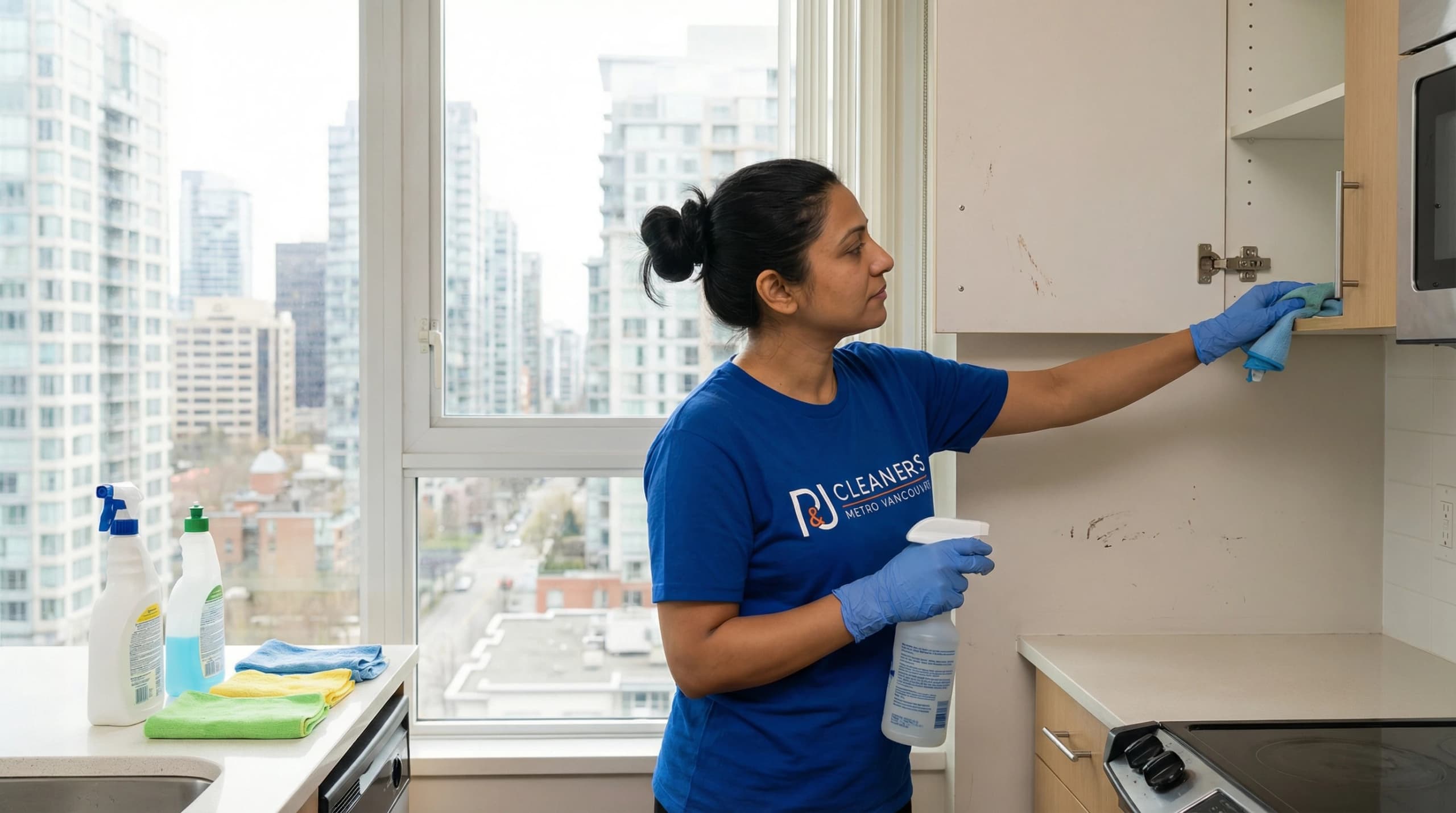
Open-concept layouts in modern New Westminster condos mean cooking odours, dust, and humidity spread instantly throughout the entire unit. Spring cleaning should include thorough range hood degreasing, filter replacement, and duct inspection to ensure proper ventilation. Clean kitchen exhaust systems remove cooking particles that otherwise settle on furniture, walls, and electronics throughout open living spaces. Wipe down all surfaces in the kitchen zone with degreasing solution, including upper cabinet tops, light fixtures, and the ceiling area around the range hood where grease vapour condenses. This targeted cleaning prevents the sticky film that accumulates in poorly ventilated open-concept spaces.
- Coordinate spring cleaning with neighbours in your strata building to prevent recontamination through shared ventilation systems and hallways.
- Replace HVAC filters monthly during spring months when pollen and outdoor pollutants are highest in New Westminster's riverside location.
- Clean floor-to-ceiling windows with distilled water to prevent mineral deposits from Fraser River humidity that create permanent clouding on glass.
- Schedule professional duct cleaning through your strata council before cooling season to remove winter dust buildup from shared ventilation systems.
- Deep clean range hoods and replace filters in open-concept units to prevent cooking particles from settling throughout entire living spaces.
Optimal Spring Cleaning Schedule
New Westminster's climate creates specific windows for effective spring cleaning. Timing your deep clean around weather patterns, pollen seasons, and humidity levels maximizes results and prevents wasted effort.

March offers the best spring cleaning window in New Westminster before tree pollen peaks in April and May. Early spring cleaning allows you to open windows for ventilation without immediately recontaminating freshly cleaned surfaces with pollen. Average March temperatures of 8-12°C are warm enough for effective cleaning solutions to work but cool enough that you won't overheat during physical labour. Schedule your deep clean for a dry week—check Environment Canada forecasts and avoid periods with consecutive rainy days when humidity prevents proper drying of cleaned surfaces, carpets, and upholstery.
Cherry blossom season in April creates beautiful scenery but terrible timing for spring cleaning in New Westminster. Pollen counts spike to 150-200 grains per cubic metre, coating outdoor surfaces within hours and infiltrating homes through any open door or window. If you must clean during peak pollen season, keep windows closed and use HEPA air purifiers to maintain indoor air quality. Focus on interior deep cleaning tasks like organizing closets, cleaning appliances, and washing walls. Save window cleaning and outdoor space preparation for late May when pollen counts drop below 50 grains per cubic metre.
Late May through early June provides a second spring cleaning opportunity after pollen season ends but before summer humidity peaks. This timing works well for exterior tasks like pressure washing decks, cleaning gutters, and washing windows. Temperatures of 15-20°C are comfortable for outdoor work, and longer daylight hours allow you to complete more tasks in a single day. Schedule professional services during this period if you missed the March window—availability is better than during the busy March-April rush, and you'll still complete deep cleaning before summer vacation season begins.
- Schedule spring cleaning for March to avoid April-May pollen season when opening windows recontaminates freshly cleaned surfaces within hours.
- Check Environment Canada forecasts and choose a dry week for spring cleaning—consecutive rainy days prevent proper drying and increase mould risk.
- Save exterior cleaning tasks like window washing and deck cleaning for late May when pollen counts drop below 50 grains per cubic metre.
- Book professional cleaning services 2-3 weeks in advance during March-April peak season when demand is highest in New Westminster.
- Plan deep cleaning projects over multiple weekends rather than attempting everything in one exhausting day—quality matters more than speed.
New Westminster Cleaning Regulations
The Royal City enforces specific bylaws affecting spring cleaning activities, particularly regarding waste disposal, water use, and noise levels. Understanding these regulations prevents fines and ensures your cleaning project complies with municipal requirements.
Local link strategy
Explore the matching service area pages for new-westminster to connect this neighborhood advice with location-specific service information.
Services mentioned in this article
Ready for help?
4.9 · 850+ Google reviewsReady to Refresh Your New Westminster Home?
Book professional spring cleaning today and experience the P&J Cleaners difference. Same-day service available with our satisfaction guarantee.
778-720-2224Spring Cleaning FAQs for New Westminster Residents
How much does spring cleaning cost in New Westminster?
Professional spring cleaning in New Westminster typically costs $45-$65 per hour depending on home size and condition. A standard 1,200 sq ft home averages $280-$420 for a complete spring clean. Heritage homes with detailed woodwork may cost 15-20% more due to specialized care requirements. P&J Cleaners offers transparent pricing with no hidden fees and same-day booking availability throughout Royal City.
What does spring cleaning include?
Spring cleaning includes deep cleaning of all rooms, baseboards, window tracks, light fixtures, and appliances. Services cover interior window washing, cabinet cleaning, closet organization, and thorough dusting of ceiling fans and vents. In New Westminster, spring cleaning also addresses moisture buildup from Fraser River humidity, mould prevention in bathrooms, and pollen removal from window sills and screens.
How often should you get spring cleaning?
Most New Westminster homeowners schedule professional spring cleaning once annually, typically in March or April after winter moisture accumulation. Homes near the Fraser River or in Queen's Park may benefit from bi-annual deep cleans due to higher humidity levels. Properties with pets, allergies, or heritage features often require quarterly professional attention to maintain optimal conditions and prevent moisture damage.
Best spring cleaning service in New Westminster?
P&J Cleaners ranks as New Westminster's top-rated spring cleaning service with 4.9/5 stars from 850+ reviews. We offer same-day booking, eco-friendly products upon request — safe for heritage homes, and a satisfaction guarantee. Our team is fully bonded and insured, with specialized training in Royal City's unique cleaning challenges including heritage home care and moisture control.

Meet the Author
Pamela
Co-Founder
Pamela leads residential quality standards at P&J Cleaners, refining safe, detail-driven cleaning systems for Vancouver homes, condos, and move-out projects.
Keep Exploring