

Neighborhood Context
Why Coquitlam cleaning routines need a different approach
Coquitlam anchors the Tri-Cities region with over 148,000 residents and a rapidly expanding commercial sector centred around the Evergreen SkyTrain extension. The city hosts diverse office environments from tech startups in Burquitlam to established professional firms near City Centre and medical practices along North Road. With 12 business parks and growing corporate presence, Coquitlam's office market demands reliable cleaning services that understand local building codes and environmental priorities. The municipality's commitment to sustainability aligns with businesses seeking green cleaning solutions.
The city's geography creates unique cleaning challenges with coastal humidity affecting indoor air quality and seasonal pollen requiring enhanced filtration systems. Coquitlam offices near Burke Mountain experience higher dust accumulation while waterfront properties in Port Coquitlam face moisture management needs. Local businesses prioritize vendors familiar with TransLink accessibility standards for buildings near SkyTrain stations and the regional emphasis on waste diversion programs. Understanding these neighbourhood-specific factors ensures cleaning protocols match Coquitlam's commercial landscape and regulatory environment.
Coquitlam's business community values partnerships with locally operated service providers who understand regional logistics and can respond quickly to urgent cleaning needs. The city's position between Vancouver and the Fraser Valley makes it a strategic hub for companies serving Metro Vancouver's eastern corridor. Office cleaning services here must navigate varied building types from heritage structures in Maillardville to modern LEED-certified developments in Westwood Plateau. This diversity requires adaptable cleaning approaches and familiarity with municipal bylaws governing commercial waste disposal and chemical usage.
2,400+ office spaces
Commercial Properties
Source: City of Coquitlam Economic Development
3,200 sq ft
Average Office Size
Source: Metro Vancouver Commercial Real Estate Board
8.3% annually
Business Growth Rate
Source: Statistics Canada Business Register
34% LEED-certified
Green Building Adoption
Source: Canada Green Building Council BC
80% with professional cleaning
Workplace Illness Reduction
Source: WorkSafeBC Occupational Health Studies
Coquitlam-Specific Office Cleaning Considerations
Tri-Cities businesses face distinct cleaning requirements shaped by local climate patterns, building regulations, and workforce expectations. These location-based insights help optimize your cleaning strategy for Coquitlam's commercial environment.
Climate and Humidity Management
Coquitlam's coastal proximity creates moisture challenges requiring specialized cleaning protocols and equipment to prevent mould growth and maintain indoor air quality standards.
Coquitlam experiences 1,400mm annual rainfall with humidity levels reaching 85% during fall and winter months. This moisture penetrates office buildings through HVAC systems and creates conditions for mould growth on porous surfaces like ceiling tiles and fabric partitions. Professional cleaning services use dehumidification equipment and antimicrobial treatments to control moisture-related issues. Buildings near the Coquitlam River or Como Lake require enhanced ventilation cleaning to manage condensation buildup. Regular HEPA vacuuming removes moisture-trapping dust particles that contribute to musty odours and allergen accumulation in carpeted areas.
The region's temperature fluctuations between 2°C winter lows and 26°C summer highs cause expansion and contraction in building materials, creating gaps where moisture and debris accumulate. Cleaning protocols must address these seasonal variations with adjusted frequencies for window track cleaning and baseboard maintenance. Offices with poor ventilation systems benefit from quarterly deep cleans that include air duct sanitization and dehumidifier filter replacement. Coastal humidity also accelerates dust mite populations in upholstered furniture, requiring steam cleaning every six months to maintain healthy indoor environments per BC Health Authority recommendations for commercial spaces.
- Schedule quarterly HVAC vent cleaning to prevent mould spore circulation in humid months and improve air quality metrics.
- Use moisture meters during inspections to identify problem areas before visible mould appears on walls or ceiling tiles.
- Install dehumidifiers in basement offices and storage areas where humidity exceeds 60% to protect documents and equipment.
- Apply antimicrobial sealants to grout lines in washrooms and kitchenettes to prevent moisture penetration and bacterial growth.
- Increase carpet extraction frequency to bi-monthly during rainy season to remove moisture and prevent odour development.
Transit Accessibility and High-Traffic Areas
SkyTrain connectivity brings increased foot traffic to Coquitlam offices, requiring enhanced entrance maintenance and accessibility compliance for buildings near transit hubs.
The Evergreen Extension transformed Coquitlam into a transit-oriented community with six SkyTrain stations serving commercial districts. Offices within 400 metres of stations experience 40% higher foot traffic than suburban locations, accelerating wear on entrance flooring and increasing debris tracked indoors. Professional cleaning services implement walk-off mat systems extending 12-15 feet from entrances to capture moisture and particulates before they reach interior spaces. Buildings near Lafarge Lake-Douglas or Lincoln stations require daily entrance cleaning during peak commute hours to maintain professional appearances and prevent slip hazards from wet weather conditions.
TransLink accessibility standards mandate barrier-free access to commercial buildings, creating cleaning challenges around automatic door mechanisms and tactile warning surfaces. These high-touch areas require hourly sanitization during business hours to prevent pathogen transmission among transit users. Offices serving public-facing roles must maintain spotless entrance areas that reflect professional standards while accommodating increased traffic volumes. Cleaning schedules align with SkyTrain operating hours, with early morning services completing before 6:30 AM rush periods and evening crews working after 7:00 PM to avoid disrupting commuter flow through building lobbies.
- Install commercial-grade entrance matting systems that capture 80% of tracked debris within the first 15 feet of doorways.
- Schedule entrance cleaning twice daily for offices within 200 metres of SkyTrain stations to manage high foot traffic.
- Use slip-resistant floor treatments on tile and concrete surfaces near automatic doors where moisture accumulates during rain.
- Implement touchless sanitizer stations at building entrances to reduce pathogen transfer from transit users to office surfaces.
- Coordinate cleaning schedules with building management to avoid blocking accessible routes during peak transit hours.
Municipal Waste Diversion and Recycling
Coquitlam's aggressive waste reduction targets require office cleaning services to implement comprehensive sorting systems that exceed provincial recycling mandates.
The City of Coquitlam aims for 80% waste diversion by 2030, surpassing BC's 75% provincial target through enhanced commercial recycling programs. Office cleaning services must separate materials into seven categories: paper, cardboard, mixed containers, organics, electronics, hazardous waste, and landfill. This complexity requires trained staff who understand municipal sorting guidelines and can educate office occupants on proper disposal methods. Buildings over 2,000 square metres face mandatory organics collection, meaning cleaning crews handle compost bins in kitchenettes and lunchrooms. Non-compliance results in municipal fines starting at $250 for improper waste sorting.
Coquitlam's partnership with Recycle BC provides free recycling services for offices but requires strict contamination controls. A single bag of improperly sorted waste can contaminate entire recycling loads, forcing materials to landfill and increasing disposal costs. Professional cleaning services conduct monthly waste audits to identify contamination sources and implement corrective training. The municipality offers rebates for businesses achieving 85% diversion rates, creating financial incentives for partnering with cleaning companies experienced in waste management protocols. Services include secure document destruction coordinated with certified shredding vendors and electronics recycling through provincial stewardship programs.
- Label waste stations with colour-coded signage matching Coquitlam's municipal sorting categories to reduce contamination rates.
- Request quarterly waste audits from your cleaning provider to identify diversion opportunities and qualify for municipal rebates.
- Use compostable liners in organics bins to simplify handling and prevent leakage during collection in kitchenette areas.
- Schedule electronics recycling pickups twice yearly to properly dispose of outdated equipment through provincial stewardship programs.
- Track diversion rates monthly to demonstrate environmental compliance and support corporate sustainability reporting requirements.
Seasonal Pollen and Allergen Control
Coquitlam's forested surroundings generate high pollen counts requiring enhanced air filtration and surface cleaning during spring and fall allergy seasons.
The Fraser Valley experiences some of Canada's highest pollen concentrations with counts exceeding 200 grains per cubic metre during peak spring months. Coquitlam offices near Burke Mountain, Westwood Plateau, and Mundy Park face elevated allergen exposure from cedar, alder, and birch trees. These microscopic particles infiltrate buildings through HVAC systems and on clothing, settling on horizontal surfaces where they trigger respiratory reactions. Professional cleaning services use HEPA-filtered vacuums that capture 99.97% of particles down to 0.3 microns, preventing allergen recirculation. Microfibre cloths trap pollen rather than dispersing it into air currents like traditional dusting methods.
Allergy season impacts workplace productivity with employees experiencing 35% reduced concentration during high pollen days according to WorkSafeBC occupational health studies. Enhanced cleaning protocols during March-May and September-October include daily vacuuming of soft surfaces, bi-weekly upholstery cleaning, and weekly air filter replacements in HVAC systems. Offices should schedule deep cleans before allergy seasons begin to remove accumulated allergens from carpets, drapes, and acoustic ceiling tiles. Window cleaning frequency increases to weekly during pollen season to remove yellow film that transfers to interior surfaces when windows open for ventilation.
- Replace HVAC filters monthly during pollen season using MERV 13-rated products that capture tree and grass allergens.
- Schedule carpet extraction in February and August before peak allergy seasons to remove embedded pollen from previous cycles.
- Keep windows closed during high pollen days and rely on HVAC systems with proper filtration to maintain air quality.
- Use electrostatic dusting tools that attract and hold pollen particles rather than dispersing them during surface cleaning.
- Install air purifiers with HEPA filtration in conference rooms and open-plan areas where employees spend extended periods.
Business Park Access and Scheduling
Coquitlam's 12 business parks have unique access protocols and security requirements that cleaning services must navigate for efficient service delivery.
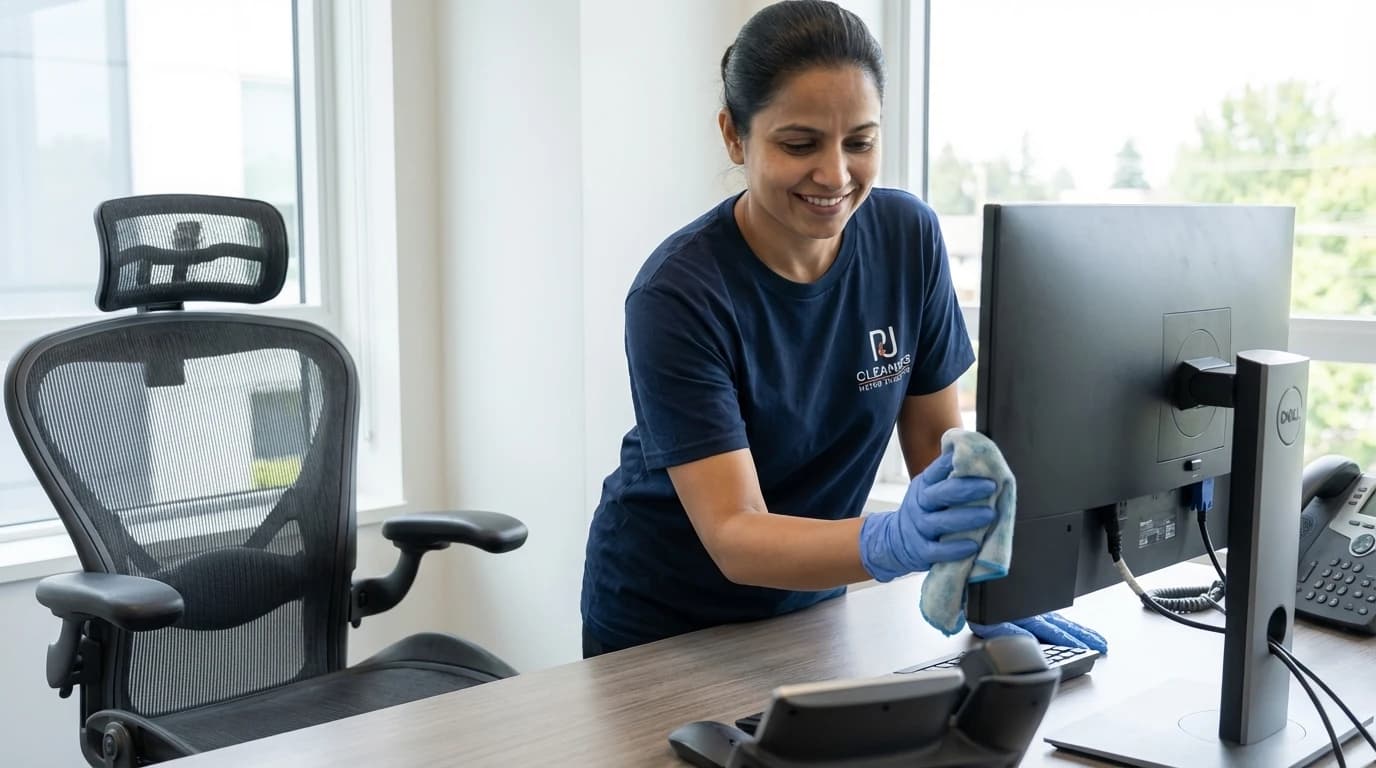
Industrial and office parks like Riverview Business Park and United Boulevard corridor implement controlled access systems requiring pre-authorized vendor credentials and after-hours security coordination. Cleaning services must obtain building-specific access cards, understand alarm codes, and coordinate with property management for elevator access during off-peak hours. Many parks restrict service vehicle parking to designated loading zones with time limits, requiring efficient equipment staging and waste removal processes. Buildings with shared lobbies and common areas need cleaning schedules that avoid conflicts with other tenants and maintain consistent service quality across multi-tenant properties.
Business park locations often lack nearby amenities, meaning cleaning crews must arrive fully equipped with supplies and cannot easily replenish materials mid-shift. This requires detailed inventory management and vehicle organization to ensure teams carry sufficient products for multiple client locations. Parks with limited cellular coverage need alternative communication methods for crew coordination and emergency response. Professional services maintain detailed site-specific protocols documenting access procedures, emergency contacts, and special requirements for each business park location. This preparation reduces service delays and ensures consistent quality regardless of property complexity or access restrictions.
- Provide cleaning crews with building-specific access instructions including alarm codes, elevator keys, and emergency contact numbers.
- Schedule business park locations consecutively to minimize travel time and maximize crew efficiency across multiple properties.
- Maintain backup supplies in service vehicles to avoid mid-shift shortages when working in areas without nearby retail access.
- Coordinate with property managers quarterly to update access credentials and review any changes to security protocols.
- Use GPS tracking and digital checklists to monitor crew locations and service completion in multi-building park environments.
Coquitlam Commercial Cleaning Regulations
Municipal bylaws and provincial standards govern commercial cleaning operations in Coquitlam, ensuring environmental protection and workplace safety compliance.
Local link strategy
Explore the matching service area pages for coquitlam to connect this neighborhood advice with location-specific service information.
Services mentioned in this article
Ready for help?
4.9 · 850+ Google reviewsReady for a Cleaner Coquitlam Office?
Book your professional office cleaning service today. Same-day availability, eco-friendly products upon request, and a satisfaction guarantee.
778-720-2224Common Questions About Office Cleaning in Coquitlam
How much does office cleaning cost in Coquitlam?
Office cleaning in Coquitlam typically costs $40-$65 per hour depending on office size, cleaning frequency, and services required. Small offices under 2,000 sq ft average $45-$50/hour, while larger commercial spaces over 5,000 sq ft range from $55-$65/hour. Monthly contracts offer 15-20% savings compared to one-time cleanings. P&J Cleaners provides free quotes with transparent pricing and no hidden fees.
What does office cleaning include?
Standard office cleaning includes vacuuming carpets, mopping hard floors, dusting surfaces and furniture, emptying trash bins, sanitizing washrooms, cleaning kitchen areas, and wiping down desks and common areas. Enhanced services add window cleaning, carpet shampooing, upholstery cleaning, and disinfection protocols. P&J Cleaners customizes each package to match your workplace needs, with eco-friendly products available upon request.
How often should you get office cleaning?
Most Coquitlam offices schedule cleaning 2-3 times weekly for optimal hygiene and appearance. High-traffic workplaces like medical offices or call centres benefit from daily cleaning, while smaller offices with under 10 employees maintain cleanliness with weekly service. WorkSafeBC recommends daily disinfection of high-touch surfaces. P&J Cleaners offers flexible scheduling including after-hours and weekend appointments to avoid disrupting business operations.
Best office cleaning service in Coquitlam?
P&J Cleaners ranks as Coquitlam's top-rated office cleaning service with 4.9/5 stars from 850+ reviews. We offer same-day booking, fully bonded and insured teams, eco-friendly products on request, and a satisfaction guarantee. Our local crews serve 39 Metro Vancouver locations including all Coquitlam business districts. We provide customized cleaning plans, transparent pricing, and consistent quality backed by rigorous training and quality control systems.
Meet the Author
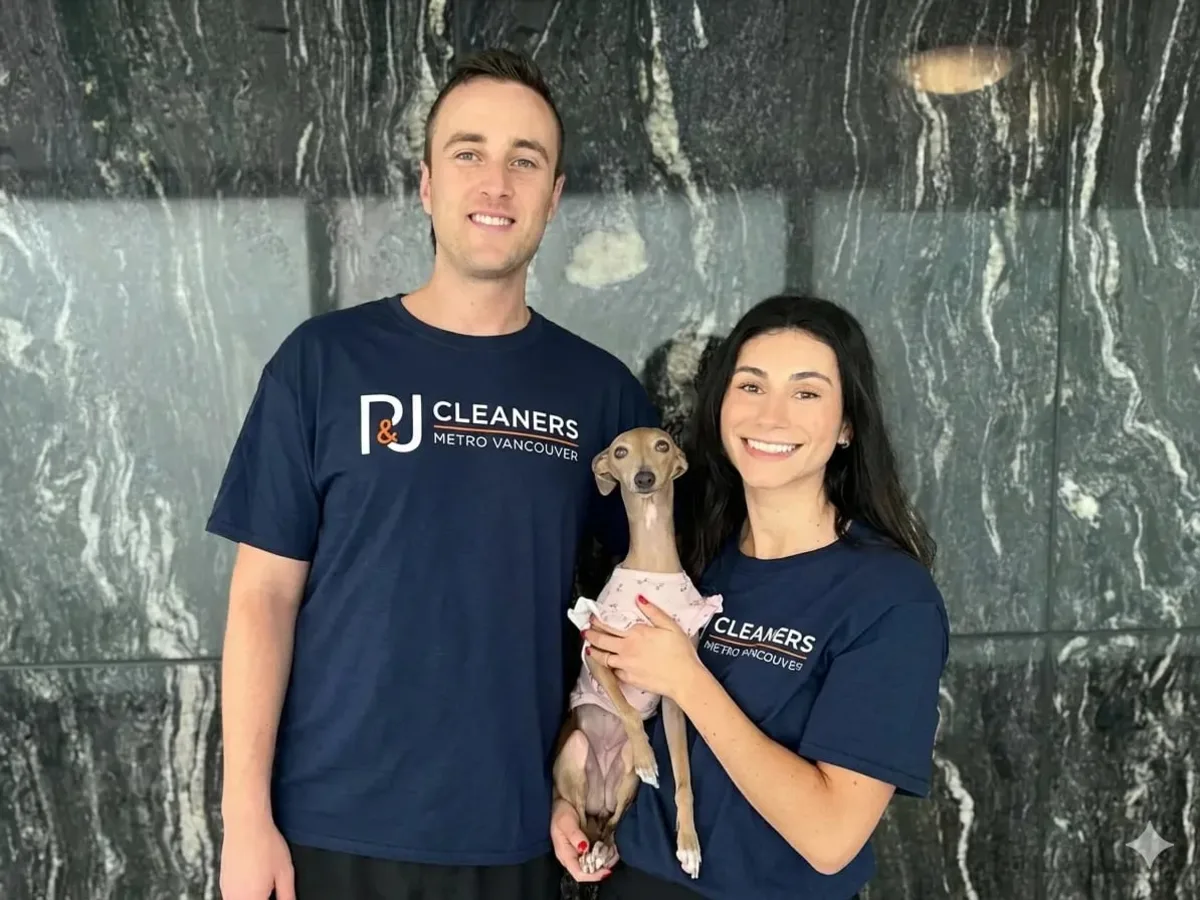
Jason
Co-Founder
Jason oversees commercial operations, workflow design, and quality control for office, restaurant, and specialty cleaning programs across Metro Vancouver.
Keep Exploring